
Best Practices in Pressure Injury Prevention ADD Hospital
Best Practices in Pressure Injury Prevention ADD Hospital Name Module 3
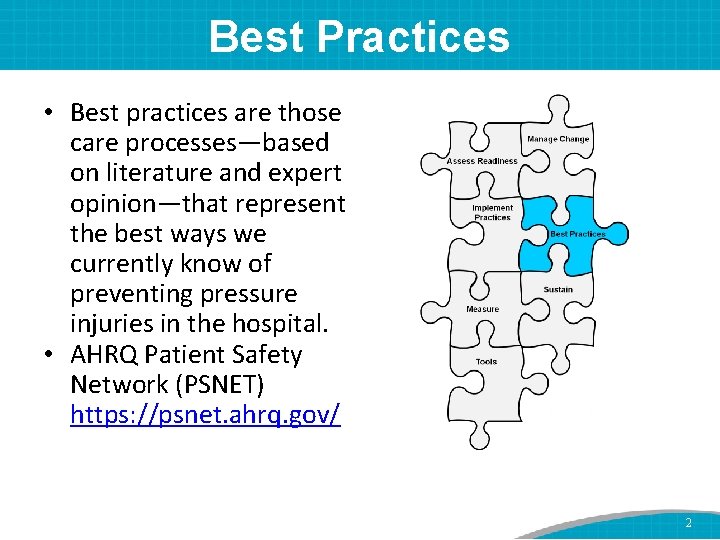
Best Practices • Best practices are those care processes—based on literature and expert opinion—that represent the best ways we currently know of preventing pressure injuries in the hospital. • AHRQ Patient Safety Network (PSNET) https: //psnet. ahrq. gov/ 2

Module 3 Goals • Identify opportunities for improvement: – Which pressure injury prevention practices to use – How to perform a comprehensive skin assessment – How to conduct a standardized assessment of pressure injury risk factors – How to incorporate risk factors into care planning Note: At various points during the module, we’ll discuss which best practices you want to include in your prevention program. 3
Bundle of Best Practices • Pressure injury prevention practices checklist: q Comprehensive skin assessment q Standardized pressure injury risk assessment q Care planning and implementation to address areas of risk 4
BEST PRACTICE COMPREHENSIVE SKIN ASSESSMENT 5
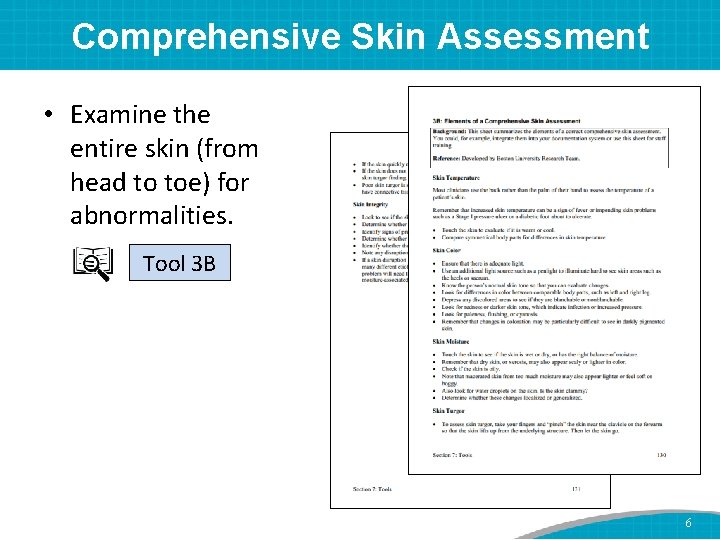
Comprehensive Skin Assessment • Examine the entire skin (from head to toe) for abnormalities. Tool 3 B 6
How To Do a Skin Assessment Video Clip of Skin Assessment 7
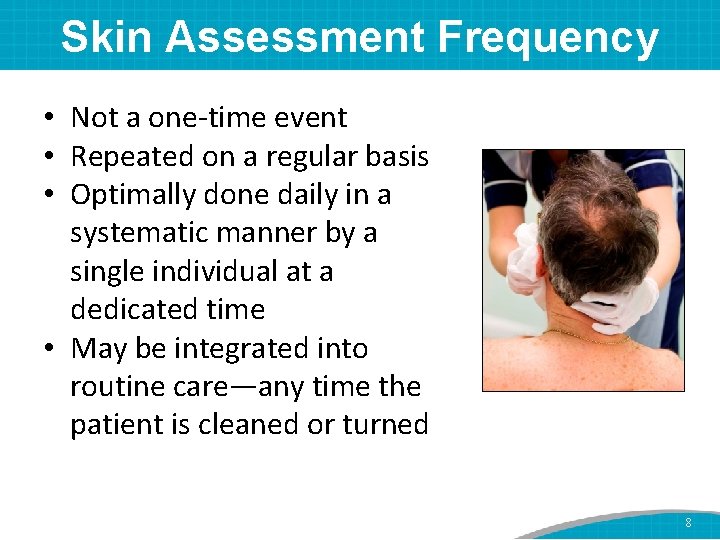
Skin Assessment Frequency • Not a one-time event • Repeated on a regular basis • Optimally done daily in a systematic manner by a single individual at a dedicated time • May be integrated into routine care—any time the patient is cleaned or turned 8
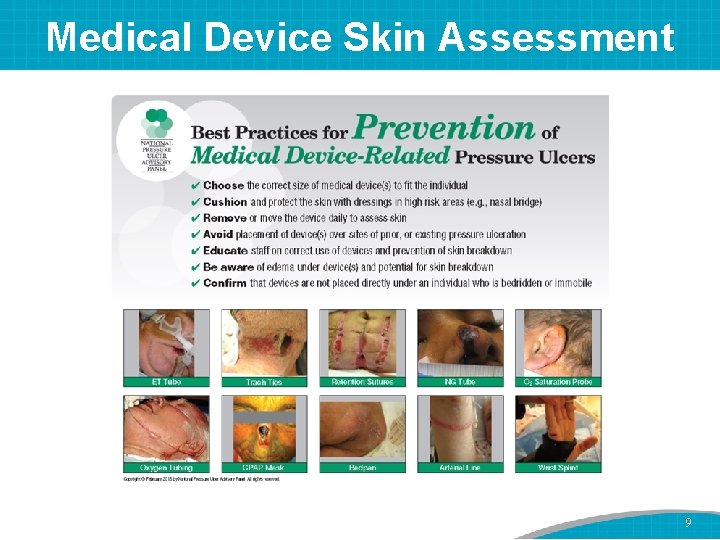
Medical Device Skin Assessment 9
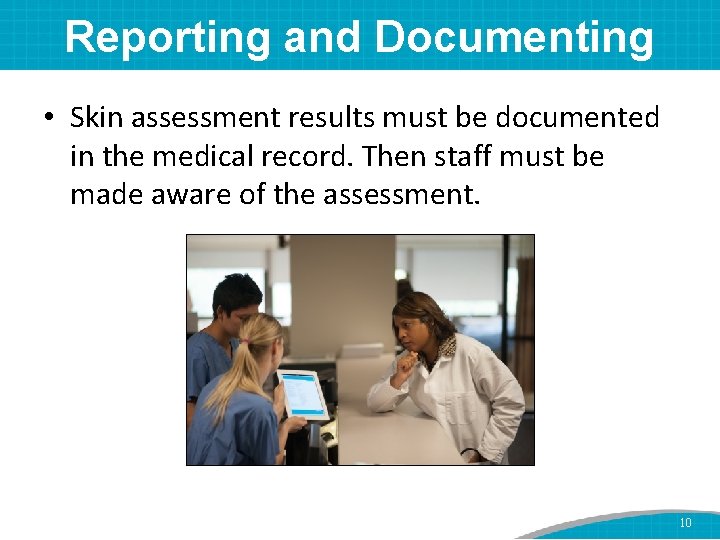
Reporting and Documenting • Skin assessment results must be documented in the medical record. Then staff must be made aware of the assessment. 10
Barriers to Practice • • Finding time for skin assessments Determining correct etiology of wounds Using inadequate documentation forms Lacking ways to empower staff to report abnormal skin findings: – Consider using Tool 3 C: Pressure Ulcer Identification Pocket Pad. 11
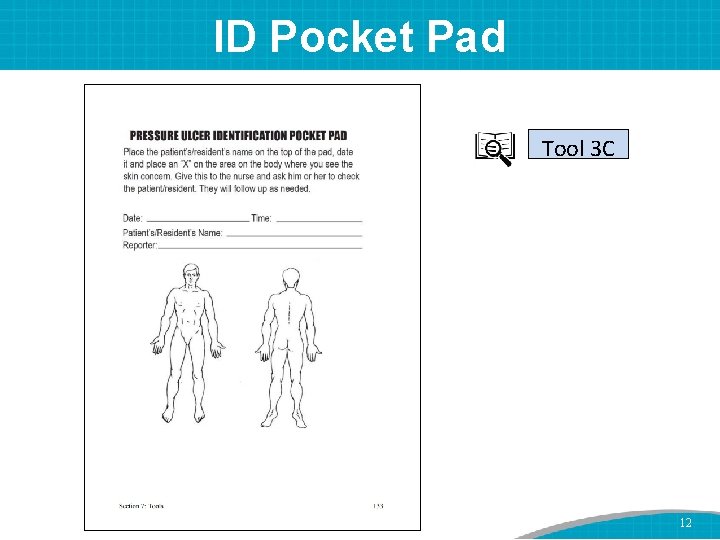
ID Pocket Pad Tool 3 C 12
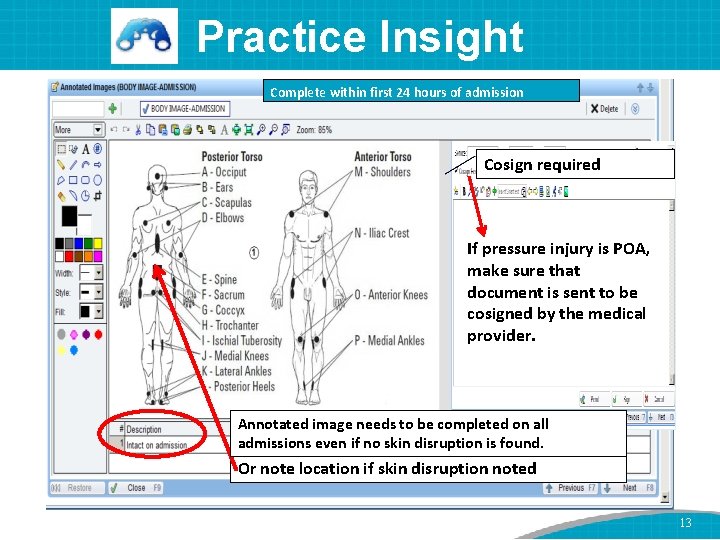
Practice Insight Complete within first 24 hours of admission Cosign required If pressure injury is POA, make sure that document is sent to be cosigned by the medical provider. Annotated image needs to be completed on all admissions even if no skin disruption is found. Or note location if skin disruption noted 13
Improving Assessment Practice • • • Ask a colleague to confirm skin assessment. Perform skin assessment with an expert. Ask for clarification. Use available resources. See tips for making assessments part of the routine. Page 42 14
BEST PRACTICE PRESSURE INJURY RISK ASSESSMENT 15
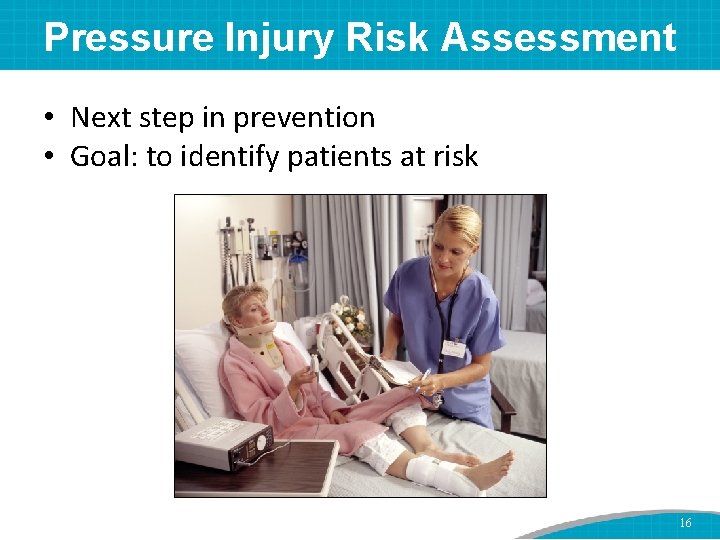
Pressure Injury Risk Assessment • Next step in prevention • Goal: to identify patients at risk 16
Risk Assessment Scales • Only one part of risk assessment • Meant to be used in conjunction with a review of other risk factors and clinical judgment – More factors to consider Page 44 • Especially helpful in identifying patients at mild to moderate risk • Two widely used scales: – Braden Scale (Tool 3 D) – Norton Scale (Tool 3 E) 17
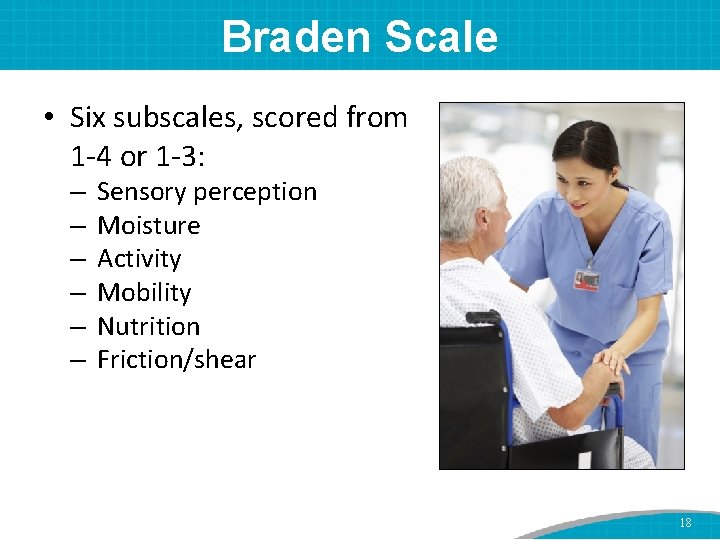
Braden Scale • Six subscales, scored from 1 -4 or 1 -3: – – – Sensory perception Moisture Activity Mobility Nutrition Friction/shear 18
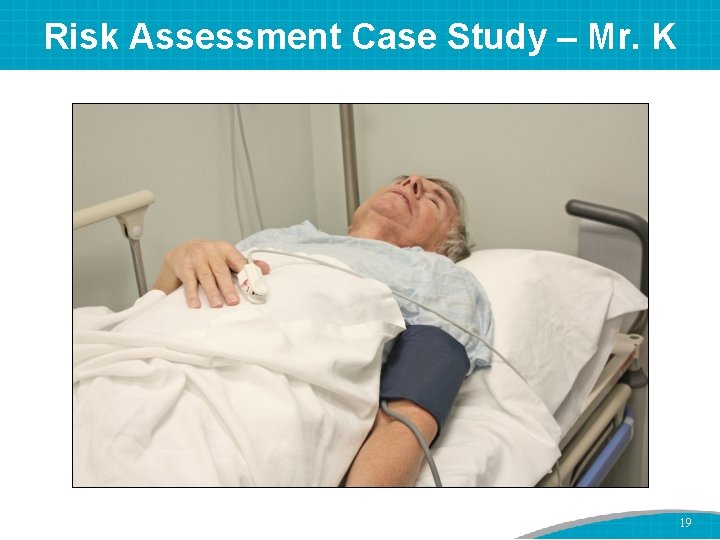
Risk Assessment Case Study – Mr. K 19
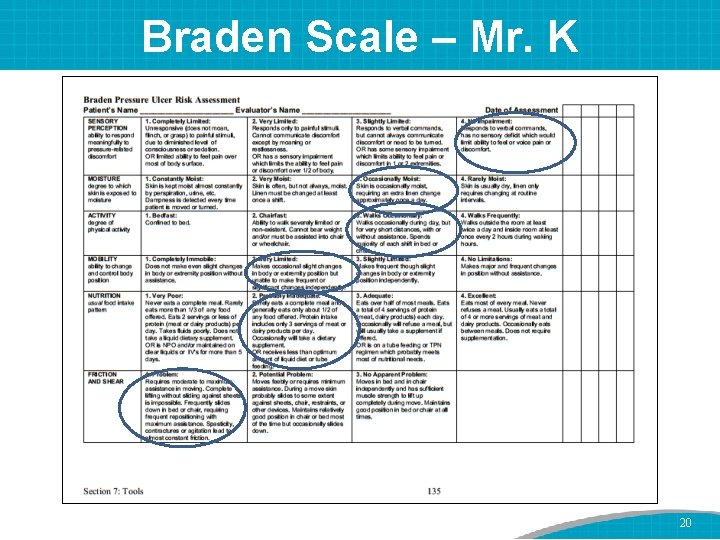
Braden Scale – Mr. K 20
How Often? • Recommendations vary. • In general acute care settings, do risk assessment upon admission, then daily or with a significant change in condition. • In critical care settings, frequent assessments should be done, such as at every shift. • For risk assessment in pediatrics. Page 46 21
Documentation • Have computerized (or paper) form in medical record. • Incorporate results in daily patient flowsheet. • Include results in patient report or handover. 22
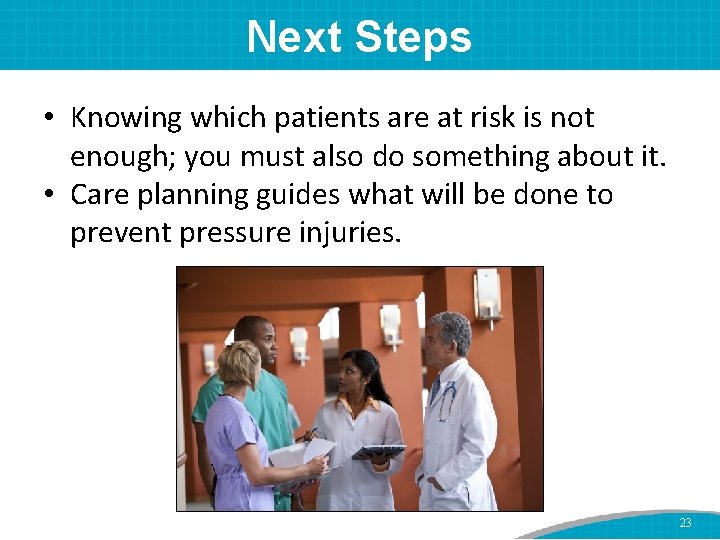
Next Steps • Knowing which patients are at risk is not enough; you must also do something about it. • Care planning guides what will be done to prevent pressure injuries. 23
BEST PRACTICE PRESSURE INJURY CARE PLANNING 24
Care Planning • A process to transfer the patient’s risk assessment information into an action plan to address his or her needs: – Implement care practices so that your patient does not develop a pressure injury. – Develop a care plan for any area of risk. – Tailor the plan to fit the patient’s needs. – Modify as needed to capture your patient’s response to interventions and any changes in condition. 25
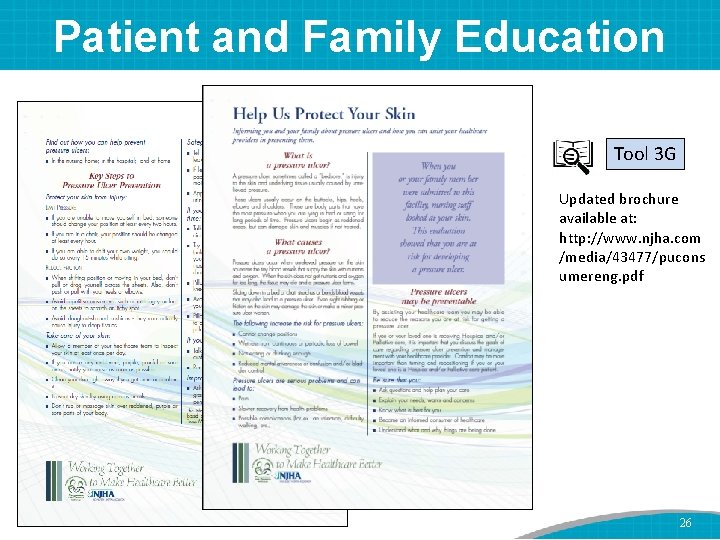
Patient and Family Education Tool 3 G Updated brochure available at: http: //www. njha. com /media/43477/pucons umereng. pdf 26
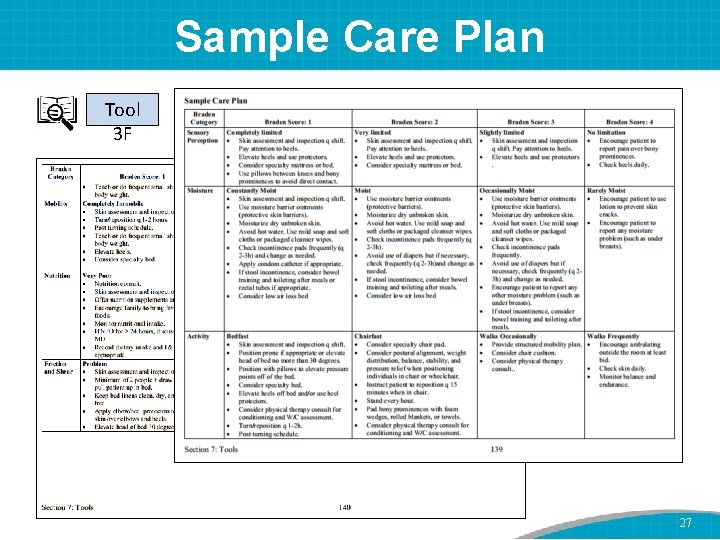
Sample Care Plan Tool 3 F 27
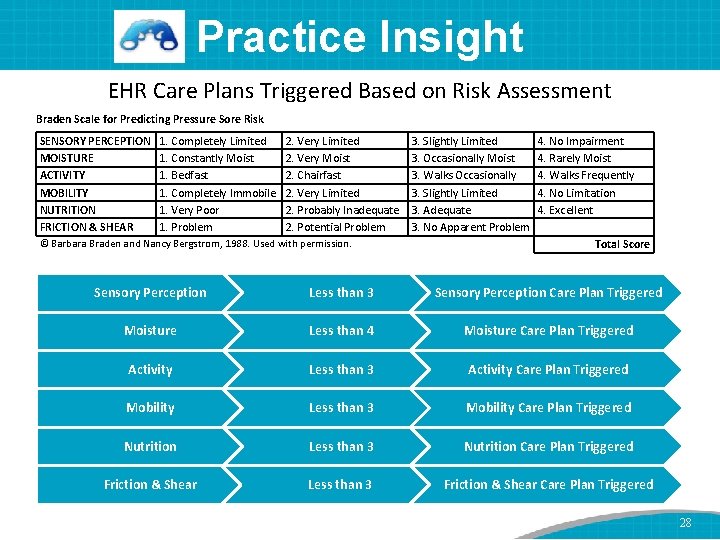
Practice Insight EHR Care Plans Triggered Based on Risk Assessment Braden Scale for Predicting Pressure Sore Risk SENSORY PERCEPTION MOISTURE ACTIVITY MOBILITY NUTRITION FRICTION & SHEAR 1. Completely Limited 1. Constantly Moist 1. Bedfast 1. Completely Immobile 1. Very Poor 1. Problem 2. Very Limited 2. Very Moist 2. Chairfast 2. Very Limited 2. Probably Inadequate 2. Potential Problem © Barbara Braden and Nancy Bergstrom, 1988. Used with permission. 3. Slightly Limited 3. Occasionally Moist 3. Walks Occasionally 3. Slightly Limited 3. Adequate 3. No Apparent Problem 4. No Impairment 4. Rarely Moist 4. Walks Frequently 4. No Limitation 4. Excellent Total Score Sensory Perception Less than 3 Sensory Perception Care Plan Triggered Moisture Less than 4 Moisture Care Plan Triggered Activity Less than 3 Activity Care Plan Triggered Mobility Less than 3 Mobility Care Plan Triggered Nutrition Less than 3 Nutrition Care Plan Triggered Friction & Shear Less than 3 Friction & Shear Care Plan Triggered 28
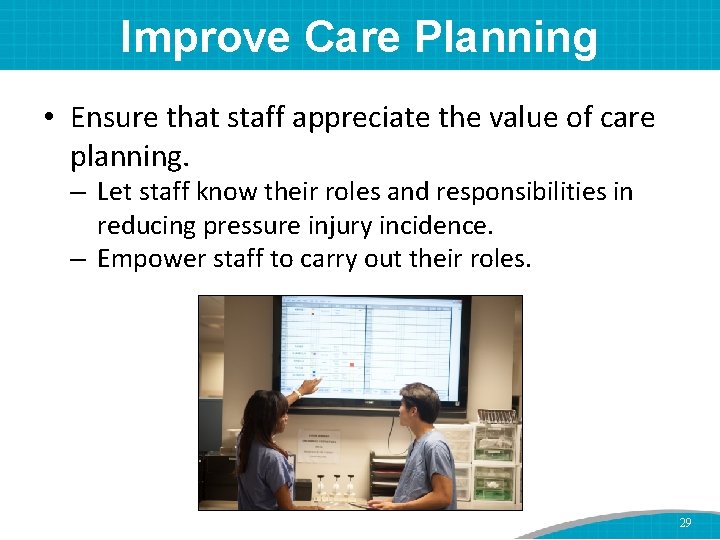
Improve Care Planning • Ensure that staff appreciate the value of care planning. – Let staff know their roles and responsibilities in reducing pressure injury incidence. – Empower staff to carry out their roles. 29
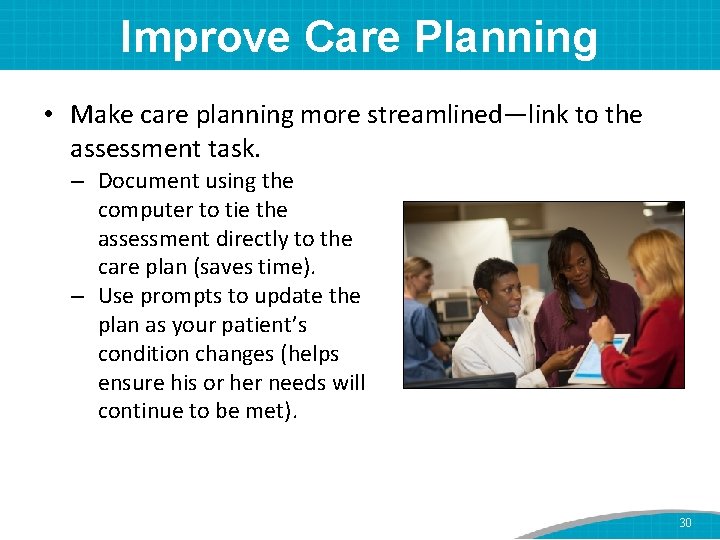
Improve Care Planning • Make care planning more streamlined—link to the assessment task. – Document using the computer to tie the assessment directly to the care plan (saves time). – Use prompts to update the plan as your patient’s condition changes (helps ensure his or her needs will continue to be met). 30
Improve Care Planning • Examples of prompts linked to routine practice: – Generate a reminder to conduct pressure injury risk assessment when a patient is in the OR for more than 4 hours. – Order support surfaces and skin care products for patients you identify as at risk. – Include the care plan in shift reports and patient handoffs. Remember: Let all levels of staff know what is required daily so they automatically carry out the task. 31

IDENTIFY YOUR BUNDLE OF BEST PRACTICES 32
Identify Best Practices • Comprehensive skin assessment • Standardized risk assessment: – Norton? Braden? Waterlow? – Another validated scale? • Care planning 33
Identify Best Practices • Comprehensive skin assessment: – Would you recommend that each admitted patient receive a skin assessment? – When would you recommend it get done again, if needed? – How do you want the assessment to be conducted? 34
Identify Best Practices • Risk assessment: – Which standardized risk assessment scale do you plan to use? – When do you plan to complete risk assessments? 35
Identify Best Practices • Care plan: – Does your current pressure injury planning process suffice for your prevention program? – Or should it be revised? If so, who will revise it? 36
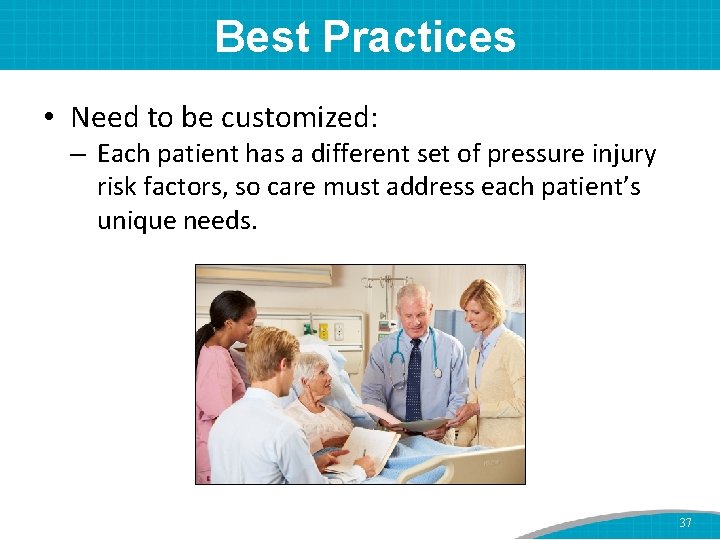
Best Practices • Need to be customized: – Each patient has a different set of pressure injury risk factors, so care must address each patient’s unique needs. 37
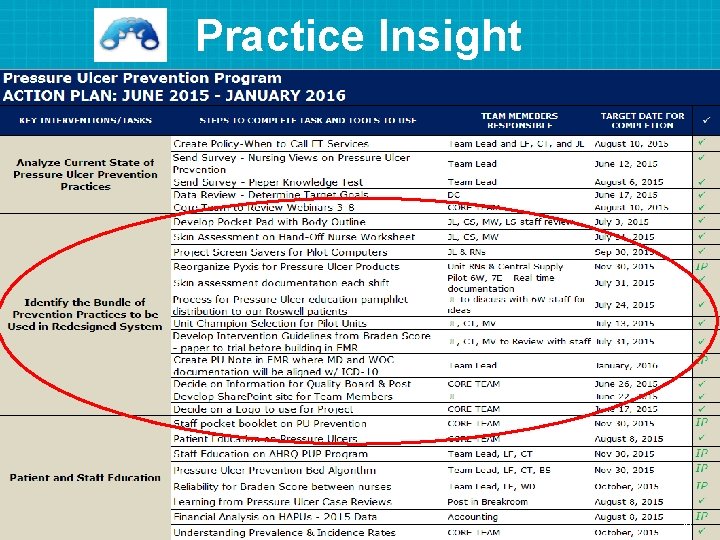
Practice Insight 38
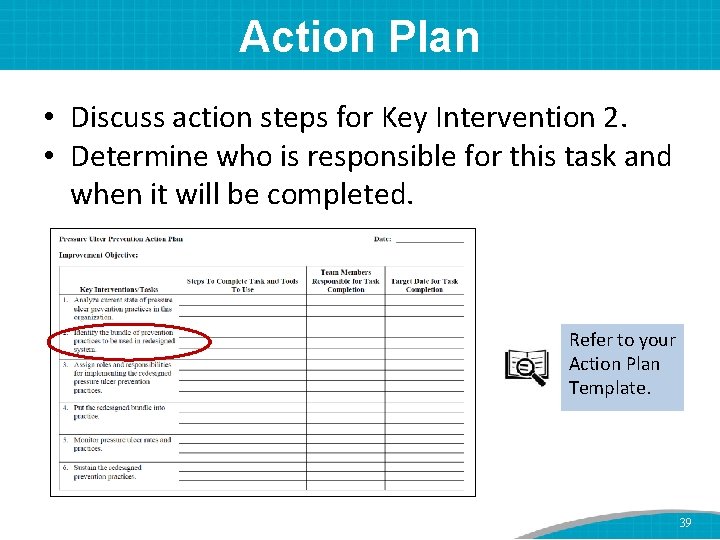
Action Plan • Discuss action steps for Key Intervention 2. • Determine who is responsible for this task and when it will be completed. Refer to your Action Plan Template. 39
Summary • We reviewed: – Comprehensive skin assessment. – Braden and Norton risk assessment tools. – Care planning. • You identified best practices for your hospital. • You completed Key Intervention 2 of the Action Plan. 40
- Slides: 40