
Best Practices in Learning Center Management NCLCA Institute
Best Practices in Learning Center Management NCLCA Institute July 2010 Dr. Lisa D’Adamo–Weinstein Director, Academic Support SUNY Empire State College, Northeast Center
Best practices in learning center management are difficult to define. Learning centers are multifaceted and complex, varying according to student demographics, institutional structures, facilities, funding, programs/services, staff expertise/size, and a myriad of other factors. This presentation will introduce participants to some models of best practices in order to spark conversation, promote reflection, provide insight, and point participants to resources to be explored within their own institutional contexts. http: //nclcainstitute 2010. pbworks. com Dr. Lisa D'Adamo-Weinstein Director, Academic Support SUNY Empire State College, Northeast Center 21 British American Blvd. Latham, NY 12110 518 -783 -6203 ext 5939 lisa@docdw. com Lisa. D’Adamo-Weinstein@esc. edu

Definitions of “Best Practices” • " Best practices refer to organizational, administrative, instructional, counseling, advising, and tutoring activities engaged in by highly successful developmental programs. These practices are typically validated by the research and the literature in developmental education. " ▫ Boylan, H. R. (2002). What Works: Research-based Practices in Developmental Education. Boone, NC: Continuous Quality Improvement Network with the National Center for Developmental Education, p. 3. • "Best Practices are defined as elements and activities that the institution perceives as congruent with its mission and the concomitant mission of its academic support center aka learning support center. " ▫ Christ, F. L. "Best Practices of Learning Support Centers, " a presentation at the 2005 Winter Institute, Austin, Texas, January 4, 2005. Bibliography on Best Practices can be found at: http: //www. lsche. net/resources/res_bibs_bestprac. htm
NCLCA defines a learning center as …a place where students can be taught to become more efficient and effective learners Learning Center services may include: �tutoring, �mentoring, �supplemental instruction, �academic and skill-building labs, �computer aided instruction, �success seminars/programs, �advising and more. Source: http: //www. nclca. org

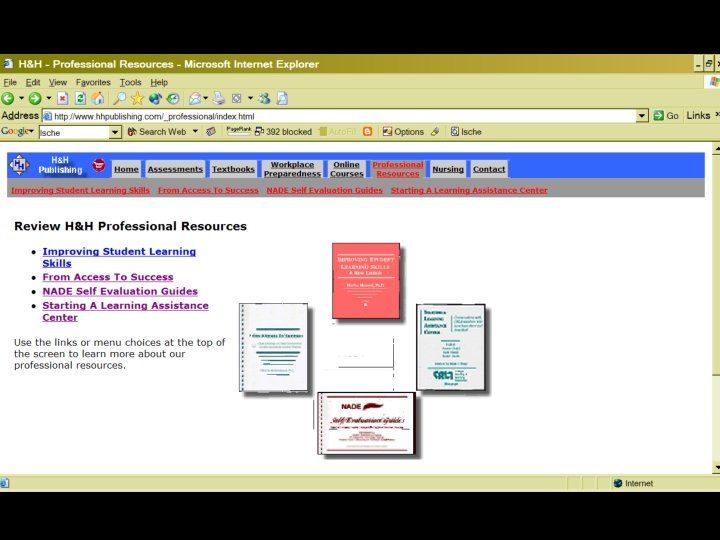
Successful Academic Support & Learning Assistance Programs include… * Proactive interventions, * Supportive environments, * Personalized support systems, * Small group tutorials, * Development of students’ basic learning skills, * Teaching of study skills and learning strategies in the context of academic content courses, * Opportunities to interact in informal settings and develop personal relationships with faculty, and * Opportunities to experience success. Adapted from: Maxwell, M. (1997). Improving Student Learning Skills. Clearwater, FL: H&H Publishing. Casazza, M. E. & Silverman, S. (1996). Learning Assistance and Developmental Education. San Francisco: Jossey-Bass.

Learning Center Management … Learning assistance program administrators must: • exercise authority over resources for which they are responsible to achieve their respective missions; • articulate a vision for their organization; • establish the program mission, policies, and procedures; • set goals and objectives; • prescribe and practice ethical behavior; • recruit, select, supervise and develop others in the learning assistance program; • manage, plan, budget and evaluate; • communicate effectively; and • marshal cooperative action from colleagues, employees, other institutional constituencies, and persons outside the organization. Program administrators must address individual, organizational, or environmental conditions that inhibit goal achievement. Program administrators must improve programs and services continuously in response to changing needs of students and institutional priorities. SOURCE: http: //www. nade. net/documents/Articles/CAS. Standards. pdf
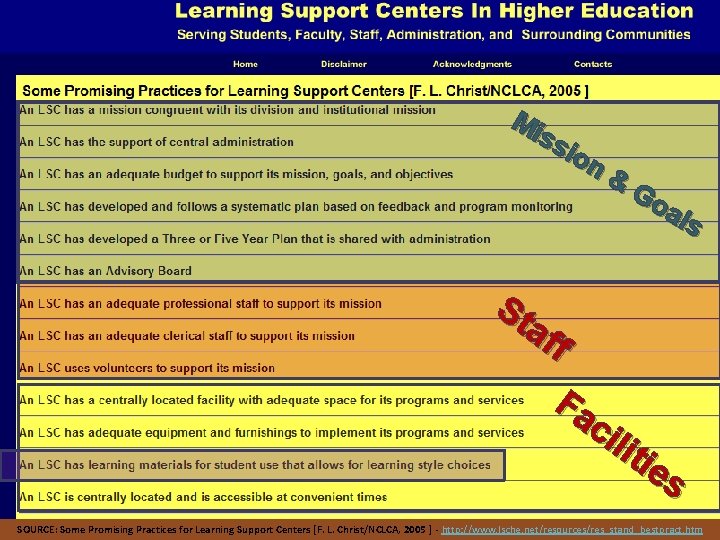
Mi ss ion & Go als St af f Fa cil iti es SOURCE: Some Promising Practices for Learning Support Centers [F. L. Christ/NCLCA, 2005 ] - http: //www. lsche. net/resources/res_stand_bestpract. htm
![SOURCE: Some Promising Practices for Learning Support Centers [F. L. Christ/NCLCA, 2005 ] -](http://slidetodoc.com/presentation_image_h2/2fff97415014dcd1f23d7ed82a47968f/image-8.jpg "SOURCE: Some Promising Practices for Learning Support Centers [F. L. Christ/NCLCA, 2005 ] -")
SOURCE: Some Promising Practices for Learning Support Centers [F. L. Christ/NCLCA, 2005 ] - http: //www. lsche. net/resources/res_stand_bestpract. htm
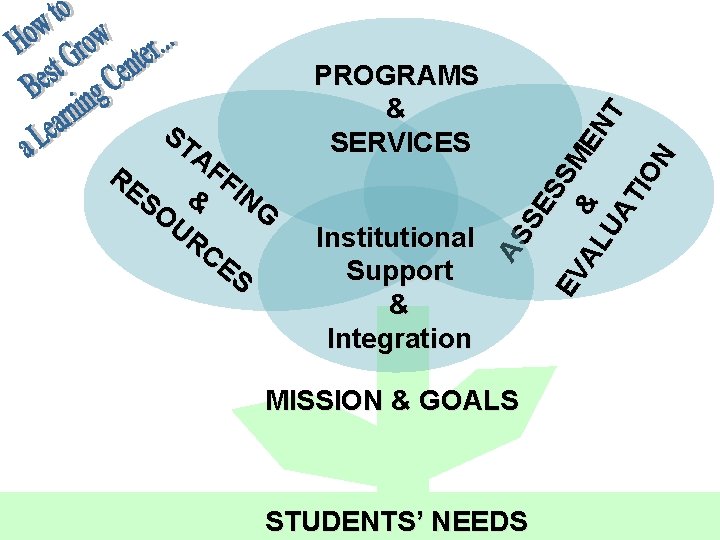
Institutional Support & Integration AS SE SS EV AL & MEN UA T TI ON ST AF RE FI SO & NG UR CE S PROGRAMS & SERVICES MISSION & GOALS STUDENTS’ NEEDS
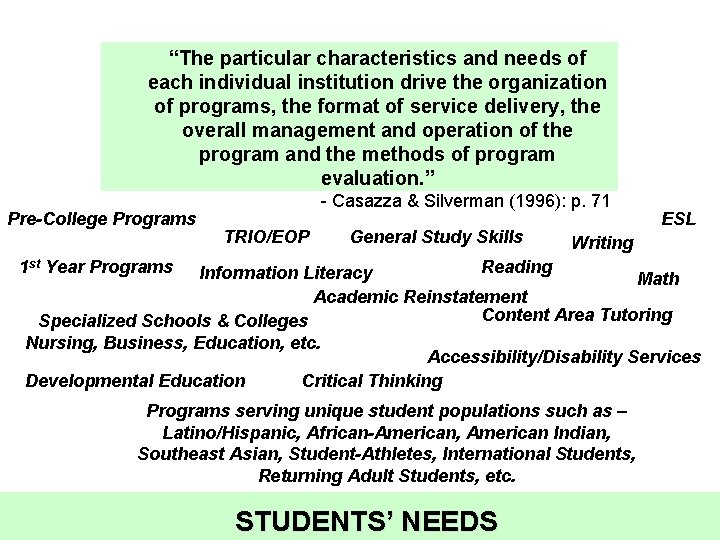
“The particular characteristics and needs of each individual institution drive the organization of programs, the format of service delivery, the overall management and operation of the program and the methods of program evaluation. ” Pre-College Programs - Casazza & Silverman (1996): p. 71 TRIO/EOP General Study Skills ESL Writing 1 st Year Programs Reading Information Literacy Math Academic Reinstatement Content Area Tutoring Specialized Schools & Colleges Nursing, Business, Education, etc. Accessibility/Disability Services Developmental Education Critical Thinking Programs serving unique student populations such as – Latino/Hispanic, African-American, American Indian, Southeast Asian, Student-Athletes, International Students, Returning Adult Students, etc. STUDENTS’ NEEDS
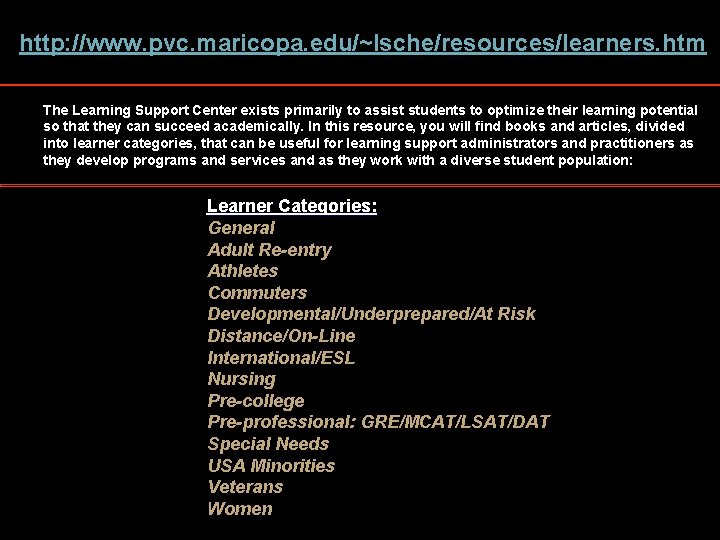
http: //www. pvc. maricopa. edu/~lsche/resources/learners. htm The Learning Support Center exists primarily to assist students to optimize their learning potential so that they can succeed academically. In this resource, you will find books and articles, divided into learner categories, that can be useful for learning support administrators and practitioners as they develop programs and services and as they work with a diverse student population: Learner Categories: General Adult Re-entry Athletes Commuters Developmental/Underprepared/At Risk Distance/On-Line International/ESL Nursing Pre-college Pre-professional: GRE/MCAT/LSAT/DAT Special Needs USA Minorities Veterans Women
Your Students: Defining Who, What, & How • Who are the students you serve in your LC? • What kinds of resources, programs, & services do they use? • How do you interact with them (F-2 -F, Online, Paper, E-mail, etc. )?
Your “Clients”: Refining Who, What, & How • Are there other students (staff, faculty, etc) you could serve in your LC? • What other kinds of resources, programs, & services do you wish you could offer? • How might you expand how you interact with students(F-2 -F, Online, Paper, Email, etc. )?
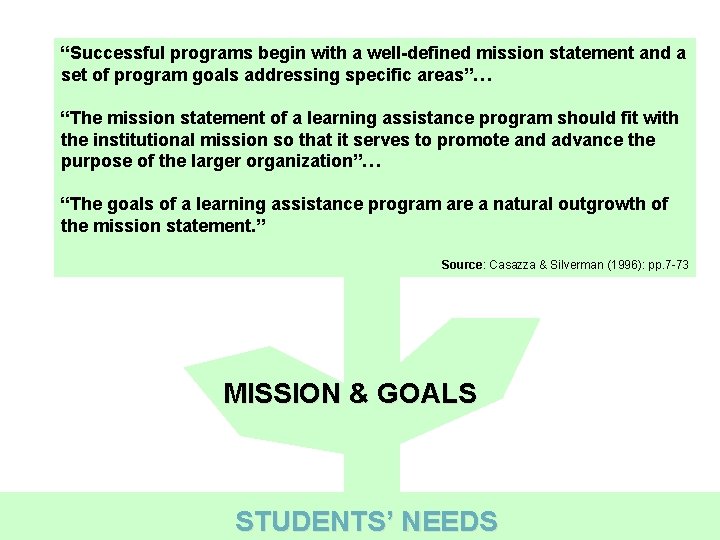
“Successful programs begin with a well-defined mission statement and a set of program goals addressing specific areas”… “The mission statement of a learning assistance program should fit with the institutional mission so that it serves to promote and advance the purpose of the larger organization”… “The goals of a learning assistance program are a natural outgrowth of the mission statement. ” Source: Casazza & Silverman (1996): pp. 7 -73 MISSION & GOALS STUDENTS’ NEEDS
Activity: Mission & Goals • Do you have a mission statement for your learning center? If so, is it tied closely to your institutional mission? When is the last time you reviewed/renewed it? • If you don’t have one, what are some ideas, elements, etc. that you would want to include?
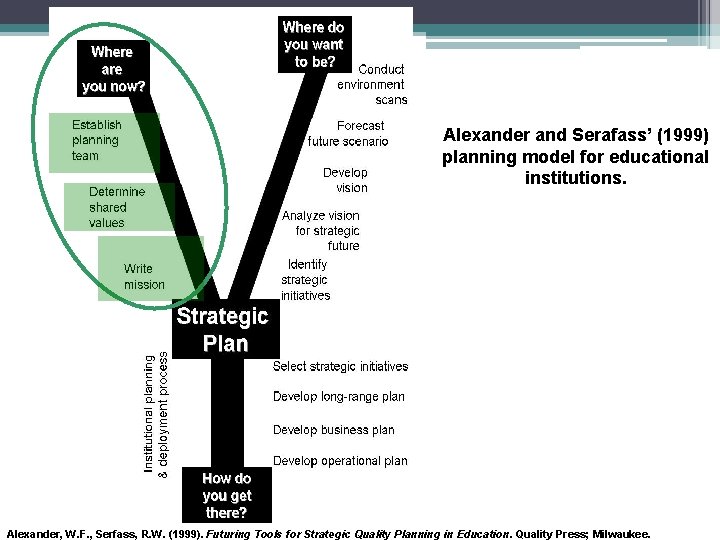
Alexander and Serafass’ (1999) planning model for educational institutions. Alexander, W. F. , Serfass, R. W. (1999). Futuring Tools for Strategic Quality Planning in Education. Quality Press; Milwaukee.
USMA MISSION To educate, train, and inspire the Corps of Cadets so that each graduate is a commissioned leader of character committed to the values of Duty, Honor, Country; professional growth throughout a career as an officer in the United States Army; and a lifetime of selfless service to the Nation.
We contribute to the purpose and mission of the United States Military Academy by committing ourselves to developing the. full potential of the United States Corps of Cadets through comprehensive performance psychology and academic skills training We pursue this vision by teaching a unique combination of reading, study and applied performance psychology skills that assist cadets in becoming self-directed learners We empower cadets to actively pursue their full academic, physical/athletic and military potential
Academic Excellence Program (AEP) AEP Mission We are a team passionate about cadet success. As learning excellence professionals, we teach and model comprehensive academic success strategies focusing on all cadets. We live what we teach for our cadets and each other. AEP Pedagogical Emphasis AEP programs and services focus on cadets’ • Academic success • Learning experiences • First-year transitional needs • Leadership development AEP programs and services emphasize learning that is • Self-directed • Intentional • Life-long
Empire State College Mission& Commitments The Mission of Empire State College • Empire State College enables motivated adults, regardless of geography or life circumstance, circumstance to design a rigorous, individualized academic program and earn a college degree. The Commitments of Empire State College • To support self-directed, self-directed intellectually curious learners who collaborate with faculty mentors. • To document, evaluate and award credit for an adult’s prior college-level life learning. • To offer each student an array of learning experiences through independent study, seminars, short -term residencies, and online courses. • To develop, implement and assess new approaches to learning that recognize the strengths and needs of adult learners • To provide access to degree programs at multiple locations in New York state and abroad, and through the World Wide Web • To expand degree opportunities for adult learners through partnerships with employers and unions, government agencies and the armed forces, and community organizations and educational institutions.
Vision, Values, & Mission Statement Vision Supportive and Welcoming Environments… • Creating both physical and virtual spaces for students, staff and faculty to interact, utilize/co-create academic support resources, and achieve academic and pedagogical goals. Ethos of Interactions … • Supporting, encouraging, and empowering adult learners to experience success and become independent, self advocating, and resourceful learners. Supporting faculty in their work with their students through collaboration, communication, and assisting students become life-long learners. Commitment to Excellence… • Constantly striving to not only meet but also exceed the needs and expectations of the students, staff and faculty. Never being complacent, and performing periodic reviews of the services and resources made available to the students, staff and faculty in order to improve offerings. Maintaining the Cutting Edge and Leading by Example • Staying professionally active at the local, college, and national levels in the fields of higher education, technology, and learning assistance. Innovating new resources and services based on the needs and demands of students, staff and faculty. Values Whether developing learning strategies, mastering new material, refreshing skills, enhancing already good study skills, or providing a support network, the Office of Academic Support works with students, staff, and faculty to support students’ academic and life management success. All resources and services emphasize learning that is self-directed, intentional, and life-long, focusing on academic success, learning/life experiences, first-term transitional needs, and academic/study skills development.
Academic Support @ NEC MISSION • To support all students in becoming successful independent, self-directed, & life-long learners. • To establish physical & virtual learning environments fostering respect and access for all students. • To work with students, staff and faculty assuming that willing students can reach & even exceed their academic potential with appropriate resources & academic strategies assistance. • To deliver individualized & group academic support in face-to-face, telephonic & online formats. • To provide a comprehensive array of academic support resources and services designed to assist adult learners to successfully accomplish their many & varied academic tasks. STUDENT OUTCOMES • Increase their self-confidence • Become more independent learners • Decrease stress levels • Achieve their academic goals • Complete assignments well & in a timely manner • Achieve/exceed their potential • Become more aware of how they learn best • Become better able to define and solve problems • Develop their academic success and study skills • Increase their knowledge of how to adapt learning strategies for different learning engagements • Improve their academic performance, including basic academic skills development • Become more comfortable in using technology and web resources
Mission SUNY Empire State College’s dedicated faculty and staff use innovative, alternative and flexible approaches to higher education that transform people and communities by providing rigorous programs that connect individuals’ unique and diverse lives to their personal learning goals.
Northeast Center Office of Academic Support Mission The staff of the Northeast Center Office of Academic Support operate as a collaborative team, striving to establish a friendly welcoming learning environment for all students. We support students in becoming successful independent learners through a comprehensive array of services and resources tailored to students’ individual academic needs and goals. We deliver these services and resources via individualized and group programming in face-to-face, telephonic and virtual formats. We work with students, staff and faculty with the expectation that willing students can reach and exceed their academic potential with appropriate assistance.
Northeast Center Office of Academic Support Student Outcomes As a result of utilizing the services and resources of the NEC Office of Academic Support, students will be able to: • Identify and manage their learning strengths and challenges, • Incorporate traditional and technology-based resources in their learning, • Use effective strategies in different learning engagements, • Create positive learning environments for themselves, • Increase their self-confidence while decreasing stress, and • Improve their academic performance and development as a life-long learner.
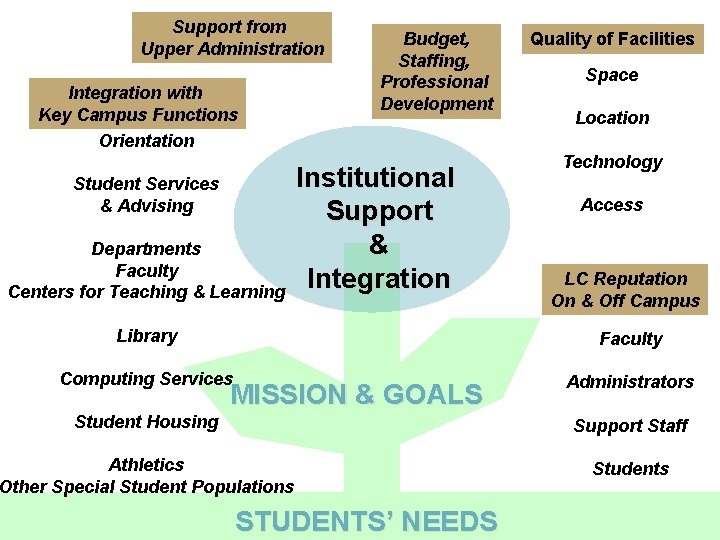
Support from Upper Administration Integration with Key Campus Functions Orientation Student Services & Advising Departments Faculty Centers for Teaching & Learning Budget, Staffing, Professional Development Institutional Support & Integration Library Quality of Facilities Space Location Technology Access LC Reputation On & Off Campus Faculty Computing Services Administrators Student Housing Support Staff Athletics Other Special Student Populations Students MISSION & GOALS STUDENTS’ NEEDS
SWOT: Institutional Support & Integration STRENGTHS WEAKNESSES OPPORTUNITIES THREATS
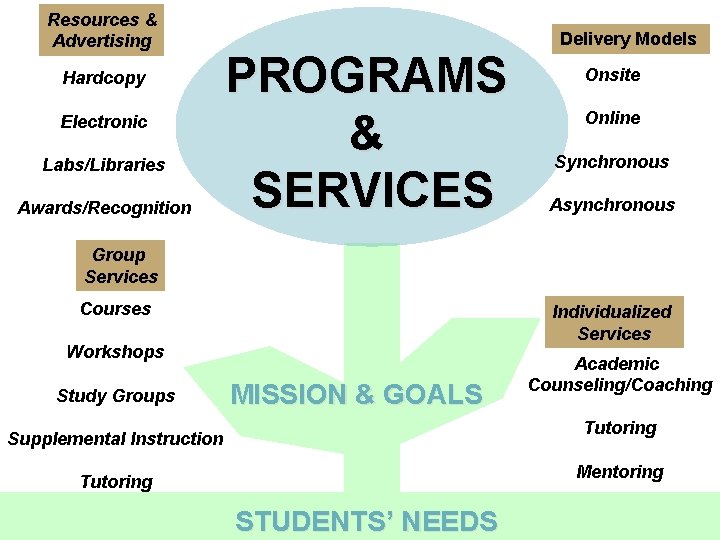
Resources & Advertising Hardcopy Electronic Labs/Libraries Awards/Recognition PROGRAMS & SERVICES Delivery Models Onsite Online Synchronous Asynchronous Group Services Courses Individualized Services Workshops Study Groups MISSION & GOALS Academic Counseling/Coaching Tutoring Supplemental Instruction Mentoring Tutoring STUDENTS’ NEEDS
Activity: TYPES of SERVICES • What types do you offer? • What would you like to offer?
SWOT: Programs & Services - Existing STRENGTHS WEAKNESSES OPPORTUNITIES THREATS
SWOT: Programs & Services - Desired STRENGTHS WEAKNESSES OPPORTUNITIES THREATS
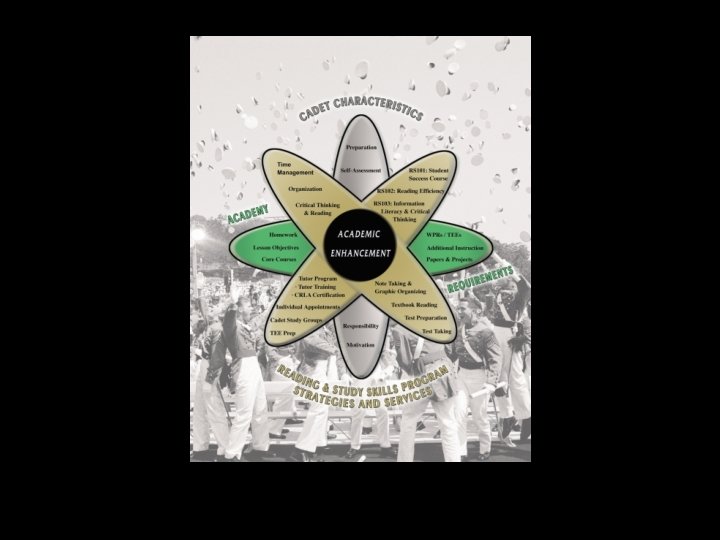
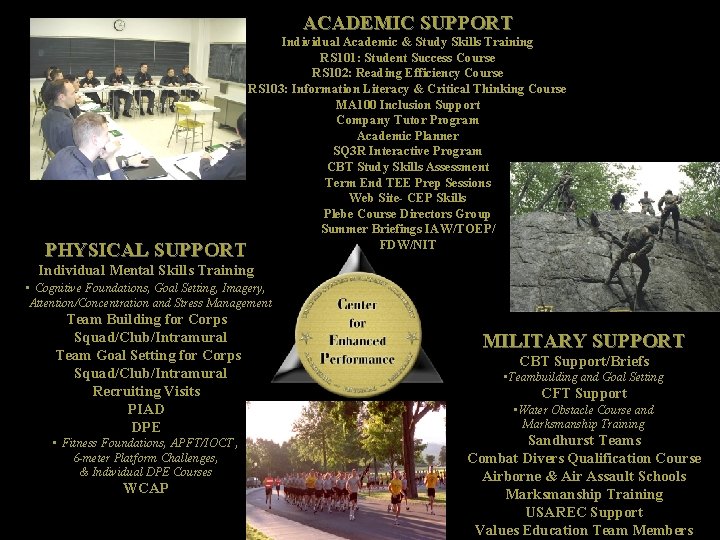
ACADEMIC SUPPORT PHYSICAL SUPPORT Individual Academic & Study Skills Training RS 101: Student Success Course RS 102: Reading Efficiency Course RS 103: Information Literacy & Critical Thinking Course MA 100 Inclusion Support Company Tutor Program Academic Planner SQ 3 R Interactive Program CBT Study Skills Assessment Term End TEE Prep Sessions Web Site- CEP Skills Plebe Course Directors Group Summer Briefings IAW/TOEP/ FDW/NIT Individual Mental Skills Training • Cognitive Foundations, Goal Setting, Imagery, Attention/Concentration and Stress Management Team Building for Corps Squad/Club/Intramural Team Goal Setting for Corps Squad/Club/Intramural Recruiting Visits PIAD DPE • Fitness Foundations, APFT/IOCT , 6 -meter Platform Challenges, & Individual DPE Courses WCAP MILITARY SUPPORT CBT Support/Briefs • Teambuilding and Goal Setting CFT Support • Water Obstacle Course and Marksmanship Training Sandhurst Teams Combat Divers Qualification Course Airborne & Air Assault Schools Marksmanship Training USAREC Support Values Education Team Members
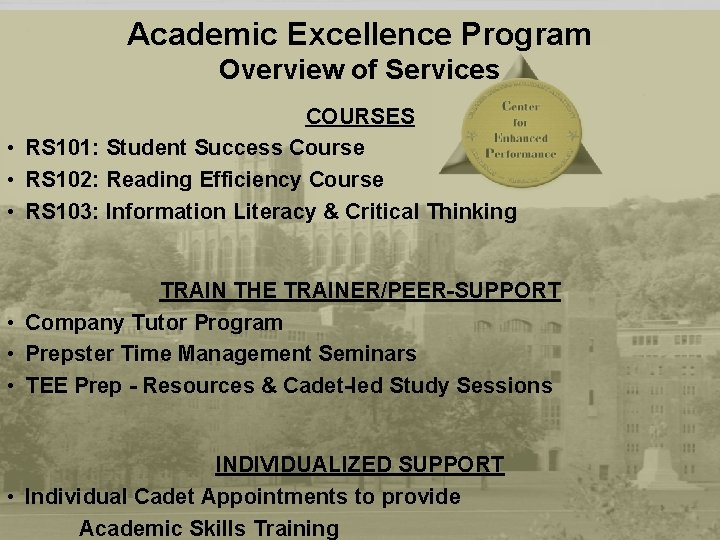
Academic Excellence Program Overview of Services COURSES • RS 101: Student Success Course • RS 102: Reading Efficiency Course • RS 103: Information Literacy & Critical Thinking TRAIN THE TRAINER/PEER-SUPPORT • Company Tutor Program • Prepster Time Management Seminars • TEE Prep - Resources & Cadet-led Study Sessions INDIVIDUALIZED SUPPORT • Individual Cadet Appointments to provide Academic Skills Training
Academic Support @ NEC Helping You Connect the Pieces for Academic Success Services & Resources Learning Coaches & Content Tutors • One-to-one appointments in person or via phone, e-mail, Internet, etc. • Workshops (online & onsite) • Small group assistance (online & onsite) • Online Content Area Tutoring – Smarthinking (www. esc. edu/smarthinking) Online Support • ANGEL Community Group - NEC Academic Support http: //www. esc. edu/ole • Log in with your My. ESC Username & Password • A self-paced or credit-bearing study & resources http: //Academic. Eye. pbworks. com • On Facebook - NEC Academic Support & Student Services
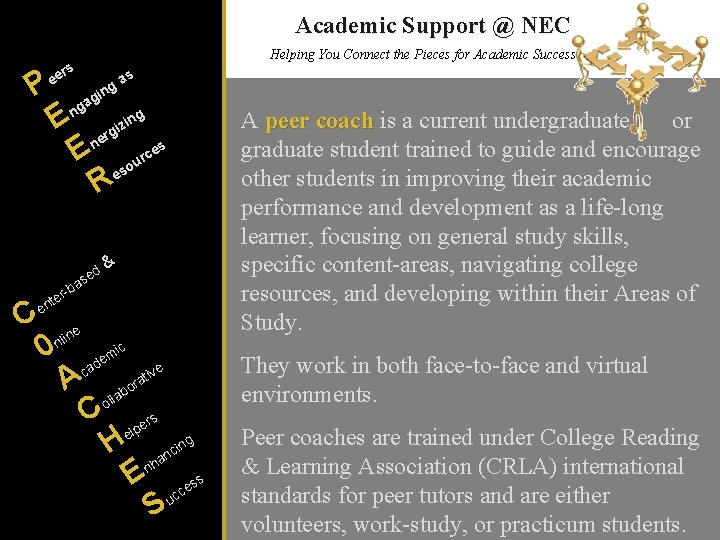
Academic Support @ NEC Helping You Connect the Pieces for Academic Success s r ee P ag ng E as ing A peer coach is a current undergraduate or graduate student trained to guide and encourage other students in improving their academic performance and development as a life-long learner, focusing on general study skills, specific content-areas, navigating college resources, and developing within their Areas of Study. ng i giz er En sources Re ed as & r-b e t en C 0 ne nli c A mi e ad c o ab l l o C They work in both face-to-face and virtual environments. ve ti ra s er p l e H g cin n ha En ccess Su Peer coaches are trained under College Reading & Learning Association (CRLA) international standards for peer tutors and are either volunteers, work-study, or practicum students.
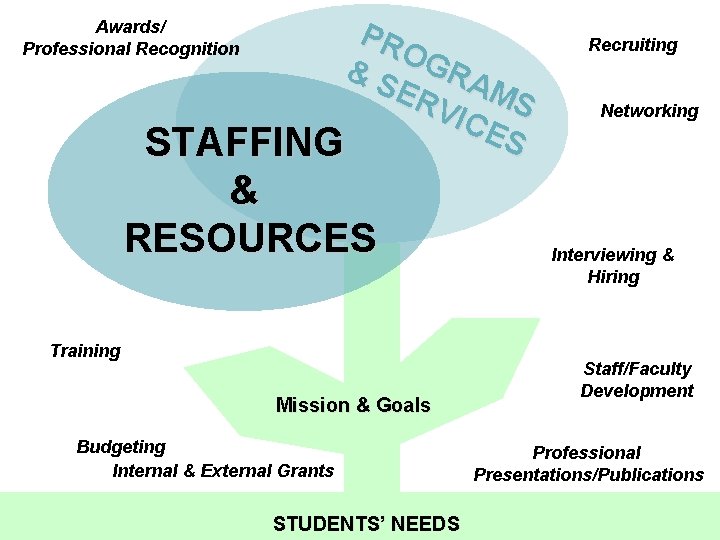
PR OG &S RA MS ER VIC E S STAFFING Awards/ Professional Recognition & RESOURCES Training Mission & Goals Budgeting Internal & External Grants STUDENTS’ NEEDS Recruiting Networking Interviewing & Hiring Staff/Faculty Development Professional Presentations/Publications
SWOT: Staffing & Resources - Existing STRENGTHS WEAKNESSES OPPORTUNITIES THREATS
SWOT: Staffing & Resources - Desired STRENGTHS WEAKNESSES OPPORTUNITIES THREATS

Meet the NEC Academic Support Team
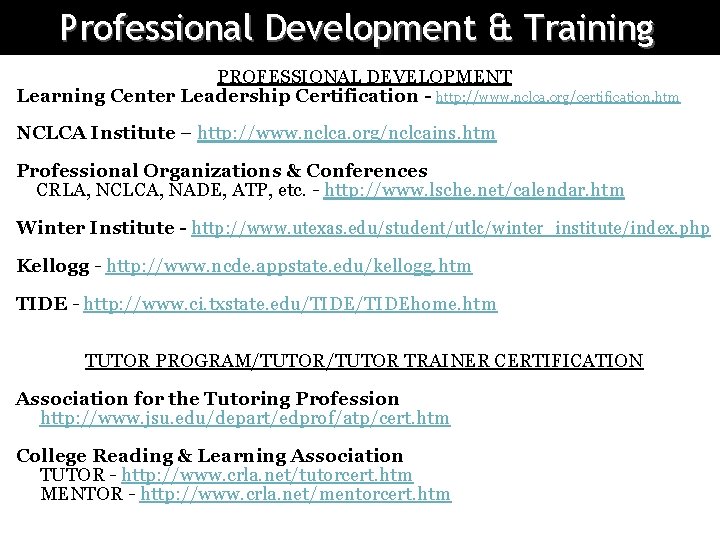
Professional Development & Training PROFESSIONAL DEVELOPMENT Learning Center Leadership Certification - http: //www. nclca. org/certification. htm NCLCA Institute – http: //www. nclca. org/nclcains. htm Professional Organizations & Conferences CRLA, NCLCA, NADE, ATP, etc. - http: //www. lsche. net/calendar. htm Winter Institute - http: //www. utexas. edu/student/utlc/winter_institute/index. php Kellogg - http: //www. ncde. appstate. edu/kellogg. htm TIDE - http: //www. ci. txstate. edu/TIDEhome. htm TUTOR PROGRAM/TUTOR TRAINER CERTIFICATION Association for the Tutoring Profession http: //www. jsu. edu/depart/edprof/atp/cert. htm College Reading & Learning Association TUTOR - http: //www. crla. net/tutorcert. htm MENTOR - http: //www. crla. net/mentorcert. htm
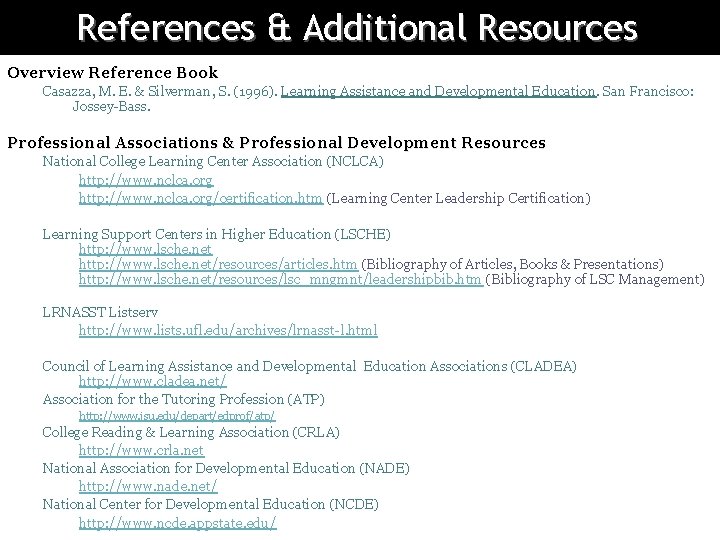
References & Additional Resources Overview Reference Book Casazza, M. E. & Silverman, S. (1996). Learning Assistance and Developmental Education. San Francisco: Jossey-Bass. Professional Associations & Professional Development Resources National College Learning Center Association (NCLCA) http: //www. nclca. org/certification. htm (Learning Center Leadership Certification) Learning Support Centers in Higher Education (LSCHE) http: //www. lsche. net/resources/articles. htm (Bibliography of Articles, Books & Presentations) http: //www. lsche. net/resources/lsc_mngmnt/leadershipbib. htm (Bibliography of LSC Management) LRNASST Listserv http: //www. lists. ufl. edu/archives/lrnasst-l. html Council of Learning Assistance and Developmental Education Associations (CLADEA) http: //www. cladea. net/ Association for the Tutoring Profession (ATP) http: //www. jsu. edu/depart/edprof/atp/ College Reading & Learning Association (CRLA) http: //www. crla. net National Association for Developmental Education (NADE) http: //www. nade. net/ National Center for Developmental Education (NCDE) http: //www. ncde. appstate. edu/
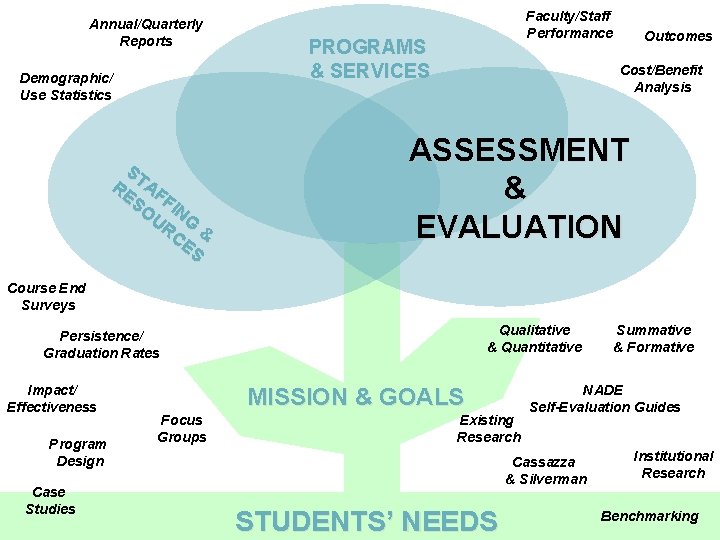
Annual/Quarterly Reports Demographic/ Use Statistics ST RE AF SO FIN UR G CE & S Faculty/Staff Performance PROGRAMS & SERVICES Outcomes Cost/Benefit Analysis ASSESSMENT & EVALUATION Course End Surveys Qualitative & Quantitative Persistence/ Graduation Rates Impact/ Effectiveness Program Design Case Studies MISSION & GOALS Focus Groups Existing Research NADE Self-Evaluation Guides Cassazza & Silverman STUDENTS’ NEEDS Summative & Formative Institutional Research Benchmarking
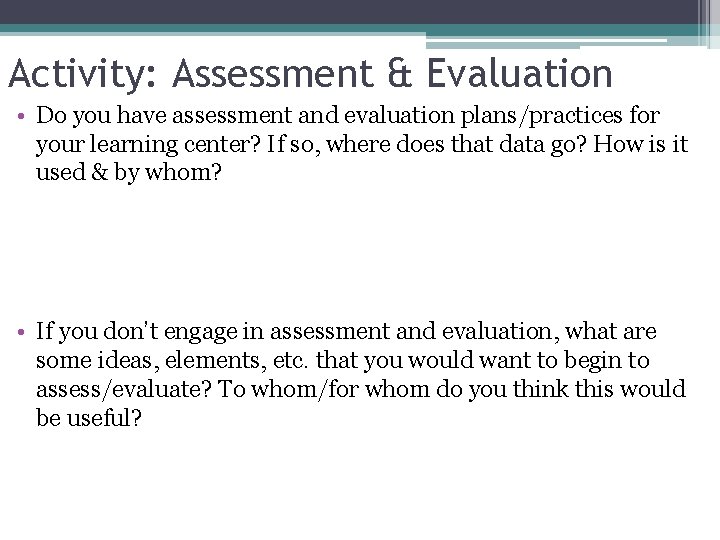
Activity: Assessment & Evaluation • Do you have assessment and evaluation plans/practices for your learning center? If so, where does that data go? How is it used & by whom? • If you don’t engage in assessment and evaluation, what are some ideas, elements, etc. that you would want to begin to assess/evaluate? To whom/for whom do you think this would be useful?
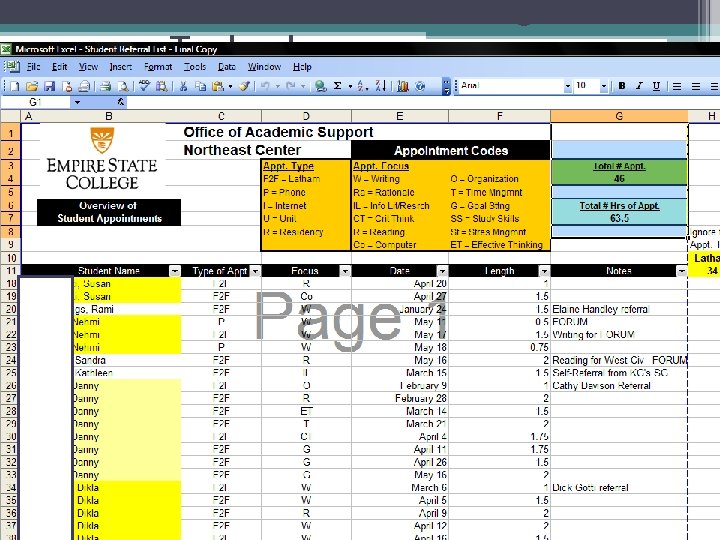
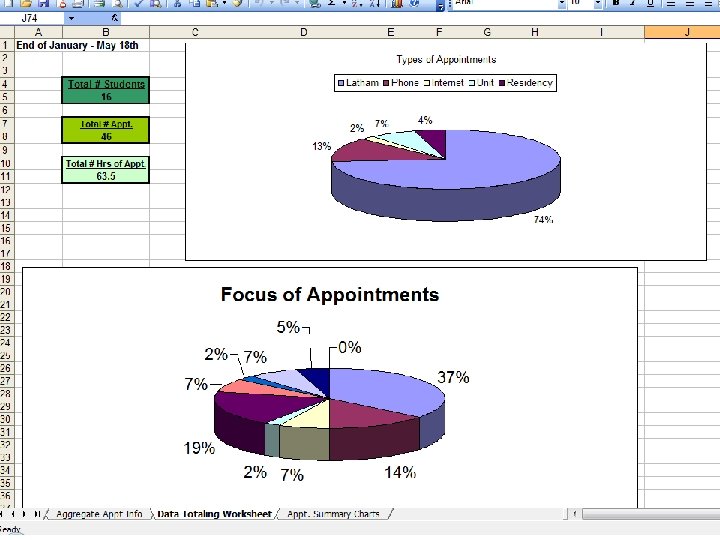
Database with Existing Technology • EXCEL
First Annual Report @ In this report, you will find the following: • Vision, Values, & Mission Statements • Original Charge to DAS Group from Joyce Elliot • Initial Performance Plan & Appraisal • Significant Activities & Achievements -- January 2007 – February 2008 • Budget requests for 2007 -2008 and 2008 -2009 • Future Goals, Enhancements, & Initiatives Access copy of report by following the Best Practices Link on nclcainstitute 2010. pbworks. com
CAS Standards for Learning Centers Part 1. MISSION The learning assistance program must develop, record, disseminate, implement and regularly review its mission and goals. The learning assistance mission statement must be consistent with the mission and goals of the institution and with the standards of this document. The mission statement must address the purpose of the learning assistance program, the population it serves, the programs and services it provides, and the goals the program is to accomplish. Part 2. PROGRAM The learning assistance program must be (a) intentional; (b) coherent; (c) based on theories and knowledge of learning and human development; (d) reflective of developmental and demographic profiles of the student population; and (e) responsive to the special needs of individuals. Part 3. LEADERSHIP Learning assistance program administrators must be selected on the basis of formal education and training, relevant work experience, personal attributes and other professional credentials. Institutions must determine expectations of accountability for learning assistance program administrators and fairly assess their performance.
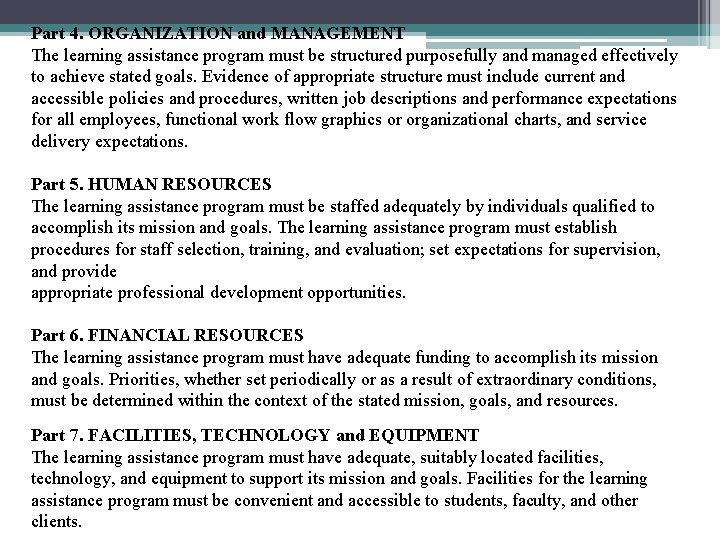
Part 4. ORGANIZATION and MANAGEMENT The learning assistance program must be structured purposefully and managed effectively to achieve stated goals. Evidence of appropriate structure must include current and accessible policies and procedures, written job descriptions and performance expectations for all employees, functional work flow graphics or organizational charts, and service delivery expectations. Part 5. HUMAN RESOURCES The learning assistance program must be staffed adequately by individuals qualified to accomplish its mission and goals. The learning assistance program must establish procedures for staff selection, training, and evaluation; set expectations for supervision, and provide appropriate professional development opportunities. Part 6. FINANCIAL RESOURCES The learning assistance program must have adequate funding to accomplish its mission and goals. Priorities, whether set periodically or as a result of extraordinary conditions, must be determined within the context of the stated mission, goals, and resources. Part 7. FACILITIES, TECHNOLOGY and EQUIPMENT The learning assistance program must have adequate, suitably located facilities, technology, and equipment to support its mission and goals. Facilities for the learning assistance program must be convenient and accessible to students, faculty, and other clients.
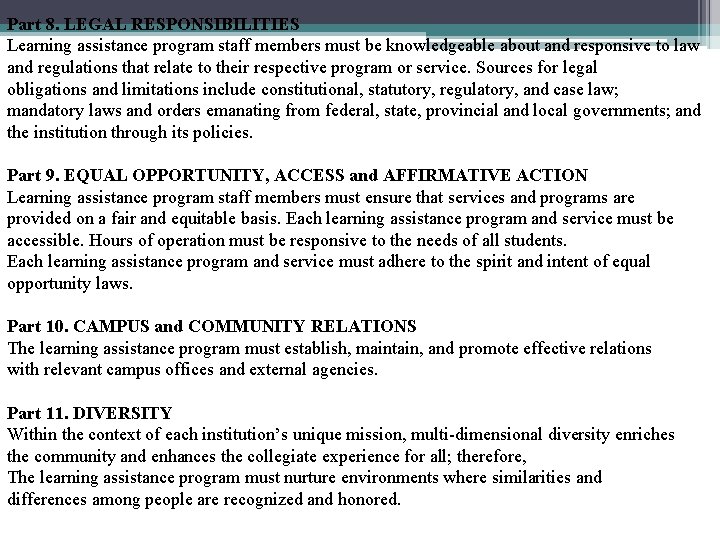
Part 8. LEGAL RESPONSIBILITIES Learning assistance program staff members must be knowledgeable about and responsive to law and regulations that relate to their respective program or service. Sources for legal obligations and limitations include constitutional, statutory, regulatory, and case law; mandatory laws and orders emanating from federal, state, provincial and local governments; and the institution through its policies. Part 9. EQUAL OPPORTUNITY, ACCESS and AFFIRMATIVE ACTION Learning assistance program staff members must ensure that services and programs are provided on a fair and equitable basis. Each learning assistance program and service must be accessible. Hours of operation must be responsive to the needs of all students. Each learning assistance program and service must adhere to the spirit and intent of equal opportunity laws. Part 10. CAMPUS and COMMUNITY RELATIONS The learning assistance program must establish, maintain, and promote effective relations with relevant campus offices and external agencies. Part 11. DIVERSITY Within the context of each institution’s unique mission, multi-dimensional diversity enriches the community and enhances the collegiate experience for all; therefore, The learning assistance program must nurture environments where similarities and differences among people are recognized and honored.
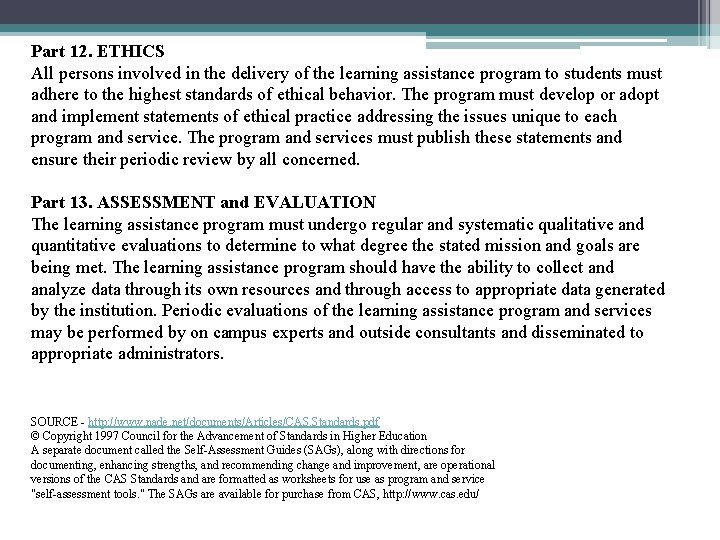
Part 12. ETHICS All persons involved in the delivery of the learning assistance program to students must adhere to the highest standards of ethical behavior. The program must develop or adopt and implement statements of ethical practice addressing the issues unique to each program and service. The program and services must publish these statements and ensure their periodic review by all concerned. Part 13. ASSESSMENT and EVALUATION The learning assistance program must undergo regular and systematic qualitative and quantitative evaluations to determine to what degree the stated mission and goals are being met. The learning assistance program should have the ability to collect and analyze data through its own resources and through access to appropriate data generated by the institution. Periodic evaluations of the learning assistance program and services may be performed by on campus experts and outside consultants and disseminated to appropriate administrators. SOURCE - http: //www. nade. net/documents/Articles/CAS. Standards. pdf © Copyright 1997 Council for the Advancement of Standards in Higher Education A separate document called the Self-Assessment Guides (SAGs), along with directions for documenting, enhancing strengths, and recommending change and improvement, are operational versions of the CAS Standards and are formatted as worksheets for use as program and service "self-assessment tools. " The SAGs are available for purchase from CAS, http: //www. cas. edu/
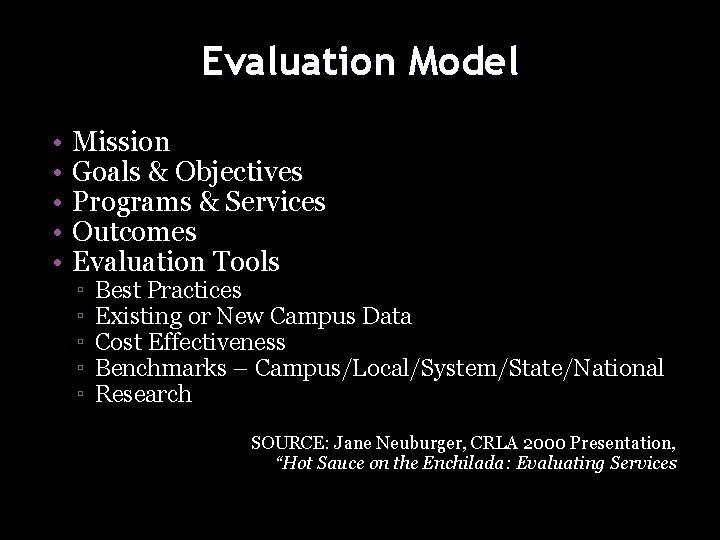
Evaluation Model • • • Mission Goals & Objectives Programs & Services Outcomes Evaluation Tools ▫ ▫ ▫ Best Practices Existing or New Campus Data Cost Effectiveness Benchmarks – Campus/Local/System/State/National Research SOURCE: Jane Neuburger, CRLA 2000 Presentation, “Hot Sauce on the Enchilada: Evaluating Services
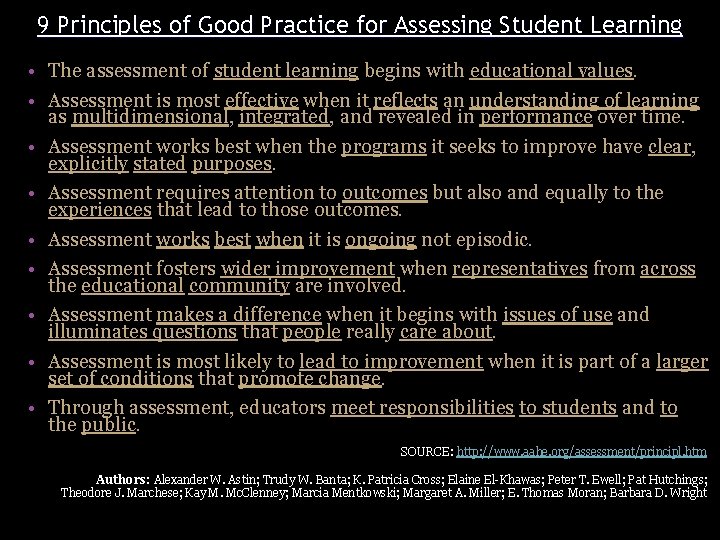
9 Principles of Good Practice for Assessing Student Learning • The assessment of student learning begins with educational values. • Assessment is most effective when it reflects an understanding of learning as multidimensional, integrated, and revealed in performance over time. • Assessment works best when the programs it seeks to improve have clear, explicitly stated purposes. • Assessment requires attention to outcomes but also and equally to the experiences that lead to those outcomes. • Assessment works best when it is ongoing not episodic. • Assessment fosters wider improvement when representatives from across the educational community are involved. • Assessment makes a difference when it begins with issues of use and illuminates questions that people really care about. • Assessment is most likely to lead to improvement when it is part of a larger set of conditions that promote change. • Through assessment, educators meet responsibilities to students and to the public. SOURCE: http: //www. aahe. org/assessment/principl. htm Authors: Alexander W. Astin; Trudy W. Banta; K. Patricia Cross; Elaine El-Khawas; Peter T. Ewell; Pat Hutchings; Theodore J. Marchese; Kay M. Mc. Clenney; Marcia Mentkowski; Margaret A. Miller; E. Thomas Moran; Barbara D. Wright
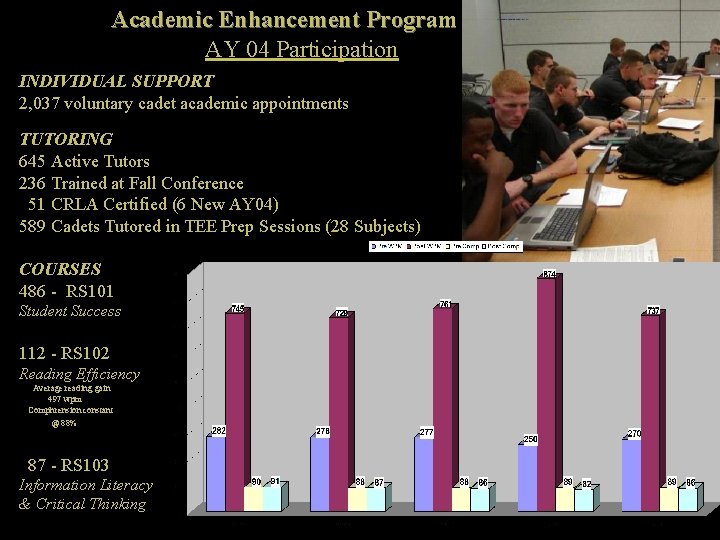
Academic Enhancement Program AY 04 Participation INDIVIDUAL SUPPORT 2, 037 voluntary cadet academic appointments TUTORING 645 Active Tutors 236 Trained at Fall Conference 51 CRLA Certified (6 New AY 04) 589 Cadets Tutored in TEE Prep Sessions (28 Subjects) COURSES 486 - RS 101 Student Success 112 - RS 102 Reading Efficiency Average reading gain 497 wpm Comphrension constant @ 88% 87 - RS 103 Information Literacy & Critical Thinking
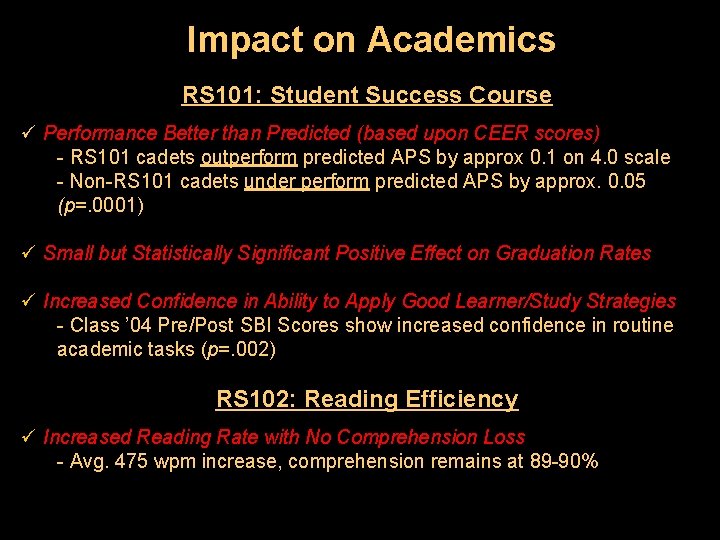
Impact on Academics RS 101: Student Success Course ü Performance Better than Predicted (based upon CEER scores) - RS 101 cadets outperform predicted APS by approx 0. 1 on 4. 0 scale - Non-RS 101 cadets under perform predicted APS by approx. 0. 05 (p=. 0001) ü Small but Statistically Significant Positive Effect on Graduation Rates ü Increased Confidence in Ability to Apply Good Learner/Study Strategies - Class ’ 04 Pre/Post SBI Scores show increased confidence in routine academic tasks (p=. 002) RS 102: Reading Efficiency ü Increased Reading Rate with No Comprehension Loss - Avg. 475 wpm increase, comprehension remains at 89 -90%
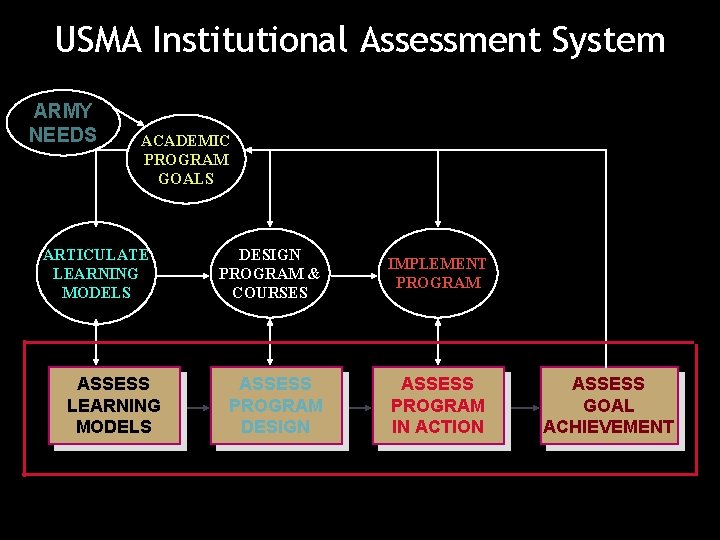
USMA Institutional Assessment System ARMY NEEDS ACADEMIC PROGRAM GOALS ARTICULATE LEARNING MODELS ASSESS LEARNING MODELS DESIGN PROGRAM & COURSES IMPLEMENT PROGRAM ASSESS PROGRAM DESIGN ASSESS PROGRAM IN ACTION ASSESS GOAL ACHIEVEMENT
References & Additional Resources continued… • Websites – Evaluation, Assessment, Standards, Awards & Recognitions ▫ American Association for Higher Education – Online Assessment Resources � http: //www. aahe. org/assessment/assess_links. htm � http: //www. aahe. org/assessment/principl. htm ▫ Western Michigan University's Evaluation Center � http: //www. wmich. edu/evalctr/checklists/ ▫ National College Learning Center Association (NCLCA) – Awards � http: //www. nclca. org/grantsawards. htm ▫ Learning Support Centers in Higher Education (LSCHE) � Awards & Recognitions Link � http: //www. lsche. net/resources/lc_awards. htm ▫ CAS Standards for Learning Assistance � http: //www. nade. net/documents/Articles/CAS. Standards. pdf ▫ Policy Center on the First Year of College – Institutions of Excellence - Benchmarks http: //www. brevard. edu/fyc/instofexcellence/data. htm
- Slides: 59