
Best Practices in Active Learning Team Based Learning
Best Practices in Active Learning “Team Based Learning (TBL)” Ilene Harris, Ph. D

Agenda ¢ ¢ Overview : Context Demonstration: TBL Activity to Develop Knowledge and Skills in TBL l “Prior reading”: Basis for selection? l In groups: IRAT and GRAT • Construct groups: Based on balancing resources: Knowledge about TBL • Individuals complete IRAT (Individual Readiness Assurance Test) • Groups complete GRAT (Group Readiness Assurance Test) • Report IRAT and GRAT scores • Appeals process • Feedback: Discuss IRAT/GRAT item options In group: Application Exercises Debriefing: TBL - What have we learned? l ¢
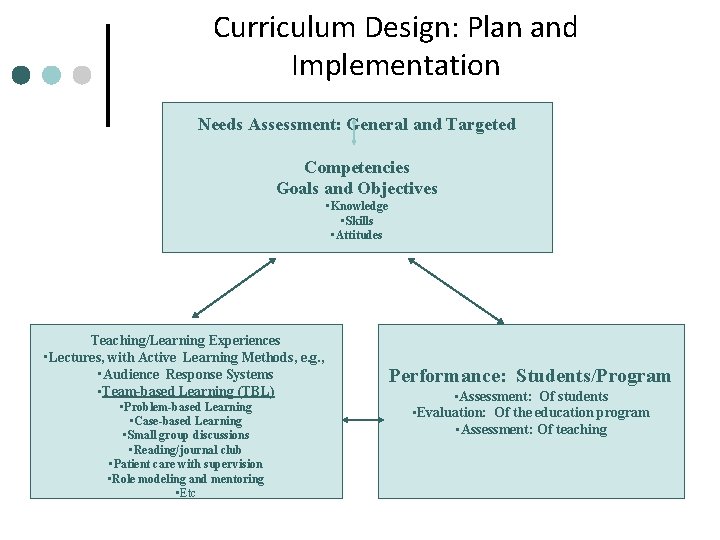
Curriculum Design: Plan and Implementation Needs Assessment: General and Targeted Competencies Goals and Objectives • Knowledge • Skills • Attitudes Teaching/Learning Experiences • Lectures, with Active Learning Methods, e. g. , • Audience Response Systems • Team-based Learning (TBL) • Problem-based Learning • Case-based Learning • Small group discussions • Reading/journal club • Patient care with supervision • Role modeling and mentoring • Etc Performance: Students/Program • Assessment: Of students • Evaluation: Of the education program • Assessment: Of teaching

TBL Overview Method of instruction for achieving student applied knowledge/competence, through – ¢ ¢ ¢ ¢ Primary learning objectives: Application of concepts Cohesive Learning Groups: Constituted to maximize diversity within groups and “equal "distribution of resources Teacher role: Design/manage instruction Student role: Read independently & work collaboratively in groups Assignments: Promote learning & team development, by requiring group interaction Feedback: Frequent/timely Accountability: Assessment/grading supports learning in groups – through accountability for quality of individual and group work; preparation; attendance; contribution to group effort
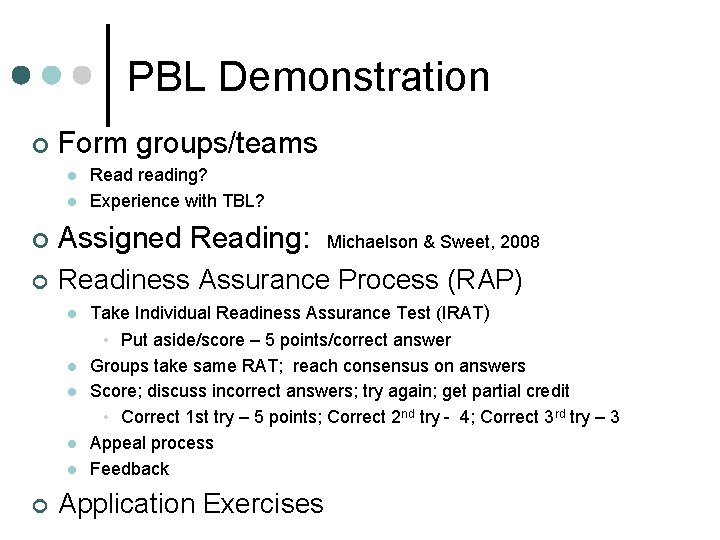
PBL Demonstration ¢ Form groups/teams l l Read reading? Experience with TBL? ¢ Assigned Reading: ¢ Readiness Assurance Process (RAP) l l l ¢ Michaelson & Sweet, 2008 Take Individual Readiness Assurance Test (IRAT) • Put aside/score – 5 points/correct answer Groups take same RAT; reach consensus on answers Score; discuss incorrect answers; try again; get partial credit • Correct 1 st try – 5 points; Correct 2 nd try - 4; Correct 3 rd try – 3 Appeal process Feedback Application Exercises

Design of PBL Units Before Course ¢ Formulate application-based instructional objectives, e. g. , l ¢ Students will be able to design a PBL unit Design instruction Select reading materials l Design Readiness Assurance Tests (RATs) of knowledge l Design application exercises l
First Day Introduce students to PBL ¢ Form groups ¢ Alleviate student concern about grades ¢ Set mechanisms to encourage development of positive group norms, e. g. , records of attendance, individual and group scores ¢
First Day: Introduce PBL ¢ Communicate l l ¢ Provide overview l l ¢ Rationale How course will be conducted Basic features Role of instructors Role of students Benefits Activities l l Explain: In syllabus, using PP Demonstrate RAT, using short reading
First Day: Form Groups ¢ Create groups with diverse membership &and balance of resources Relevant characteristics of students, e. g. , previous course work, practical experience, access to perspectives l Diminish potential for emergence of subgroups l ¢ Form groups during class
First Day Alleviate concern about grades ¢ Grading system creates individual accountability for l l l ¢ Because – grading system includes l l l ¢ Individual grades on RATs Group grades on RATs and application exercises Basing part of grade on peer evaluation Team application assignments l l l ¢ Pre-class preparation Class attendance Devoting time/energy for group assignments Done in class Based on thinking, discussing, deciding Unlikely that less motivated team-mates put group at risk Involve students in setting grade weights
Each Unit Readiness Assurance Process (RAP) ¢ ¢ Assigned Readings: Read independently ahead of time Readiness Assurance Process : MCQs to assess understanding of key concepts; difficult enough to stimulate team discussion l IRAT: Turn in answers/score during team test l TRAT/GRAT: Retake test as team; reach agreement on answers • Valuable for learning concepts and team development l l Immediately score, with Intermediate Feedback Assessment Technique (IF-AT), a self-scoring scratch-off answer sheet to provide timely feedback on GRATs Scoring: 1 st try, full credit; 2 nd try, reduced credit, etc. ¢ Appeals Process: Refer to assigned readings to build case; address ¢ confusion caused by inadequacy of readings or quality of questions Instructor Focused Feedback
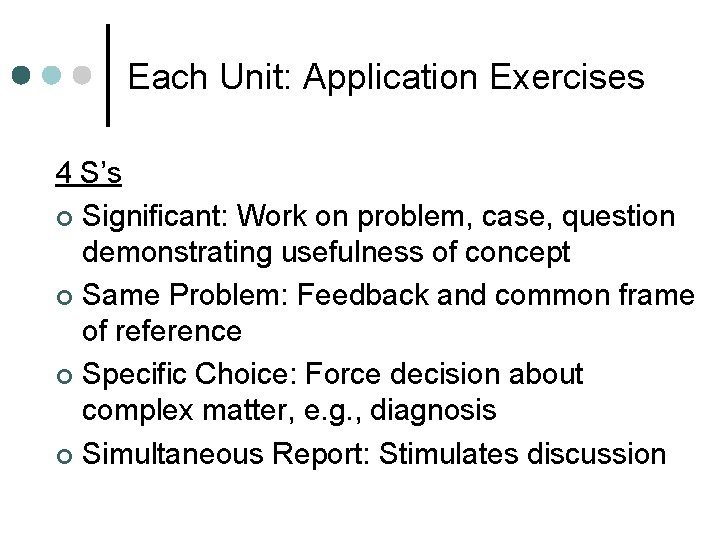
Each Unit: Application Exercises 4 S’s ¢ Significant: Work on problem, case, question demonstrating usefulness of concept ¢ Same Problem: Feedback and common frame of reference ¢ Specific Choice: Force decision about complex matter, e. g. , diagnosis ¢ Simultaneous Report: Stimulates discussion
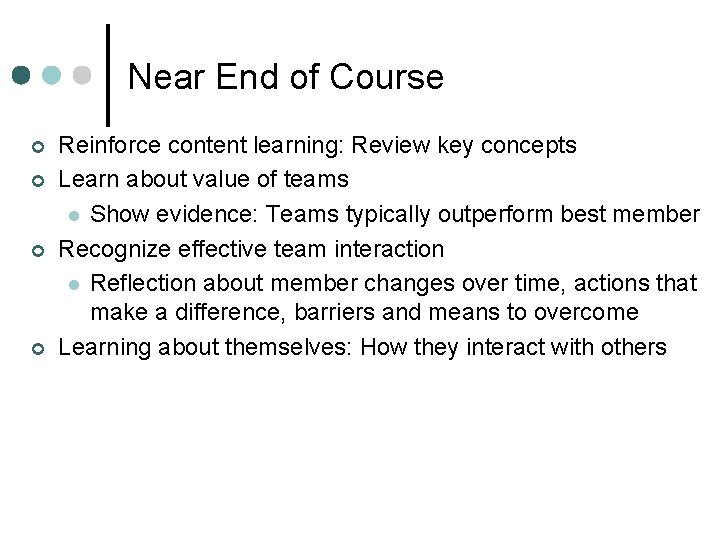
Near End of Course ¢ ¢ Reinforce content learning: Review key concepts Learn about value of teams l Show evidence: Teams typically outperform best member Recognize effective team interaction l Reflection about member changes over time, actions that make a difference, barriers and means to overcome Learning about themselves: How they interact with others
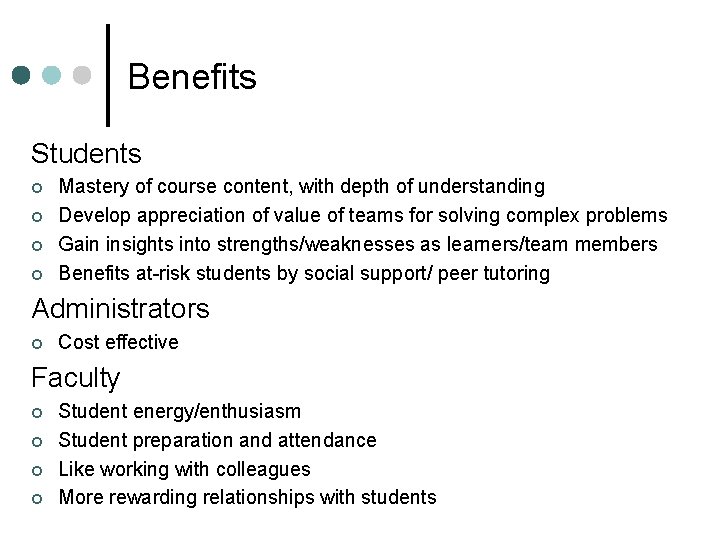
Benefits Students ¢ ¢ Mastery of course content, with depth of understanding Develop appreciation of value of teams for solving complex problems Gain insights into strengths/weaknesses as learners/team members Benefits at-risk students by social support/ peer tutoring Administrators ¢ Cost effective Faculty ¢ ¢ Student energy/enthusiasm Student preparation and attendance Like working with colleagues More rewarding relationships with students
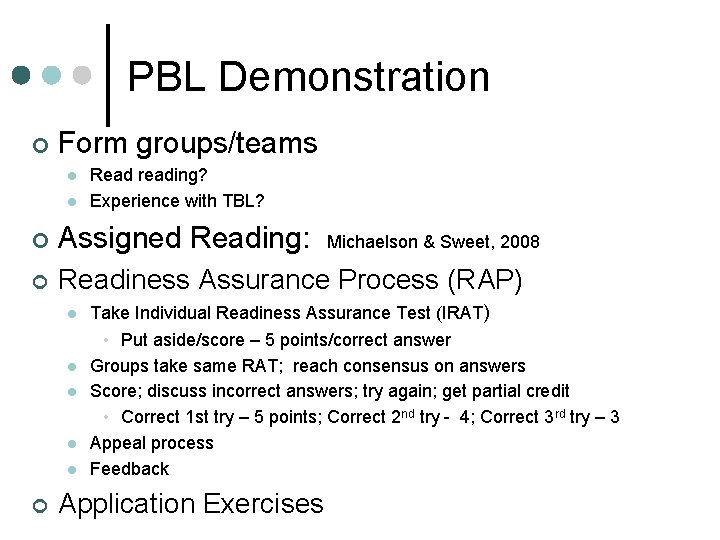
PBL Demonstration ¢ Form groups/teams l l Read reading? Experience with TBL? ¢ Assigned Reading: ¢ Readiness Assurance Process (RAP) l l l ¢ Michaelson & Sweet, 2008 Take Individual Readiness Assurance Test (IRAT) • Put aside/score – 5 points/correct answer Groups take same RAT; reach consensus on answers Score; discuss incorrect answers; try again; get partial credit • Correct 1 st try – 5 points; Correct 2 nd try - 4; Correct 3 rd try – 3 Appeal process Feedback Application Exercises
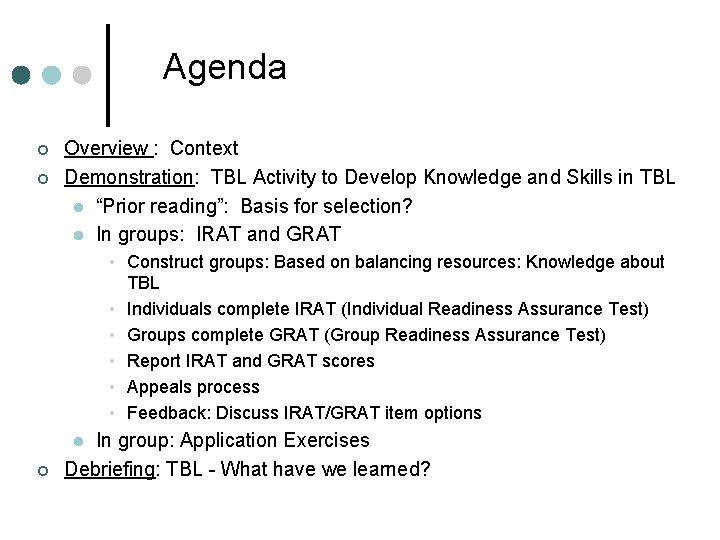
Agenda ¢ ¢ Overview : Context Demonstration: TBL Activity to Develop Knowledge and Skills in TBL l “Prior reading”: Basis for selection? l In groups: IRAT and GRAT • Construct groups: Based on balancing resources: Knowledge about TBL • Individuals complete IRAT (Individual Readiness Assurance Test) • Groups complete GRAT (Group Readiness Assurance Test) • Report IRAT and GRAT scores • Appeals process • Feedback: Discuss IRAT/GRAT item options In group: Application Exercises Debriefing: TBL - What have we learned? l ¢
- Slides: 16