
Best Practices for Conducting the Learning Media Assessment
Best Practices for Conducting the Learning Media Assessment: Tips from the Trenches Dr. Nicole Johnson, Dr. Kathleen Stanfa, & Julia Stitch Kutztown University
What The Law Says Individuals with Disabilities Education Act (IDEA) requires that Braille be considered for all students with a visual impairment. This can not be determined unless a proper and thorough learning media assessment takes place.
What is the Learning Media Assessment A framework for selecting appropriate literacy media for students who are visually impaired. The LMA determines the best instructional medium for each student including: Braille Print/Large Print Dual Media Auditory Tactile Combination
Assessment Ongoing Assessment along with Progress Monitoring should be done on a regular basis. Legally Written Every 2 Years. FVLMA is critical! Determine How are they using their functional Vision? What is the best learning modes? Tactile, Auditory, or Visual Is the condition progressive? Is their Vision Stable? What types of Assessment do you utilize to assess students with visual impairments including those with additional disabilities?
What should the LMA Include? • Observations/Interviews • Current visual Functioning (Overview of FVA) • How the student accesses their environment when provided various materials (Visual, Tactual, Auditory) • How the student utilizes their senses to access the curriculum • Reading Rates (when able): Utilize various print sizes if a print reader and/or Braille reading rates when applicable
Writing ability: Difference with fine point marker, pencil, etc. Writing legibility in both math and literary Technology Assessment/Overview Brailling ability • If student is not a Braille reader a statement on Braille being considered is required under IDEA. • Include if there is a future need for Braille depending if the visual impairment is progressive. • Braille needs to be considered in the case of low vision. Include reading rates and if they are comparable to grade level peers. • Braille should be considered for students with multiple disabilities and if determined a tactual learner pre-braille activities should be implemented.
Resources for Learning Media Assessments Paths to Literacy Teaching Students with Visual Impairments American Printing House for the Blind (APH) National Reading Assessment (NRMA) Basic Reading Inventory Assistive Technology Assessments Teacher Made Assessments/Various Methods
PATHS TO LITERACY Multiple Disabilities Sample LMA Overview of LMA Various Resources
Teaching Students with Visual Impairments Various Resources for Teachers of the Visually Impaired Free Printables to conduct the LMA and use for progress monitoring Website
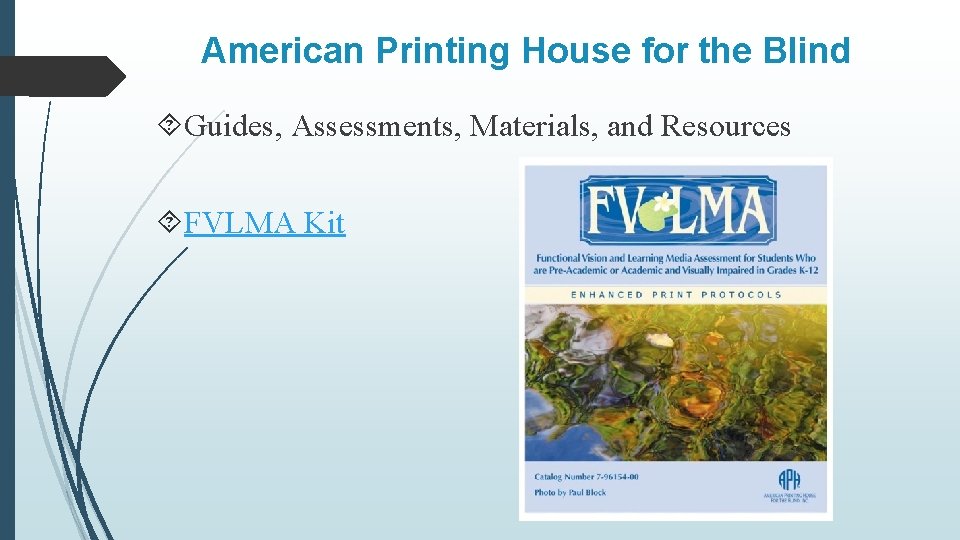
American Printing House for the Blind Guides, Assessments, Materials, and Resources FVLMA Kit
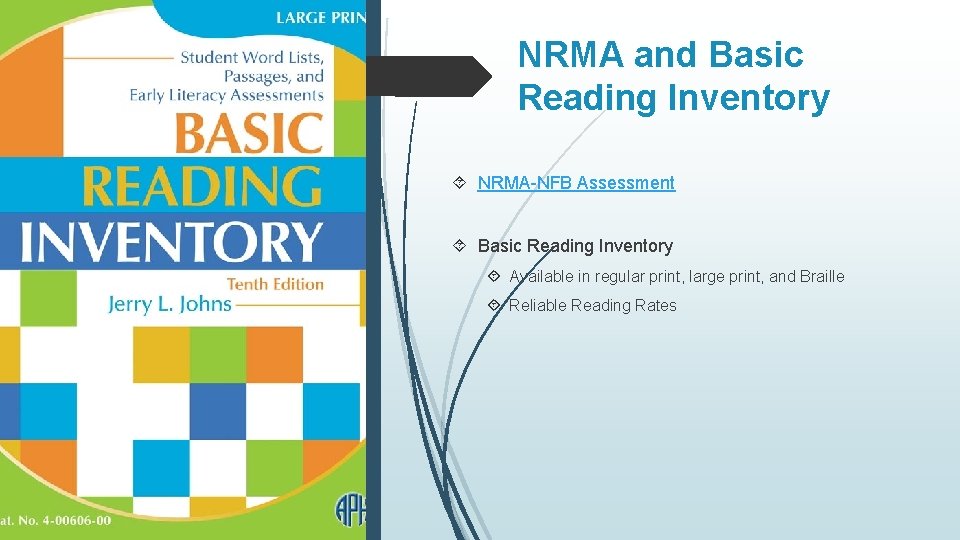
NRMA and Basic Reading Inventory NRMA-NFB Assessment Basic Reading Inventory Available in regular print, large print, and Braille Reliable Reading Rates
Assistive Technology & Teacher Made Assessments AT Assessment Forms Foundations Book What Resources do you use for AT and LMA Assessments? What struggles do you have when completing assessments?
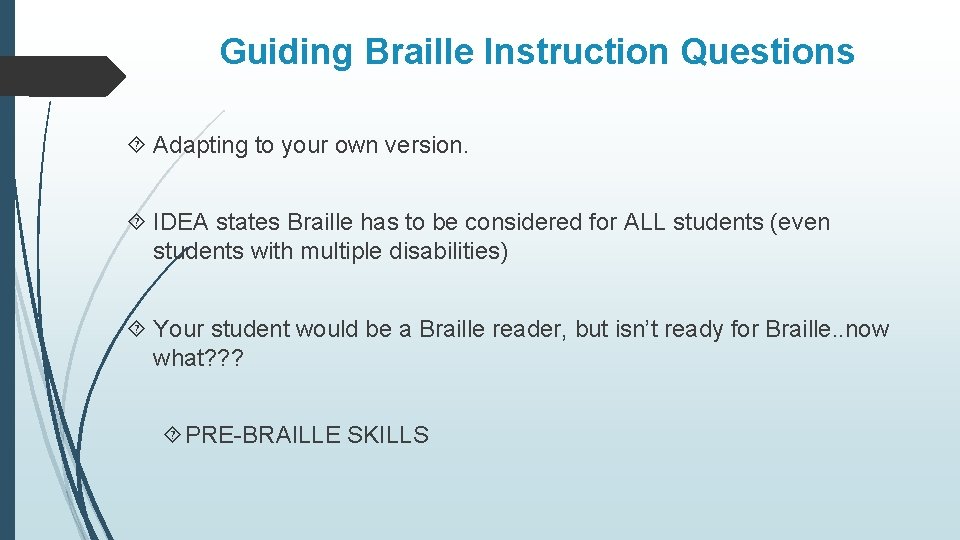
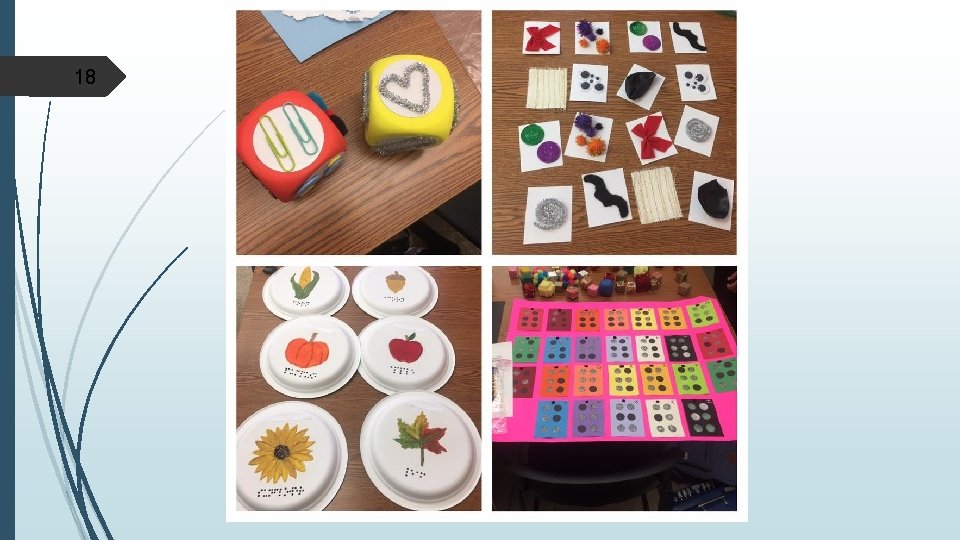
Guiding Braille Instruction Questions Adapting to your own version. IDEA states Braille has to be considered for ALL students (even students with multiple disabilities) Your student would be a Braille reader, but isn’t ready for Braille. . now what? ? ? PRE-BRAILLE SKILLS
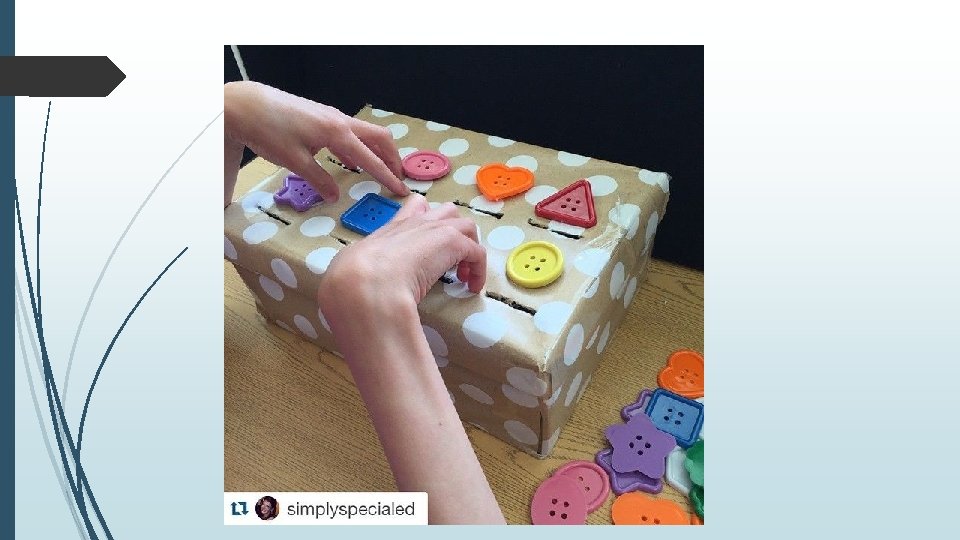
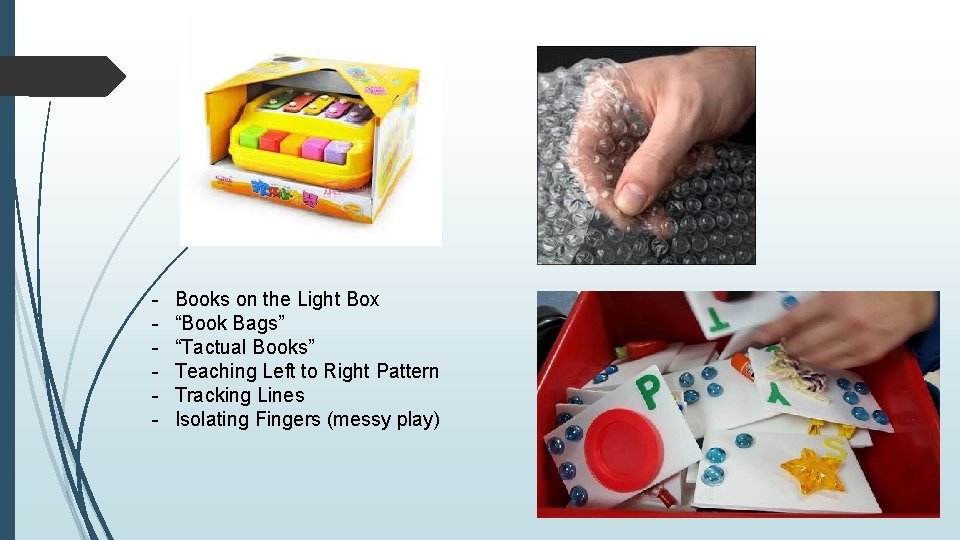
- Books on the Light Box “Book Bags” “Tactual Books” Teaching Left to Right Pattern Tracking Lines Isolating Fingers (messy play)
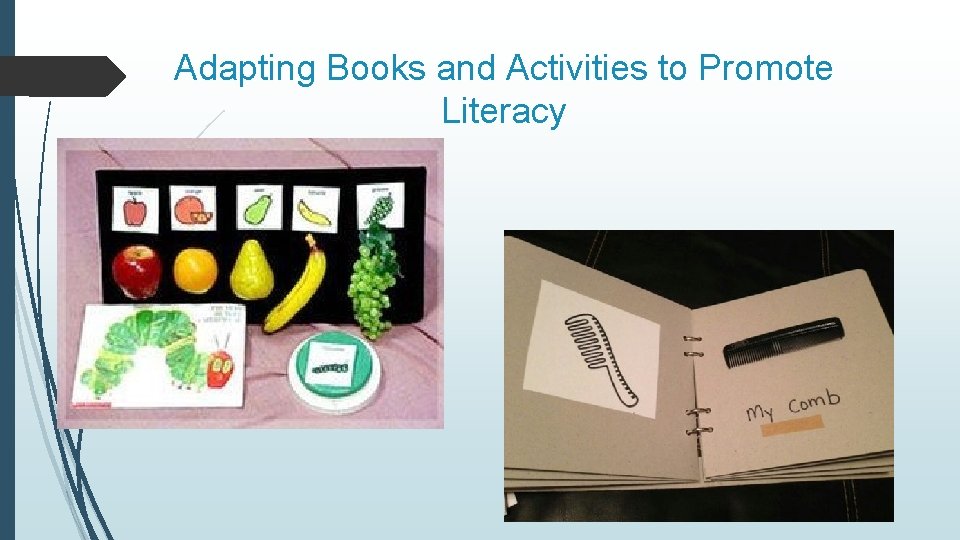
Adapting Books and Activities to Promote Literacy
18
Ongoing Assessment Print Size/Level Reading Materials Continually Keep Progress and adjust as needed Can conduct LMA more then every 3 years!
Sample Assessment Overview Cortical Visual Impairment (CVI) Assessments Ongoing Assessment Critical as move through Phases/ranges Informaton Other Sample Learning Media Assessments How often do you update the LMA? Participate in Ongoing Assessment? What documents do you use?
- Slides: 20