
Beowulf The Beginning of English Literature Bear Beehunter
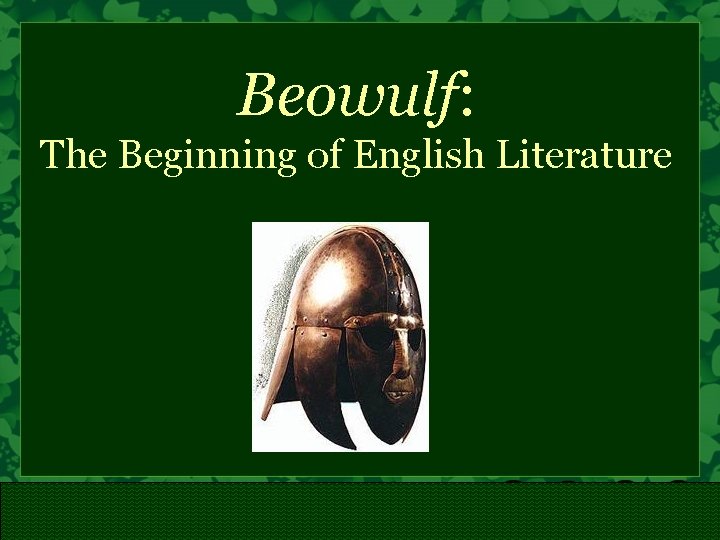
Beowulf: The Beginning of English Literature
• Bear Bee-hunter • Wolf in Northern mythology: • Great Protectors and strong • Great Protectors, cunning and speedy
Introducing the Epic • It derives from Scandinavian folktales and Sagas • It is a blend of legend and history • It contains precise references to real historical events and tribal struggles
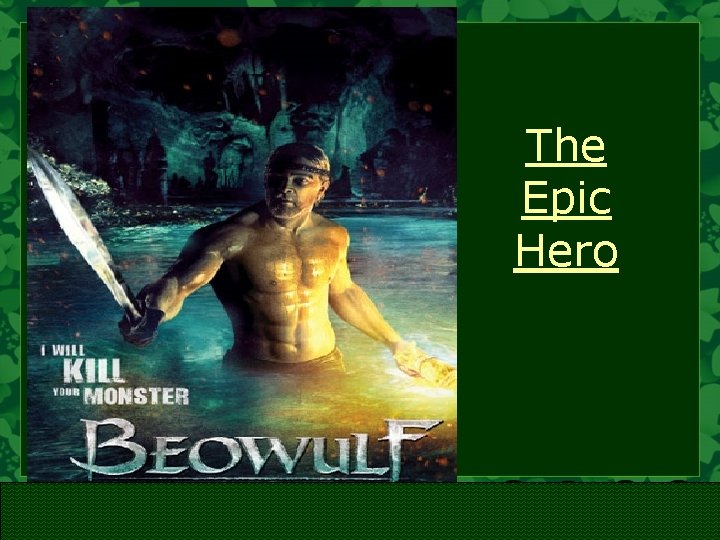
The Epic Hero
Beowulf’s Name Beowulf’s father – Edgetho In most cases, the son is named after the father : • Donald (son of Don) • Mc. Donaldson (son of Don) It proves Beowulf is an individual with his own powers and abilities (and more important than his father
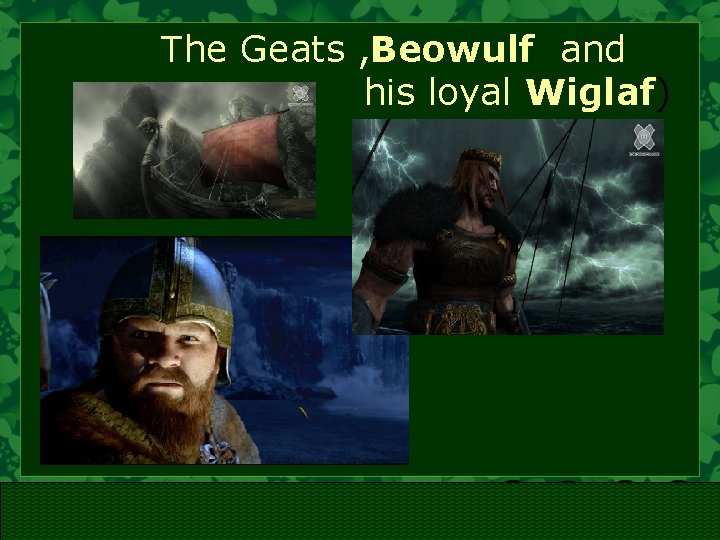
The Geats , Beowulf and his loyal Wiglaf)
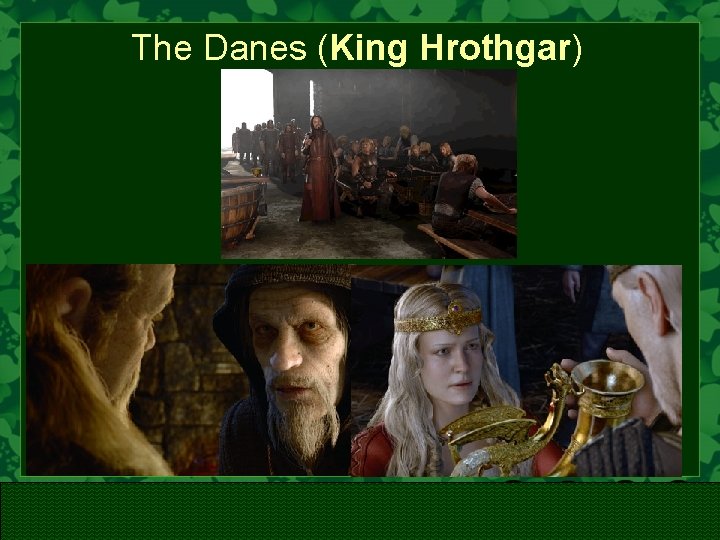
The Danes (King Hrothgar)
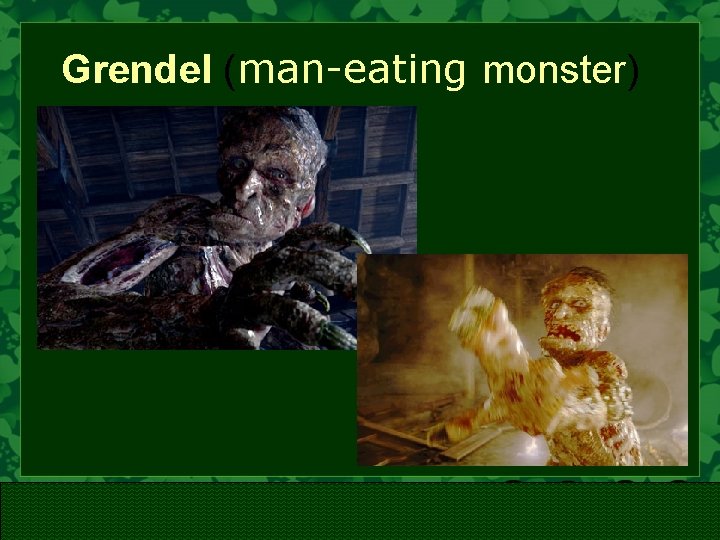
Grendel (man-eating monster)
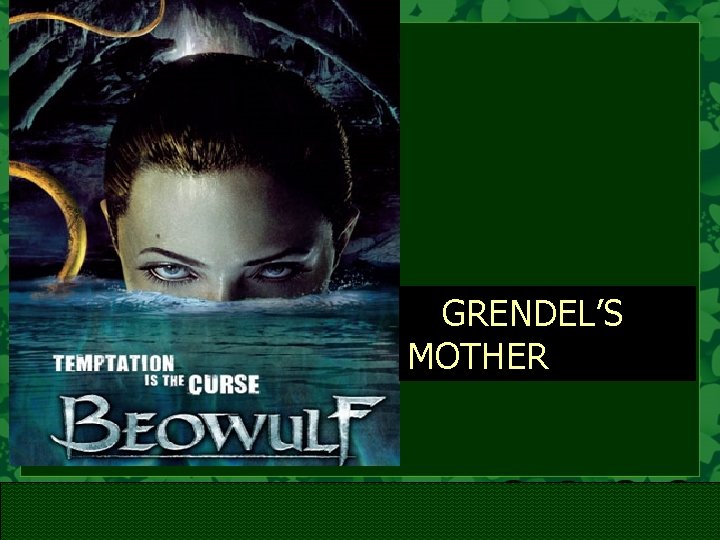
GRENDEL’S MOTHER
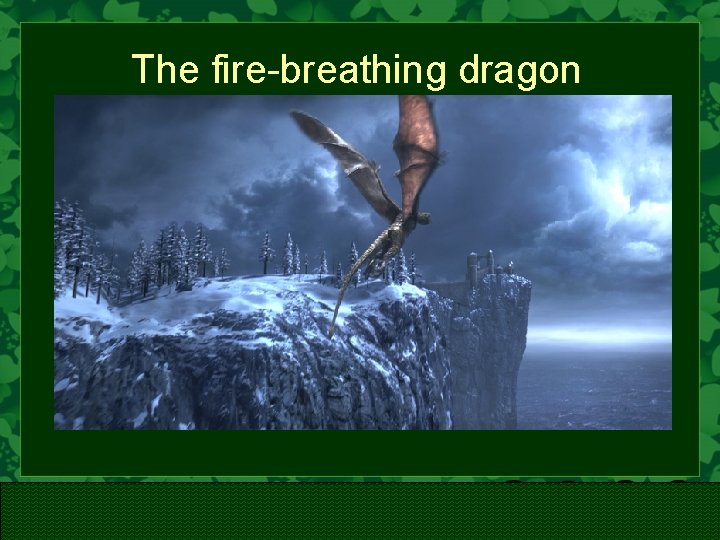
The fire-breathing dragon
Mythical elements • A fantastic world • Monsters • Dragons • Imaginary creatures
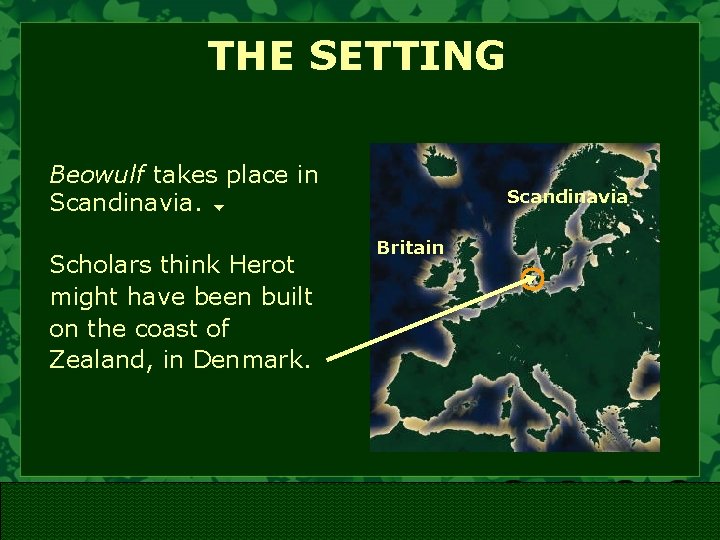
THE SETTING Beowulf takes place in Scandinavia. Scholars think Herot might have been built on the coast of Zealand, in Denmark. Scandinavia Britain
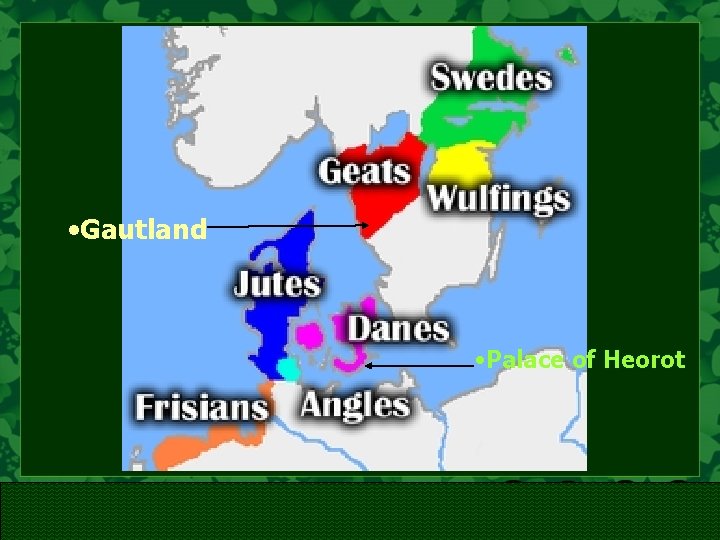
• Gautland • Palace of Heorot
The presence of nature • Unpleasant and cold winters • Spring hailed with joy • Rough and stormy northern sea • Biting winds • Black pools • Gloomy marshes • Forests and caves • Mist and Fog
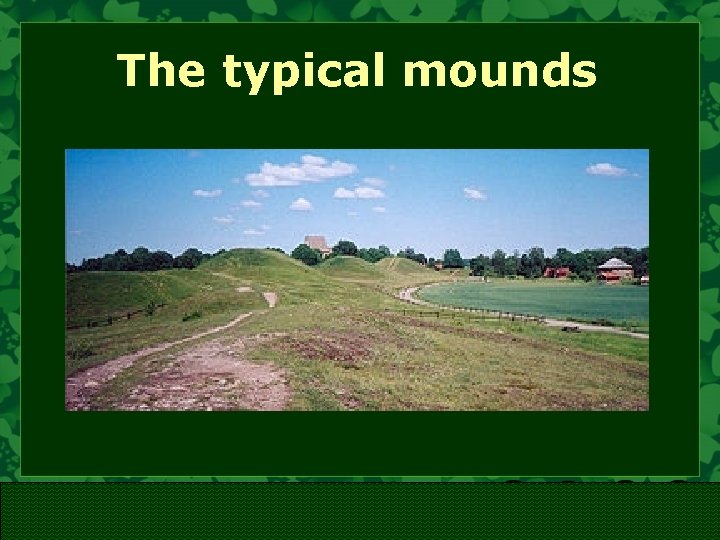
The typical mounds
The general atmosphere • Gloomy • Fierce • Melancholic • Solitary • A strong sense of doom • Stoic resignation
SOCIAL LIFE It reveals a way of life ruled by simple laws: • Eating • Drinking • Fighting • Hunting • Listening to the Scop during the feasts
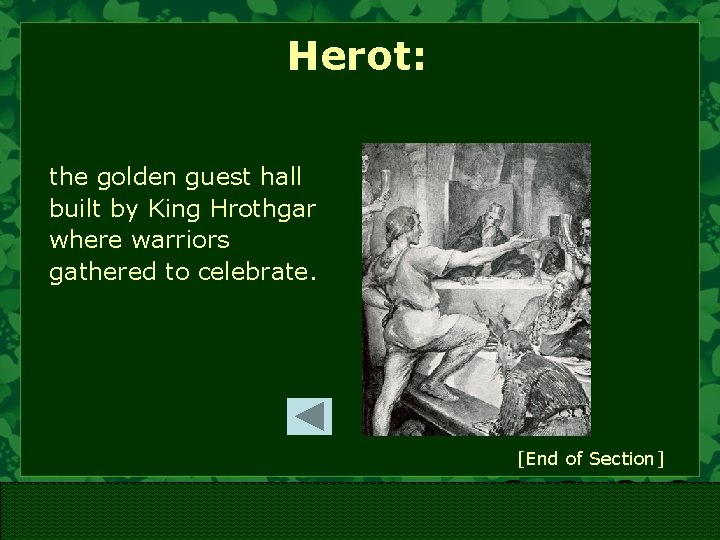
Herot: the golden guest hall built by King Hrothgar where warriors gathered to celebrate. [End of Section]
THE PLOT Two stories unified by the presence of the same hero Beowulf (2007): Short Version • The first: Beowulf is a young hero going to help Hrothgar, king of the Danes after 50 years • The second: Beowulf in his old age as king of the Geats in Gautland
Features of the time • The generosity of the lord • The fidelty of the subjects • The sense of honour • The duty to help people in need • Violence
The values of warrior society • Loyalty and kinship • The need to take revenge • Physical strength and courage • The search for glory in this life • weapons personalized with names • Fate / Wyrd
Themes • The Feud = the tragic waste A system of revenge is repeated in the poem: feud peace feud • The eternal conflict between dark and light, good and evil • Fate • Courage as the quality that can stand against Fate.
LANGUAGE The Language is: • elevated • the vocabulary used is rich and various • vivid and descriptive to render the melancholic mood of the poem. The narration is objective, the poet’s point of view coincides with that of the characters, they don’t criticize the ideals and customs of the country they belong to.
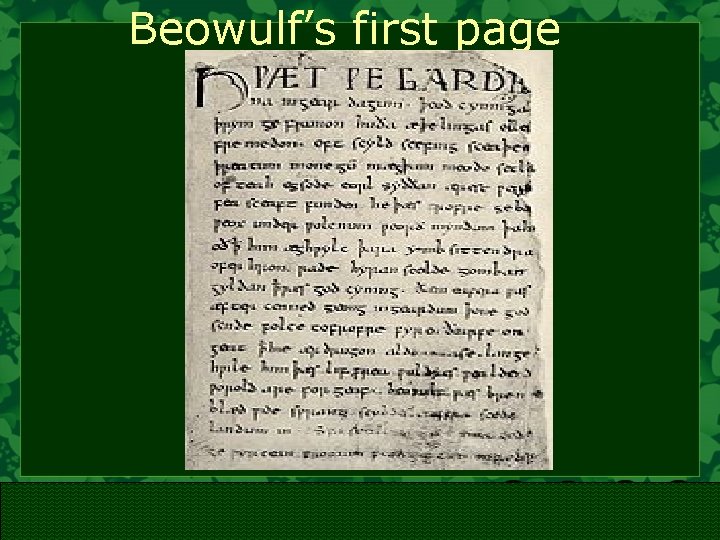
Beowulf’s first page
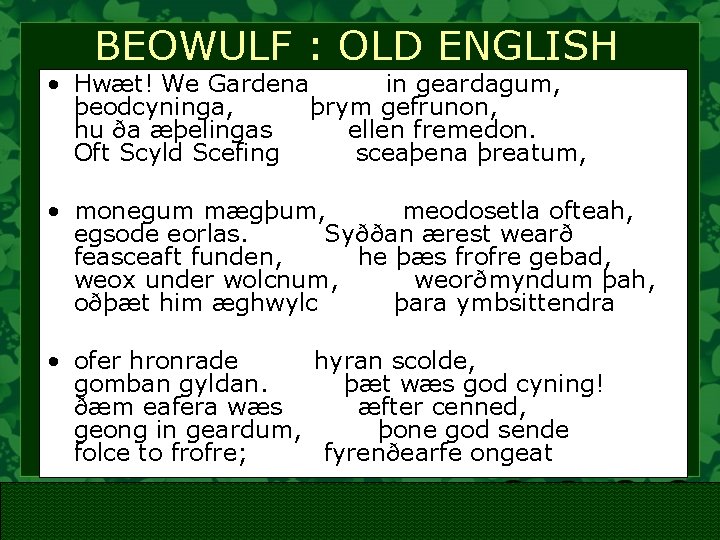
BEOWULF : OLD ENGLISH • Hwæt! We Gardena in geardagum, þeodcyninga, þrym gefrunon, hu ða æþelingas ellen fremedon. Oft Scyld Scefing sceaþena þreatum, • monegum mægþum, meodosetla ofteah, egsode eorlas. Syððan ærest wearð feasceaft funden, he þæs frofre gebad, weox under wolcnum, weorðmyndum þah, oðþæt him æghwylc þara ymbsittendra • ofer hronrade hyran scolde, gomban gyldan. þæt wæs god cyning! ðæm eafera wæs æfter cenned, geong in geardum, þone god sende folce to frofre; fyrenðearfe ongeat
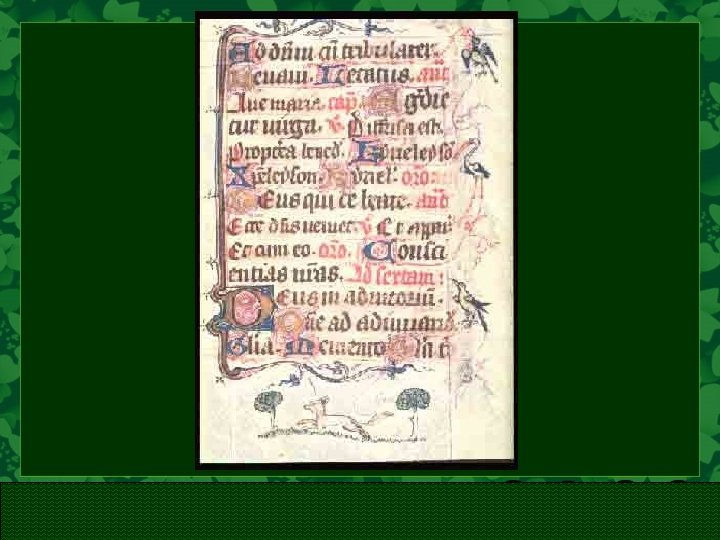
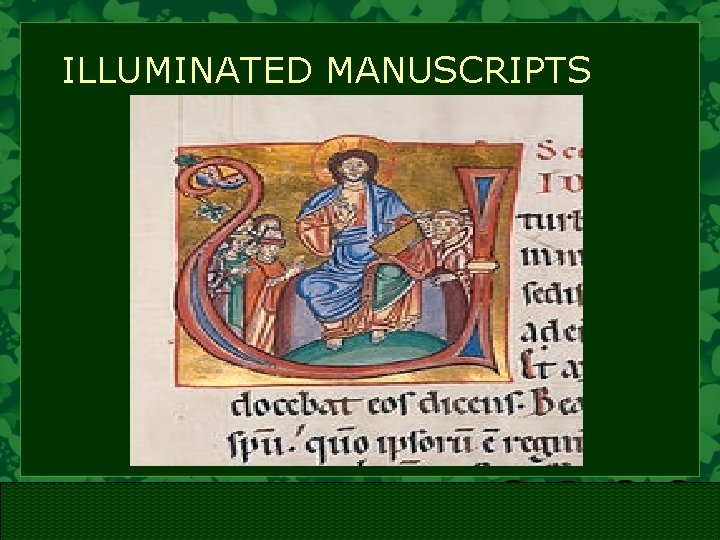
ILLUMINATED MANUSCRIPTS
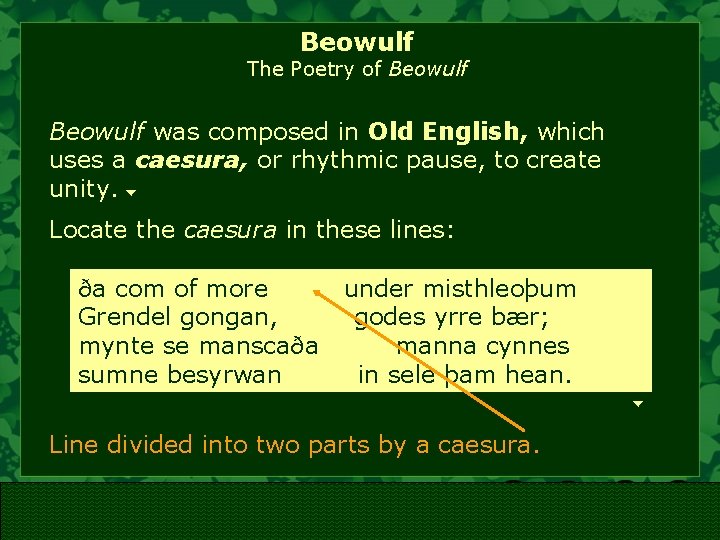
Beowulf The Poetry of Beowulf was composed in Old English, which uses a caesura, or rhythmic pause, to create unity. Locate the caesura in these lines: ða com of more under misthleoþum Grendel gongan, godes yrre bær; mynte se manscaða manna cynnes sumne besyrwan in sele þam hean. Line divided into two parts by a caesura.
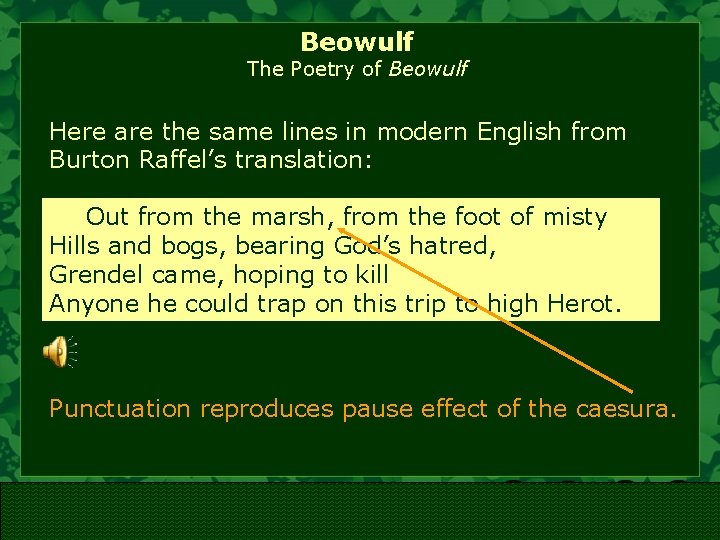
Beowulf The Poetry of Beowulf Here are the same lines in modern English from Burton Raffel’s translation: Out from the marsh, from the foot of misty Hills and bogs, bearing God’s hatred, Grendel came, hoping to kill Anyone he could trap on this trip to high Herot. Punctuation reproduces pause effect of the caesura.
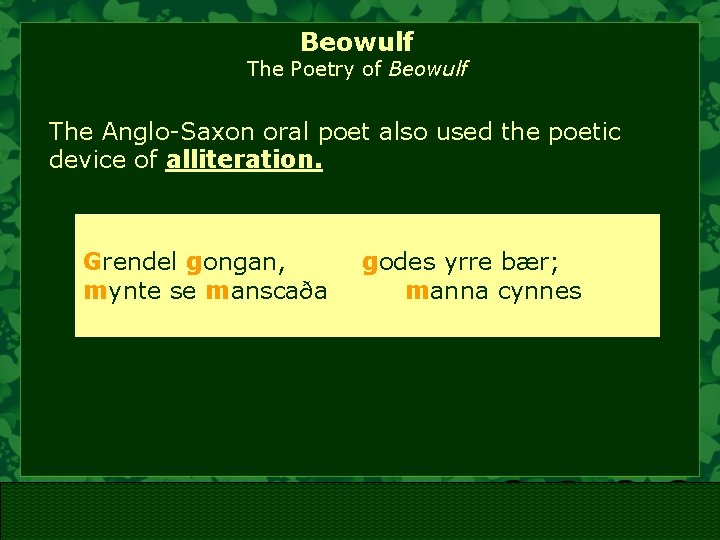
Beowulf The Poetry of Beowulf The Anglo-Saxon oral poet also used the poetic device of alliteration. Grendel gongan, godes yrre bær; mynte se manscaða manna cynnes

Beowulf The Poetry of Beowulf Find examples of alliteration in Burton Raffel’s translation of lines 1 -5: Out from the marsh, from the foot of misty Hills and bogs, bearing God’s hatred, Grendel came, hoping to kill Anyone he could trap on this trip to high Herot.

Beowulf The Poetry of Beowulf The kenning is another poetic device that was used by the oral poet. Examples of kennings from Beowulf: gold-shining hall= Herot guardian of crime = Grendel strong-hearted wakeful sleeper = Beowulf cave-guard and sky-borne foe = dragon
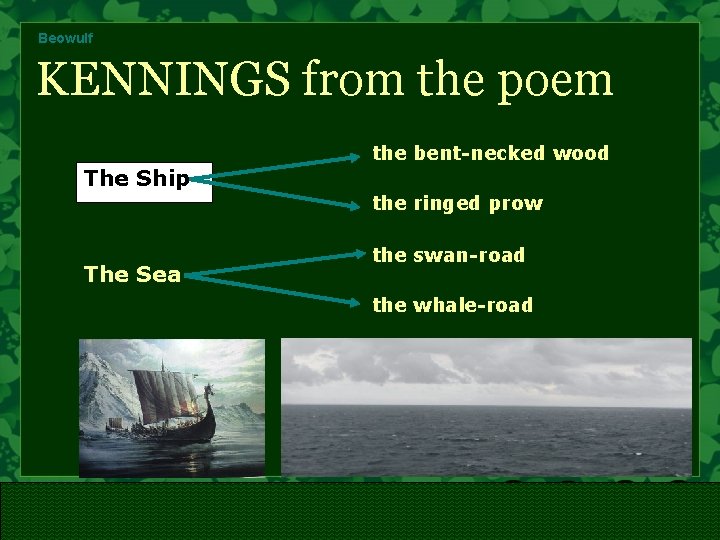
Beowulf KENNINGS from the poem The Ship The Sea the bent-necked wood the ringed prow the swan-road the whale-road
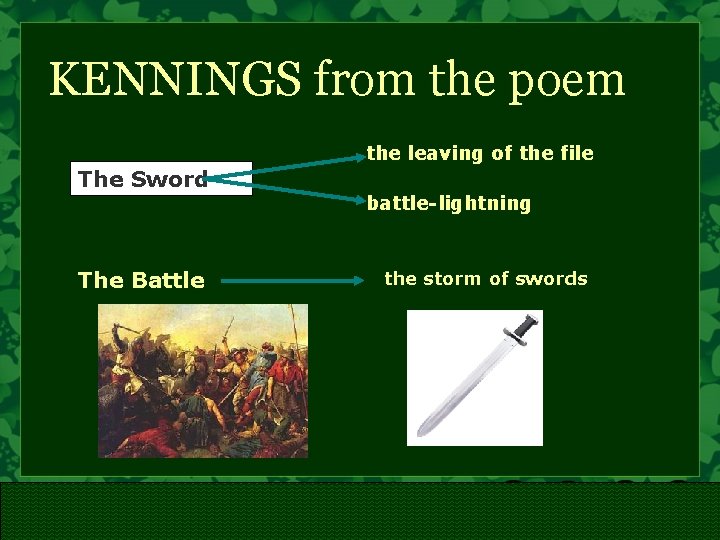
KENNINGS from the poem the leaving of the file The Sword The Battle battle-lightning the storm of swords
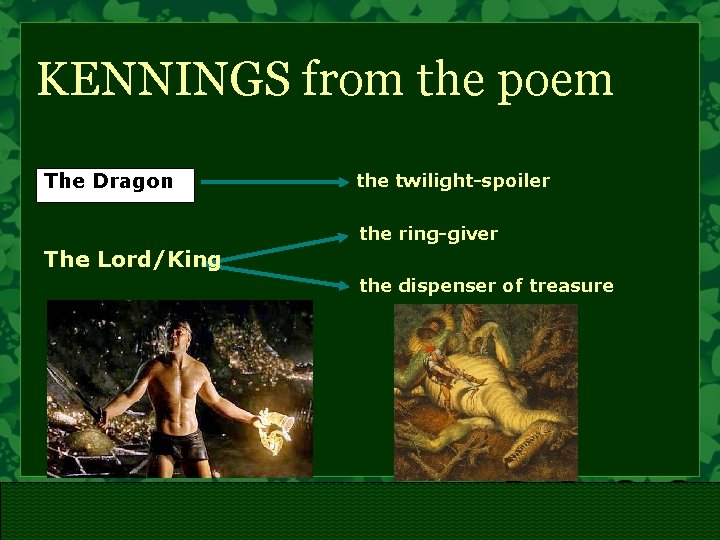
KENNINGS from the poem The Dragon the twilight-spoiler the ring-giver The Lord/King the dispenser of treasure
Christian elements • Beowulf= good struggling against evil • He prays the Creator of all things, the ruler of the Heavens • God’s WILL, identical with FATE ( Wyrd ) • Reference to the Old Testament: • • • Heorot = symbol of the world The Danes = mankind The lake = hell Grendel’s mother = the devil The sword = the cross
THE EPIC • It is a long narrative poem • It was written in Old English • It was oral and extremely musical • It tells the deeds of the great warrior kings of the pre-Christian England • It displays qualities and virtues superior to those of the common man. , fighting monsters or other supernatural forces • The main theme is the war-like ideal in which the main character has the leadership in an heroic society
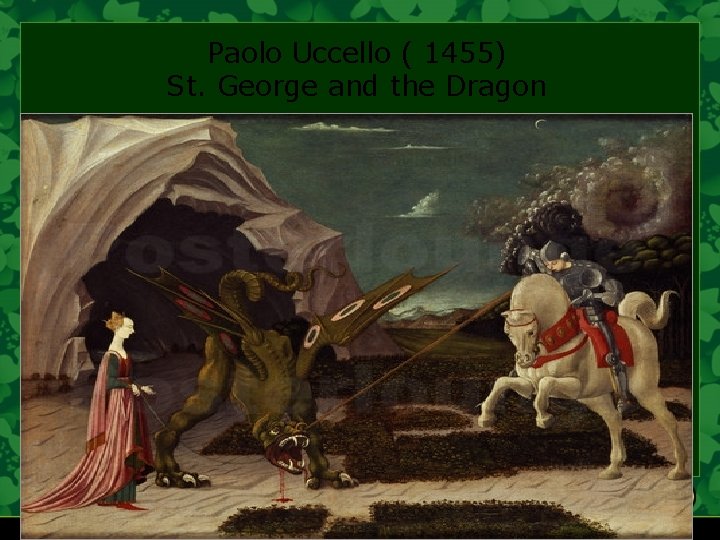
Paolo Uccello ( 1455) St. George and the Dragon
- Slides: 39