
Beowulf Historical Context AngloSaxon Period 4501066 Early inhabitants
Beowulf
Historical Context
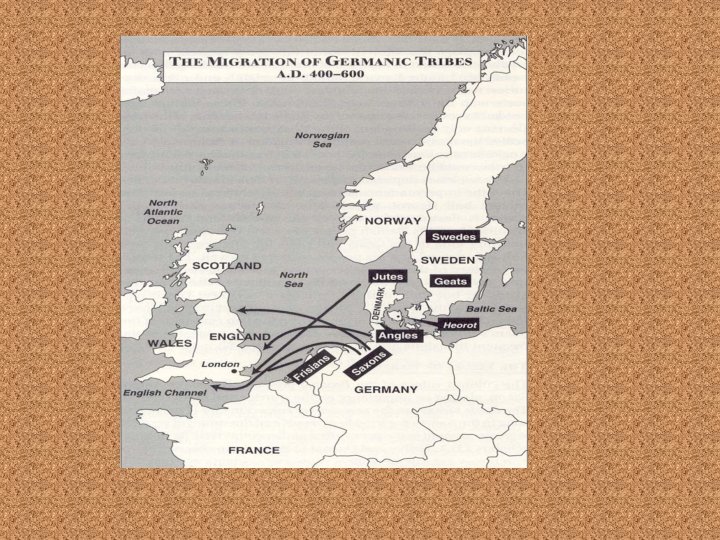
Anglo-Saxon Period 4501066 • Early inhabitants of Britain were Celts. • During the 1 st century they were invaded by Romans—Julius Caesar in fact! • In 450 Romans were called home to protect their Empire against barbarian attacks, leaving Britain open for invasions. • At that time, Celts were attacked by Angles, Saxon, (Germanic) & Jutes(Denmark)
Results of the Anglo-Saxon Invasion • Christianity • A common language was created which is referred to as Old English. • Education began to spread as well. • Latin and the concept of writing the oral histories now began. • Angleland=Anglo-Saxon England
Anglo-Saxon Culture • Each person in society had a price related to their position in society=Wergild. Families were entitled to a sum of money if a relative was murdered. • Women were expected to be moral and domestic. They had full legal rights & some aristocratic women were expected to be peacemakers or arbitrators.
Anglo-Saxon Values: Germanic Heroic Code • Loyalty – fighting for one’s king – Avenging one’s kinsmen – Keeping one’s word • Generosity – gifts symbolize bonds and power
Values/Code • Heroism – Physical strength – Skill and resourcefulness in battle – courage • Reputation • Hospitality, kings were expected to be hospitable and generous • Honor through deeds
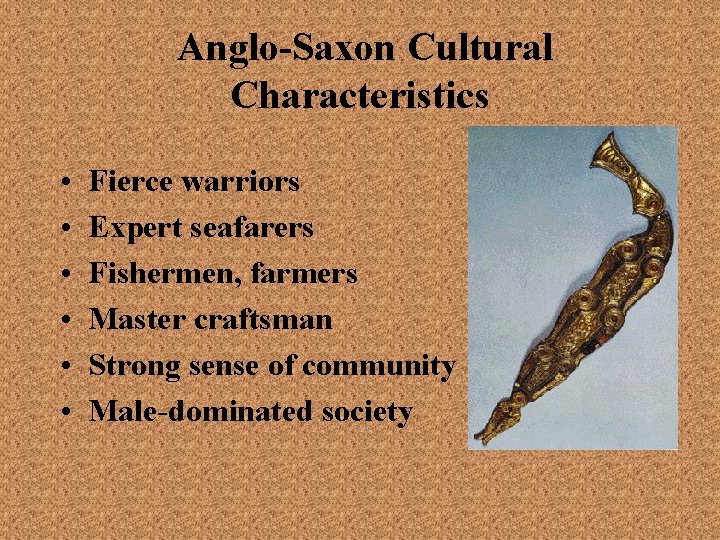
Anglo-Saxon Cultural Characteristics • • • Fierce warriors Expert seafarers Fishermen, farmers Master craftsman Strong sense of community Male-dominated society
Beowulf vocabulary • Comitatus : Germanic code of loyalty • Scop: poet in oral culture – Preserves history – Entertains court – Spreads hero’s fame • Thane: warrior who swears loyalty to the king • Wergild: “man price” – Substitute for violence • Wyrd: fate (to the poet = God’s will
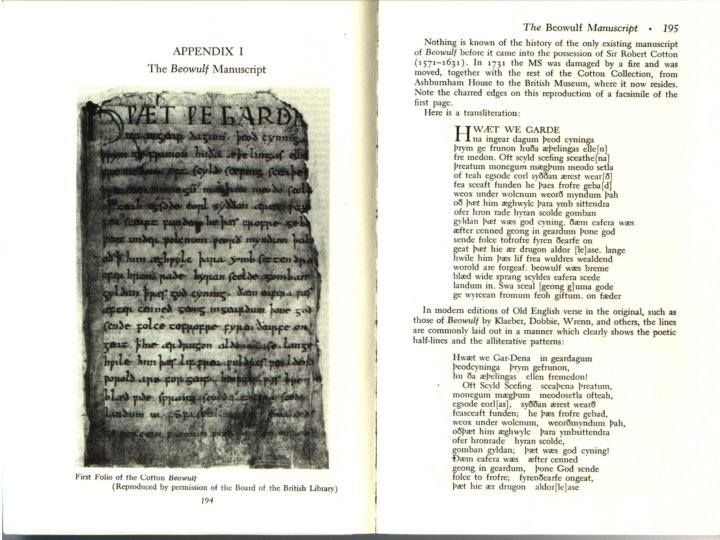
Who Wrote Beowulf? • Unfortunately, no one knows when Beowulf was composed, or by whom, or why! • Handwritten by a monk around 1000 AD • Obtained by Sir Robert Cotton • Damaged in fire in 1731 • Currently at British Museum • Available on the “The Electronic Beowulf”
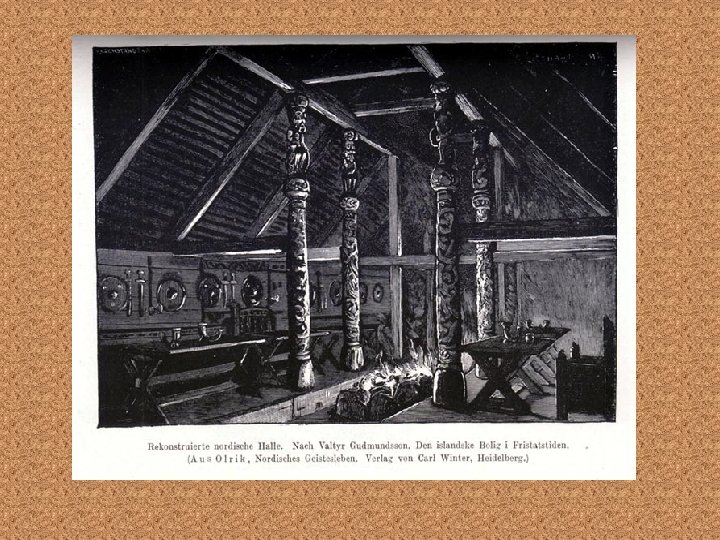
The Scop • The earliest literature in all languages comes from oral traditions or songs sung and tales told. • During Anglo-Saxon times the wandering poet or scop( pronounced shop) would entertain the upper class during feasts/celebrations held in the mead hall. • Scops memorized and preserved the Anglo-Saxon culture through their stories • The mead hall was a central gathering place
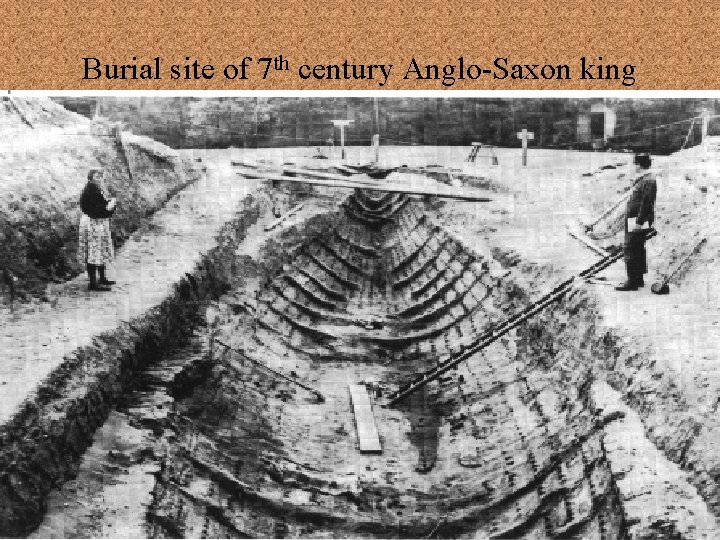
Burial site of 7 th century Anglo-Saxon king (Suffolk, England, discovered in 1939)
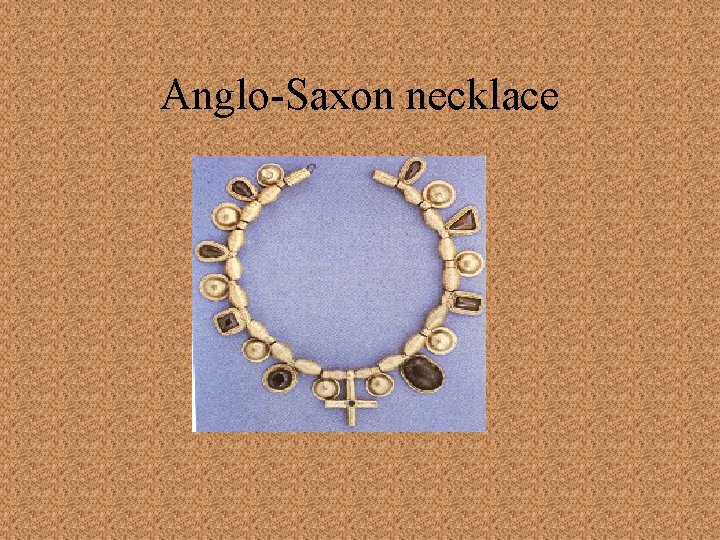
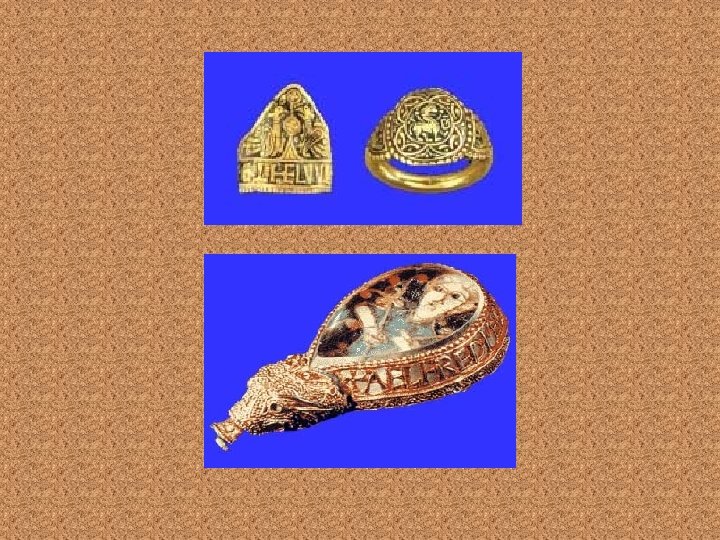
Anglo-Saxon necklace
Pagan vs. Christian Pagan Christian • the worship of idols or false gods, or the system of religious opinions and worship maintained by pagans; heathenism. • Polytheistic (worshipped more than one God). • See life as a blessing, not a sin. • Male and Female Divinity • Nature Centered. • No soliciting converts. • Seek inspiration in pre. Christian sources, folklore, and mythology • The worship of one God and his son Jesus Christ • We are born sinners • Adam and Eve and the Garden of Eden • Good vs. Evil or God vs. Satan • Baptism • Jesus saved the Jewish people • Loyalty and fairness are important qualities
Common Themes • • Courage of hero Emulation of Anglo-Saxon ideals Briefness and sadness of life Mystery and cruelty of the sea Exile Ruin Lament
Beowulf’s Name • Beowulf’s father– Edgetho – In most cases, the son is named after the father • • Donald (son of Don) Mc. Donaldson (son of Don) • Proves Beowulf is own individual with own powers and abilities (and more important than his father) • Beo– Bears are known as Great Protectors in Norse mythology – Strong • Wulf– Wolf – Wolves are also great protectors, but are also cunning and speedy
Anglo-Saxon Poetry
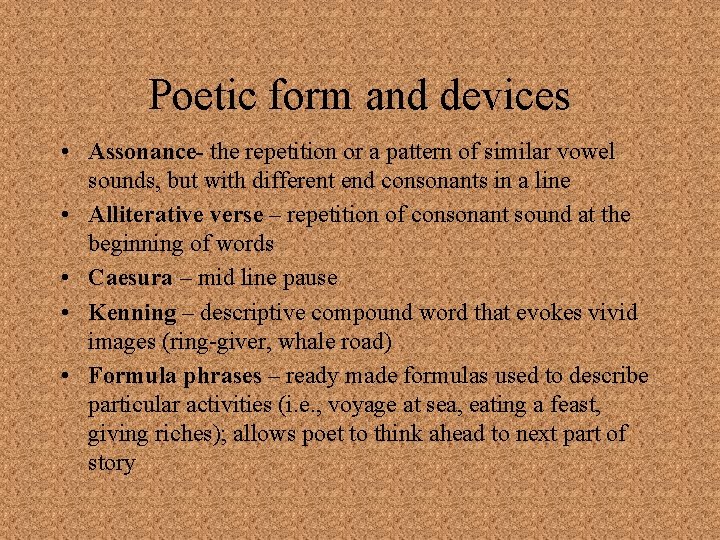
Poetic form and devices • Assonance- the repetition or a pattern of similar vowel sounds, but with different end consonants in a line • Alliterative verse – repetition of consonant sound at the beginning of words • Caesura – mid line pause • Kenning – descriptive compound word that evokes vivid images (ring-giver, whale road) • Formula phrases – ready made formulas used to describe particular activities (i. e. , voyage at sea, eating a feast, giving riches); allows poet to think ahead to next part of story
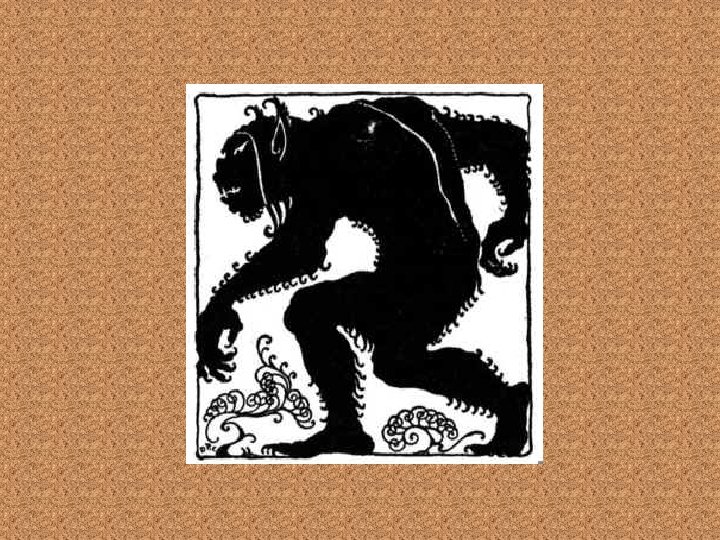
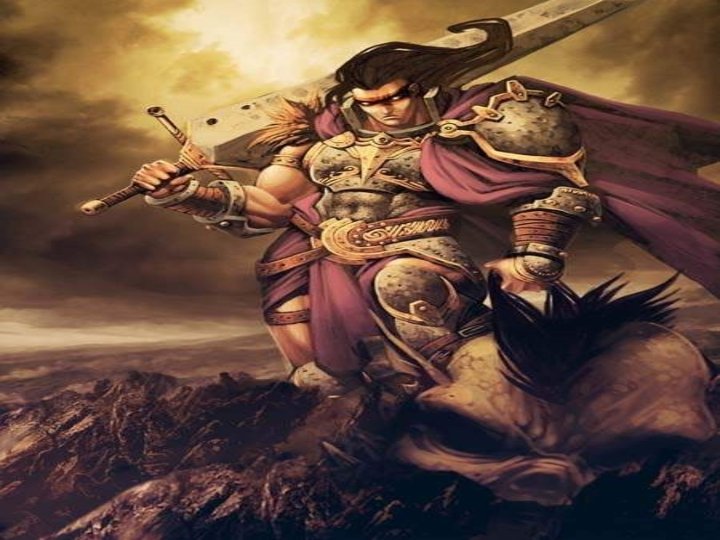
EPIC AND EPIC HERO
Epic Definition An epic is a long narrative poem that relates the great deeds of a larger-than-life hero who embodies the values of a particular society. -Sometimes called a heroic poem -Beowulf, the Iliad, and the Odyssey are all epics
Epics often… • Concern eternal human problems such as the conflict between GOOD and EVIL • Written or told on a grand scale and often in ceremonial style
2 Types of Epics 1. Folk Epic- oral compositions passed on from storyteller to storyteller and has changed over time. Ex. -Beowulf, the Iliad, and the Odyssey 2. Literary Epic- written compositions that are unchanged over time. Ex. Aeneid and Paradise Lost
Epic Characteristics • There are 5 main epic characteristics
Epic Characteristic #1 • The hero is a great leader who is identified strongly with a particular people or society.
Epic Characteristic #2 • The setting is broad and often includes supernatural realms, especially the land of the dead.
Epic Characteristic #3 • The hero does great deeds in battle or undertakes an extraordinary journey or quest.
Epic Characteristic #4 • Sometimes gods or other supernatural or fantastic beings take part in the action.
Epic Characteristic #5 The story is told in heightened language •
Some other Epic characteristics called… EPIC CONVENTIONS- Shared characteristics of epics that bards/scops drew upon to recall the stories they were recounting and that writers of epics drew upon to establish the epic quality of their poems.
EPIC CONVENTION #1 • There is an INVOCATION or formal plea for aid/help. • This plea is usually to a deity or some other spiritual power.
EPIC CONVENTION #2 • The action begins IN MEDIA RES… • literally meaning “in the middle of things”
EPIC CONVENTION #3 • The epic begins in media res and then flashes back to events that took place before the narrator’s current time setting
EPIC CONVENTIONS #4 • Epic Similes- elaborately extended comparisons relating heroic events to simple, everyday events
Epic Hero Definition • The epic hero is a “LARGER THAN LIFE PERSON” who embodies the highest ideals of his culture
Real Example: • In Beowulf, the epic hero Beowulf is considered “larger-than-life” • and embodies LOYALTY, VALOR/ COURAGE, SENSE OF JUSTICE, DIGNITY, PERSISTENCE, and many other traits of the Anglo-Saxon culture
Epic Hero Characteristic #1 The epic hero usually undertakes a QUEST/ JOURNEY to achieve something of great value to themselves or society
Epic Hero Characteristic #2 Epic heroes “LIVE ON AFTER DEATH”… • meaning they are forever remembered by those who live after them… • achieving a type of IMMORTALITY
Epic Hero Characteristic #3 • Not a “Superman” with magical powers, • but a “REGULAR” human whose aspirations and accomplishments set him/her apart
Epic Hero Characteristic #4 • Overcomes great obstacles/opponents but maintains HUMANITY
Epic Hero Characteristic #5 • Epic hero experiences typical HUMAN EMOTIONS/ FEELINGS, yet is able to master and control these human traits to a greater degree than a typical person
Epic Hero Characteristic #6 • It is often necessary for the epic hero to connect/make contact with “LESSER” humans in order to succeed
Also… • The epic hero is an ARCHETYPAL character.
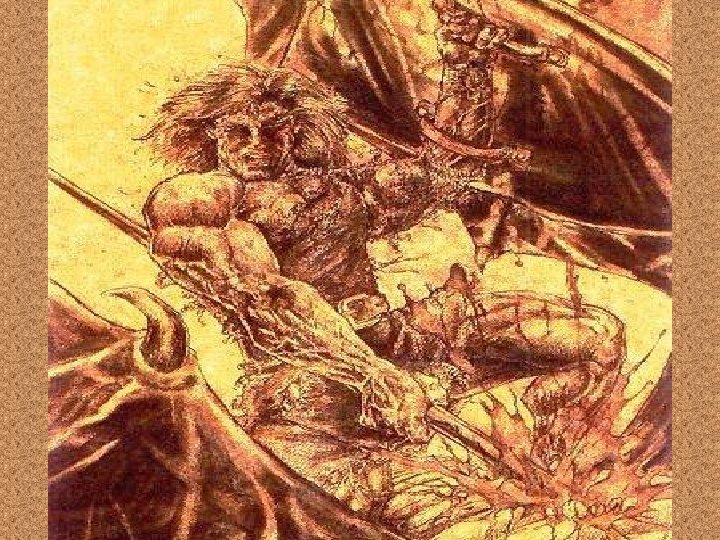
Archetype • An archetype is a pattern that appears in literature across cultures and is repeated through the ages. • An archetype can be a character, a plot, an image, or a setting. • In Beowulf, the hero archetype is the dragon slayer.
What is heroism? • Strong will? • Valor in battle? • Concern for others? Is Beowulf a hero?
• What is a hero? • What is courage? • What qualities do you believe a good leader should possess? • What does it mean to be loyal? • Why is reputation important? • Why is generosity important? What does it mean to be generous?
- Slides: 52