
Benzene Benzene is a clear colorless liquid with
Benzene

Benzene is a clear, colorless liquid with a sweet odor. It is a natural component of crude oil and refined petroleum, volcanic emissions, and cigarette smoke. PPT-SM-B 2017 2

Benzene is potentially toxic, flammable, and unstable. It is a carcinogen, which means it can cause cancer. PPT-SM-B 2017 3

Sources of benzene exposure can include: q. Industrial process emissions q. Cigarette/cigar smoke inhalation q. Gas stations q. Motor vehicle exhaust fumes q. Oil-based liquids and solvents PPT-SM-B 2017 4
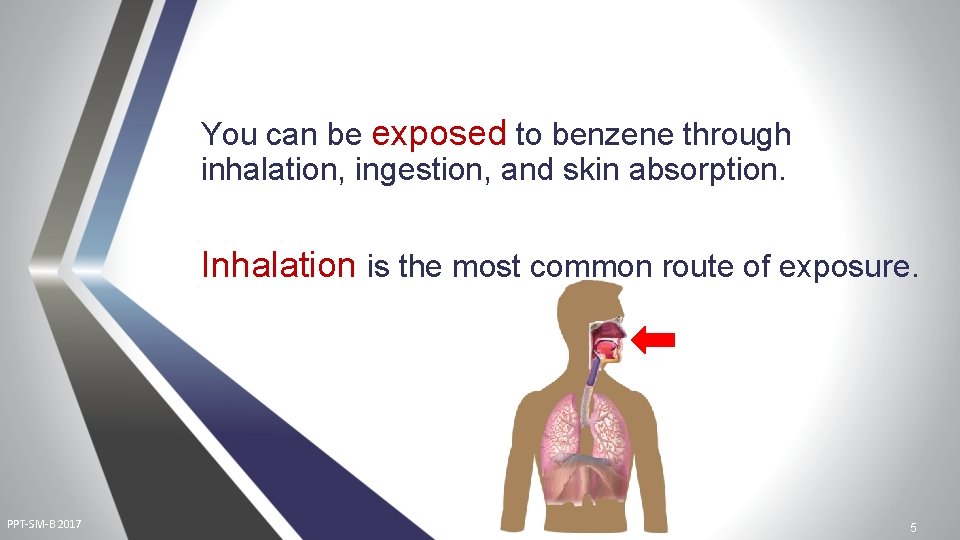
You can be exposed to benzene through inhalation, ingestion, and skin absorption. Inhalation is the most common route of exposure. PPT-SM-B 2017 5
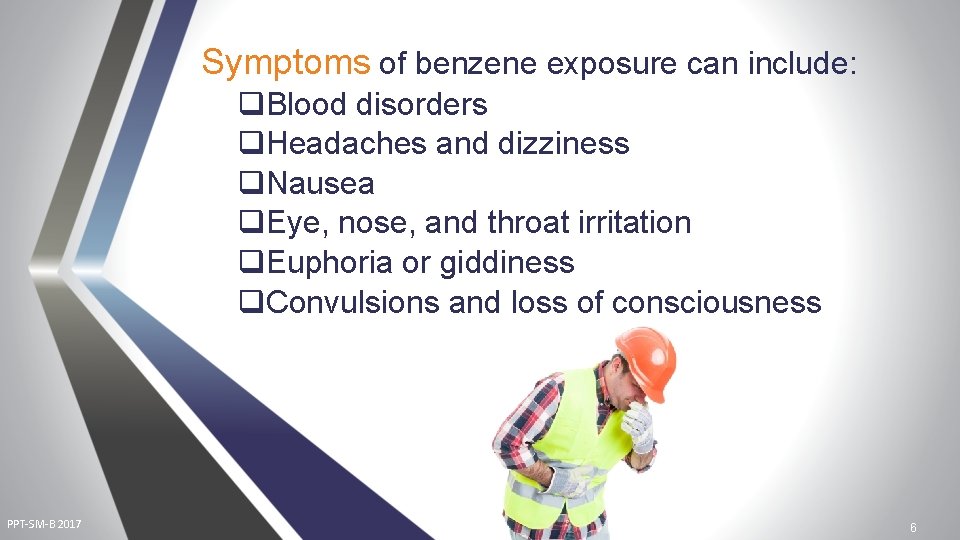
Symptoms of benzene exposure can include: q. Blood disorders q. Headaches and dizziness q. Nausea q. Eye, nose, and throat irritation q. Euphoria or giddiness q. Convulsions and loss of consciousness PPT-SM-B 2017 6

The Occupational Safety and Health Administration (OSHA) sets permissible exposure limits (PELs) on certain chemicals. OSHA limits workplace exposure to benzene in the air to: q 1 part per million (ppm) during an 8 -hour timeweighted average q A maximum of 5 ppm for 15 minutes for a shortterm exposure limit (STEL) PPT-SM-B 2017 7

Your company must develop a benzene program to protect workers when the benzene concentration is above the PEL. A benzene program requires your company to monitor benzene levels and report the results. PPT-SM-B 2017 8
Your company must: q. Set up controls q. Monitor affected workers q. Remove overexposed workers q. Maintain documents and records Affected workers must be notified of the results of monitoring within 15 working days after their company receives the results. PPT-SM-B 2017 9
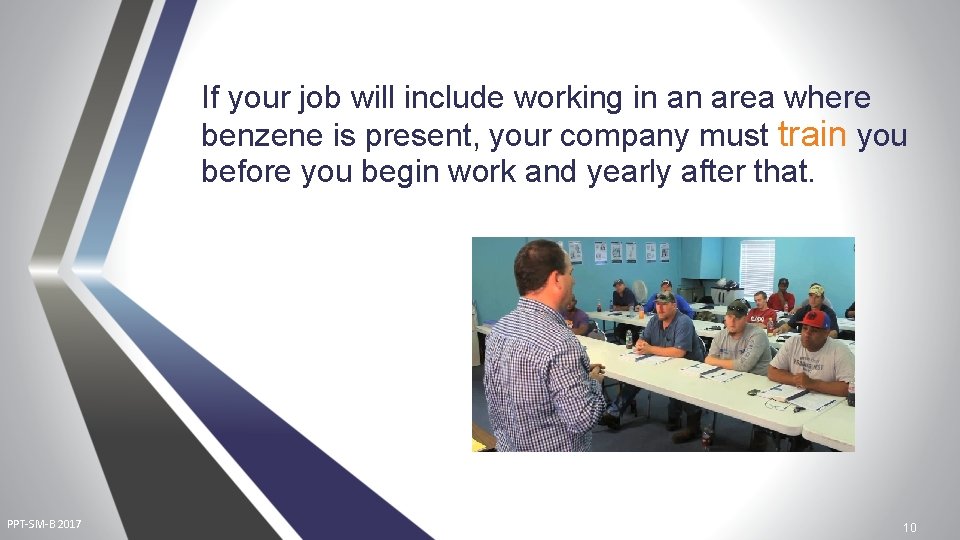
If your job will include working in an area where benzene is present, your company must train you before you begin work and yearly after that. PPT-SM-B 2017 10

Your company must meet minimum hazard communication requirements, set up regulated benzene areas, and post warning signs. PPT-SM-B 2017 11

Other hazard controls for benzene include: q. Providing ventilation q. Eyewash stations q. Substituting less hazardous substances q. Using personal protective equipment (PPE), including protective gloves and suits and respirators PPT-SM-B 2017 12
Before handling benzene, you should be properly trained on any handling and storage requirements: q. Store in tightly closed containers in a cool, well ventilated area away from ignition sources of any kind q. Handle with care using proper grounding and bonding because of the chemical’s unstable behavior PPT-SM-B 2017 13

If engineering controls and work practices cannot reduce worker exposure below the PEL, workers must use appropriate respiratory protection. Review the chart on slide 15 to find out what type of respirator to wear for different benzene concentrations. PPT-SM-B 2017 14
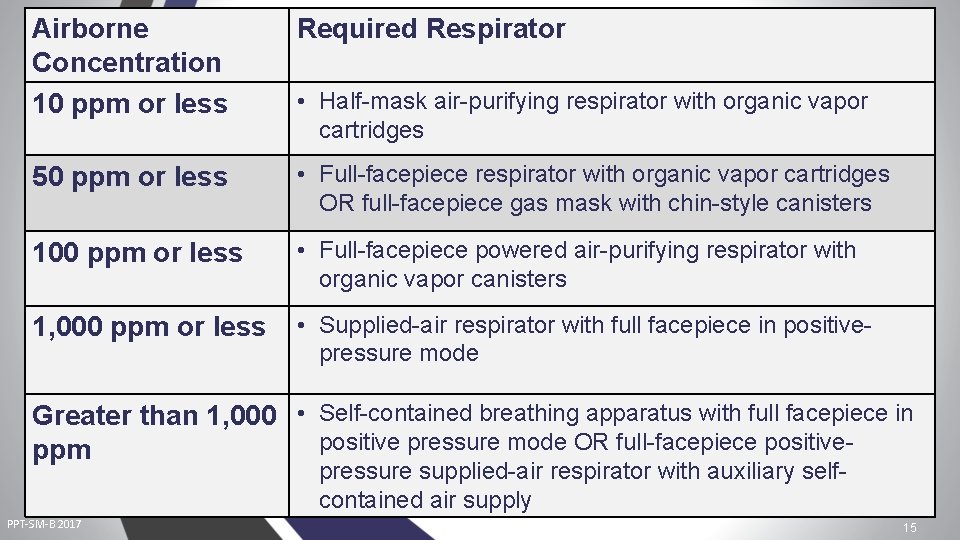
Airborne Concentration 10 ppm or less Required Respirator 50 ppm or less • Full-facepiece respirator with organic vapor cartridges OR full-facepiece gas mask with chin-style canisters 100 ppm or less • Full-facepiece powered air-purifying respirator with organic vapor canisters 1, 000 ppm or less • Supplied-air respirator with full facepiece in positivepressure mode • Half-mask air-purifying respirator with organic vapor cartridges Greater than 1, 000 • Self-contained breathing apparatus with full facepiece in positive pressure mode OR full-facepiece positiveppm pressure supplied-air respirator with auxiliary selfcontained air supply PPT-SM-B 2017 15
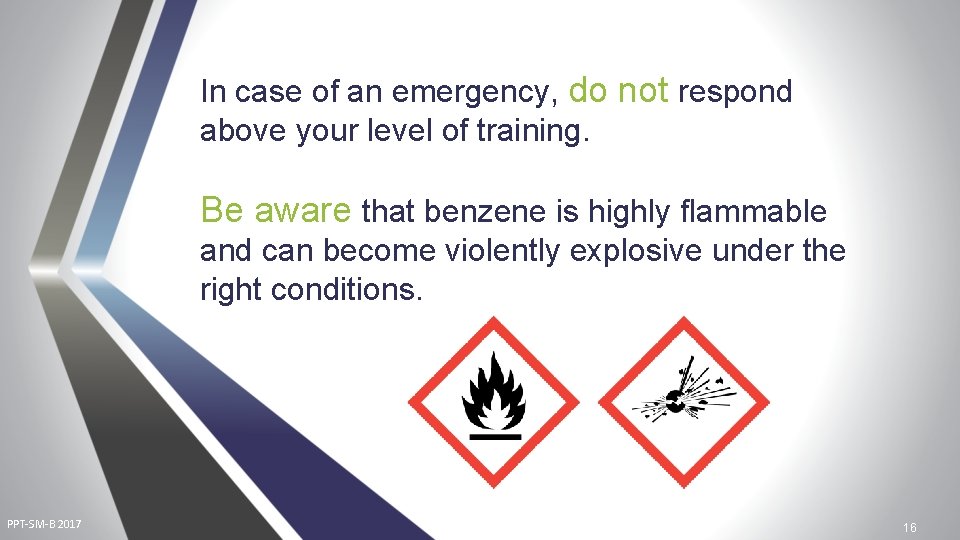
In case of an emergency, do not respond above your level of training. Be aware that benzene is highly flammable and can become violently explosive under the right conditions. PPT-SM-B 2017 16

Benzene is a hazardous chemical that can have harmful effects on workers who are exposed to it. Your company should have a benzene program in place to protect workers if the chemical is above the PEL. Always wear and use appropriate PPE and respiratory protection when required. PPT-SM-B 2017 17
Copyright © 2016 by PEC/Premier Safety Operations, LLC
- Slides: 18