
Bent Out of Shape Understanding and Dealing with
Bent Out of Shape? Understanding and Dealing with STRESS in Your Life
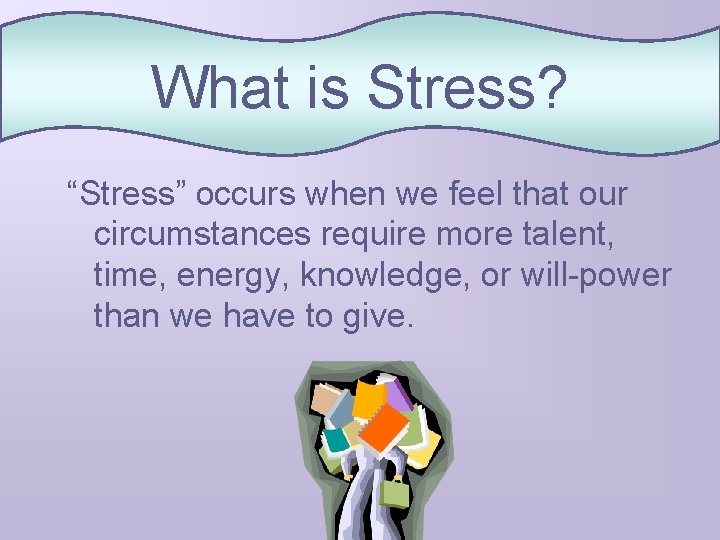
What is Stress? “Stress” occurs when we feel that our circumstances require more talent, time, energy, knowledge, or will-power than we have to give.
Common “Stressful” Events ¢ ¢ ¢ Chronic illness Marital problems Financial problems Death in the family Emotional Problems: l l l Unexpressed anger Depression Grief Guilt Low self-esteem ¢ ¢ ¢ Environmental stress: overcrowding, crime, noise, traffic, etc. . Job related difficulties Life cycle transitions Caregiver burnout Pregnancy Retirement
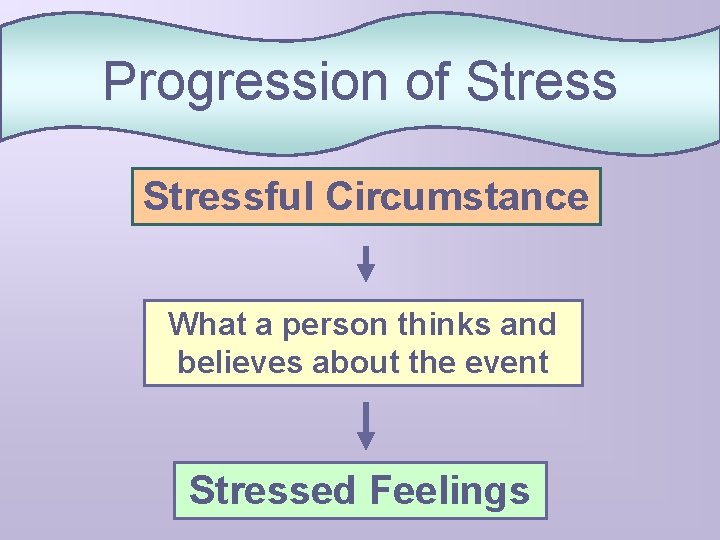
Progression of Stressful Circumstance What a person thinks and believes about the event Stressed Feelings
Symptoms of Stress Rapid heartbeat ¢ Headache ¢ Stiff neck/tight shoulders ¢ Backache ¢ Upset stomach, nausea, diarrhea ¢ Pessimism ¢ ¢ ¢ ¢ Irritability Outbursts of anger Exhaustion Lack of focus Worry Self-doubt Feelings of being lost in details
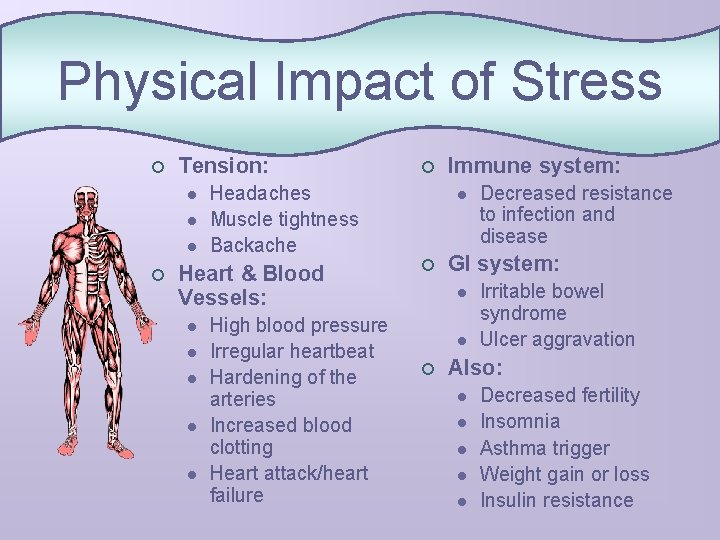
Physical Impact of Stress ¢ Tension: l l l ¢ Headaches Muscle tightness Backache Heart & Blood Vessels: l l l ¢ High blood pressure Irregular heartbeat Hardening of the arteries Increased blood clotting Heart attack/heart failure Immune system: l ¢ GI system: l l ¢ Decreased resistance to infection and disease Irritable bowel syndrome Ulcer aggravation Also: l l l Decreased fertility Insomnia Asthma trigger Weight gain or loss Insulin resistance
Is all stress bad? ¢ Some stress can actually be positive: l New/exciting situations l Challenges at work (problems to solve) l Stress that helps an athlete perform or a presenter to speak in front of an audience
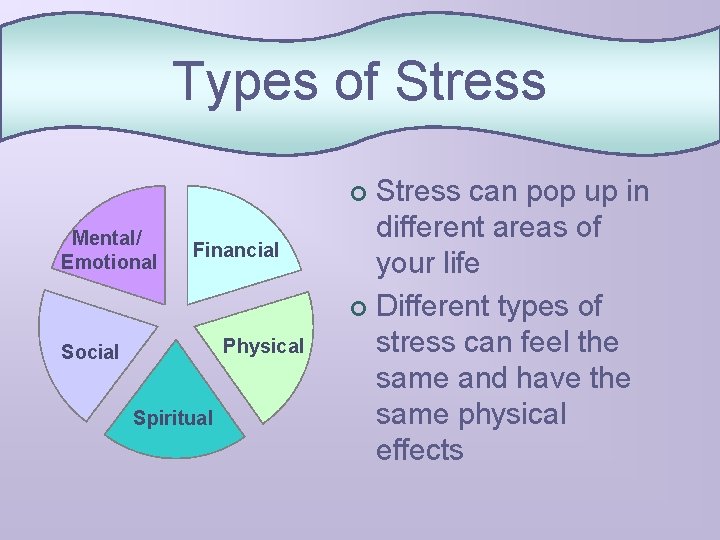
Types of Stress can pop up in different areas of your life ¢ Different types of stress can feel the same and have the same physical effects ¢ Mental/ Emotional Financial Physical Social Spiritual
Mental/Emotional Stress
Who Am I? Not having a clear picture of who you are and what is important to you can result in lack of focus. ¢ Lack of focus negatively affects: ¢ Your goals l Your choices l Your relationships l Your commitments l
Strengths &Weaknesses Ignoring personal strengths and weaknesses can create stress by setting you up for goals and expectations that are unrealistic for your skill set.
Unrealistic Goals ¢ Goals can be stressful when they are unrealistic: Goals that are not reasonable based on a person’s talents and abilities. l Trying to achieve goals without any planning. l Trying to complete a task in an unrealistic time period. l Trying to accomplish too many goals at one time l
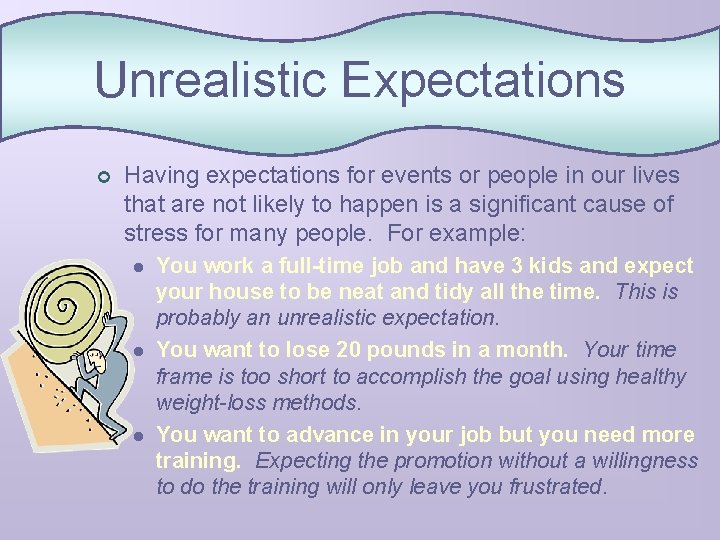
Unrealistic Expectations ¢ Having expectations for events or people in our lives that are not likely to happen is a significant cause of stress for many people. For example: l l l You work a full-time job and have 3 kids and expect your house to be neat and tidy all the time. This is probably an unrealistic expectation. You want to lose 20 pounds in a month. Your time frame is too short to accomplish the goal using healthy weight-loss methods. You want to advance in your job but you need more training. Expecting the promotion without a willingness to do the training will only leave you frustrated.
Negative Outlook Thinking all the time that something bad is about to happen is stressful. ¢ A negative attitude can make you want to quit and give up. ¢ A negative outlook may come from difficulties or disappointments in the past. ¢
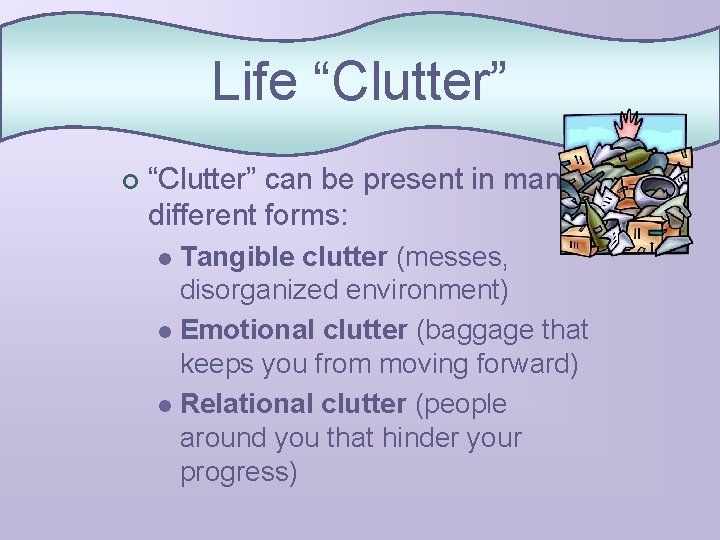
Life “Clutter” ¢ “Clutter” can be present in many different forms: Tangible clutter (messes, disorganized environment) l Emotional clutter (baggage that keeps you from moving forward) l Relational clutter (people around you that hinder your progress) l
Do you have “Margins”? If your daily schedule is so tight that you have no time in between events, your schedule has no margins. ¢ Margin is like the room left on a written page that makes the text easier to read. ¢ Lack of margin can: ¢ Prevent spontaneity l Create stress l
Finding Balance
Know Your Limitations ¢ No one can really “do it all” We each have different talents and abilities l Working together creates the bests results l Recognize the strengths of those around you ¢ Ask for help when you need it ¢
Check Your Expectations Have realistic expectations of yourself and others. ¢ Give the people in your life (and yourself) room to make mistakes. ¢
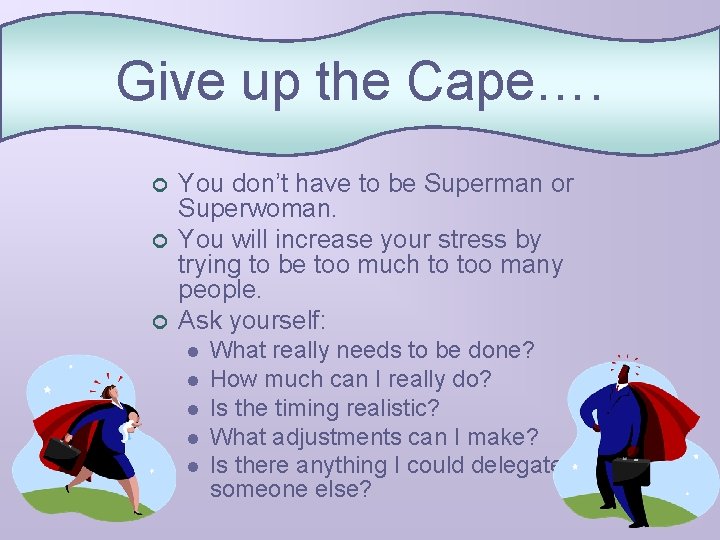
Give up the Cape…. ¢ ¢ ¢ You don’t have to be Superman or Superwoman. You will increase your stress by trying to be too much to too many people. Ask yourself: l l l What really needs to be done? How much can I really do? Is the timing realistic? What adjustments can I make? Is there anything I could delegate to someone else?
Be Adaptable… ¢ ¢ Large trees sway in the wind so that they don’t break. When you are faced with pressures that you can’t control, try to adapt and be flexible.
Time Management Prioritize tasks that are most important too you. ¢ If you don’t get to everything, just work on it the next day. ¢ Try to appreciate what you were able to accomplish without feeling stressed that you didn’t get to everything. ¢
Break it Down… When a large task feels overwhelming it can lead to anxiety or procrastination. ¢ Break large projects down into small, manageable pieces. ¢ “The only way to eat an elephant is one bite at a time. . . ”
Delegate ¢ Think about projects that are causing stress: l What duties are you responsible for that could be delegated to others?
Journaling Some people feel better when they write down their thoughts and feelings. ¢ Journaling can help to identify stress triggers: ¢ l l l Where were you? Who was involved? What was the trigger? What were your reactions? How intense was the stress?
Emotional Outlet It is healthy to vent when you feel overwhelmed. ¢ Discussing a frustrating situation with another person may help you to process through solutions to the problem. ¢
Relaxation Techniques Certain techniques can help a person relax and take their mind off of stressful events or stimuli: ¢ Visualization ¢ Deep breathing exercises ¢ Progressive muscle relaxation ¢ Prayer/ participating in religious activities ¢ Hobbies ¢
Adopt a Positive Attitude Watch your thoughts; they become your words Watch your words; they become your actions Watch your actions; they become your habits Watch your habits; they become your character Watch your character; it becomes your destiny ¢ ¢ What you think about flavors how you feel about life Try choosing to be positive even in unpleasant or undesirable circumstances “…as a man thinketh in his heart- so is he…”
Financial Stress
Financial Problems Having too many financial obligations may force you to overwork in order to pay for everything. ¢ Financial disagreements are often one of the main issues that cause stress in marriage. ¢ Debt can be a weight that makes it harder to reach your goals. ¢
Finding Balance
Financial Peace Plan a budget based on available resources ¢ Live within your budget ¢ Periodically review and adjust your budget ¢ Seek financial counsel as needed ¢ Limit or eliminate “credit” purchases that don’t fit in the budget ¢
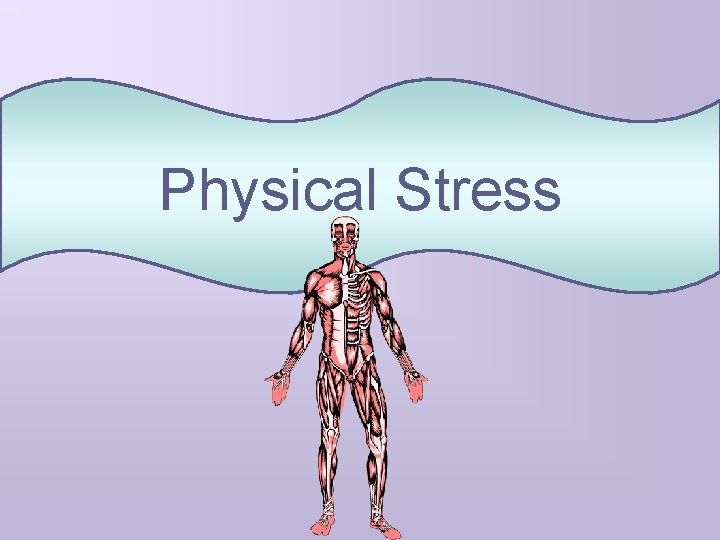
Physical Stress
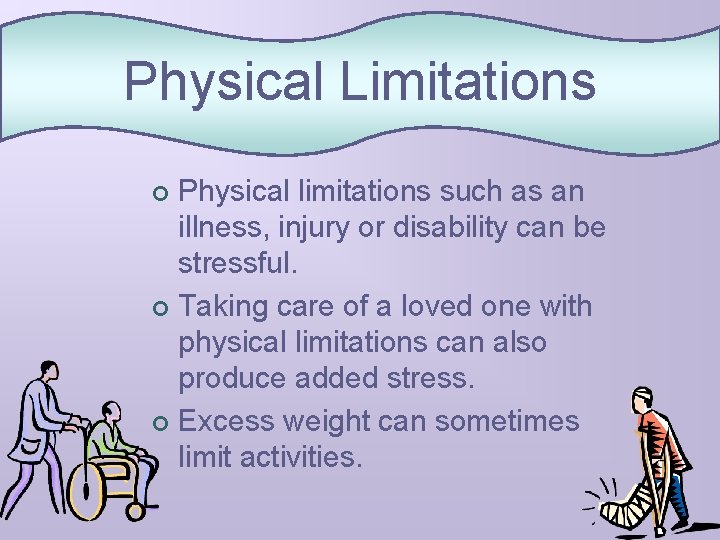
Physical Limitations Physical limitations such as an illness, injury or disability can be stressful. ¢ Taking care of a loved one with physical limitations can also produce added stress. ¢ Excess weight can sometimes limit activities. ¢
Sleep Deprivation Sleep keeps you refreshed and able to focus. ¢ Mental and physical exhaustion may leave you unable to deal appropriately with day to day tasks. ¢ Lack of sleep can cause chemical imbalances in your brain that affect mood and can lead to anxiety and depression. ¢
Poor Diet & Inactivity Poor eating habits can weaken the immune system and make it more difficult for the body to repair damage and prevent or fight infection. ¢ Prolonged inactivity can make even simple tasks seem more difficult and tiring. ¢
Finding Balance
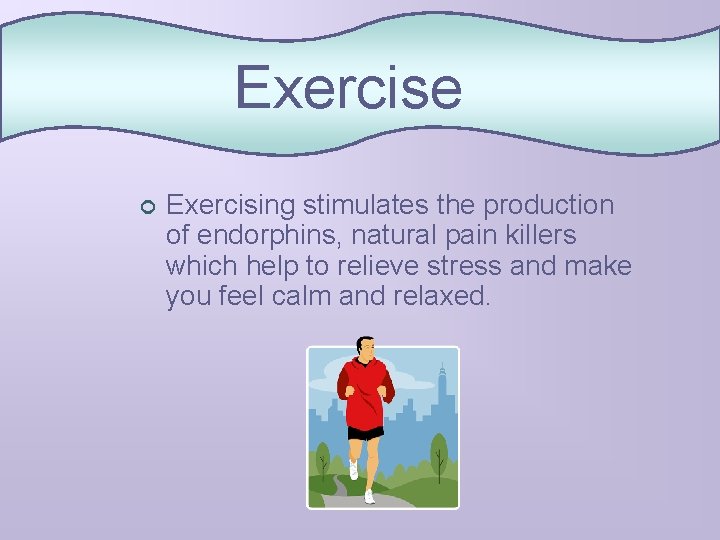
Exercise ¢ Exercising stimulates the production of endorphins, natural pain killers which help to relieve stress and make you feel calm and relaxed.
Adequate Sleep One of the best things you can do (no matter how pressing circumstances seem) is to let yourself get a good night’s rest. ¢ Brain chemistry requires proper sleep/wake cycling to keep you fresh and able to deal with life’s challenges. ¢
Balanced Diet You don’t have to be extreme to have a healthy diet. ¢ Balance and variety is more important than restricting foods from your diet. ¢ Eating fresh foods is usually better than processed foods. ¢ Moderation with sweets and junk food. ¢
Social Stress
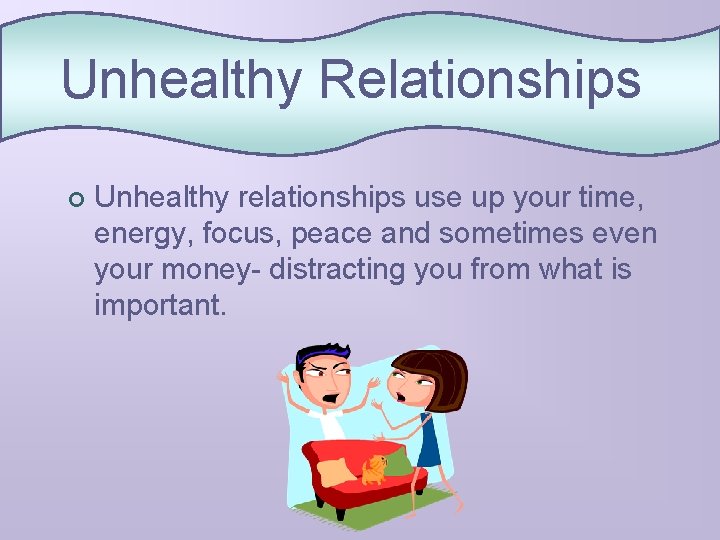
Unhealthy Relationships ¢ Unhealthy relationships use up your time, energy, focus, peace and sometimes even your money- distracting you from what is important.
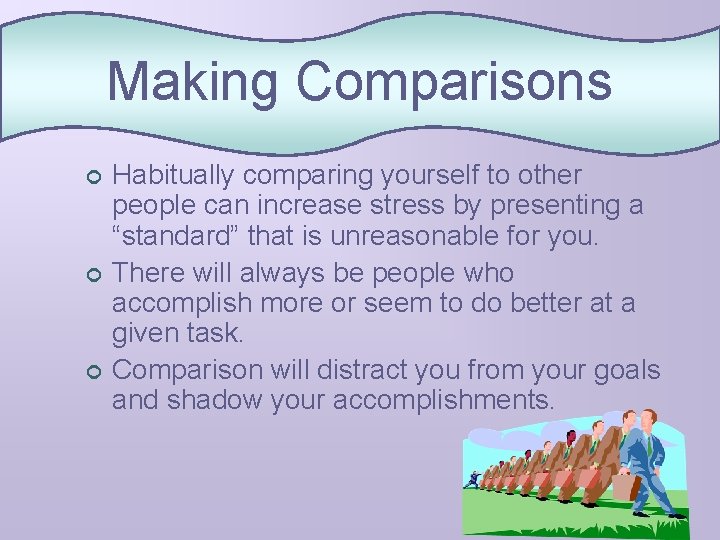
Making Comparisons ¢ ¢ ¢ Habitually comparing yourself to other people can increase stress by presenting a “standard” that is unreasonable for you. There will always be people who accomplish more or seem to do better at a given task. Comparison will distract you from your goals and shadow your accomplishments.
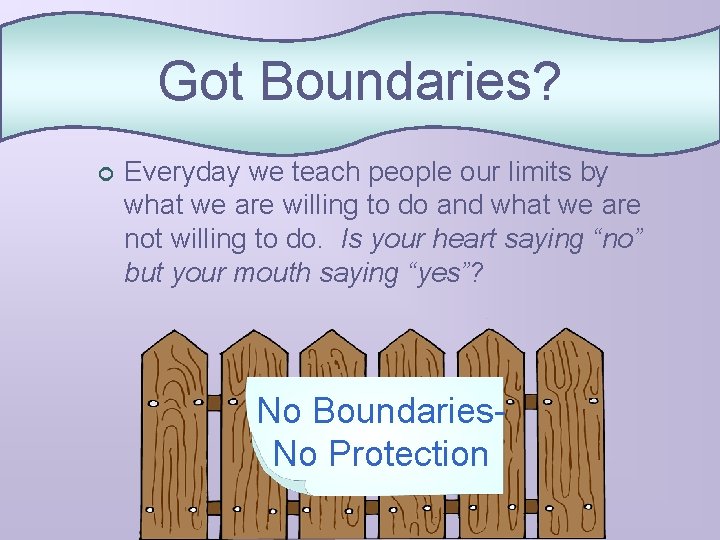
Got Boundaries? ¢ Everyday we teach people our limits by what we are willing to do and what we are not willing to do. Is your heart saying “no” but your mouth saying “yes”? No Boundaries. No Protection
Boundary Check ¢ ¢ ¢ Are you able to openly disagree with other people? Do you commit to things you don’t really want to do? Do you ever feel like you are doing something only to keep someone else happy? Do you take time for yourself or are you always taking care of other people? Do you feel responsible for the feelings or actions of other people?
Finding Balance
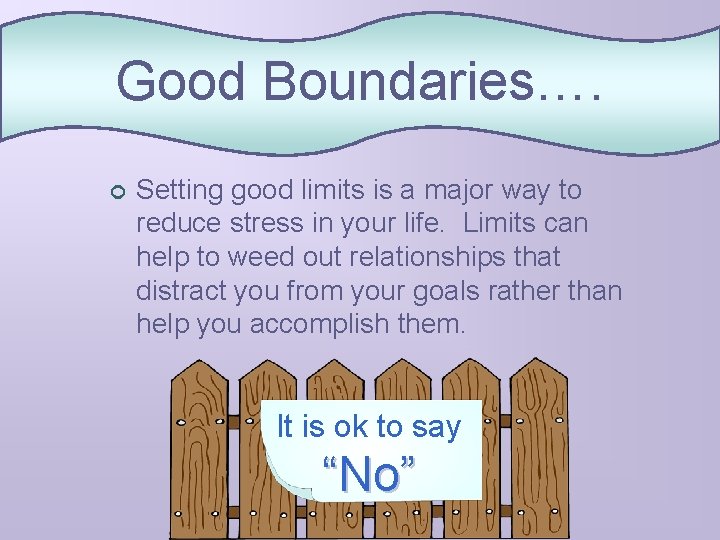
Good Boundaries…. ¢ Setting good limits is a major way to reduce stress in your life. Limits can help to weed out relationships that distract you from your goals rather than help you accomplish them. It is ok to say “No”
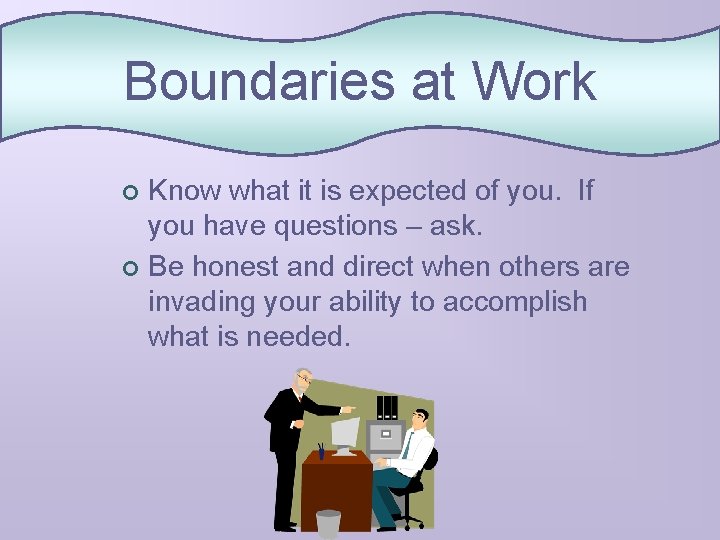
Boundaries at Work Know what it is expected of you. If you have questions – ask. ¢ Be honest and direct when others are invading your ability to accomplish what is needed. ¢
Your “Board of Directors” Large companies have a “Board of Directors” that advise those in management and help them make wise decisions. ¢ Who do you go to for input when you need advice on major decisions? Friends? A Mentor? Family members? ¢ Make sure these people are helping you achieve your goals. ¢
Social Support ¢ ¢ Relationships don’t have to add stress, they can actually help you deal with stress. Social support can take many different forms: l l l l Family members Friends Co-workers Assistance programs Support groups Members or leaders at your church or religious organization A professional counselor
Spiritual Stress
Integrity Check… Are there negative choices that you continue to make that sabotage your attempts to succeed and get ahead? ¢ Are you: ¢ Honest? l Dependable? l Trustworthy? l Responsible? l
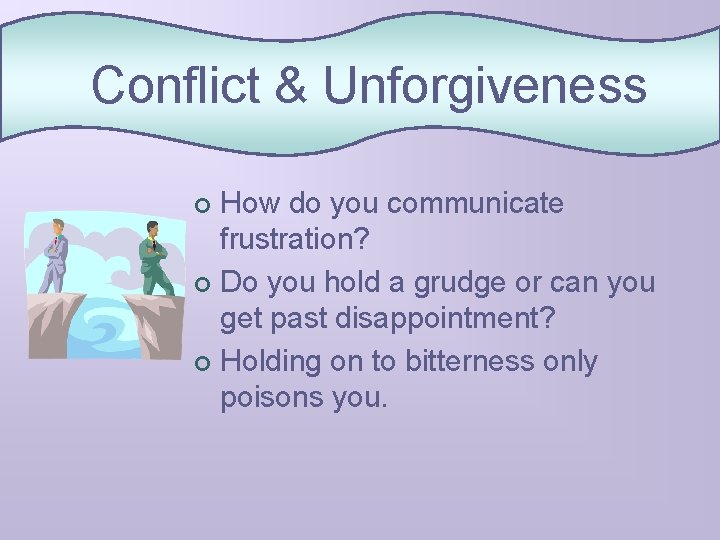
Conflict & Unforgiveness How do you communicate frustration? ¢ Do you hold a grudge or can you get past disappointment? ¢ Holding on to bitterness only poisons you. ¢
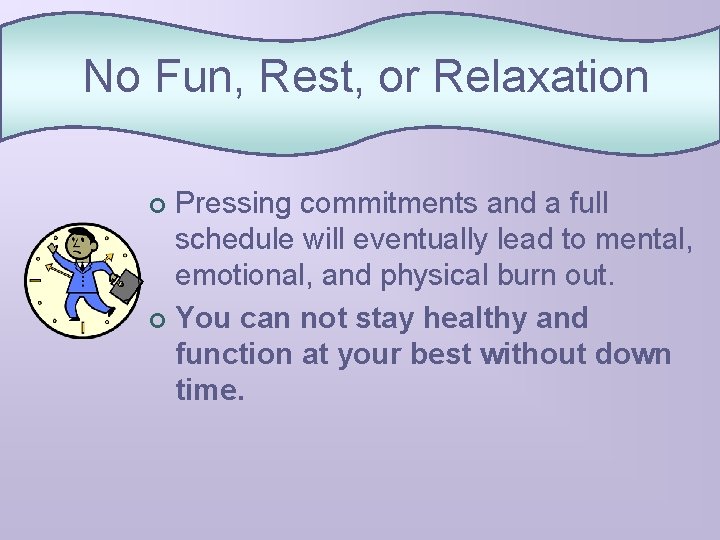
No Fun, Rest, or Relaxation Pressing commitments and a full schedule will eventually lead to mental, emotional, and physical burn out. ¢ You can not stay healthy and function at your best without down time. ¢
Finding Balance
Feed Your Spirit Know what your spiritual outlook is and why you believe what you do. ¢ You may find it helpful to congregate with like minded people. ¢ Several religious disciplines practice prayer or some type of quiet reflection that may help you deal with stress. ¢
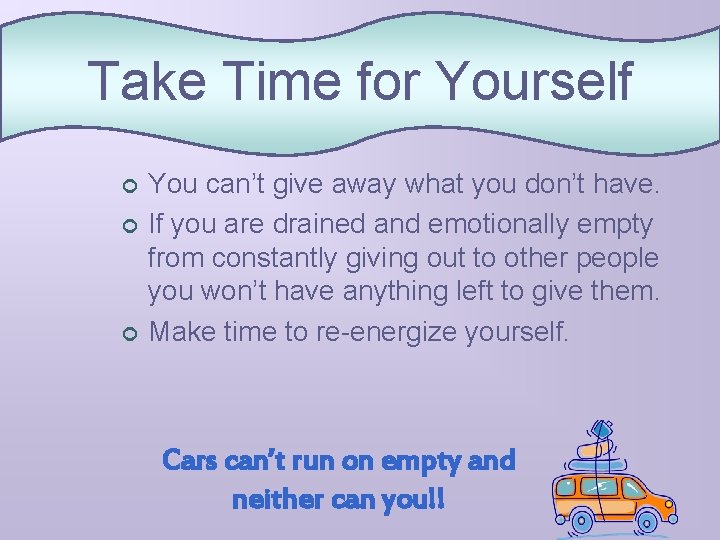
Take Time for Yourself ¢ ¢ ¢ You can’t give away what you don’t have. If you are drained and emotionally empty from constantly giving out to other people you won’t have anything left to give them. Make time to re-energize yourself. Cars can’t run on empty and neither can you!!
Have Fun! Hobbies ¢ Gardening ¢ Reading ¢ Watching a movie ¢ Visiting with friends ¢ Whatever you enjoy that allows you to relax and take a break from work and pressing responsibilities ¢
Humor Try not to take things too seriously!! ¢ Laughter helps to release tension and reduce stress hormones. ¢ Surround yourself with positive, happy people. ¢ Take the time to laugh about and enjoy life. ¢ “A merry heart helps like a medicine… “
Moving Forward
What is My Role? CHANGE what you can… ACCEPT what you can’t.
What Can You Change? 1. 2. 3. Your thinking? - Focus on the positive, try to see problems as opportunities, keep a sense of humor. Your lifestyle choices? - Healthy diet, regular exercise, adequate sleep, leisure time, relaxation techniques. The situations you are in? - Time and money management, assertiveness, leave a job or relationship. Make changes that will lessen the load of stress in your life.
Avoid Negative Coping Mechanisms ¢ ¢ Alcohol Drugs Smoking Eating: l l l ¢ ¢ Too much Too little Poorly Blaming or displacing stress to others Violence Pessimism Withdrawal
Changing Your Response to Stress ¢ ¢ The way you are thinking about a situation may make it seem worse. What kind of mental tape is playing? Check for potential pitfalls: l l l Are you trying to keep everyone else happy/pleased? Are you seeing things as black and white? Urgent and critical? Are you determined that you always have to finish at the top?
Stress doesn’t have to take over your life! You hold the keys to identify and change some of the things in your life that make you feel stressed. Why not start today!
- Slides: 65