
Benjamin A Pierce GENETICS A Conceptual Approach FIFTH
Benjamin A. Pierce GENETICS A Conceptual Approach FIFTH EDITION CHAPTER 16 Control of Gene Expression in Prokaryotes © 2014 W. H. Freeman and Company

16. 1 The Regulation of Gene Expression is Critical for All Organisms • Genes and Regulatory Elements • Levels of Gene Regulation • DNA-Binding Proteins
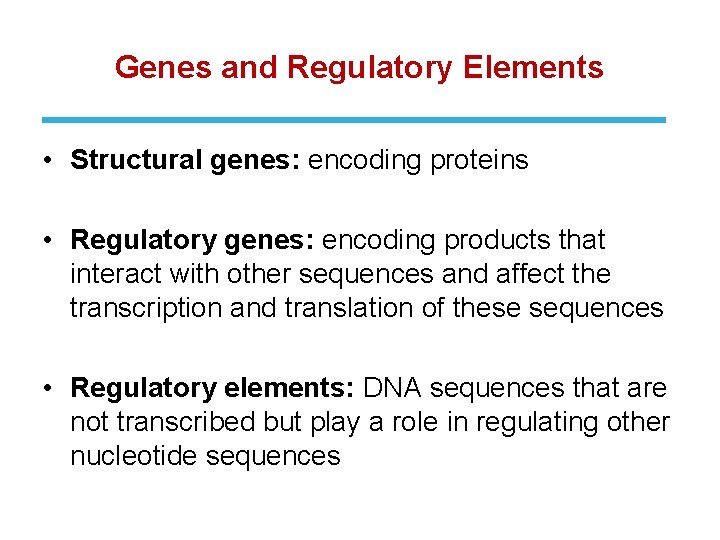
Genes and Regulatory Elements • Structural genes: encoding proteins • Regulatory genes: encoding products that interact with other sequences and affect the transcription and translation of these sequences • Regulatory elements: DNA sequences that are not transcribed but play a role in regulating other nucleotide sequences
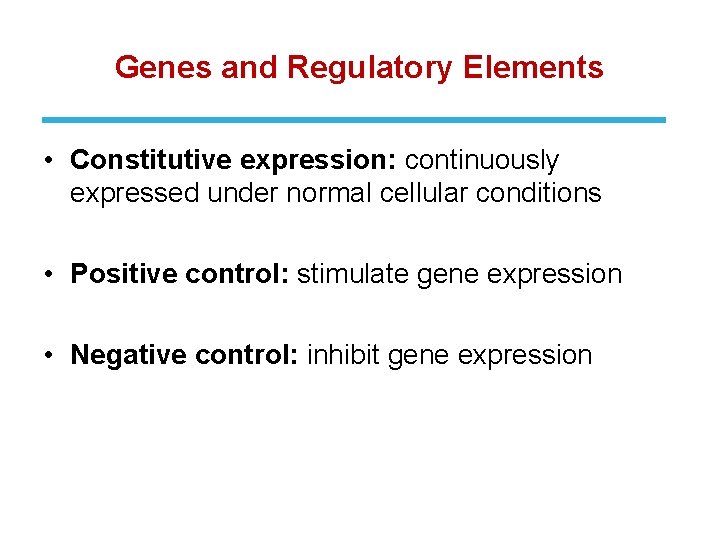
Genes and Regulatory Elements • Constitutive expression: continuously expressed under normal cellular conditions • Positive control: stimulate gene expression • Negative control: inhibit gene expression
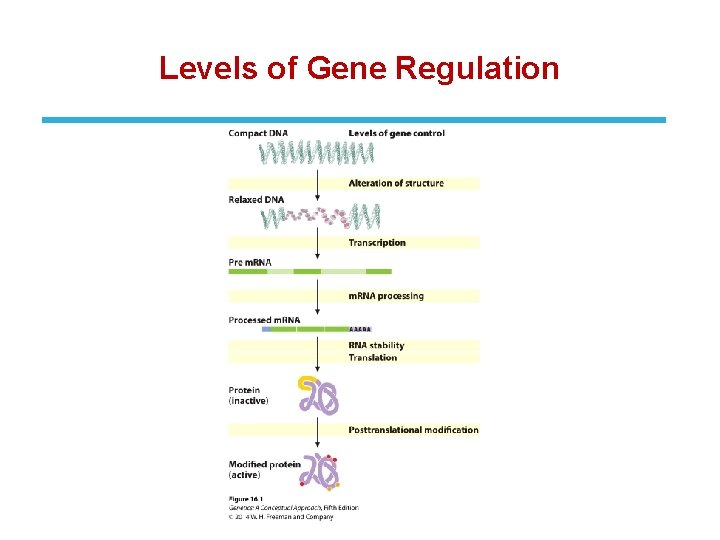
Levels of Gene Regulation
DNA-Binding Proteins • Domains: ~ 60 - 90 amino acids, responsible for binding to DNA, forming hydrogen bonds with DNA • Motif: within the binding domain, a simple structure that fits into the major groove of the DNA ‒ Distinctive types of DNA-binding proteins based on the motif
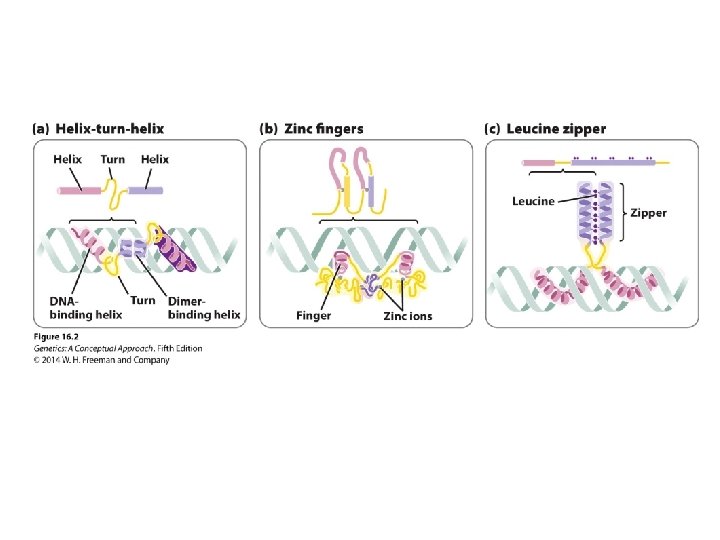
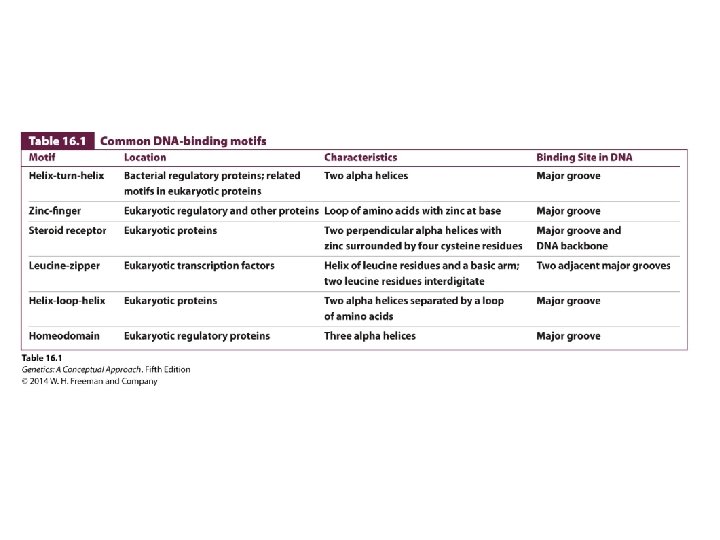
Concept Check 1 How do amino acids in DNA-binding proteins interact with DNA? a. By forming covalent bonds with DNA base b. By forming hydrogen bonds with DNA base c. By forming covalent bonds with sugars
Concept Check 1 How do amino acids in DNA-binding proteins interact with DNA? a. By forming covalent bonds with DNA base b. By forming hydrogen bonds with DNA base c. By forming covalent bonds with sugars
16. 2 Operons Control Transcription in Bacterial Cells • Operon Structure • Negative and Positive Control: Inducible and Repressible Operons • The lac Operon of E. coli • lac Mutations • Positive Control and Catabolite Repression • The trp Operon of E. coli
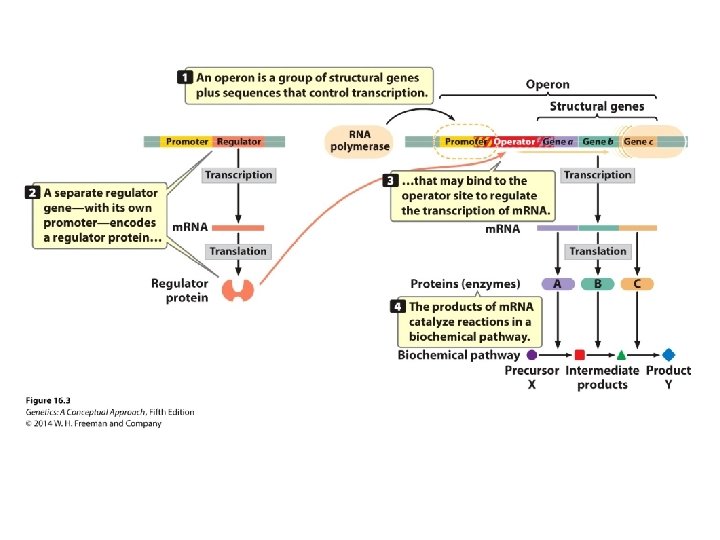
Operon Structure • Operon: promoter + additional sequences that control transcription (operator) + structure genes • Regulator gene: DNA sequence encoding products that affect the operon function, but are not part of the operon
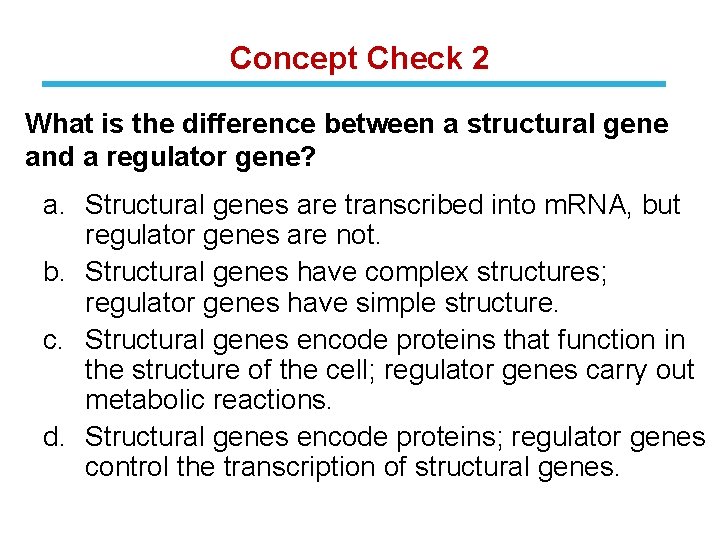
Concept Check 2 What is the difference between a structural gene and a regulator gene? a. Structural genes are transcribed into m. RNA, but regulator genes are not. b. Structural genes have complex structures; regulator genes have simple structure. c. Structural genes encode proteins that function in the structure of the cell; regulator genes carry out metabolic reactions. d. Structural genes encode proteins; regulator genes control the transcription of structural genes.
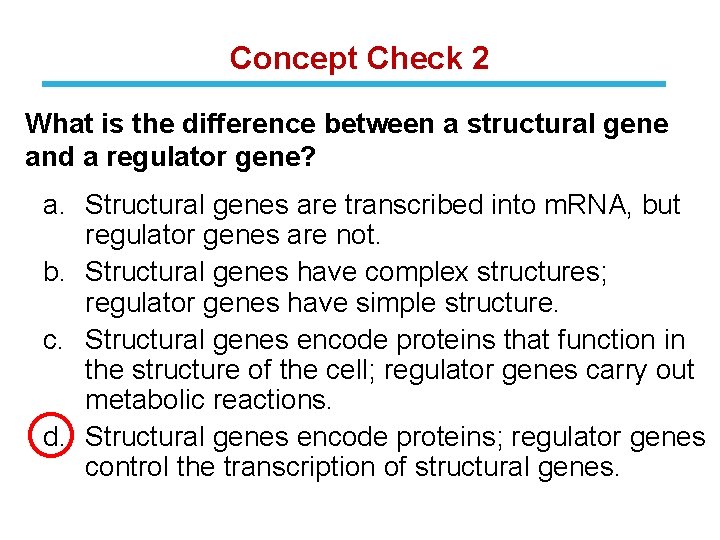
Concept Check 2 What is the difference between a structural gene and a regulator gene? a. Structural genes are transcribed into m. RNA, but regulator genes are not. b. Structural genes have complex structures; regulator genes have simple structure. c. Structural genes encode proteins that function in the structure of the cell; regulator genes carry out metabolic reactions. d. Structural genes encode proteins; regulator genes control the transcription of structural genes.
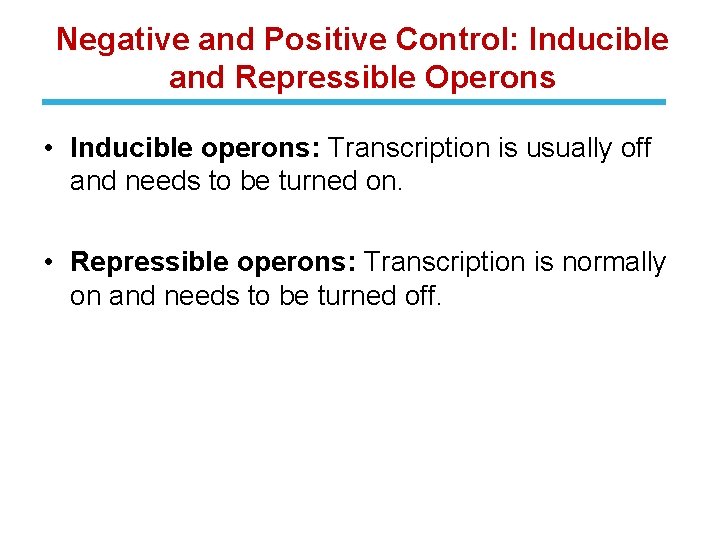
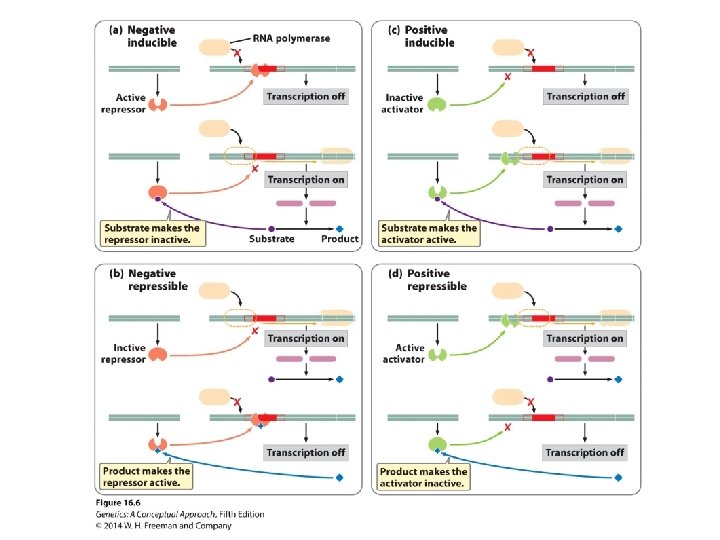
Negative and Positive Control: Inducible and Repressible Operons • Inducible operons: Transcription is usually off and needs to be turned on. • Repressible operons: Transcription is normally on and needs to be turned off.
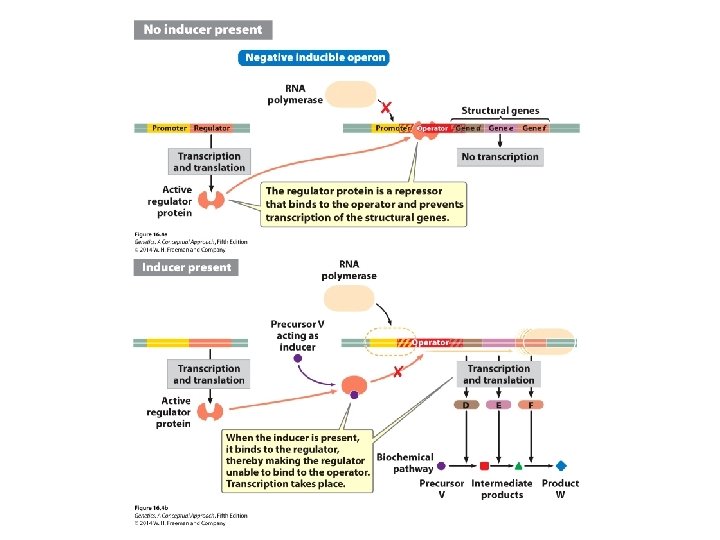
Negative and Positive Control: Inducible and Repressible Operons • Negative inducible operons: The control at the operator site is negative. Molecule binding is to the operator, inhibiting transcription. Such operons are usually off and need to be turned on, so the transcription is inducible. • Inducer: small molecule that turns on the transcription.
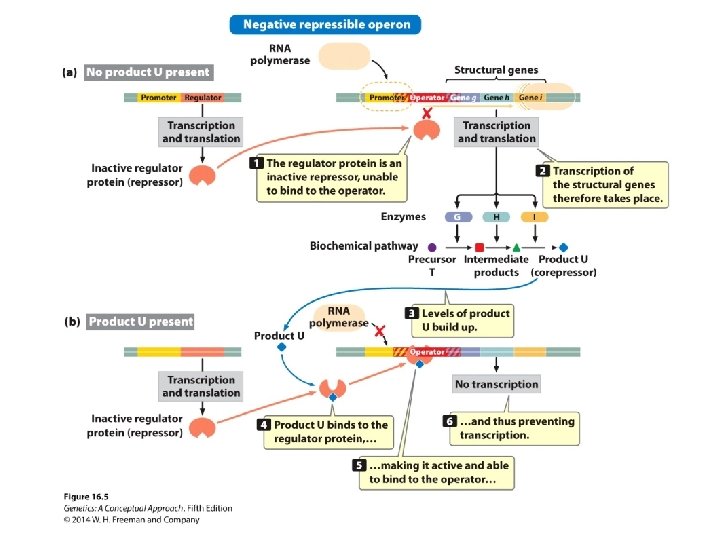
Negative and Positive Control: Inducible and Repressible Operons • Negative repressible operons: The control at the operator site is negative. But such transcription is usually on and needs to be turned off, so the transcription is repressible. • Corepressor: a small molecule that binds to the repressor and makes it capable of binding to the operator to turn off transcription.
Negative and Positive Control: Inducible and Repressible Operons • Positive inducible operon • Positive repressible operon
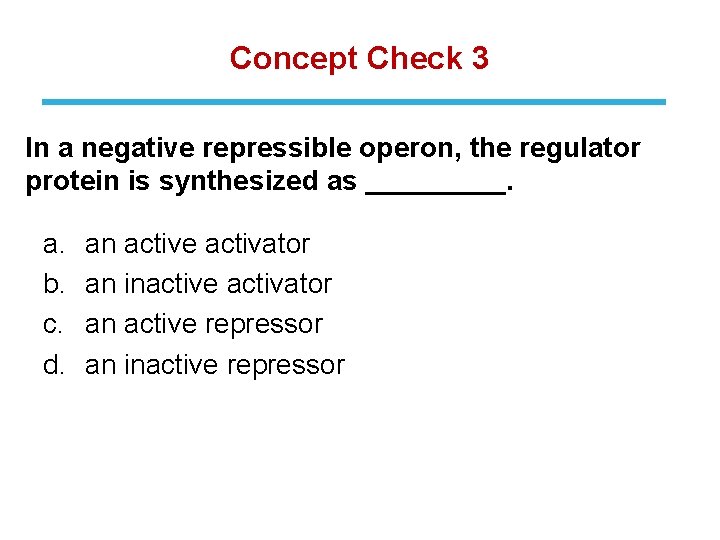
Concept Check 3 In a negative repressible operon, the regulator protein is synthesized as. a. b. c. d. an active activator an inactive activator an active repressor an inactive repressor
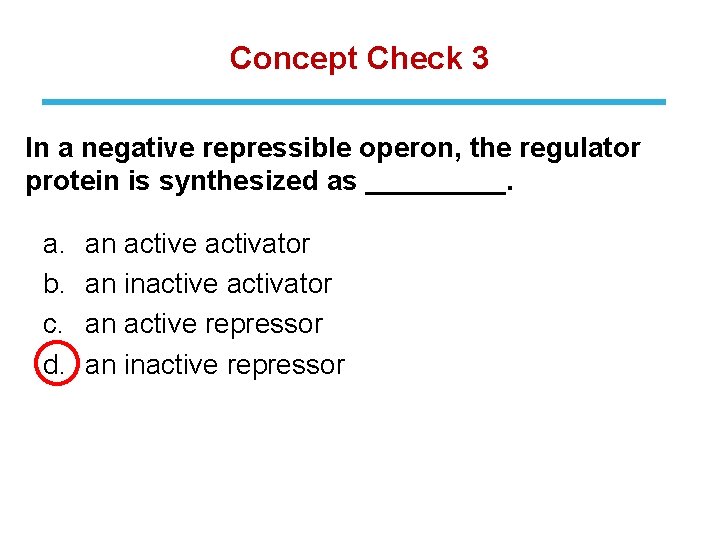
Concept Check 3 In a negative repressible operon, the regulator protein is synthesized as. a. b. c. d. an active activator an inactive activator an active repressor an inactive repressor
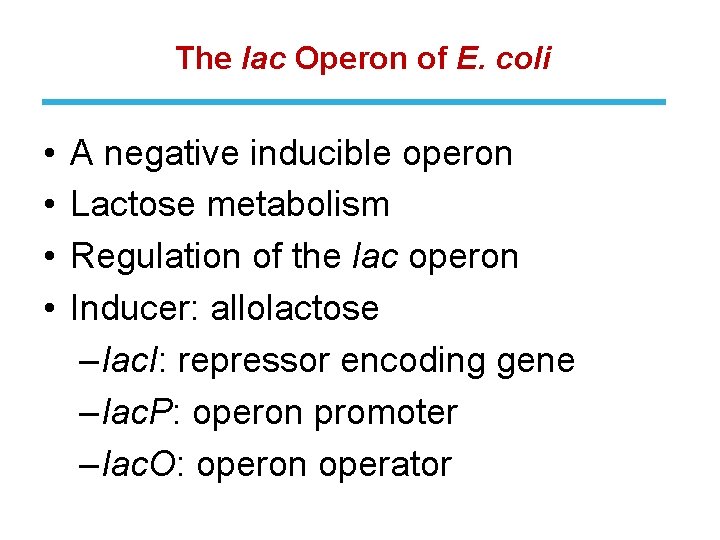
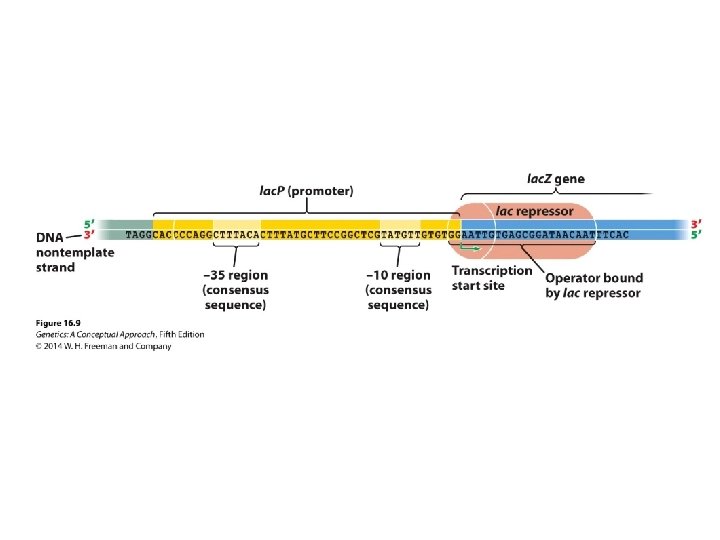
The lac Operon of E. coli • • A negative inducible operon Lactose metabolism Regulation of the lac operon Inducer: allolactose – lac. I: repressor encoding gene – lac. P: operon promoter – lac. O: operon operator
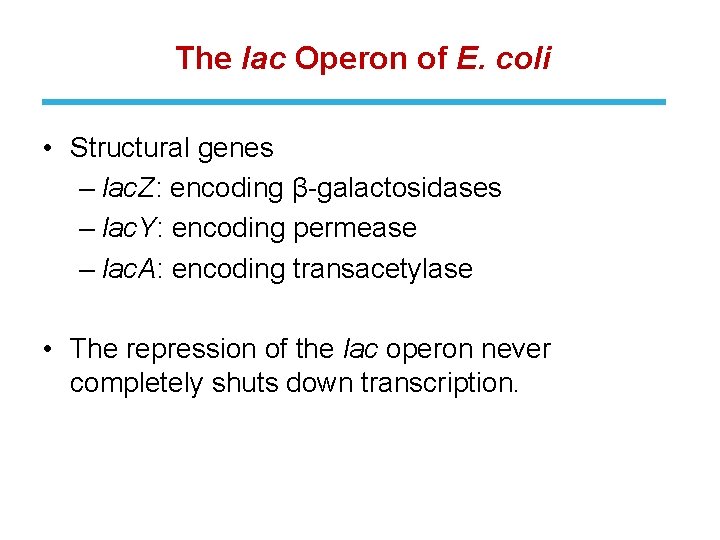
The lac Operon of E. coli • Structural genes ‒ lac. Z: encoding β-galactosidases ‒ lac. Y: encoding permease ‒ lac. A: encoding transacetylase • The repression of the lac operon never completely shuts down transcription.
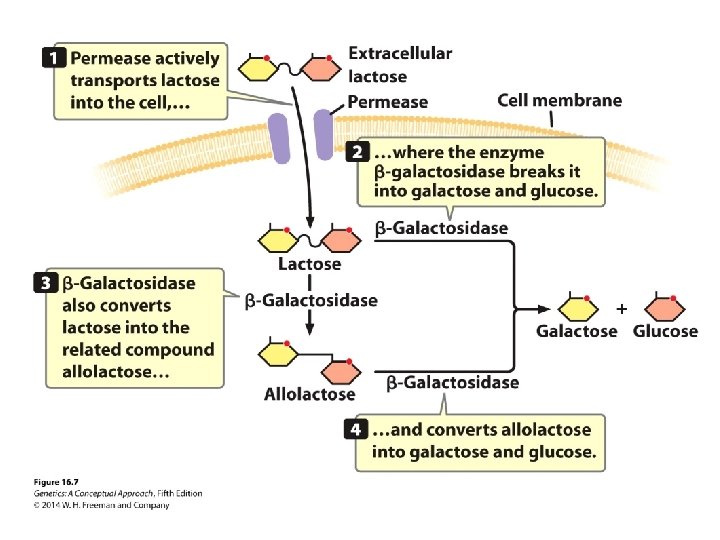
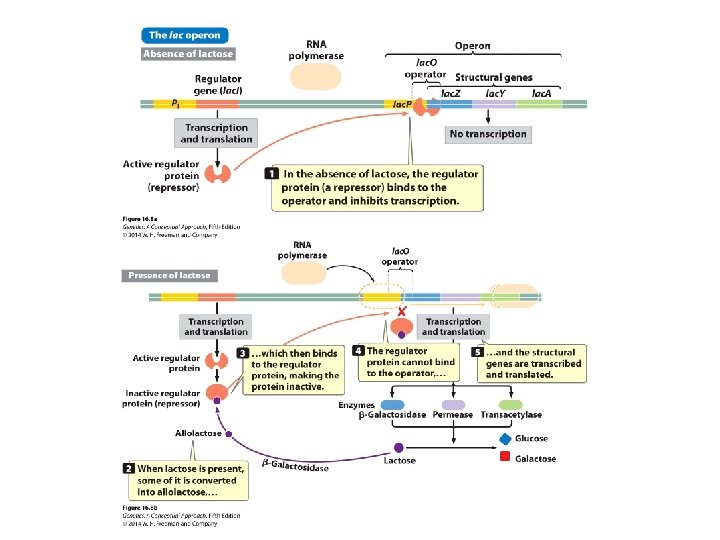
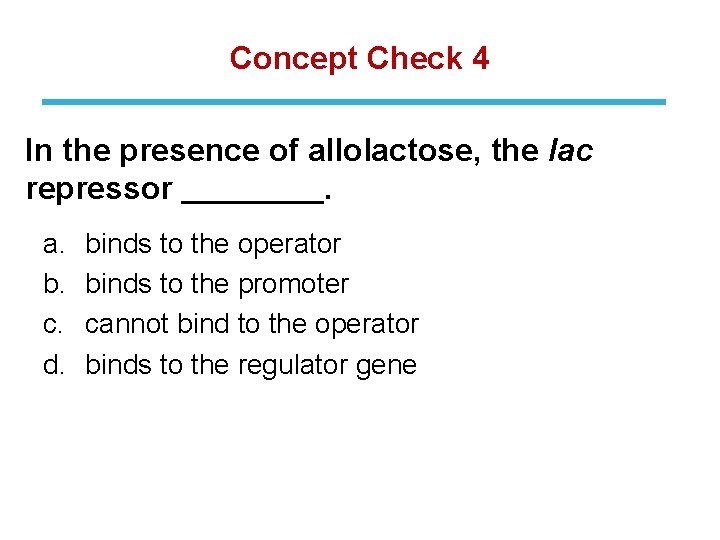
Concept Check 4 In the presence of allolactose, the lac repressor. a. b. c. d. binds to the operator binds to the promoter cannot bind to the operator binds to the regulator gene
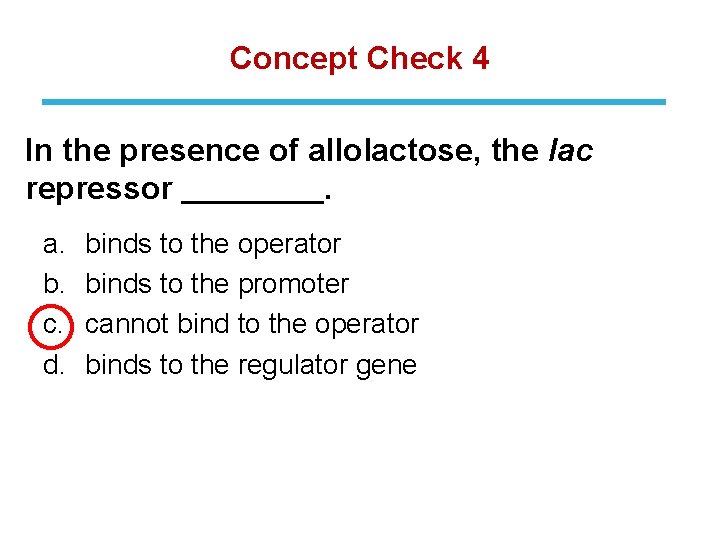
Concept Check 4 In the presence of allolactose, the lac repressor. a. b. c. d. binds to the operator binds to the promoter cannot bind to the operator binds to the regulator gene
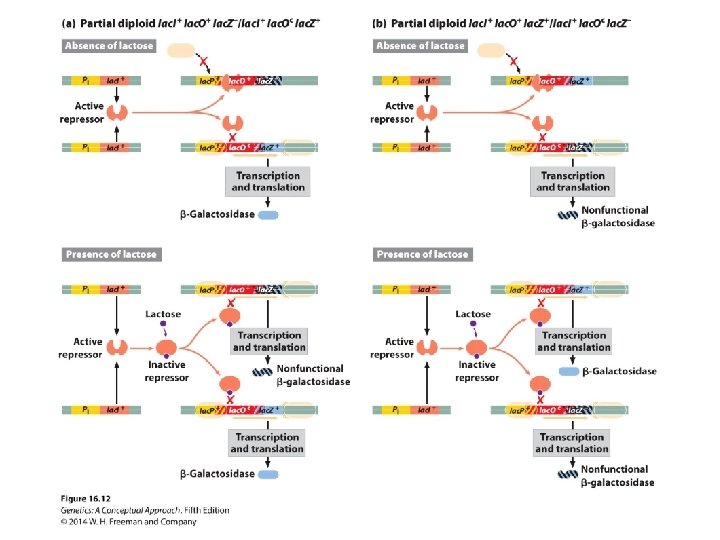
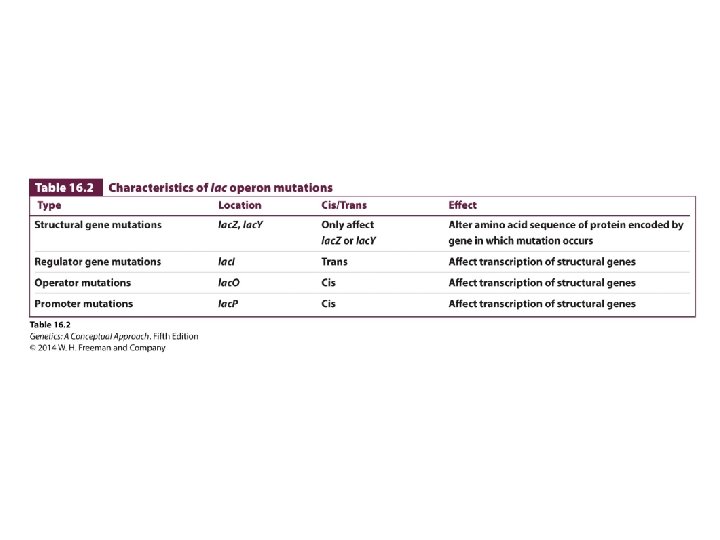
lac Mutations • Partial diploid: full bacterial chromosome + an extra piece of DNA on F plasmid • Structural gene mutations: affect the structure of the enzymes, but not the regulations of their synthesis • lac. Z+lac. Y−/lac. Z−lac. Y+ produce fully functional β-galactosidase and permease.
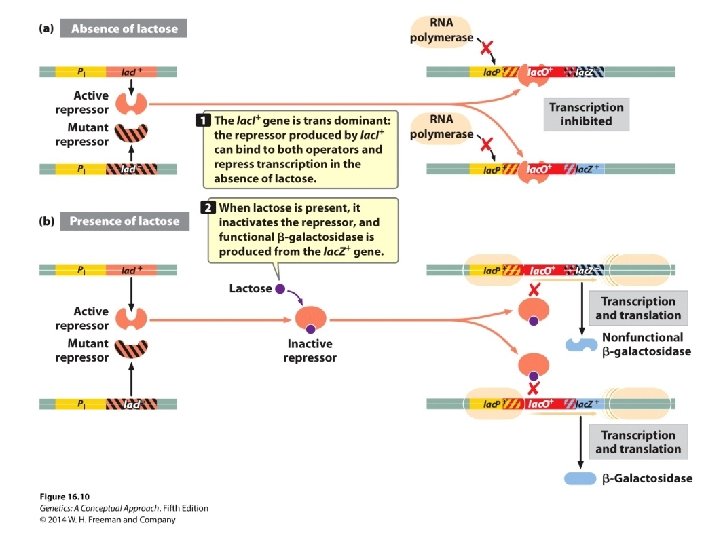
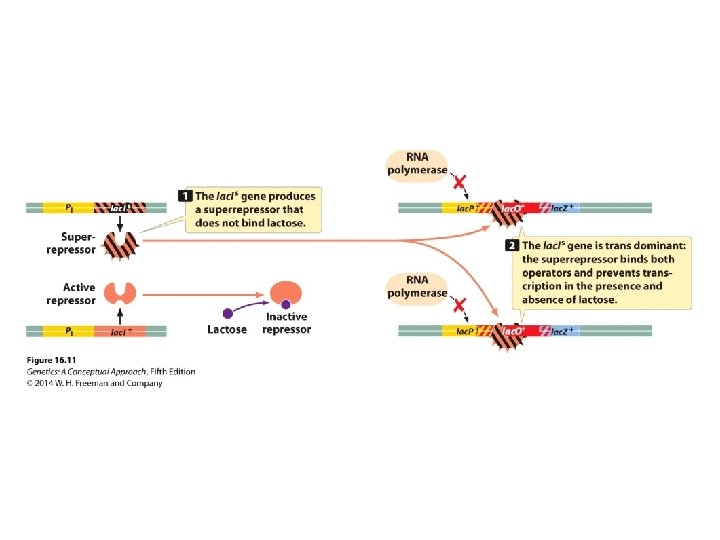
lac Mutations • Regulator gene mutations: lac. I− leads to constitutive transcription of three structure genes. ‒ lac. I+ is dominant over lac. I− and is trans acting. A single copy of lac. I+ brings about normal regulation of lac operon. ‒ lac. I+lac. Z−/lac. I−lac. Z+ produce fully functional βgalactosidase.
lac Mutations • Operator mutations: lac. Oc: C = constitutive • lac. Oc is dominant over lac. O+, which is cis acting. • lac. I+lac. O+Z−/lac. I+lac. Oclac. Z+ produce fully functional β-galactosidase constitutively.
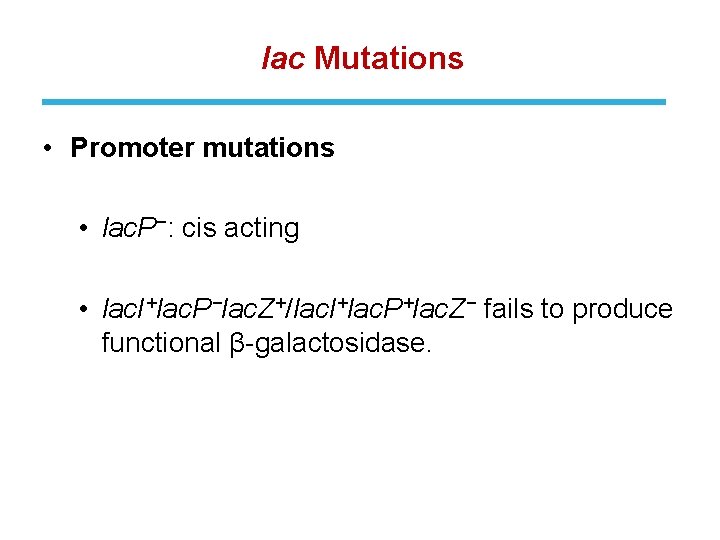
lac Mutations • Promoter mutations • lac. P−: cis acting • lac. I+lac. P−lac. Z+/lac. I+lac. P+lac. Z− fails to produce functional β-galactosidase.
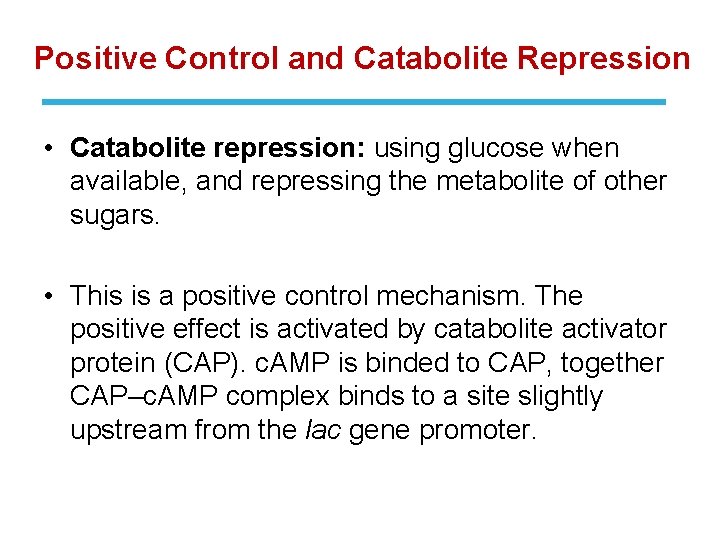
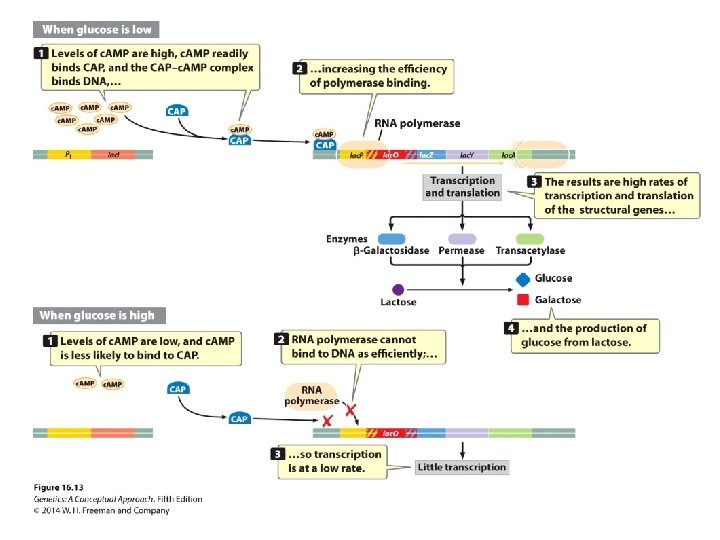
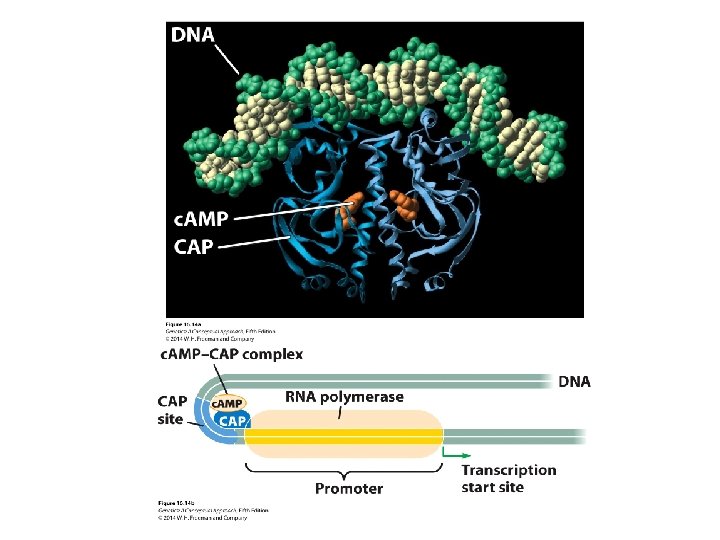
Positive Control and Catabolite Repression • Catabolite repression: using glucose when available, and repressing the metabolite of other sugars. • This is a positive control mechanism. The positive effect is activated by catabolite activator protein (CAP). c. AMP is binded to CAP, together CAP–c. AMP complex binds to a site slightly upstream from the lac gene promoter.
Positive Control and Catabolite Repression • c. AMP: adenosine-3′, 5′-cyclic monophosphate • The concentration of c. AMP is inversely proportional to the level of available glucose.
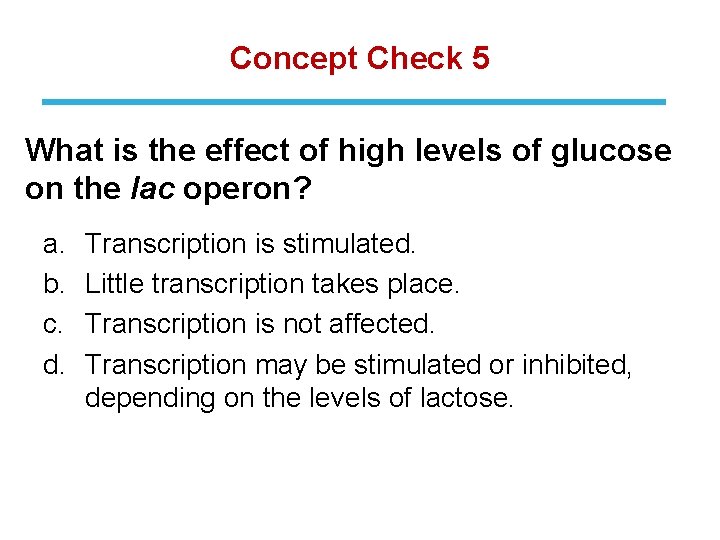
Concept Check 5 What is the effect of high levels of glucose on the lac operon? a. b. c. d. Transcription is stimulated. Little transcription takes place. Transcription is not affected. Transcription may be stimulated or inhibited, depending on the levels of lactose.
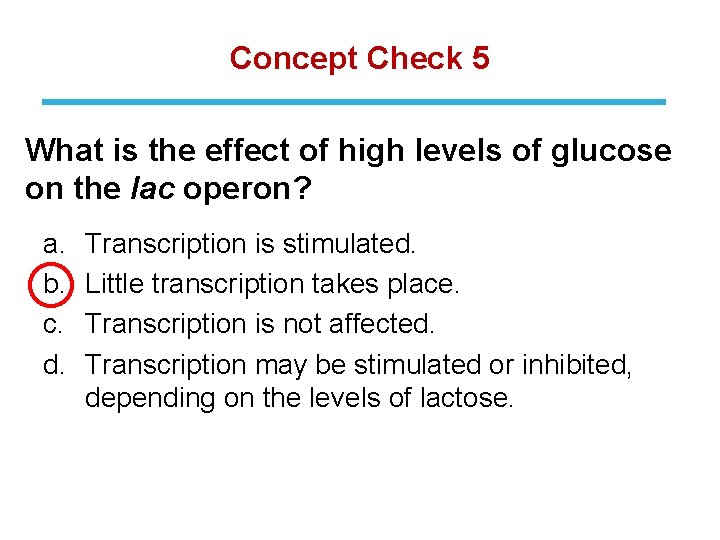
Concept Check 5 What is the effect of high levels of glucose on the lac operon? a. b. c. d. Transcription is stimulated. Little transcription takes place. Transcription is not affected. Transcription may be stimulated or inhibited, depending on the levels of lactose.
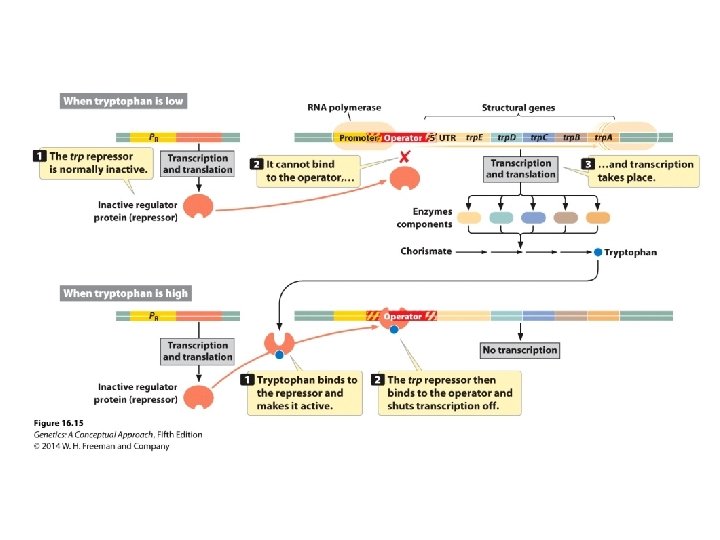
The trp Operon of E. coli • A negative repressible operon • Five structural genes • trp. E, trp. D, trp. C, trp. B, and trp. A—five enzymes together convert chorismate to typtophane.
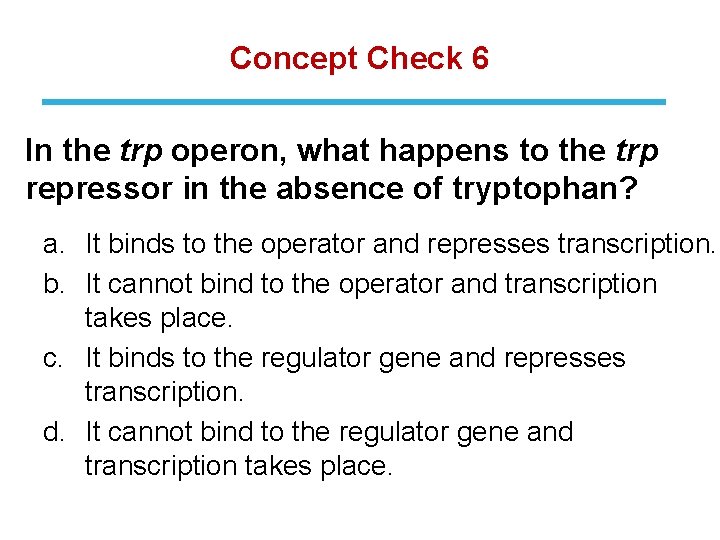
Concept Check 6 In the trp operon, what happens to the trp repressor in the absence of tryptophan? a. It binds to the operator and represses transcription. b. It cannot bind to the operator and transcription takes place. c. It binds to the regulator gene and represses transcription. d. It cannot bind to the regulator gene and transcription takes place.
Concept Check 6 In the trp operon, what happens to the trp repressor in the absence of tryptophan? a. It binds to the operator and represses transcription. b. It cannot bind to the operator and transcription takes place. c. It binds to the regulator gene and represses transcription. d. It cannot bind to the regulator gene and transcription takes place.
16. 3 Some Operons Regulate Transcription Through Attenuation, the Premature Termination of Transcription • Attenuation: affects the continuation of transcription, not its initiation. This action terminates the transcription before it reaches the structural genes. • Attenuator • Antiterminator
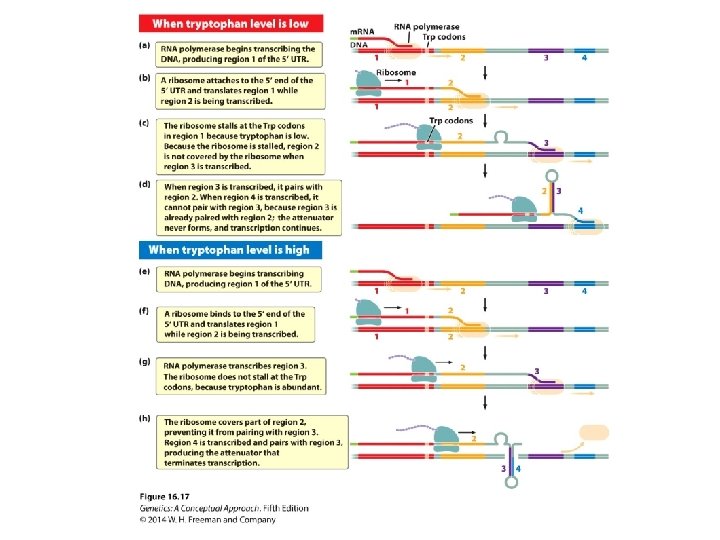
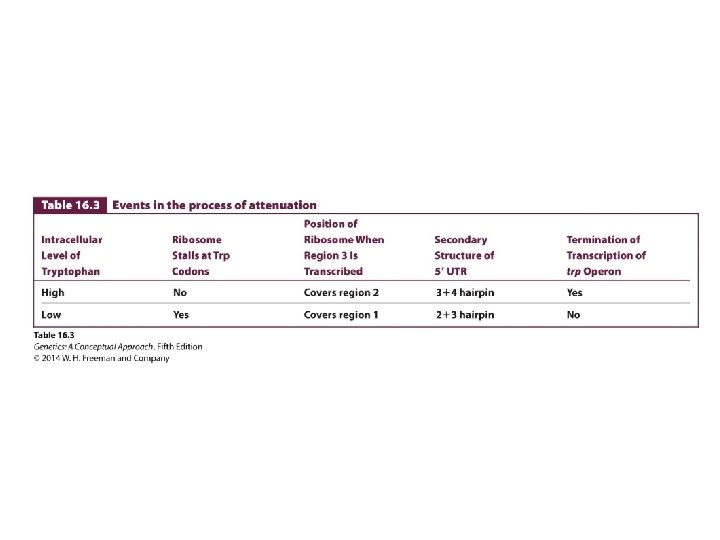
Attenuation in the trp Operon of E. coli • Four regions of the long 5′ UTR (leader) region of trp. E m. RNA • When tryptophan is high, region 1 binds to region 2, which leads to the binding of region 3 and region 4, terminating transcription prematurely.
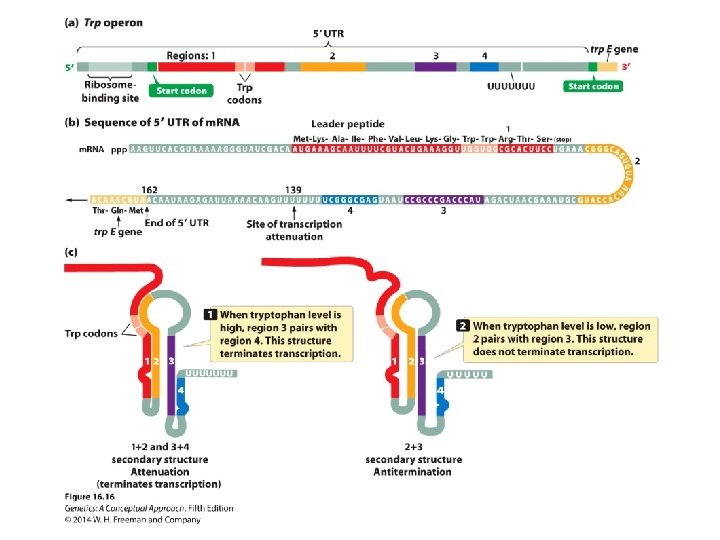
Attenuation in the trp Operon of E. coli • Four regions of the long 5′ UTR (leader) region of trp. E m. RNA • When tryptophan is low, region 2 binds to region 3, which prevents the binding of region 3 and region 4, and transcription continues.
Concept Check 7 Attenuation results when which regions of the 5′ UTR region pair? a. b. c. d. 1 and 3 2 and 4 3 and 4
Concept Check 7 Attenuation results when which regions of the 5′ UTR region pair? a. b. c. d. 1 and 3 2 and 4 3 and 4
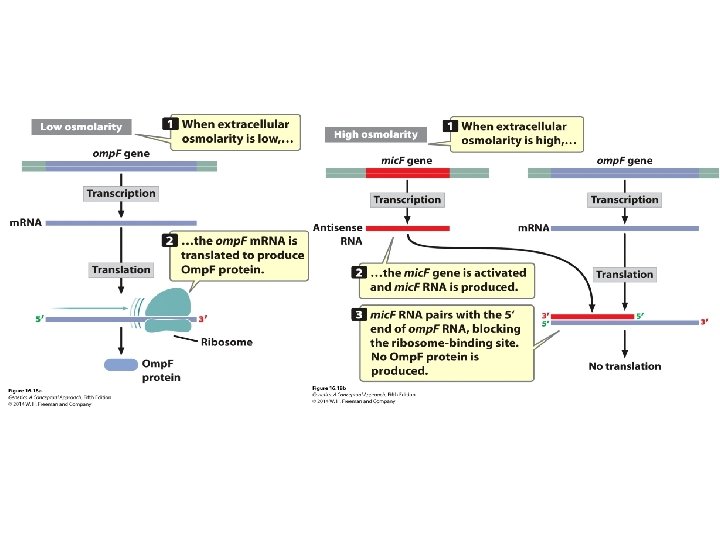
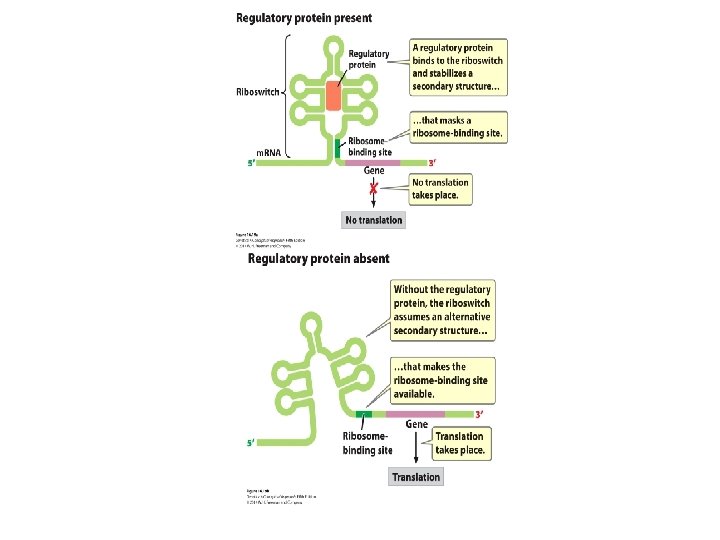
16. 4 RNA Molecules Control the Expression of Some Bacterial Genes • Antisense RNA: complementary to targeted partial sequence of m. RNA • Riboswitches: molecules influence the formation of secondary structures in m. RNA • Ribozymes: m. RNA molecules with catalytic activity
- Slides: 61