
BENIGN PAROXYSMAL POSITIONAL VERTIGO WASEEM WATAD Basic Anatomy
BENIGN PAROXYSMAL POSITIONAL VERTIGO WASEEM WATAD
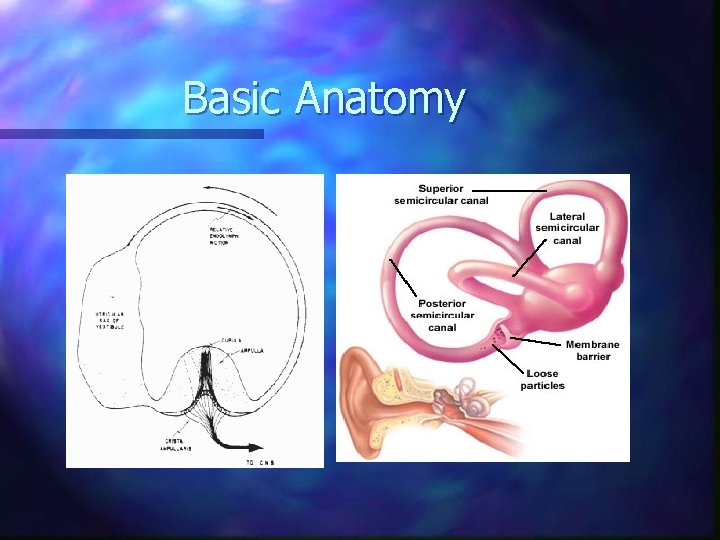
Basic Anatomy
BPPV Barany 1921 n Dix-Hallpike 1952 – important features of nystagmus n Abnormal sensation of motion elicited by certain critical positions n Provocative position nystagmus n At least 20% of vertigo n Underestimated n
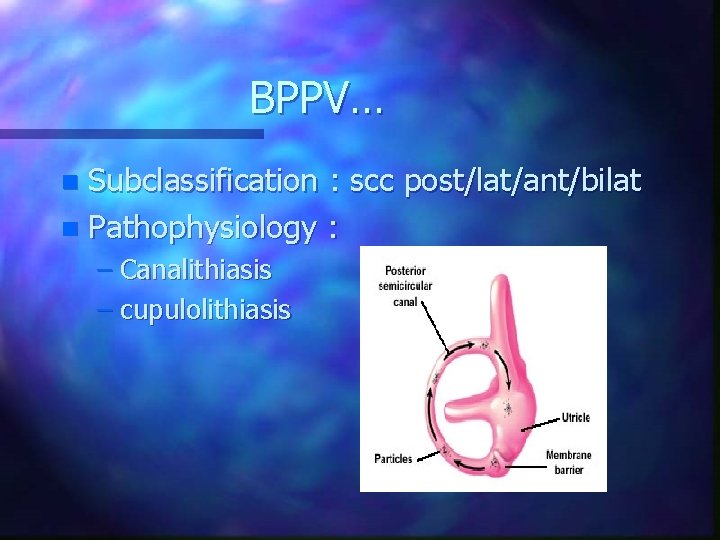
BPPV… Subclassification : scc post/lat/ant/bilat n Pathophysiology : n – Canalithiasis – cupulolithiasis
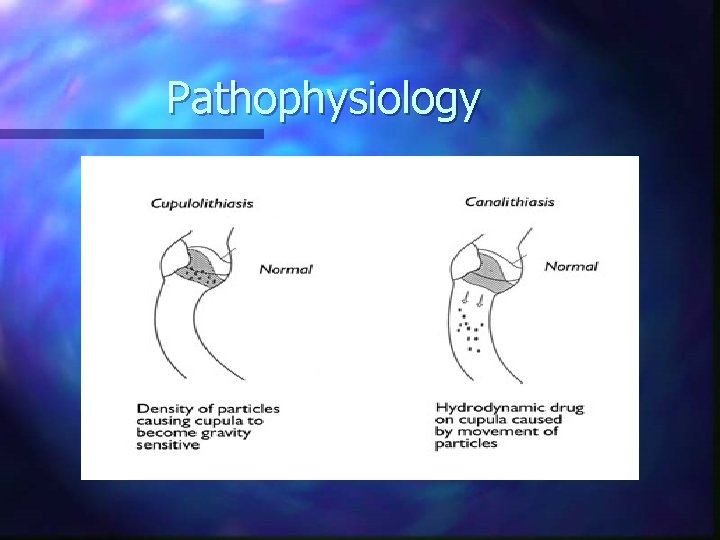
Pathophysiology
Pathophysiology (cont(. n Cupulolithiasis : – Harold Schuknecht 1962 – Densities (otocania) adherent to cupula of crista ampullaris – Basophilic particles -1969
n Canalithiasis : – John Epley – 1980 – Densities free floating in canal portion – Parnes , Mc. Clure – 1991 found particles in post SCC
BPPV. . . n n Frequency : 10 -64/100000 Sex : 64% women Age : older population ( 51 -57) younger than 35 – head trauma. History : – – sudden days-weeks occassionally months -years episodes.
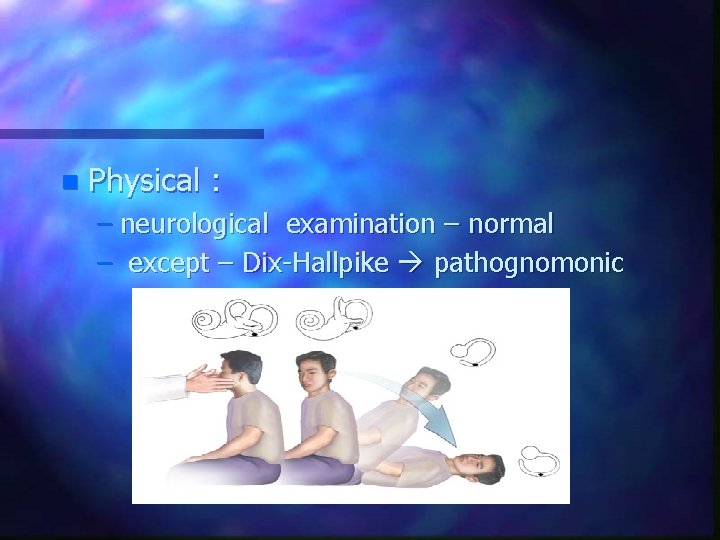
n Physical : – neurological examination – normal – except – Dix-Hallpike pathognomonic
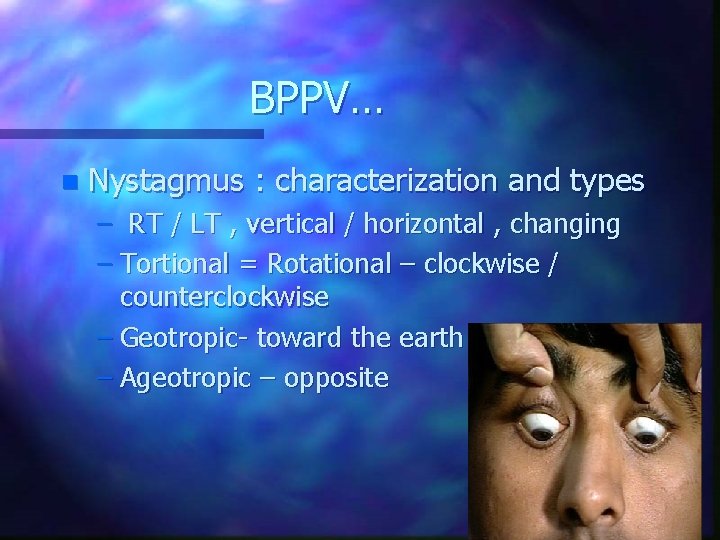
BPPV… n Nystagmus : characterization and types – RT / LT , vertical / horizontal , changing – Tortional = Rotational – clockwise / counterclockwise – Geotropic- toward the earth – Ageotropic – opposite
BPPV… Classic post SCC – geotropic rotatory nystagmus n Horizontal SCC – purely horizontal nystagmus n Non-fatiguing nystagmus – cupulolithiasis > canalithiasis n
Classic BPPV n Involved the POST SCC – Geotropic NG with affected ear down – Rotatory , fast phase toward the undermost ear – Latency – few seconds – Duration – limited < 20 seconds – Reversal upon return upright position – Response decline upon repetitive provocation
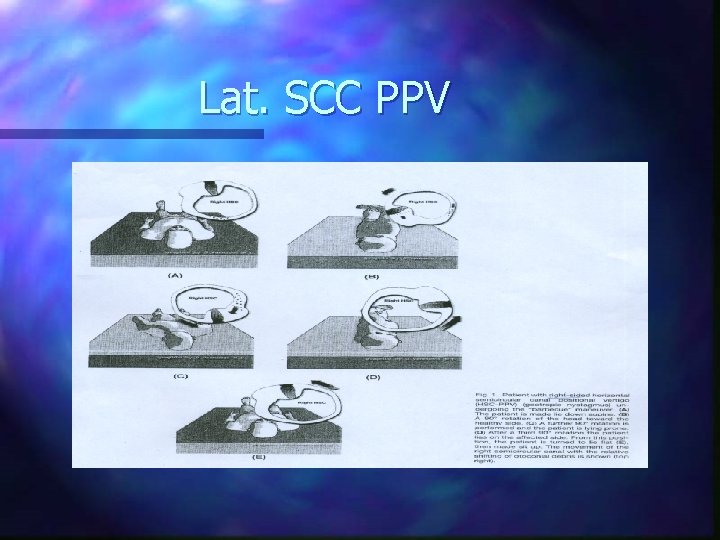
Lat. SCC PPV Most common atypical BPPV n 3 -9% of cases n Consequence of Epley maneuver n Horizontal purely nystagmus n Cupulolithiasis rather than canalithiasis n Modified Epley / lampert maneuver… n
Lat. SCC PPV
Ant. SCC PPV Rare – 2% n Down-beating /torsional NG for the opposite ear on Dix-Hallpike maneuver n
BPPV - Causes n Predisposing factors : – Inactivity – Acute alcoholism – Major surgery – CNS disease
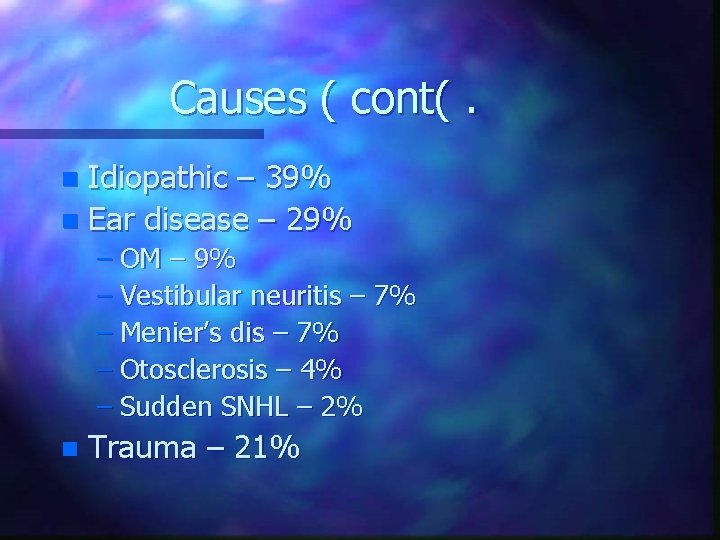
Causes ( cont(. Idiopathic – 39% n Ear disease – 29% n – OM – 9% – Vestibular neuritis – 7% – Menier’s dis – 7% – Otosclerosis – 4% – Sudden SNHL – 2% n Trauma – 21%
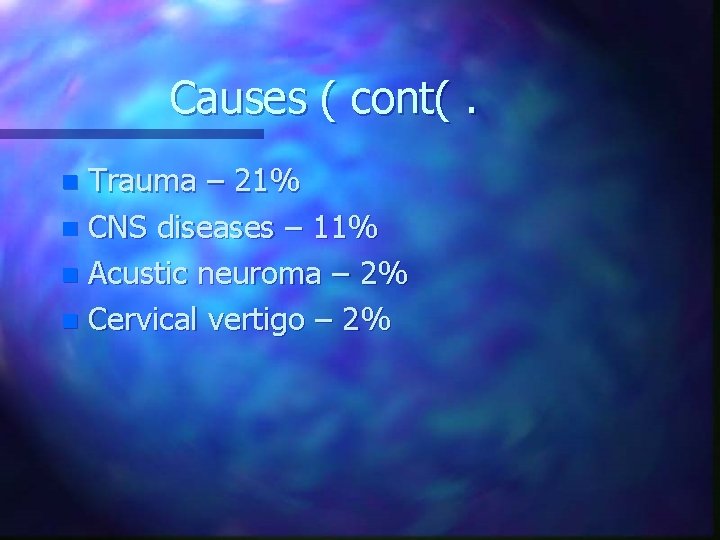
Causes ( cont(. Trauma – 21% n CNS diseases – 11% n Acustic neuroma – 2% n Cervical vertigo – 2% n
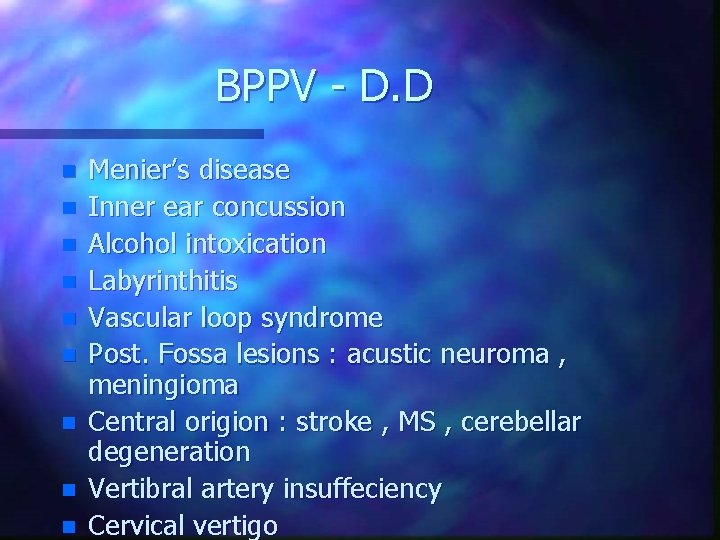
BPPV - D. D n n n n n Menier’s disease Inner ear concussion Alcohol intoxication Labyrinthitis Vascular loop syndrome Post. Fossa lesions : acustic neuroma , meningioma Central origion : stroke , MS , cerebellar degeneration Vertibral artery insuffeciency Cervical vertigo
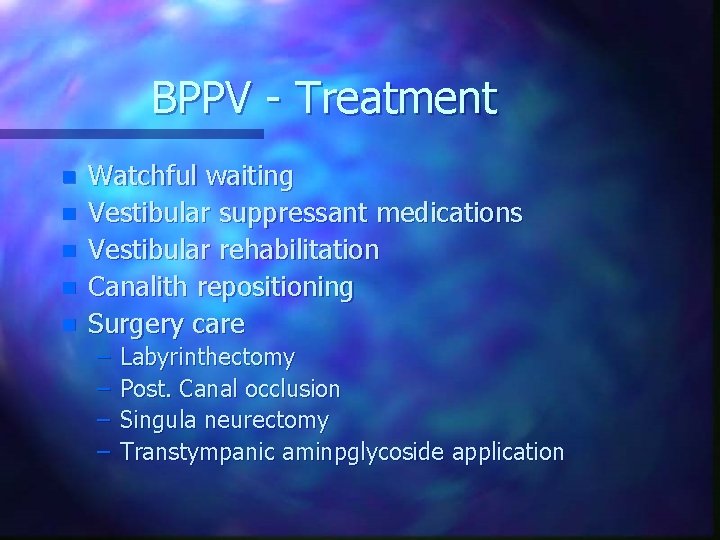
BPPV - Treatment n n n Watchful waiting Vestibular suppressant medications Vestibular rehabilitation Canalith repositioning Surgery care – – Labyrinthectomy Post. Canal occlusion Singula neurectomy Transtympanic aminpglycoside application
Trials about BPPV
General Labeled benign paroxysmal positional vertigo is not always benign n Evaluation of the effectiveness of canalith reepositioning procedurs – CRP n Several studies … n
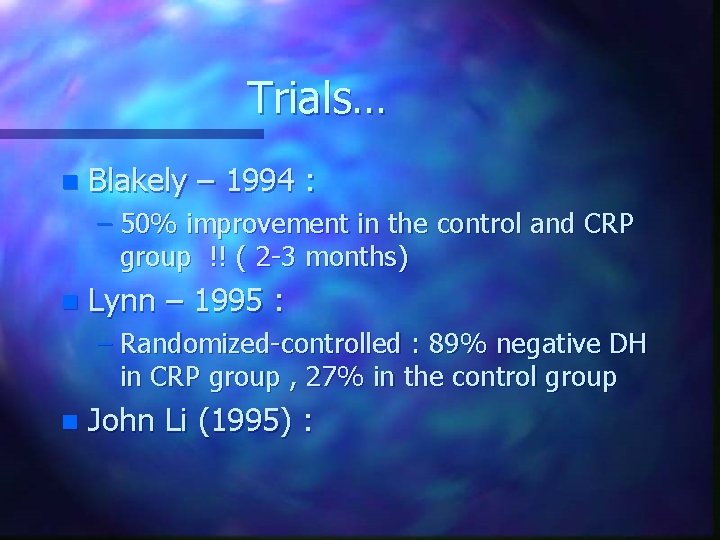
Trials… n Blakely – 1994 : – 50% improvement in the control and CRP group !! ( 2 -3 months) n Lynn – 1995 : – Randomized-controlled : 89% negative DH in CRP group , 27% in the control group n John Li (1995) :
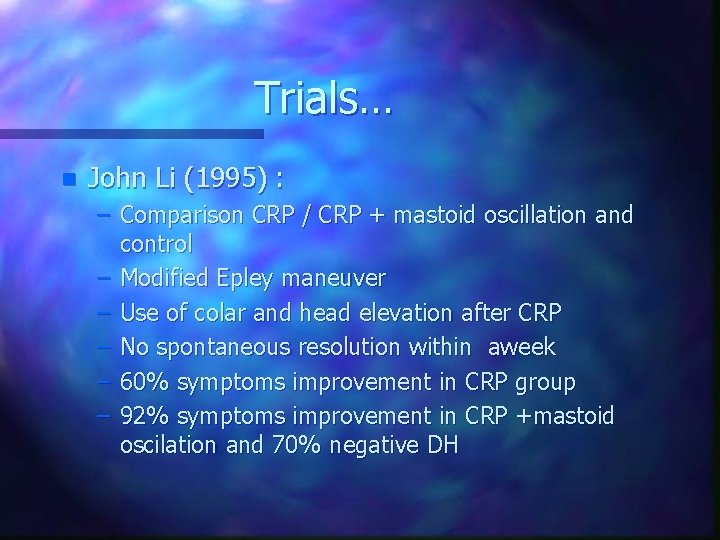
Trials… n John Li (1995) : – Comparison CRP / CRP + mastoid oscillation and control – Modified Epley maneuver – Use of colar and head elevation after CRP – No spontaneous resolution within aweek – 60% symptoms improvement in CRP group – 92% symptoms improvement in CRP +mastoid oscilation and 70% negative DH
Trials… n R. steenerson – 1996 : – Comparison of CRP and vestibular habituation training – Tow approaches are effective in symptomatic relief ( 3 months) – CRP faster relief and fewer treatments
Trials… n K. Yimatae (2003) – Randomized-controoled – Modified Epley maneuver, no mastoid oscillator and no instructions after the maneuver – Subjective and objective weekly follow-up – CRP group – 76% negative DH, 48% control group – CRP group – 96% symptoms improvement , 90% control group – Non-cured patients need > 6 procedures in 2 weeks , should considering liberatory maneuver
Elderly population and BPPV n S. Angeli – 2003 : – Effectiveness of CRP and VR – Modified Epley : n n n Elderly comorbidities : degenerative osteoarthritis disease , CVA , peripheral neuropathy, cognitive and autonomic dysfunctions S/E of CRP – neck torsion and extension result in vertibrobasilar artery insufficiency, strain on the spine column, dislodged carotid a. emboli Avoid liberatory maneuver – 64% CRP group – negative DH after a month – Overall 77% with CRP and VR
CRP Meta-Analysis B. Woodworth - 2004 n CRP - First line of treatment – Non-invasive – Easy to perform in the office – No need to expensive instrumentations – Repeat maneuver if needed – Potential to provide rapid relief of vertigo
Meta - Analysis 9 randomized-controlled trials n Symptoms resolution and elimination of positive Dix-Hallpike test n CRP more effective than control ( x 5 ) n Untreated patients - symptoms improvements with time but positive DH n So Resolution of vertigo – avoidance of provocative positions n
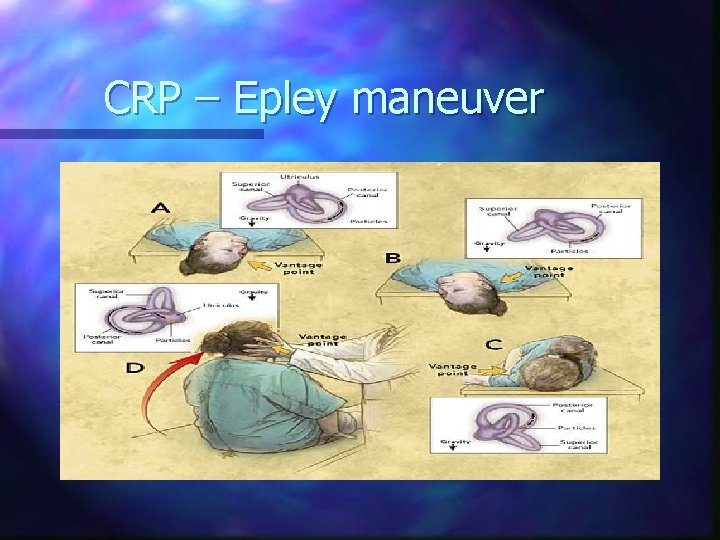
CRP – Epley maneuver
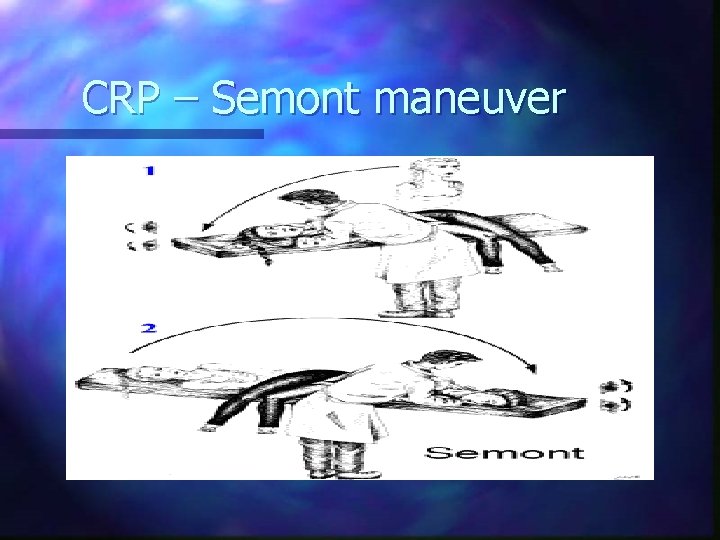
CRP – Semont maneuver
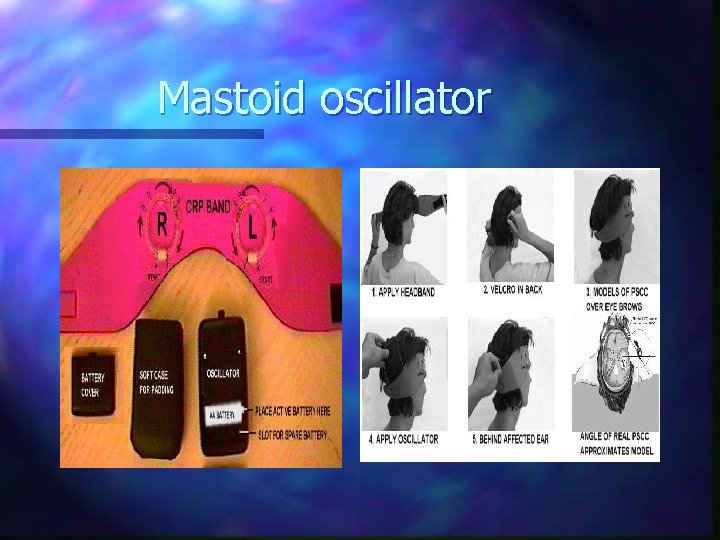
Mastoid oscillator
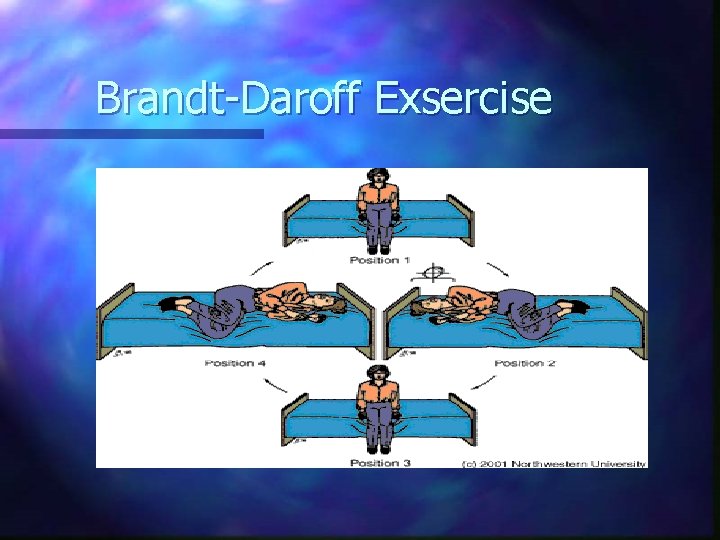
Brandt-Daroff Exsercise
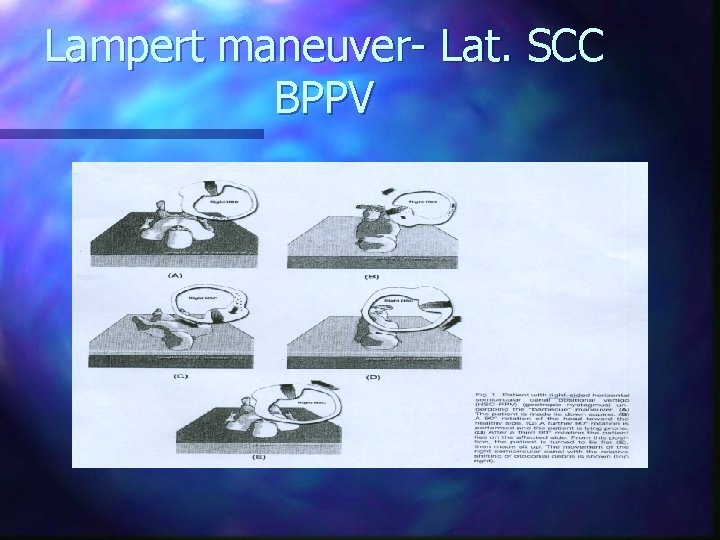
Lampert maneuver- Lat. SCC BPPV
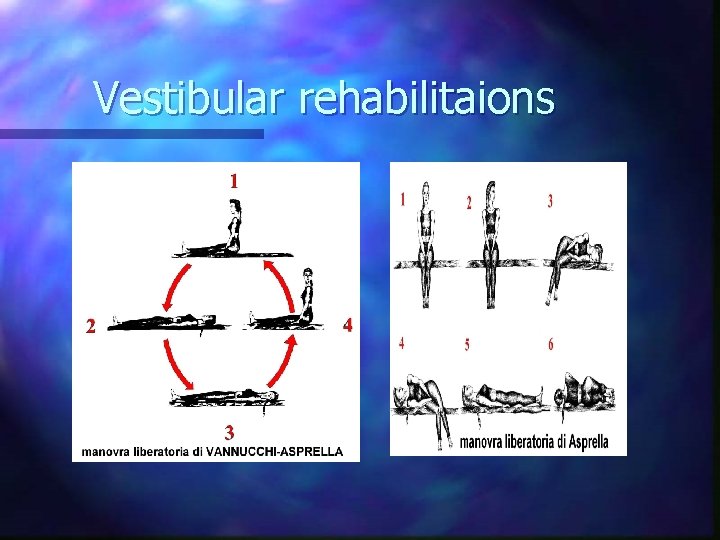
Vestibular rehabilitaions
Complications of CRP Failure – 25% (12%-56) n Recurrence – 13% in 6 months n Side effects n – Nausea – Vomiting – Fainting – Sweating n Worse vertigo – LAT SCC PPV
n THANK YOU …
- Slides: 37