
BENIGN BREAST DISEASE Dr Amit Gupta Associate Professor

BENIGN BREAST DISEASE Dr. Amit Gupta Associate Professor Dept Of Surgery

Mammary ductogram demonstrating lobules
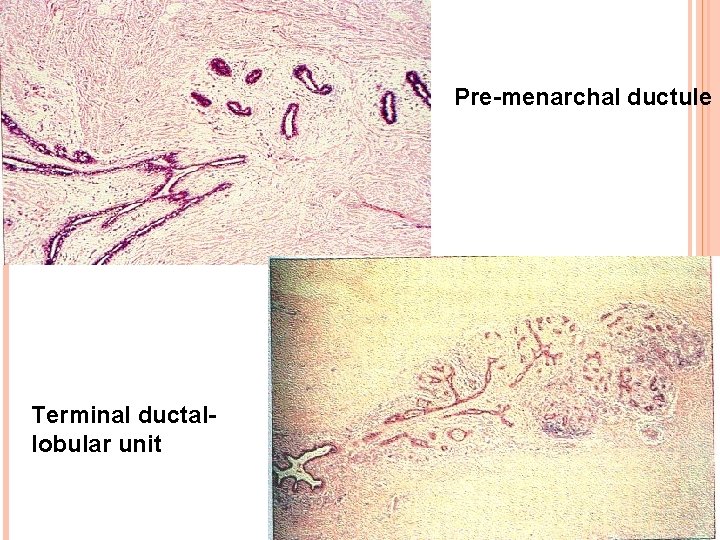
Pre-menarchal ductule Terminal ductallobular unit
BREAST DEVELOPMENT Menarche and Reproductive Cycles: Pulsed estrogen exposure causes rapid growth, elongation and branching Term pregnancy leads to terminal differentiation and stops growth End bud epithelial tissue undergoes cyclic proliferation Breast feeding is associated with a lower risk of breast cancer
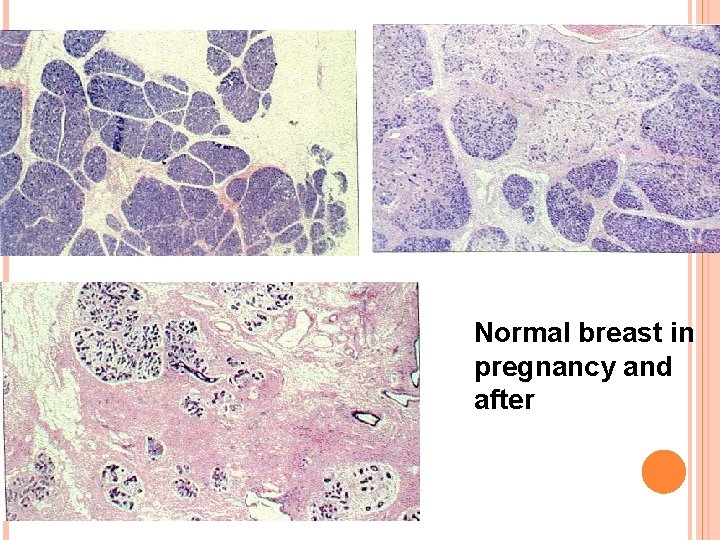
Normal breast in pregnancy and after
BREAST DEVELOPMENT Involution: Changes of involution begin after cessation of lactation and continue through menopause Competing involution and proliferative processes are patchy and increased in peri-menopause and with HRT Hyperplasia with atypia and DCIS peak in this period
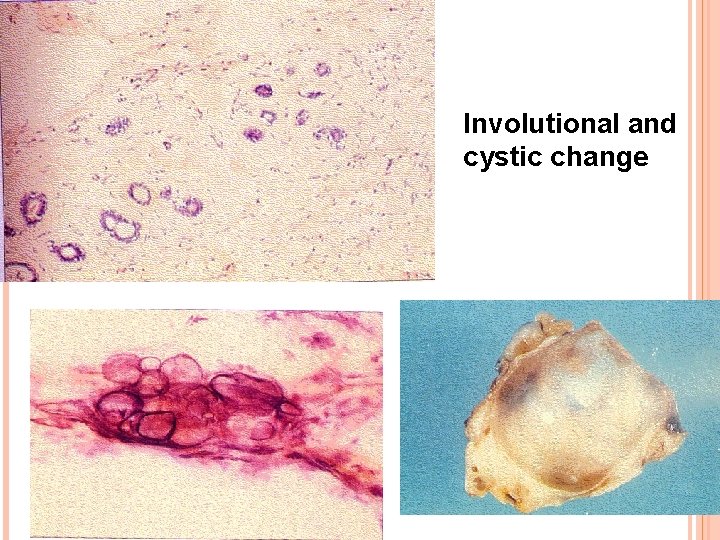
Involutional and cystic change
DEFINITION It is spectrum of diseases that are histologically variation of normal breast anatomy with no evidence of malignancy on histopathological examinations.
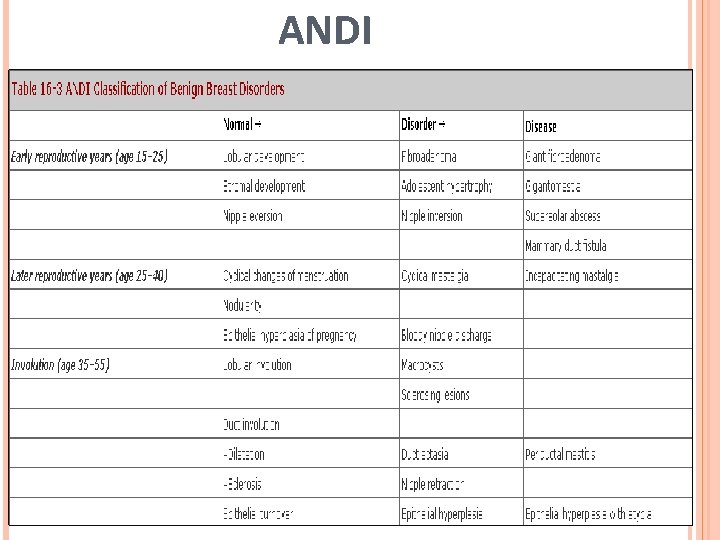
BENIGN BREAST DISEASE It includes: v. Congenital anomalies v. Inflammatory lesion v. ANDI v. Non breast diseases
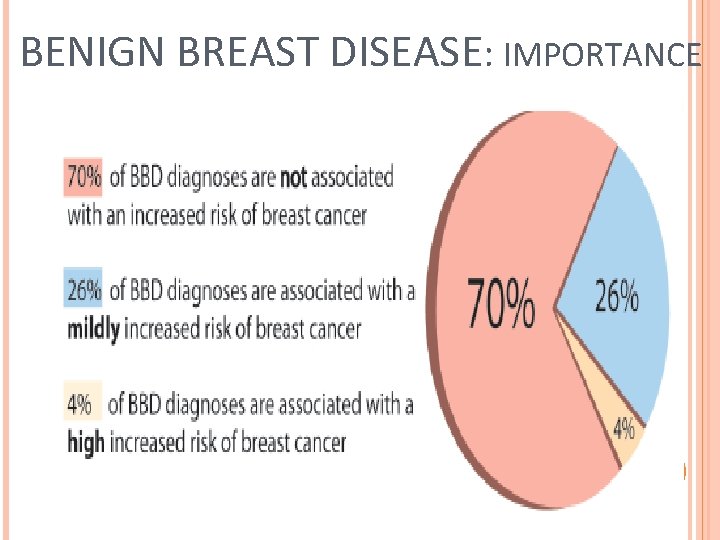
BENIGN BREAST DISEASE: IMPORTANCE 10 times more frequent than carcinoma in patients presenting to physician. 70% of lumps are benign but 30 % can have malignancy or malignant potential. Anxiety Mostly & stress to patients. requires reassurance pharmacologic treatments only. and some

CONGENITAL ANOMALIES Polymastia, Polythelia Amastia Poland syndrome Symmastia.
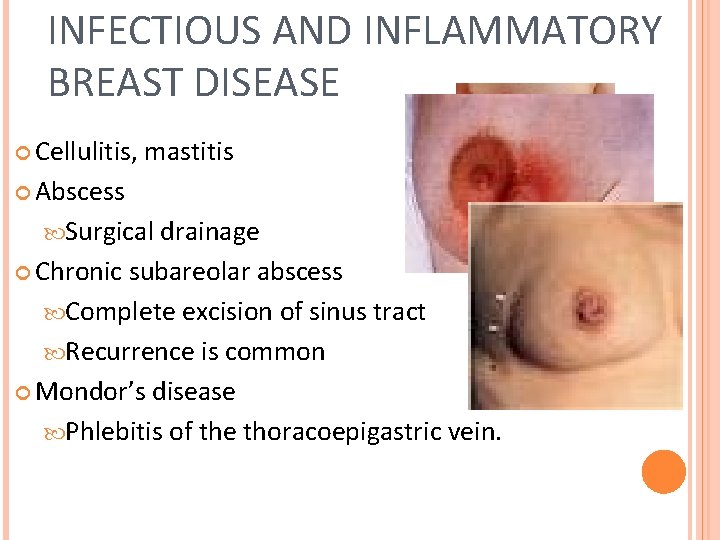
INFECTIOUS AND INFLAMMATORY BREAST DISEASE Cellulitis, mastitis Abscess Surgical drainage Chronic subareolar abscess Complete excision of sinus tract Recurrence is common Mondor’s disease Phlebitis of the thoracoepigastric vein.
ANDI
CLASSIFICATION : HISTOLOGICAL § Non Proliferative Lesion ØSimple Cyst ØComplex cyst

SIMPLE CYST
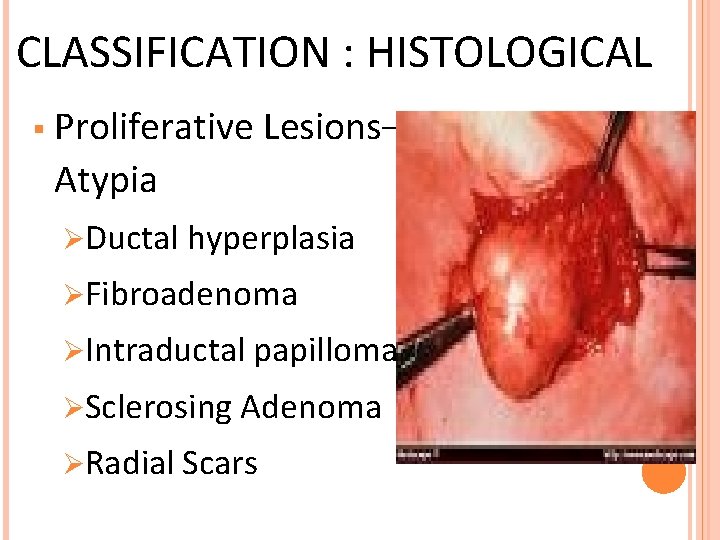
CLASSIFICATION : HISTOLOGICAL § Proliferative Lesions– Without Atypia ØDuctal hyperplasia ØFibroadenoma ØIntraductal papilloma ØSclerosing Adenoma ØRadial Scars
CLASSIFICATION : HISTOLOGICAL § Proliferative Lesions With Atypia- ØAtypical ductal hyperplasia ØAtypical lobular hyperplasia
CLASSIFICATION: MALIGNANT POTENTIAL § Lesions with Increased Risk of Ca ØDuctal hyperplasia ØSclerosing adenosis ØAtypical hyperplasia ØRadial scars
CLASSIFICATION: MALIGNANT POTENTIAL § Lesions with no Increased risk of Ca ØFibrocystic disease ØDuct ectasia ØSolitary papillomas ØSimple fibroadenomas ØMastitis or breast abscess ØGalactocele ØFat necrosis ØLipoma
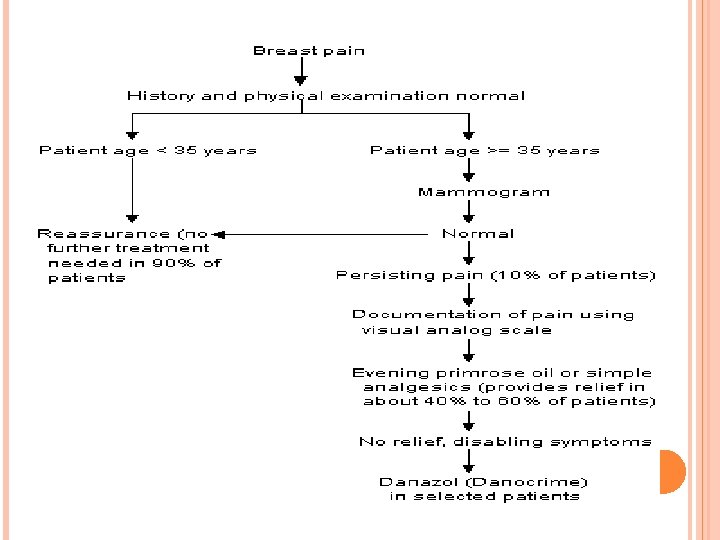
SYNDROMIC APPROACH: § Mastalgia ØCyclic ØNon Cyclic
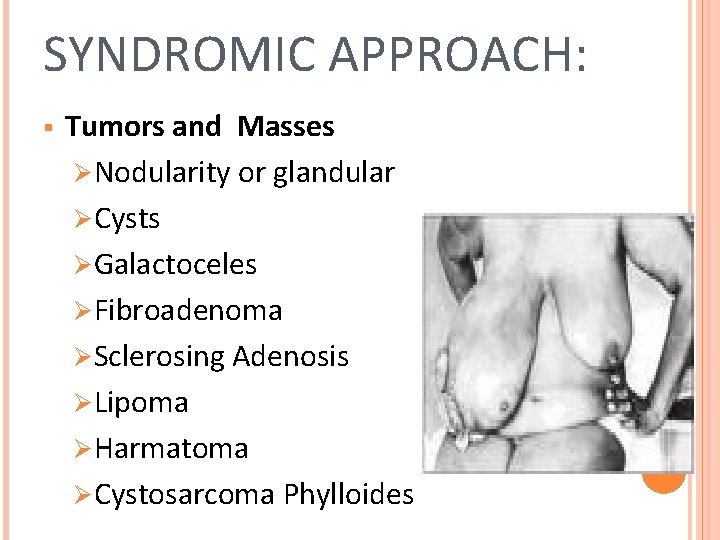
SYNDROMIC APPROACH: § Tumors and Masses ØNodularity or glandular ØCysts ØGalactoceles ØFibroadenoma ØSclerosing Adenosis ØLipoma ØHarmatoma ØCystosarcoma Phylloides
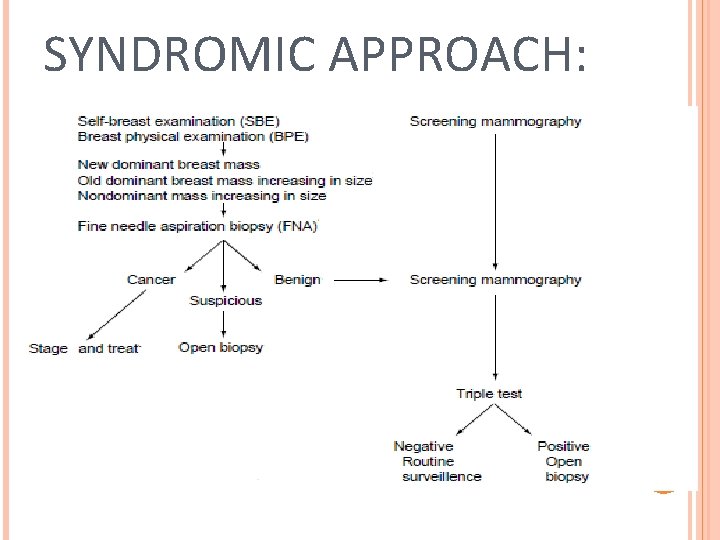
SYNDROMIC APPROACH:
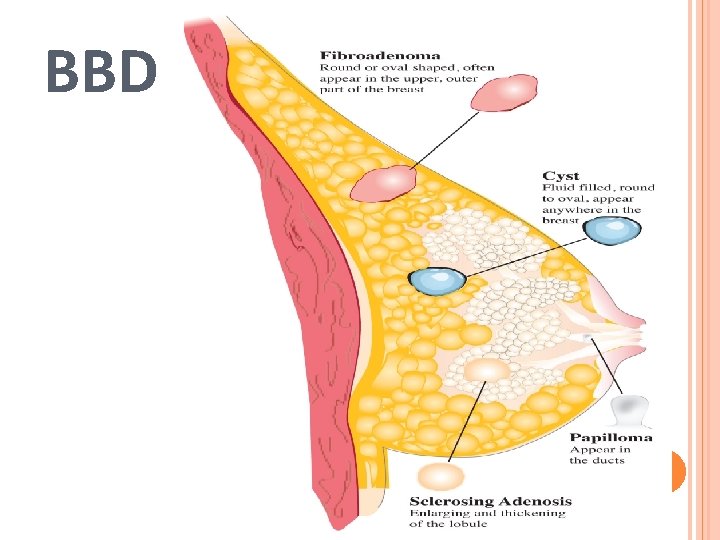
BBD

(Triple test)
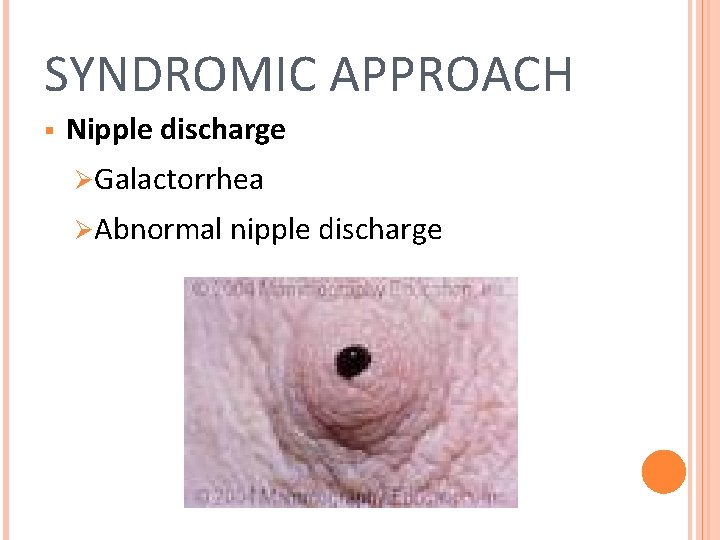
SYNDROMIC APPROACH § Nipple discharge ØGalactorrhea ØAbnormal nipple discharge
- Slides: 26