
Benefits of insect inclusion in diets of young
Benefits of insect inclusion in diets of young pigs Thomas Spranghers 4/03/2020
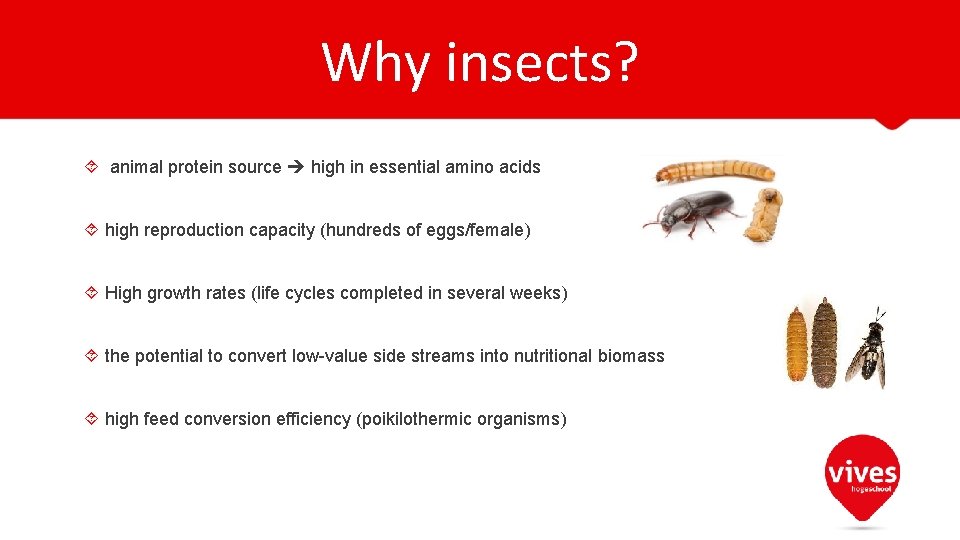
Why insects? animal protein source high in essential amino acids high reproduction capacity (hundreds of eggs/female) High growth rates (life cycles completed in several weeks) the potential to convert low-value side streams into nutritional biomass high feed conversion efficiency (poikilothermic organisms)
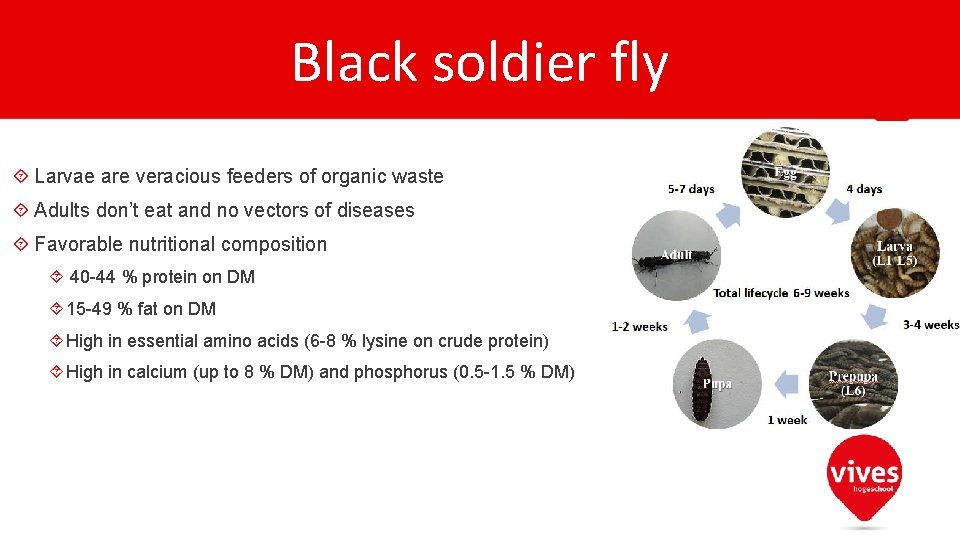
Black soldier fly Larvae are veracious feeders of organic waste Adults don’t eat and no vectors of diseases Favorable nutritional composition 40 -44 % protein on DM 15 -49 % fat on DM High in essential amino acids (6 -8 % lysine on crude protein) High in calcium (up to 8 % DM) and phosphorus (0. 5 -1. 5 % DM)
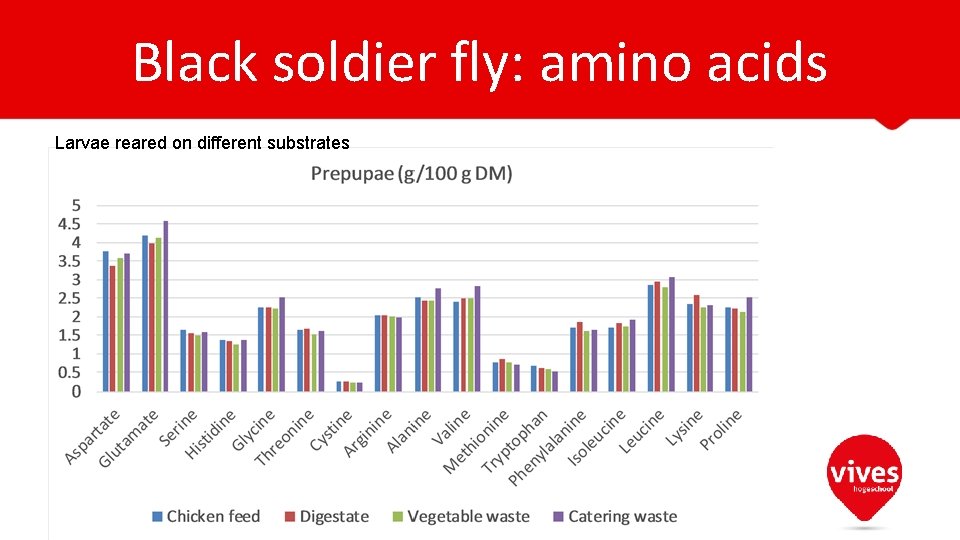
Black soldier fly: amino acids Larvae reared on different substrates
Black soldier fly: amino acids Essential amino acid contents are similar to soybean (full fat) Defatted BSF meal is in general superior to soybean meal Studies (Kortelainen et al. , 2015; Driemeyer, 2016, Spranghers et al. , 2017; Neumann et al. , 2018; Biasato et al. , 2019) show that: Digestibility of piglet feeds is not compromised using up to 10% BSF meal No adverse effects on performance of piglets (up to 8% full fat and 10% defatted meal) Economic situation is not yet favorable added value is necessary
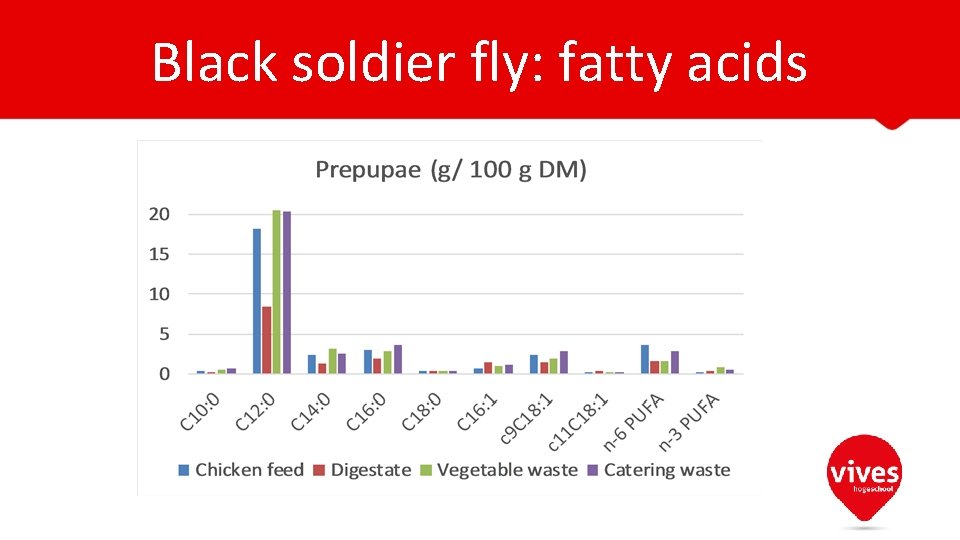
Black soldier fly: fatty acids
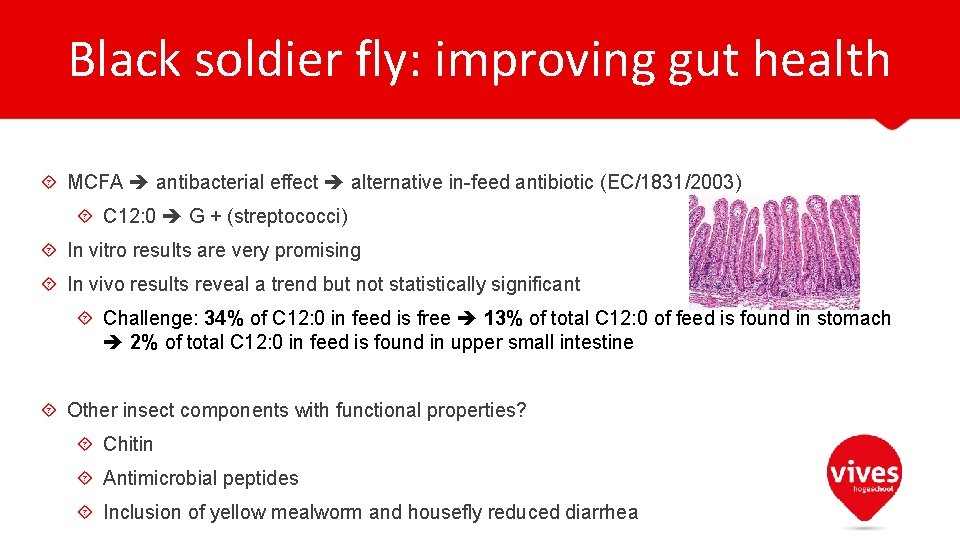
Black soldier fly: improving gut health MCFA antibacterial effect alternative in-feed antibiotic (EC/1831/2003) C 12: 0 G + (streptococci) In vitro results are very promising In vivo results reveal a trend but not statistically significant Challenge: 34% of C 12: 0 in feed is free 13% of total C 12: 0 of feed is found in stomach 2% of total C 12: 0 in feed is found in upper small intestine Other insect components with functional properties? Chitin Antimicrobial peptides Inclusion of yellow mealworm and housefly reduced diarrhea

Thank you for your attention! Thomas. Spranghers@vives. be www. insectinfo. be
- Slides: 8