
Benefit of atrial septal defect closure in adults
Benefit of atrial septal defect closure in adults Predictors of unfavorable outcome H. M. Gabriel 1, M. Humenberger 1, R. Rosenhek 1, GP. Diller 2, G. Kaleschke 2, TH. Binder 1, P. Probst 1, G. Maurer 1, H. Baumgartner 2 • Medical University of Vienna, Dept. of Internal Medicine II, Division of Cardiology, Vienna, Austria • Adult Congenital and Valvular Heart Disease Center, University Hospital of Muenster , Muenster, Germany
Predictors of unfavorable outcome after ASD closure in adults Background • Previous studies demonstrated that transcatheter atrial septal defect (ASD) closure can successfully and safely be performed at all ages • There is ongoing controversy whether adults of advanced age can benefit with regard to morbidity and mortality • Improvement has been demonstarated, nevertheless some adults remain symptomatic after intervention. • However, predictors of such unfavorable outcome have poorly been defined.
Predictors of unfavorable outcome after ASD closure in adults Purpose of the Study To evaluate the effects of transcatheter ASD closure on functional status, arrhythmias, RV size and PAP according to the age To identify predictors of unfavorable outcome of ASD closure – defined by persistent NYHA FC > II
Predictors of unfavorable outcome after ASD closure in adults Methods: Study Population • All consecutive patients undergoing transcatheter ASD closure • Indication for closure: significant left-to-right shunt (signs of right ventricular volume overload) irrespective of the presence of symptoms • no severe pulmonary vascular disease (defined by PVR > 5 Wood units even after vasoreactivity testing or after targeted treatment) • balloon stretched defect diameter <36 mm • sufficient rim, no significant additional lesions
Predictors of unfavorable outcome after ASD closure in adults Methods: Patient Assessement • Clinical evaluation (NYHA FC) • Physical examination • ECG • Echocardiography (TTE + TEE) including RV size (4 -chamber view), PAP (TR), Qp: Qs, defect morphology • Catheterization: estimation of PVR when PAP > 50% systemic pressure • Intervention (Amplatzer® Occluder) General anesthesia, TEE, balloon sizing
Predictors of unfavorable outcome after ASD closure in adults Patient Characteristics at Study Entry • N 317 • Gender 218 female (69%) • Age 51± 18 yrs (range: 16 to 83) • Defect size 18± 6 mm • Qp: Qs 2. 2± 0. 8 • RV size 43± 7 mm • PAPsyst. 41± 15 mm. Hg • PAP > 35 mm. Hg 59 %
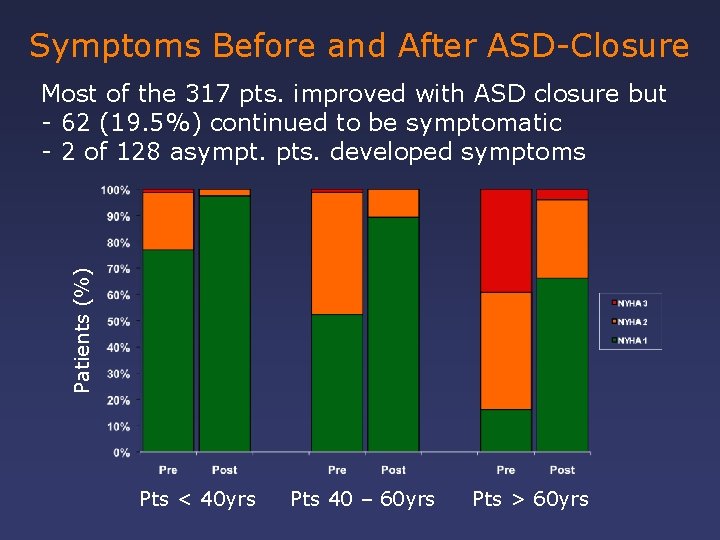
Symptoms Before and After ASD-Closure Patients (%) Most of the 317 pts. improved with ASD closure but - 62 (19. 5%) continued to be symptomatic - 2 of 128 asympt. pts. developed symptoms Pts < 40 yrs Pts 40 – 60 yrs Pts > 60 yrs
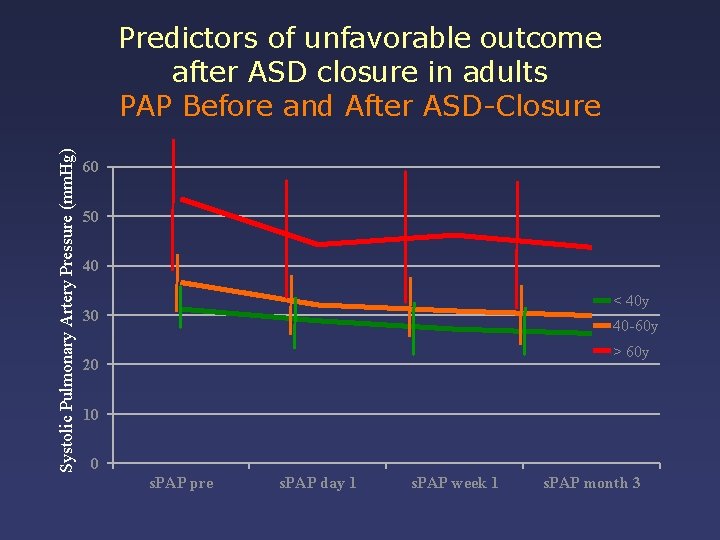
Systolic Pulmonary Artery Pressure (mm. Hg) Predictors of unfavorable outcome after ASD closure in adults PAP Before and After ASD-Closure 60 50 40 < 40 y 30 40 -60 y > 60 y 20 10 0 s. PAP pre s. PAP day 1 s. PAP week 1 s. PAP month 3
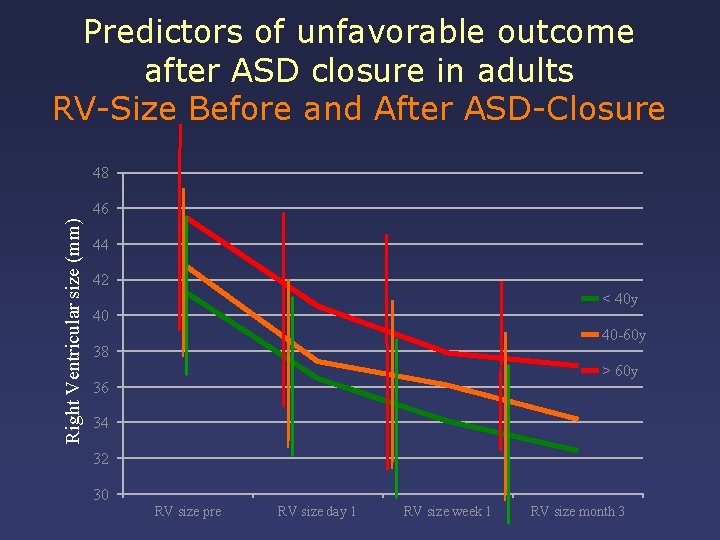
Predictors of unfavorable outcome after ASD closure in adults RV-Size Before and After ASD-Closure 48 Right Ventricular size (mm) 46 44 42 < 40 y 40 40 -60 y 38 > 60 y 36 34 32 30 RV size pre RV size day 1 RV size week 1 RV size month 3
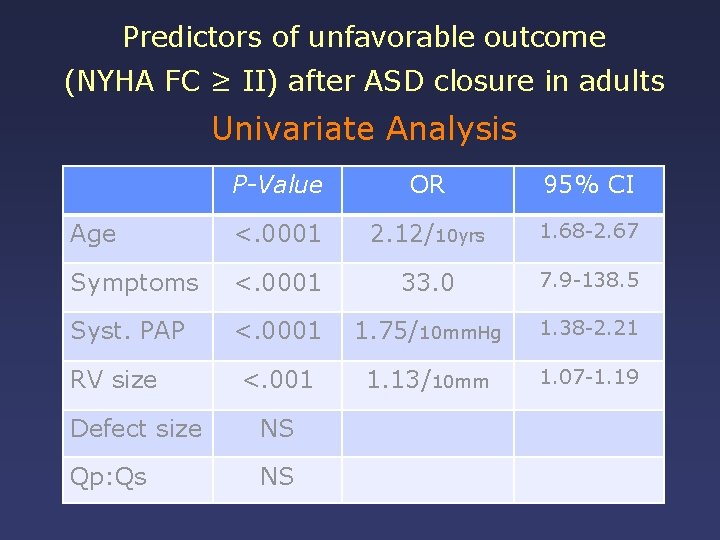
Predictors of unfavorable outcome (NYHA FC ≥ II) after ASD closure in adults Univariate Analysis P-Value OR 95% CI Age <. 0001 2. 12/10 yrs 1. 68 -2. 67 Symptoms <. 0001 33. 0 7. 9 -138. 5 Syst. PAP <. 0001 1. 75/10 mm. Hg 1. 38 -2. 21 <. 001 1. 13/10 mm 1. 07 -1. 19 RV size Defect size NS Qp: Qs NS
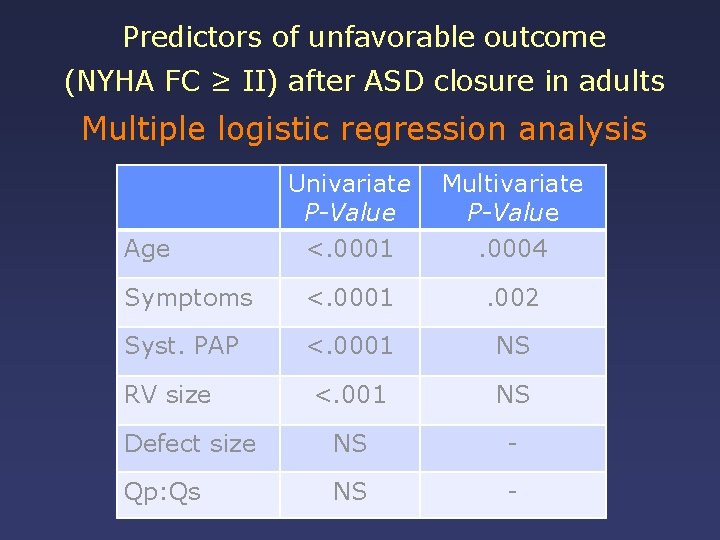
Predictors of unfavorable outcome (NYHA FC ≥ II) after ASD closure in adults Multiple logistic regression analysis Univariate P-Value Multivariate P-Value Age <. 0001 . 0004 Symptoms <. 0001 . 002 Syst. PAP <. 0001 NS <. 001 NS Defect size NS - Qp: Qs NS - RV size
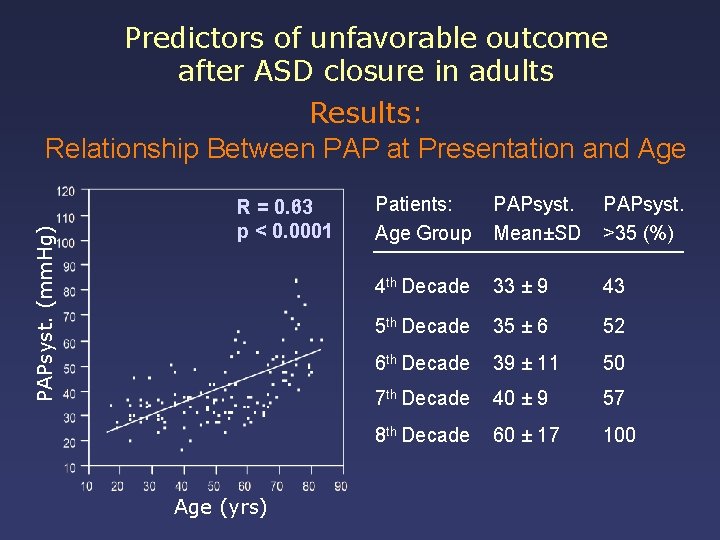
PAPsyst. (mm. Hg) Predictors of unfavorable outcome after ASD closure in adults Results: Relationship Between PAP at Presentation and Age R = 0. 63 p < 0. 0001 Age (yrs) Patients: Age Group PAPsyst. Mean±SD PAPsyst. >35 (%) 4 th Decade 33 ± 9 43 5 th Decade 35 ± 6 52 6 th Decade 39 ± 11 50 7 th Decade 40 ± 9 57 8 th Decade 60 ± 17 100
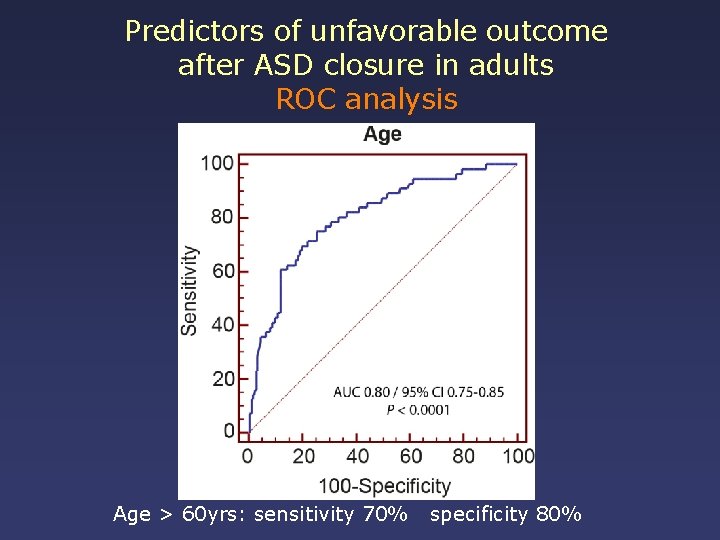
Predictors of unfavorable outcome after ASD closure in adults ROC analysis Age > 60 yrs: sensitivity 70% specificity 80%
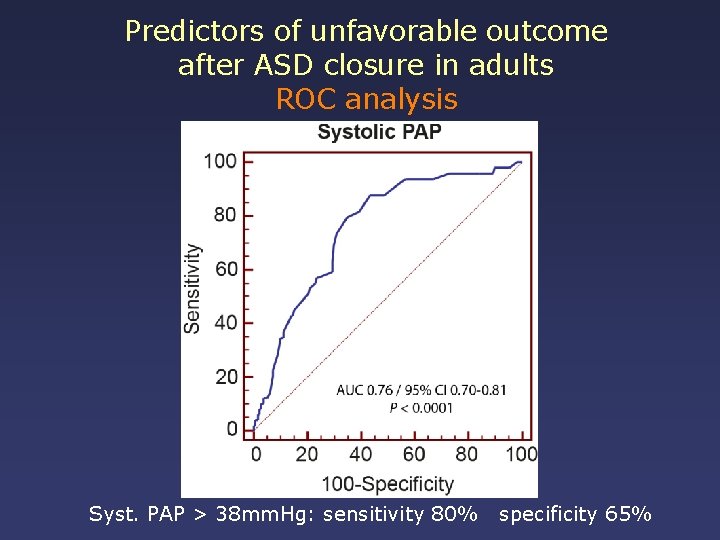
Predictors of unfavorable outcome after ASD closure in adults ROC analysis Syst. PAP > 38 mm. Hg: sensitivity 80% specificity 65%
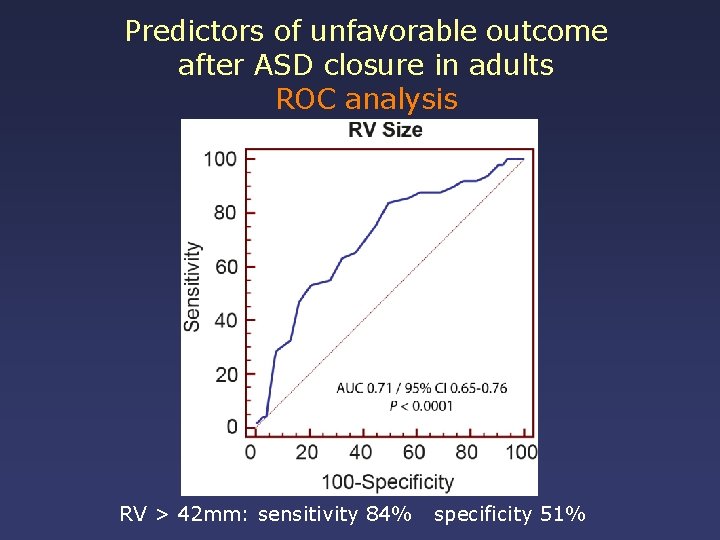
Predictors of unfavorable outcome after ASD closure in adults ROC analysis RV > 42 mm: sensitivity 84% specificity 51%
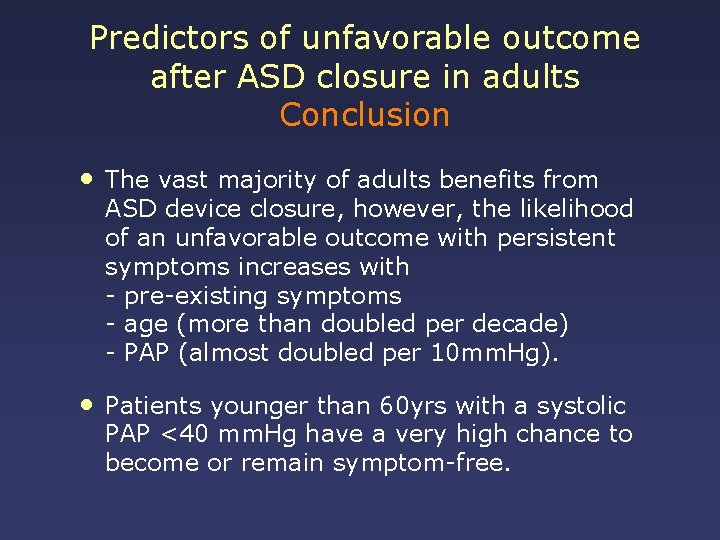
Predictors of unfavorable outcome after ASD closure in adults Conclusion • The vast majority of adults benefits from ASD device closure, however, the likelihood of an unfavorable outcome with persistent symptoms increases with - pre-existing symptoms - age (more than doubled per decade) - PAP (almost doubled per 10 mm. Hg). • Patients younger than 60 yrs with a systolic PAP <40 mm. Hg have a very high chance to become or remain symptom-free.

- Slides: 17