
Benchmarking Definitions Comparing business processes not only performance
Benchmarking
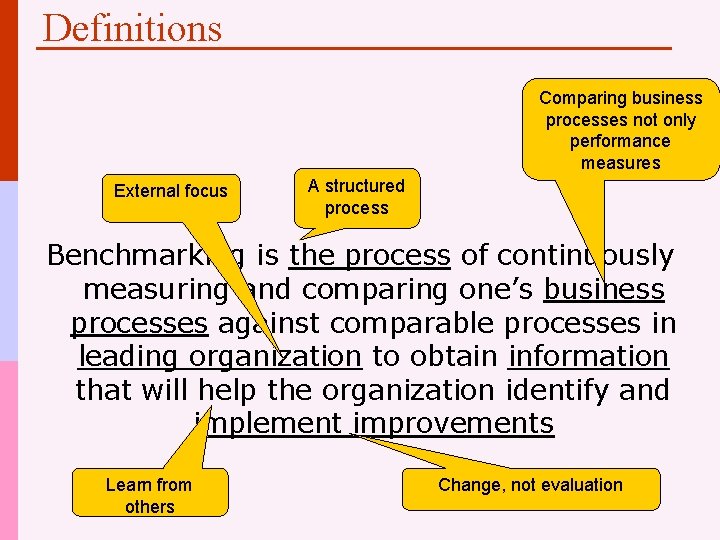
Definitions Comparing business processes not only performance measures External focus A structured process Benchmarking is the process of continuously measuring and comparing one’s business processes against comparable processes in leading organization to obtain information that will help the organization identify and implement improvements Learn from others Change, not evaluation

Reasons for benchmarking Helps organization understand develop a critical attitude toward its business processes p Encourages an active learning process in the organization p Organization can find new sources for improvement and new ways of doing things p Reference points are established for performance measurement p
Types of benchmarking Defined based on p Whom is being compared against p What is being compared
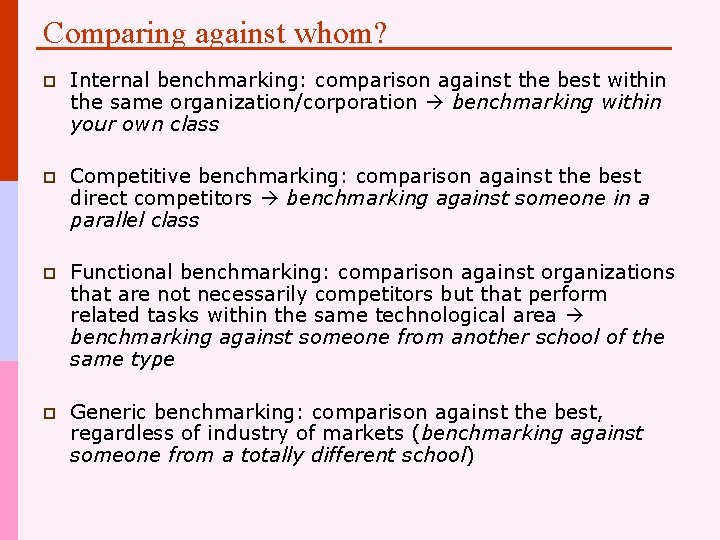
Comparing against whom? p Internal benchmarking: comparison against the best within the same organization/corporation benchmarking within your own class p Competitive benchmarking: comparison against the best direct competitors benchmarking against someone in a parallel class p Functional benchmarking: comparison against organizations that are not necessarily competitors but that perform related tasks within the same technological area benchmarking against someone from another school of the same type p Generic benchmarking: comparison against the best, regardless of industry of markets (benchmarking against someone from a totally different school)
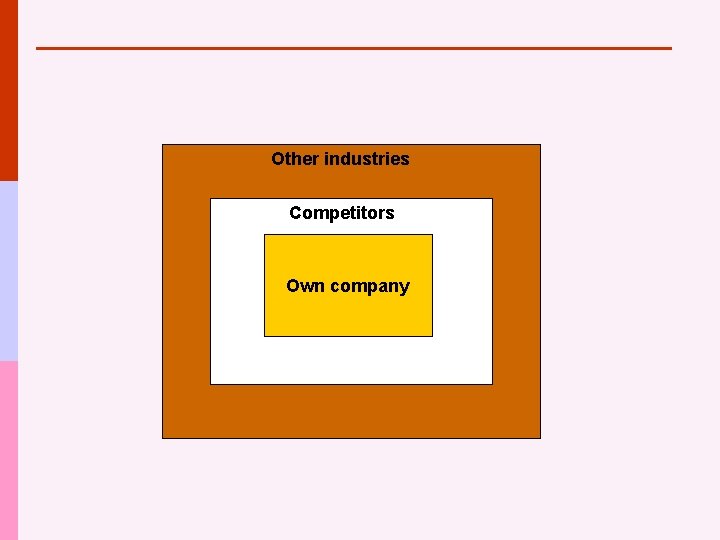
Other industries Competitors Own company
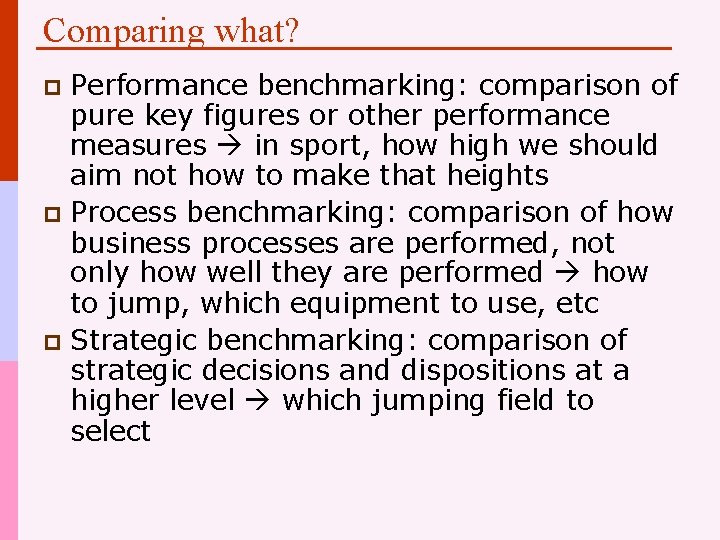
Comparing what? Performance benchmarking: comparison of pure key figures or other performance measures in sport, how high we should aim not how to make that heights p Process benchmarking: comparison of how business processes are performed, not only how well they are performed how to jump, which equipment to use, etc p Strategic benchmarking: comparison of strategic decisions and dispositions at a higher level which jumping field to select p

Each type from the two categories can in theory be combined into a benchmarking study with a given focus p In practice, not all of the possible combinations are equally suitable p Different studies have shown that the best results are generally achieved by a combination of: p process benchmarking and generic benchmarking using partners from other industries.

A typical benchmarking study Performance benchmarking High level comparison: • Where are we? • How good are we in central areas? • Who is good? • Who can we learn something from? Benchmarking Partners Process Benchmarking List of prioritized Improvement areas Detailed comparison of processes: • What do the best do? • What can we learn from them?

Models for organizing benchmarking study One-on-one comparison Comparison in a group Anonymized comparison through a third party
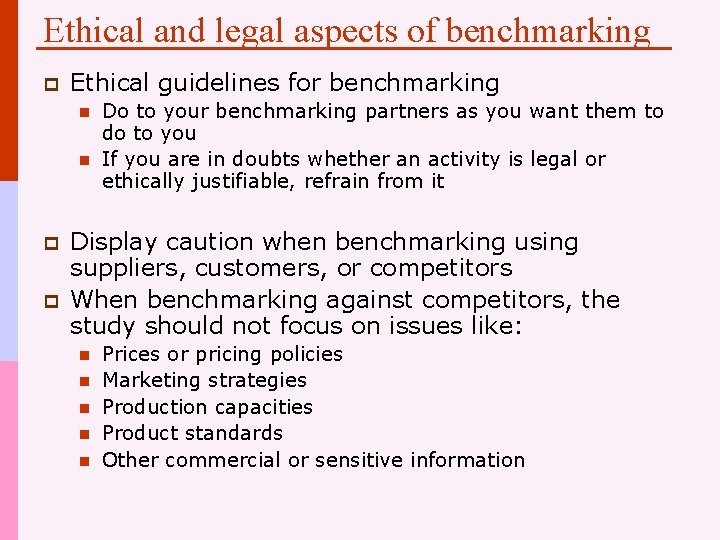
Ethical and legal aspects of benchmarking p Ethical guidelines for benchmarking n n p p Do to your benchmarking partners as you want them to do to you If you are in doubts whether an activity is legal or ethically justifiable, refrain from it Display caution when benchmarking using suppliers, customers, or competitors When benchmarking against competitors, the study should not focus on issues like: n n n Prices or pricing policies Marketing strategies Production capacities Product standards Other commercial or sensitive information
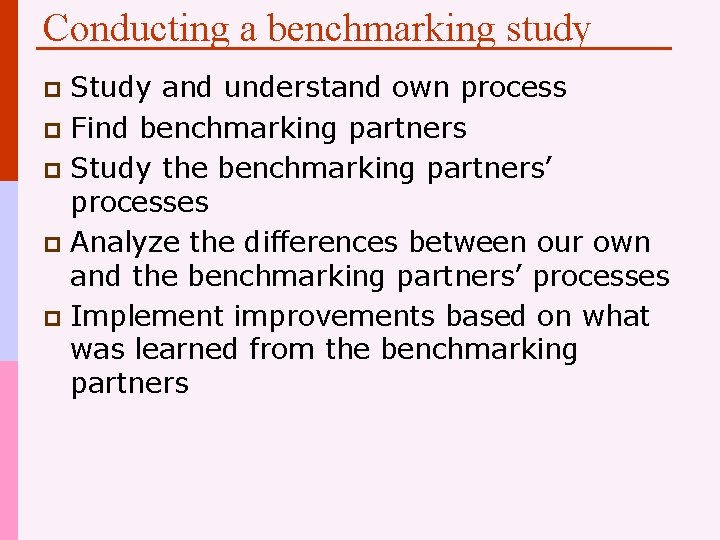
Conducting a benchmarking study Study and understand own process p Find benchmarking partners p Study the benchmarking partners’ processes p Analyze the differences between our own and the benchmarking partners’ processes p Implement improvements based on what was learned from the benchmarking partners p
Plan Select the process to be benchmarked p Establish a benchmarking team p Understand document the process to be benchmarked p Establish performance measures for the process p
Search p Compile a list of criteria that an ideal benchmarking partner should satisfy. The criteria typically include: n n n p p p Geographic location Size Technology used and markets served Industry Structure and organization Search for potential benchmarking partners Compare the candidates and select one or more partners Establish contact with the selected partners and gain acceptance for their participation in the study
Observe p Assess the information needs and information sources Information sought at three levels n n n p p Performance: indicator of how well the organization perform business process e. g. finishing time for a sprinter Practice: how the process is performed e. g. plan for the race, the running technique, type of shoes Enablers: conditions surrounding the process that render the partner able to perform the process in a particular way e. g. diet, training method, and so on. Select a method and tool for collecting data and information Perform data collection and debriefing
Analyze Sort the collected information and data p Quality control the collected information and data p Normalize the data: adjusting for the conditions that are truly different recalculation of the data to average values or ratio to eliminate aspects like size, market conditions, different legislation, cost levels, and so on p Identify gaps in the performance level p
Adapt Describe the ideal process and summarize improvement actions based on it p Set targets for the improvement p Develop an implementation plan, carry out the plan, and monitor the progress p Write a final report from the benchmarking study p
Organizational Tools Mahendrawathi ER, Ph. D
Organizational Tools Cross-functional teams p Problem-solving teams p Quality circles p Concurrent engineering p
Cross functional team A group consisting of members from different functional department or areas of responsibility and often also from different hierarchical levels. The purpose of the team is to solve problems involving several of the organization’s functions p Can be formed in three different ways/point in time: p n n n Exist on a permanent basis Ad hoc basis As a combination of the two
Problem-solving team A temporary team formed to solve a predefined problem and is composed of members from areas affected by this problem p A variant of cross functional team because it is temporary p
Quality circle p p Quality circles are permanent but not cross functional Consist of: n n n A group of people from the same work area Under the guidance of a circle leader Voluntarily participate in regular meeting during normal working hours (app. 1 hour/week) To, according their own priorities, identify, analyze, and solve problems within their own work area Present oral and written suggestions for solutions with cost estimates to a person authorized to decide on implementation
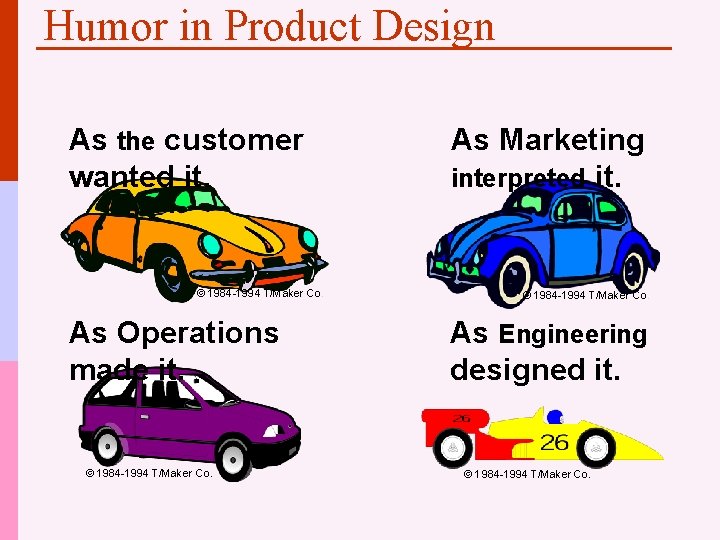
Humor in Product Design As the customer wanted it. © 1984 -1994 T/Maker Co. As Operations made it. © 1984 -1994 T/Maker Co. As Marketing interpreted it. © 1984 -1994 T/Maker Co. As Engineering designed it. © 1984 -1994 T/Maker Co.
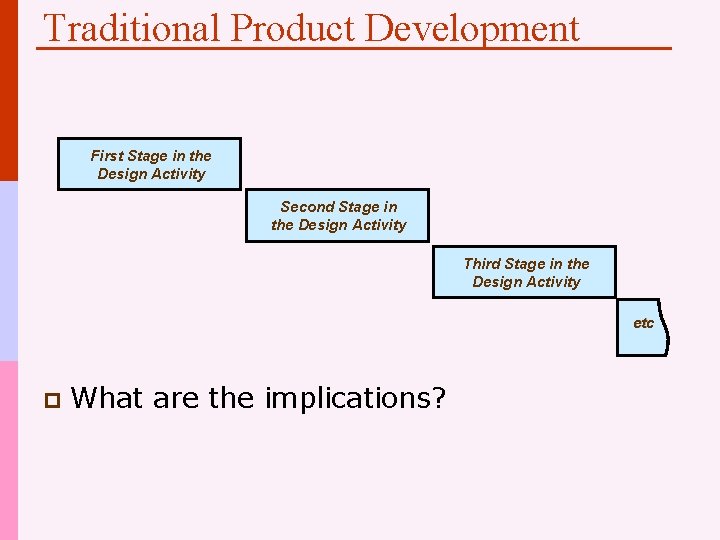
Traditional Product Development First Stage in the Design Activity Second Stage in the Design Activity Third Stage in the Design Activity etc p What are the implications?
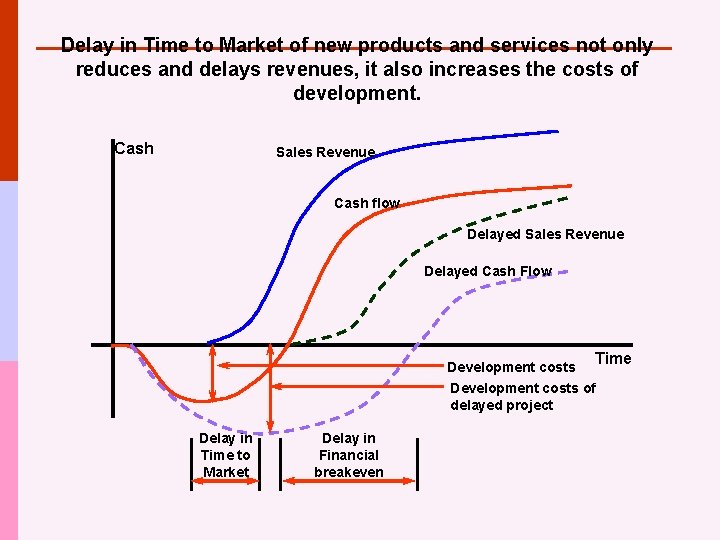
Delay in Time to Market of new products and services not only reduces and delays revenues, it also increases the costs of development. Cash Sales Revenue Cash flow Delayed Sales Revenue Delayed Cash Flow Time Development costs of delayed project Delay in Time to Market Delay in Financial breakeven
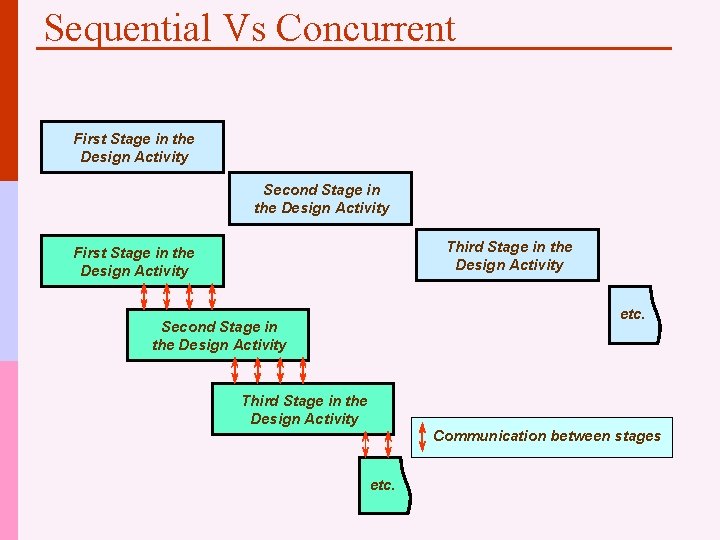
Sequential Vs Concurrent First Stage in the Design Activity Second Stage in the Design Activity Third Stage in the Design Activity First Stage in the Design Activity etc. Second Stage in the Design Activity Third Stage in the Design Activity Communication between stages etc.
Concurrent Engineering Cross functional teams that interact concurrently in a series of tasks that must be accomplished to complete the product design and development activities p Concurrent engineering process is also known as participative design and engineering p The aim is to enhance the design with inputs from all key stakeholders p
Important keywords in Concurrent Engineering p Integration: the different departments involved in the process from product concept to launch are integrated. Typical integrated team will consist of: n n n n p A sales representative A market analyst Two product developers A process engineer The manufacturing manager One manufacturing operator A customer Parallelism: reduces the duration of the process.
- Slides: 28