
Benchmarking A Powerful Tool for Achieving Organizational Excellence
Benchmarking: A Powerful Tool for Achieving Organizational Excellence in Addiction Treatment David Doty, Ph. D. John Winslow, M. H. S. , C. P. P.

Why Benchmark? • Performance is measured in all organizations • Clinical, operational and financial dimensions • How helpful is performance data? • Does data drive organizational decisionmaking? • Does data drive organizational vision?
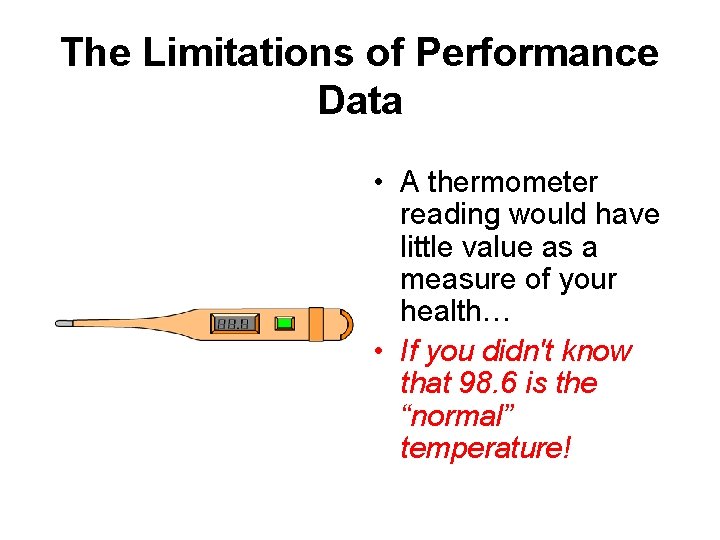
The Limitations of Performance Data • A thermometer reading would have little value as a measure of your health… • If you didn't know that 98. 6 is the “normal” temperature!

The Role of Benchmarking • Benchmarking provides the vital external context for understanding your measured organizational performance • Identifies organizational strengths and opportunities for improvement
Benchmarking for Organizational Excellence in Addiction Treatment • SAAS, NIATx, and Behavioral Pathway Systems are partnering to sponsor an addiction-specific national benchmarking initiative • BPS specializes in behavioral health and human services benchmarking and has numerous state and national benchmarking initiatives underway
Objectives of Benchmarking Initiative • Provide SAAS with information it needs to advocate for its members • Provide participating organizations with individualized comparative benchmark data that can serve as a vital context for understanding measured outcomes • Provide a powerful vehicle for the identification of best practices and organizational improvement through process benchmarking and the application of NIATx principles

Scope of Benchmarks • Comprehensive range of benchmarks • Operational, clinical, organizational climate, and financial domains of performance • 21 benchmark dimensions • Approximately 150 input metrics

Operational Benchmarks • Initial Access • Subsequent Access (Number of days from intake to first treatment appt) • Length of Stay/Utilization, by Level of Care • Average Caseload Size of Clinician, by Level of Care • Outpatient Productivity • Average Group Size
Clinical Benchmarks • • Engagement/Retention, by Level of Care Outpatient No-Show/Cancellation Rates Client Satisfaction/Perceptions of Care Degree of Engagement with Recovery Support Services • Involvement of Significant Others
Organizational Climate • Staff Morale/Satisfaction (25 Item Measure with automated administration and scoring) • Staff Retention/Turn-Over • Percent of Staff Position Vacancies (Counselors)
Financial Benchmarks • Cost per Unit of Service, by Level of Care • Salaries, by Role • Administrative Overhead as a Percent of Total Expenses • Payer Mix • Current Ratio (Assets Divided by Liabilities) • Net Days in Accounts Receivable • Days of Cash on Hand
New Strategic Benchmarks • • Readiness for Health Care Reform Integration with Primary Health Care Information Technology Parity
Data Submission • On-line benchmarking survey • Aggregated anonymous data-no complicated encounter-level data • No software needed • User-friendly, encrypted and secure • Quarterly submission-Available 24/7 • Submit relevant and available data--no reporting requirements • State-of-the-art on-line data validation
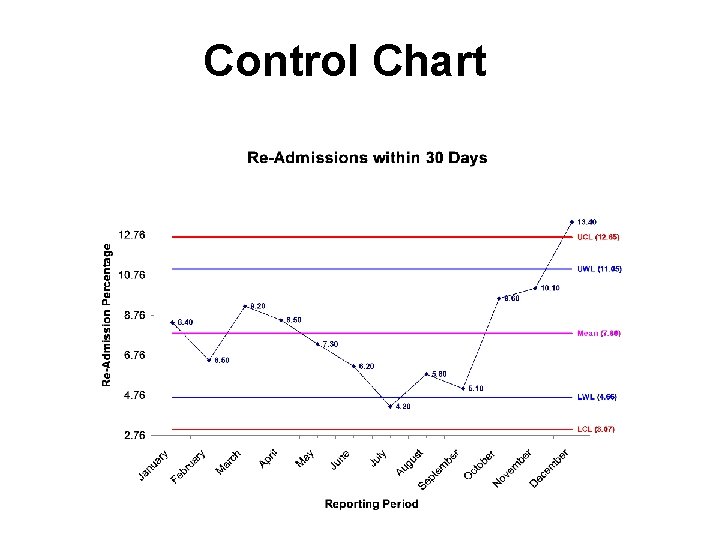
Benchmarking Reports • • Standard Report Executive Summary Report Organizational Climate Report Run Charts

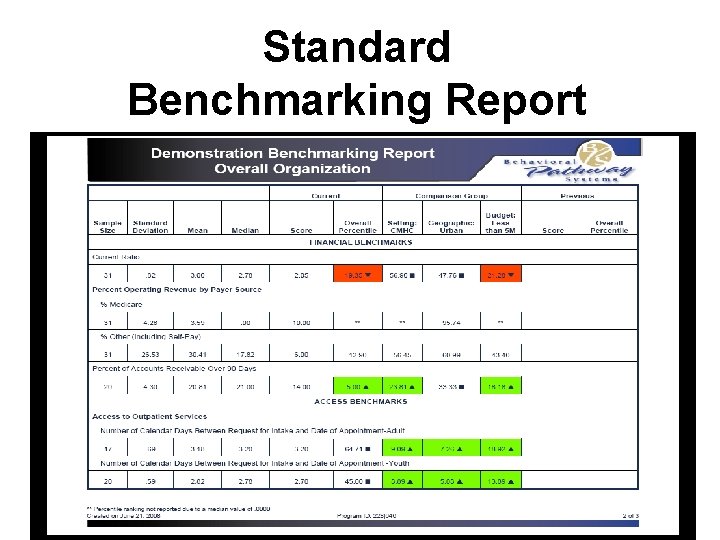
Standard Benchmarking Report • Normative Data – Sample Size – Mean – Median – Standard Deviation • Comparative Data – Overall Percentile Rankings – Peer Group Comparisons (budget size, geographic area, setting) “Apples to Apples” – State Norms if sample size permits • Previous Scores
Standard Benchmarking Report
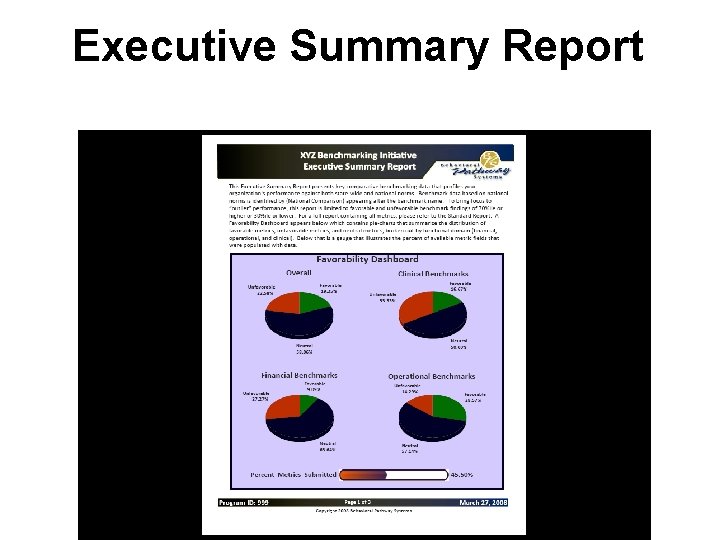
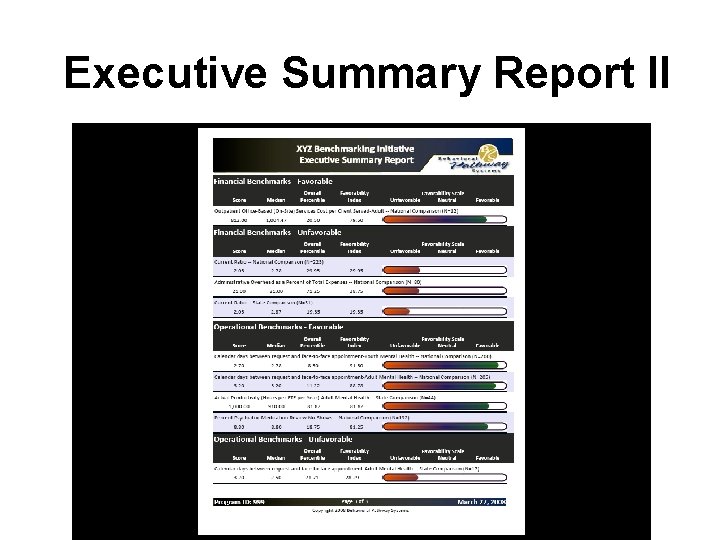
Executive Summary Report • Designed for busy senior leaders and boards • Graphic representation of scores • Brief, key highlights
Executive Summary Report
Executive Summary Report II

Organizational Climate Report
Control Chart
Accommodations for Multiple Locations • Satellite locations easily accommodated • Each location can be benchmarked independently to produce a separate report • No limit to number of additional locations
Moving Beyond “the Numbers” • Benchmarking is not just about data • When data is generated, real fun begins • Identify potential best practices through process benchmarking and other vehicles • Enhance organizational performance through NIATx principles • Emphasis on shared learning from one another and from “top performers” • A learning community
Shared Activities and Available Resources • Monthly audio-conferences/user support meetings • Monthly newsletter to educate and inform • Articles and other resources • Telephonic and E-Mail user support • Detailed reviews of reports • Free telephonic consultation in interpreting your data and developing improvement strategies • Confidential referrals to top performers for informal peer consultation
Benchmarking and Organizational Improvement • Outpatient No-Shows – Provider discovered no-shows were high. Implemented three Best practices that reduced no-shows by 32%. Impact: Outpatient volume increased by 3, 000, adding approximately $180, 000 to net margin • Revenue Cycle – Observed pattern of high Days in AR, AR Over 90 Days and Bad Debt. Modified revenue cycle process. Impact: Bad Debt declined from 6% to 3%, AR over 90 Days was reduced from 28% to 18% and contribution to net margin increased by almost $300, 000
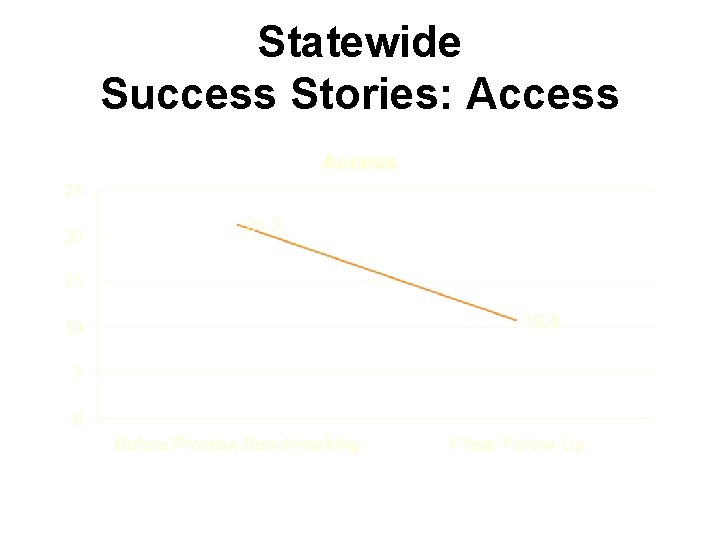
Statewide Success Stories: Access
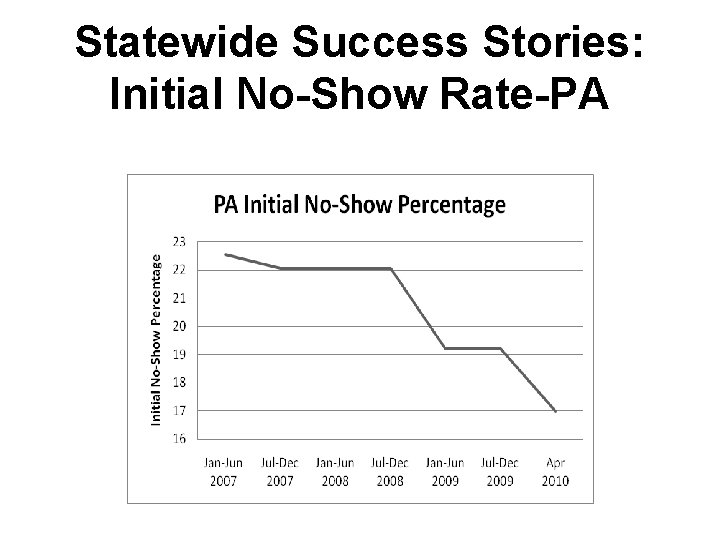
Statewide Success Stories: Initial No-Show Rate-PA
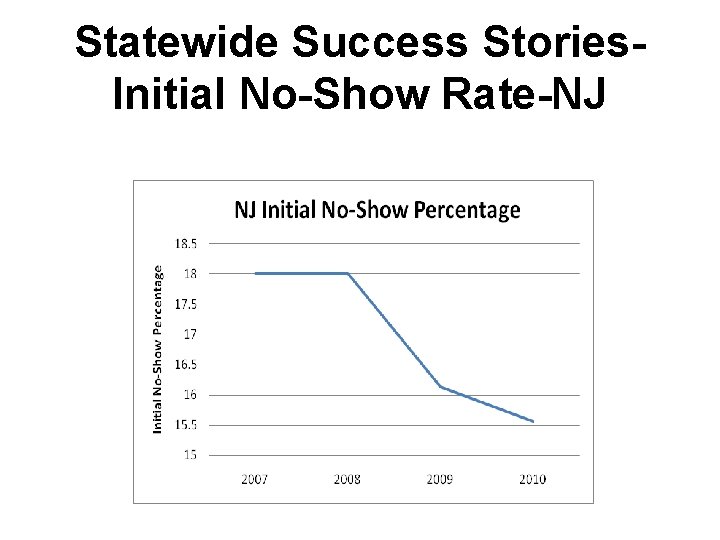
Statewide Success Stories. Initial No-Show Rate-NJ

One Year Subscription Fee • Annual Subscription Fee: $1, 000 per organization • Includes all benefits described

Benchmarking through the Eyes of a Participant
Background • Local health department outpatient program on Maryland’s Eastern Shore • When news first appeared re: National Benchmarking Initiative Maryland had just begun transitioning from block grant funding to hybrid fee-for-service system • Murmurings of possible move to privatization
Proactive vs. Reactive
Rally the troops! Benchmarking Steering Committee DCAP Supervisors then full staff buy-in

Planning & Organization are Key!

Into Action! Trial & Error Various spreadsheets created Allowing for (a degree of) autonomy Prioritizing “low -hanging fruit” and prize benchmarks
Crunching the Numbers Clinical & Support staff Supervisors Administration
Interpreting the Data “We didn’t know what we didn’t know” Major Findings §Pleased with staff survey results §Scored high on: üRecognition & Growth üLeadership üCompensation & Benefits üOverall Satisfaction §Excelling at staff retention §High Initial No-Show Cancellation rates §Poor engagement/retention rates for Intensive Outpatient (IOP)
Putting the Data to Use • Develop strategies to: – Decrease initial wait times – Increase Intensive Outpatient attendance – Maintain high staff retention rates – Improve “Client Engagement & Retention” and Reduce Premature Discharges – Survive and. Thrive in Tough Economic Times – Improve staff morale
- Slides: 38