
BEM class 4 Building Thermo 1 Envelope Heat
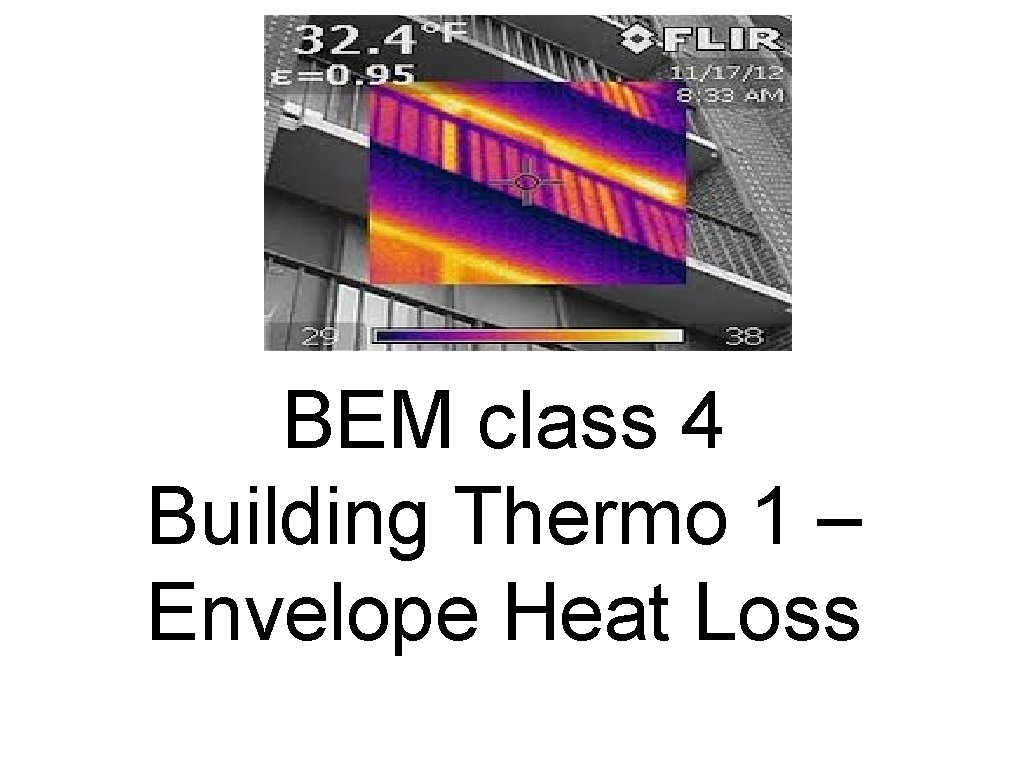
BEM class 4 Building Thermo 1 – Envelope Heat Loss

Building Thermodynamics How buildings lose/gain heat - 3 fundamental mechanisms of heat transfer • Conduction • Convection • Radiation
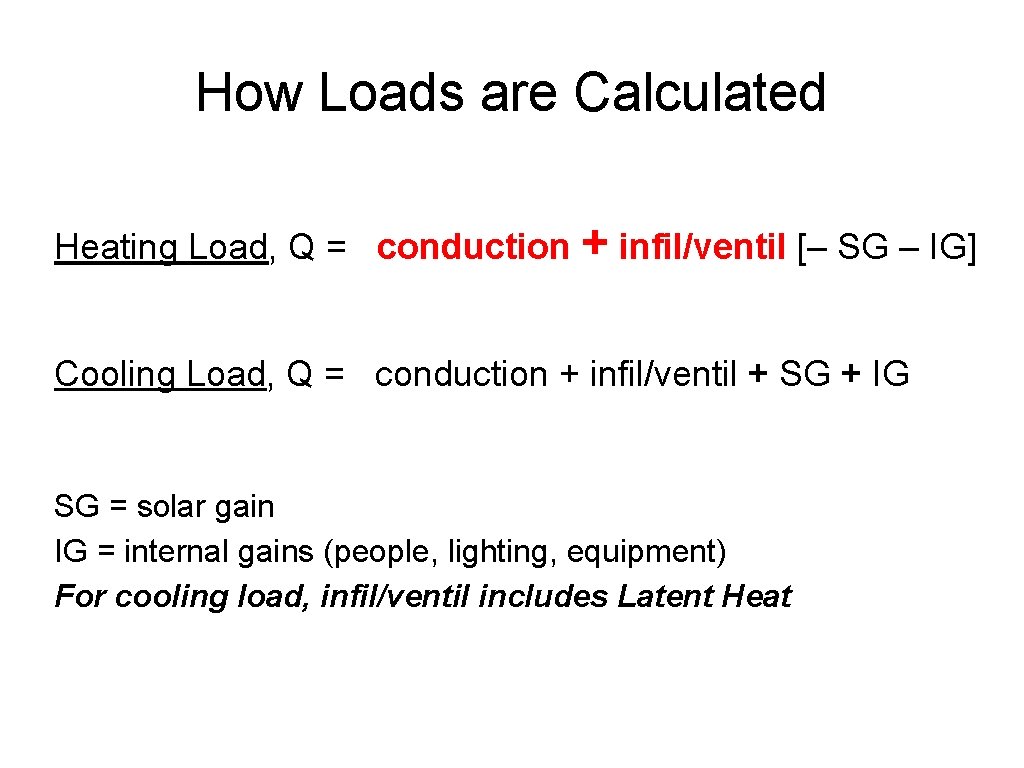
How Loads are Calculated Heating Load, Q = conduction + infil/ventil [– SG – IG] Cooling Load, Q = conduction + infil/ventil + SG + IG SG = solar gain IG = internal gains (people, lighting, equipment) For cooling load, infil/ventil includes Latent Heat
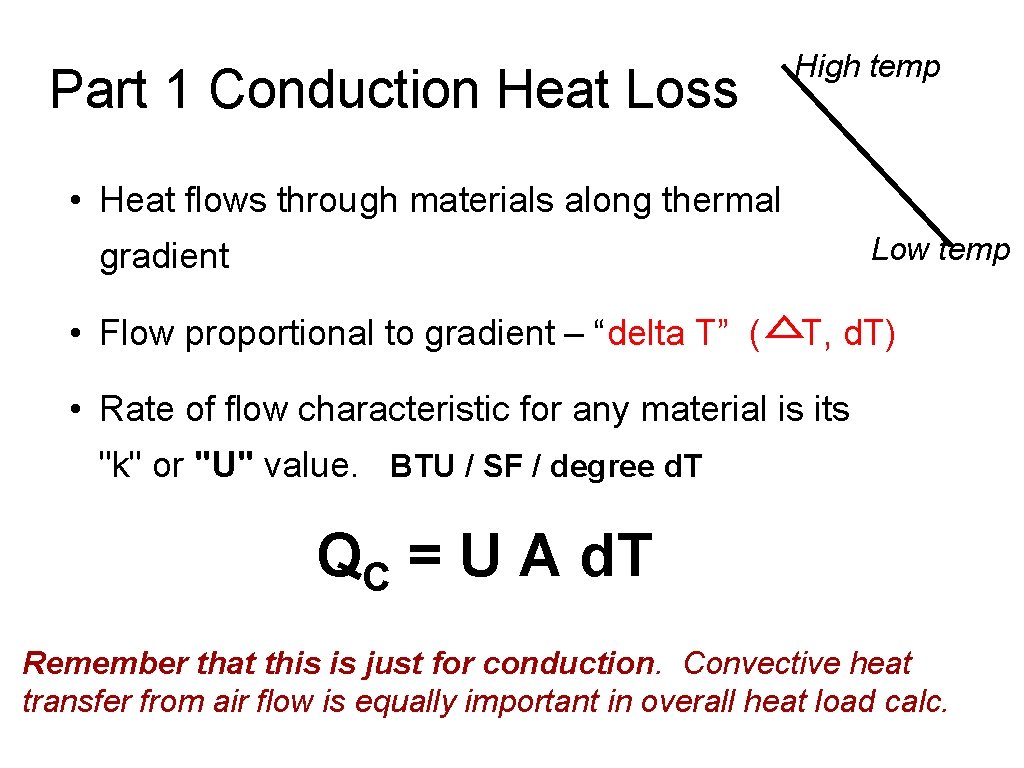
Part 1 Conduction Heat Loss High temp • Heat flows through materials along thermal Low temp gradient • Flow proportional to gradient – “delta T” ( T, d. T) • Rate of flow characteristic for any material is its "k" or "U" value. BTU / SF / degree d. T QC = U A d. T Remember that this is just for conduction. Convective heat transfer from air flow is equally important in overall heat load calc.

Conduction Heat Loss Q = U A d. T Where, Q is heat loss for the construction U is value of material or composite, BTU/sf-hour A is surface area, square foot d. T is term for temperature difference and may be hourly (peak), bin, or annual.

U-values and R-values • U=1/R • R-values are additive; U -values are NOT. • Per thickness of material • Look-up tables for tested values. • Field testing with infrared to measure heat flux.
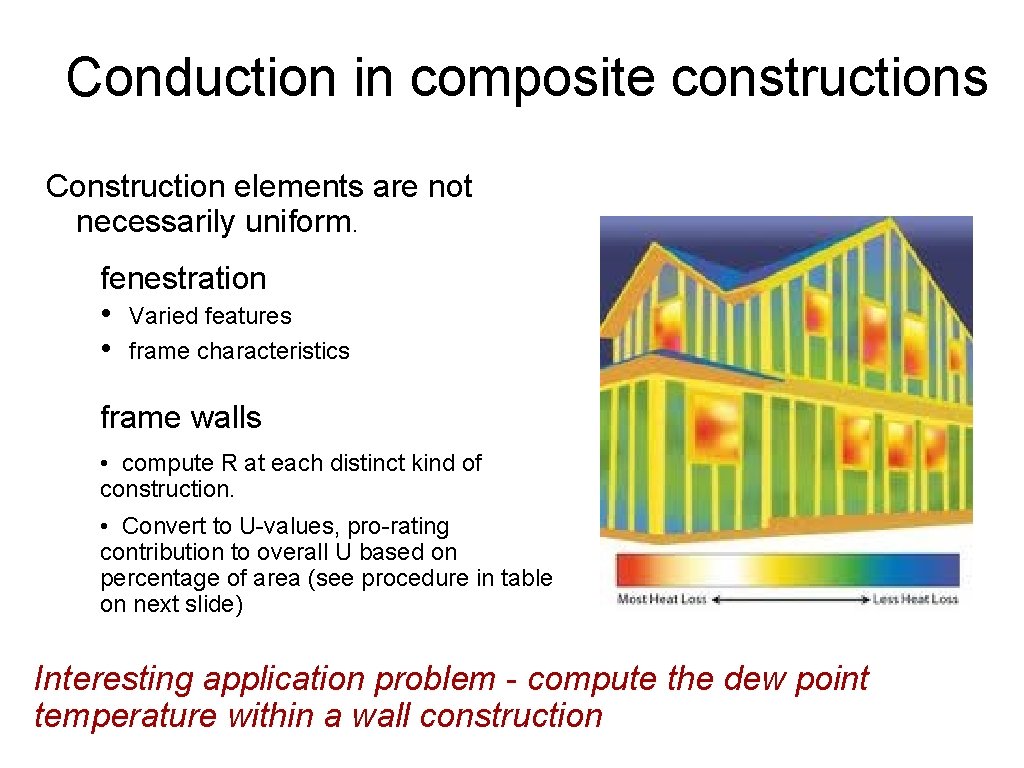
Conduction in composite constructions Construction elements are not necessarily uniform. fenestration • Varied features • frame characteristics frame walls • compute R at each distinct kind of construction. • Convert to U-values, pro-rating contribution to overall U based on percentage of area (see procedure in table on next slide) Interesting application problem - compute the dew point temperature within a wall construction
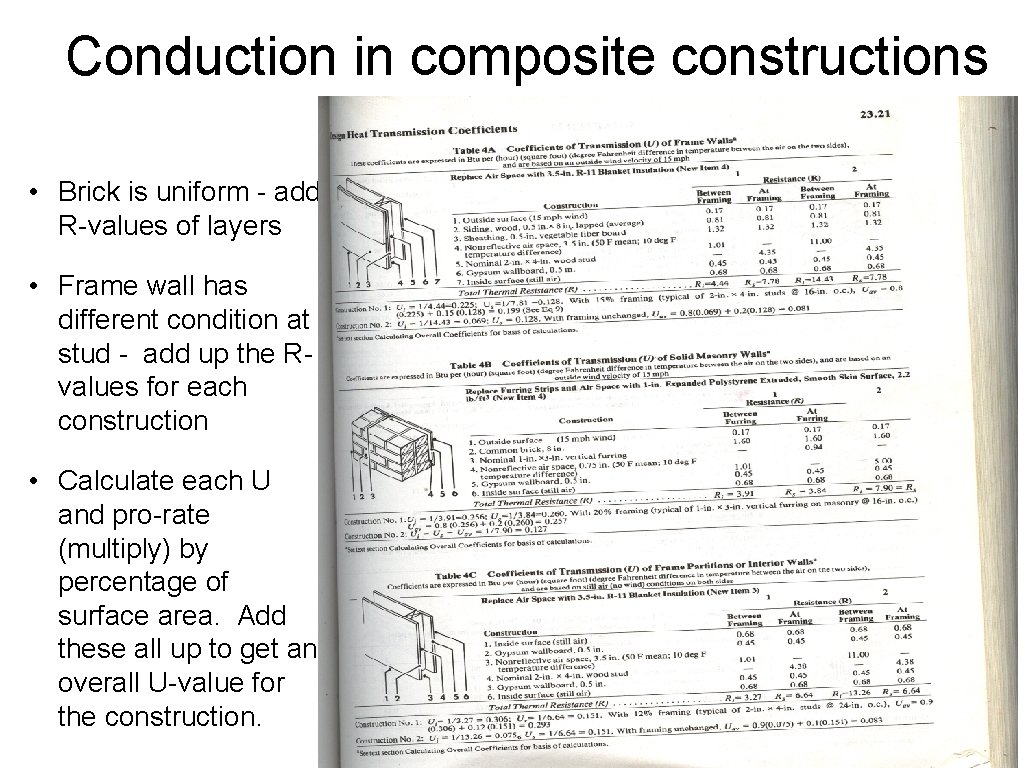
Conduction in composite constructions • Brick is uniform - add R-values of layers • Frame wall has different condition at stud - add up the Rvalues for each construction • Calculate each U and pro-rate (multiply) by percentage of surface area. Add these all up to get an overall U-value for the construction.
Code • ASHRAE 90. 1 and 62. 1 and International Code Council (ICC) • State Energy Codes – http: //www. dos. ny. gov/dcea/energycode_code. html – http: //publicecodes. cyberregs. com/st/ny/st/index. htm • NYC Energy Code – http: //www. nyc. gov/html/dob/html/codes_and_reference_materials/nycecc_mai n. shtml – Training Modules http: //www. nyc. gov/html/dob/html/codes_and_reference_materials/nycecc_trai ning_modules. shtml • Sallan Foundation "Decoding the Code"
Code cont'd • Focus on envelope insulation values • Compliance pathways • Prescriptive A - meet U values by component • Prescriptive B- meet overall U • "appendix G" modeling against baseline • RESCHECK, COMCHECK - free tools, download, widely used.
Conduction Heat Loss Calculation • Collect, compute, compile R and U values and areas for various constructions (walls, roof, windows). Apply UAd. T to each. Sum. (Hmmm, where does that d. T come from? ? ) • Can also develop overall envelope U by adding “UA”s -- this weights the U-values proportional to building surface areas. This is the basis of envelope trade-off procedures in Code. • What about foundation and/or slab heat losses?
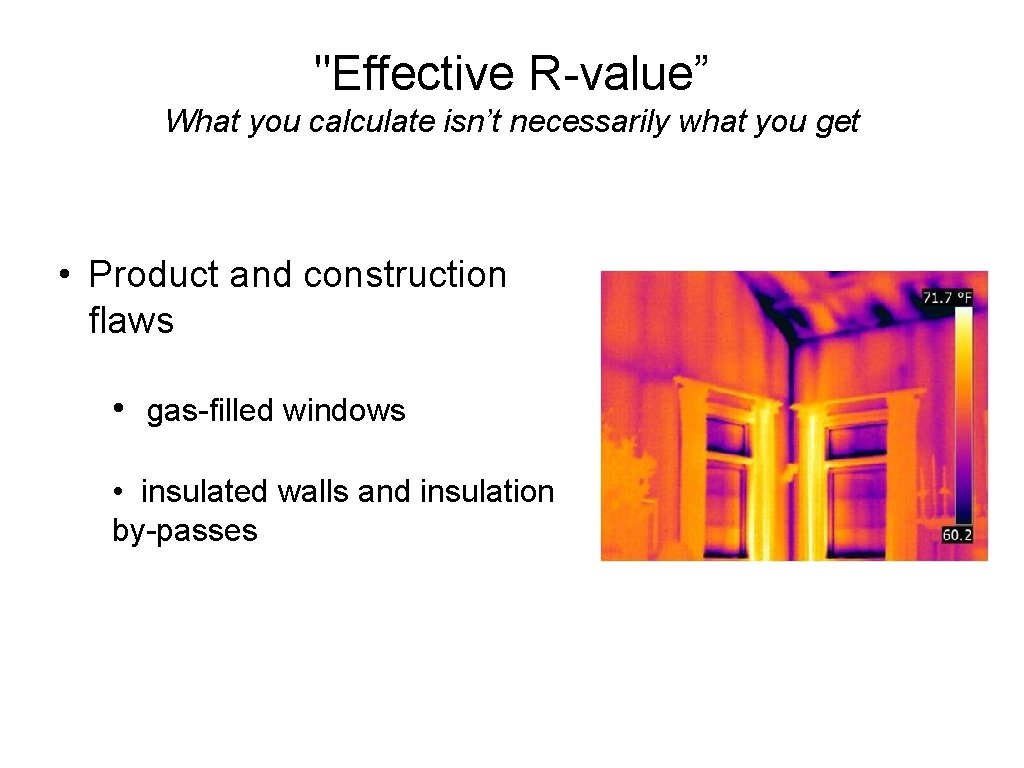
"Effective R-value” What you calculate isn’t necessarily what you get • Product and construction flaws • gas-filled windows • insulated walls and insulation by-passes
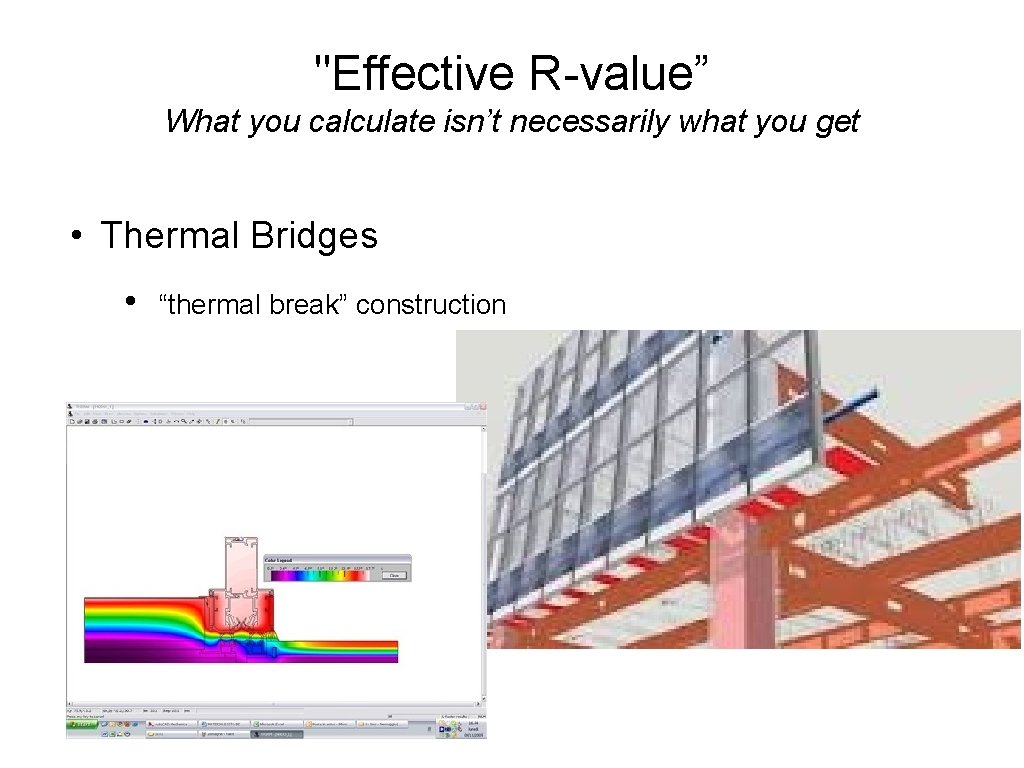
"Effective R-value” What you calculate isn’t necessarily what you get • Thermal Bridges • “thermal break” construction
Part 2 – CONVECTIVE EFFECTS • Effect on conduction (surface effects) • Air movement into and out of buildings • Latent heat in outside air • Interior air flows and comfort

AIR MOVEMENT INTO & OUT OF BUILDINGS • Wind and Stack effects • Variable impacts • CFD • Ventilation exhaust • Supply air & building pressurization
HOW MUCH OUTSIDE AIR? • All-natural draft ventilation • Function of wind, draft and openings • estimation by crack-length or by air-changes per hour (ACH) • 0. 5 - 2 ACH. “Blower-door” testing. • Mechanically-driven systems • Count up CFM from fan ratings • Code for ventilation • NYC Building Code. • ASHRAE 62. 1 • "15 CFM PERSON "
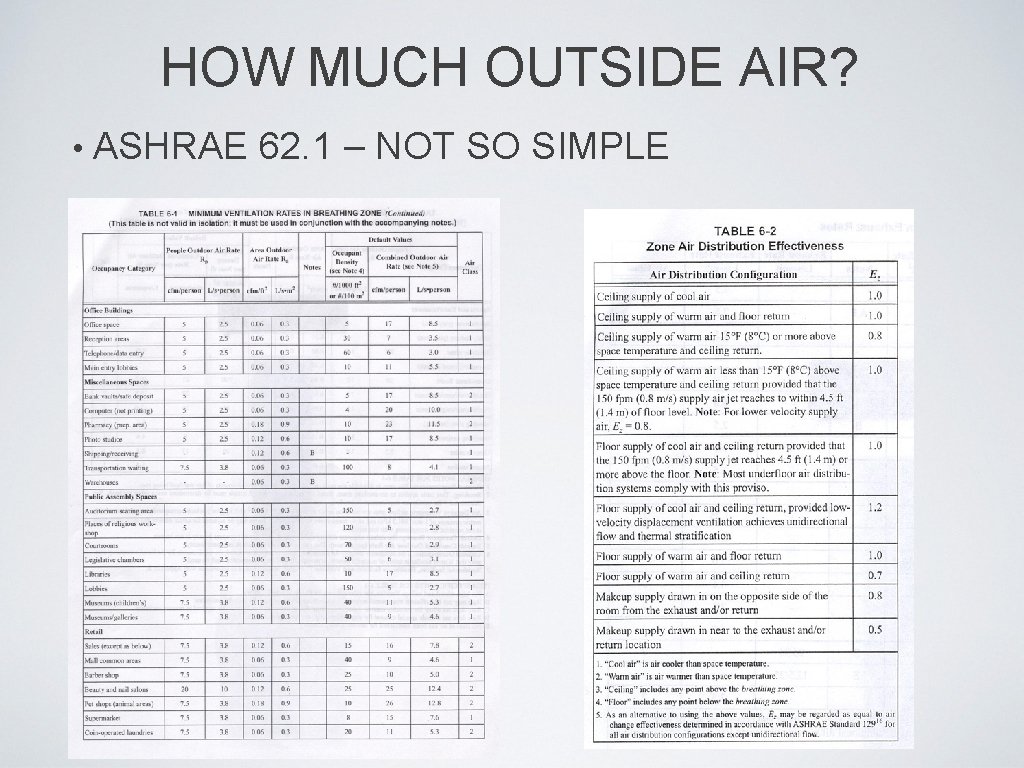
HOW MUCH OUTSIDE AIR? • ASHRAE 62. 1 – NOT SO SIMPLE
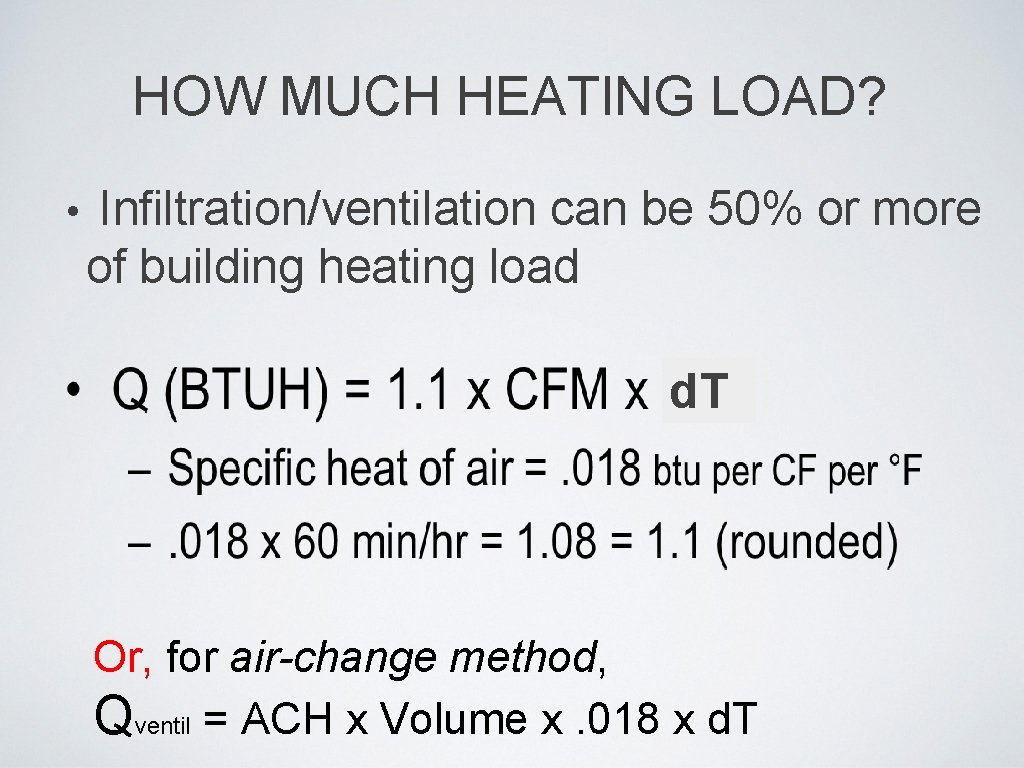
HOW MUCH HEATING LOAD? • Infiltration/ventilation can be 50% or more of building heating load d. T Or, for air-change method, Qventil = ACH x Volume x. 018 x d. T
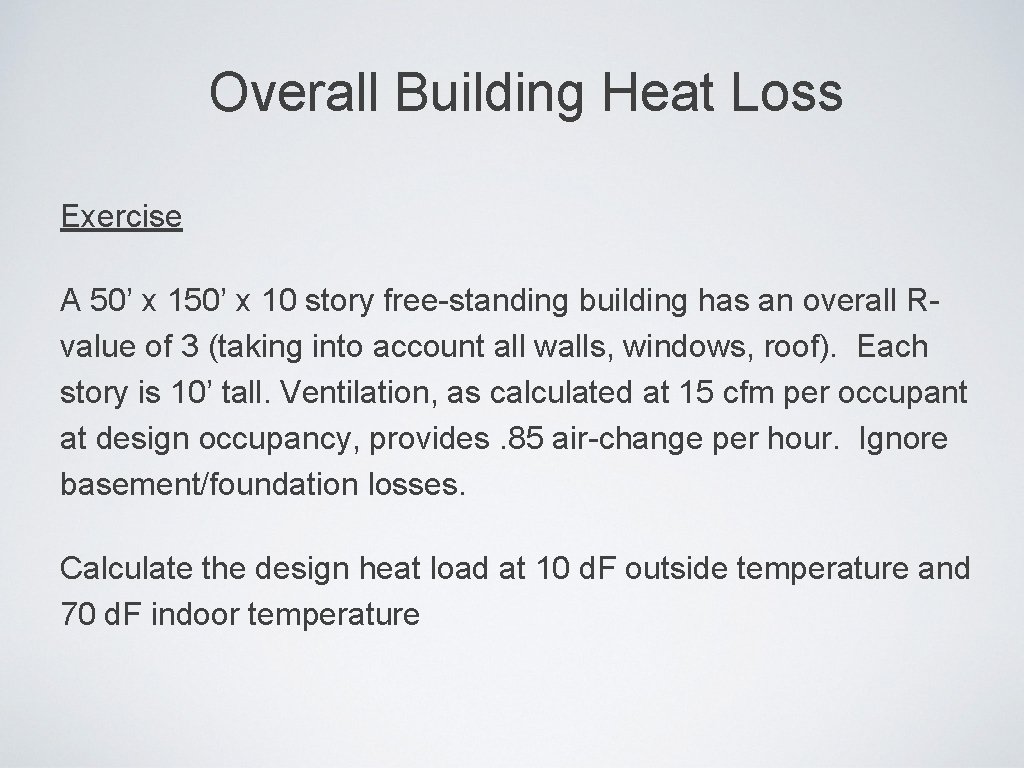
Overall Building Heat Loss Exercise A 50’ x 10 story free-standing building has an overall Rvalue of 3 (taking into account all walls, windows, roof). Each story is 10’ tall. Ventilation, as calculated at 15 cfm per occupant at design occupancy, provides. 85 air-change per hour. Ignore basement/foundation losses. Calculate the design heat load at 10 d. F outside temperature and 70 d. F indoor temperature
![[(50 x 2) + (150 x 2)] x 10 = 40, 000 sf surface](http://slidetodoc.com/presentation_image/228a8f2fd4d80003012060cd40404179/image-20.jpg "[(50 x 2) + (150 x 2)] x 10 = 40, 000 sf surface")
[(50 x 2) + (150 x 2)] x 10 = 40, 000 sf surface area 40, 000 x 1/3 x (70 -10) = 800, 000 BTUH conduction 50 x 10 = 750, 000 cf volume 750, 000 x. 85 x. 018 x (70 -10) = 688, 500 BTUH ventilation Answer = 800, 000 + 688, 500 = 1, 488, 500 BTU
- Slides: 20