
BEM class 3 Building Thermo 3 indoor outdoor
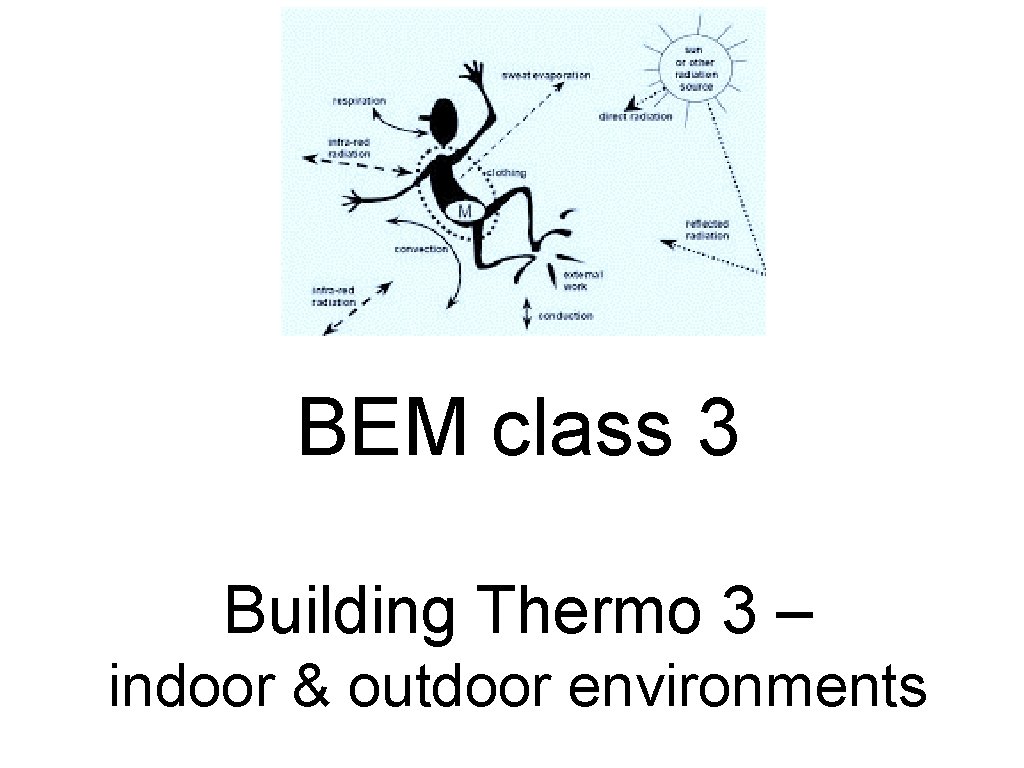
BEM class 3 Building Thermo 3 – indoor & outdoor environments
topics Human comfort in the indoor environment Building Zoning Design Conditions, Climate Zones
Human Comfort in the Indoor Environment ASHRAE Std. 55 (-2013) “Thermal Environmental Conditions for Human Occupancy” Heat Exchange at the Human Body boundary Sensitivity to air temperature, surface (radiant) temperatures, humidity, air movement Dependence on clothing, activity. Role of culture and expectations.
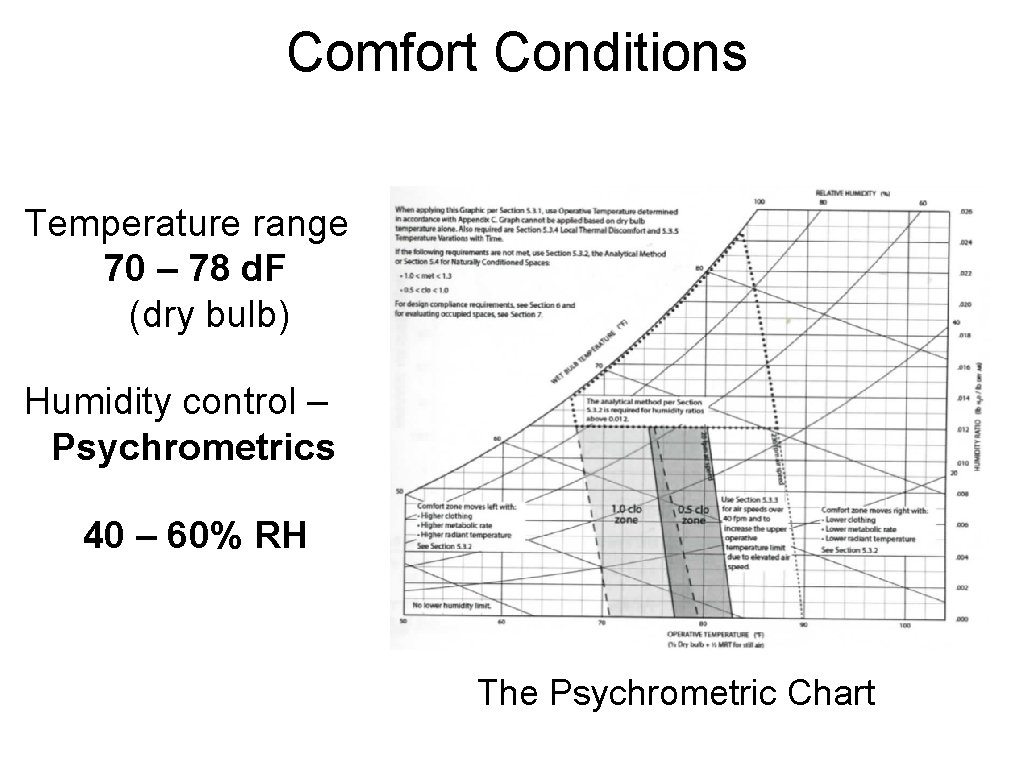
Comfort Conditions Temperature range 70 – 78 d. F (dry bulb) Humidity control – Psychrometrics 40 – 60% RH The Psychrometric Chart

Interior Air Movement Evaporative effects of air movement HVAC System Effectiveness • ASHRAE 62 (2013) Ventilation for Acceptable Indoor Air Quality • Different types of air distribution systems • Air distribution under varying conditions • Short-circuits. Stratification. • "droop" at low flows in variable air volume systems (VAV)
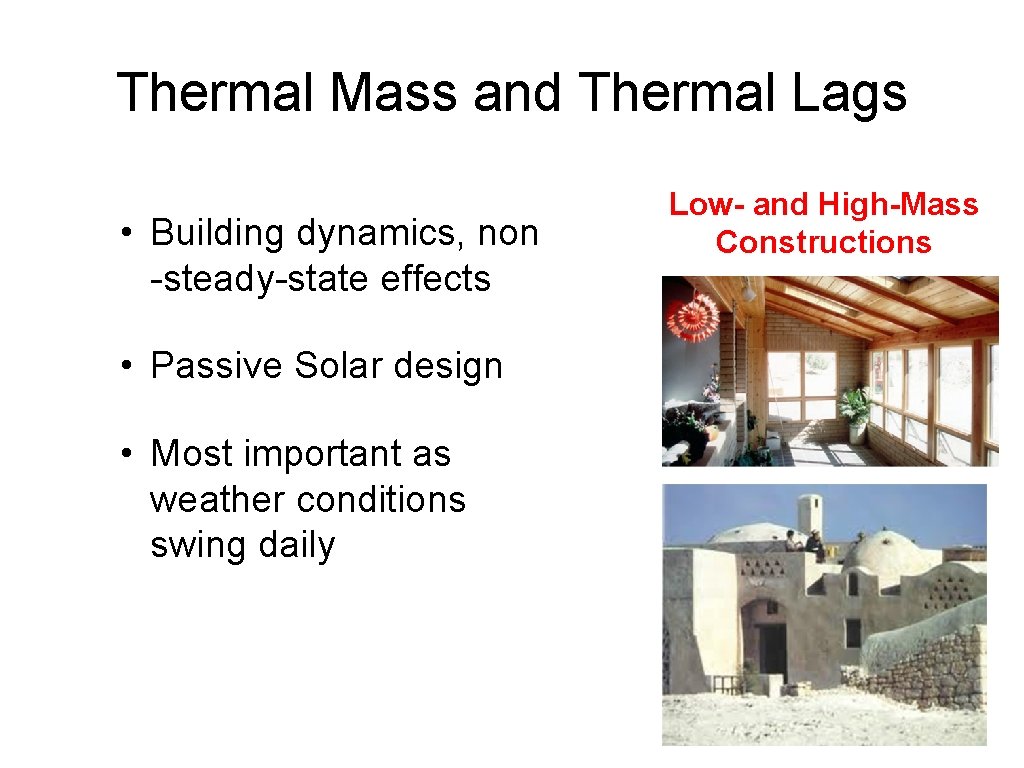
Thermal Mass and Thermal Lags • Building dynamics, non -steady-state effects • Passive Solar design • Most important as weather conditions swing daily Low- and High-Mass Constructions
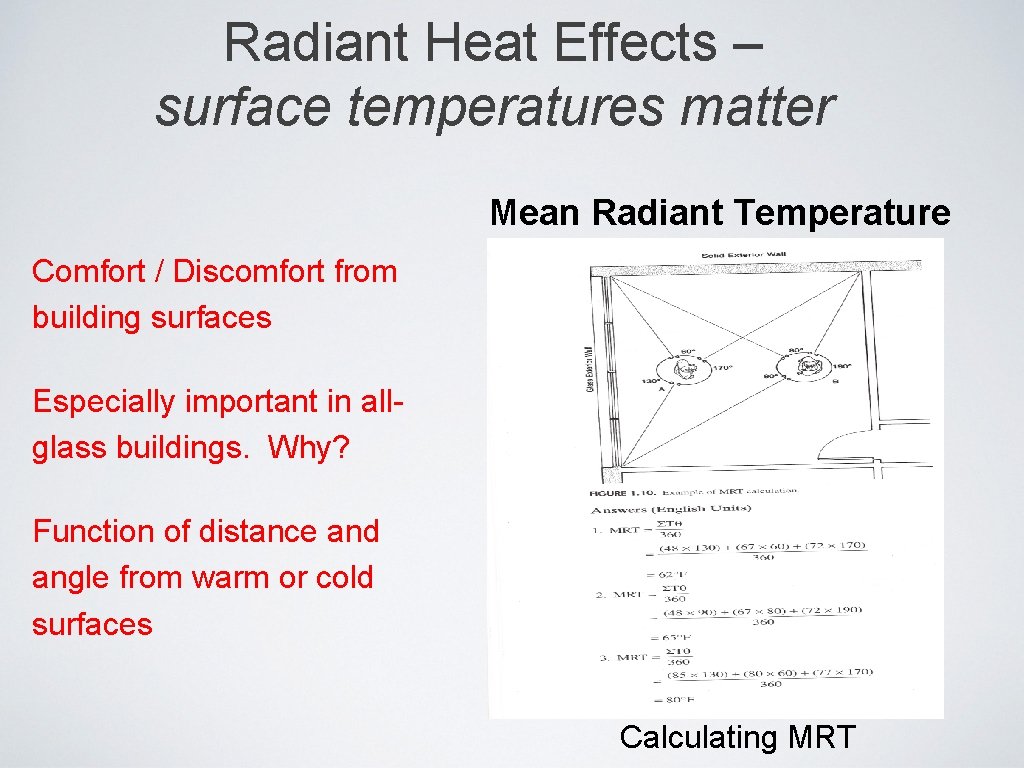
Radiant Heat Effects – surface temperatures matter Mean Radiant Temperature Comfort / Discomfort from building surfaces Especially important in allglass buildings. Why? Function of distance and angle from warm or cold surfaces Calculating MRT
Building Zones Space use and occupancy • Corridors, stairwells • Conference rooms, auditoriums, cafeterias Environmental exposures • Façade orientation, corners • Perimeter vs Core HVAC zones vs model zones • Read the COMNET MGP guidance
Outdoor Conditions & Thermal Loads Thermal loads driven most significantly by outside TEMPERATURE 2 aspects: (1) Design - selection of mechanical equipment (2) Annual Energy Use
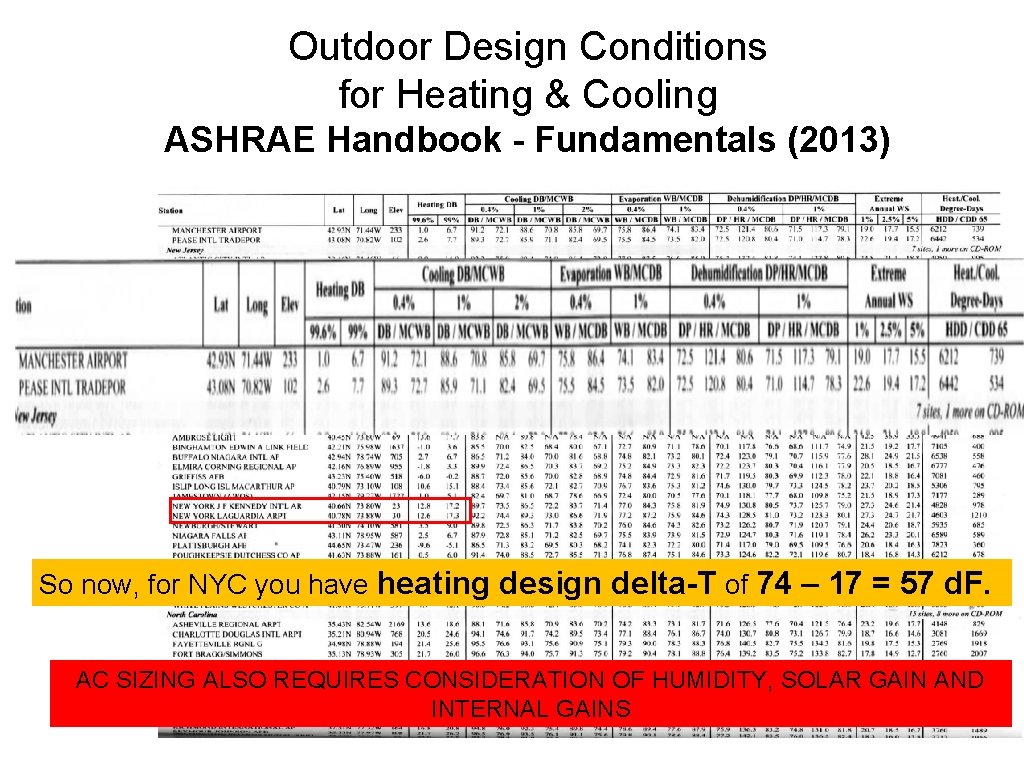
Outdoor Design Conditions for Heating & Cooling ASHRAE Handbook - Fundamentals (2013) So now, for NYC you have heating design delta-T of 74 – 17 = 57 d. F. AC SIZING ALSO REQUIRES CONSIDERATION OF HUMIDITY, SOLAR GAIN AND INTERNAL GAINS
From Peak (design) to Annual – how hot/cold over time? Hourly outdoor temperatures – recorded by US Weather Service (NOAA) Manual Methods • Bin data – hourly occurrences in 5 -degree “bins” (see next slide) • Degree-days – reported in newspapers on running daily basis HDD: 65 – daily avg temp eg – high 25 low 15 avg 20 HDD= 45 CDD: daily avg temp – 65 eg – high 90 low 70 avg 80 CDD = 15 Weather “Tapes” for use in models • Typical Meteorological Year (TMY) (see Hensen ch 3)

Sample Bin Data
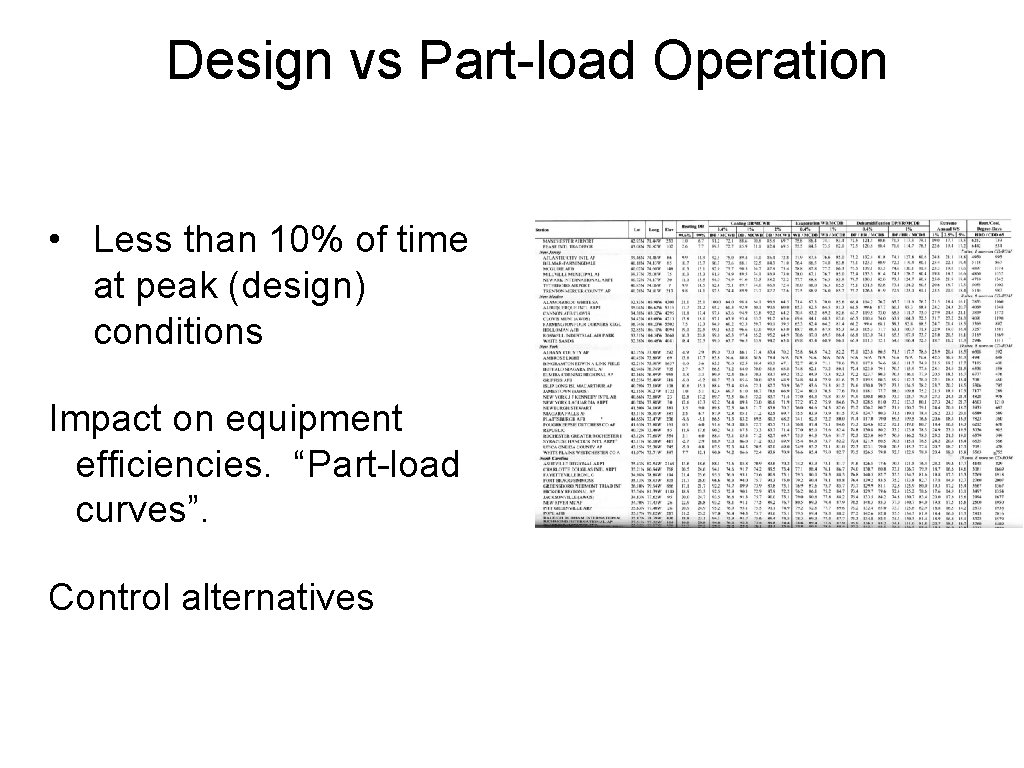
Design vs Part-load Operation • Less than 10% of time at peak (design) conditions Impact on equipment efficiencies. “Part-load curves”. Control alternatives
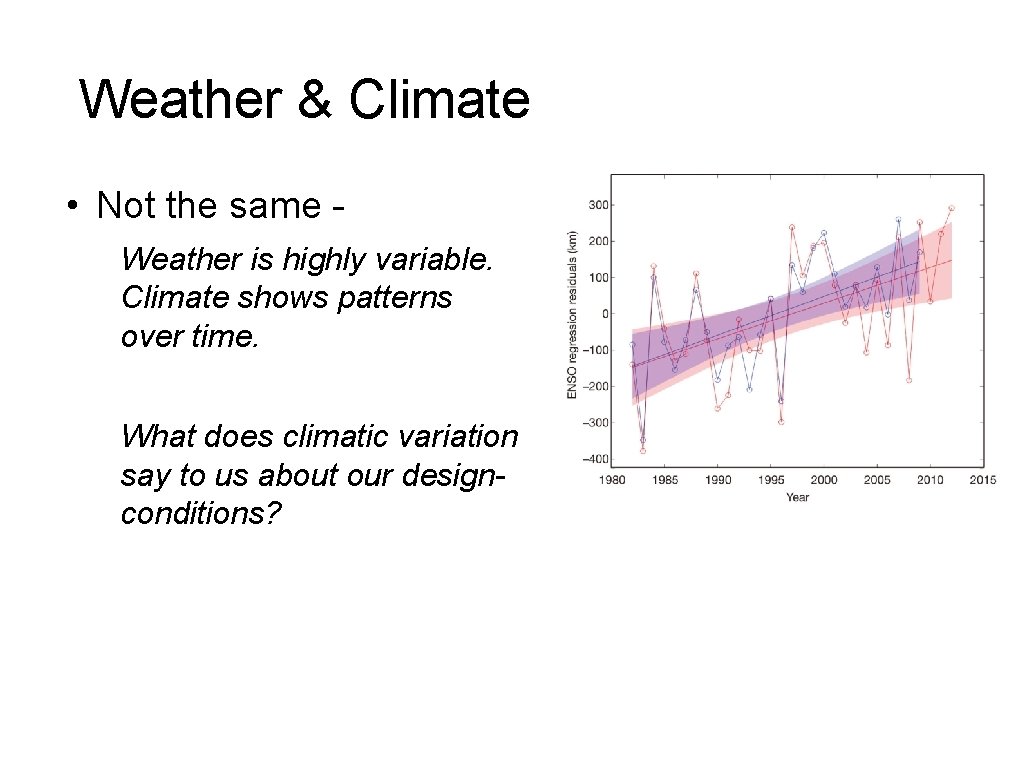
Weather & Climate • Not the same Weather is highly variable. Climate shows patterns over time. What does climatic variation say to us about our designconditions?
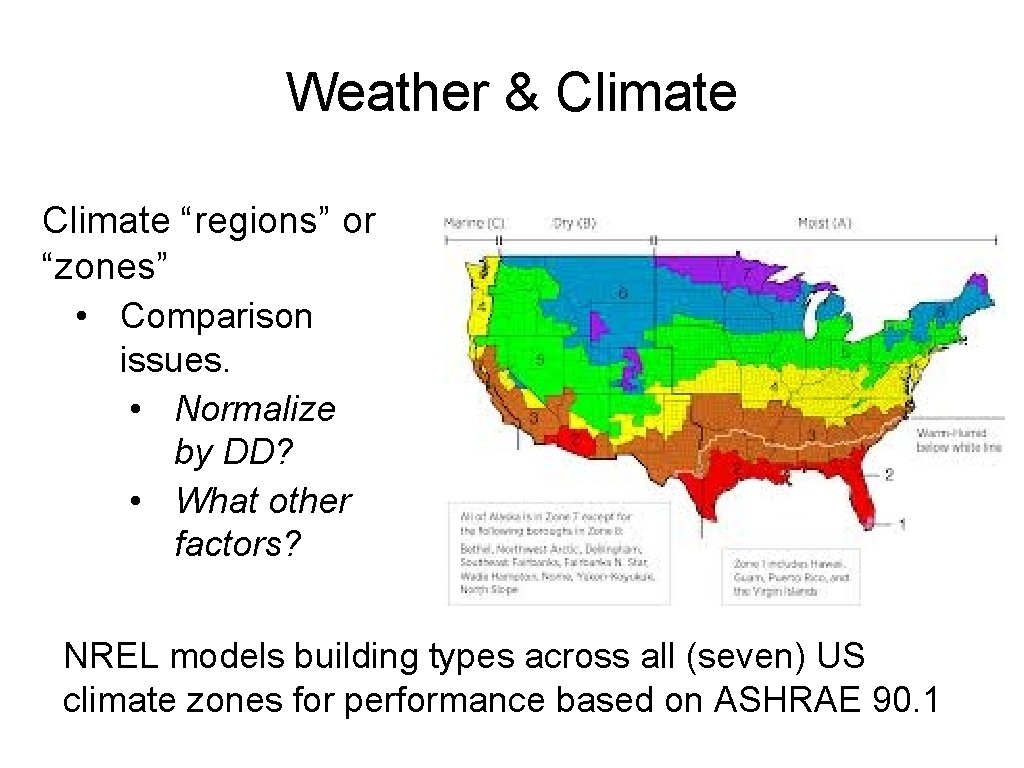
Weather & Climate “regions” or “zones” • Comparison issues. • Normalize by DD? • What other factors? NREL models building types across all (seven) US climate zones for performance based on ASHRAE 90. 1
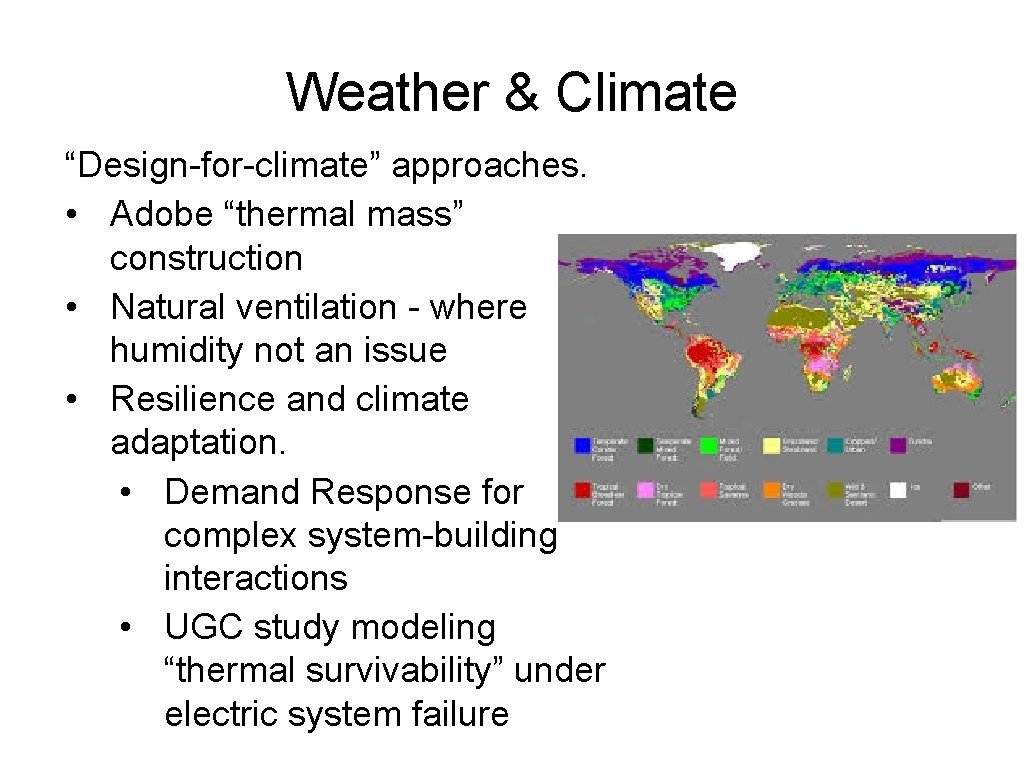
Weather & Climate “Design-for-climate” approaches. • Adobe “thermal mass” construction • Natural ventilation - where humidity not an issue • Resilience and climate adaptation. • Demand Response for complex system-building interactions • UGC study modeling “thermal survivability” under electric system failure
- Slides: 16