
Belt Drives Belt drives are used to transmit
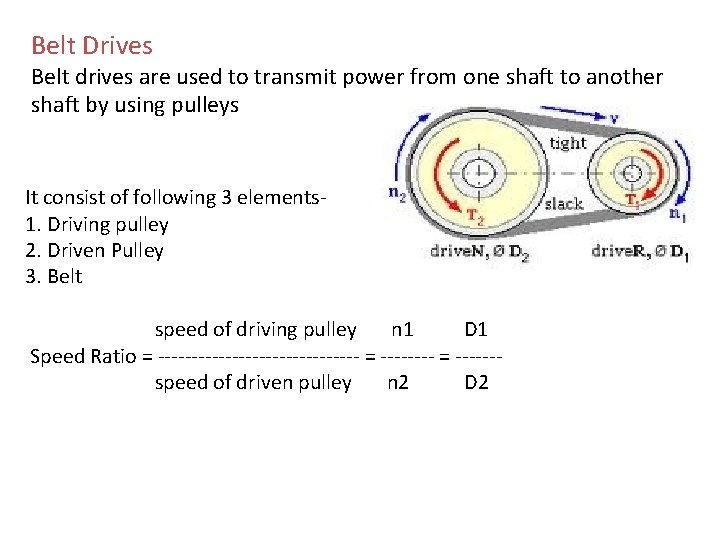
Belt Drives Belt drives are used to transmit power from one shaft to another shaft by using pulleys It consist of following 3 elements 1. Driving pulley 2. Driven Pulley 3. Belt speed of driving pulley n 1 D 1 Speed Ratio = --------------- = ------speed of driven pulley n 2 D 2
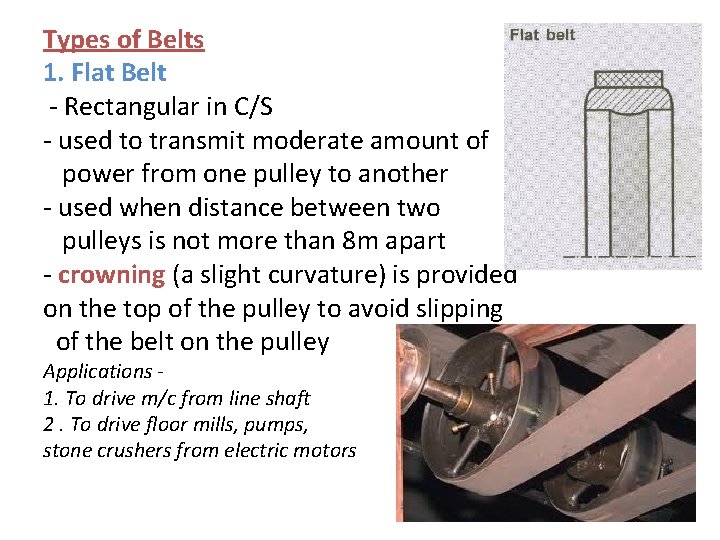
Types of Belts 1. Flat Belt - Rectangular in C/S - used to transmit moderate amount of power from one pulley to another - used when distance between two pulleys is not more than 8 m apart - crowning (a slight curvature) is provided on the top of the pulley to avoid slipping of the belt on the pulley Applications 1. To drive m/c from line shaft 2. To drive floor mills, pumps, stone crushers from electric motors
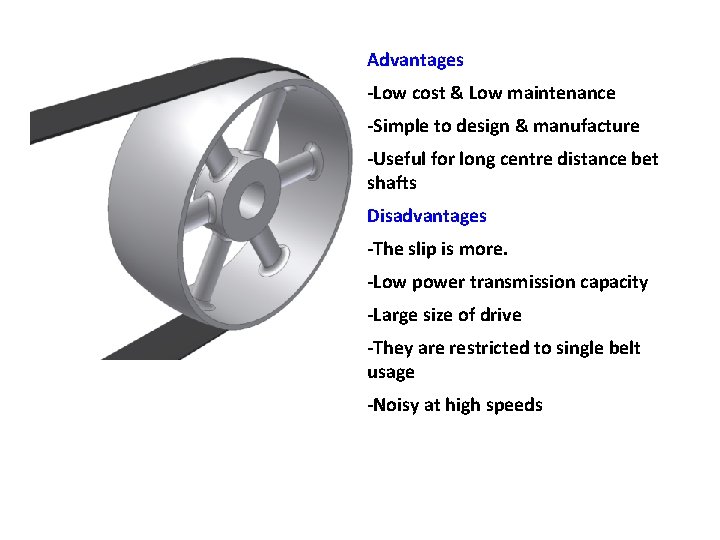
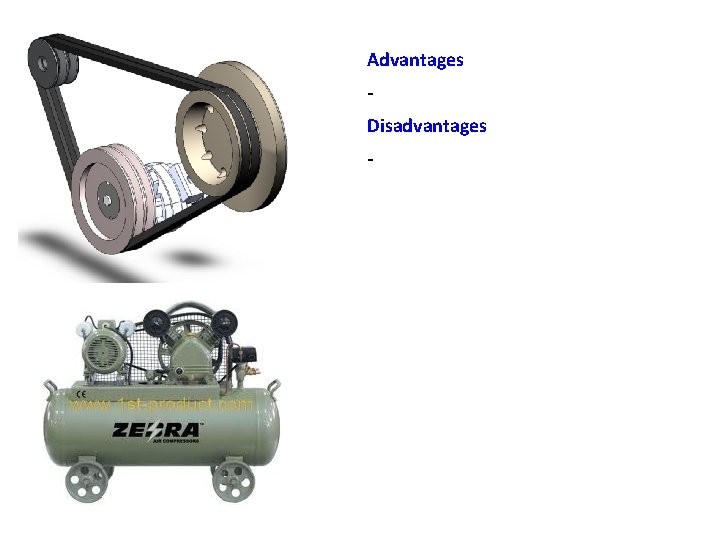
Advantages -Low cost & Low maintenance -Simple to design & manufacture -Useful for long centre distance bet shafts Disadvantages -The slip is more. -Low power transmission capacity -Large size of drive -They are restricted to single belt usage -Noisy at high speeds
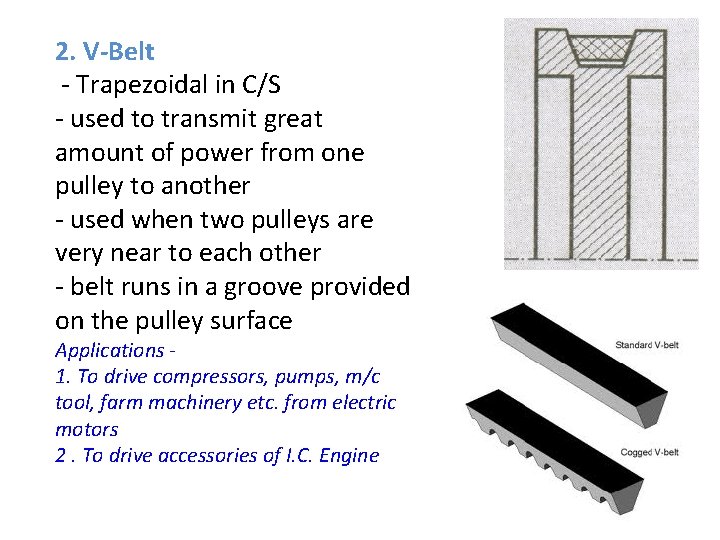
2. V-Belt - Trapezoidal in C/S - used to transmit great amount of power from one pulley to another - used when two pulleys are very near to each other - belt runs in a groove provided on the pulley surface Applications 1. To drive compressors, pumps, m/c tool, farm machinery etc. from electric motors 2. To drive accessories of I. C. Engine
Advantages Disadvantages -
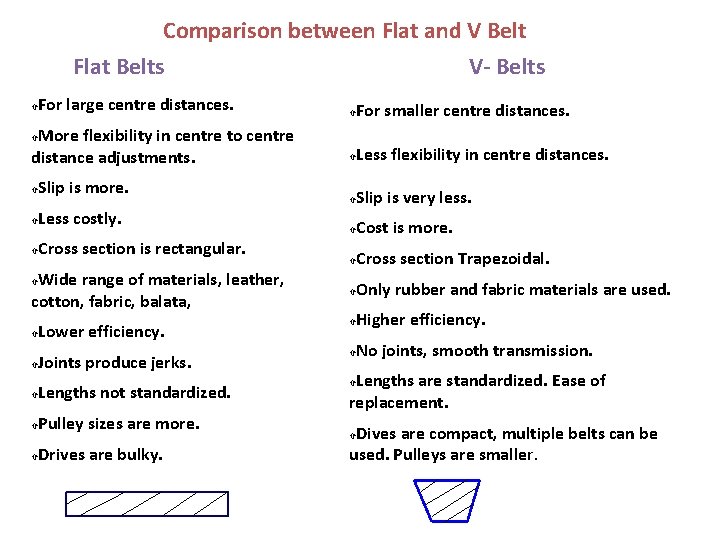
Comparison between Flat and V Belt Flat Belts For large centre distances. More flexibility in centre to centre distance adjustments. V- Belts For smaller centre distances. Less flexibility in centre distances. Slip is very less. Cost is more. Cross section Trapezoidal. Only rubber and fabric materials are used. Slip is more. Less costly. Cross section is rectangular. Wide range of materials, leather, cotton, fabric, balata, Lower efficiency. Higher efficiency. Joints produce jerks. No joints, smooth transmission. Lengths not standardized. Pulley sizes are more. Drives are bulky. Lengths are standardized. Ease of replacement. Dives are compact, multiple belts can be used. Pulleys are smaller.
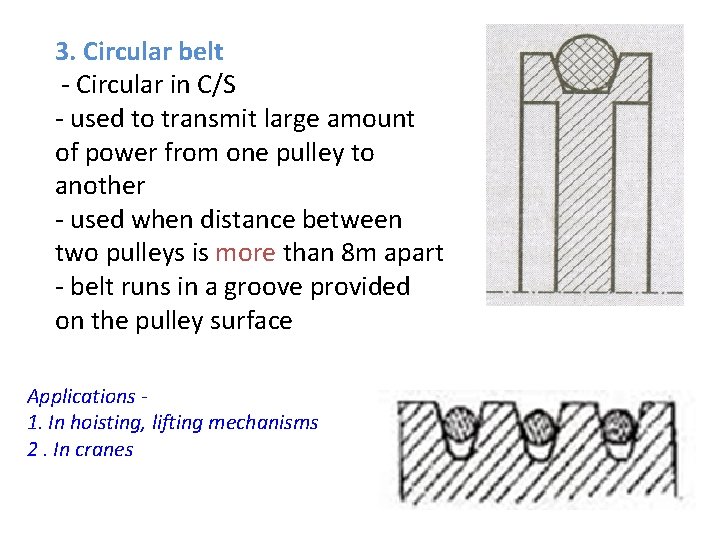
3. Circular belt - Circular in C/S - used to transmit large amount of power from one pulley to another - used when distance between two pulleys is more than 8 m apart - belt runs in a groove provided on the pulley surface Applications 1. In hoisting, lifting mechanisms 2. In cranes
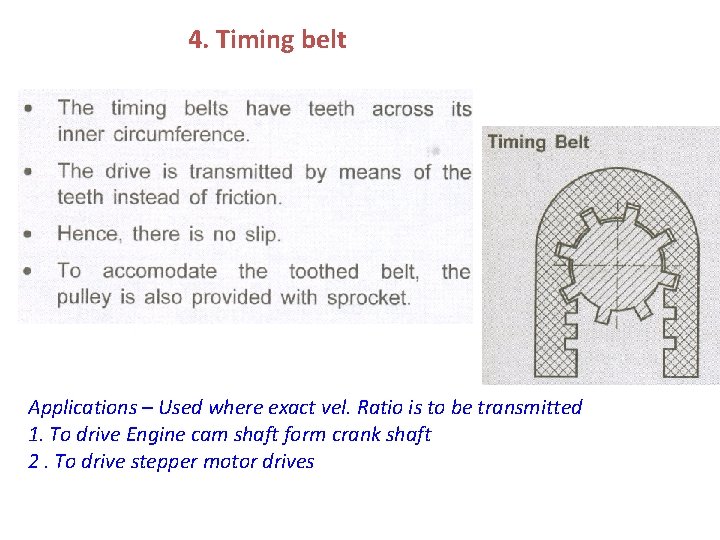
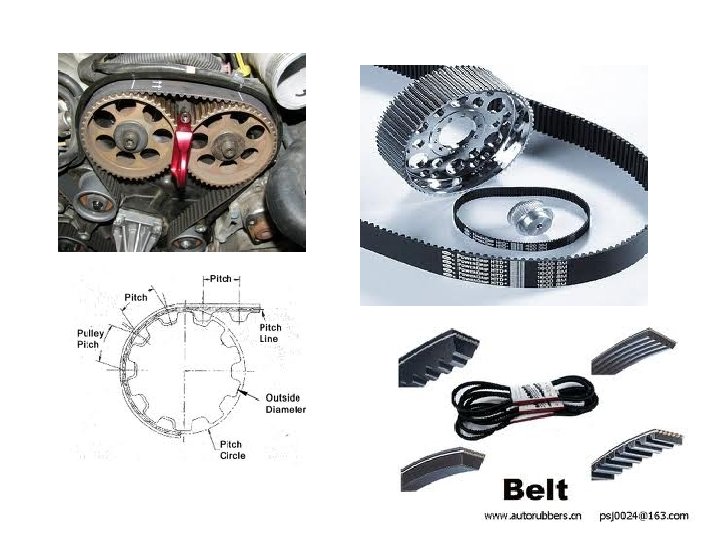
4. Timing belt Applications – Used where exact vel. Ratio is to be transmitted 1. To drive Engine cam shaft form crank shaft 2. To drive stepper motor drives

Open belt drive Cross belt drive
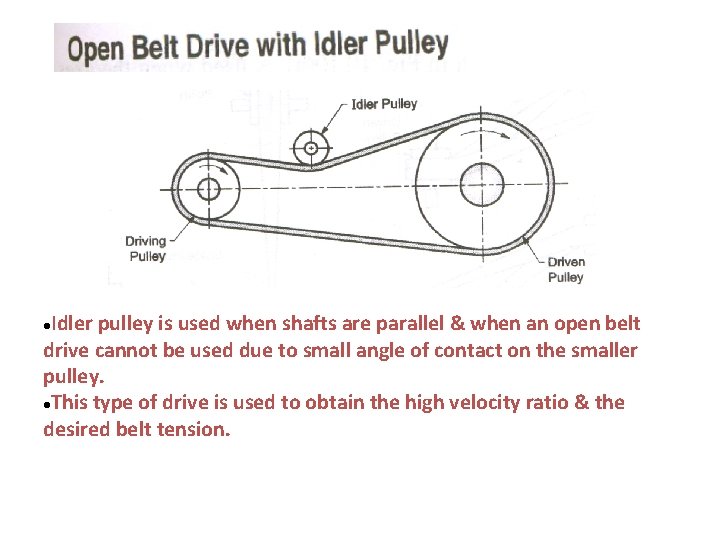
Idler pulley is used when shafts are parallel & when an open belt drive cannot be used due to small angle of contact on the smaller pulley. This type of drive is used to obtain the high velocity ratio & the desired belt tension.

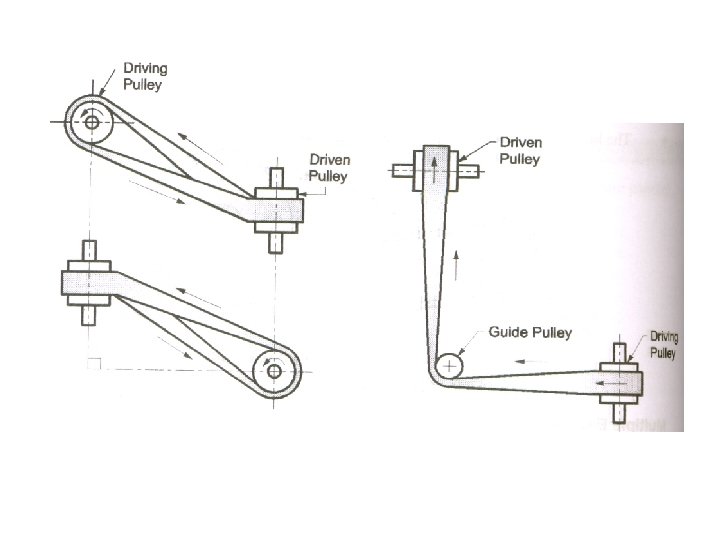
Compound belt drive Quarter Turn belt drive
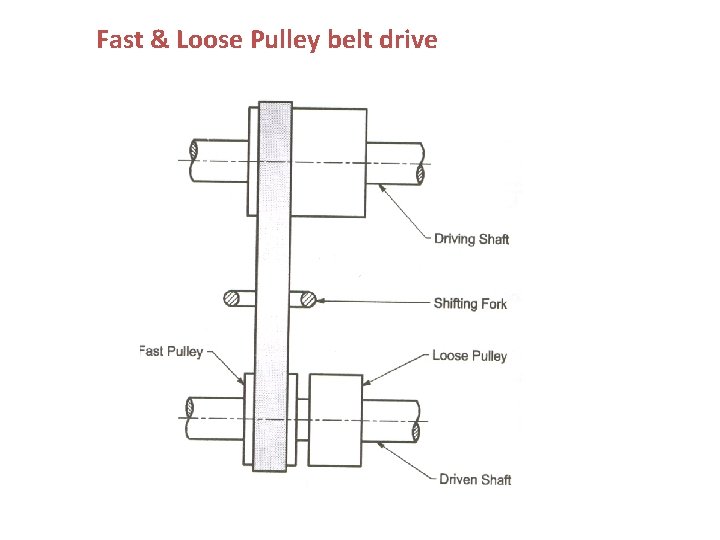
Fast & Loose Pulley belt drive
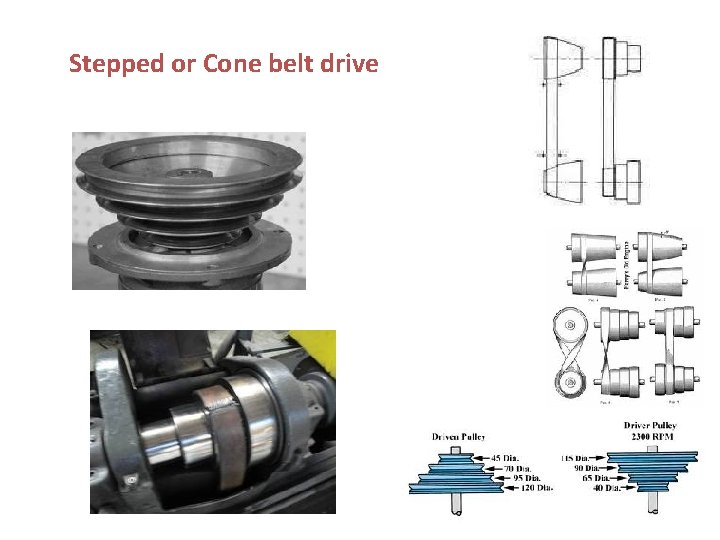
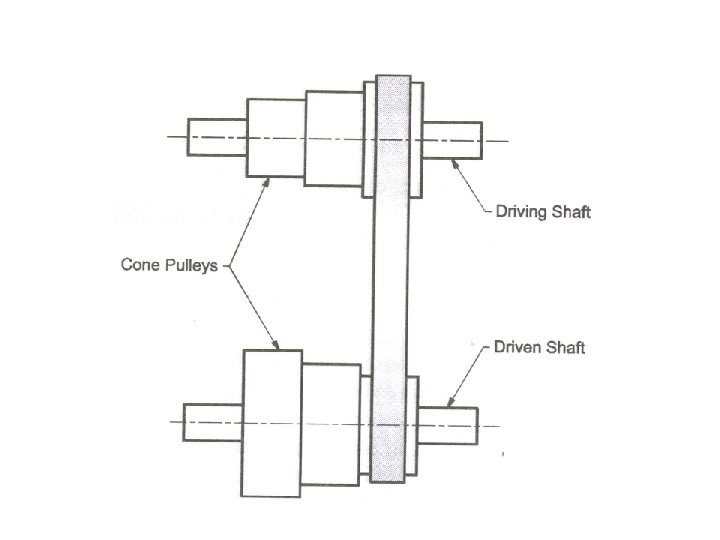
Stepped or Cone belt drive
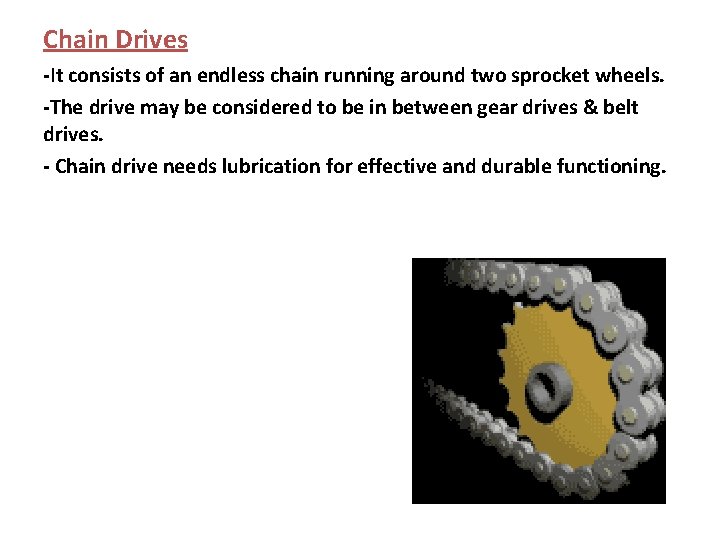
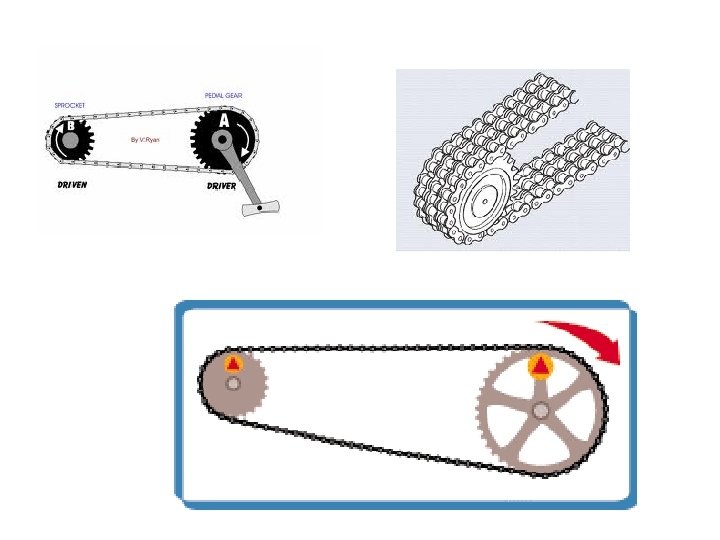
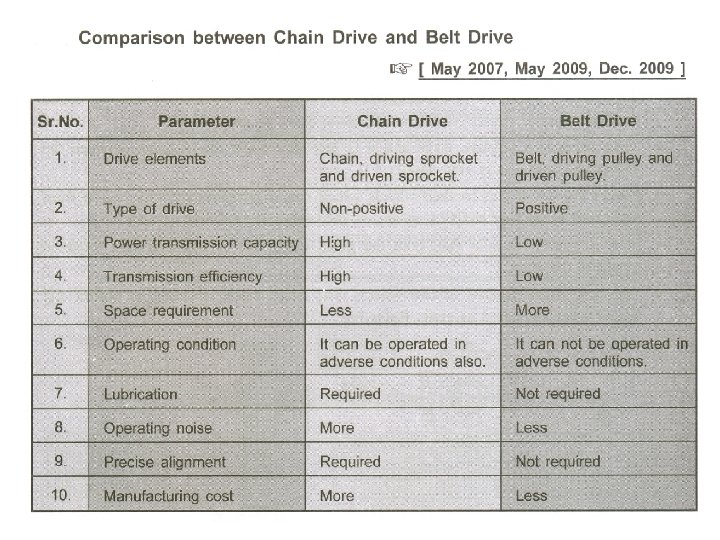
Chain Drives -It consists of an endless chain running around two sprocket wheels. -The drive may be considered to be in between gear drives & belt drives. - Chain drive needs lubrication for effective and durable functioning.
Advantages Chain drives are positive drives. • The torque transmitting ability is very large. • As there is no slip, constant velocities are maintained. Less expensive than gear drives. • A single chain can run more than one out put shaft. • The efficiency is high, 98%. • Suitable for medium centre distances. • Speed ratios up to 10: 1 are possible. • Limitations They are costly, and noisy. • Precise alignment is required. -Chain drives need lubrication. -Due to polygon effect, not suitable where the precise motion is required. •
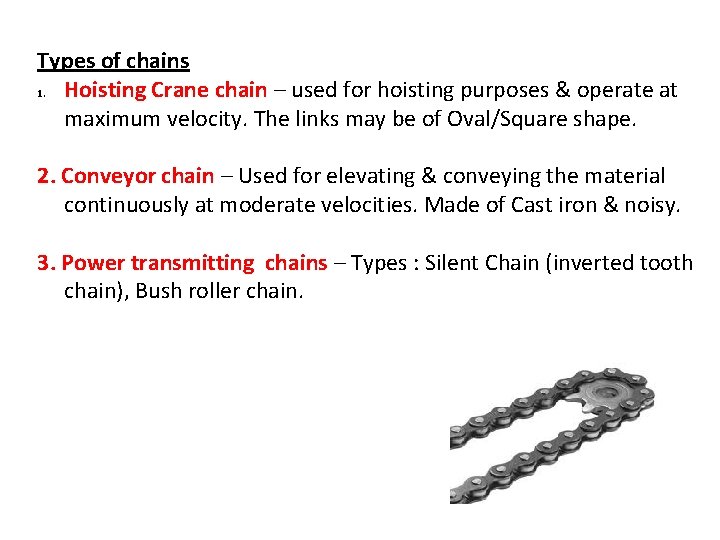
Types of chains 1. Hoisting Crane chain – used for hoisting purposes & operate at maximum velocity. The links may be of Oval/Square shape. 2. Conveyor chain – Used for elevating & conveying the material continuously at moderate velocities. Made of Cast iron & noisy. 3. Power transmitting chains – Types : Silent Chain (inverted tooth chain), Bush roller chain.
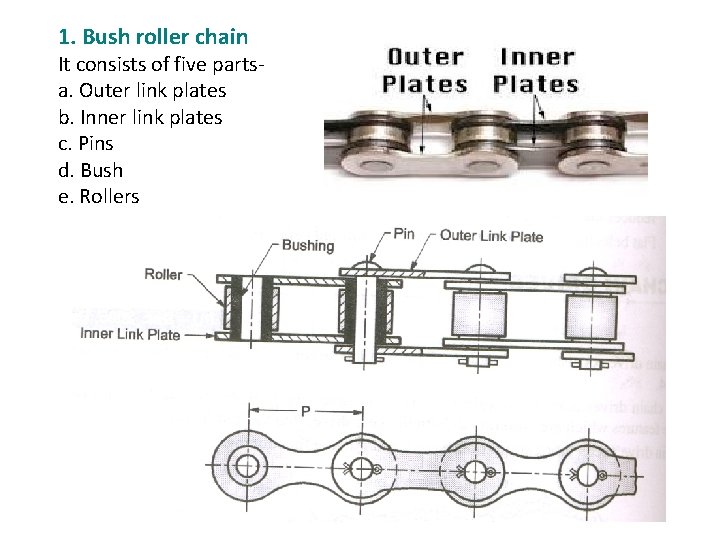
1. Bush roller chain It consists of five partsa. Outer link plates b. Inner link plates c. Pins d. Bush e. Rollers
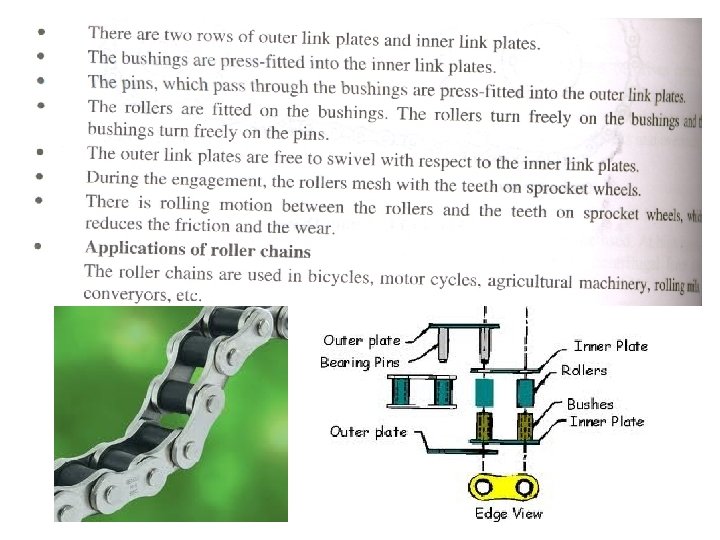
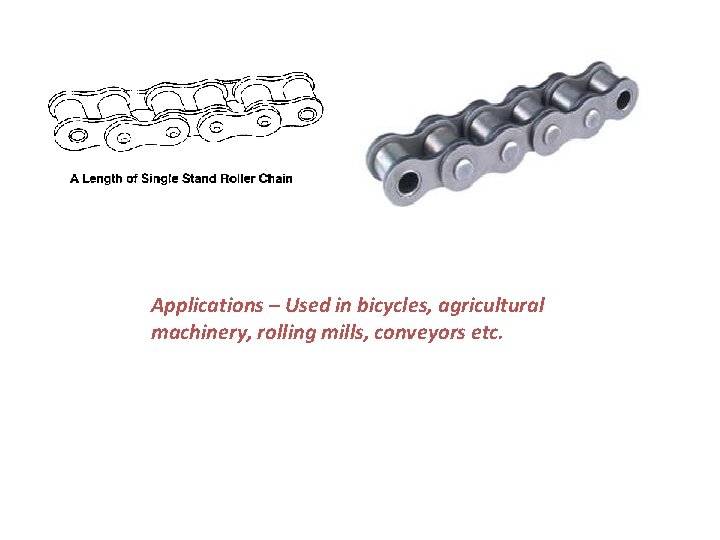
Applications – Used in bicycles, agricultural machinery, rolling mills, conveyors etc.
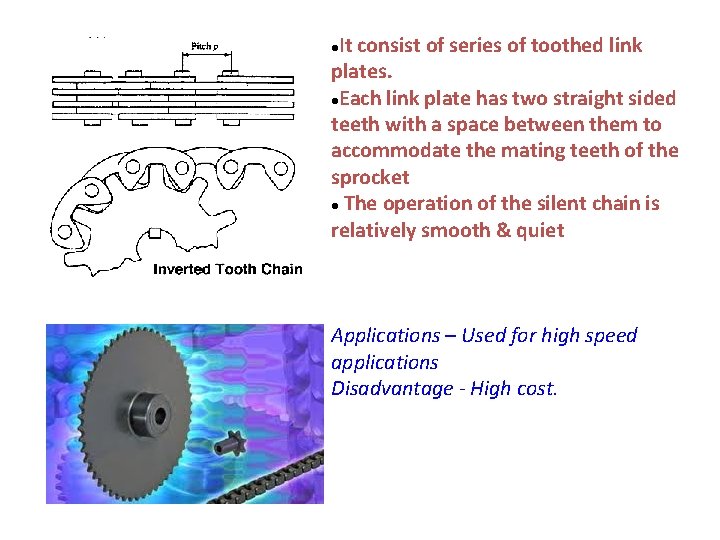
It consist of series of toothed link plates. Each link plate has two straight sided teeth with a space between them to accommodate the mating teeth of the sprocket The operation of the silent chain is relatively smooth & quiet Applications – Used for high speed applications Disadvantage - High cost.
- Slides: 25