
Bellwork Review Topographic Maps Notes Arizona State Science

Bellwork Review
Topographic Maps Notes Arizona State Science Standard Strand 6: Earth and Space Science, Concept 1: Structure of the Earth, PO 3: Explain the following processes involved in the formation of the Earth’s structure: erosion, deposition
Topographic Map Objective Students will be able to interpret a topographical map, and use evidence to make conclusions about the topography shown
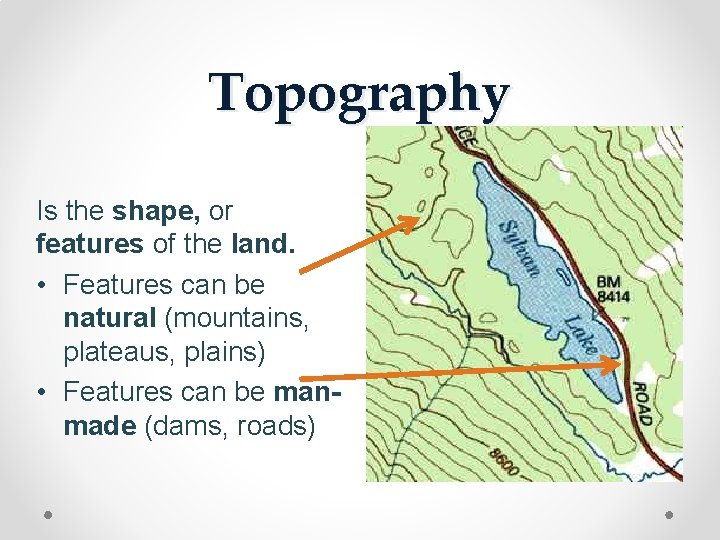
Topography Is the shape, or features of the land. • Features can be natural (mountains, plateaus, plains) • Features can be manmade (dams, roads)
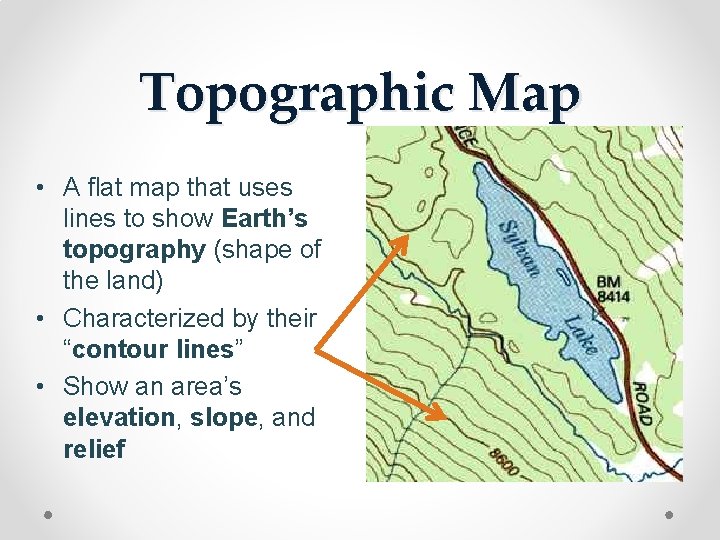
Topographic Map • A flat map that uses lines to show Earth’s topography (shape of the land) • Characterized by their “contour lines” • Show an area’s elevation, slope, and relief

Topographic Map Uses 1. Business – use to help them decide where to build new stores, housing or factories 2. Environment – scientists can determine how much water/wind will cause erosion and can try to prevent it. 3. Weather – topography effects weather patterns.
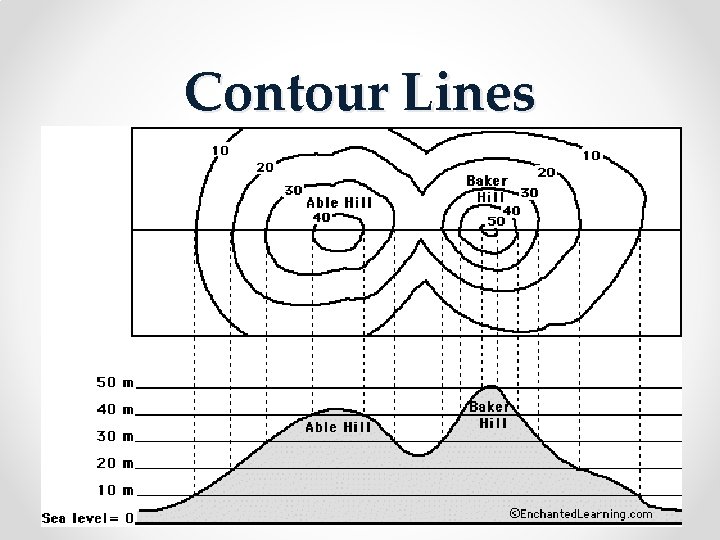
Contour Lines
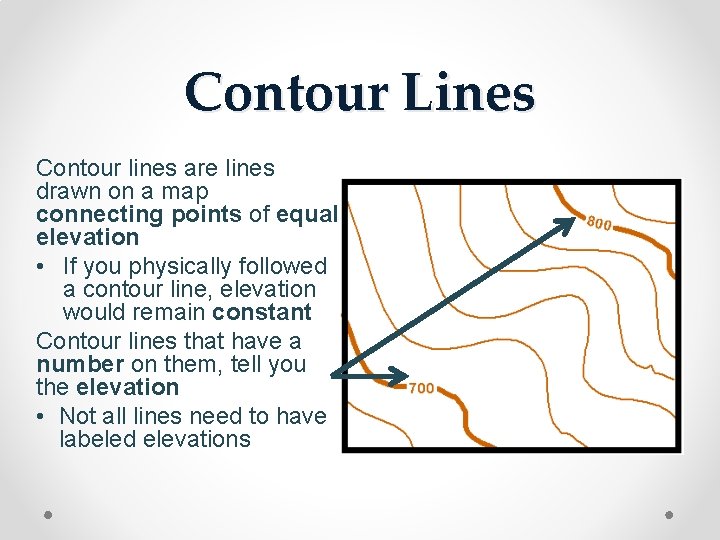
Contour Lines Contour lines are lines drawn on a map connecting points of equal elevation • If you physically followed a contour line, elevation would remain constant Contour lines that have a number on them, tell you the elevation • Not all lines need to have labeled elevations
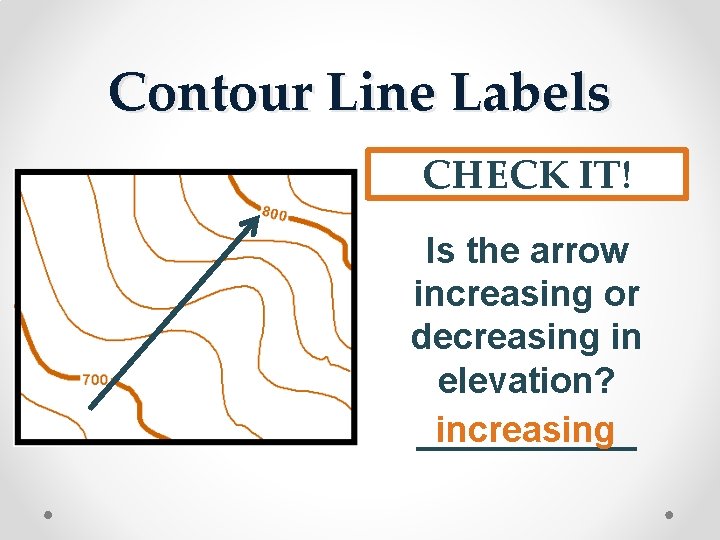
Contour Line Labels CHECK IT! Is the arrow increasing or decreasing in elevation? increasing ______
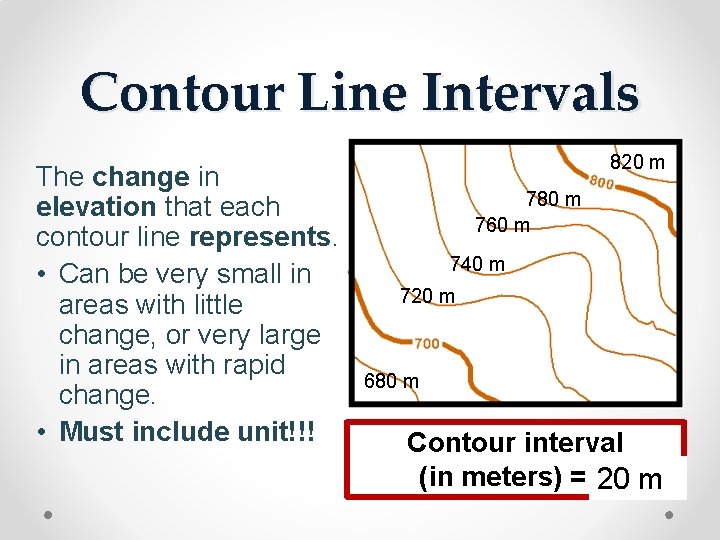
Contour Line Intervals The change in elevation that each contour line represents. • Can be very small in areas with little change, or very large in areas with rapid change. • Must include unit!!! 820 m 780 m 760 m 740 m 720 m 680 m Contour interval (in meters) = ? 20 m
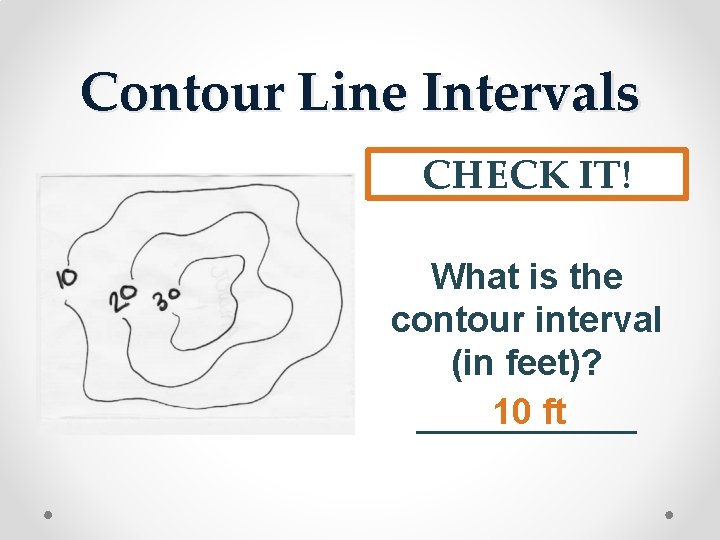
Contour Line Intervals CHECK IT! What is the contour interval (in feet)? 10 ft ______

Contour Line Intervals CHECK IT! What is the contour interval (in meters)? 10 m ______
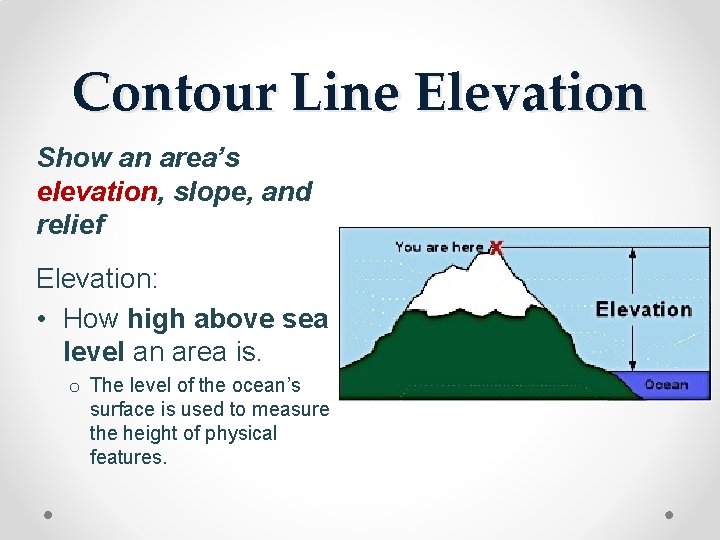
Contour Line Elevation Show an area’s elevation, slope, and relief Elevation: • How high above sea level an area is. o The level of the ocean’s surface is used to measure the height of physical features.
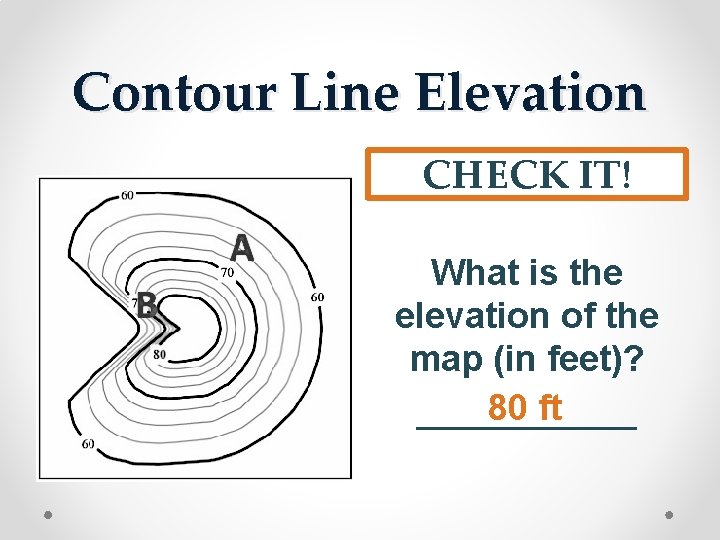
Contour Line Elevation CHECK IT! What is the elevation of the map (in feet)? 80 ft ______
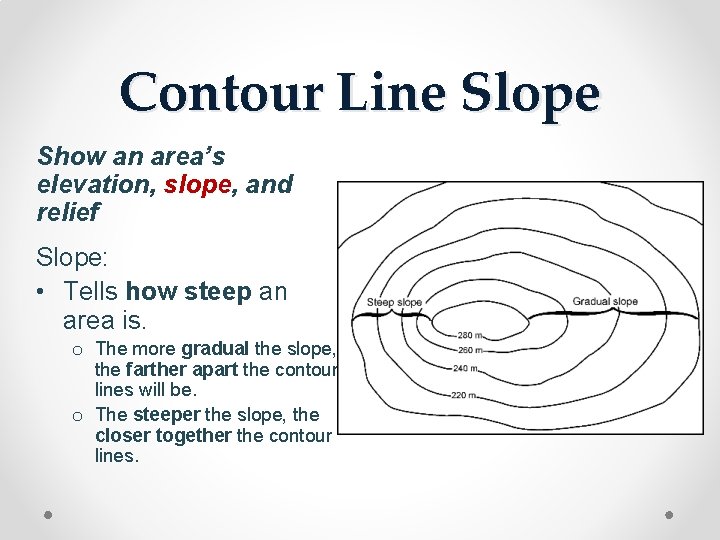
Contour Line Slope Show an area’s elevation, slope, and relief Slope: • Tells how steep an area is. o The more gradual the slope, the farther apart the contour lines will be. o The steeper the slope, the closer together the contour lines.
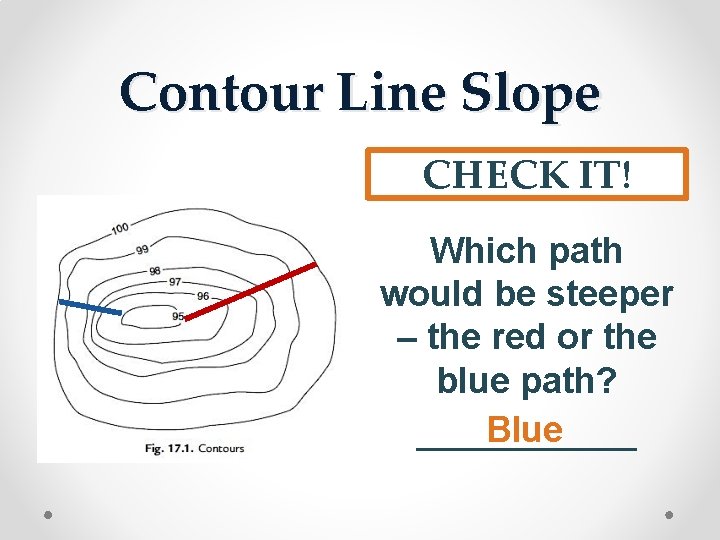
Contour Line Slope CHECK IT! Which path would be steeper – the red or the blue path? Blue ______
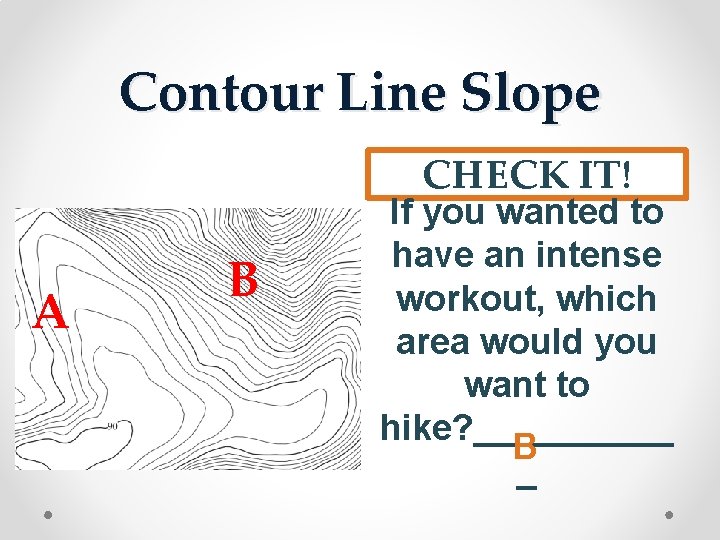
Contour Line Slope CHECK IT! A B If you wanted to have an intense workout, which area would you want to hike? _____ B _
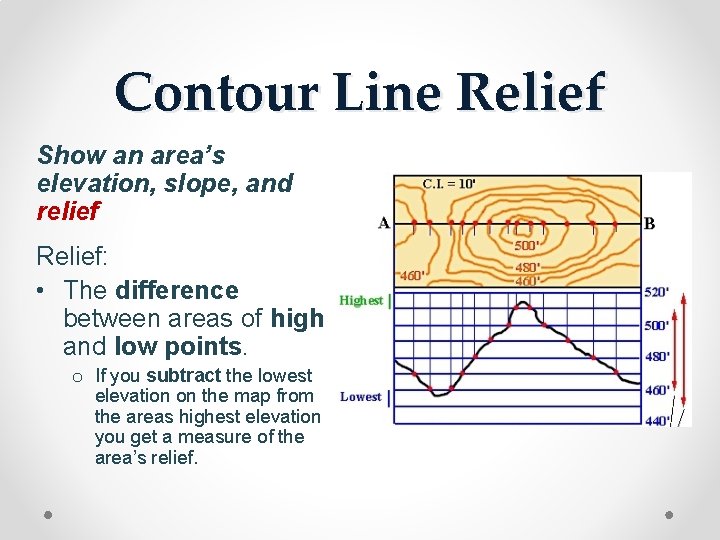
Contour Line Relief Show an area’s elevation, slope, and relief Relief: • The difference between areas of high and low points. o If you subtract the lowest elevation on the map from the areas highest elevation you get a measure of the area’s relief.
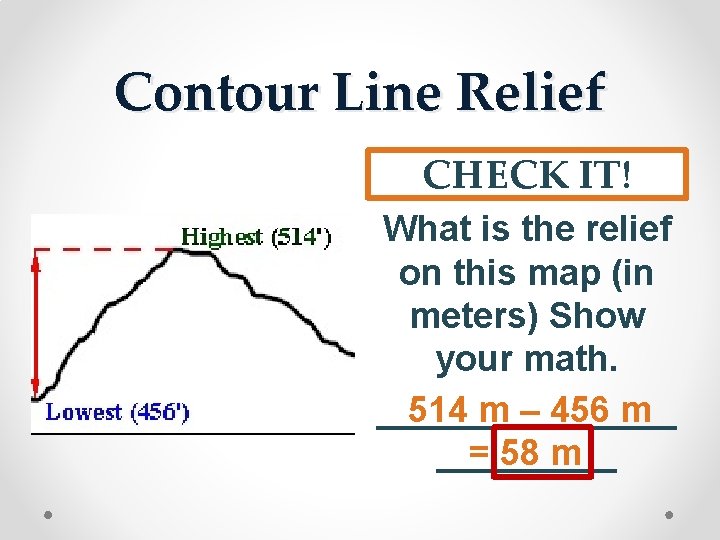
Contour Line Relief CHECK IT! What is the relief on this map (in meters) Show your math. 514 m – 456 m ________ = 58 m _____
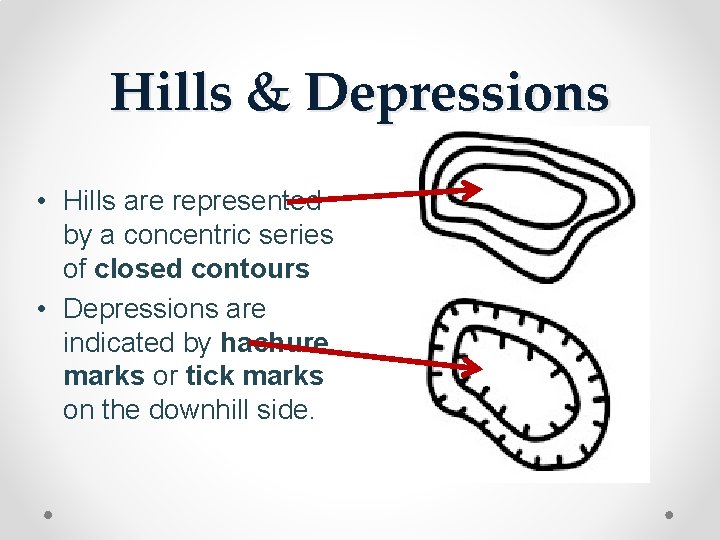
Hills & Depressions • Hills are represented by a concentric series of closed contours • Depressions are indicated by hachure marks or tick marks on the downhill side.
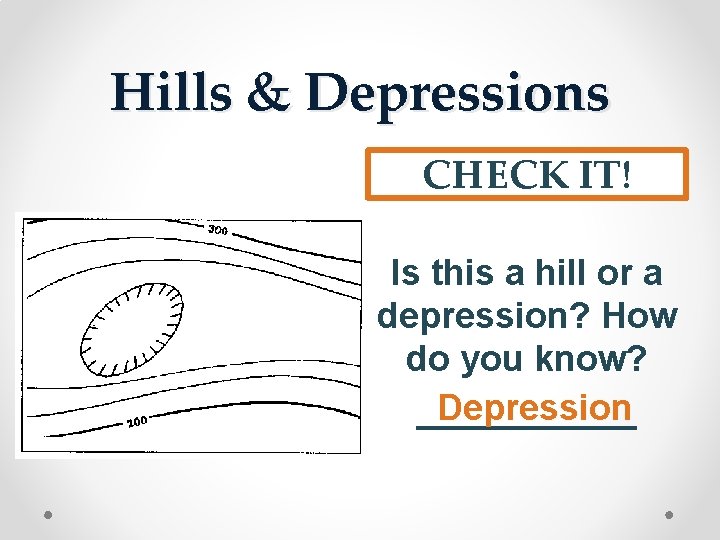
Hills & Depressions CHECK IT! Is this a hill or a depression? How do you know? Depression ______
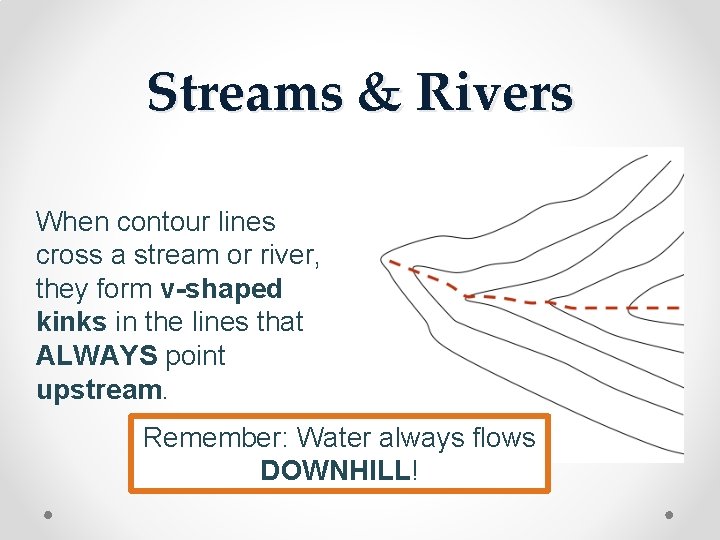
Streams & Rivers When contour lines cross a stream or river, they form v-shaped kinks in the lines that ALWAYS point upstream. Remember: Water always flows DOWNHILL!
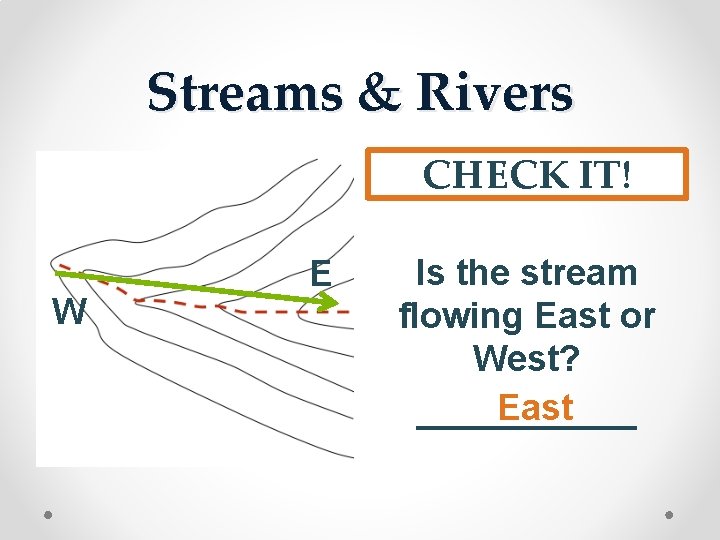
Streams & Rivers CHECK IT! W E Is the stream flowing East or West? East ______
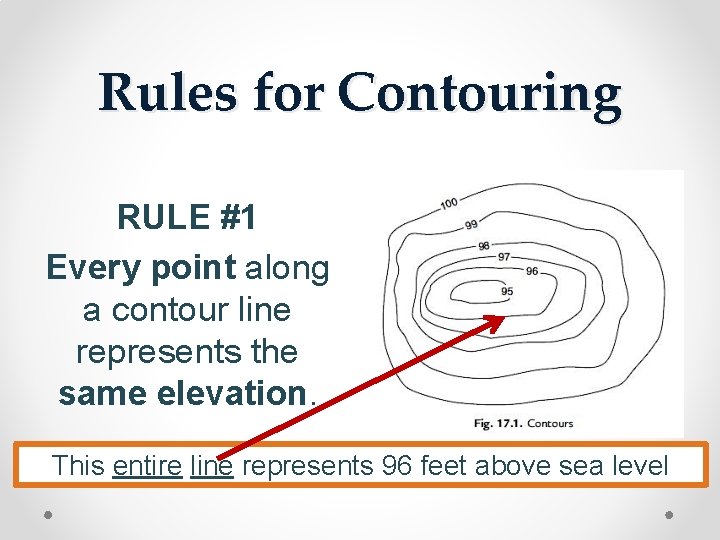
Rules for Contouring RULE #1 Every point along a contour line represents the same elevation. This entire line represents 96 feet above sea level
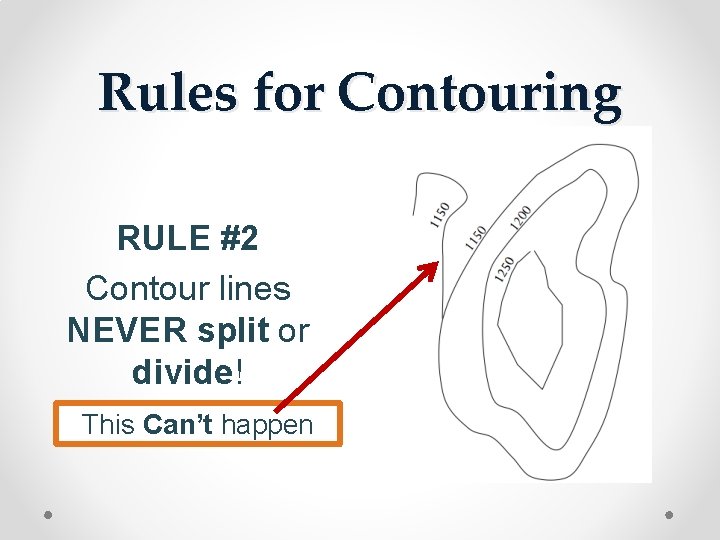
Rules for Contouring RULE #2 Contour lines NEVER split or divide! This Can’t happen
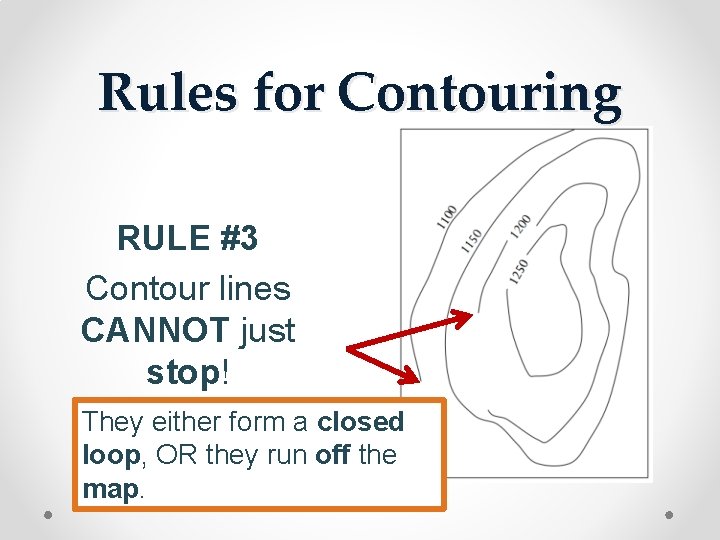
Rules for Contouring RULE #3 Contour lines CANNOT just stop! They either form a closed loop, OR they run off the map.
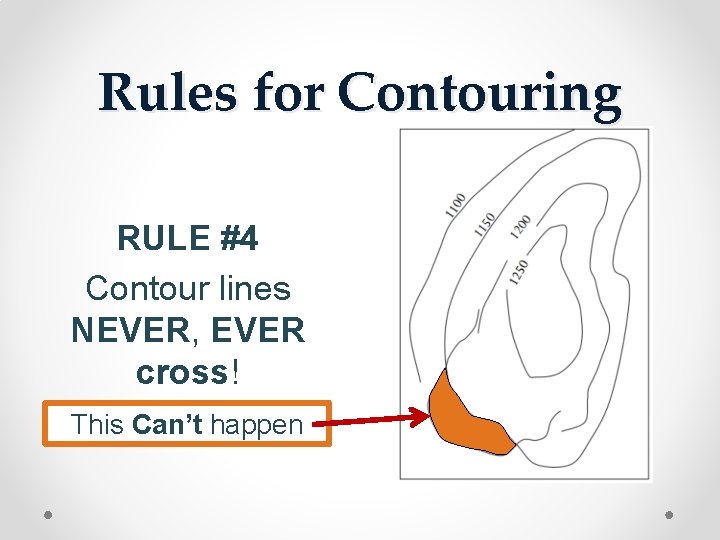
Rules for Contouring RULE #4 Contour lines NEVER, EVER cross! This Can’t happen

Partner Practice

Exit Ticket
- Slides: 29