
Bellwork Pick up and Do worksheet 8 2
Bellwork • Pick up and Do worksheet 8. 2 (1 -24)
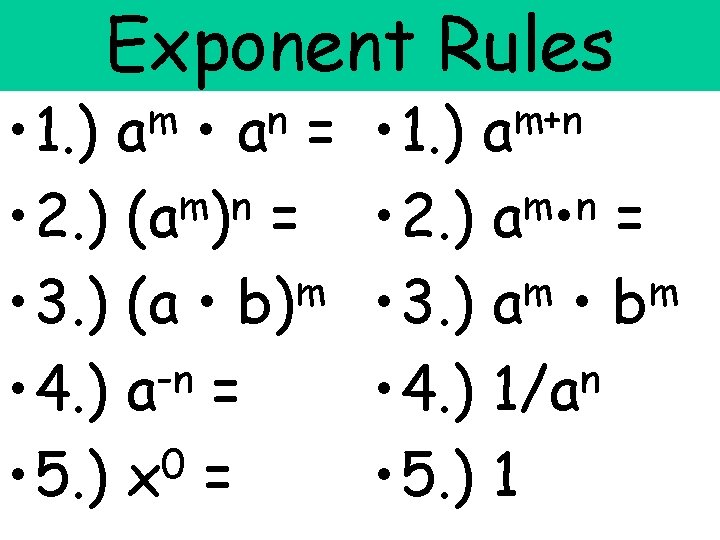
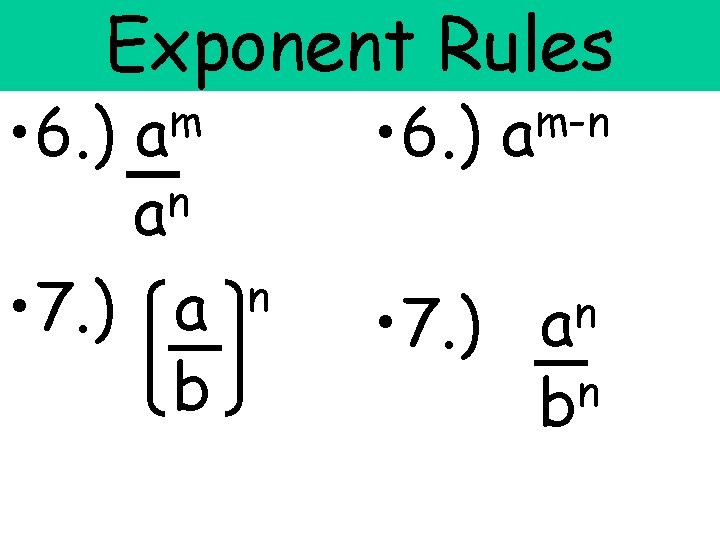
Exponent Rules • 6. ) m a n a • 7. ) a b n • 6. ) m-n a • 7. ) n a n b
Worksheet 8. 1 • On a sheet of paper, number from 1 -18. • Take the Quiz on page 425 (1 -18) • You can use your rules (1 -7) sheet.
Bellwork • Do worksheet 8. 3 (1 -20 only) • It is on the back of worksheet 8. 2
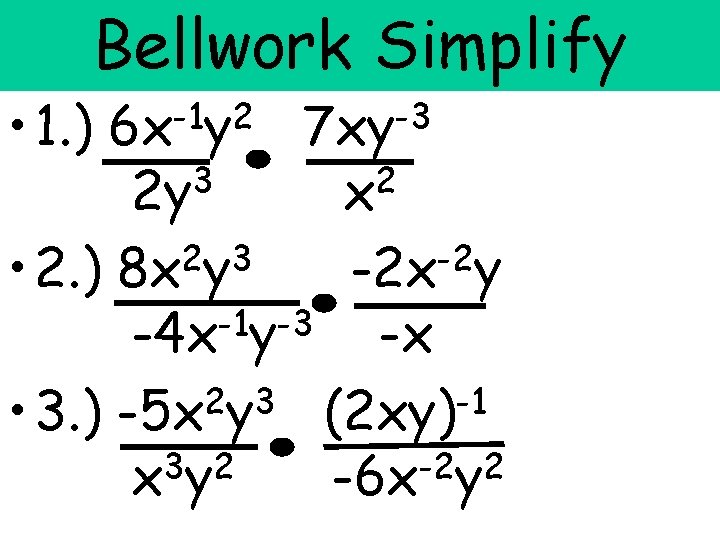
• 1. ) Bellwork Simplify -1 2 6 x y 3 2 y • 2. ) 2 3 8 x y • 3. ) 2 3 -5 x y -3 7 xy -1 -3 -4 x y 3 2 x y 2 x -2 -2 x y -x -1 (2 xy) -2 2 -6 x y
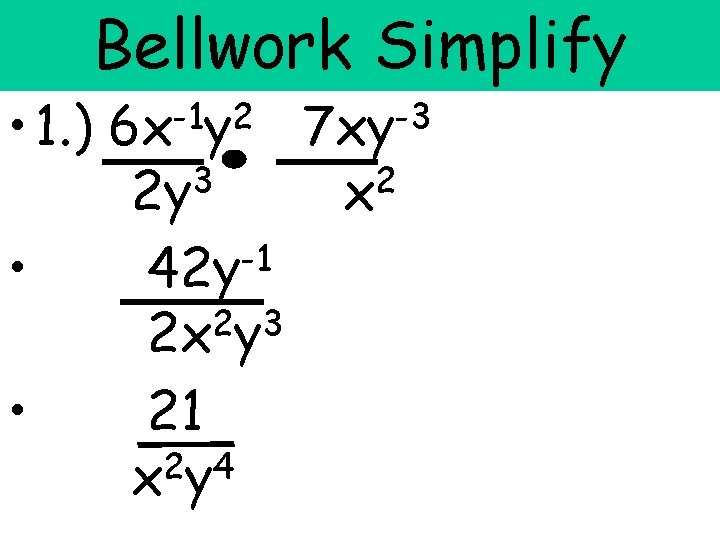
• 1. ) • • Bellwork Simplify -1 2 6 x y 3 2 y -1 42 y 2 3 2 x y 21 2 4 x y -3 7 xy 2 x
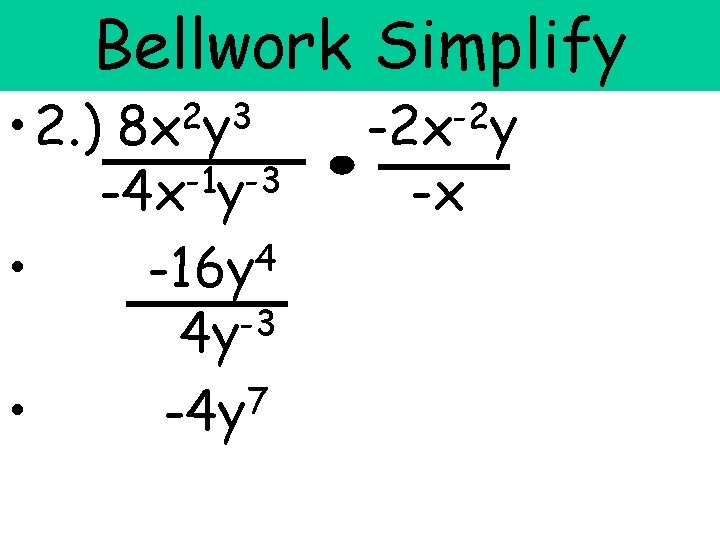
Bellwork Simplify • 2. ) -1 -3 -4 x y 4 • -16 y -3 4 y 7 • -4 y 2 3 8 x y -2 -2 x y -x
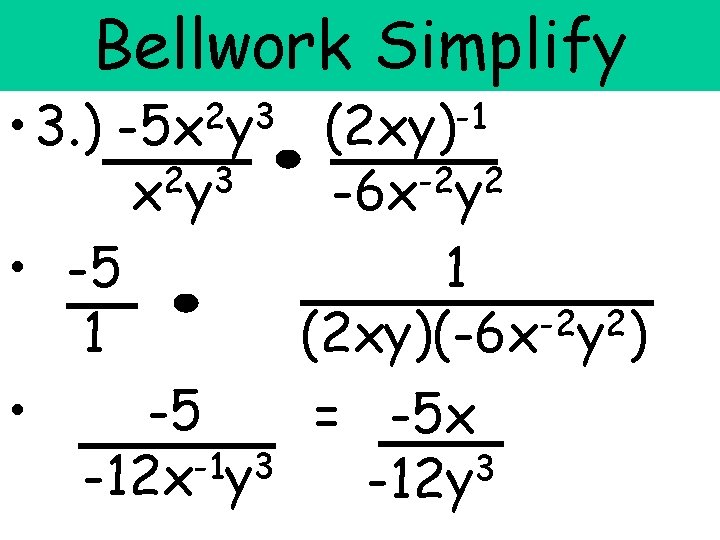
Bellwork Simplify • 3. ) 2 3 -5 x y 2 3 x y -1 (2 xy) -2 2 -6 x y • -5 1 -2 2 1 (2 xy)(-6 x y ) • -5 = -5 x -1 3 3 -12 x y -12 y
Quiz • Take the Quiz over 8. 1 - 8. 3
Today’s Objective • To be able to express a very large number or very small number in scientific notation.
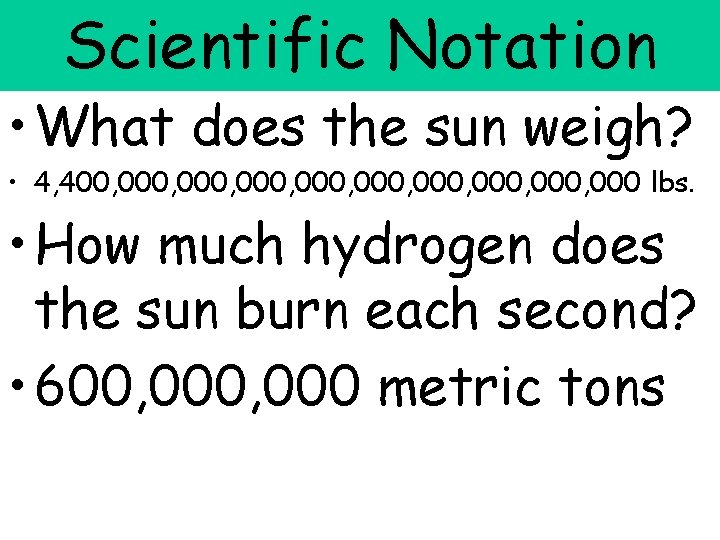
Scientific Notation • What does the sun weigh? • 4, 400, 000, 000, 000 lbs. • How much hydrogen does the sun burn each second? • 600, 000 metric tons
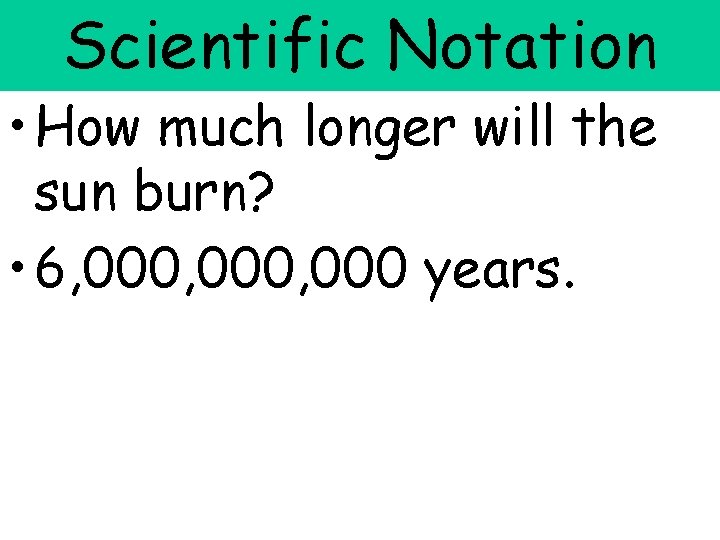
Scientific Notation • How much longer will the sun burn? • 6, 000, 000 years.
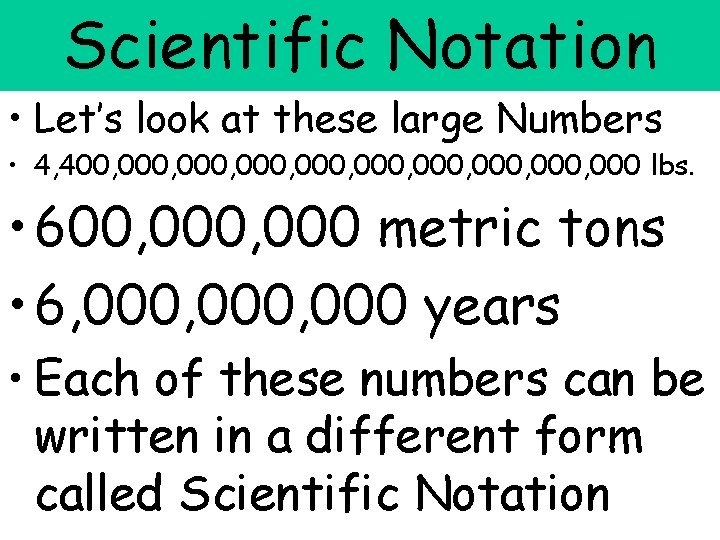
Scientific Notation • Let’s look at these large Numbers • 4, 400, 000, 000, 000 lbs. • 600, 000 metric tons • 6, 000, 000 years • Each of these numbers can be written in a different form called Scientific Notation

Scientific Notation • Scientific Notation is made up of 2 parts. • 1 st Part = a number between 1 and 10 • 2 nd Part = x 10 to some power • If it doesn’t have both parts, it is NOT Scientific Notation.
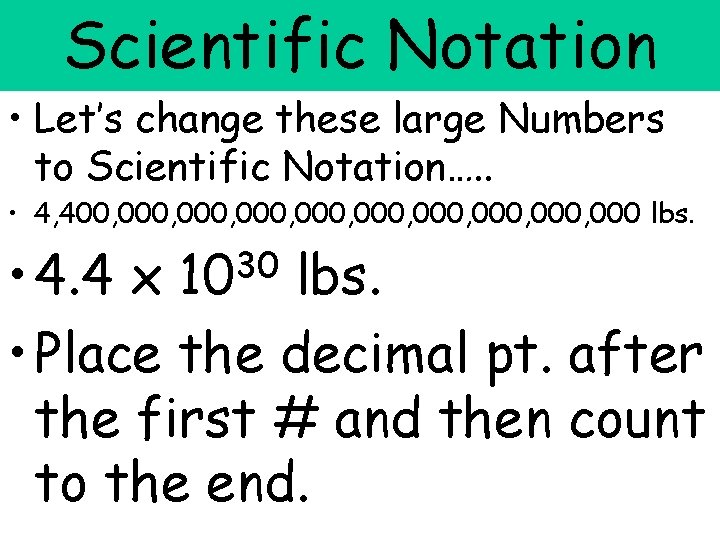
Scientific Notation • Let’s change these large Numbers to Scientific Notation…. . • 4, 400, 000, 000, 000 lbs. • 4. 4 x lbs. • Place the decimal pt. after the first # and then count to the end. 30 10
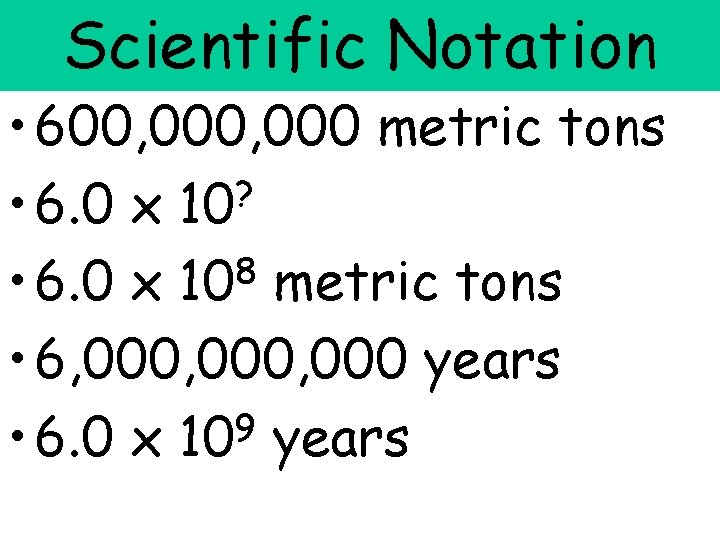
Scientific Notation • 600, 000 metric tons ? • 6. 0 x 10 8 • 6. 0 x 10 metric tons • 6, 000, 000 years 9 • 6. 0 x 10 years
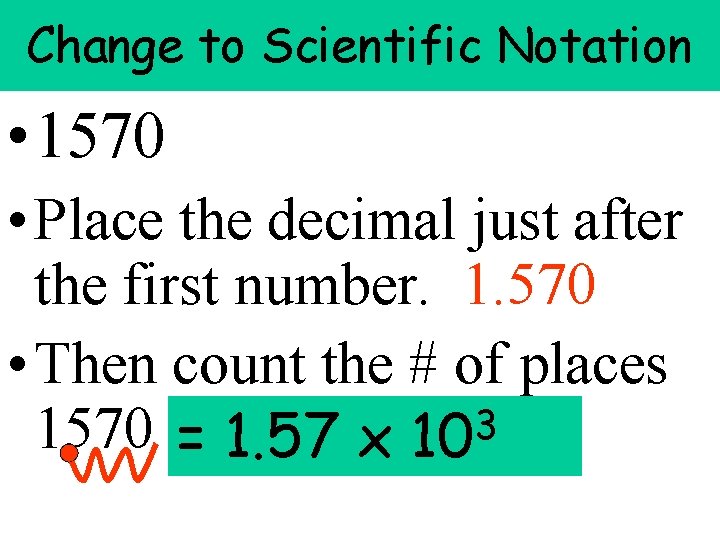
Change to Scientific Notation • 1570 • Place the decimal just after the first number. 1. 570 • Then count the # of places 1570 = 1. 57 x 103
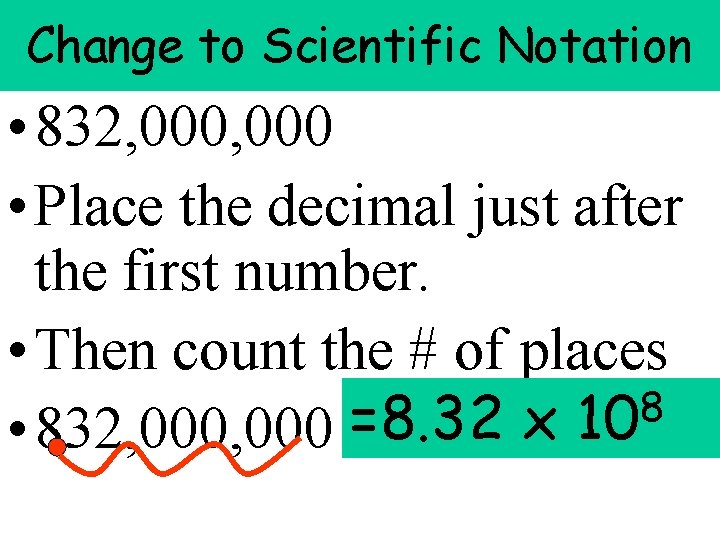
Change to Scientific Notation • 832, 000 • Place the decimal just after the first number. • Then count the # of places 8 • 832, 000 =8. 32 x 10
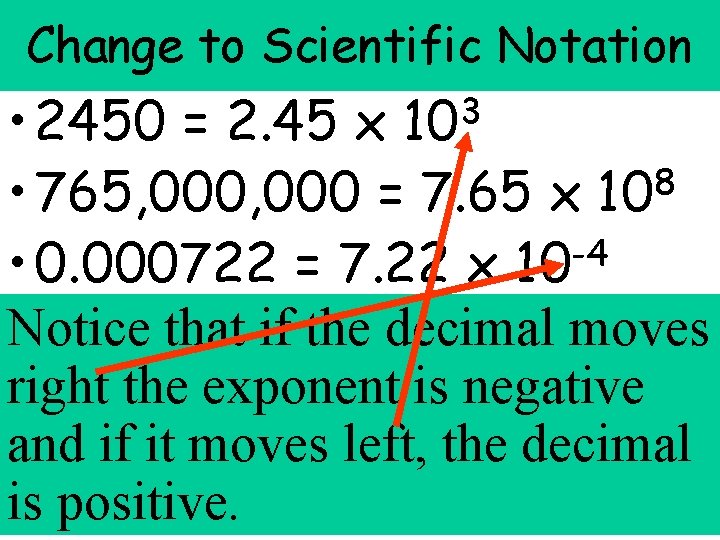
Change to Scientific Notation • 2450 = 2. 45 x 8 • 765, 000 = 7. 65 x 10 -4 • 0. 000722 = 7. 22 x 10 Notice that if the decimal moves right the exponent is negative and if it moves left, the decimal is positive. 3 10
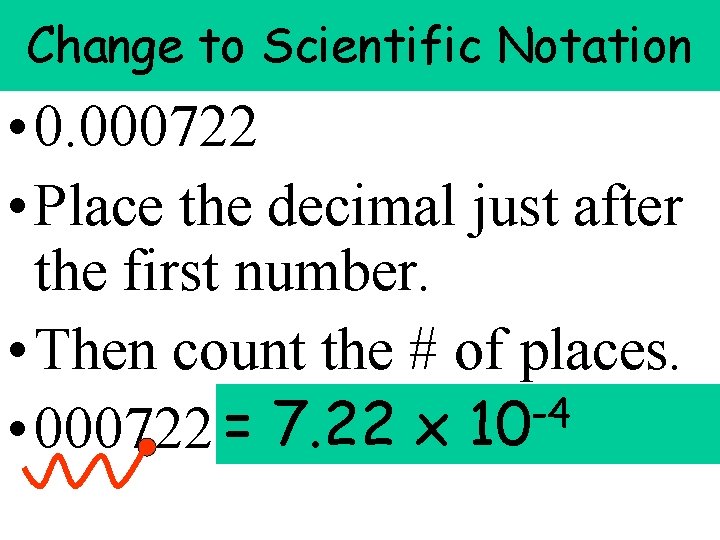
Change to Scientific Notation • 0. 000722 • Place the decimal just after the first number. • Then count the # of places. -4 • 000722 = 7. 22 x 10
Change to Standard Notation • Now let’s go backwards and change from Scientific Notation to Standard Notation.
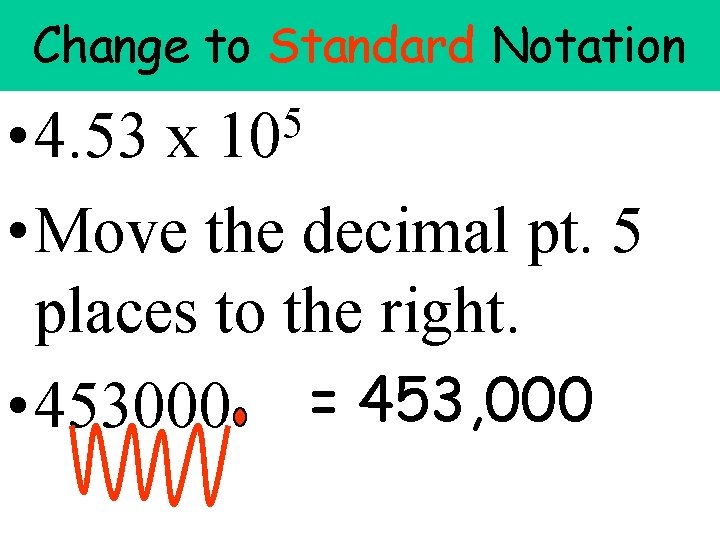
Change to Standard Notation • 4. 53 x • Move the decimal pt. 5 places to the right. • 453000 = 453, 000 5 10
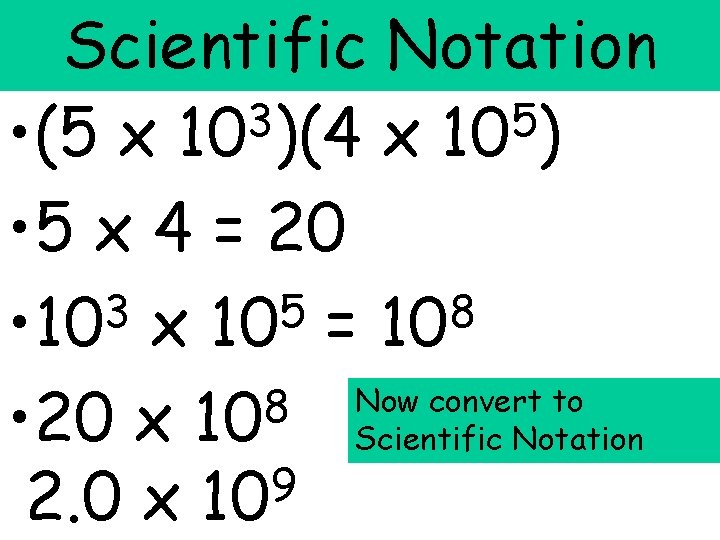
Scientific Notation 3 5 • (5 x 10 )(4 x 10 ) • 5 x 4 = 20 3 5 8 • 10 x 10 = 10 Now convert to 8 • 20 x 10 Scientific Notation 9 2. 0 x 10
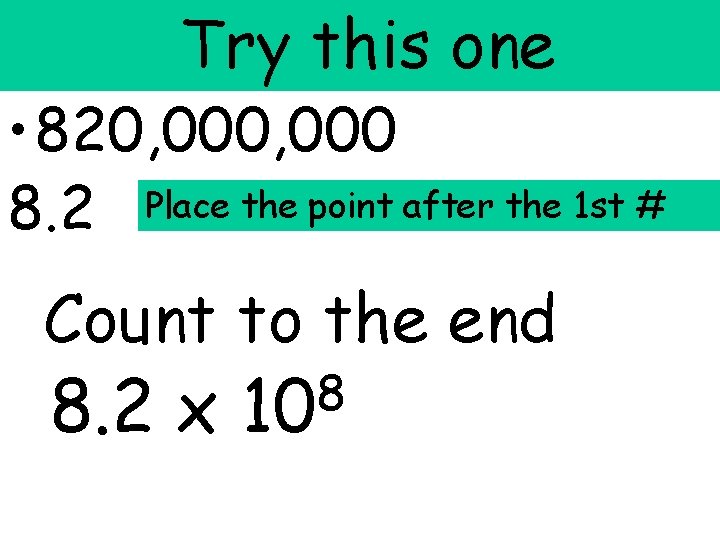
Try this one • 820, 000 8. 2 Place the point after the 1 st # Count to the end 8. 2 x 8 10
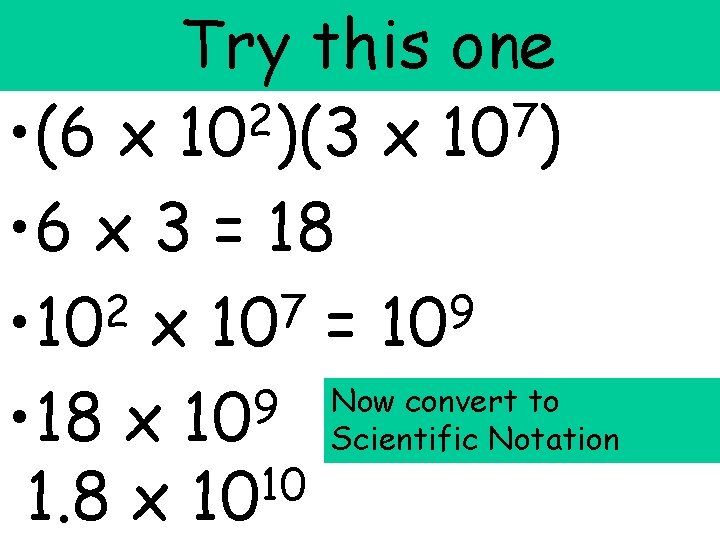
Try this one 2 7 • (6 x 10 )(3 x 10 ) • 6 x 3 = 18 2 7 9 • 10 x 10 = 10 Now convert to 9 • 18 x 10 Scientific Notation 10 1. 8 x 10
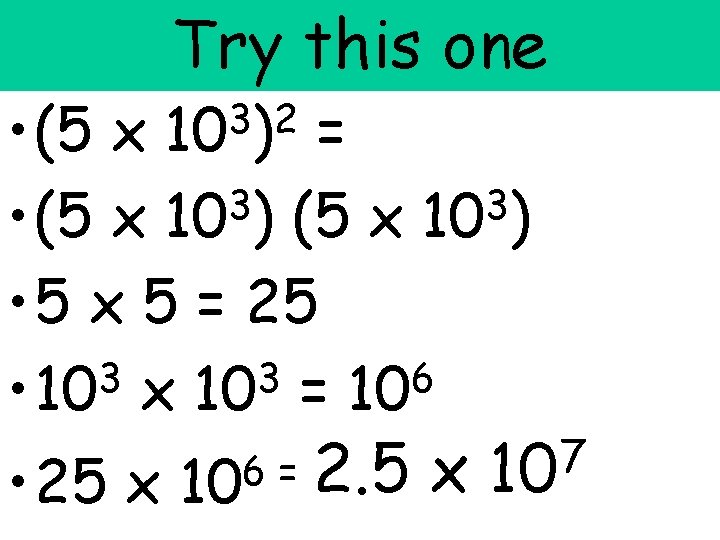
Try this one • (5 x = 3 3 • (5 x 10 ) • 5 x 5 = 25 3 3 6 • 10 x 10 = 10 3 2 10 ) • 25 x 6 = 10 2. 5 x 7 10
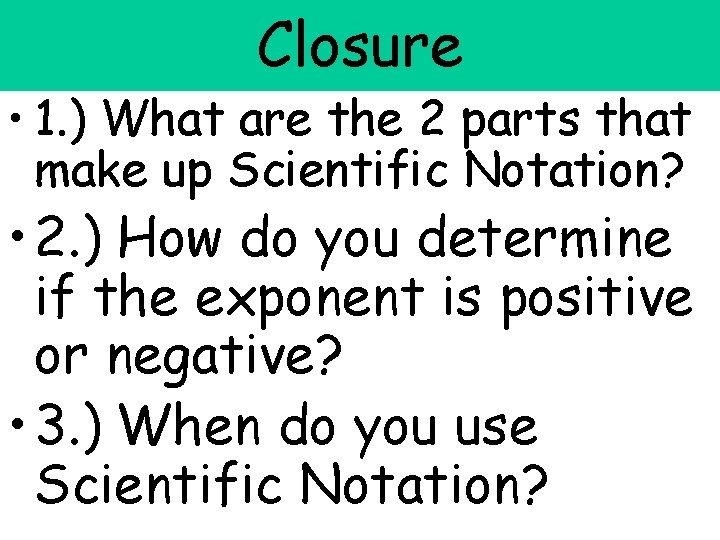
Closure • 1. ) What are the 2 parts that make up Scientific Notation? • 2. ) How do you determine if the exponent is positive or negative? • 3. ) When do you use Scientific Notation?
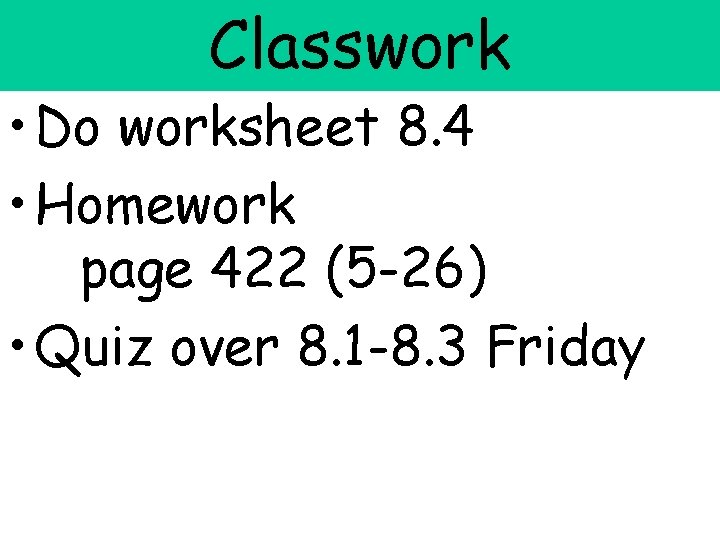
Classwork • Do worksheet 8. 4 • Homework page 422 (5 -26) • Quiz over 8. 1 -8. 3 Friday

List of Clicks • Start, P: drive, Algebra, Multichc, Smiley Face, Open, Sec 8 -4
- Slides: 30