
Bellwork Characteristics of Roman Empire Danger Minilesson The
Bellwork: Characteristics of Roman Empire Danger Minilesson: The Fall of the Roman Empire (Jenga) Work Time: Free Write Homework: Current Event Cartoon due Monday

Diocletian Reforms the Empire • A. D. 284 Emperor Diocletian restores order, divides empire in two • Two emperors in Greek-speaking East, Latin-speaking West • In A. D. 305 Diocletian retires, rivals compete for power
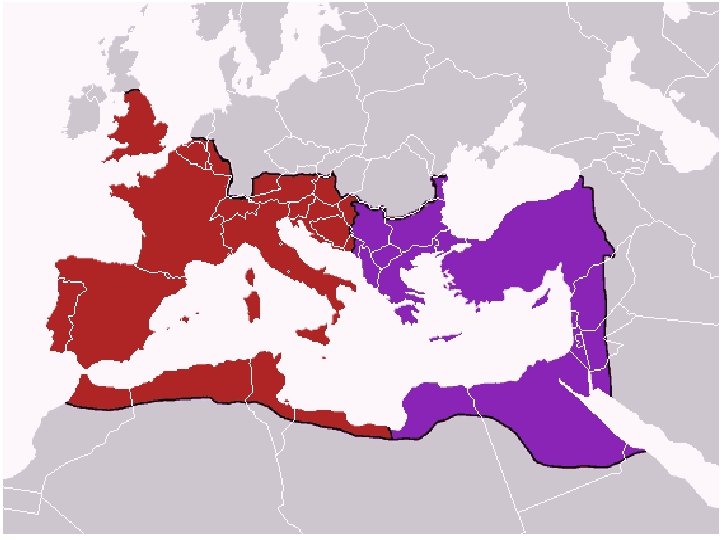
Constantine Moves the Capital • Constantine becomes emperor of Western Empire in A. D. 312 • Seizes Eastern Empire in A. D. 324; moves Roman capital to Byzantium • Byzantium eventually renamed Constantinople—city of Constantine
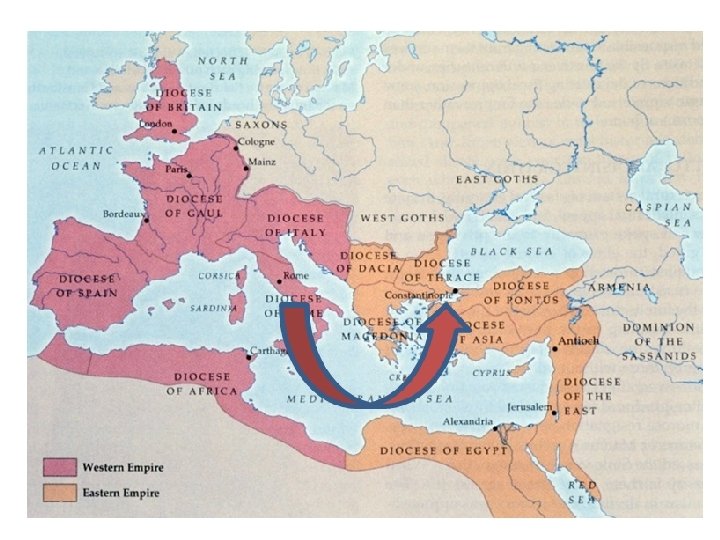

Constatntinople Rome
Political • political office more trouble than it’s worth • military interference in politics • civil war and unrest • division of an empire • moving of capital to Byzantium
Social • declining interest in public affairs • low confidence in empire • disloyalty, lack of patriotism, corruption • differences between rich and poor • declining population (disease and food shortage)

Economic • • poor harvests disruption of trade no more war treasure gold and silver drain inflation huge tax burden widening gap between rich and poor poverty in Western Empire
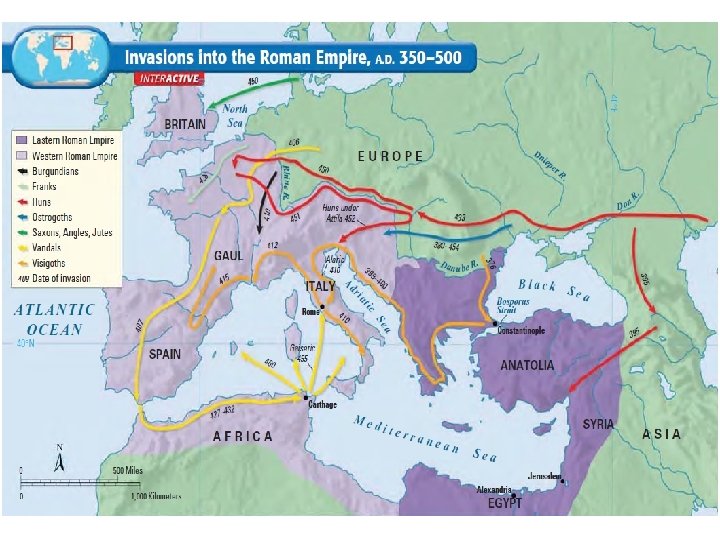
Military • threat from northern European tribes • low funds for defense • problems recruiting Roman citizens • mercenaries fight for $ only • decline of patriotism and loyalty among soldiers
Free Write • Which factors contributed most to the “Fall of Rome? ” (consider politics, economics, social, and military— 3 minutes) • Consider past units of study and our study of current events this year to identify trends that have negatively affected societies. (3 minutes)
- Slides: 12