
Bellringer Monday 42213 1 What is MITOSIS give
Bellringer- Monday 4/22/13 1. What is MITOSIS? (give simple explanation) 2. At the end of Mitosis You have cells that are 3. Referring to #2, are there any cells that you have that might not go through Mitosis but might go through a DIFFERENT PROCESS? THINK!!!!! Time’s Up! 142 Minutes 59 30 Seconds 3 10 6 Minute 7 8 CANCER BROCHURE AND HW DUE FRIDAY!!
Bellringer- Thursday 4/25/13 1. How many chromosomes are in human body cells? 2. Your chromosomes occur in that means you get one from _____ 3. and one from 4. Time’s Up! 142 Minutes 59 30 Seconds 3 10 6 Minute 7 8

DON’T FORGET…… CANCER BROCHURE AND HW DUE TOMORROW!! LMBAUKNECHT@CPS. EDU
Bellringer- Friday 4/26/13 TURN IN HOMEWORK AND CANCER BROCHURE • What are homologous chromosomes? • Who do homologous chromosomes come from? • How are homologous chromosomes related? Time’s Up! 142 Minutes 59 30 Seconds 3 10 6 Minute 7 8
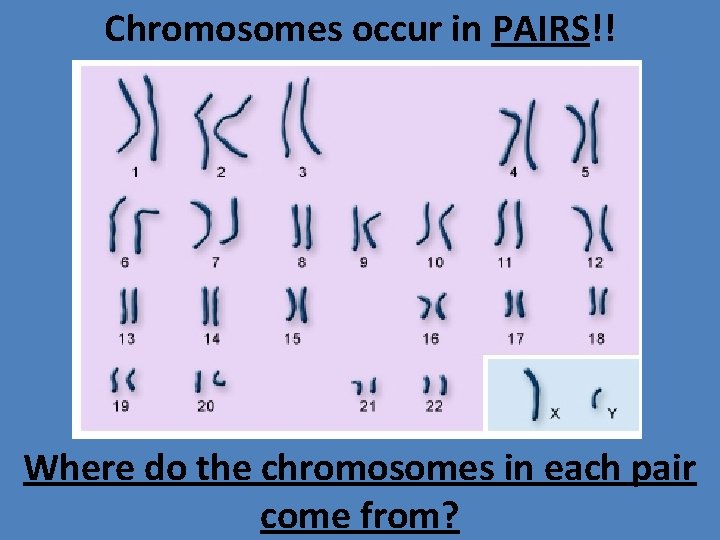
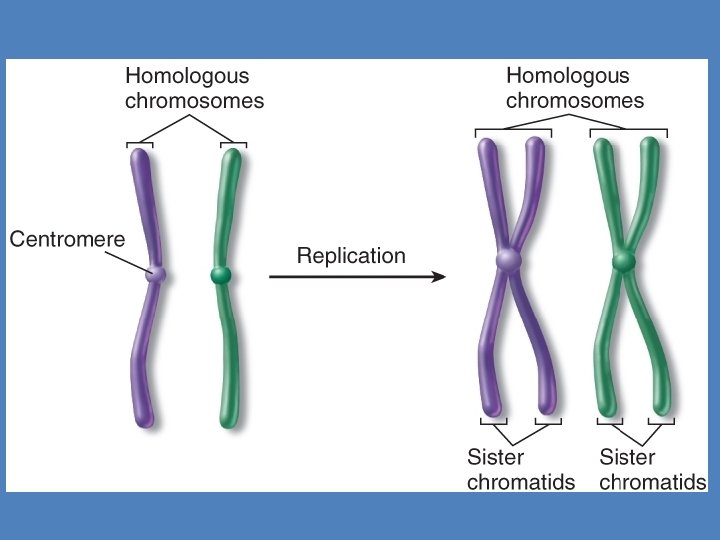
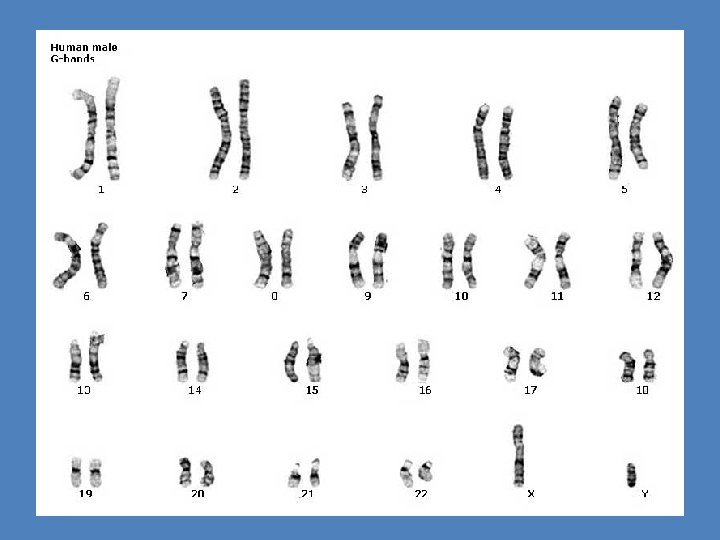
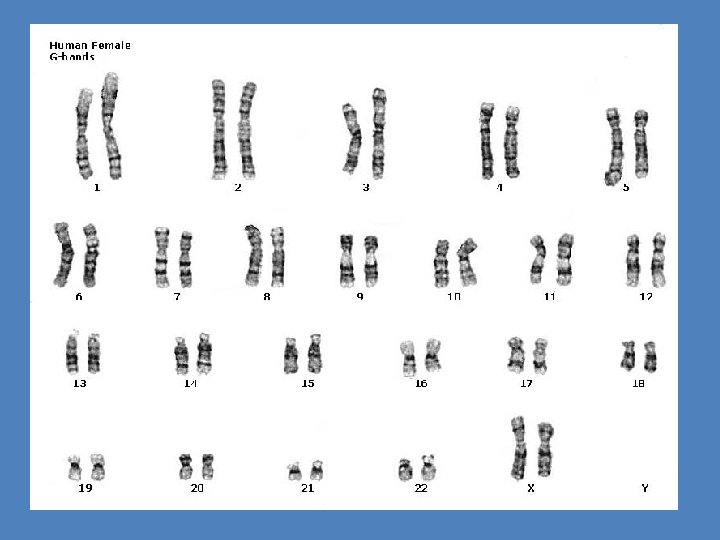
Chromosomes occur in PAIRS!! Where do the chromosomes in each pair come from?
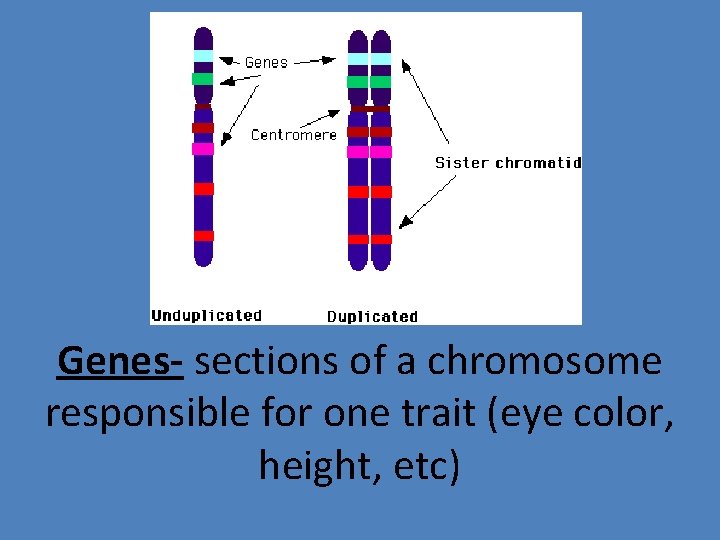
Genes- sections of a chromosome responsible for one trait (eye color, height, etc)
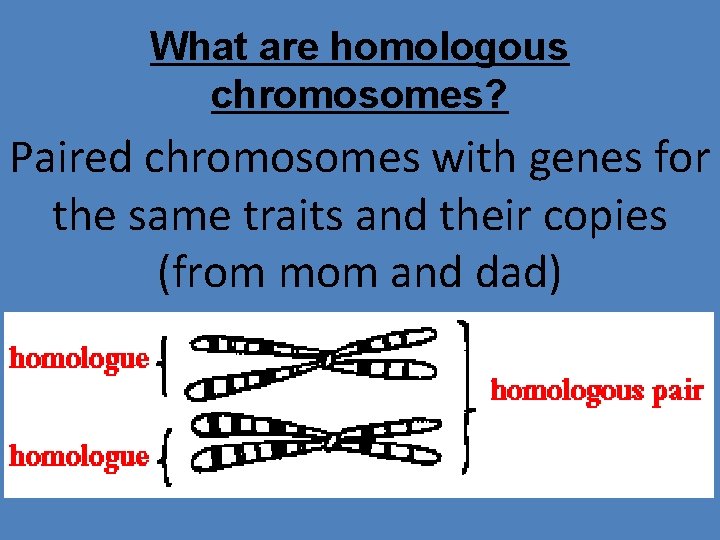
What are homologous chromosomes? Paired chromosomes with genes for the same traits and their copies (from mom and dad)
MEIOSIS
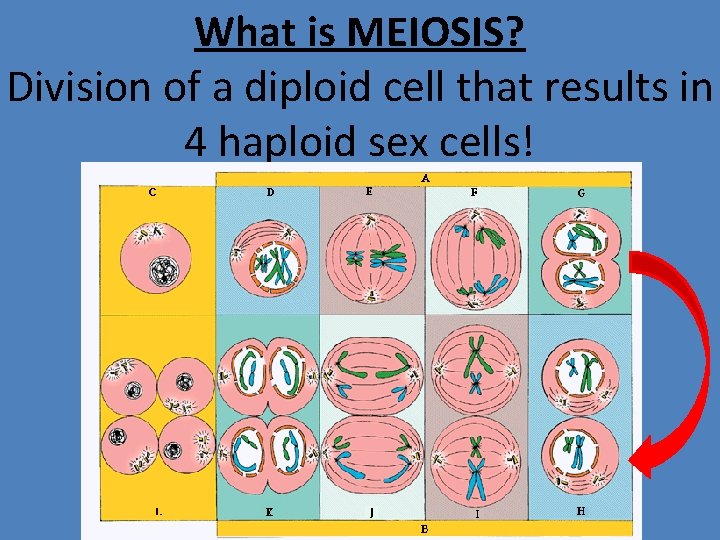
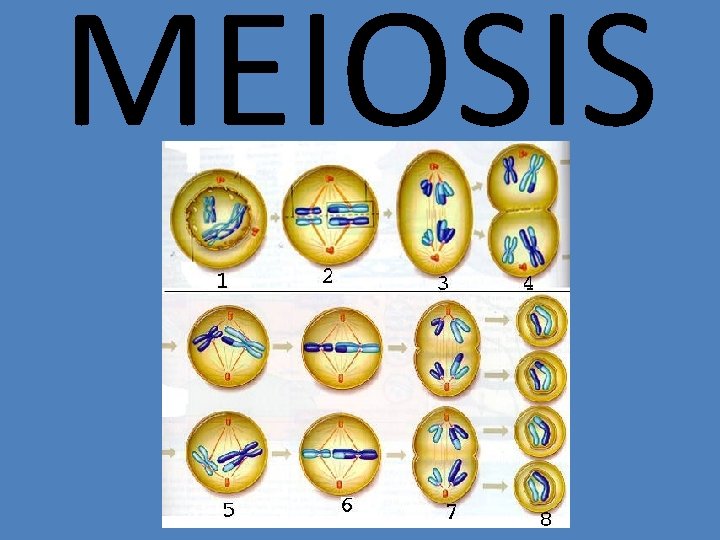
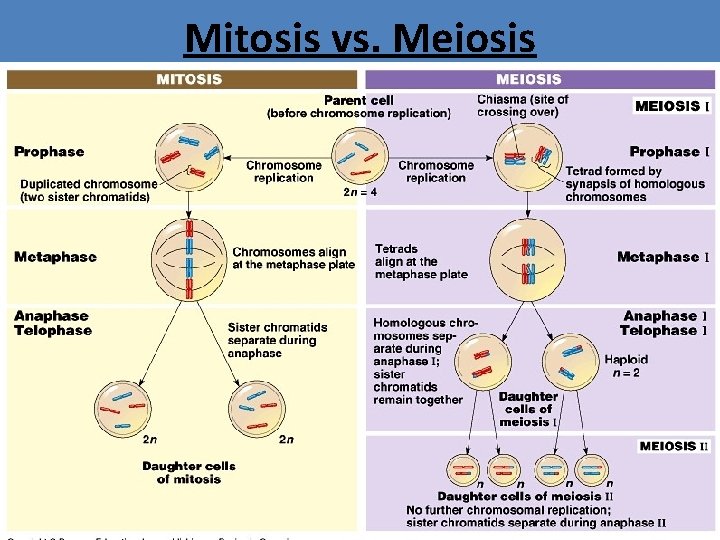
What is MEIOSIS? Division of a diploid cell that results in 4 haploid sex cells!
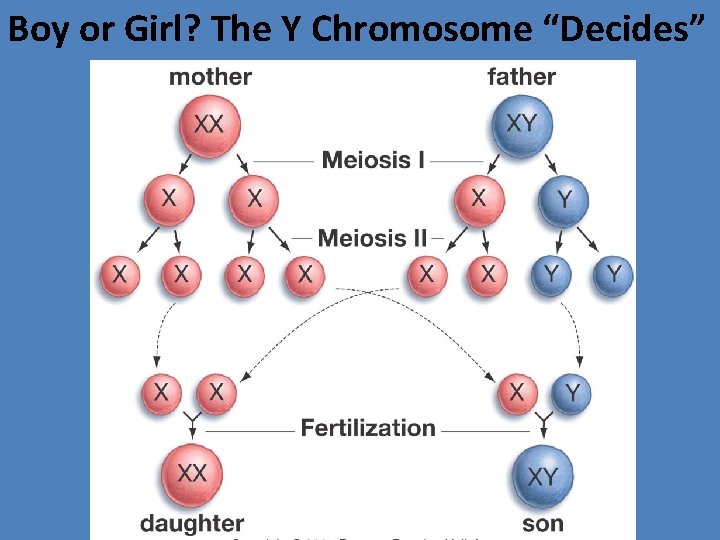
Why do we need meiosis? To reduce the number of chromosomes in 1/2 in our sperm and egg! Why 1/2 the chromosomes in sex cells? So the offspring has 1 complete set of chromosomes (50% from mom and 50% from dad)!
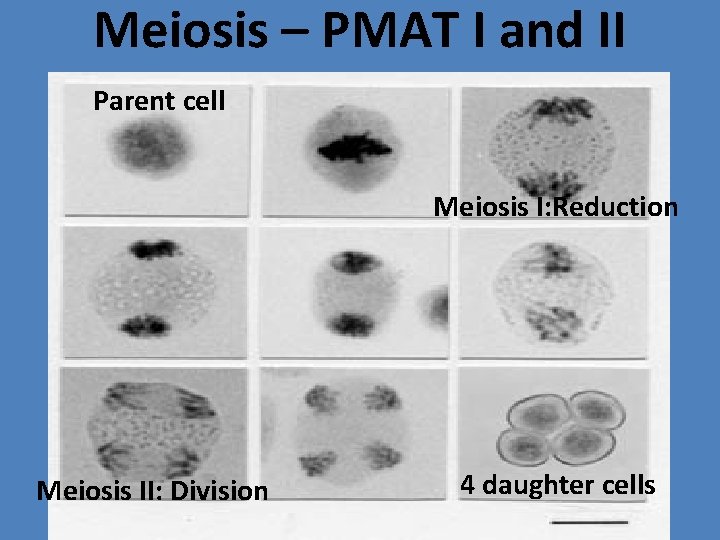
Meiosis – PMAT I and II Parent cell Meiosis I: Reduction Meiosis II: Division 4 daughter cells
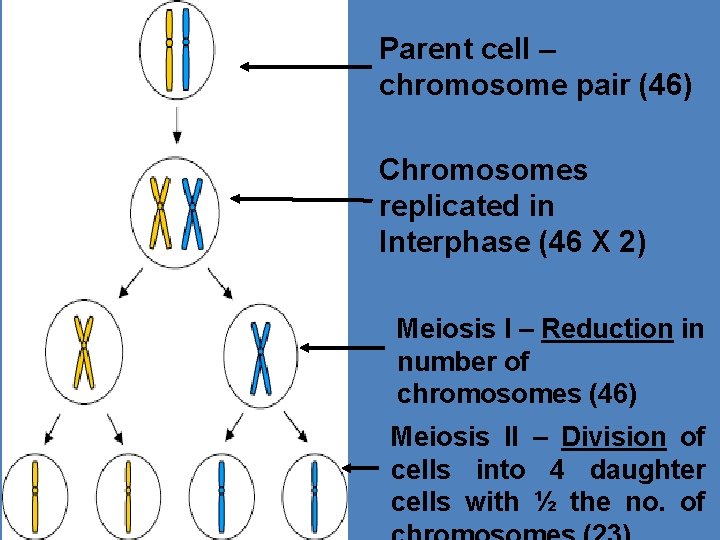
Meiosis Parent cell – chromosome pair (46) Chromosomes replicated in Interphase (46 X 2) Meiosis I – Reduction in number of chromosomes (46) Meiosis II – Division of cells into 4 daughter cells with ½ the no. of
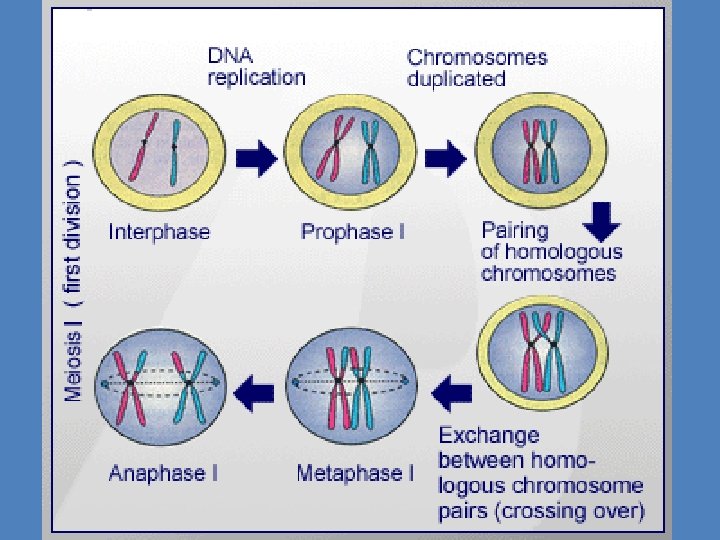
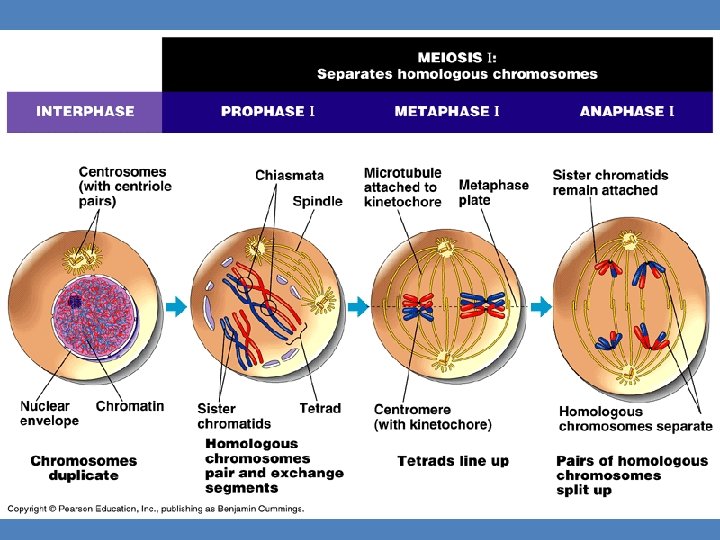
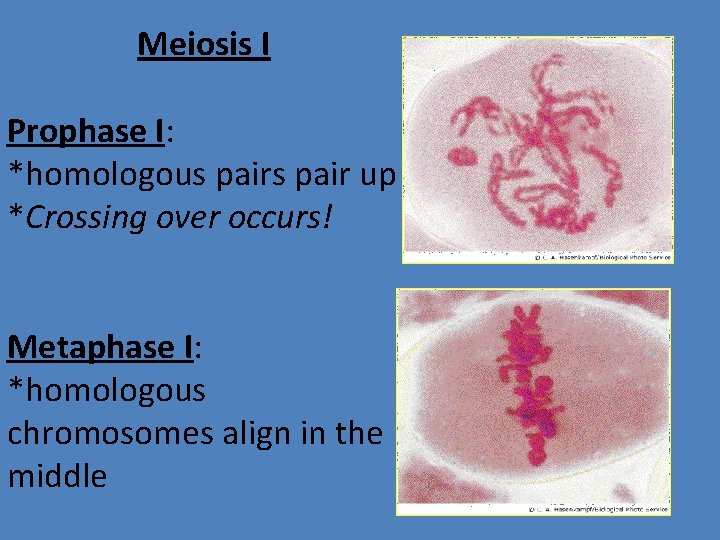
Meiosis I Prophase I: *homologous pair up *Crossing over occurs! Metaphase I: *homologous chromosomes align in the middle
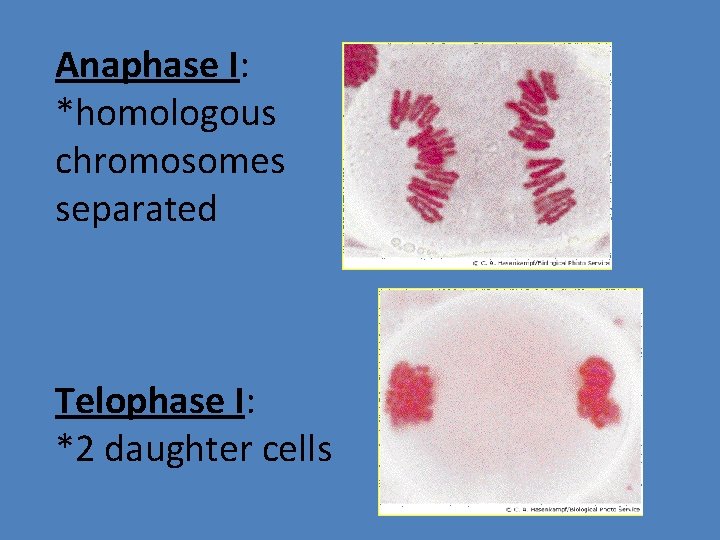
Anaphase I: *homologous chromosomes separated Telophase I: *2 daughter cells
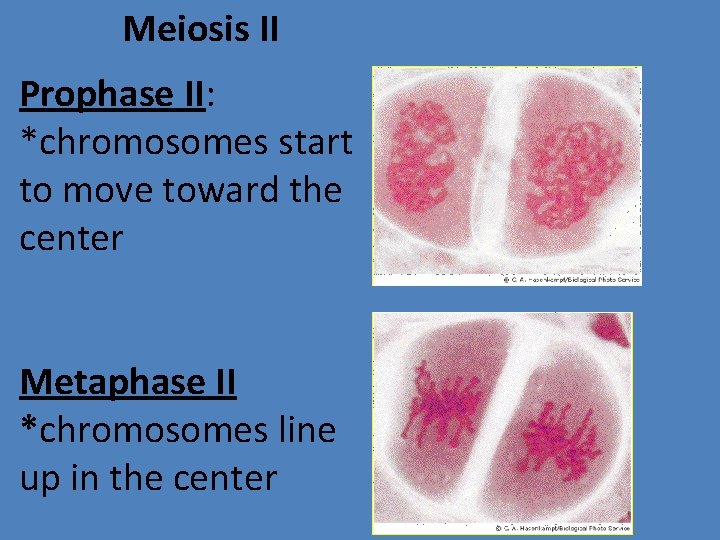
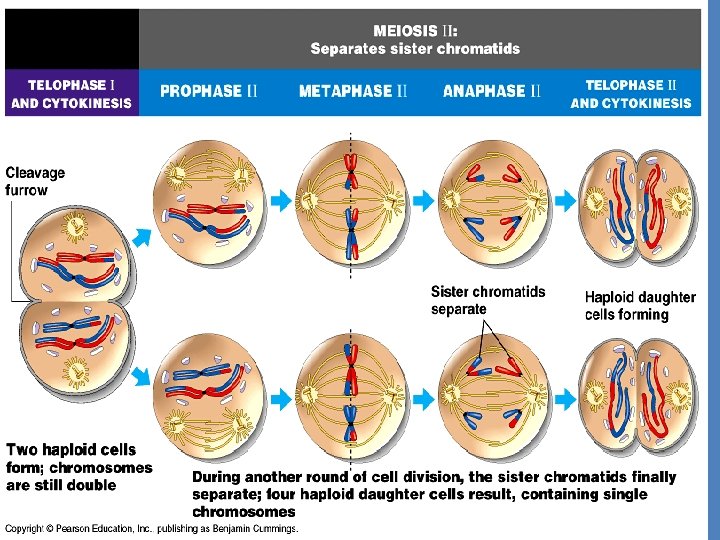
Meiosis II Prophase II: *chromosomes start to move toward the center Metaphase II *chromosomes line up in the center
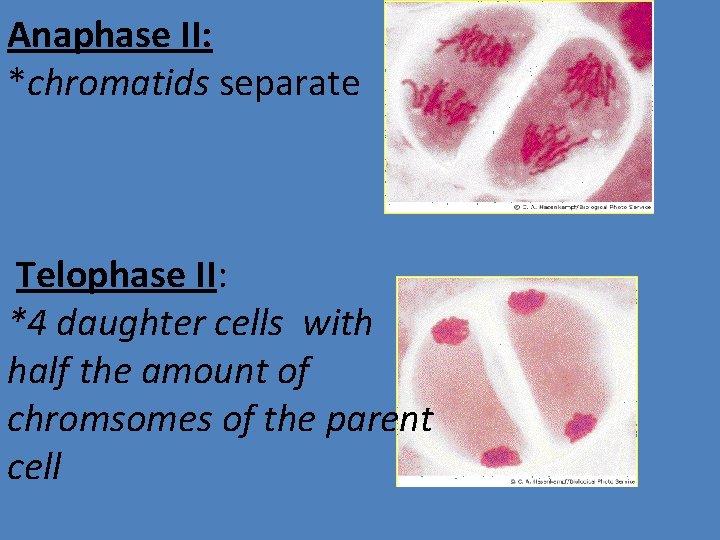
Anaphase II: *chromatids separate Telophase II: *4 daughter cells with half the amount of chromsomes of the parent cell
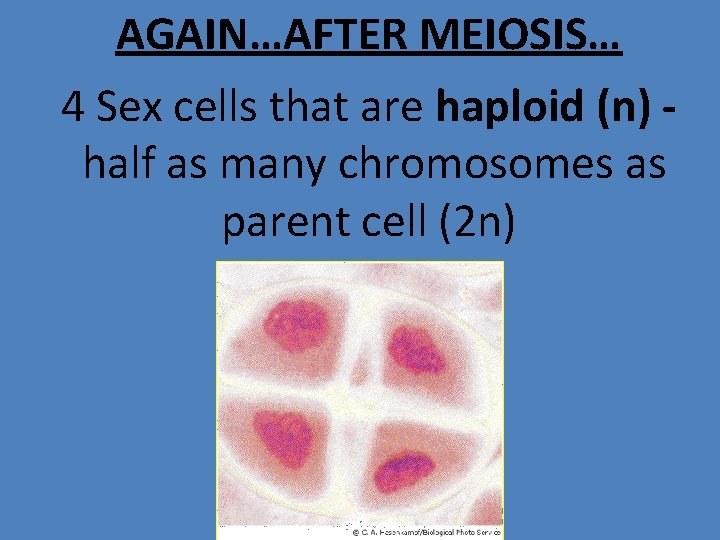
AGAIN…AFTER MEIOSIS… 4 Sex cells that are haploid (n) half as many chromosomes as parent cell (2 n)
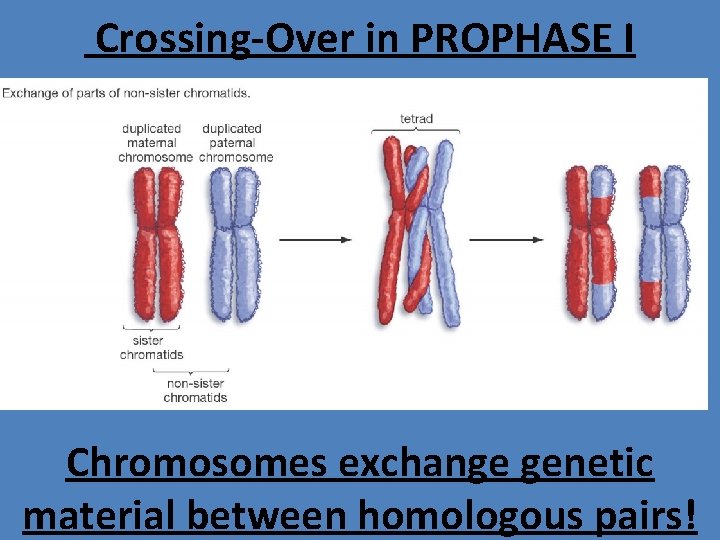
Crossing-Over in PROPHASE I Chromosomes exchange genetic material between homologous pairs!
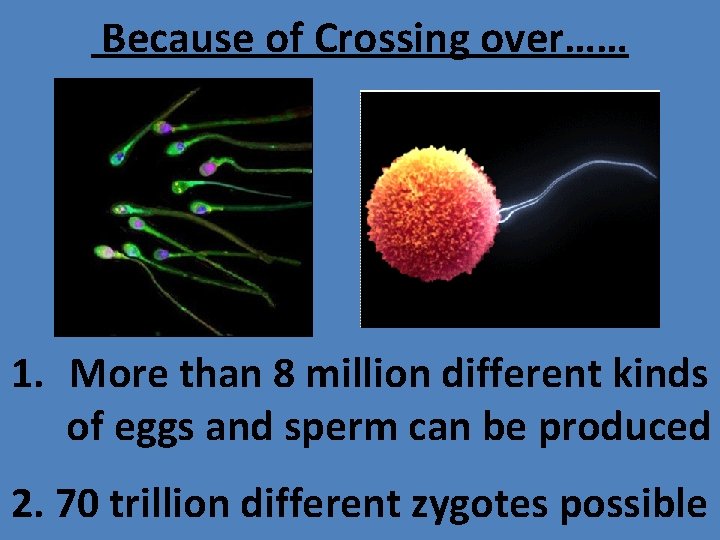
Because of Crossing over…… 1. More than 8 million different kinds of eggs and sperm can be produced 2. 70 trillion different zygotes possible
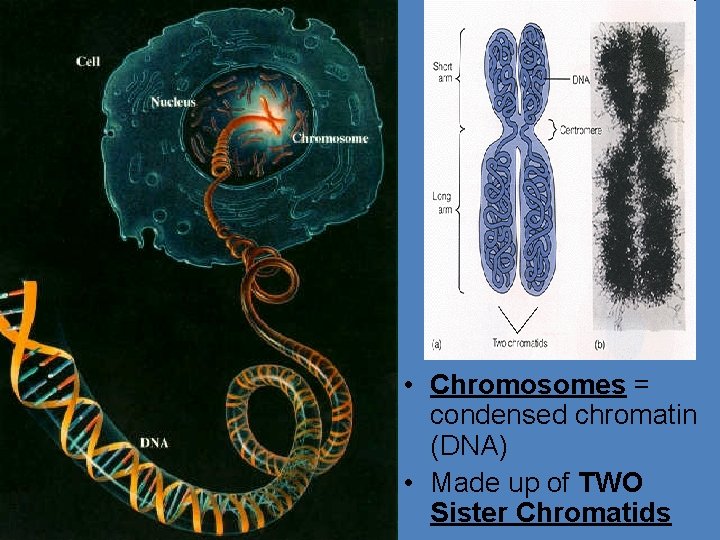
• Chromosomes = condensed chromatin (DNA) • Made up of TWO Sister Chromatids
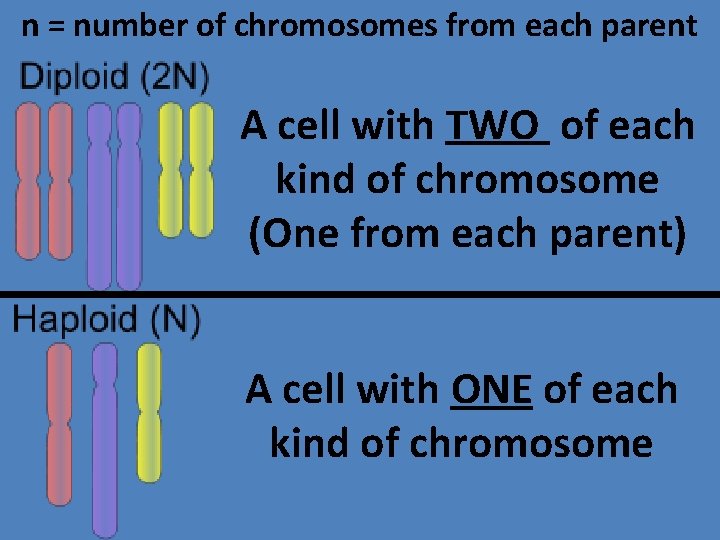
n = number of chromosomes from each parent A cell with TWO of each kind of chromosome (One from each parent) A cell with ONE of each kind of chromosome
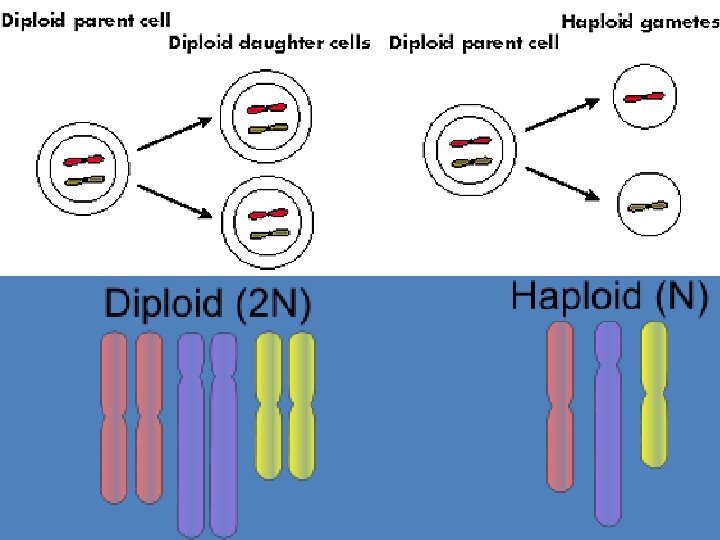
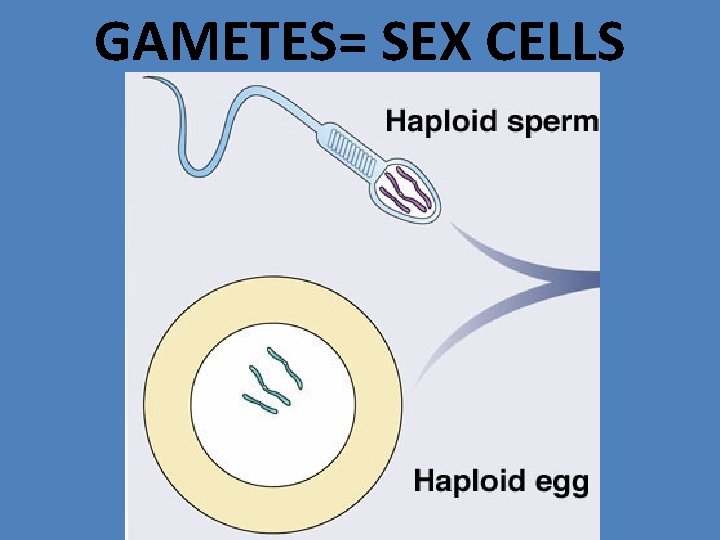
GAMETES= SEX CELLS
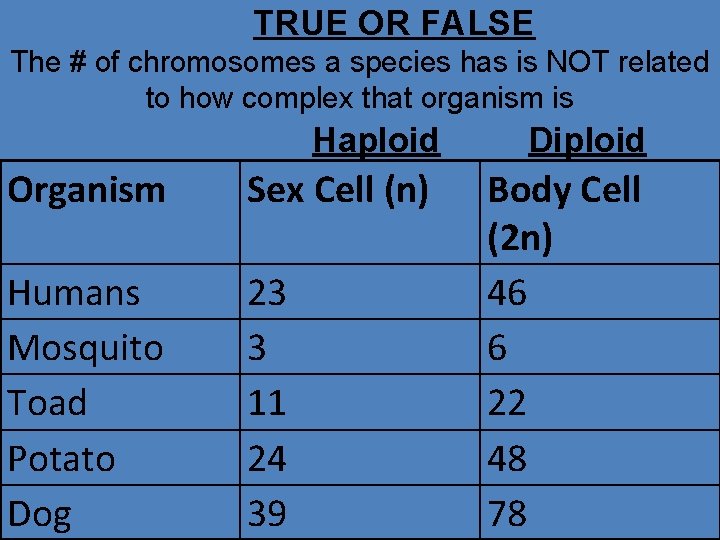
TRUE OR FALSE The # of chromosomes a species has is NOT related to how complex that organism is Haploid Organism Sex Cell (n) Humans Mosquito Toad Potato Dog 23 3 11 24 39 Diploid Body Cell (2 n) 46 6 22 48 78
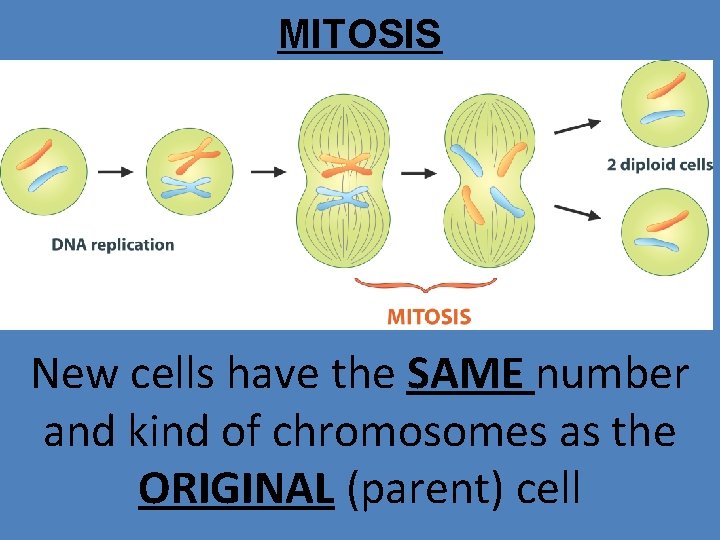
MITOSIS New cells have the SAME number and kind of chromosomes as the ORIGINAL (parent) cell
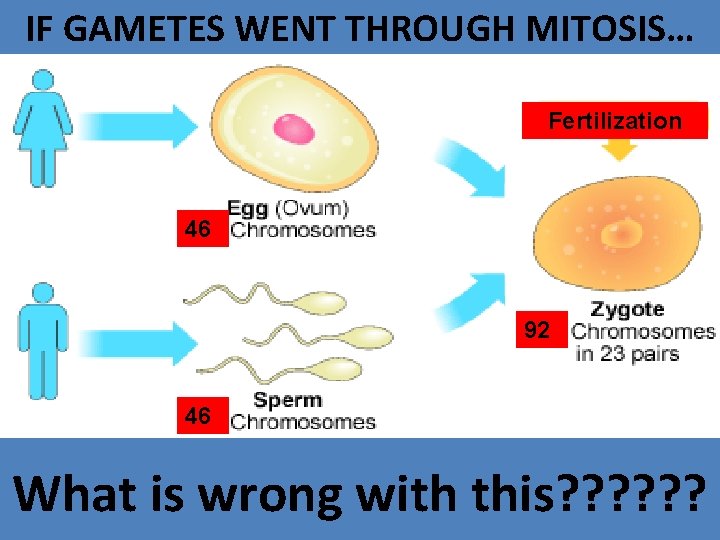
IF GAMETES WENT THROUGH MITOSIS… Fertilization 46 92 46 What is wrong with this? ? ?
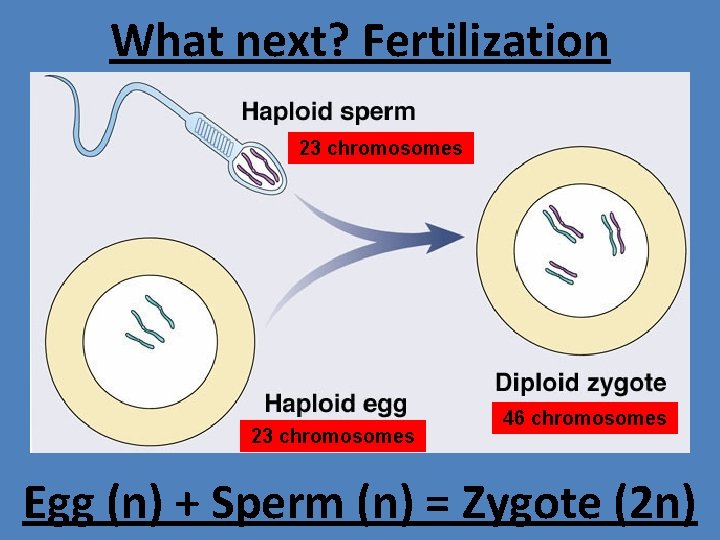
What next? Fertilization 23 chromosomes 46 chromosomes Egg (n) + Sperm (n) = Zygote (2 n)
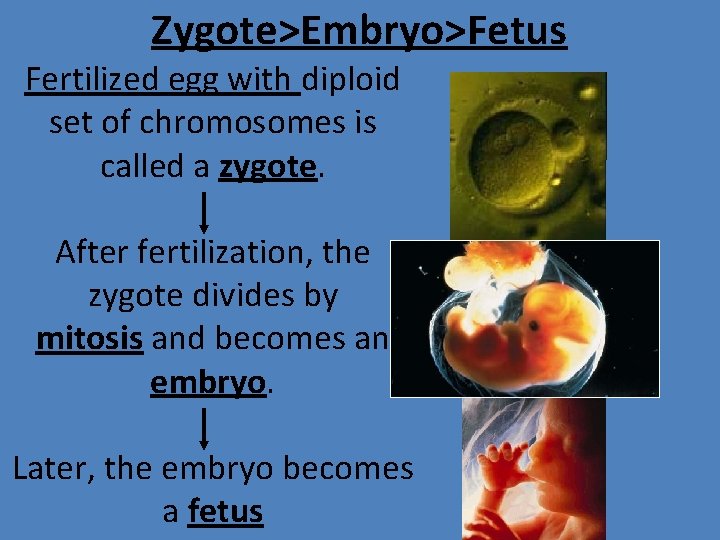
Zygote>Embryo>Fetus Fertilized egg with diploid set of chromosomes is called a zygote. After fertilization, the zygote divides by mitosis and becomes an embryo. Later, the embryo becomes a fetus
What happens during Meiosis?
Mitosis vs. Meiosis
Boy or Girl? The Y Chromosome “Decides”
- Slides: 37