
Bellringer List the four components of emotion emotions
Bellringer: List the four components of emotion.
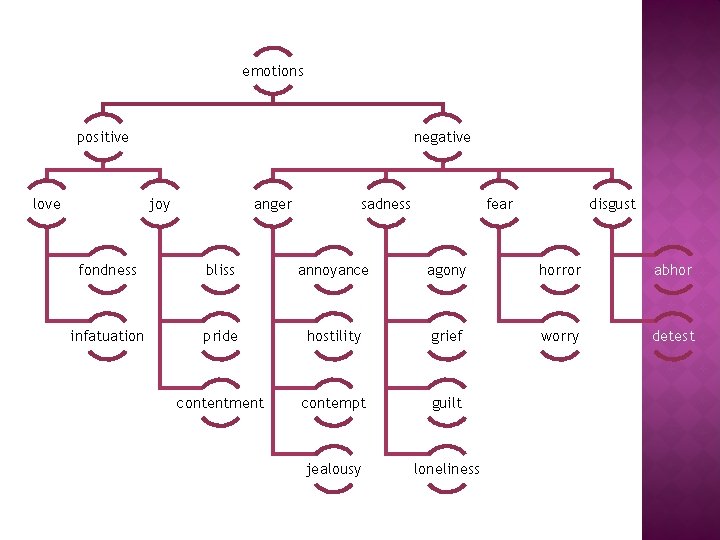
emotions positive love negative joy anger sadness fear disgust fondness bliss annoyance agony horror abhor infatuation pride hostility grief worry detest contentment contempt guilt jealousy loneliness
� An EQ (Emotional Quotient) test scores a person’s emotional intelligence. � Four skills of emotional intelligence �Emotional Awareness �Emotional Management �Social Emotional Awareness �Relationship Management � Scoring � 0 -24 means it is an area that needs enrichment � 25 -34 means effective but needs strengthening � 35 -40 means enhanced and can help to improve weaker areas
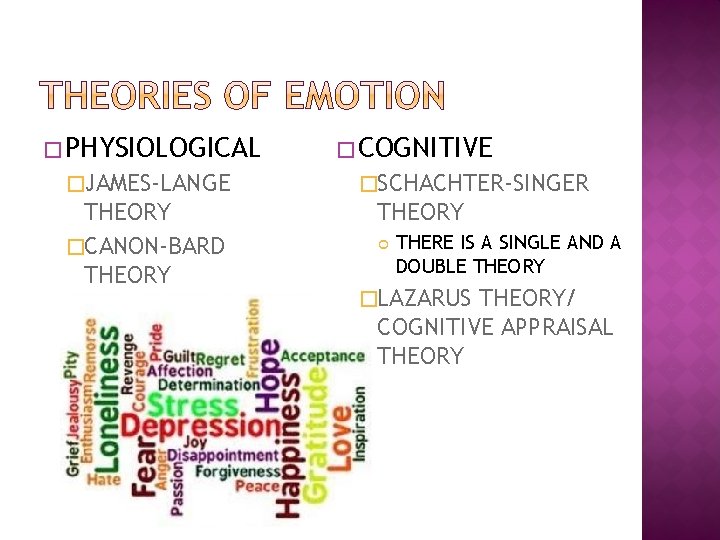
� PHYSIOLOGICAL �JAMES-LANGE THEORY �CANON-BARD THEORY � COGNITIVE �SCHACHTER-SINGER THEORY THERE IS A SINGLE AND A DOUBLE THEORY �LAZARUS THEORY/ COGNITIVE APPRAISAL THEORY
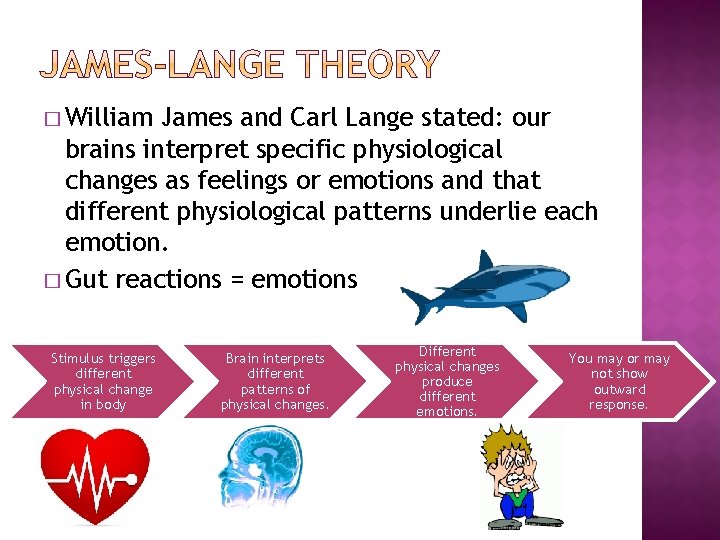
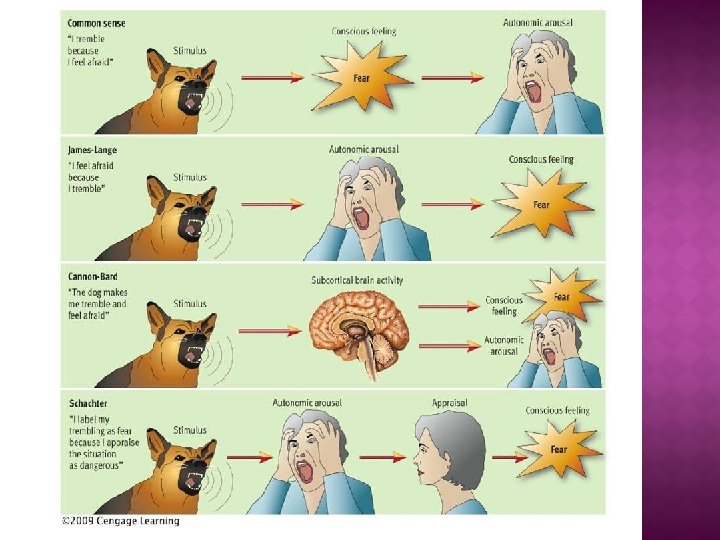
� William James and Carl Lange stated: our brains interpret specific physiological changes as feelings or emotions and that different physiological patterns underlie each emotion. � Gut reactions = emotions Stimulus triggers different physical change in body Brain interprets different patterns of physical changes. Different physical changes produce different emotions. You may or may not show outward response.
�Criticisms �Different emotions are not always associated with different patterns of physiological patterns. �People who have severed spinal cords do not receive physiological responses yet still feel emotions. �Some emotions (i. e. guilty and jealousy) may require more thought and interpretation.
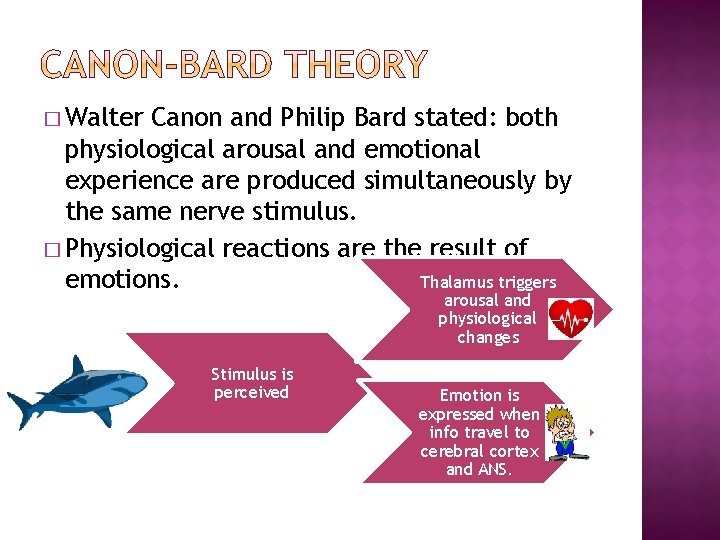
� Walter Canon and Philip Bard stated: both physiological arousal and emotional experience are produced simultaneously by the same nerve stimulus. � Physiological reactions are the result of Thalamus triggers emotions. arousal and physiological changes Stimulus is perceived Emotion is expressed when info travel to cerebral cortex and ANS.
�Changes/Criticisms �A change has been made to say that the hypothalamus and limbic system play major role in emotion �Simultaneous occurrence of physiological and emotion responses has not yet been proven.
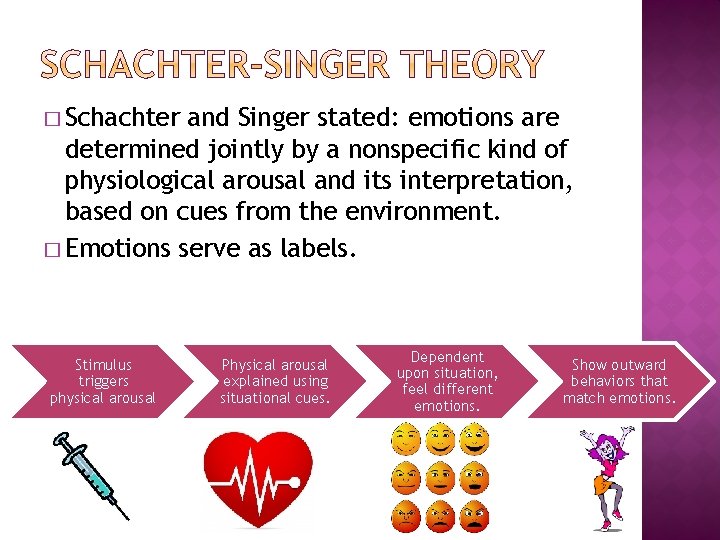
� Schachter and Singer stated: emotions are determined jointly by a nonspecific kind of physiological arousal and its interpretation, based on cues from the environment. � Emotions serve as labels. Stimulus triggers physical arousal Physical arousal explained using situational cues. Dependent upon situation, feel different emotions. Show outward behaviors that match emotions.
�Criticism �Arousal is not as nonspecific as theory states even though it has been proven that arousal magnify can be mistaken for multiple emotions.
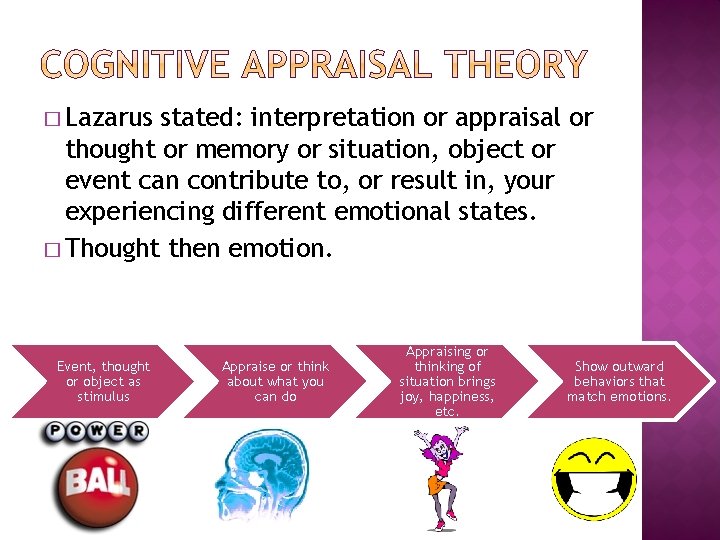
� Lazarus stated: interpretation or appraisal or thought or memory or situation, object or event can contribute to, or result in, your experiencing different emotional states. � Thought then emotion. Event, thought or object as stimulus Appraise or think about what you can do Appraising or thinking of situation brings joy, happiness, etc. Show outward behaviors that match emotions.
�Criticism �Arousal is not as nonspecific as theory states even though it has been proven that arousal magnify an be mistaken for multiple emotions.
- Slides: 14