
Bellringer 81516 What lies on the Earths crust
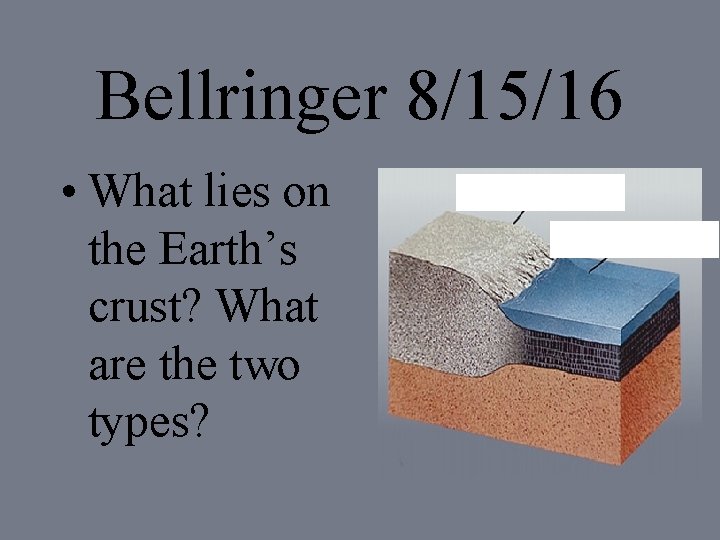
Bellringer 8/15/16 • What lies on the Earth’s crust? What are the two types?
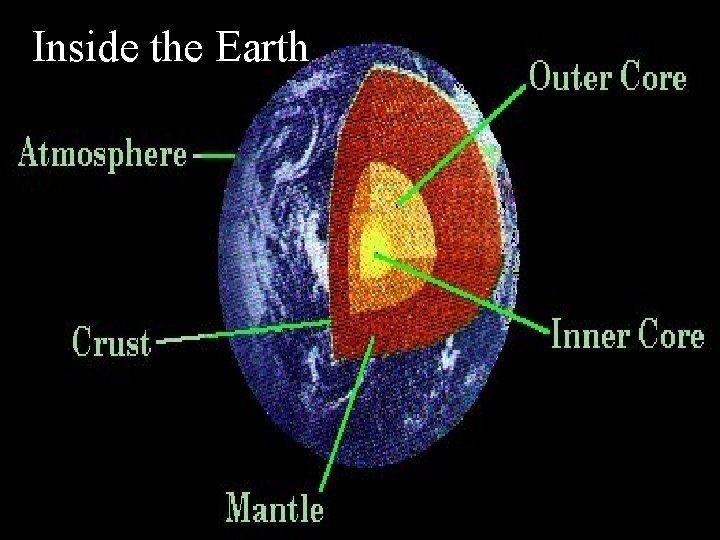
Inside the Earth
Composition Differences Chemical Composition • Crust • Mantle • Core (Inner & Outer) Physical Composition • Lithosphere • Asthenosphere • Mesosphere (middle Earth)
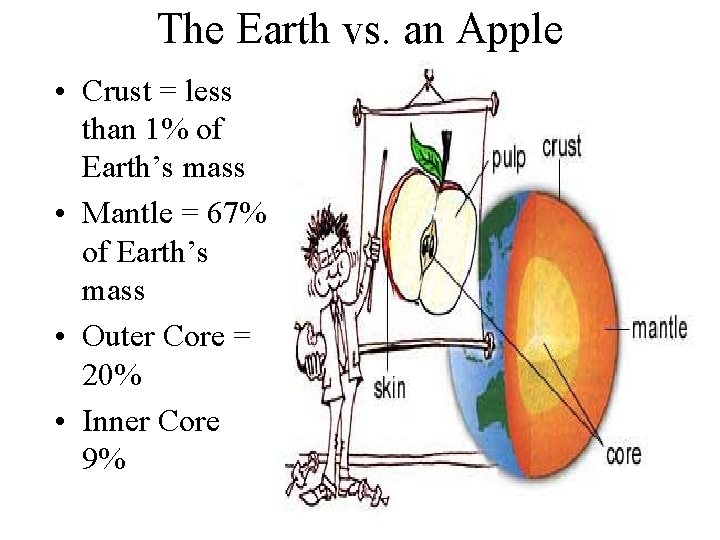
The Earth vs. an Apple • Crust = less than 1% of Earth’s mass • Mantle = 67% of Earth’s mass • Outer Core = 20% • Inner Core 9%
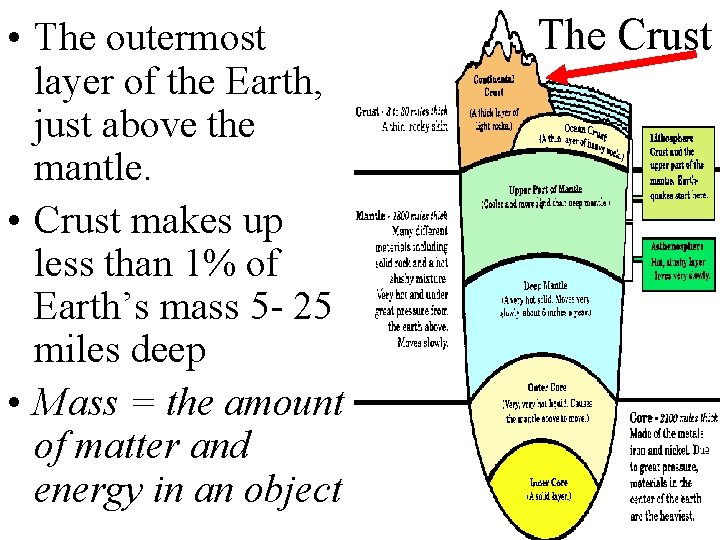
• The outermost layer of the Earth, just above the mantle. • Crust makes up less than 1% of Earth’s mass 5 - 25 miles deep • Mass = the amount of matter and energy in an object The Crust
Two Types of Crust Continental • Less density • Thinnest layer of the Earth • Deepest 328, 000 feet deep or 62 miles • Land mass not covered by water Oceanic • Thinner and more dense • Covered by ocean and seas • Twice as much iron calcium and magnesium • 16, 400 feet deep =3 miles
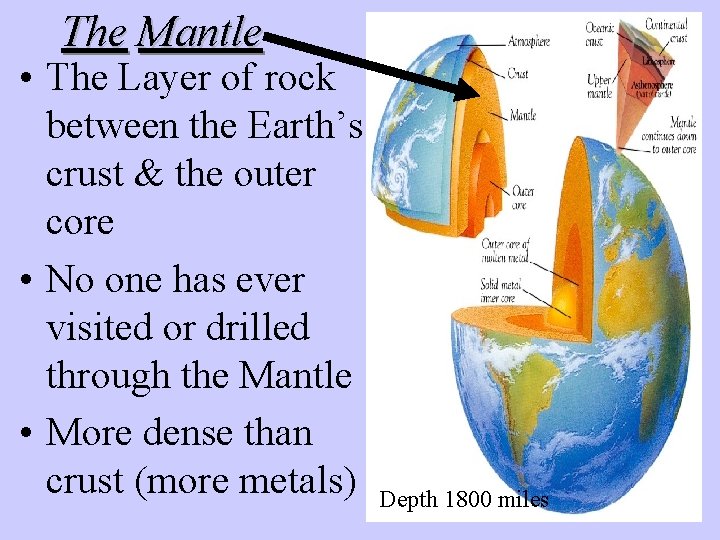
The Mantle • The Layer of rock between the Earth’s crust & the outer core • No one has ever visited or drilled through the Mantle • More dense than crust (more metals) Depth 1800 miles
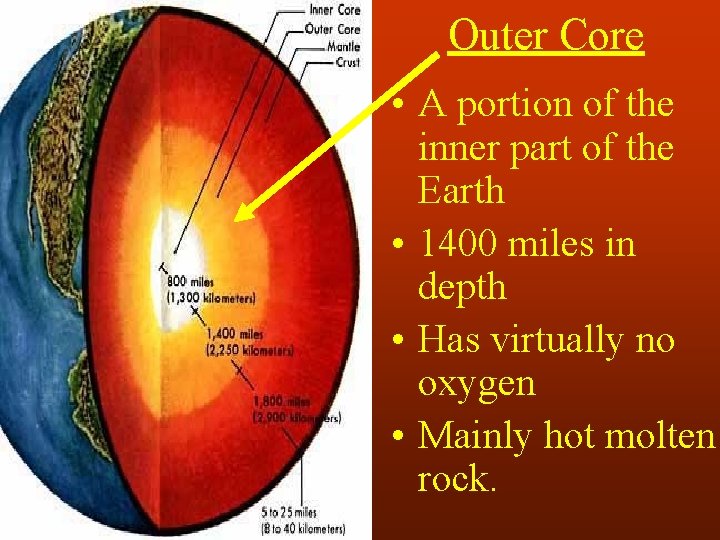
Outer Core • A portion of the inner part of the Earth • 1400 miles in depth • Has virtually no oxygen • Mainly hot molten rock.
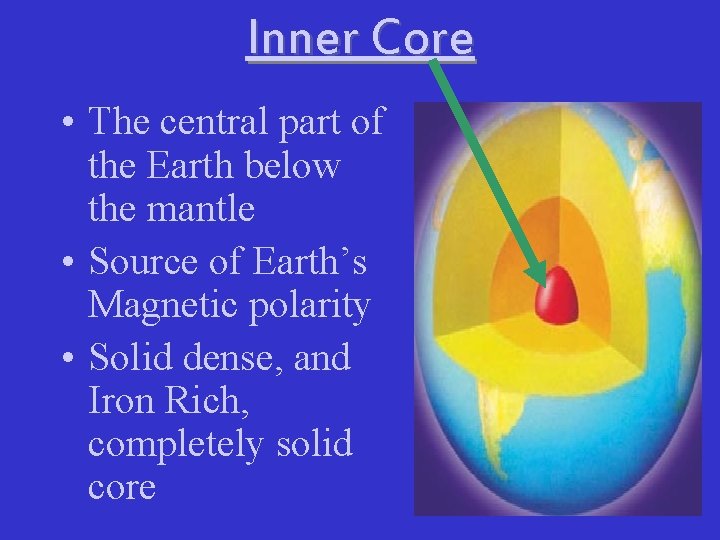
Inner Core • The central part of the Earth below the mantle • Source of Earth’s Magnetic polarity • Solid dense, and Iron Rich, completely solid core
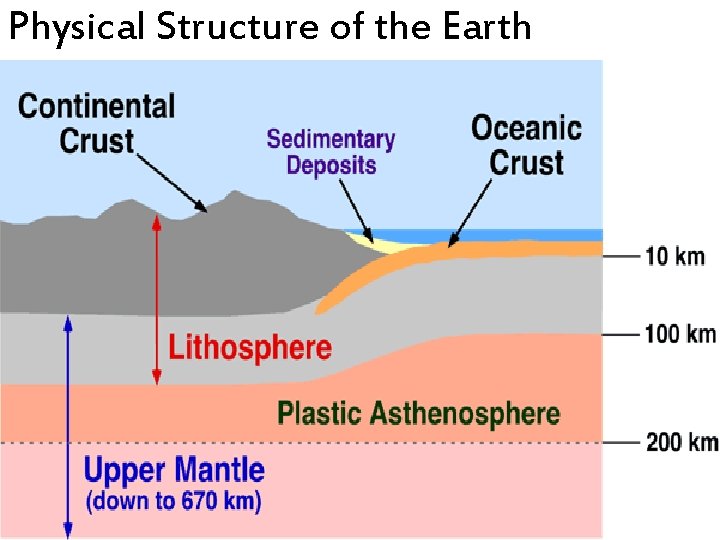
Physical Structure of the Earth
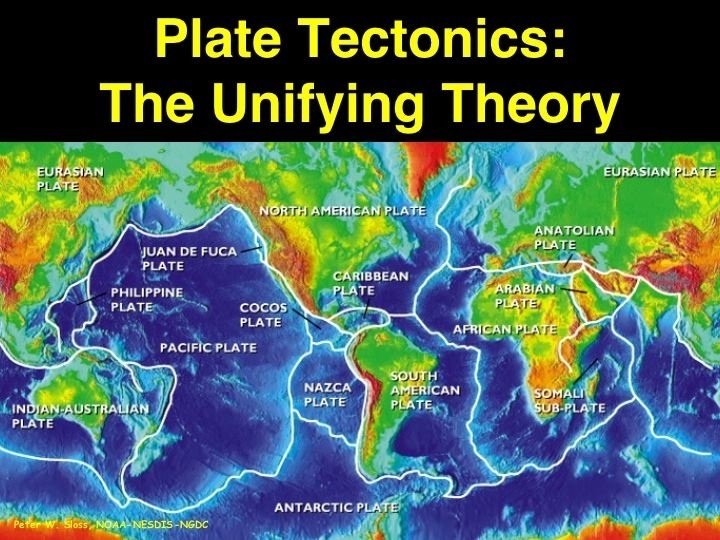
Plate tectonics- Unifying Theory
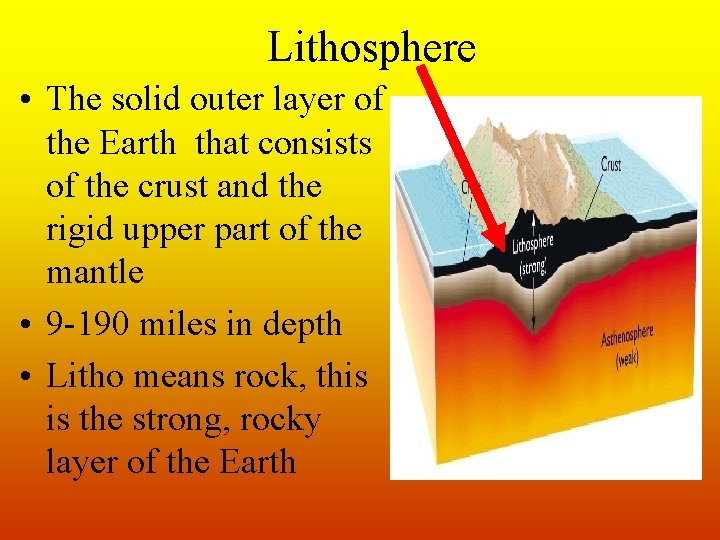
Lithosphere • The solid outer layer of the Earth that consists of the crust and the rigid upper part of the mantle • 9 -190 miles in depth • Litho means rock, this is the strong, rocky layer of the Earth
Asthenosphere • The soft “weak” layer of the mantle on which the tectonic plates move • 250 km =820, 000 feet in depth or 155 miles • Plastic layer = (flexible or easily molded) • Made up of solid rock that flows very slowly
Mesosphere • Meso means middle • Strong lower part of the mantle between the Astenosphere and the outer core • Extends all the way into Earth’s core nearly 4000 miles to the center, or 20 million feet • How far can we drill?
Tectonic Plates: Plate Tectonics • Pieces of the lithosphere that consist of the crust and rigid upper portion of the mantle • Tectonic – Greek for “Builder” • These processes are called tectonics because they are Earth builders and movers.
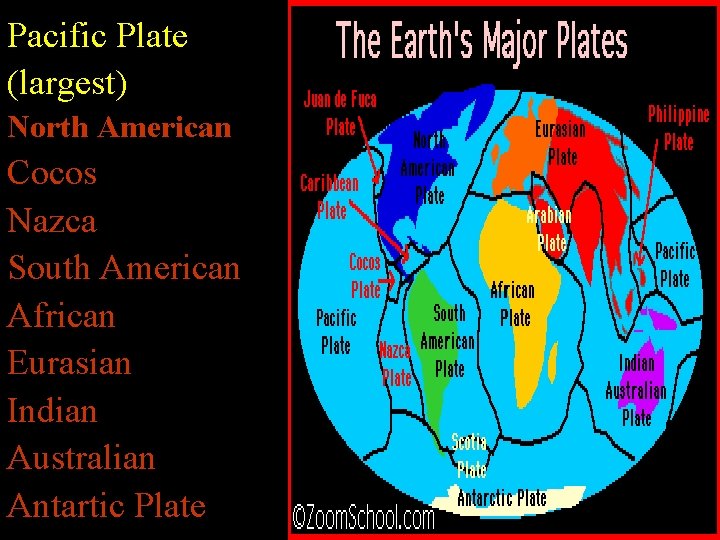
Pacific Plate (largest) Major North American Cocos Nazca South American African Eurasian Indian Australian Antartic Plate Tectonic Plates
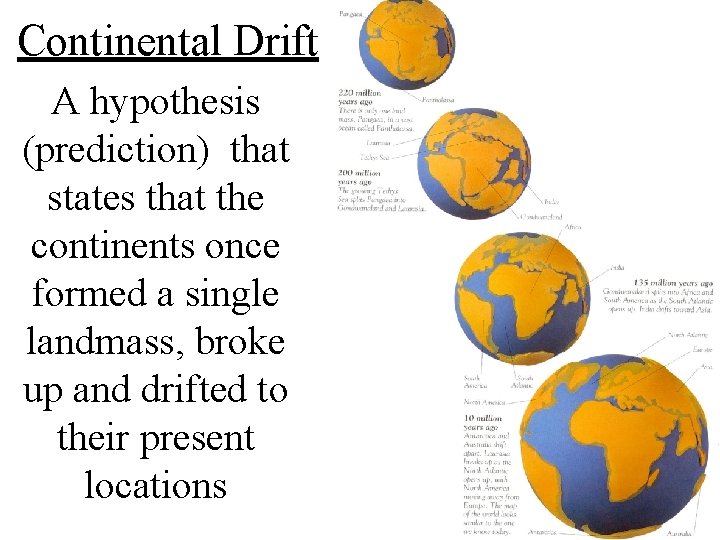
Continental Drift A hypothesis (prediction) that states that the continents once formed a single landmass, broke up and drifted to their present locations
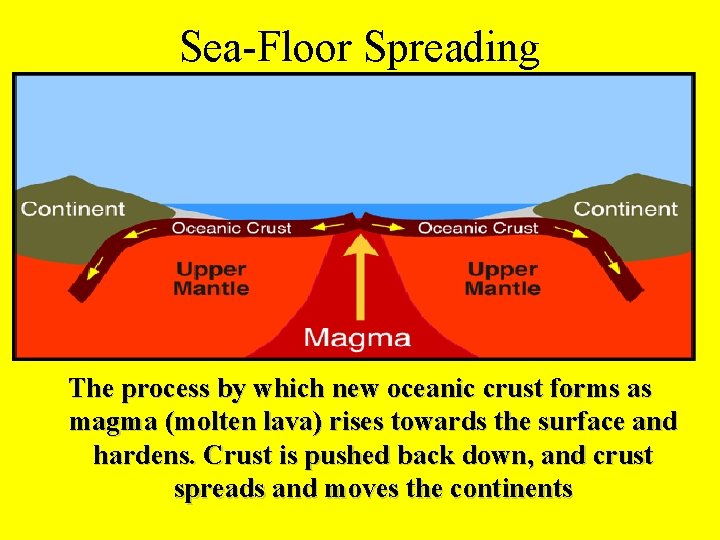
Sea-Floor Spreading The process by which new oceanic crust forms as magma (molten lava) rises towards the surface and hardens. Crust is pushed back down, and crust spreads and moves the continents
Tectonic Plate Continental Drift Lithosphere Sea-Floor Spreading Asthenosphere Mid Ocean Ridge Mesosphere Inner Core Outer Core Crust Mantle Concepts
Summary • The interior of the Earth is hot! • Thanks to Alfred Wegener’s theory we now believe and have evidence that our continents are constantly moving • Heat flow and movement of material within the Earth cause earthquakes and volcanic eruptions and create mountains and ocean floor • The Earth has three main chemical layers and four mane physical layers
- Slides: 20