
Bellow verb to make a sound similar to
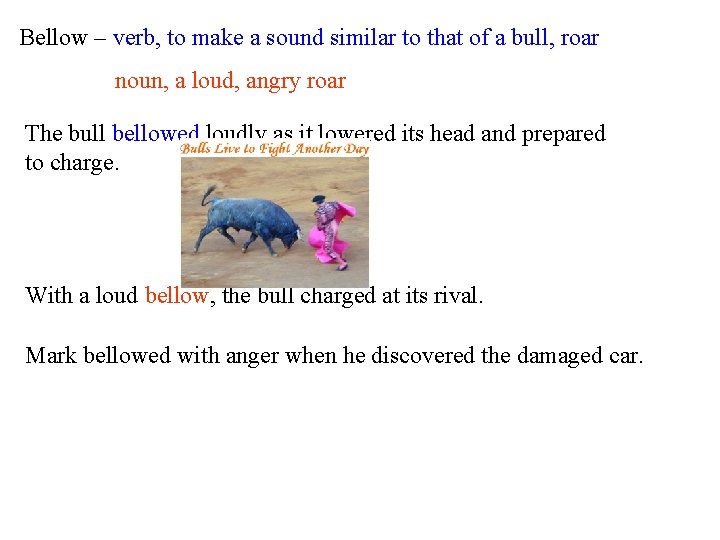
Bellow – verb, to make a sound similar to that of a bull, roar noun, a loud, angry roar The bull bellowed loudly as it lowered its head and prepared to charge. With a loud bellow, the bull charged at its rival. Mark bellowed with anger when he discovered the damaged car.
Beneficiary – noun, one who benefits from something; a person who is left money or other property in a will The students were the beneficiaries of the professor’s vast knowledge of science. The beneficiary of the woman’s fortune decided to donate the money to those in need.
Botch – verb, to repair or patch poorly, make a mess of noun, a hopelessly bungled job (note – this form of the word is rarely used) After the mechanic botched the repair job, the car broke down in the middle of the highway.
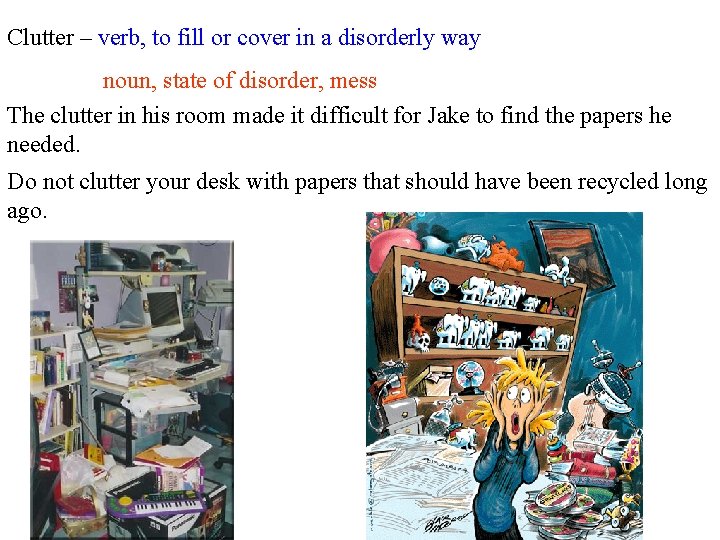
Clutter – verb, to fill or cover in a disorderly way noun, state of disorder, mess The clutter in his room made it difficult for Jake to find the papers he needed. Do not clutter your desk with papers that should have been recycled long ago.

Dilapidated – adj. , falling apart or ruined, run-down (Noun form is dilapidation. ) The children were afraid to enter the dilapidated building.
Dismantle – verb, to take apart; to strip of something The noun form is dismantlement. The mechanic dismantled the car, but still could not discover what was wrong with it.
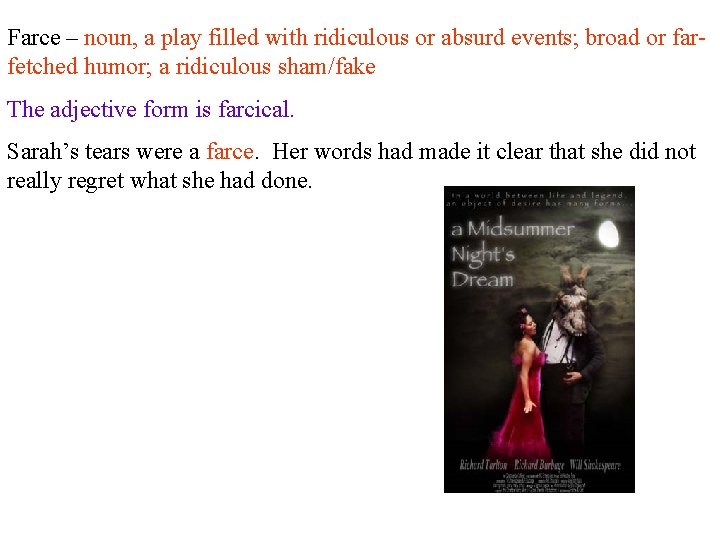
Farce – noun, a play filled with ridiculous or absurd events; broad or farfetched humor; a ridiculous sham/fake The adjective form is farcical. Sarah’s tears were a farce. Her words had made it clear that she did not really regret what she had done.

Futile – adj. , not successful, failing to have any result; useless The noun form is futility. He bellowed with frustration and anger when his futile attempts to repair the vase he had broken only caused him to drop it once again. Eventually, the young child realized the futility of trying to count every snowflake.
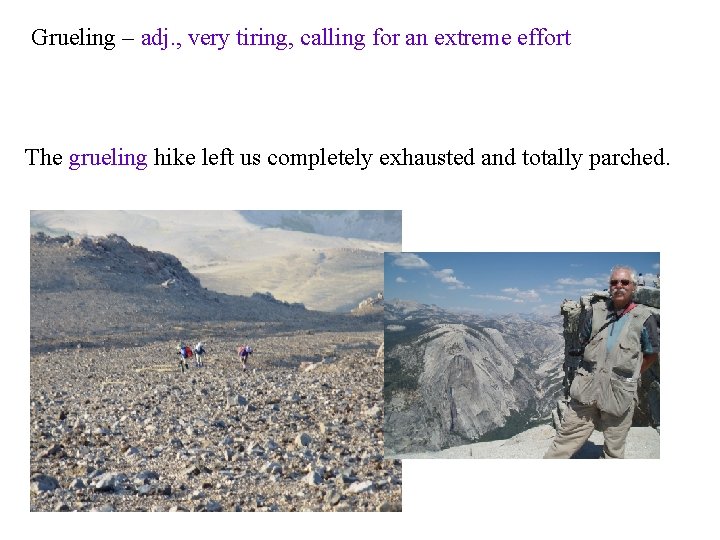
Grueling – adj. , very tiring, calling for an extreme effort The grueling hike left us completely exhausted and totally parched.

Hospitable – adj. , offering friendly or generous treatment to guests; open to anything new or strange The noun form is hospitality. The adverb form is hospitably. The woman was so hospitable that we quickly felt comfortable in her house. Mary was known for her hospitality and her kindness to complete strangers.

Lair – noun, the home or den of a wild animal; any hideout The fox hid in his lair until the hunters left the forest. The dragon emerged from his lair to hunt.
Lavish – adj. , overly generous, extravagant, abundant verb, to spend or give freely or without limit The adverb form is lavishly. Mike’s lavish gifts embarrassed the girl on whom he had a crush. Your grandparents often lavish you with affection and attention.
Morbid – adj. , in an unhealthy mental state, extremely gloomy; caused by or related to disease, unwholesome Her morbid conversations made her depressing to speak with.
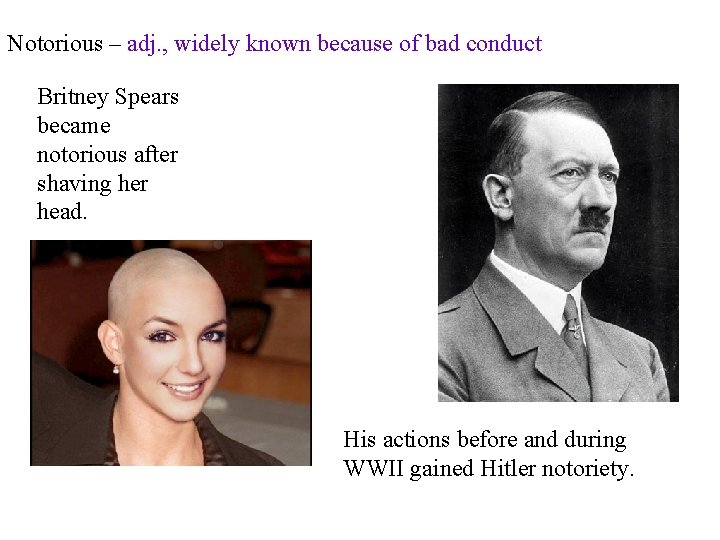
Notorious – adj. , widely known because of bad conduct Britney Spears became notorious after shaving her head. His actions before and during WWII gained Hitler notoriety.
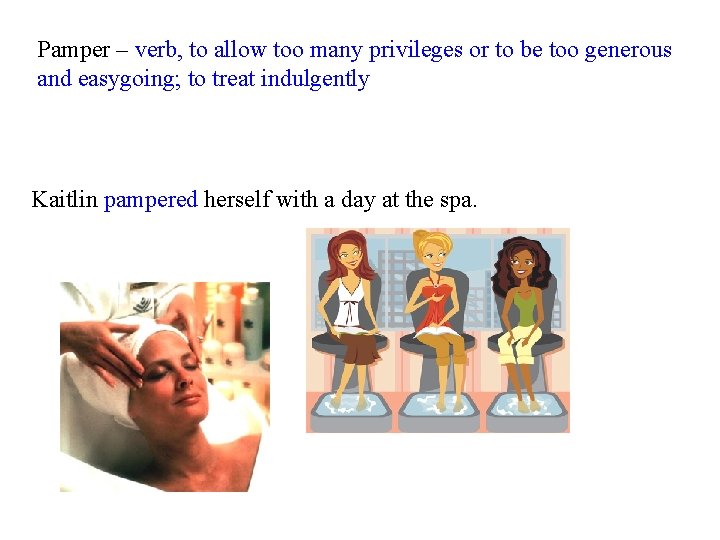
Pamper – verb, to allow too many privileges or to be too generous and easygoing; to treat indulgently Kaitlin pampered herself with a day at the spa.
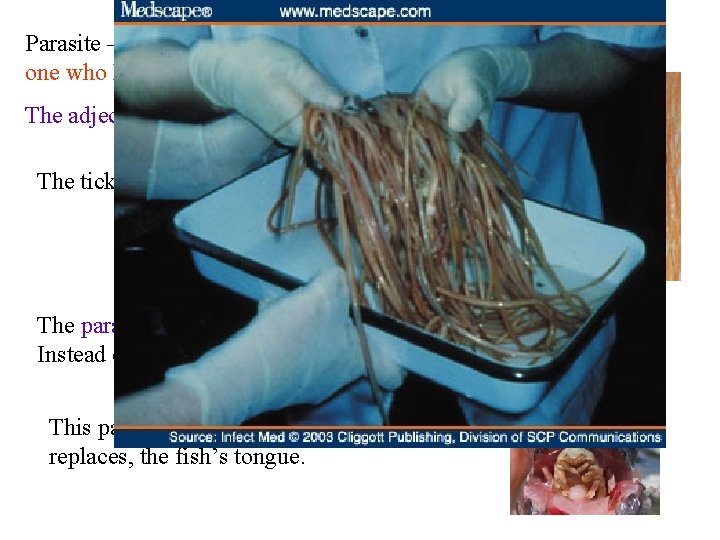
Parasite – noun, an organism that lives in or on another organism; one who lives off another person The adjective form is parasitic. The tick is a form of parasite. The parasitic wasp laid its eggs on the back of a caterpillar. Instead of butterflies emerging from the pupa, a wasp emerged. This parasite lives on, and eventually replaces, the fish’s tongue.

Shirk – verb, to avoid or get out of doing work, neglect a duty Ted shirked his duties when he hid under his desk all morning, hoping nobody would notice he was not at the meeting. Muffin shirked his responsibilities as he watched the mouse run by him.
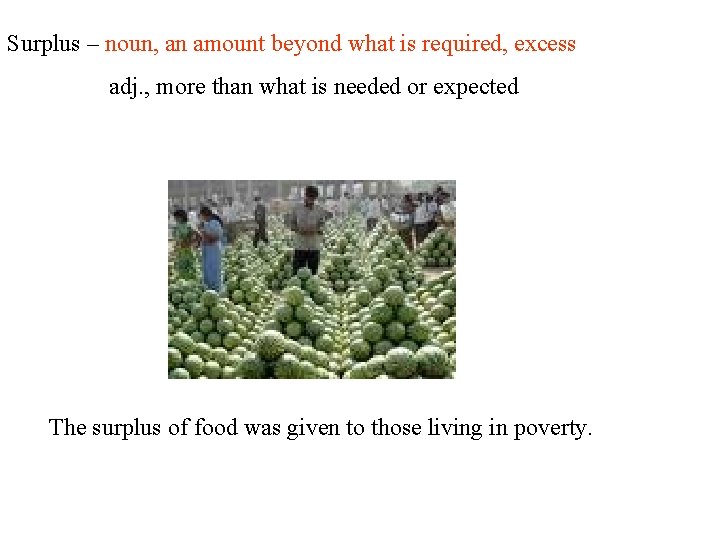
Surplus – noun, an amount beyond what is required, excess adj. , more than what is needed or expected The surplus of food was given to those living in poverty.
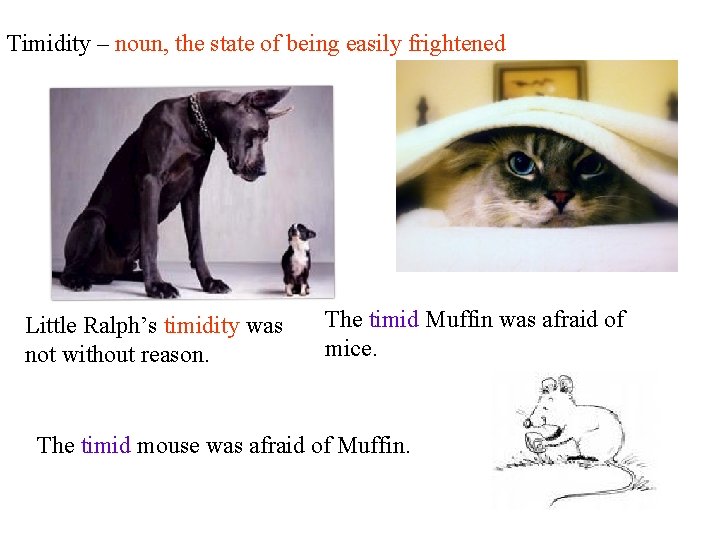
Timidity – noun, the state of being easily frightened Little Ralph’s timidity was not without reason. The timid Muffin was afraid of mice. The timid mouse was afraid of Muffin.
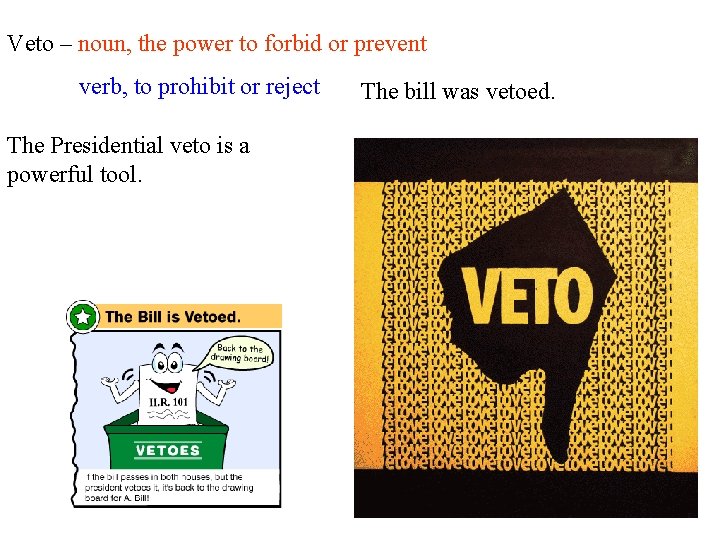
Veto – noun, the power to forbid or prevent verb, to prohibit or reject The Presidential veto is a powerful tool. The bill was vetoed.
- Slides: 20