
Bell work Week 32 Pick a science word
Bell work Week 32 Pick a science word and write the definition. Chapter Check the calendar! Don’t forget to complete your moon journal.
Title of notes: Tides pg. 29 RS Goal for lesson: write on your self assessment worksheet I can explain how the Earth gets tidal changes. Check the calendar! Don’t forget to complete your moon journal.
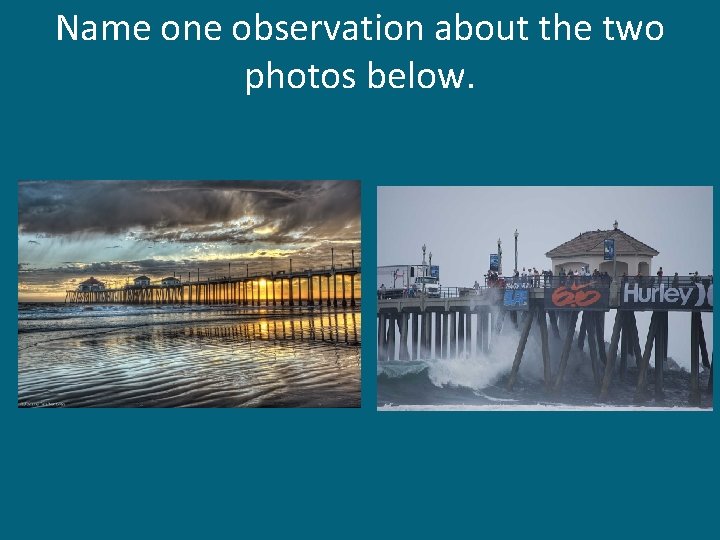
Name one observation about the two photos below.

What do you observe?
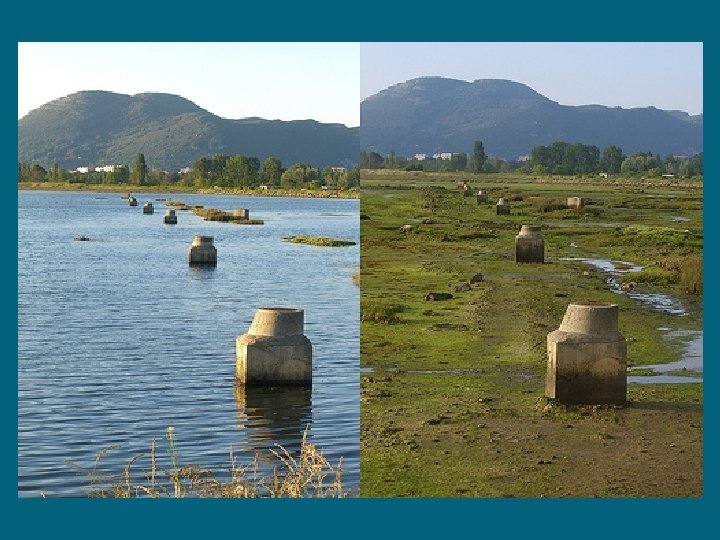
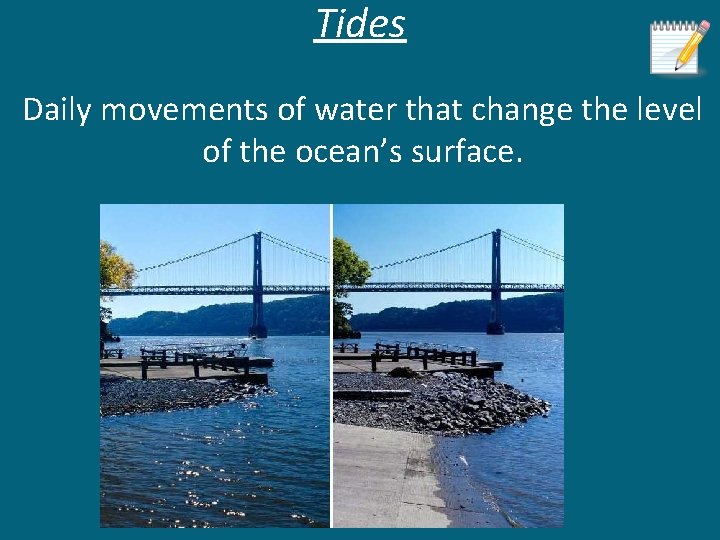
Tides Daily movements of water that change the level of the ocean’s surface.
Earth’s rotation / moon’s revolution During the day, the Earth rotates 180° in 12 hours. The moon revolves 6 -8° around the Earth in 12 hours. Coastal cities experiences a high tide every 12 hours.
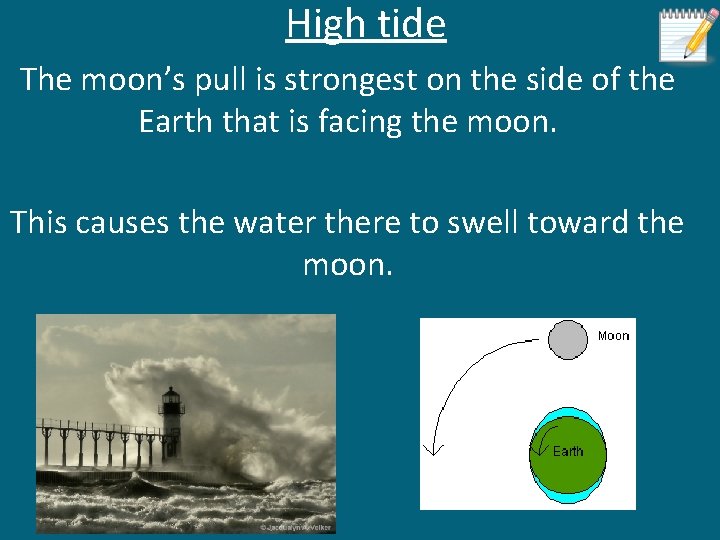
High tide The moon’s pull is strongest on the side of the Earth that is facing the moon. This causes the water there to swell toward the moon.
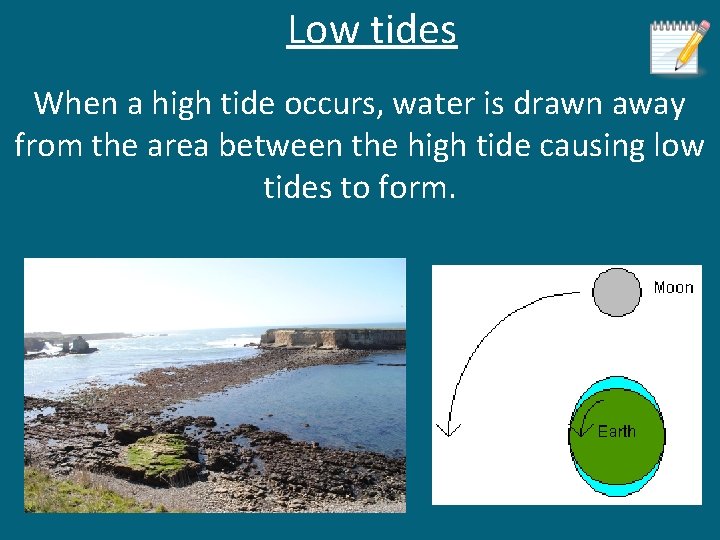
Low tides When a high tide occurs, water is drawn away from the area between the high tide causing low tides to form.
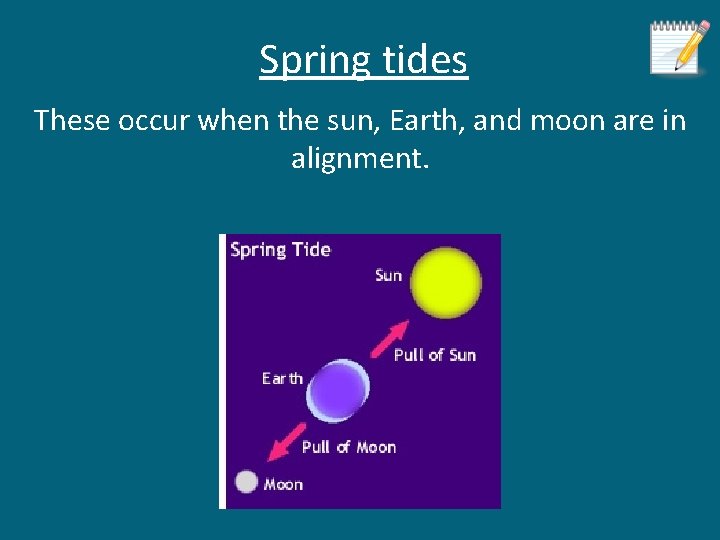
Spring tides These occur when the sun, Earth, and moon are in alignment.
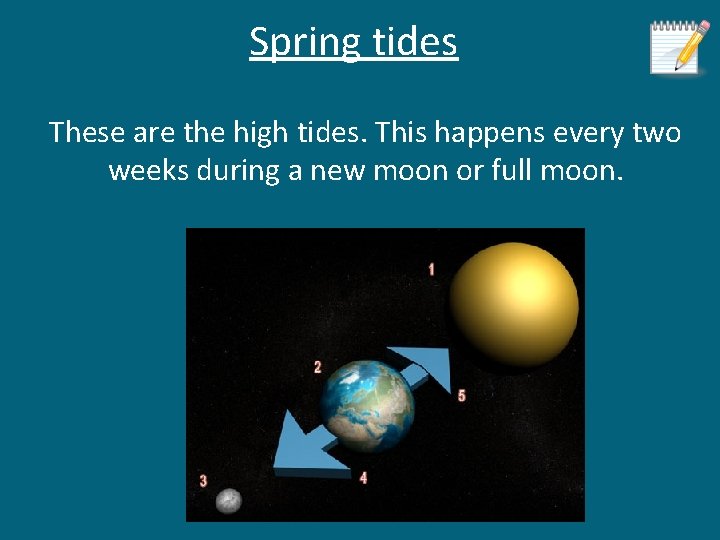
Spring tides These are the high tides. This happens every two weeks during a new moon or full moon.
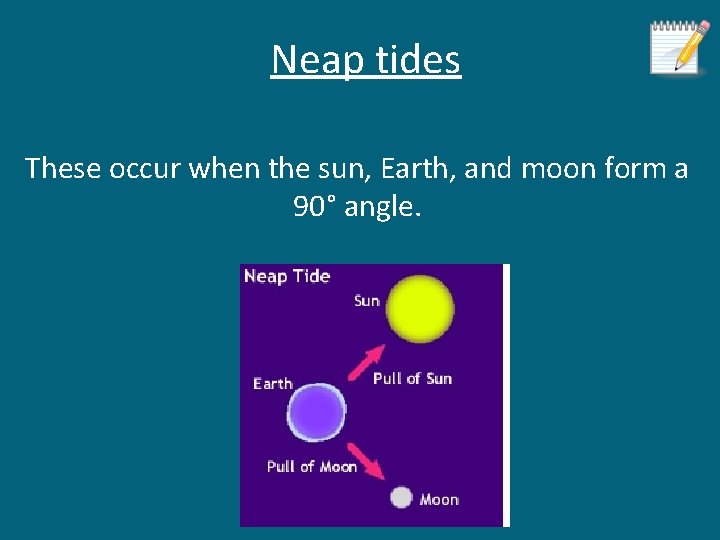
Neap tides These occur when the sun, Earth, and moon form a 90° angle.
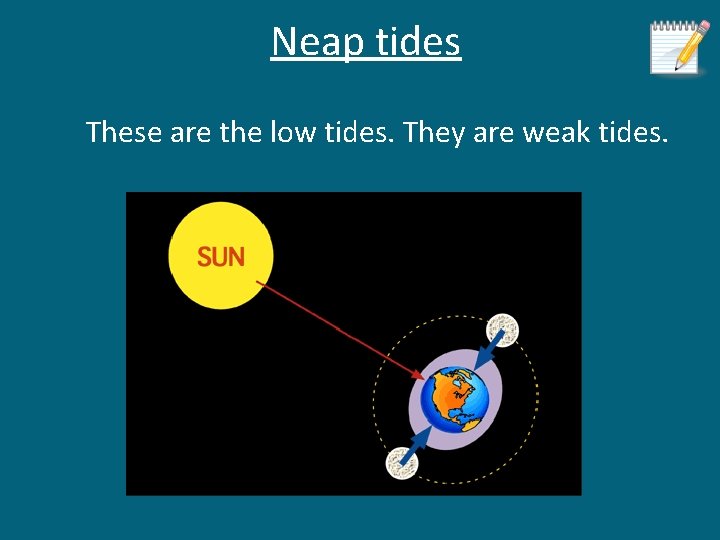
Neap tides These are the low tides. They are weak tides.
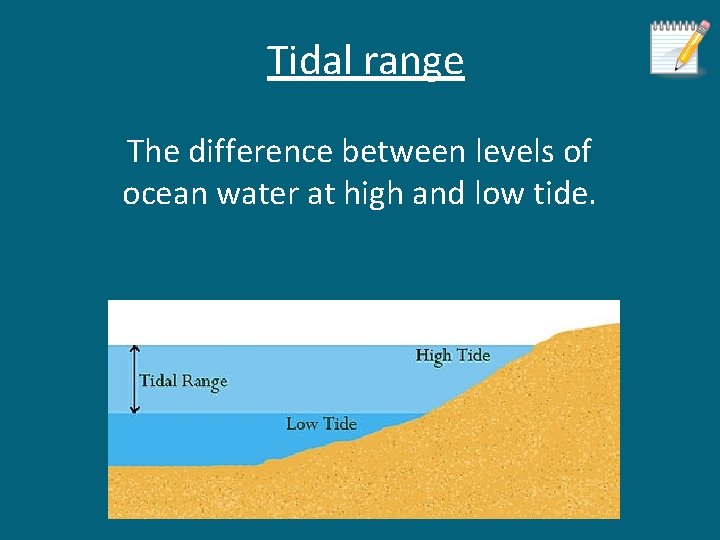
Tidal range The difference between levels of ocean water at high and low tide.
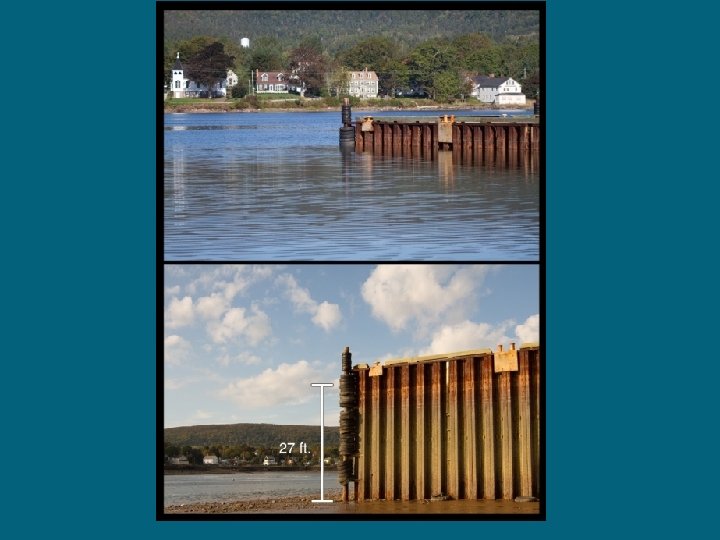
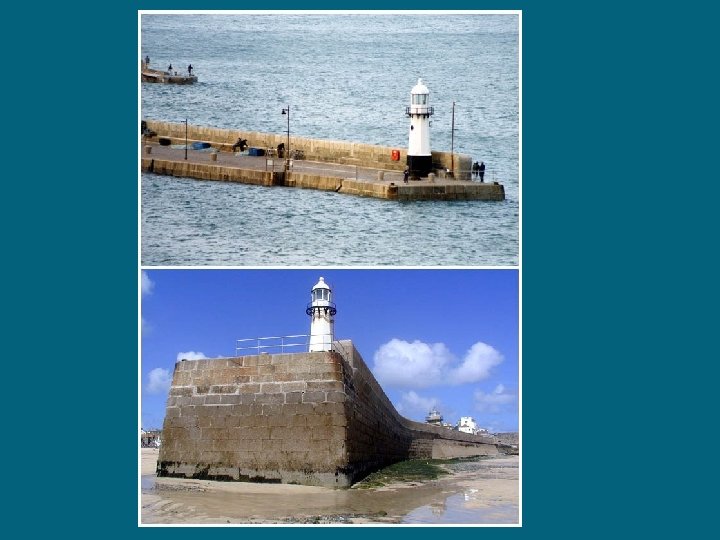
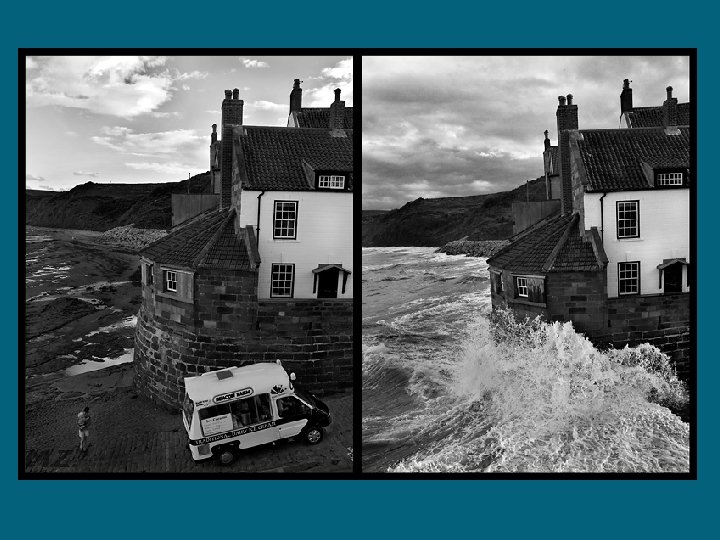
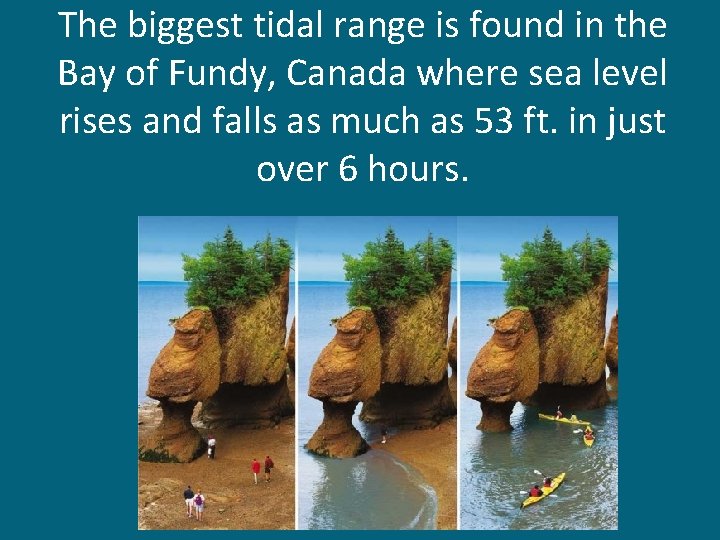
The biggest tidal range is found in the Bay of Fundy, Canada where sea level rises and falls as much as 53 ft. in just over 6 hours.
Notebook activity pg. 29 LS Draw the position of the sun, moon, and Earth at a spring and a neap tide and label them all!
- Slides: 19