
Bell Work Title Atoms and isotopes Date D

Bell Work Title: Atoms and isotopes Date: D
Lesson Sequence Lesson GCSE Physics Specification –Teaching from Sept 2016 onwards 1 Atoms and isotopes Spec Reference 6. 4 2 Radioactive decay Topic Atomic structure 3 Alpha, Beta and Gamma decay Lesson Atoms and isotopes Sequence 1 of 5 4 Half life 5 Uses and the risks of radioactivity Key Words; Isotope, mass number, atomic number
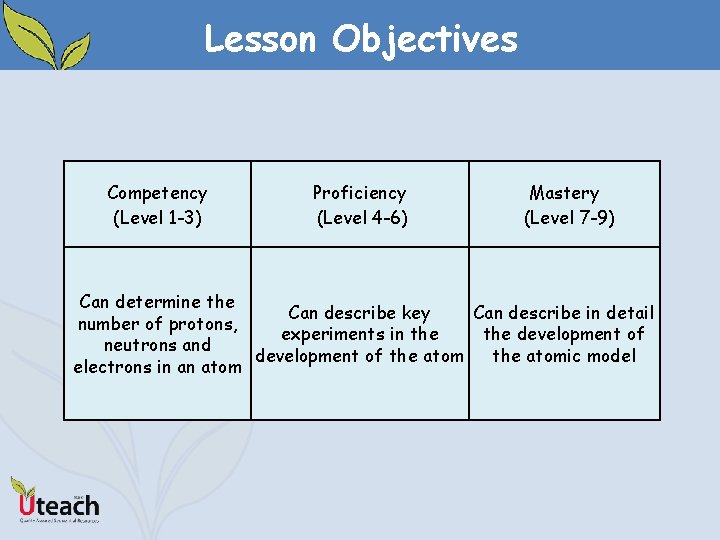
Lesson Objectives Competency (Level 1 -3) Proficiency (Level 4 -6) Mastery (Level 7 -9) Can determine the Can describe key Can describe in detail number of protons, experiments in the development of neutrons and development of the atomic model electrons in an atom
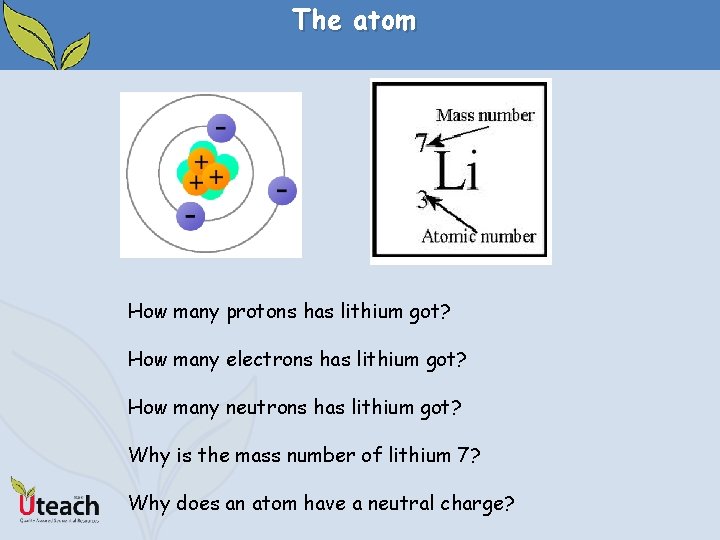
The atom How many protons has lithium got? How many electrons has lithium got? How many neutrons has lithium got? Why is the mass number of lithium 7? Why does an atom have a neutral charge?
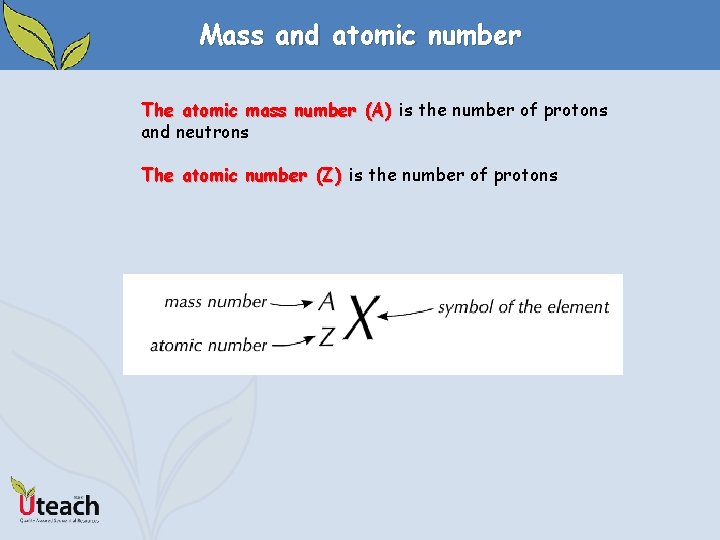
Mass and atomic number The atomic mass number (A) is the number of protons and neutrons The atomic number (Z) is the number of protons
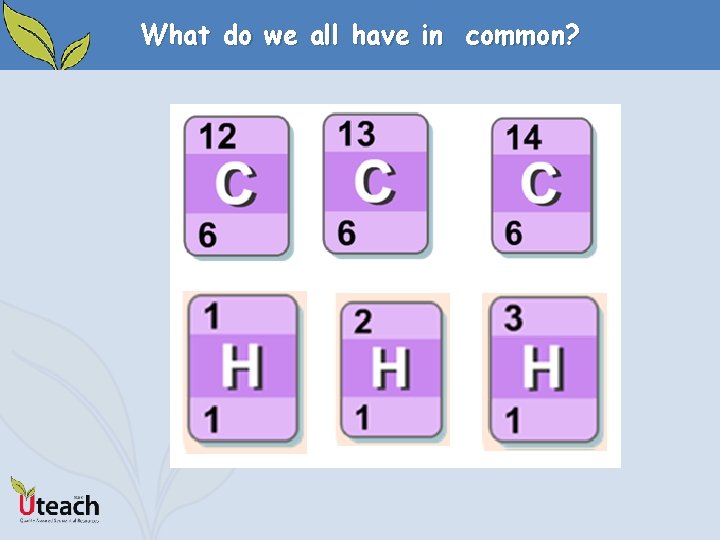
What do we all have in common?
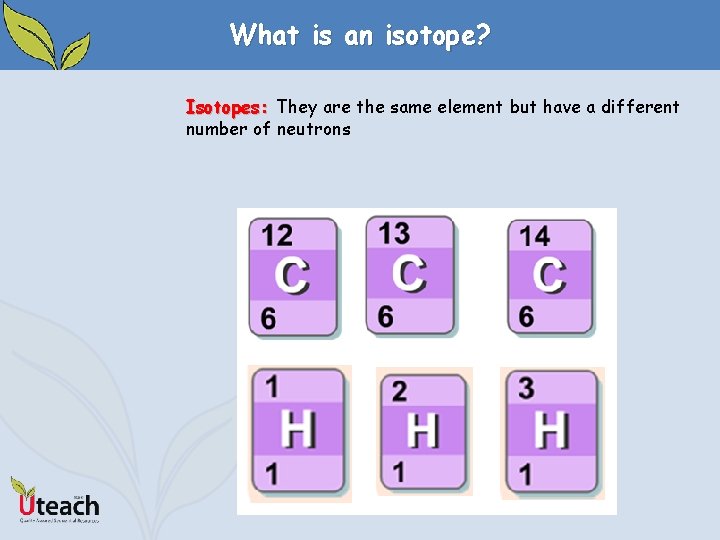
What is an isotope? Isotopes: They are the same element but have a different number of neutrons
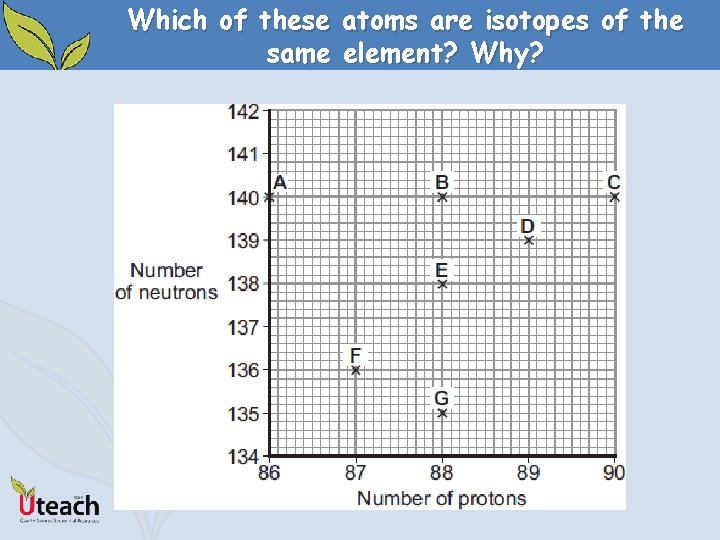
Which of these atoms are isotopes of the same element? Why?
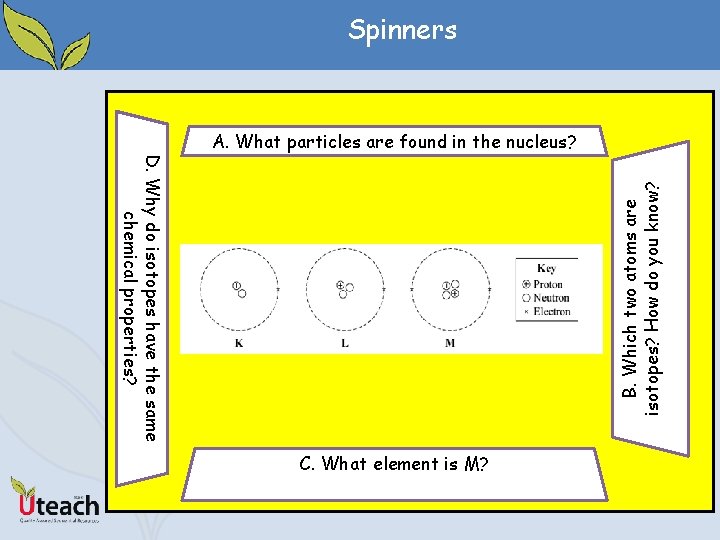
Spinners A. What particles are found in the nucleus? B. Which two atoms are isotopes? How do you know? D. Why do isotopes have the same chemical properties? C. What element is M?
Investigating the atom
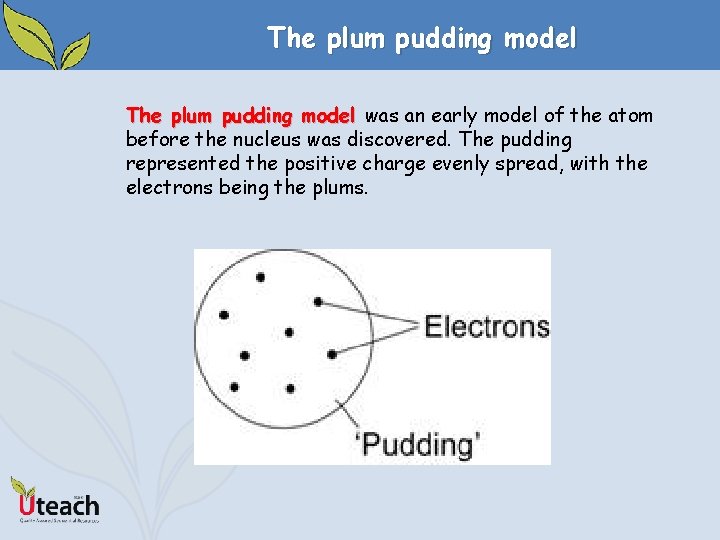
The plum pudding model was an early model of the atom before the nucleus was discovered. The pudding represented the positive charge evenly spread, with the electrons being the plums.
Scientific models If you kicked a football at an empty goal and the ball bounced back to you, what would you conclude?
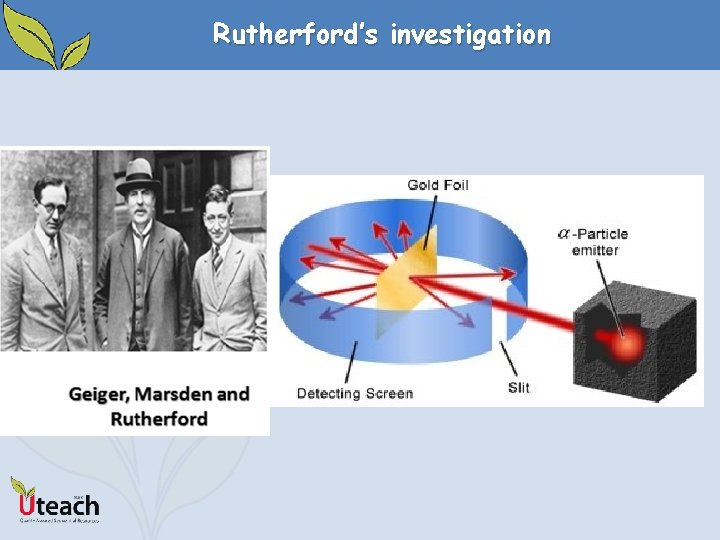
Rutherford’s investigation
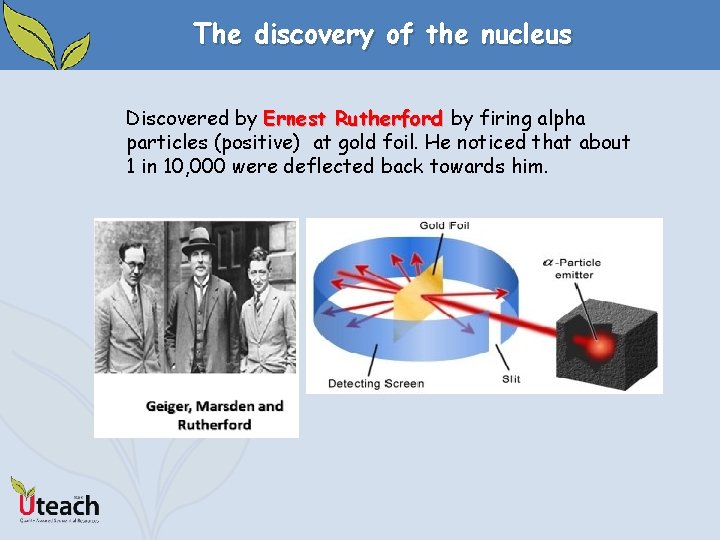
The discovery of the nucleus Discovered by Ernest Rutherford by firing alpha particles (positive) at gold foil. He noticed that about 1 in 10, 000 were deflected back towards him.
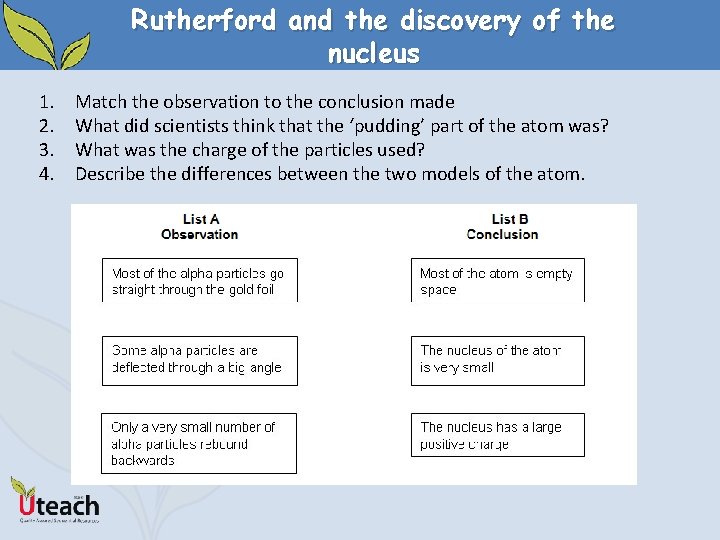
Rutherford and the discovery of the nucleus 1. 2. 3. 4. Match the observation to the conclusion made What did scientists think that the ‘pudding’ part of the atom was? What was the charge of the particles used? Describe the differences between the two models of the atom.
- Slides: 16