
Bell Work Pendulum Intro 1 List as many
Bell Work: Pendulum Intro 1. List as many waves as you can. (aim for 10+) 2. List as many examples of pendulums as you can.
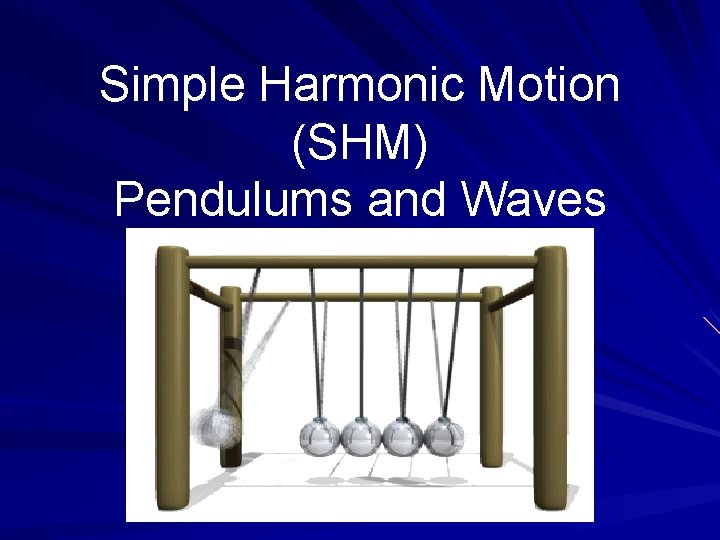
Simple Harmonic Motion (SHM) Pendulums and Waves
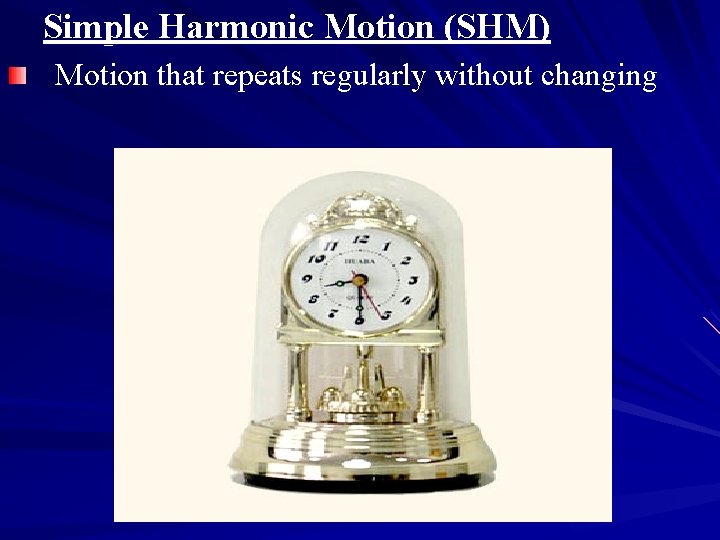
Simple Harmonic Motion (SHM) Motion that repeats regularly without changing
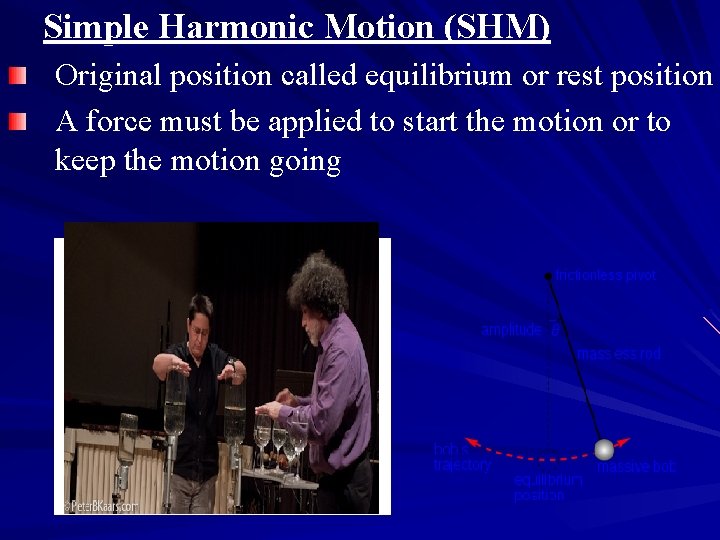
Simple Harmonic Motion (SHM) Original position called equilibrium or rest position A force must be applied to start the motion or to keep the motion going
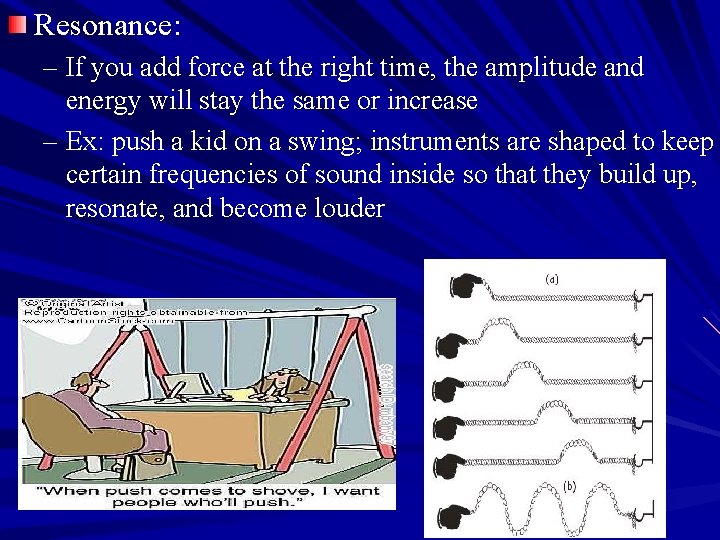
Resonance: – If you add force at the right time, the amplitude and energy will stay the same or increase – Ex: push a kid on a swing; instruments are shaped to keep certain frequencies of sound inside so that they build up, resonate, and become louder

Simple Harmonic Motion (SHM) Bouncing spring, pendulums, waves exhibit SHM
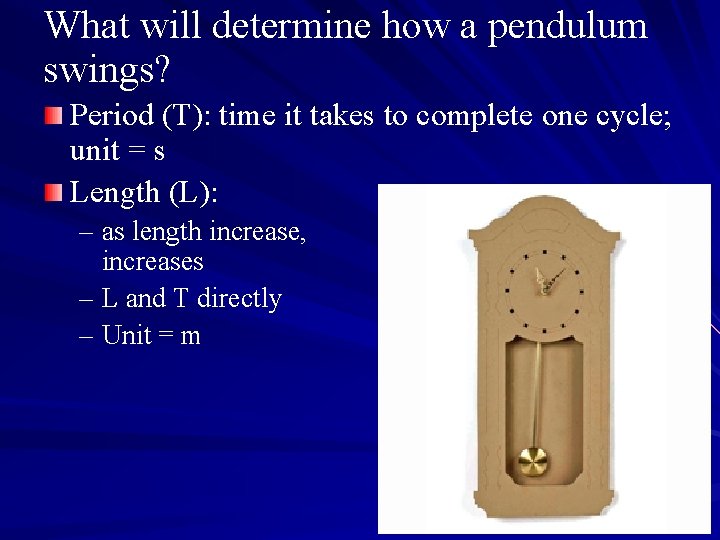
What will determine how a pendulum swings? Period (T): time it takes to complete one cycle; unit = s Length (L): – as length increase, increases – L and T directly – Unit = m period related
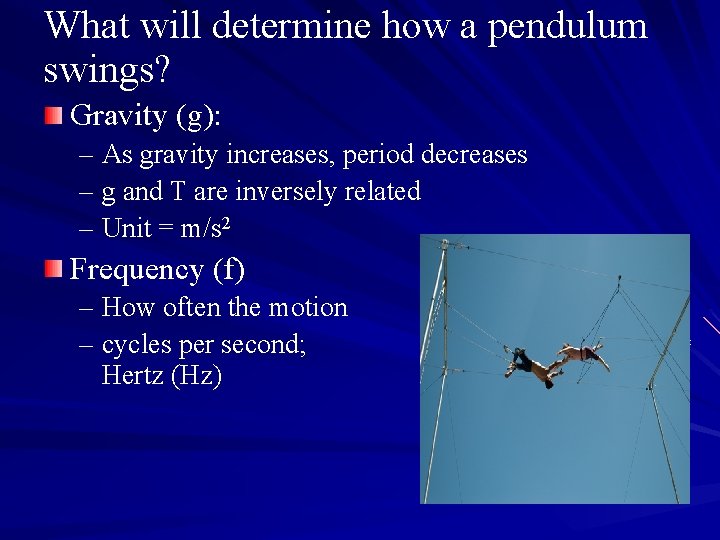
What will determine how a pendulum swings? Gravity (g): – As gravity increases, period decreases – g and T are inversely related – Unit = m/s 2 Frequency (f) – How often the motion – cycles per second; Hertz (Hz) occurs Unit =
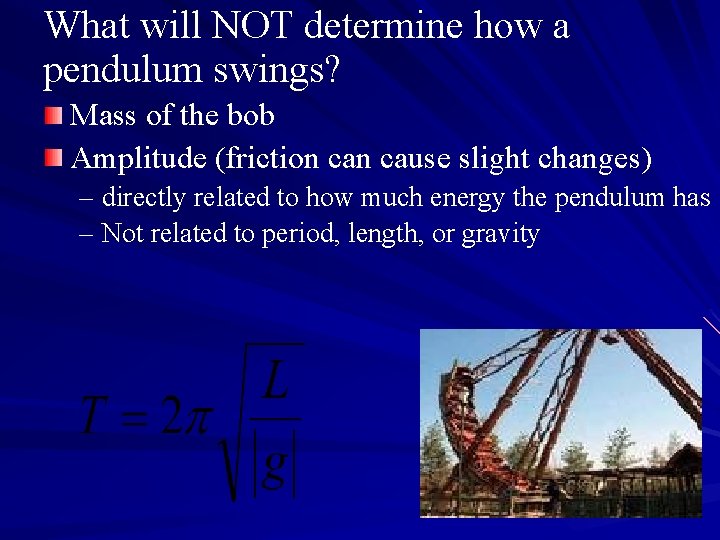
What will NOT determine how a pendulum swings? Mass of the bob Amplitude (friction cause slight changes) – directly related to how much energy the pendulum has – Not related to period, length, or gravity

Pendulum Equation:
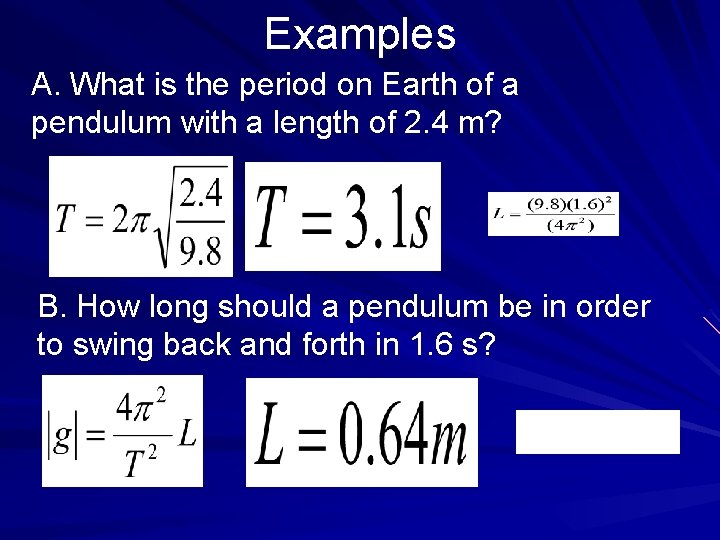
Examples A. What is the period on Earth of a pendulum with a length of 2. 4 m? B. How long should a pendulum be in order to swing back and forth in 1. 6 s?
- Slides: 11