
Bell Work Monday 601 Look in your book
Bell Work Monday 6/01 Look in your book beginning on page 841 and begin reading to find the answers • 1. What were three forces in Europe that helped set the stage for war? • 2. Who were the members of the Triple Alliance and Triple Entente? • 3. What single event set the stage for WWI?
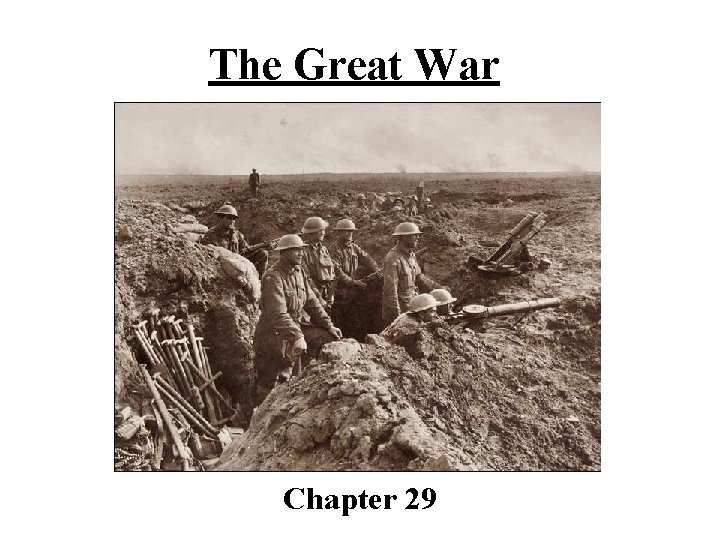
The Great War Chapter 29

Section 1 -Marching Towards War
Rising Tensions in Europe • The Rise of Nationalism– Nationalism-A deep devotion to one’s own nation • It can serve as a unifying force or the catalyst for fierce competition among others – Ex. By the turn of the 20 th century Great Britain, Germany, Russia, Italy, France and the Austria-Hungarian empire were engaged in a fierce rivalry • Militarism-The policy of glorifying military power and keeping an army prepared for war
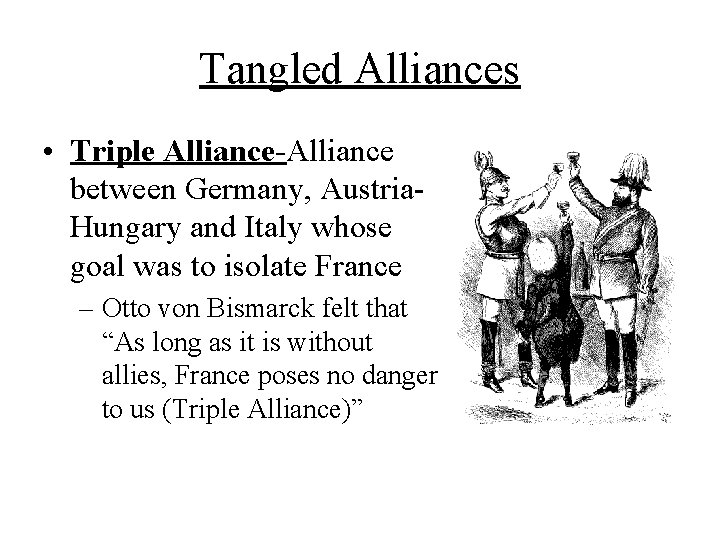
Tangled Alliances • Triple Alliance-Alliance between Germany, Austria. Hungary and Italy whose goal was to isolate France – Otto von Bismarck felt that “As long as it is without allies, France poses no danger to us (Triple Alliance)”
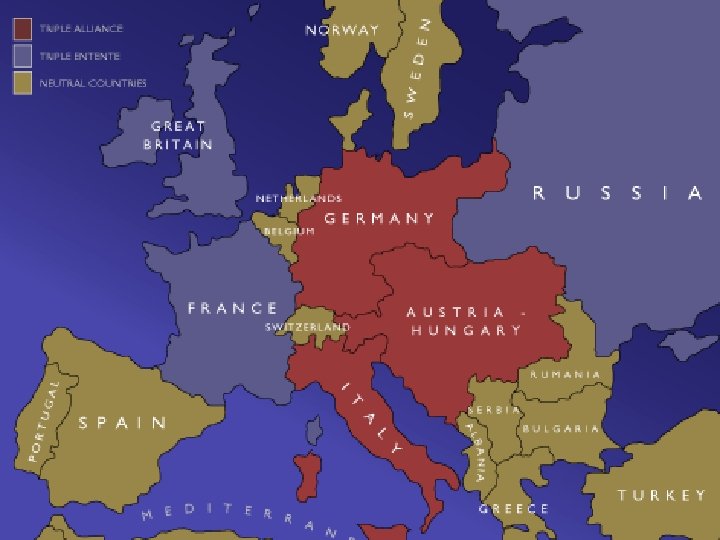
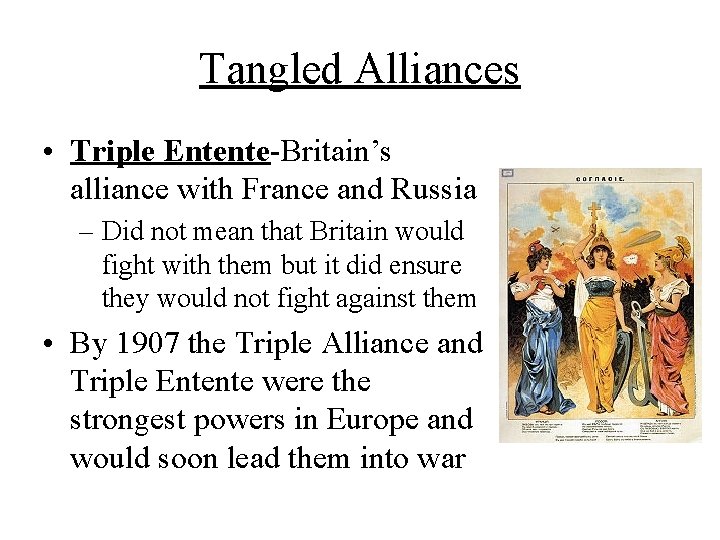
Tangled Alliances • Triple Entente-Britain’s alliance with France and Russia – Did not mean that Britain would fight with them but it did ensure they would not fight against them • By 1907 the Triple Alliance and Triple Entente were the strongest powers in Europe and would soon lead them into war
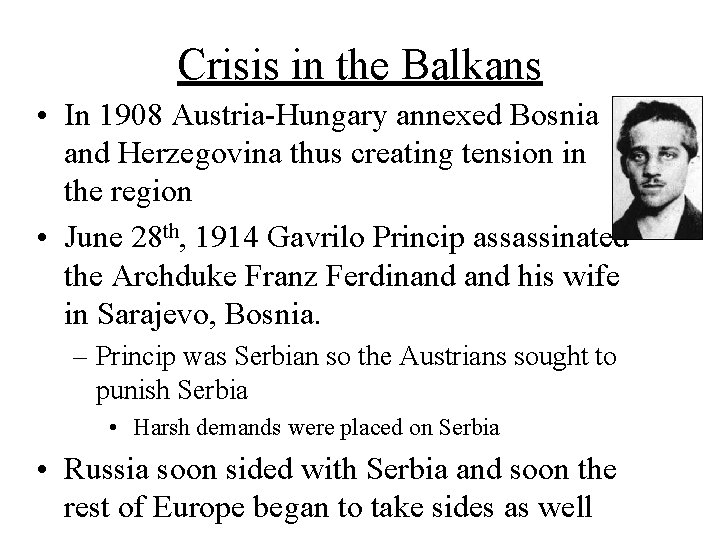
Crisis in the Balkans • In 1908 Austria-Hungary annexed Bosnia and Herzegovina thus creating tension in the region • June 28 th, 1914 Gavrilo Princip assassinated the Archduke Franz Ferdinand his wife in Sarajevo, Bosnia. – Princip was Serbian so the Austrians sought to punish Serbia • Harsh demands were placed on Serbia • Russia soon sided with Serbia and soon the rest of Europe began to take sides as well
Bell Work Tuesday 5/13 Look in your book beginning on page 845 and begin reading to find the answers • 1. Which countries comprised the Central Powers? Which countries comprised the Allies? • 2. What were the characteristics of trench warfare? • 3. What factors contributed to Russia’s war difficulties?
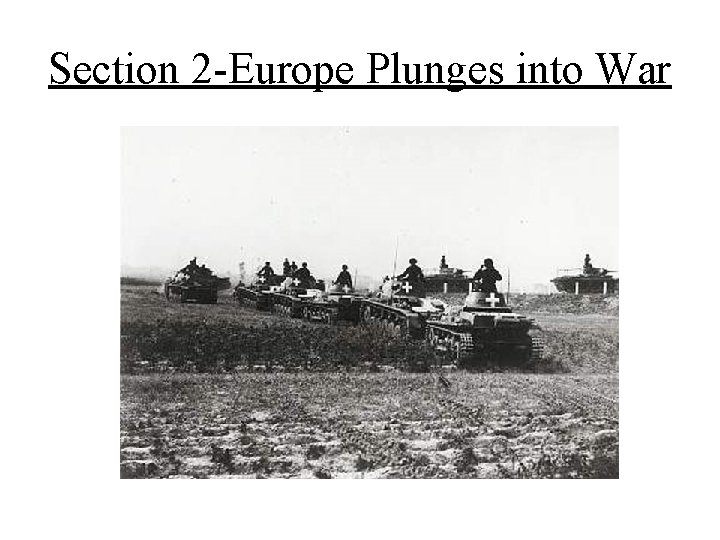
Section 2 -Europe Plunges into War
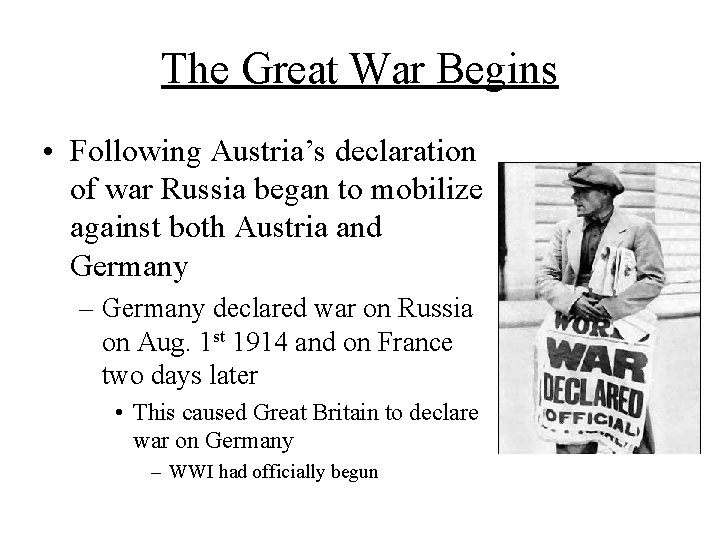
The Great War Begins • Following Austria’s declaration of war Russia began to mobilize against both Austria and Germany – Germany declared war on Russia on Aug. 1 st 1914 and on France two days later • This caused Great Britain to declare war on Germany – WWI had officially begun
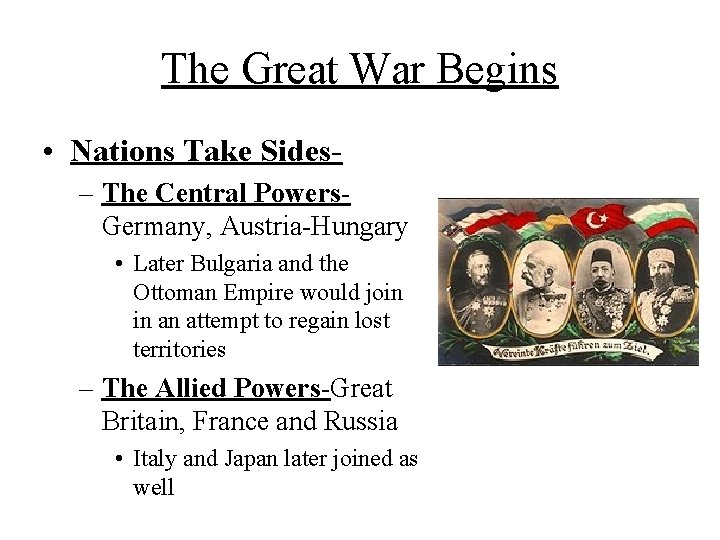
The Great War Begins • Nations Take Sides– The Central Powers. Germany, Austria-Hungary • Later Bulgaria and the Ottoman Empire would join in an attempt to regain lost territories – The Allied Powers-Great Britain, France and Russia • Italy and Japan later joined as well
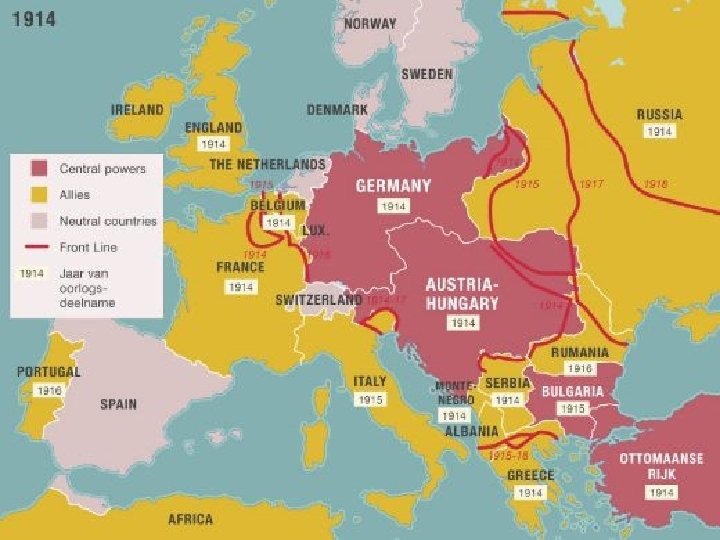
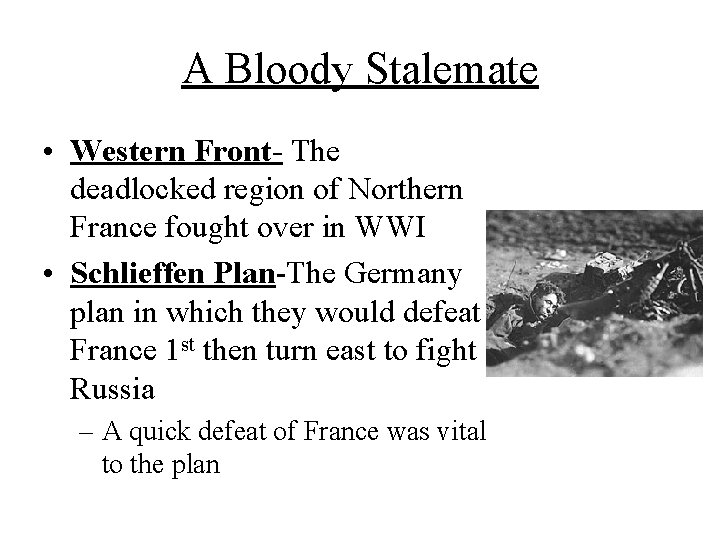
A Bloody Stalemate • Western Front- The deadlocked region of Northern France fought over in WWI • Schlieffen Plan-The Germany plan in which they would defeat France 1 st then turn east to fight Russia – A quick defeat of France was vital to the plan
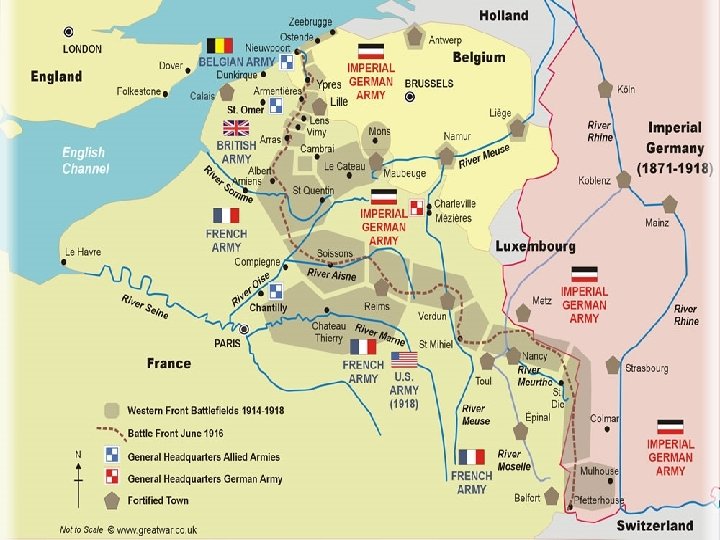
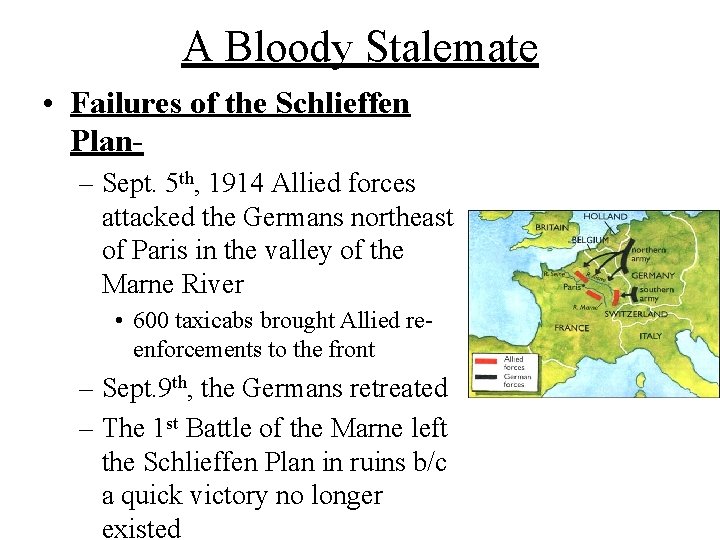
A Bloody Stalemate • Failures of the Schlieffen Plan– Sept. 5 th, 1914 Allied forces attacked the Germans northeast of Paris in the valley of the Marne River • 600 taxicabs brought Allied reenforcements to the front – Sept. 9 th, the Germans retreated – The 1 st Battle of the Marne left the Schlieffen Plan in ruins b/c a quick victory no longer existed
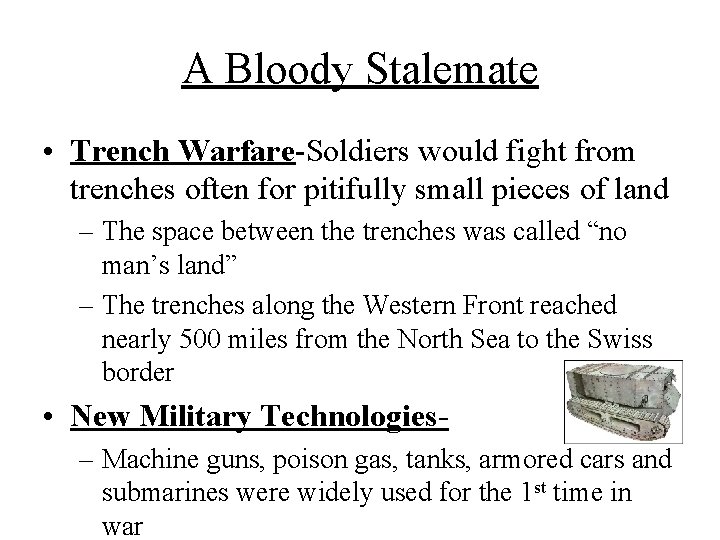
A Bloody Stalemate • Trench Warfare-Soldiers would fight from trenches often for pitifully small pieces of land – The space between the trenches was called “no man’s land” – The trenches along the Western Front reached nearly 500 miles from the North Sea to the Swiss border • New Military Technologies– Machine guns, poison gas, tanks, armored cars and submarines were widely used for the 1 st time in war
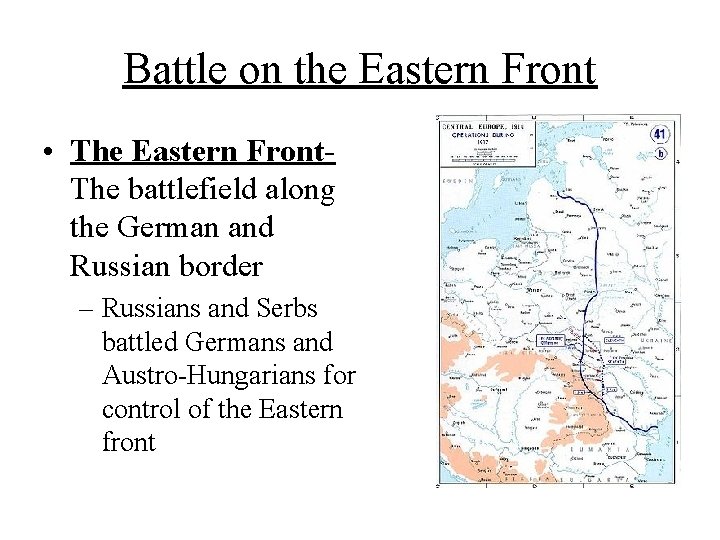
Battle on the Eastern Front • The Eastern Front. The battlefield along the German and Russian border – Russians and Serbs battled Germans and Austro-Hungarians for control of the Eastern front
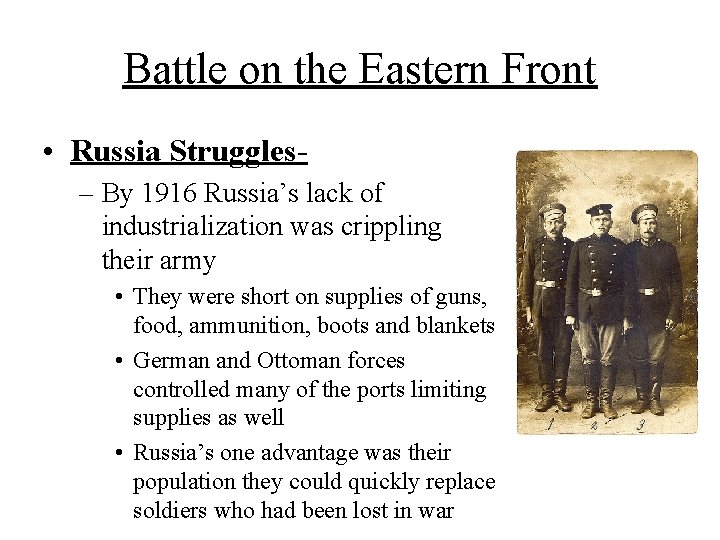
Battle on the Eastern Front • Russia Struggles– By 1916 Russia’s lack of industrialization was crippling their army • They were short on supplies of guns, food, ammunition, boots and blankets • German and Ottoman forces controlled many of the ports limiting supplies as well • Russia’s one advantage was their population they could quickly replace soldiers who had been lost in war
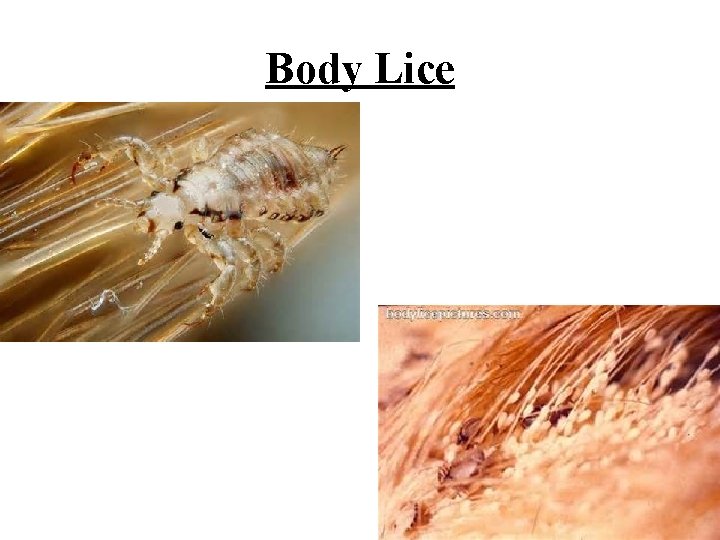
Body Lice
Bell Work Monday 5/19 Look in your book beginning on page 851 and begin reading to find the answers • 1. What factors helped prompt the U. S. to join the war on the Allies side? • 2. What role did women play in the war? • 3. Why was the Second Battle of the Marne so important?
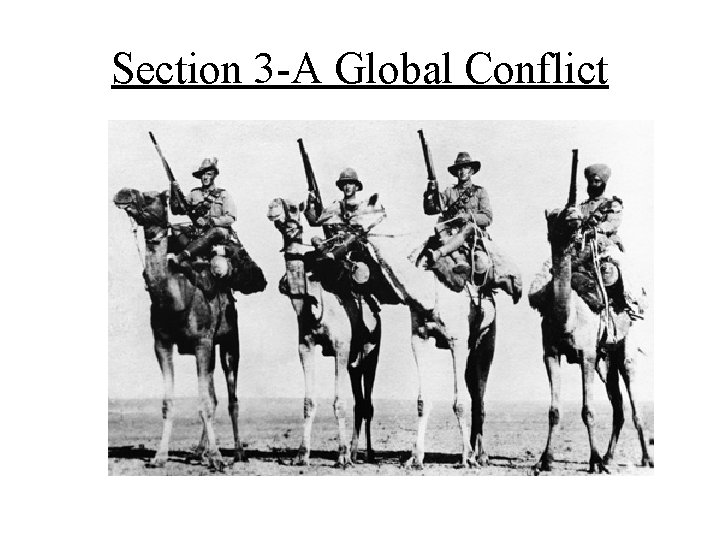
Section 3 -A Global Conflict
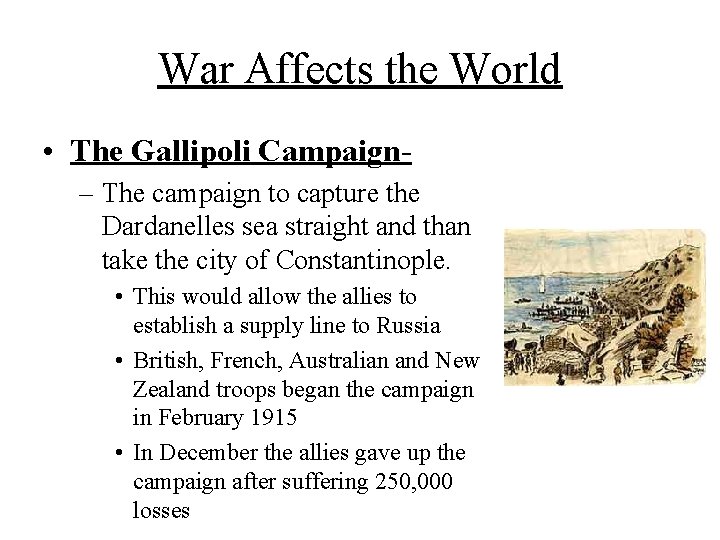
War Affects the World • The Gallipoli Campaign– The campaign to capture the Dardanelles sea straight and than take the city of Constantinople. • This would allow the allies to establish a supply line to Russia • British, French, Australian and New Zealand troops began the campaign in February 1915 • In December the allies gave up the campaign after suffering 250, 000 losses
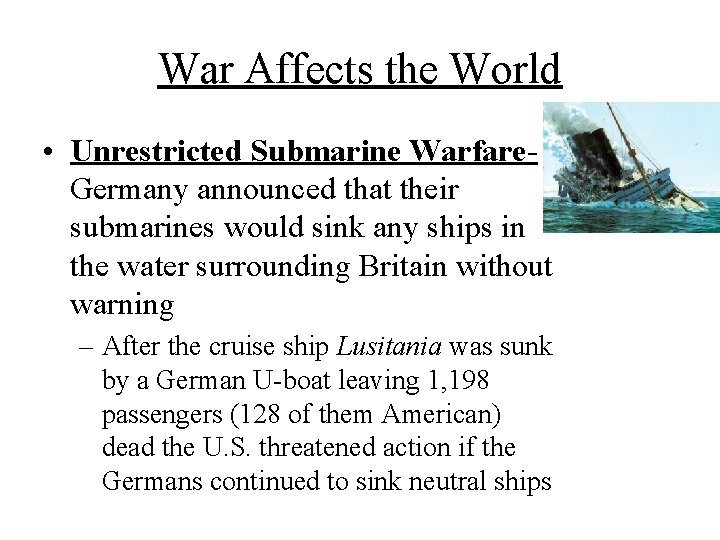
War Affects the World • Unrestricted Submarine Warfare. Germany announced that their submarines would sink any ships in the water surrounding Britain without warning – After the cruise ship Lusitania was sunk by a German U-boat leaving 1, 198 passengers (128 of them American) dead the U. S. threatened action if the Germans continued to sink neutral ships
War Affects the World • Americans Join the Fight– Germany returned to unrestricted submarine warfare in 1917 – The Zimmerman Note- In February, 1917 the U. S. intercepted a German telegram headed to Mexico • Germany wanted Mexico to join their fight and in return they would help Mexico “reconquer” the lands they lost to the U. S. • This led President Wilson to ask for a declaration of war against Germany on April 2 nd, 1917
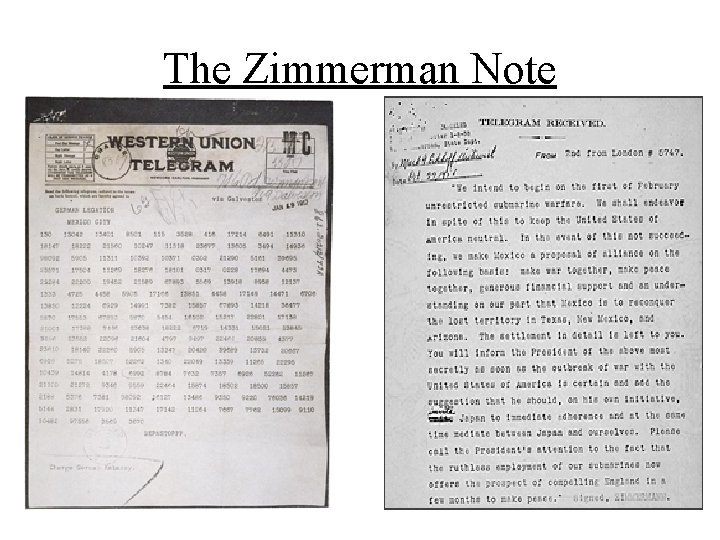
The Zimmerman Note
War Affects the Home Front • Total War- Policy where all available resources nation possesses are dedicated to war – Governments would take control of the economy and tell the factories what to produce • Rationing-System where the amount of goods one could purchase were limited during war time • Propaganda-One-sided information designed to keep up moral and support for the war.
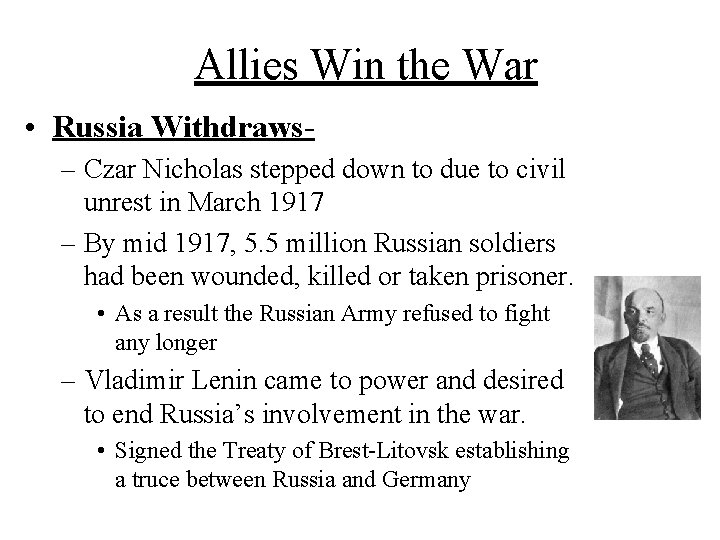
Allies Win the War • Russia Withdraws– Czar Nicholas stepped down to due to civil unrest in March 1917 – By mid 1917, 5. 5 million Russian soldiers had been wounded, killed or taken prisoner. • As a result the Russian Army refused to fight any longer – Vladimir Lenin came to power and desired to end Russia’s involvement in the war. • Signed the Treaty of Brest-Litovsk establishing a truce between Russia and Germany
Allies Win the War • The Central Powers Collapse– July 1918 the Allied forces and Germany clashed in the Second Battle of the Marne • 350 tanks rolled through the German line • Nearly 2 million new American troops arrived to help advance towards Germany – Bulgaria, Austria-Hungary and the Ottomans surrendered 1 st – November 9 th, 1918 Kaiser Wilhelm II stepped down and Germany officially became a republic.
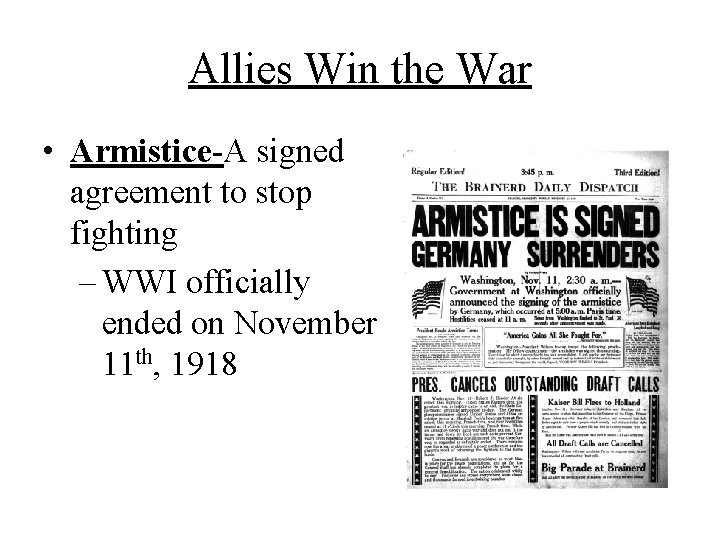
Allies Win the War • Armistice-A signed agreement to stop fighting – WWI officially ended on November 11 th, 1918
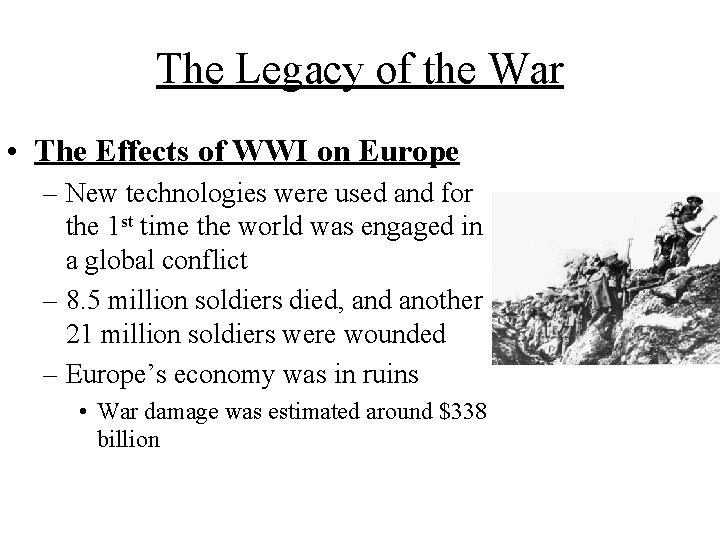
The Legacy of the War • The Effects of WWI on Europe – New technologies were used and for the 1 st time the world was engaged in a global conflict – 8. 5 million soldiers died, and another 21 million soldiers were wounded – Europe’s economy was in ruins • War damage was estimated around $338 billion
Bell Work Friday 6/05 Look in your book beginning on page 858 and begin reading to find the answers • 1. What was the goal of Woodrow Wilson’s Fourteen Points? • 2. What was the “war guilt” clause in the Treaty of Versailles? • 3. Why did the U. S. reject the Treaty of Versailles?
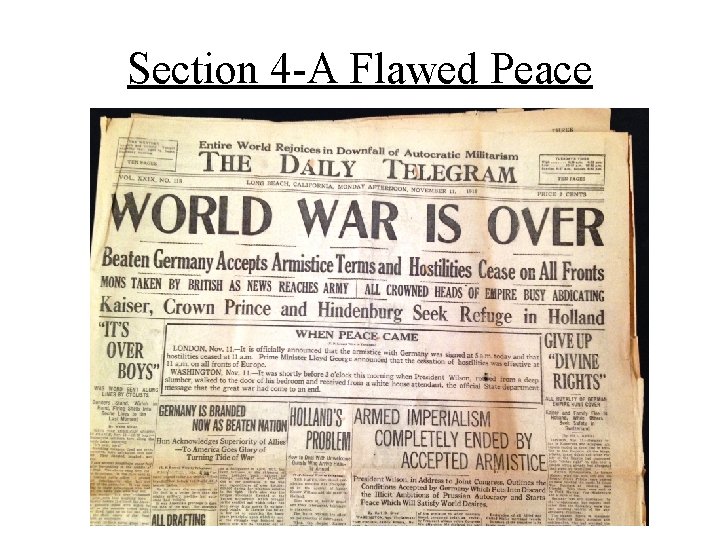
Section 4 -A Flawed Peace
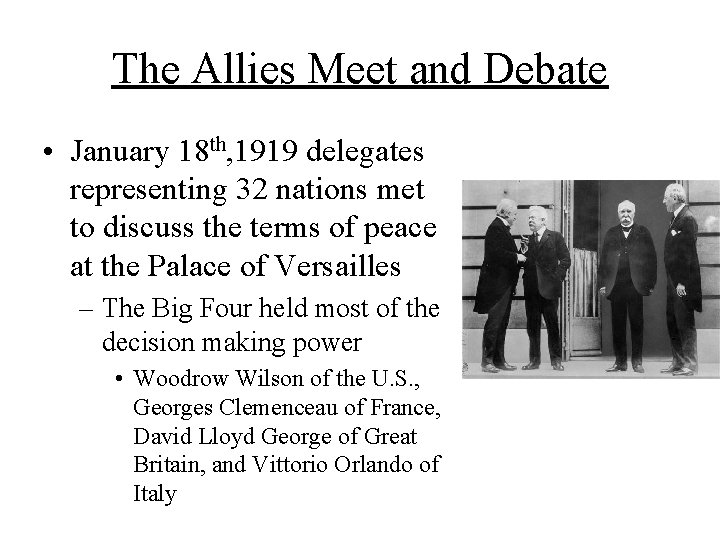
The Allies Meet and Debate • January 18 th, 1919 delegates representing 32 nations met to discuss the terms of peace at the Palace of Versailles – The Big Four held most of the decision making power • Woodrow Wilson of the U. S. , Georges Clemenceau of France, David Lloyd George of Great Britain, and Vittorio Orlando of Italy
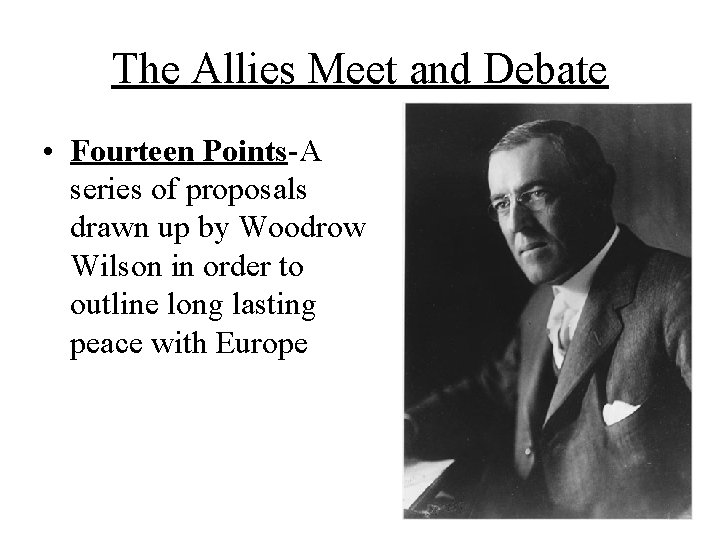
The Allies Meet and Debate • Fourteen Points-A series of proposals drawn up by Woodrow Wilson in order to outline long lasting peace with Europe
The Allies Meet and Debate • Wilson’s Fourteen Points – – – – No secret treaties Freedom of Seas Lower tariffs to increase trade Reduce militaries No more colonizing New boundaries for countries League of Nations • All countries could peacefully settle disagreements • Like a modern UN • Many countries not happy because did not punish Germany
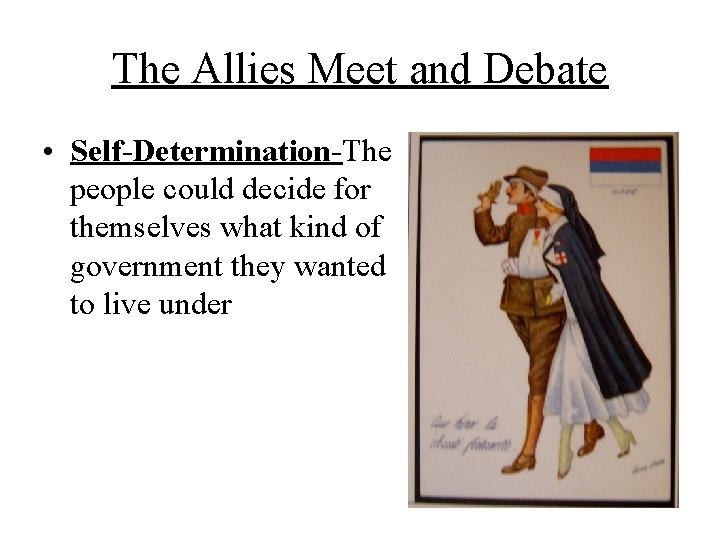
The Allies Meet and Debate • Self-Determination-The people could decide for themselves what kind of government they wanted to live under
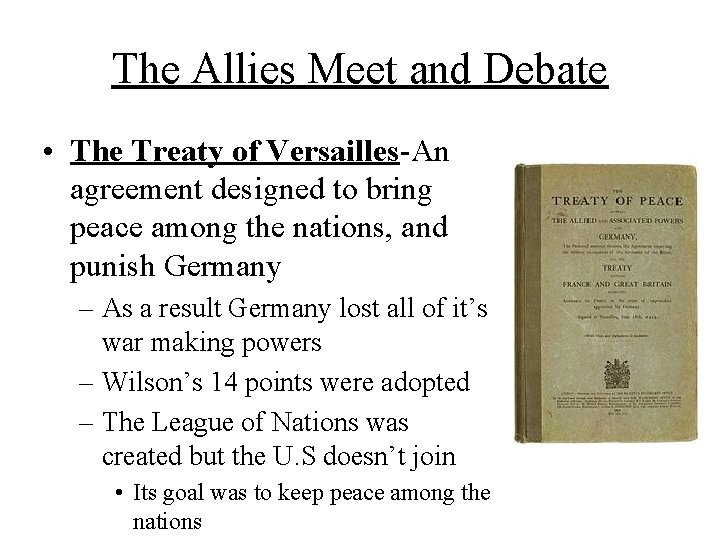
The Allies Meet and Debate • The Treaty of Versailles-An agreement designed to bring peace among the nations, and punish Germany – As a result Germany lost all of it’s war making powers – Wilson’s 14 points were adopted – The League of Nations was created but the U. S doesn’t join • Its goal was to keep peace among the nations
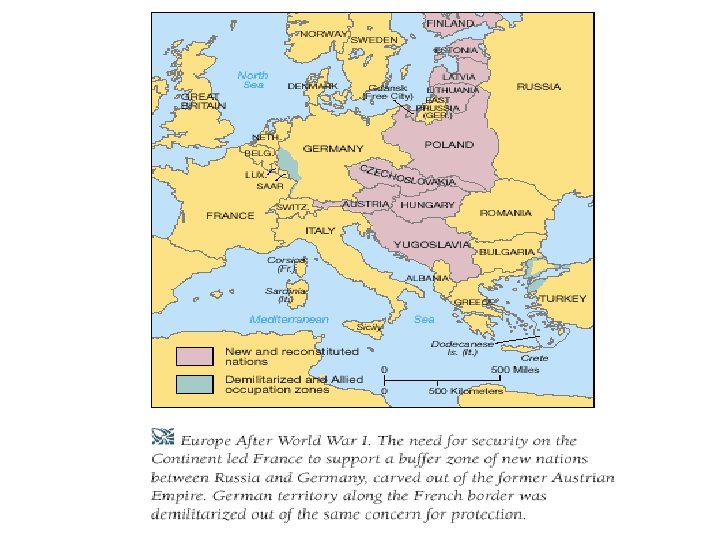
A Troubled Treaty • A total of five treaties were signed by the allied powers – This created feelings of bitterness and betrayal among the losing nations • New Nations Created After WWI– Austria, Hungary, Czechoslovakia, and Yugoslavia were recognized as independent nations – The Ottomans lost all of their territory except modern day Turkey
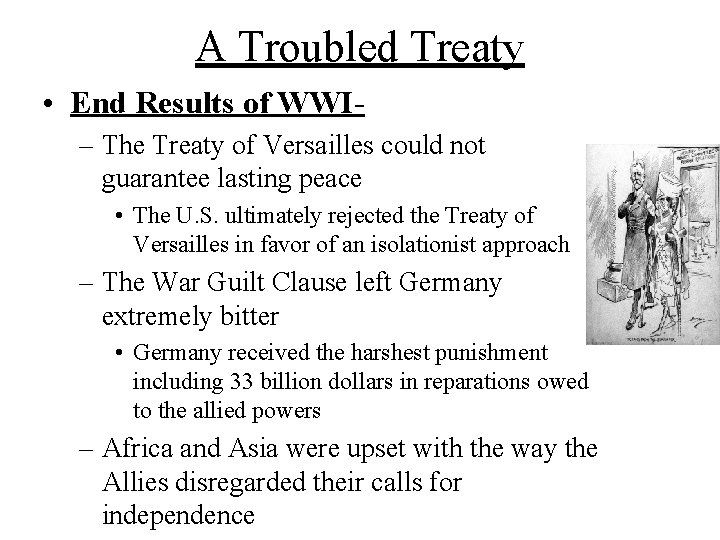
A Troubled Treaty • End Results of WWI– The Treaty of Versailles could not guarantee lasting peace • The U. S. ultimately rejected the Treaty of Versailles in favor of an isolationist approach – The War Guilt Clause left Germany extremely bitter • Germany received the harshest punishment including 33 billion dollars in reparations owed to the allied powers – Africa and Asia were upset with the way the Allies disregarded their calls for independence
- Slides: 41