
Bell Work List five organelles from a cell
Bell Work List five organelles from a cell and describe what they do.
• I can analyze how plant and animal cells are organized to carry on the processes of life. Objectives
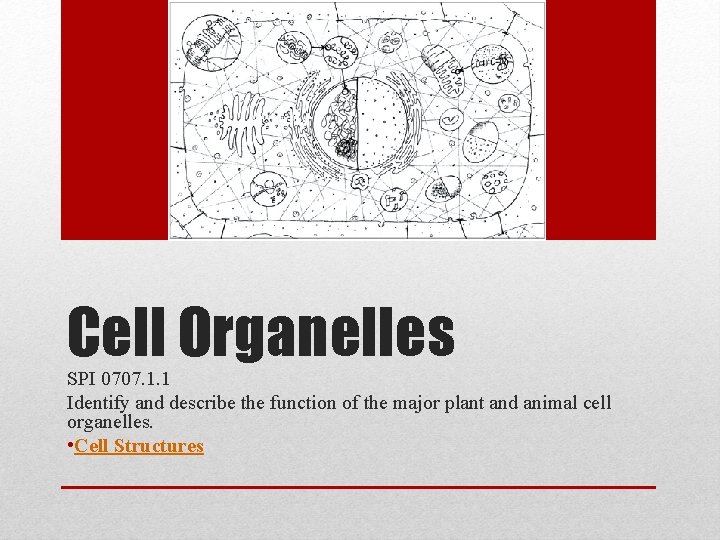
Cell Organelles SPI 0707. 1. 1 Identify and describe the function of the major plant and animal cell organelles. • Cell Structures
• A few major Organelles: • Nucleus- Control Center • Cell Membrane- controls what enters and leaves the cell • Ribosome- Makes proteins • Endoplasmic Reticulum- Smooth and Rough; packages and transports proteins • Cytoskeleton- web of proteins that provides structure. • Cytoplasm- thick fluid that hold organelles • Vacuole- packages and sends materials to other cells • Mitochondria- creates energy for the cell (Cellular Respiration) • Chloropasts- only in plant cells. Makes food for the cell (Photosynthesis) • Cell Wall- Only in plant cells. Gives extra support for the cell.
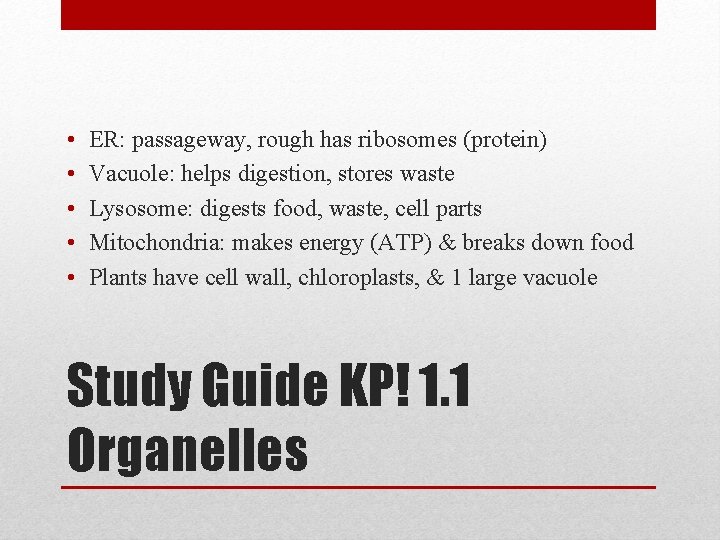
• • • ER: passageway, rough has ribosomes (protein) Vacuole: helps digestion, stores waste Lysosome: digests food, waste, cell parts Mitochondria: makes energy (ATP) & breaks down food Plants have cell wall, chloroplasts, & 1 large vacuole Study Guide KP! 1. 1 Organelles
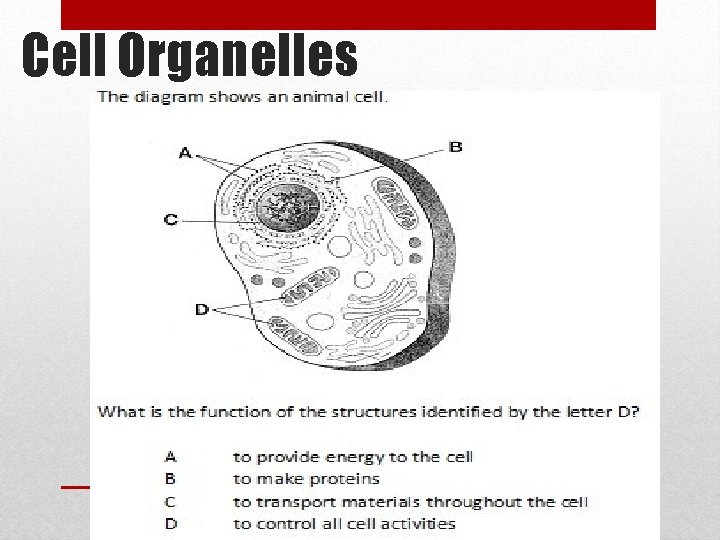
Cell Organelles
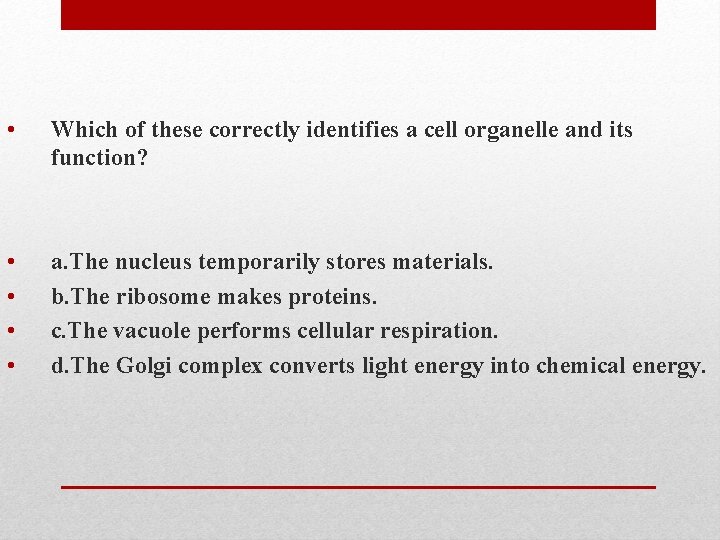
• Which of these correctly identifies a cell organelle and its function? • • a. The nucleus temporarily stores materials. b. The ribosome makes proteins. c. The vacuole performs cellular respiration. d. The Golgi complex converts light energy into chemical energy.
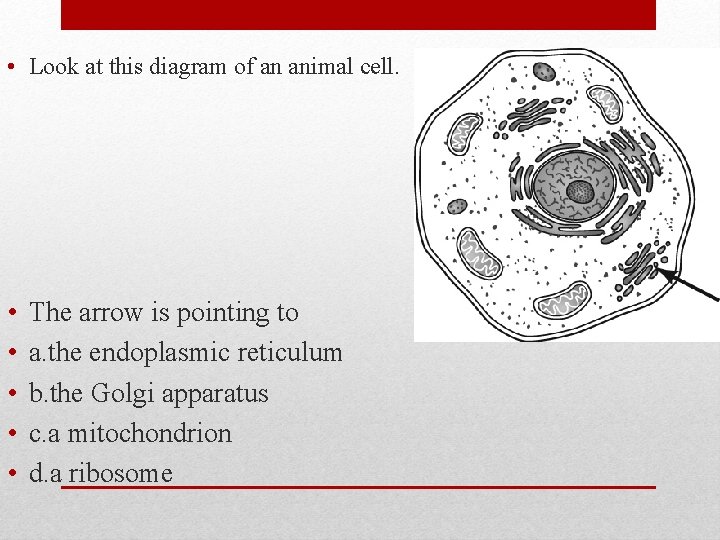
• Look at this diagram of an animal cell. • • • The arrow is pointing to a. the endoplasmic reticulum b. the Golgi apparatus c. a mitochondrion d. a ribosome
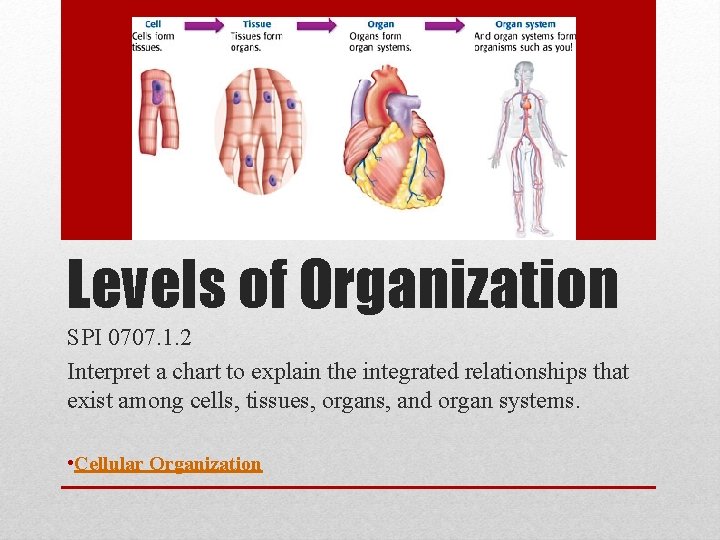
Levels of Organization SPI 0707. 1. 2 Interpret a chart to explain the integrated relationships that exist among cells, tissues, organs, and organ systems. • Cellular Organization
(neuron grey matter brain nervous system human) • cell tissue organ system organism Study Guide KP! 1. 2 Levels of Organization
• A group of cells that work together is a(n): • A B C D organism tissue organ system organ
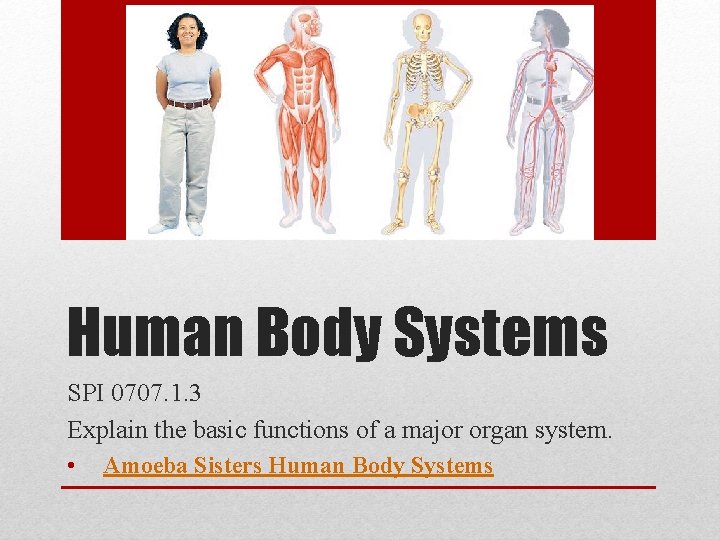
Human Body Systems SPI 0707. 1. 3 Explain the basic functions of a major organ system. • Amoeba Sisters Human Body Systems
• Cardiovascular: carries oxygen-rich blood through body (to and from heart) • Nervous: receives & sends electrical messages from surroundings (brain) • Lymphatic/ immune: protect against bacteria, viruses, invaders • Respiratory: includes lungs, take in O 2 and release CO 2 • Skeletal/ muscular: work together to protect organs, create movement Study Guide KP! 1. 3 Human Body Systems
• Which is not a major function of the circulatory system? • • A delivering oxygen and nutrients to cells • B carrying carbon dioxide away from cells • C removing solid waste from the body • D pumping blood throughout the body
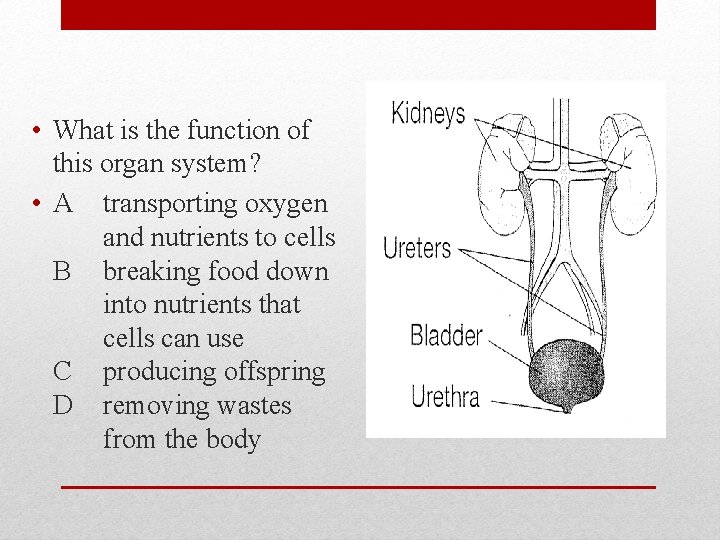
• What is the function of this organ system? • A transporting oxygen and nutrients to cells B breaking food down into nutrients that cells can use C producing offspring D removing wastes from the body
• Which two organ systems work together to get nutrients to body cells? • • A B C D circulatory and digestive circulatory and respiratory digestive and immune excretory and digestive
• The primary function of the muscular system is: A B C D to provide strength and movement in an organism taking oxygen into the lungs giving structure and protection to the body to help your body grow
• Which of the following is necessary in order to move our skeletal system: • A B C D eyes muscles skin hands
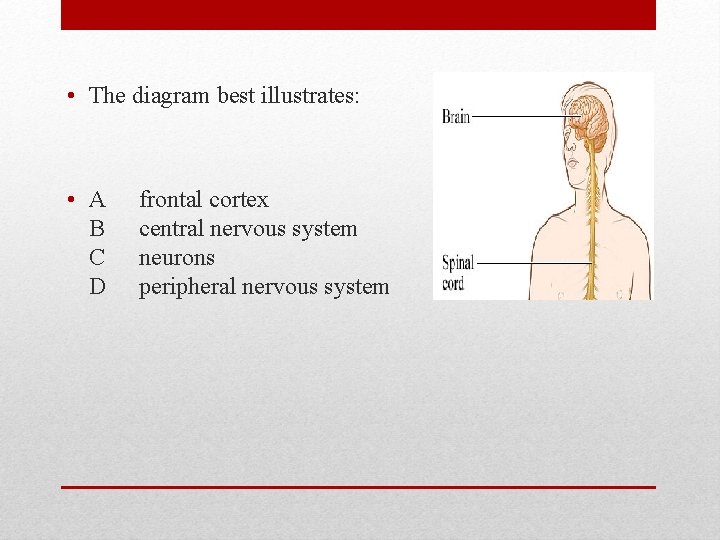
• The diagram best illustrates: • A B C D frontal cortex central nervous system neurons peripheral nervous system
• Which organ system is responsible for sending signals to the brain? • • A B C D nervous system excretory system muscular system integumentary system
• Which of the following organ systems is matched to its correct function? • A skeletal; protects your internal organs from damage B respiratory; pumps blood through your body C cardiovascular; takes in oxygen and removes carbon dioxide D muscular; provides structure and support
- Slides: 21