
Bell Work How does transduction work for vision
Bell Work • How does transduction work for vision?
Hearing

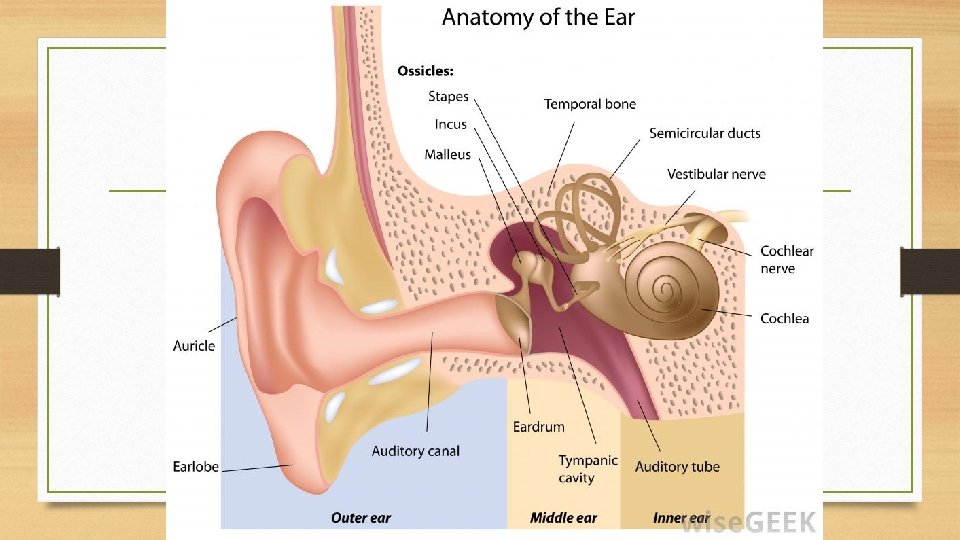
Transduction • Sound waves vibrates eardrum, then hammer, then stirrup, then oval window, then cochlea • Cochlea is lined with mucus called basilar membrane • In basilar membrane is hair • That hair vibrates, causing neural stimulation called Organ of Corti • Sent to Thalamus up auditory nerve
Ossicles – “Tiny Bones • Bones in middle ear • Hammer, anvil, stirrup
Pitch Theories
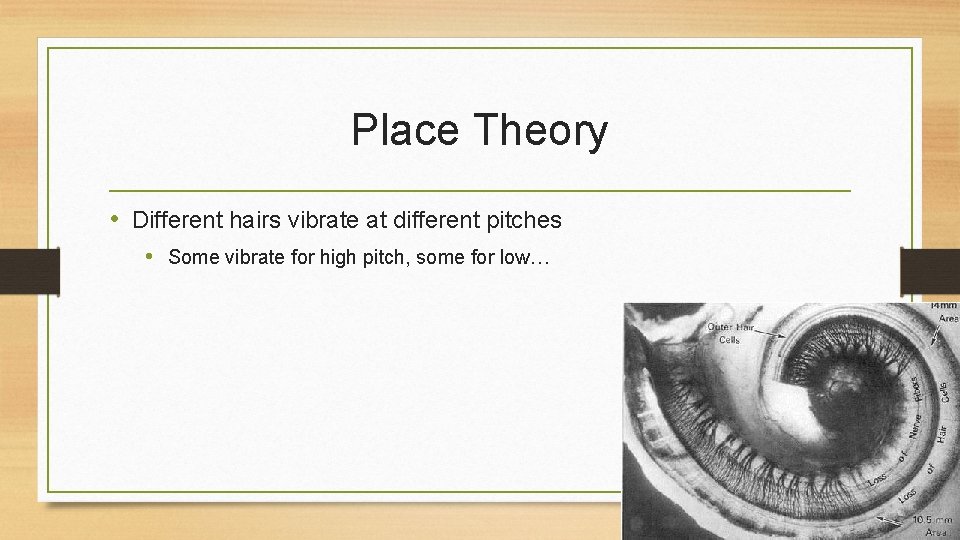
Place Theory • Different hairs vibrate at different pitches • Some vibrate for high pitch, some for low…
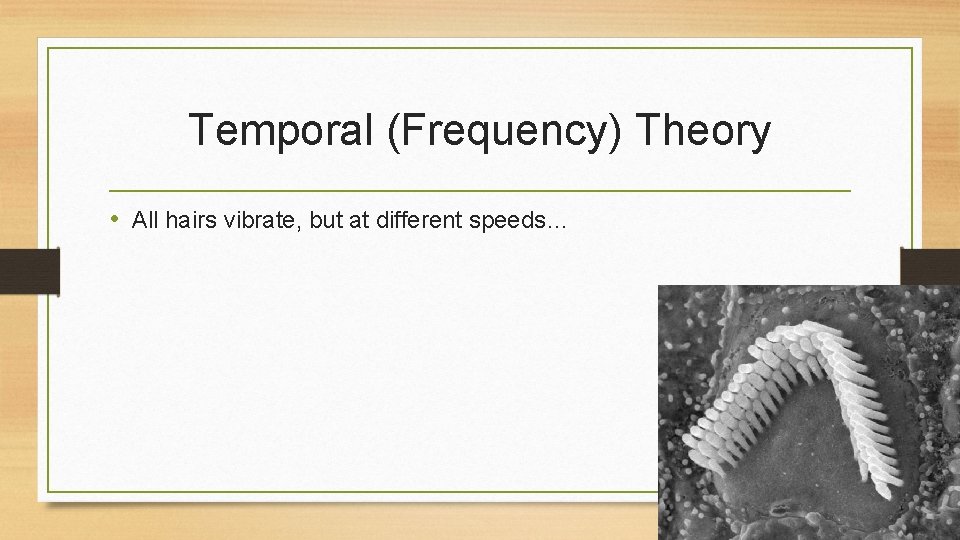
Temporal (Frequency) Theory • All hairs vibrate, but at different speeds…
Deafness

Conduction Deafness • Something goes wrong with sound/vibration on way to cochlea. • Can replace bones or get hearing aid.

Nerve (sensorineural) Deafness • The hair cells in the cochlea get damaged. • Loud noises can cause this type of deafness. • Cannot replace the hairs. • Cochlea implant is possible.
Mononaural v. Binaural
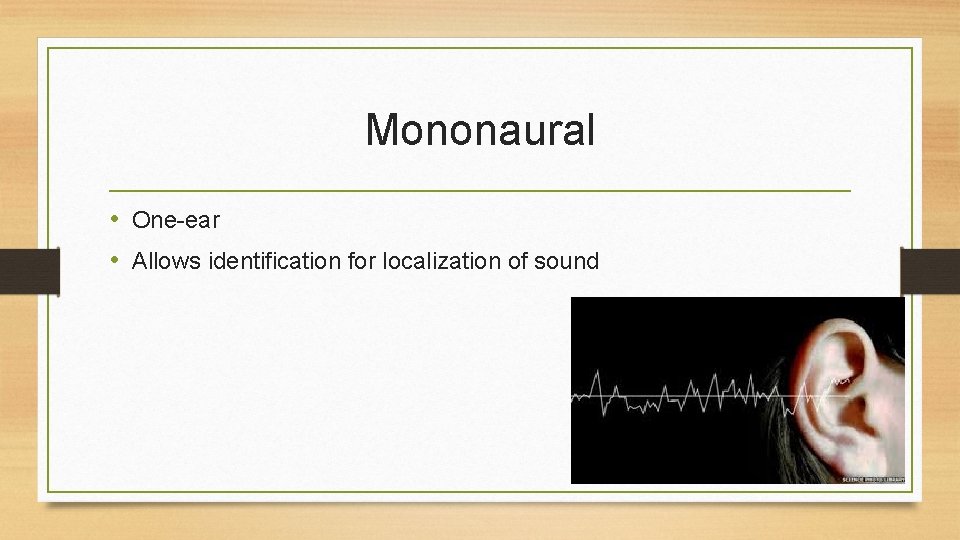
Mononaural • One-ear • Allows identification for localization of sound
Binaural • Interaul level difference • Different intensity of sound in each ear • Interaul timing difference • Small difference in time when sound reaches ears.
Wrap Up How does transduction occur when hearing?

Crash Course
- Slides: 17