
Bell Work How did the Seven Years War
Bell Work • How did the Seven Years War affect the North American continent AND British-Colonial relations? This Day in History: September 7, 1776 - During the Revolutionary War, the American submersible craft Turtle attempts to attach a time bomb to the hull of British Admiral Richard Howe’s flagship Eagle in New York Harbor. It was the first use of a submarine in warfare. September 7, 1813 - The United States gets its nickname, Uncle Sam. The name is linked to Samuel Wilson, a meat packer from Troy, New York, who supplied barrels of beef to the United States Army during the War of 1812. Wilson stamped the barrels with “U. S. ” for United States, but soldiers began referring to the grub as “Uncle Sam’s. ” September 7, 1940 - Three hundred German bombers raid London, in the first of 57 consecutive nights of bombing. This bombing “blitzkrieg” (lightning war) would continue until May 1941. September 7, 1977 - President Jimmy Carter signs a treaty that will give Panama control over the Panama Canal beginning in the year 2000. The treaty ended an agreement signed in 1904 between then-President Theodore Roosevelt and Panama, which gave the U. S. the right to build the canal and a renewable lease to control five miles of land along either side of it. September 7, 1996 - Actor and hip-hop recording artist Tupac Shakur is shot several times in Las Vegas, Nevada, after attending a boxing match.
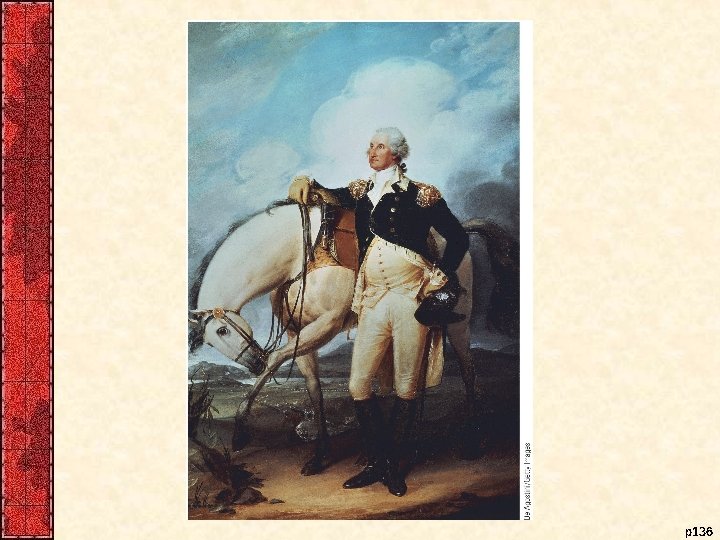
I. Congress Drafts George Washington • Second Continental Congress meets in Philadelphia on May 10, 1775: – Most important single action—selected George Washington to head army: • Choice was made with considerable misgivings • He never rose above the rank of colonel • His largest command had numbered only 1, 200 • Falling short of true military genius, he would actually lose more battles than he won • However, He was gifted with outstanding powers of leadership and immense strength of character • He radiated patience, courage, self-discipline, and a sense of justice • He was trusted and insisted on serving without pay • He kept, however, a careful list of expenses-$100, 000
p 136
II. Bunker Hill and Hessian Hirelings • War of inconsistency was fought for 14 months—April 1775 to July 1776—before fateful plunge into independence. • Gradually tempo of warfare increased: – May 1775 Ethan Allen and Benedict Arnold captured garrisons at Ticonderoga and Crown Point in upper New York – June 1775 the colonists seized Bunker Hill – Siege of Boston-March of 1776
II. Bunker Hill and Hessian Hirelings (cont. ) • July 1775, Congress adopted Olive Branch Petition: – professed loyalty to crown and begged king to prevent further hostilities • King George III slammed door on all hope of reconciliation: – August 1775 he proclaimed colonies in rebellion – skirmishes were now treason, a hanging crime – He next hired 1000 s of German troops – George III needed the men – Because most of these soldiers came from German principality of Hesse, Americans called all European mercenaries Hessians – News of Hessian deal shocked colonists
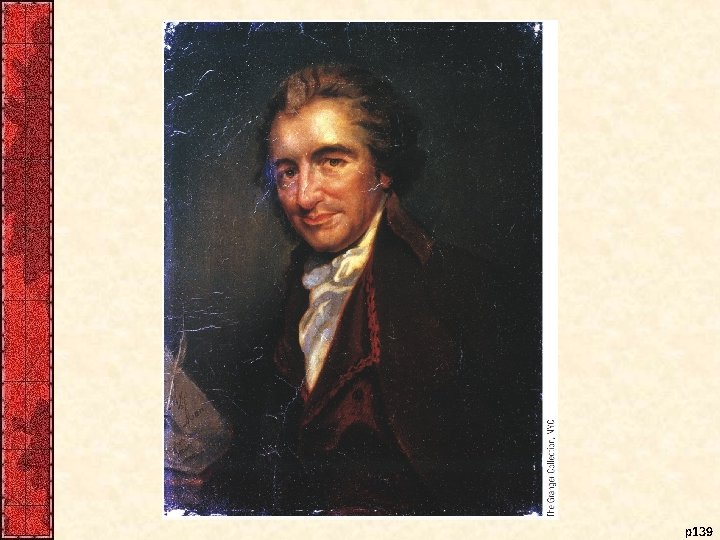
IV. Thomas Paine Preaches Common Sense (cont. ) • 1776 Common Sense by Thomas Paine: – One of most influential pamphlets ever published – Began with treatise on nature of government – Argued only lawful states were those that derive “their just powers from the consent of the governed” – As for king, he was nothing but “the Royal Brute of Great Britain” – 120, 000 copies were sold in one week
p 139
IV. Thomas Paine Preaches Common Sense (cont. ) • Tried to convince colonists that true cause was independence, not reconciliation with Britain: – Nowhere in physical universe did smaller heavenly bodies control larger ones – So why should tiny island of Britain control vast continent of America
VI. Jefferson’s “Explanation” of Independence • On June 7, 1776, Richard Henry Lee of Virginia moved: – “these United Colonies are, and of right ought to be free and independent states” – motion was adopted on July 2, 1776 – motion was formal “declaration” of independence by colonies
VI. Jefferson’s “Explanation” of Independence (cont. ) • An inspirational appeal was needed: – To enlist other British colonies in the Americas – To invite assistance from foreign nations – To rally resistance at home • Congress appointed a committee to prepare a formal statement: – Task of drafting fell to Thomas Jefferson – He was fully qualified for it
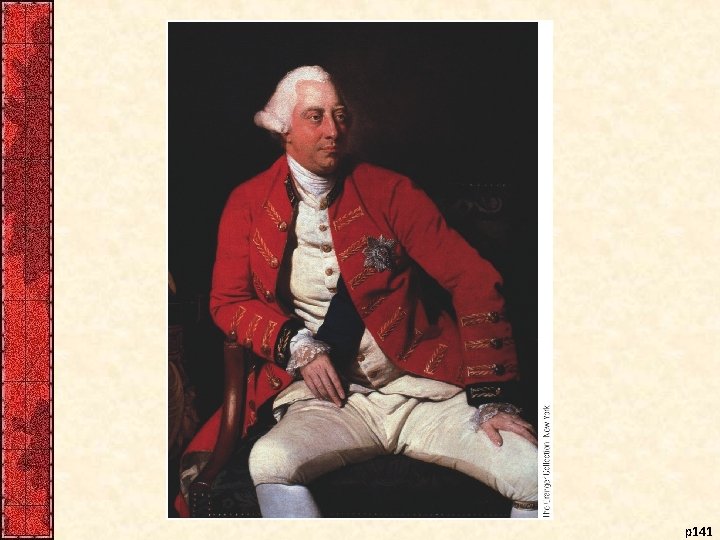
VI. Jefferson’s “Explanation of Independence (cont. ) • The Declaration of Independence: – Formally approved by Congress on July 4, 1776 – Had universal appeal by invoking “natural rights” of humankind—not just British rights – Argued that because king had flouted these rights, the colonists were justified in cutting ties – Set forth long list of presumably tyrannous misdeeds of George III – Declaration had universal impact
p 141
VII. Patriots and Loyalists • War of Independence was a war within a war: – Loyalists—colonists loyal to king who fought American rebels • called “Tories” after dominant political factions in Britain – Patriots—rebels who also fought British redcoats • called “Whigs” after opposition factions in Britain
VII. Patriots and Loyalists (cont. ) • Loyalists: – About 16 percent of American people – Families were often split – Many were people of education and wealth – More numerous among older generation – Included king’s officers and beneficiaries – Included Anglican clergy and congregations • Virginia was notable exception
VII. Patriots and Loyalists (cont. ) • Loyalists entrenched in: – aristocratic New York City and Charlestown – Quaker Pennsylvania and New Jersey – were less numerous in New England
IX. General Washington at Bay • Washington: – Could only muster 18, 000 ill-trained troops to meet British invaders at New York, March 1776 – Disaster befell Americans at Battle of Long Island, summer and fall of 1776 – Washington escaped to Manhattan Island, finally reaching Delaware River
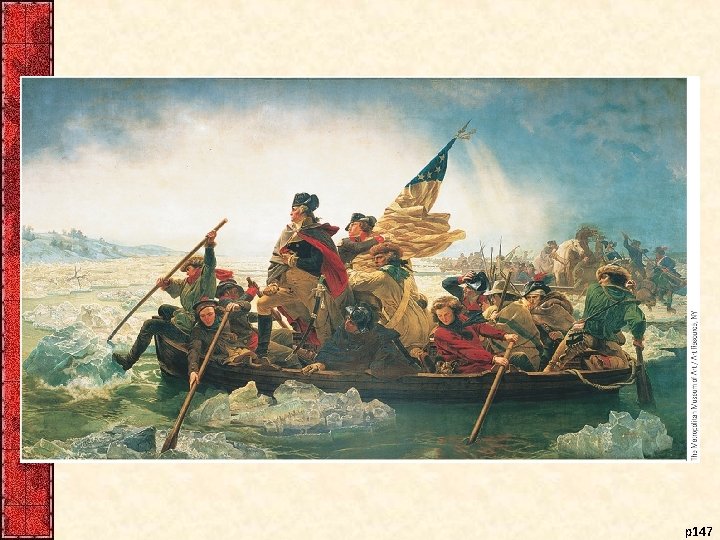
IX. General Washington at Bay (cont. ) – General William Howe did not speedily crush demoralized American forces – Washington stealthily recrossed Delaware River at Trenton on December 26, 1776 – Surprised and captured 1, 000 Hessians – A week later he defeated small British force at Princeton – These two lifesaving victories revealed “Old Fox” Washington at his military best
p 147
X. Burgoyne’s Blundering Invasion • London officials adopted intricate scheme to capture Hudson River valley in 1777: – If successful, would sever New England from rest of the states and paralyze American cause: • General John Burgoyne would push down Lake Champlain route from Canada • General Howe’s troops would advance up Hudson and meet Burgoyne near Albany • A third force, under Colonel Barry St. Leger, would come from west via Lake Ontario and Mohawk valley
X. Burgoyne’s Blundering Invasion (cont. ) • British did not reckon with General Arnold: – came along St. Lawrence to Lake Champlain area where he assembled a small fleet – his fleet was destroyed, but time had been won • Without Arnold, British would have recaptured Fort Ticonderoga: – if Burgoyne could have started there (instead of Montreal) he would have been successful
X. Burgoyne’ Blundering Invasion (cont. ) • Washington transferred army to vicinity of Philadelphia: – There he was defeated in two battles at Brandywine Creek and at Germantown • General Howe settled down in Philadelphia and left Burgoyne to flounder in upper New York • Washington retired to Valley Forge • Trapped, Burgoyne surrendered at Saratoga to Gen. Horatio Gates on October 17, 1777
X. Burgoyne’s Blundering Invasion (cont. ) • Saratoga ranks high among decisive battles of both America and world history: – Victory revived faltering colonial cause – Even more important, made possible urgently needed foreign aid from France, which in turn helped ensure American independence
XI. Revolution in Diplomacy? (cont. ) • Summer of 1776, Continental Congress drafted a Model Treaty: – Guide commissioners dispatched to France – John Adams, one of chief authors, described basic principles: • “ 1. No political connection. . . 2. No military connection. . . 3. Only a commercial connection. ” • These were remarkable self-denying restrictions • Infused idealism into American foreign policy
XI. Revolution in Diplomacy? (cont. ) • Benjamin Franklin negotiated treaty in Paris: – He was determined that his appearance should herald diplomatic revolution – He shocked royal court – Ordinary Parisians adored him as a specimen of new democratic social order • The British now offered a measure allowing American home rule within the empire
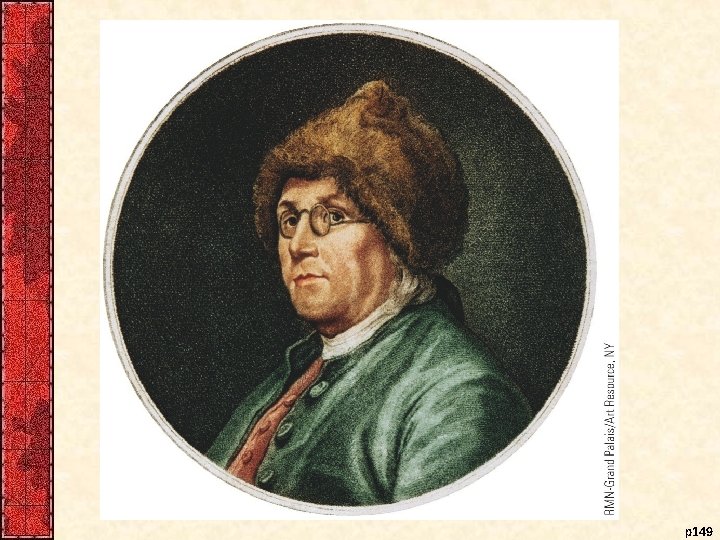
p 149
XI. Revolution in Diplomacy? (cont. ) This was essentially what colonists had asked for— except independence: • On February 6, 1778, France offered a treaty of alliance • Young republic concluded its first entangling military alliance and would soon regret it • Treaty with France constituted official recognition of America’s independence • Both bound themselves to secure America’s freedom
XII. The Colonial War Becomes a Wider War • England France came to blows in 1778 • Shot fired at Lexington widened into global conflagration: – Spain entered in 1779 as did Holland – weak maritime neutrals of Europe began to demand their rights (see Table 8. 1) • Russia’s Catherine the Great organized Armed Neutrality—lined up remaining European neutrals in an attitude of passive hostility toward Britain
XII. The Colonial War Becomes a Wider War (cont. ) – France’s entrance: • Forced British to change basic strategy • They had counted on blockading colonial coast and commanding seas • French now had powerful fleet in American waters • British decided to evacuate Philadelphia and concentrate strength in New York City • In June 1778, redcoats were attacked by Washington • Battle was indecisive and Washington remained in New York area
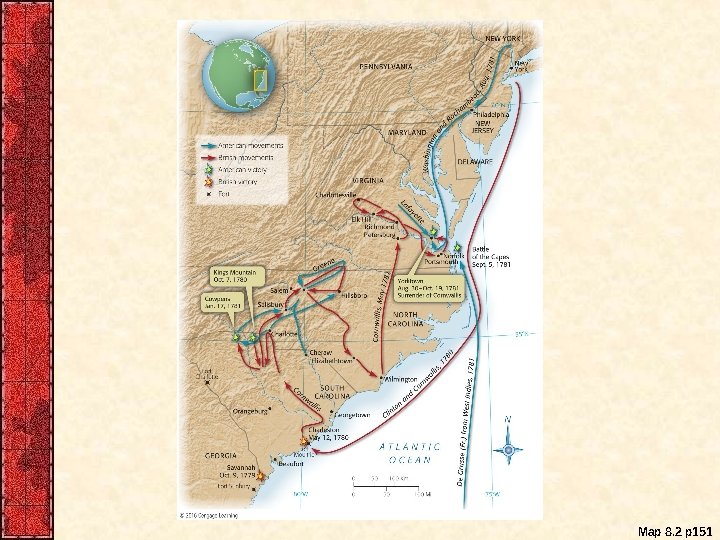
Map 8. 2 p 151
XIII. Blow and Counterblow (cont. ) – – Georgia overrun in 1778 -1779 Charleston fell in 1780 Warfare intensified in Carolinas 1781: American riflemen wiped out British at King’s Mountain, then defeated a smaller force at Cowpens – In Carolina campaign, General Nathaniel Greene distinguished himself by strategy of delay – By standing and then retreating, he exhausted his foe, General Cornwallis, in vain pursuit – Greene succeeded in clearing most of Georgia and South Carolina of British troops
XIV. The Land Frontier and the Sea Frontier (cont. ) • In Illinois, British were vulnerable to attack: • They held only scattered posts captured from French • George Rogers Clark conceived idea of seizing these forts by surprise • 1778 -1779, he quickly captured Kaskaskia, Cahokia, and Vincennes • Clark’s admirers have argued his success later forced British to cede region north of Ohio River to United States at peace table in Paris
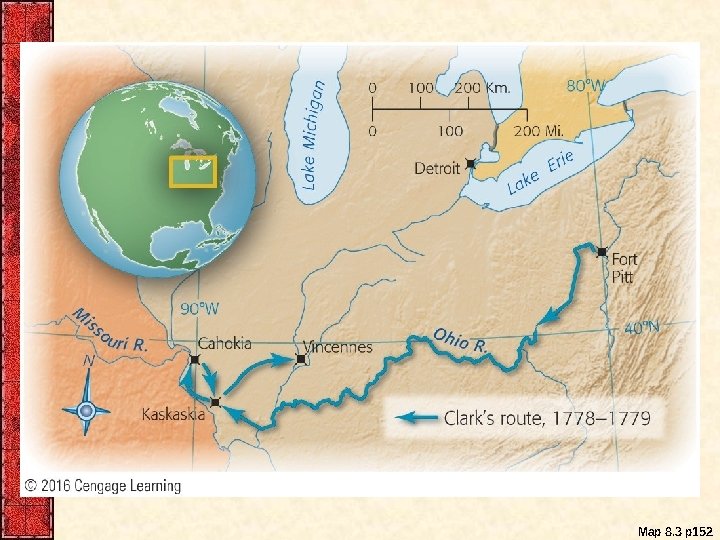
Map 8. 3 p 152
XIV. The Land Frontier and the Sea Frontier (cont. ) • America’s infant navy under Scotsman John Paul Jones: • Tiny force never made dent in Britain’s massive fleet • Chief contribution was destroying British merchant shipping • Carried war into waters around British Isles • Privateers: – Privately owned armed ships—legalized pirates – Authorized by Congress to attack enemy ships – 1, 000 American privateers responded to call of patriotism and profit, with about 70, 000 men – Captured some 600 British prizes, while British captured same number of merchantmen and privateers
XV. Yorktown and the Final Curtain (cont. ) • Cornwallis blundered into a trap: – After futile operations in Virginia, he fell back to Chesapeake Bay at Yorktown: • Awaited seaborne supplies and reinforcements • Assumed Britain still controlled seas • During this period British naval superiority slipped away
XV. Yorktown and the Final Curtain (cont. ) • French actions: – Admiral de Grasse informed Americans he could join them against Cornwallis at Yorktown – Washington makes a swift march of 300 miles from New York to Chesapeake – Accompanied by Rochambeau’s French army, Washington besets British at land – While de Grasse blockaded sea – Cornered, Cornwallis surrendered entire force of 7000 men on October 19, 1781
XVI. Peace at Paris (cont. ) • American negotiators Benjamin Franklin, John Adams, and John Jay gathered at Paris: • Instructed to make no separate peace and to consult with French allies at all stages • American representatives chafed under directive • Knew it had been written by subservient Congress under pressure from French Foreign Office
XVI. Peace at Paris (cont. ) John Jay was unwilling to play French game: • Secretly made overtures to London • London came to terms with Americans • Preliminary treaty signed in 1782 Formal Treaty of Paris signed in 1783: • Britain recognized independence of United States • Granted generous boundaries: to Mississippi (west), to Great Lakes (north), and to Spanish Florida (south) • Yankees retained access to fisheries of Newfoundland
XVI. Peace at Paris (cont. ) – American concessions: • Loyalists not to be further persecuted • Congress was to recommend to states that: – confiscated Loyalist property be restored – debts owed to British creditors be paid – British concessions: • Accept defeat in North America • Ending war allowed England to rebuild
XVII. A New Nation Legitimized • British terms were liberal: – Granted enormous trans-Appalachian area – In spirit, Americans made a separate peace— contrary to French alliance – France relieved with end of costly conflict – America alone gained from world-girdling war: • Began national career with splendid territorial birthright and priceless heritage
Read The Loyalists • Pg. 144 -145 • Also, if you have not completed the Declaration of Independence questions from yesterday finish that this weekend.
- Slides: 40