
Bell Work According to the Gestalt principle of
Bell Work According to the Gestalt principle of proximity, A. Objects that display the same features are grouped together B. objects that are close together are interpreted as belonging together C. monocular cues allow the size of an object to remain constant D. binocular cues allow the color of an object to remain constant E. objects that are farther away look as if they are moving more slowly than do closer objects 1. 2. Which of the following would be most difficult for a person who only had one eye? A. Inserting a toothpick into a horizontal straw B. Watching a movie at a theatre C. Correctly identifying the color of a car D. Organizing objects into similar patterns or colors E. Understanding that a line continues despite a break in it

Hearing
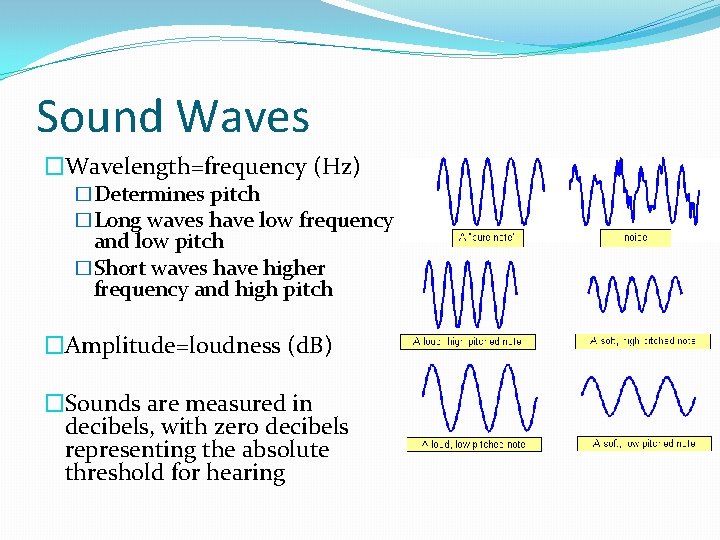
Sound Waves �Wavelength=frequency (Hz) �Determines pitch �Long waves have low frequency and low pitch �Short waves have higher frequency and high pitch �Amplitude=loudness (d. B) �Sounds are measured in decibels, with zero decibels representing the absolute threshold for hearing
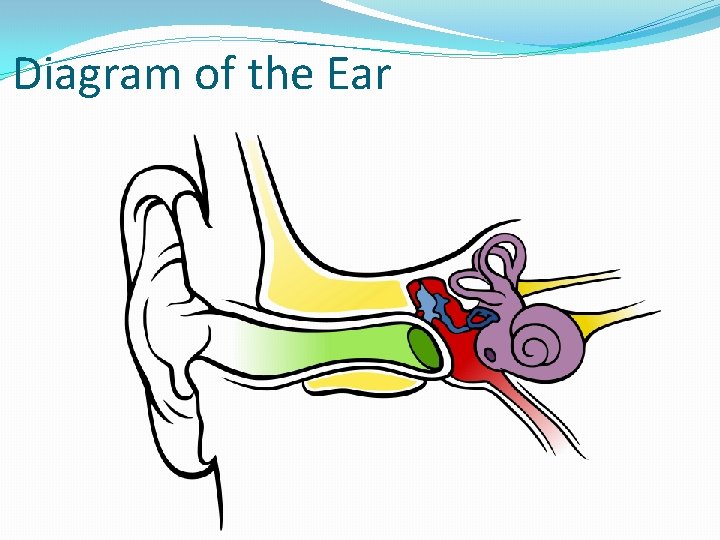
Diagram of the Ear
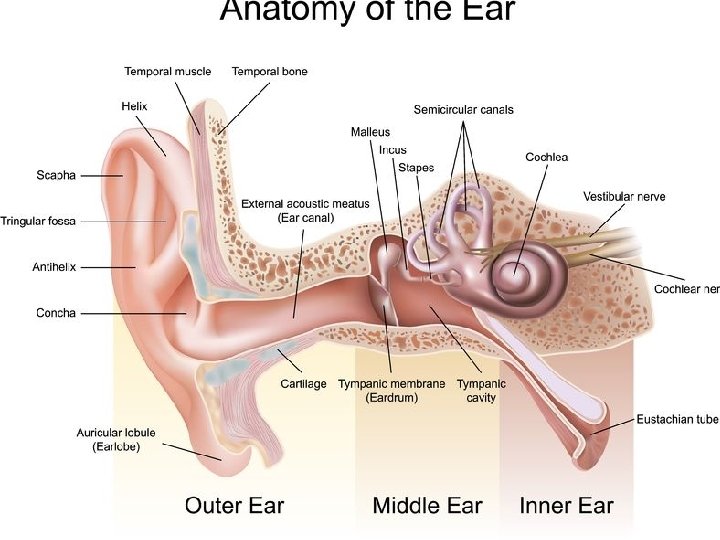
Hearing Loss 1. Sensorineural Hearing Loss � Aka nerve deafness � Damage to the cochlea’s hair cell receptors or their associated nerves � Causes: biological changes, linked to heredity, aging, prolonged exposure to ear-splitting noise 2. Conduction Hearing Loss � Caused by damage to the mechanical system that conducts sound waves to the cochlea � Ringing=bleeding
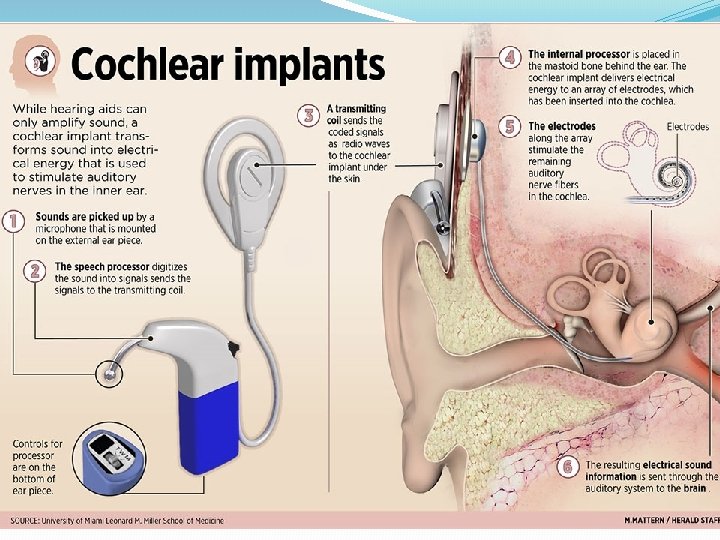
Restoring Hearing Loss �Cochlear implant �Restore hearing for people with nerve deafness �Translates sounds into electrical signals that convey info about sound to the brain �Cannot restore hearing if brain never learned how to process sound in childhood
Perceiving Loudness �NOT from intensity of sound �From NUMBER of activated hair cells �For those with hearing loss, loud sounds still sound loud
Perceiving Pitch �Helmholtz’s Place Theory �Links the pitch we hear with the place where the cochlea’s basilar membrane is stimulated �Accounts for high-pitched sounds, but not low-pitched sounds �Frequency Theory �Theory that the rate of nerve impulses traveling up the auditory nerve matches the frequency of a tone �Accounts for low-pitched sounds
Locating Sound �Sound waves strike one ear sooner and more intensely than the other �Brain analyzes the minute differences in the two sounds and computes the sound’s source
- Slides: 11