
Bell Work 12 6 16 1 Turn in
Bell Work 12 -6 -16 1. Turn in your essay if you have not yet. 2. Straighten your team’s table and chairs. 3. Get the team tub from the back counter. 4. Get out a pen or pencil.

Glory, God and Gold Voyages & Adventures European Exploration Pt. 2
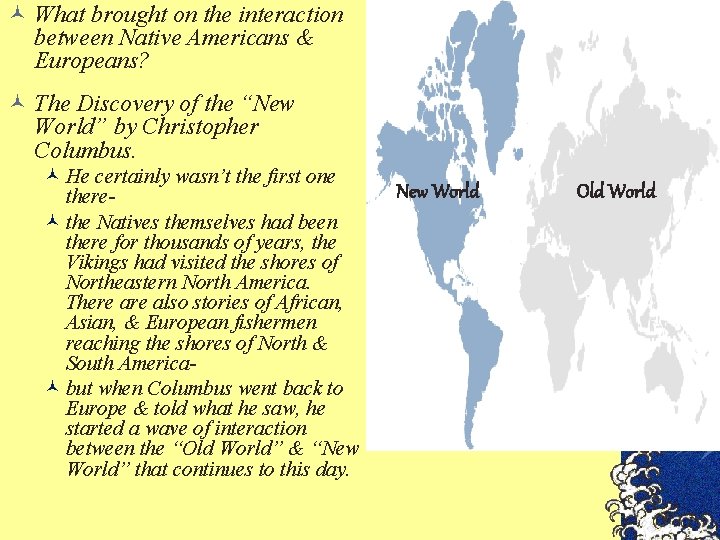
© What brought on the interaction between Native Americans & Europeans? © The Discovery of the “New World” by Christopher Columbus. © He certainly wasn’t the first one there© the Natives themselves had been there for thousands of years, the Vikings had visited the shores of Northeastern North America. There also stories of African, Asian, & European fishermen reaching the shores of North & South America© but when Columbus went back to Europe & told what he saw, he started a wave of interaction between the “Old World” & “New World” that continues to this day. New World Old World
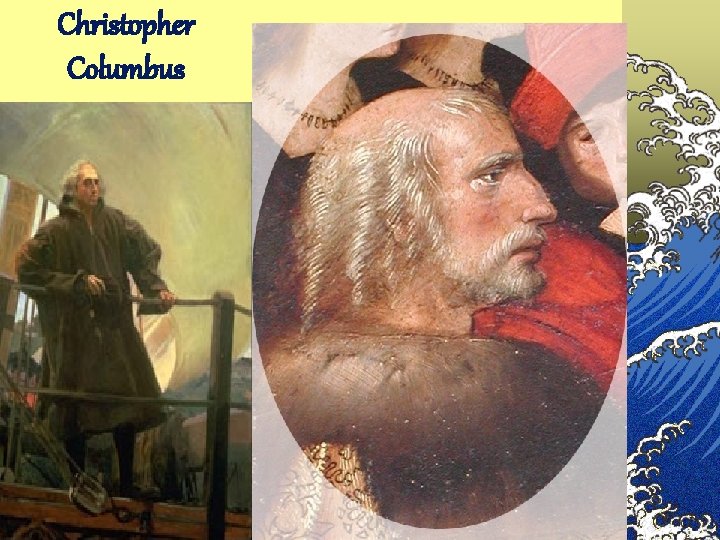
Christopher Columbus
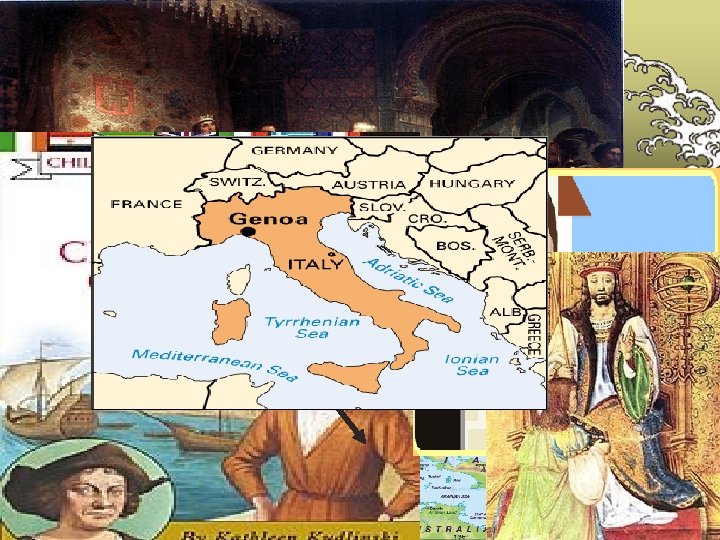
Christopher Columbus • Born in 1451 in Genoa, Italy • Went on trading voyages as a teenager • By the 1480 s, Columbus & his brother had developed a plan to travel to the Indies (southeast Asia), by sailing directly west across the Atlantic • In 1485 Columbus presented his plan to sail west with 3 ships to John II, King of Portugal. • John II rejected Columbus when his experts said Columbus’ estimates of the distance of the trip were too short. • Columbus’ plan was also turned down by Genoa & Venice. • Finally, in 1492 Spanish King Ferdinand & Queen Isabella agreed to finance (pay for) his journey. • Spain was envious of the success of Portuguese explorers & also desired a sea route to Asia.
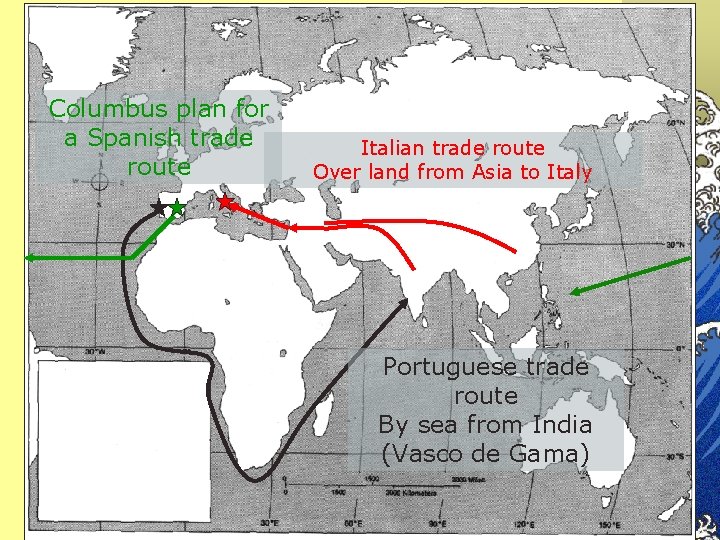
Columbus plan for a Spanish trade route Italian trade route Over land from Asia to Italy Portuguese trade route By sea from India (Vasco de Gama)
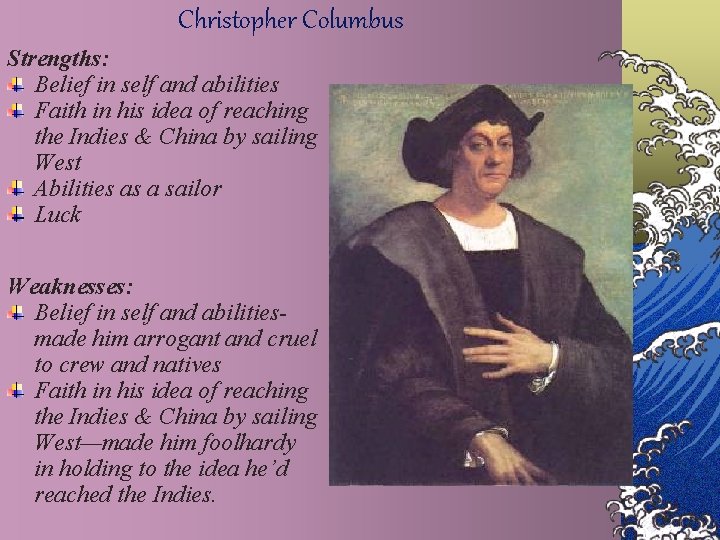
Christopher Columbus Strengths: Belief in self and abilities Faith in his idea of reaching the Indies & China by sailing West Abilities as a sailor Luck Weaknesses: Belief in self and abilitiesmade him arrogant and cruel to crew and natives Faith in his idea of reaching the Indies & China by sailing West—made him foolhardy in holding to the idea he’d reached the Indies.

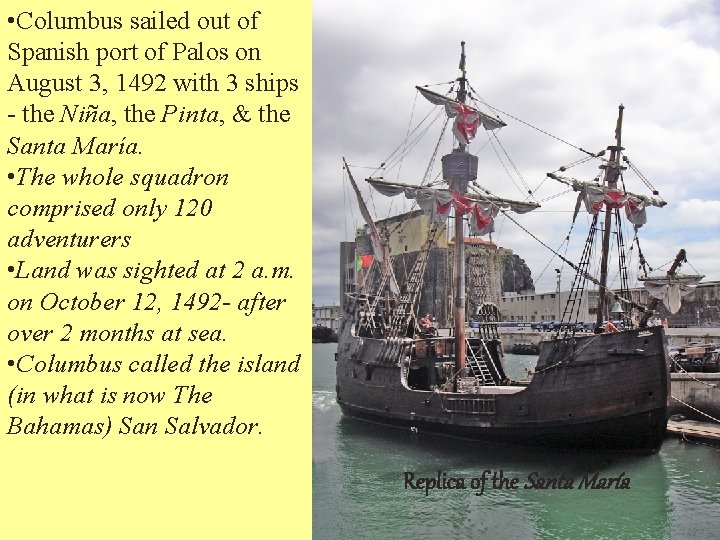
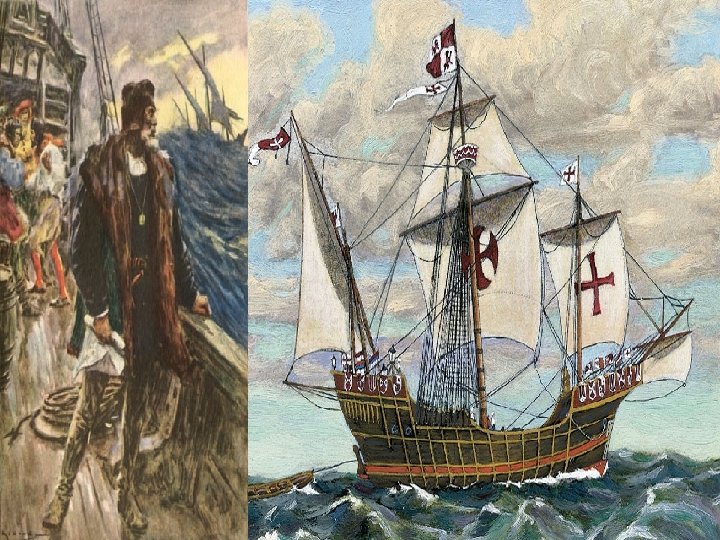
• Columbus sailed out of Spanish port of Palos on August 3, 1492 with 3 ships - the Niña, the Pinta, & the Santa María. • The whole squadron comprised only 120 adventurers • Land was sighted at 2 a. m. on October 12, 1492 - after over 2 months at sea. • Columbus called the island (in what is now The Bahamas) San Salvador. Replica of the Santa María
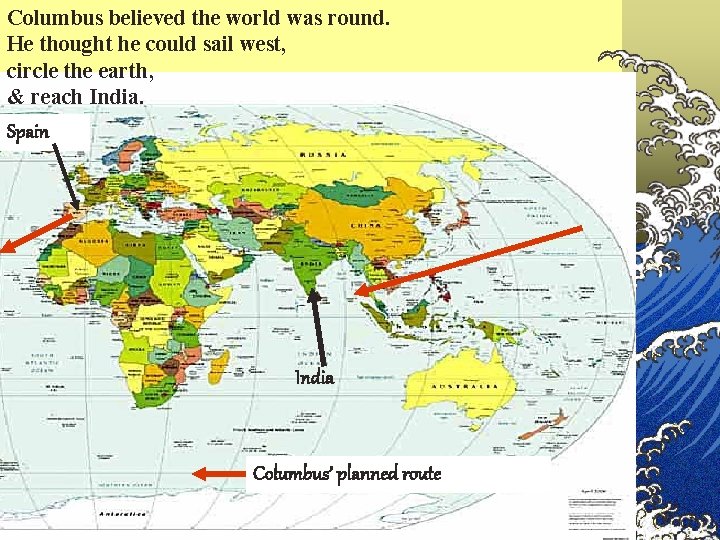
Columbus believed the world was round. He thought he could sail west, circle the earth, & reach India. Spain India Columbus’ planned route
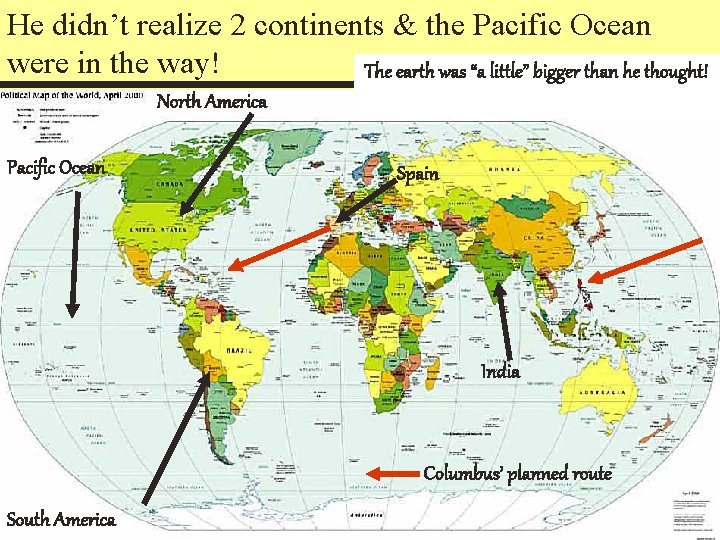
He didn’t realize 2 continents & the Pacific Ocean were in the way! The earth was “a little” bigger than he thought! North America Pacific Ocean Spain India Columbus’ planned route South America
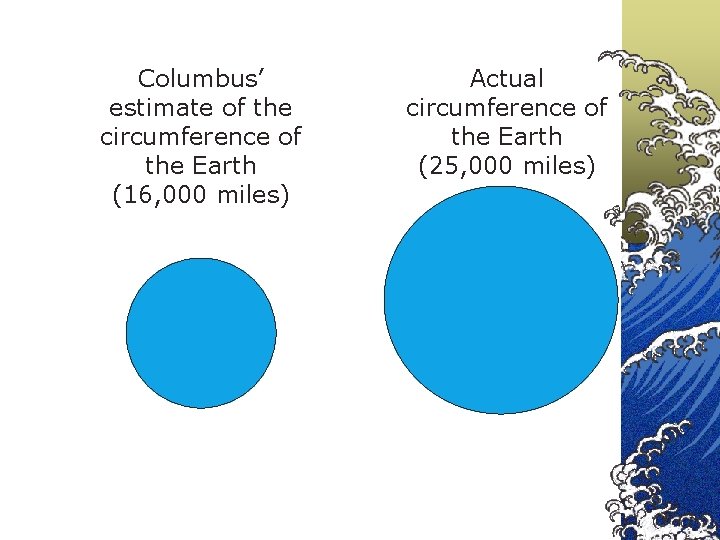
Columbus’ estimate of the circumference of the Earth (16, 000 miles) Actual circumference of the Earth (25, 000 miles)
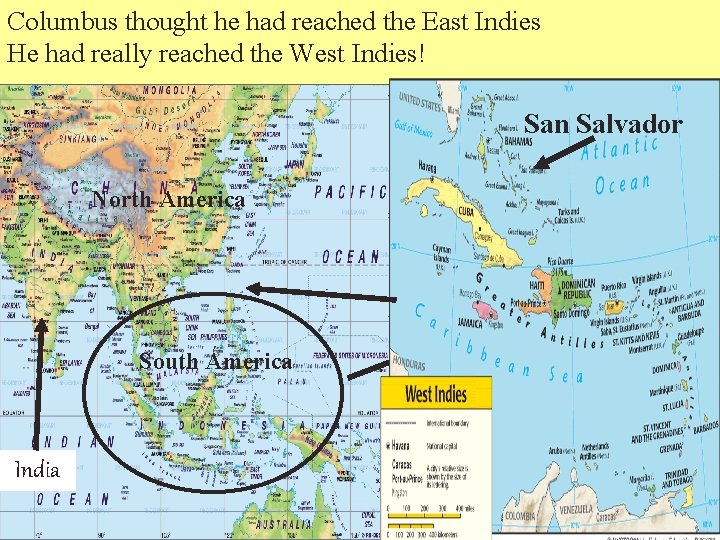
Columbus thought he had reached the East Indies He had really reached the West Indies! San Salvador North America South America India
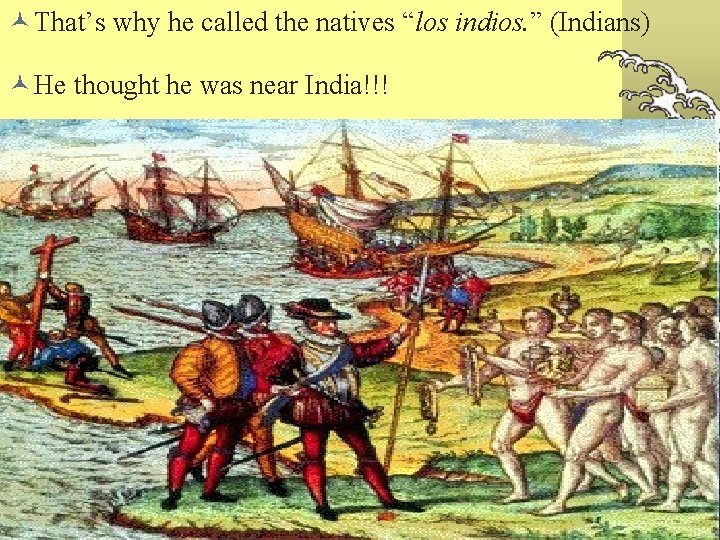
© That’s why he called the natives “los indios. ” (Indians) © He thought he was near India!!!
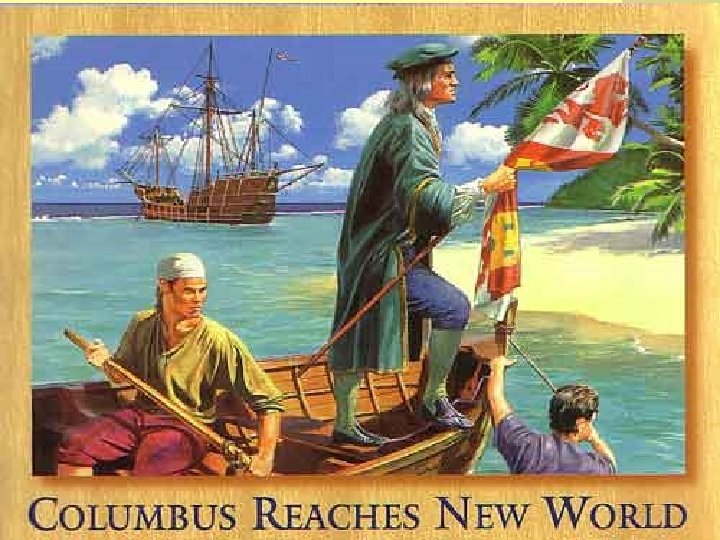
Columbus arrives on Salvador (he named it, it means “Holy Savior”)
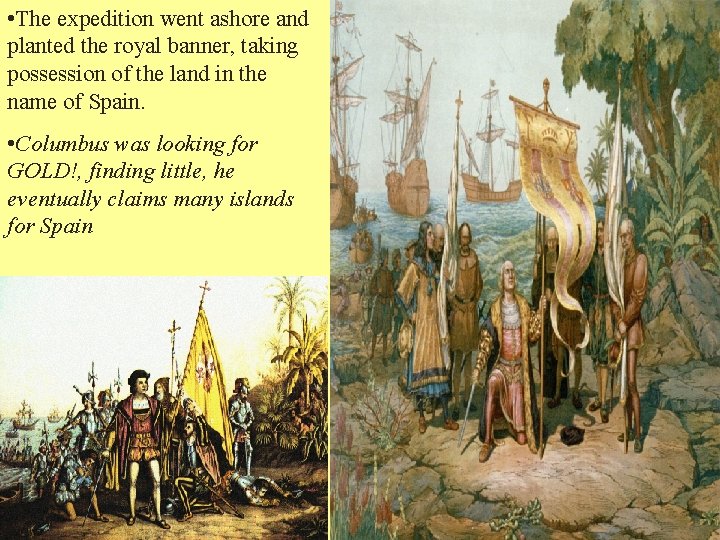
• The expedition went ashore and planted the royal banner, taking possession of the land in the name of Spain. • Columbus was looking for GOLD!, finding little, he eventually claims many islands for Spain
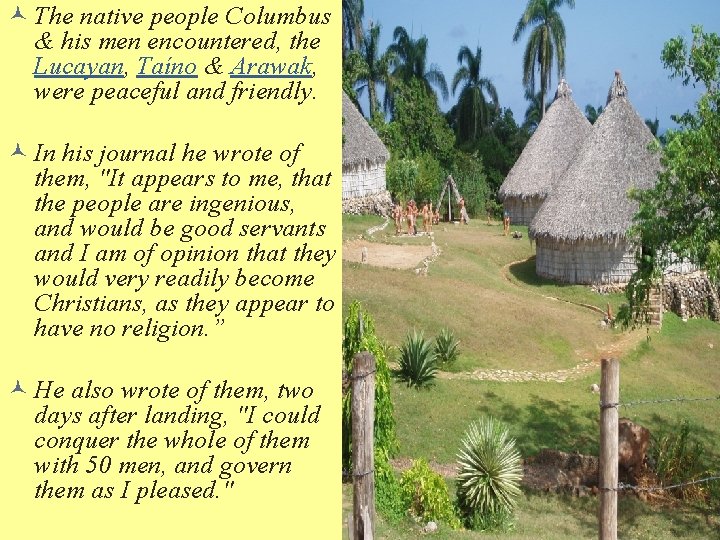
© The native people Columbus & his men encountered, the Lucayan, Taíno & Arawak, were peaceful and friendly. © In his journal he wrote of them, "It appears to me, that the people are ingenious, and would be good servants and I am of opinion that they would very readily become Christians, as they appear to have no religion. ” © He also wrote of them, two days after landing, "I could conquer the whole of them with 50 men, and govern them as I pleased. "
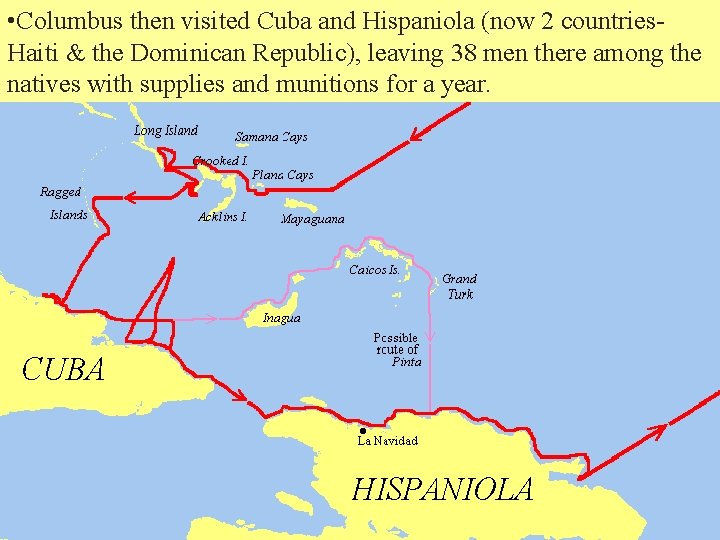
• Columbus then visited Cuba and Hispaniola (now 2 countries. Haiti & the Dominican Republic), leaving 38 men there among the natives with supplies and munitions for a year.
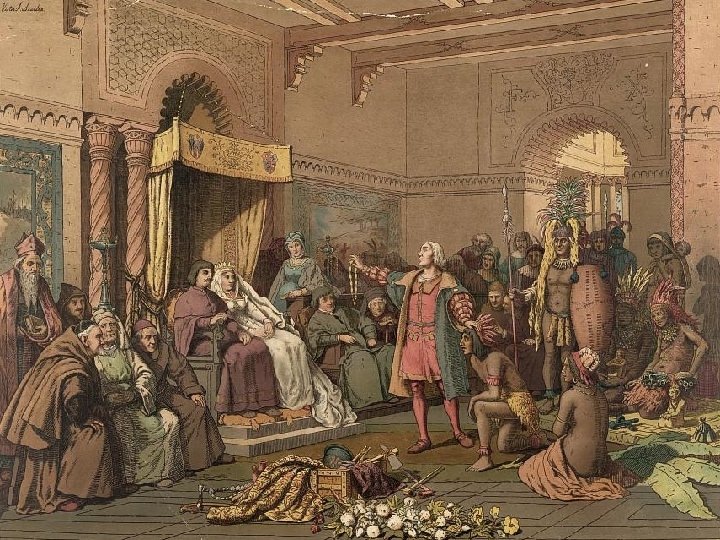
© By this time his flagship had been wrecked, and he set sail on 4 January 1493 with his two caravels on the return journey to Spain. © They reached Palos on 15 March 1493, and Columbus was received with the highest honors by the court. © He told the King & Queen of the riches of the new world.
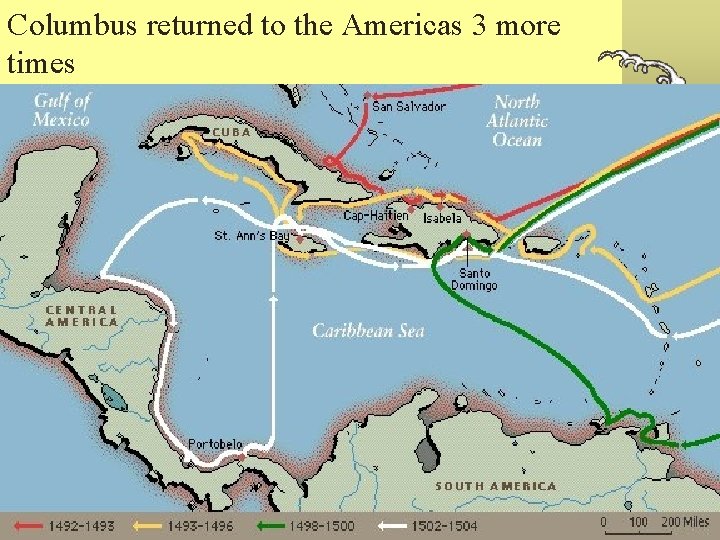
Columbus returned to the Americas 3 more times
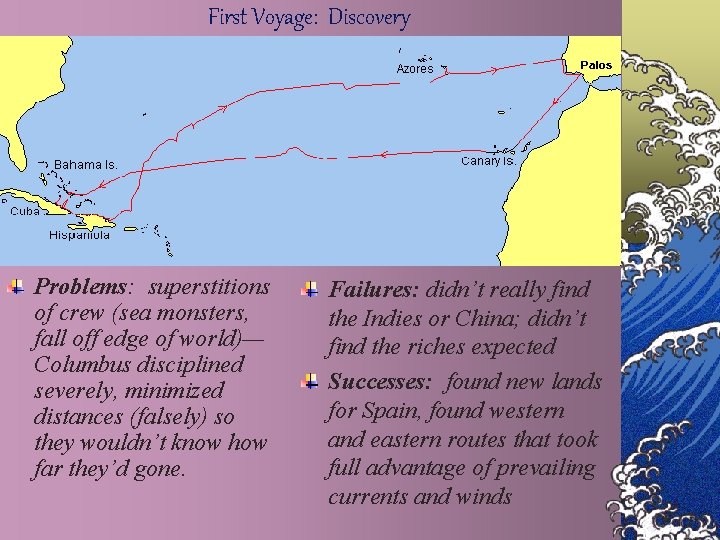
First Voyage: Discovery Problems: superstitions of crew (sea monsters, fall off edge of world)— Columbus disciplined severely, minimized distances (falsely) so they wouldn’t know how far they’d gone. Failures: didn’t really find the Indies or China; didn’t find the riches expected Successes: found new lands for Spain, found western and eastern routes that took full advantage of prevailing currents and winds
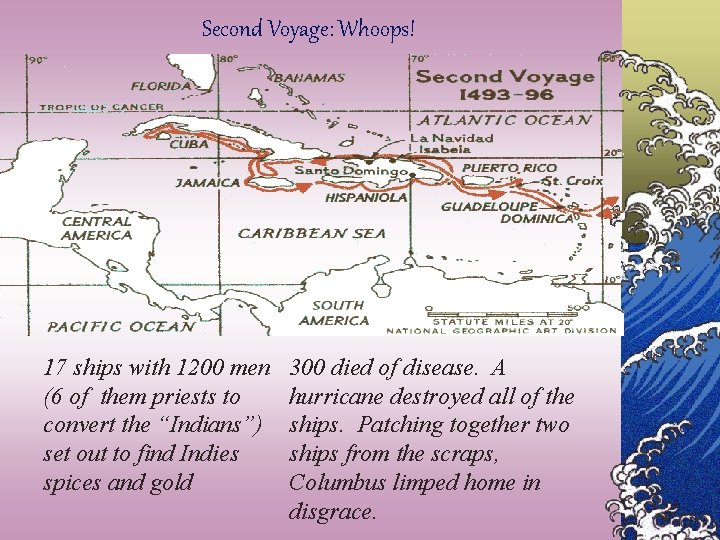
Second Voyage: Whoops! 17 ships with 1200 men (6 of them priests to convert the “Indians”) set out to find Indies spices and gold 300 died of disease. A hurricane destroyed all of the ships. Patching together two ships from the scraps, Columbus limped home in disgrace.
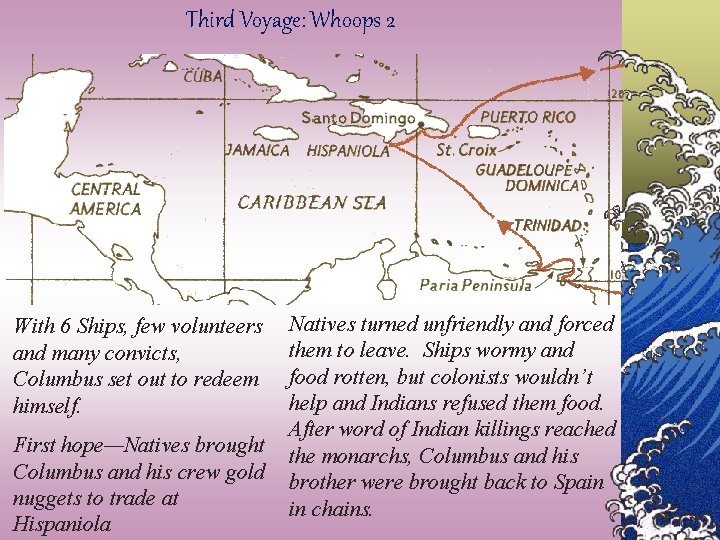
Third Voyage: Whoops 2 With 6 Ships, few volunteers and many convicts, Columbus set out to redeem himself. First hope—Natives brought Columbus and his crew gold nuggets to trade at Hispaniola Natives turned unfriendly and forced them to leave. Ships wormy and food rotten, but colonists wouldn’t help and Indians refused them food. After word of Indian killings reached the monarchs, Columbus and his brother were brought back to Spain in chains.
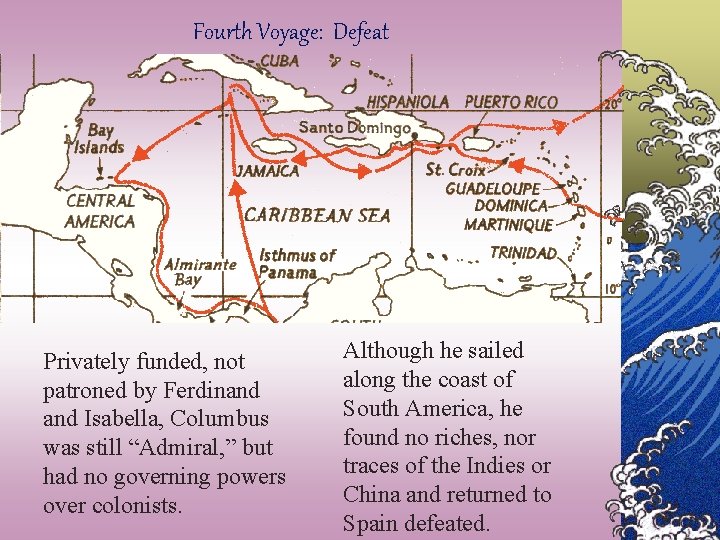
Fourth Voyage: Defeat Privately funded, not patroned by Ferdinand Isabella, Columbus was still “Admiral, ” but had no governing powers over colonists. Although he sailed along the coast of South America, he found no riches, nor traces of the Indies or China and returned to Spain defeated.
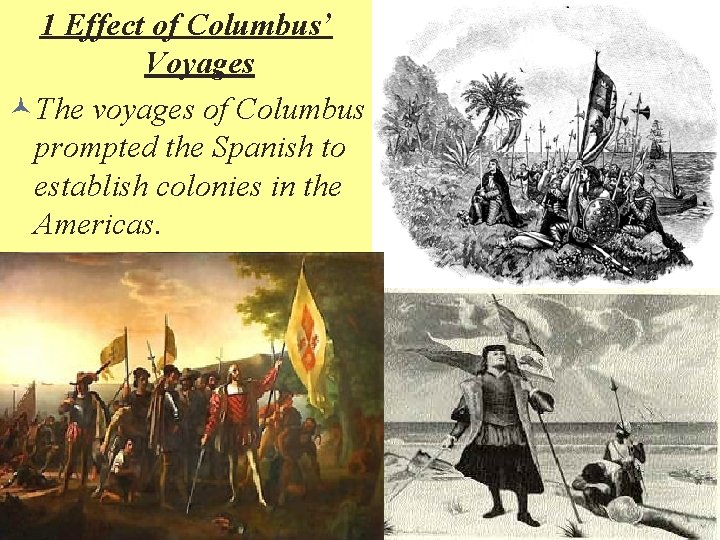
1 Effect of Columbus’ Voyages ©The voyages of Columbus prompted the Spanish to establish colonies in the Americas.
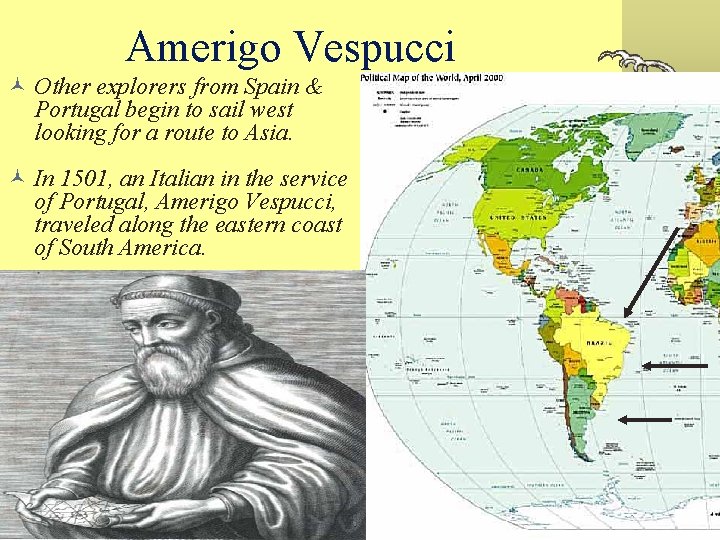
Amerigo Vespucci © Other explorers from Spain & Portugal begin to sail west looking for a route to Asia. © In 1501, an Italian in the service of Portugal, Amerigo Vespucci, traveled along the eastern coast of South America. © Upon his return to Europe he claimed that the land was not part of Asia, but a “new” world. © In 1507 a German mapmaker named the new continent “America” in honor of Amerigo Vespucci.
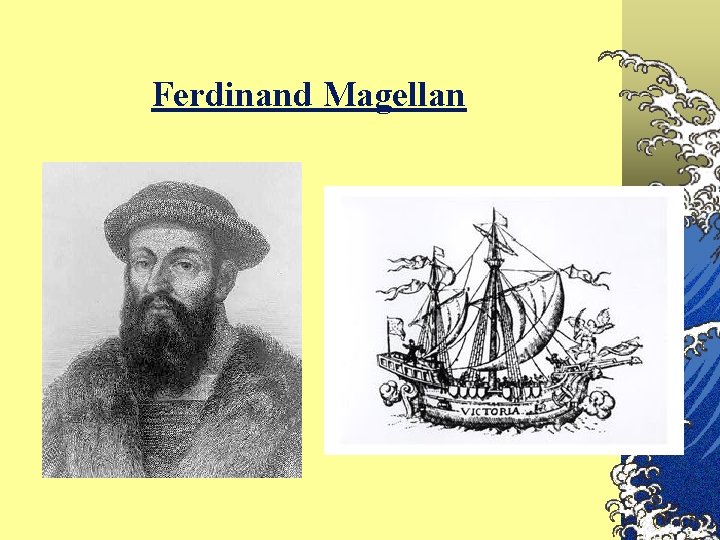
Ferdinand Magellan
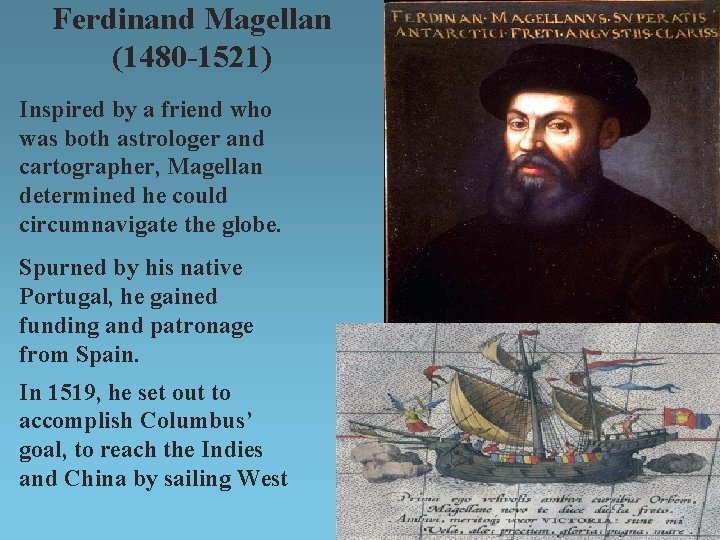
Ferdinand Magellan (1480 -1521) Inspired by a friend who was both astrologer and cartographer, Magellan determined he could circumnavigate the globe. Spurned by his native Portugal, he gained funding and patronage from Spain. In 1519, he set out to accomplish Columbus’ goal, to reach the Indies and China by sailing West
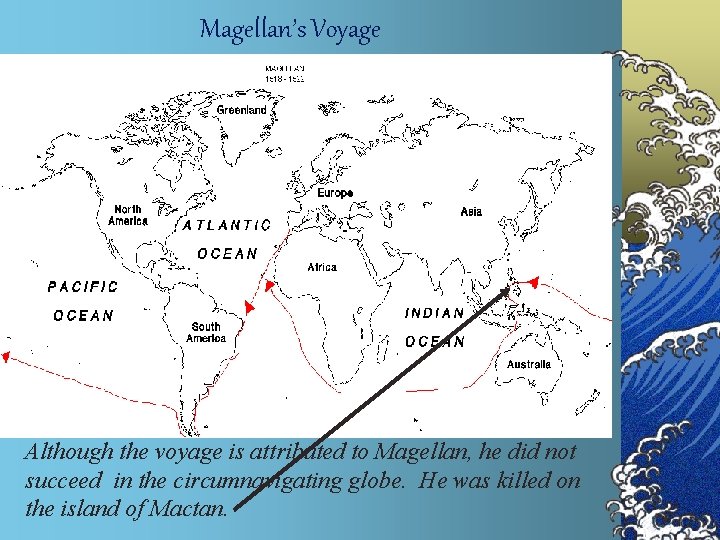
Magellan’s Voyage Although the voyage is attributed to Magellan, he did not succeed in the circumnavigating globe. He was killed on the island of Mactan.
Obstacles & Problems Magellan and his crew suffered all of the following as he searched for a western sea passage around South America: Finding many places along Combating the mutiny of the coast that looked like three out of his five ships. sea passages that were just To quell it, he had to kill bays and inlets the captain of one of the Running out of food and ships, and imprison some supplies. He thought he of the crew. had supplies for two years. Meeting greedy natives His suppliers in Spain who swarmed over his fraudulently gave him six ships and took everything months worth. (He and the that wasn’t nailed down. crew ate fresh fish and Navigating through one of game, rats and wormy the most treacherous biscuits, even, oxhide passages of rock-lined bindings, and drank water in the world: the contaminated with rat urine. strait named for him.
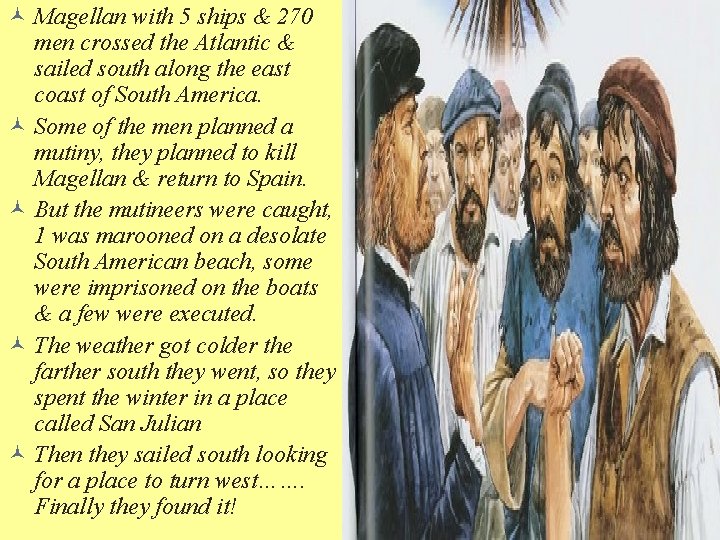
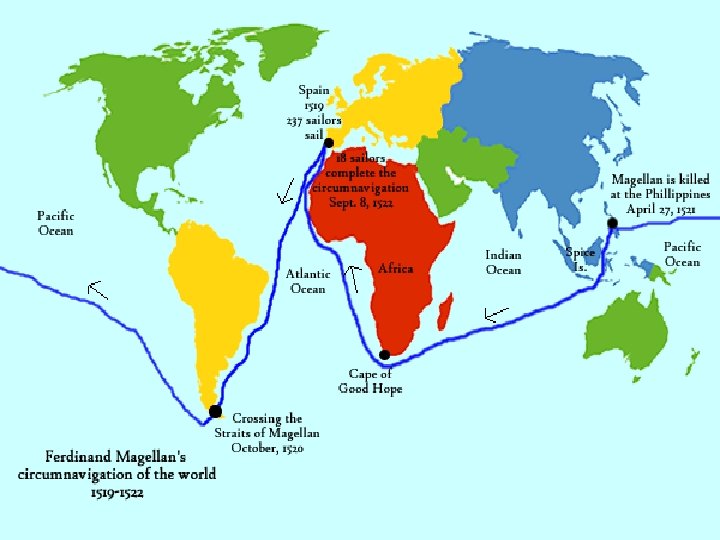
© Magellan with 5 ships & 270 men crossed the Atlantic & sailed south along the east coast of South America. © Some of the men planned a mutiny, they planned to kill Magellan & return to Spain. © But the mutineers were caught, 1 was marooned on a desolate South American beach, some were imprisoned on the boats & a few were executed. © The weather got colder the farther south they went, so they spent the winter in a place called San Julian © Then they sailed south looking for a place to turn west……. Finally they found it! San Julian
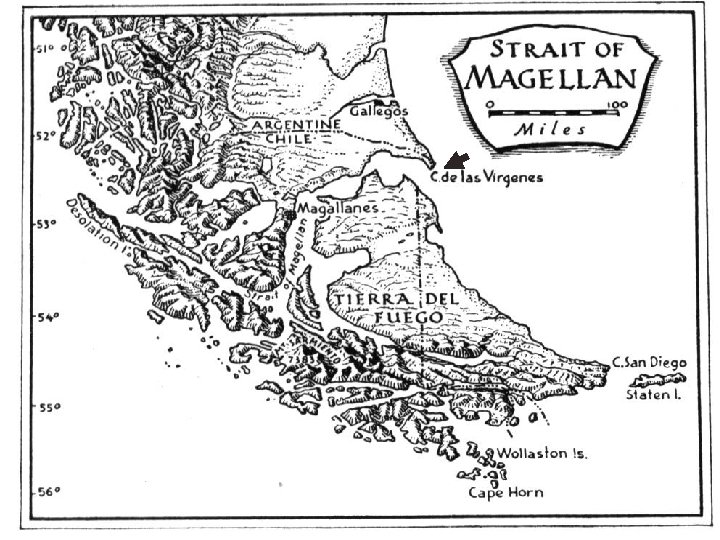
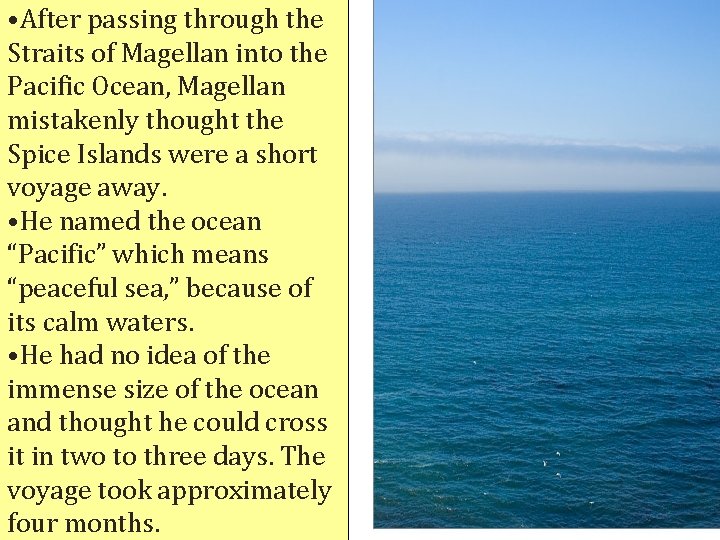
• After passing through the Straits of Magellan into the Pacific Ocean, Magellan mistakenly thought the Spice Islands were a short voyage away. • He named the ocean “Pacific” which means “peaceful sea, ” because of its calm waters. • He had no idea of the immense size of the ocean and thought he could cross it in two to three days. The voyage took approximately four months.
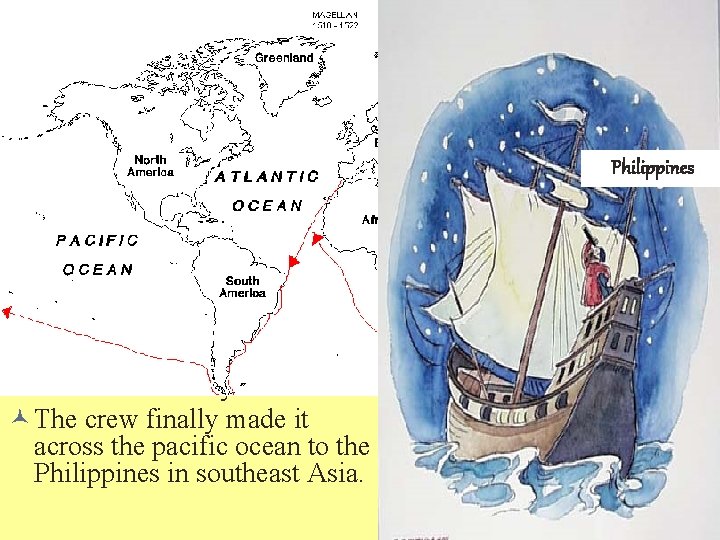
© Along the way, conditions aboard the ships were abominable. The crew began to starve as food stores were depleted. © The water turned putrid and yellow in color. © The crew survived on sawdust, leather strips from the sails or their boots, & rats. © Without the benefit of vitamin C in fresh fruits and vegetables, the men also came down with scurvy. © The crew finally made it across the pacific ocean to the Philippines in southeast Asia. Philippines
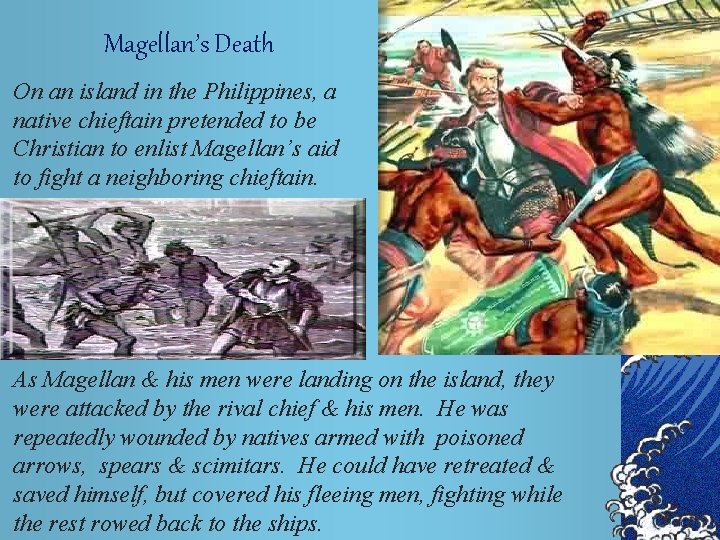
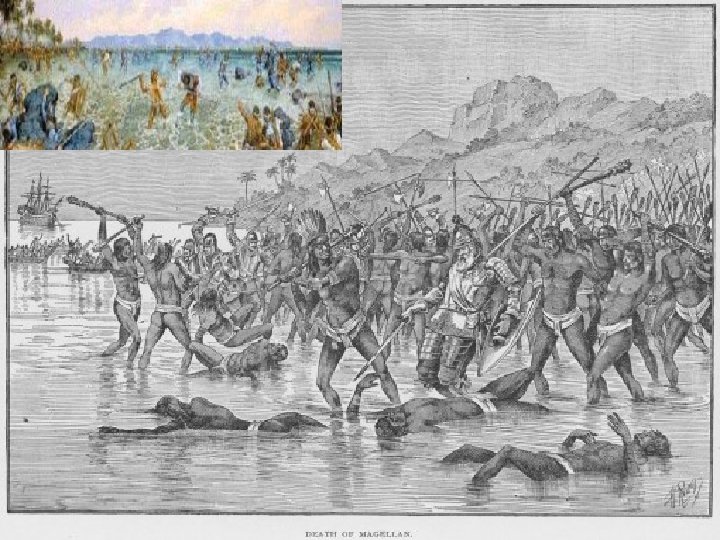
Magellan’s Death On an island in the Philippines, a native chieftain pretended to be Christian to enlist Magellan’s aid to fight a neighboring chieftain. As Magellan & his men were landing on the island, they were attacked by the rival chief & his men. He was repeatedly wounded by natives armed with poisoned arrows, spears & scimitars. He could have retreated & saved himself, but covered his fleeing men, fighting while the rest rowed back to the ships.
Concluding the Voyage The remaining crew continued on towards Spain. One by one the ships fell apart. The Portuguese imprisoned some of the men in islands near Spain Only 18 of the 270 men landed back at Seville. (6. 6%!!) The total time of the voyage was 12 days less than three years. As penitence, the 18 survivors walked barefoot carrying candles to the shrine of the Virgin Mary.
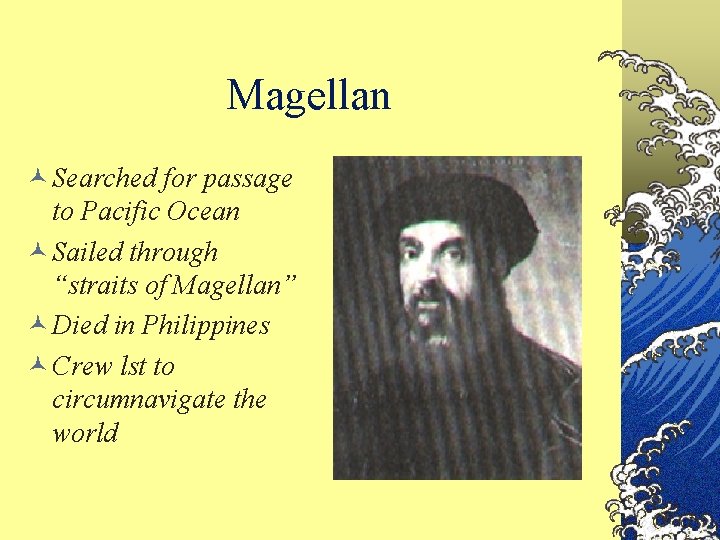
Magellan © Searched for passage to Pacific Ocean © Sailed through “straits of Magellan” © Died in Philippines © Crew lst to circumnavigate the world
- Slides: 41