
Bell Work 1 What is the difference between
Bell Work 1. What is the difference between prejudice and discrimination? 2. Give an example of a non-racial stereotype.
Attraction
Activity With a partner (or by yourself), create a list of items that you think will make a recipe for perfect love…

Factors Affecting Attraction Proximity • Geographically close (same school/hometown/workplace) • Mere exposure effect-increased liking due to repeated exposure to stimuli • Evolutionary route (familiarity indicated safety) Physical Attractiveness • Perceive attractive people as healthier, happier, more sensitive, more successful, and more socially skilled • Physical attractiveness is largely based on cultural trends, which can change over time • Golden ratio-symmetry in the face (average proportions)
Factors Affecting Attraction Physical Attractiveness • Evolutionary: men view young, fertile women with a low waist-to-hip ratio as attractive • Women view men who are healthy-looking, mature, dominant, masculine, and affluent as more attractive Similarity • Share common beliefs, attitudes, interests, race, education, intelligence, etc. • Dissimilarity breeds discontent and could lead to aggression

Factors Affecting Attraction Reciprocal Liking • We like those who like us—our positive response can increase the partner’s liking for us • Reward theory of attraction: we continue relationships when they offer more rewards than costs Liking Through Association • Being classically conditioned to like someone
Types of Love Romantic Love • Passionate love-occurs when there is a state of emotional arousal, usually at the beginning of a relationship • • Similar to adrenaline, so sometimes this love fades over time Testosterone, dopamine, adrenaline • Companionate love-deep affectionate attachment that is experienced with someone for the long-term • Oxytocin
Making Relationships Last Equity • Both partners put in the same amount of effort that they receive • Increases chances of enduring, rewarding relationship (extends into emotional support, parenting style, etc. ) Self-disclosure • Being open and honest about ourselves • Emotional intimacy Positive support • Providing support, sympathy, and smiles instead of putdowns and criticisms
Sternberg’s Triangular Theory of Love consists of three basic components: 1. Intimacy-feelings of emotional closeness or ties that one has for another person 2. Passion-emotional and sexual arousal a person feels towards another person (physical aspect of love), but is NOT simply sex 3. Commitment-the decisions one makes about a relationship, either shortterm or long-term There are 8 types of love, each made out of combinations of the above components.
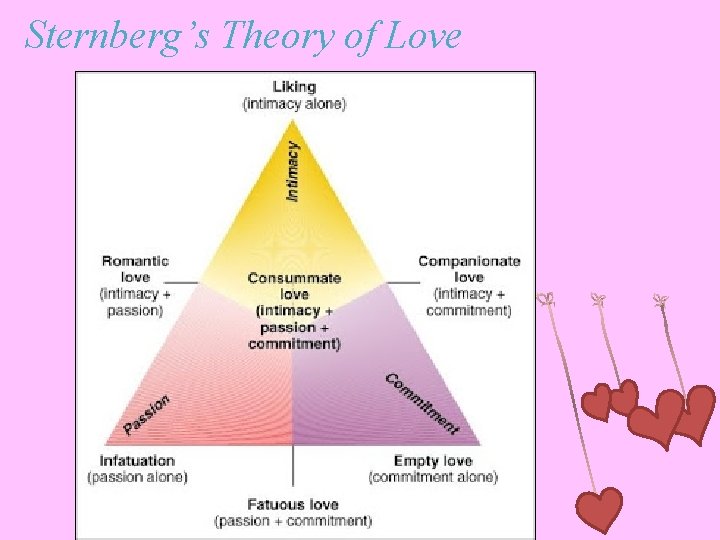
Sternberg’s Theory of Love

Guess What Type of Love It Is! http: //mypsychstuff. blogspot. com/search/la bel/love
- Slides: 11