
Bell Work 1 2 What do you know
Bell Work 1. 2. What do you know about the Industrial Revolution? Why do you think it developed in England?
Agricultural & Industrial Revolution
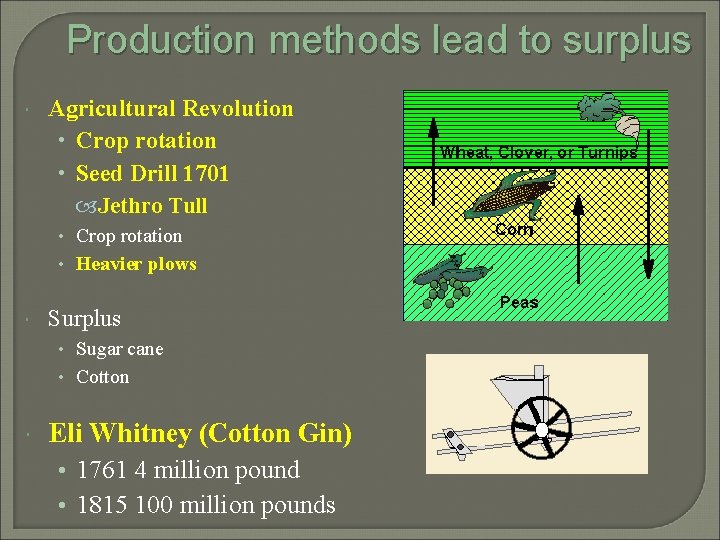
Production methods lead to surplus Agricultural Revolution • Crop rotation • Seed Drill 1701 Jethro Tull • Crop rotation • Heavier plows Surplus • Sugar cane • Cotton Eli Whitney (Cotton Gin) • 1761 4 million pound • 1815 100 million pounds
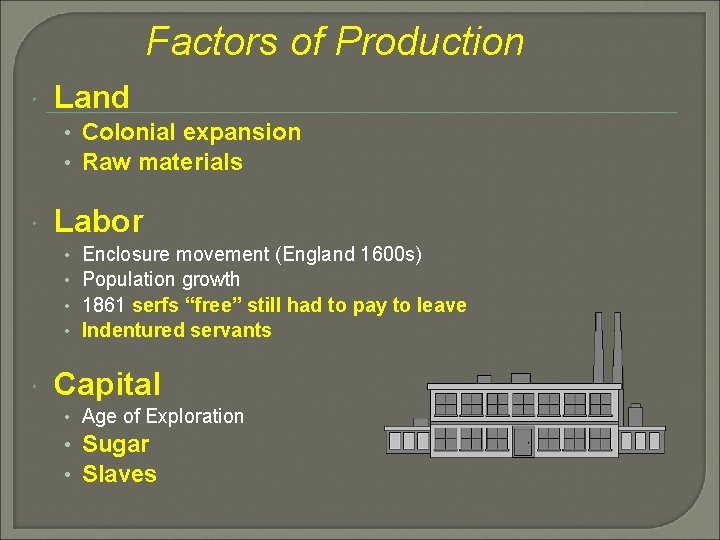
Factors of Production Land • Colonial expansion • Raw materials Labor • • Enclosure movement (England 1600 s) Population growth 1861 serfs “free” still had to pay to leave Indentured servants Capital • Age of Exploration • Sugar • Slaves
Complex factors Begins in England because they have land, labor and capital Enclosure movement – • English fenced in land so they could control what was grown and moved the tenets from the land Greater crop yield or surplus Tenets moved to cities and needed to work (raw materials and labor) Landowners got wealthy and needed somewhere to spend their money (capital) Coal (steam engines), Canals, Railroads
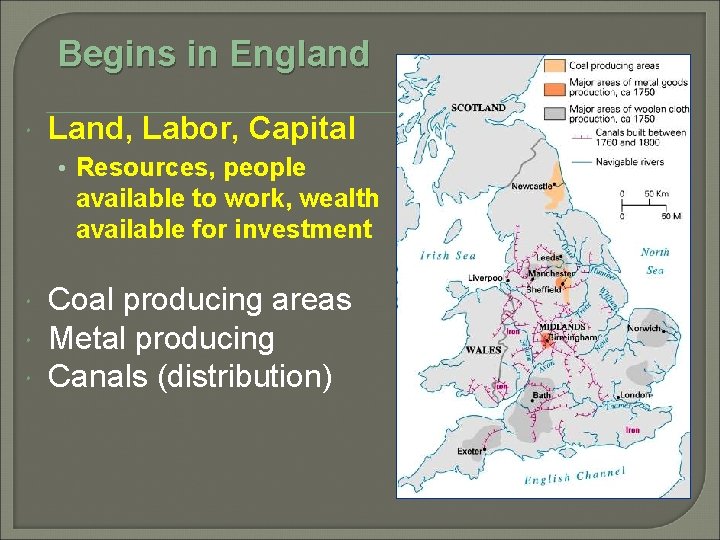
Begins in England Land, Labor, Capital • Resources, people available to work, wealth available for investment Coal producing areas Metal producing Canals (distribution)

The Enclosure Movement
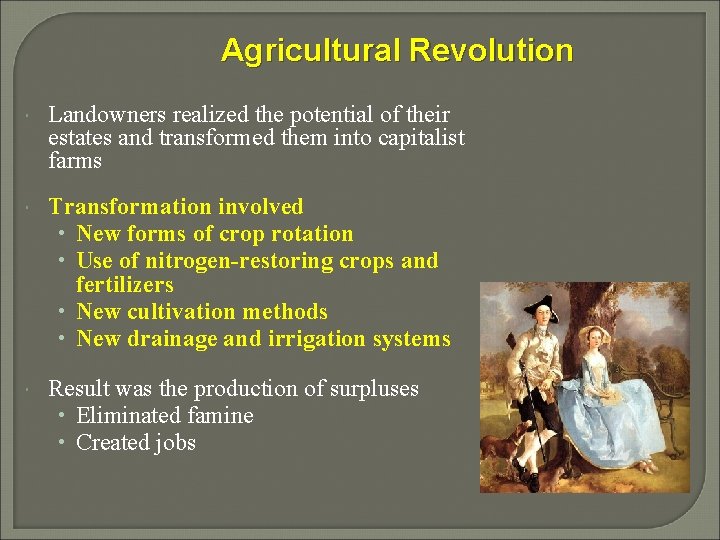
Agricultural Revolution Landowners realized the potential of their estates and transformed them into capitalist farms Transformation involved • New forms of crop rotation • Use of nitrogen-restoring crops and fertilizers • New cultivation methods • New drainage and irrigation systems Result was the production of surpluses • Eliminated famine • Created jobs
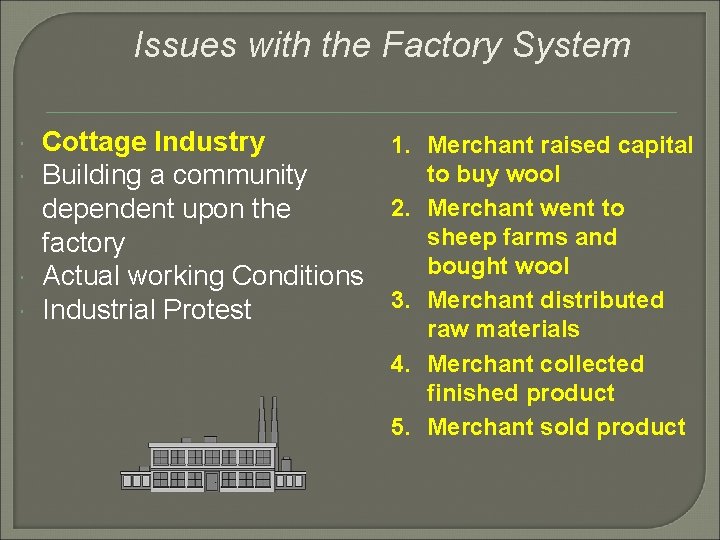
Issues with the Factory System Cottage Industry 1. Merchant raised capital to buy wool Building a community 2. Merchant went to dependent upon the sheep farms and factory bought wool Actual working Conditions 3. Merchant distributed Industrial Protest raw materials 4. Merchant collected finished product 5. Merchant sold product
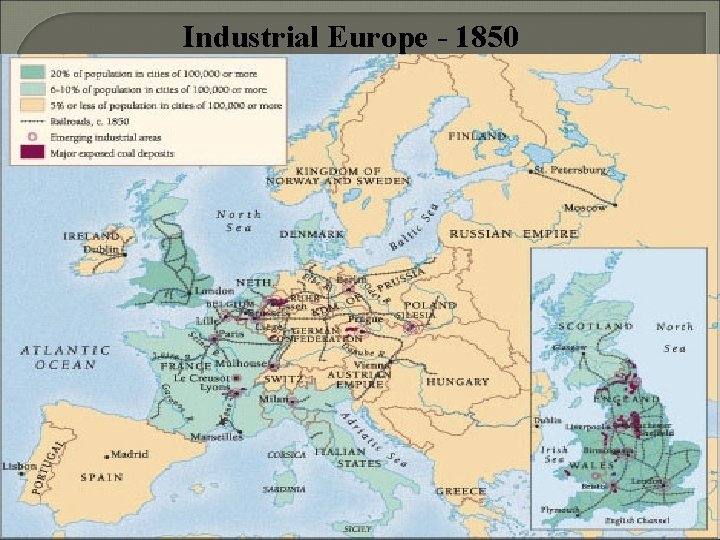
Industrial Europe - 1850
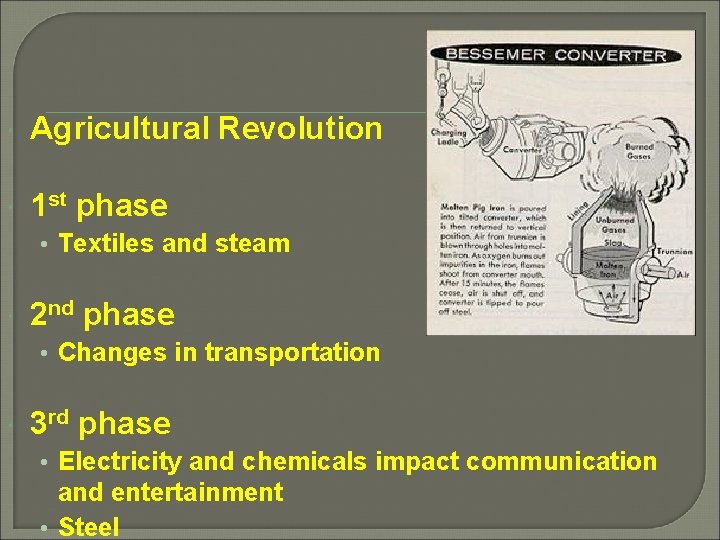
Stages Agricultural Revolution 1 st phase • Textiles and steam 2 nd phase • Changes in transportation 3 rd phase • Electricity and chemicals impact communication and entertainment • Steel
Worldwide Developments Advances in transportation • Railroads Cheaper and faster Allowed overland movement of people and goods on a much greater scale • Steamships Steam power had been used for years on river boats, new technology allowed the building of ocean steamers

Chapter 13 Section 2
Methods of Mass Production System of manufacturing a large number of identical goods. • Division of labor-a type of mass production Manufacturing process into a series of separate tasks Worker is very skilled in one task Quality improves Requires fewer workers Workers get bored and not focused on task makes more errors Worker satisfaction declines • System of interchangeable parts Type of mass production Less innovation • Assembly line Conveyor belt carried the product to each worker Increased productivity Worker satisfaction declines More errors
Process – Preparation vs. Equipment Henry Bessemer process leads to…. • Cheaper and better steel Madame Curie radium extraction leads to…. • X-Ray Henry Ford’s use of the assembly line leads to…. • Cheaper cars accessible to common man Interchangeable parts leads to…. • Faster and cheaper weapons
Impact Technological innovations • Steam engine and interchangeable parts • Leads to next level in IR Creation of rapid transport and communications • Railways, steamships, and telegraph Series of basic economic changes • • Urbanization Factory system Improvements in banking Tendency to larger businesses Social changes • Movement from rural to urban • Greater emphasis on family life
CHANGES Provokes a growing demand for manufactured goods Provokes a shift in a nations economy away from agriculture Provokes rapid demographic change • Decline in both birth and death rates Improves general standard of living but does not improve distribution of wealth • Often causes increase in gap between rich and poor Middle class has leisure time • New parks are built • New sports • New cultural outlets such as opera, plays, etc. • Department stores Greater availability of goods
- Slides: 17