
Bell Ringer z Why did the antifederalists see
Bell Ringer z § Why did the anti-federalists see a need for a Bill of Rights? § What was the purpose of the federalist papers?
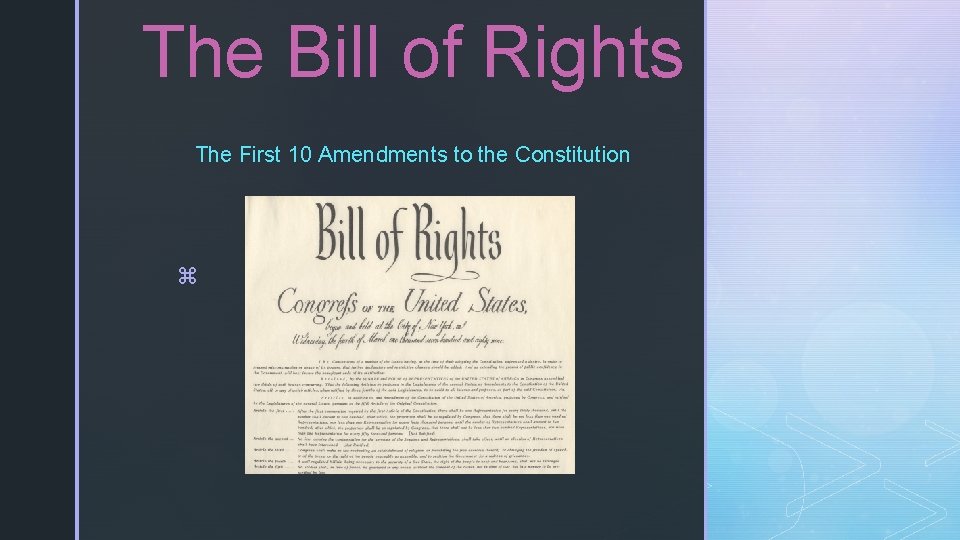
The Bill of Rights The First 10 Amendments to the Constitution z
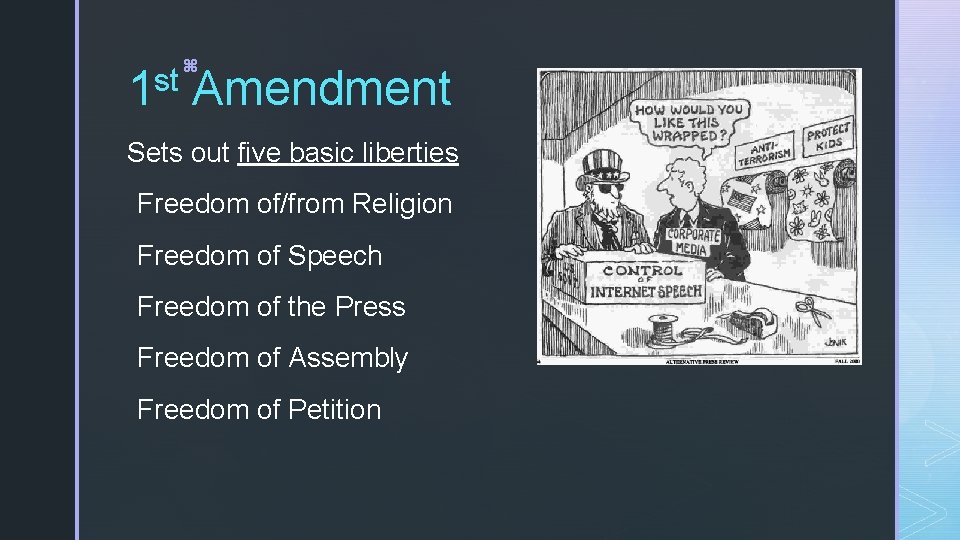
st 1 z Amendment Sets out five basic liberties Freedom of/from Religion Freedom of Speech Freedom of the Press Freedom of Assembly Freedom of Petition
z 2 nd Amendment Protects the Right to bear arms States may keep a militia (National Guard)
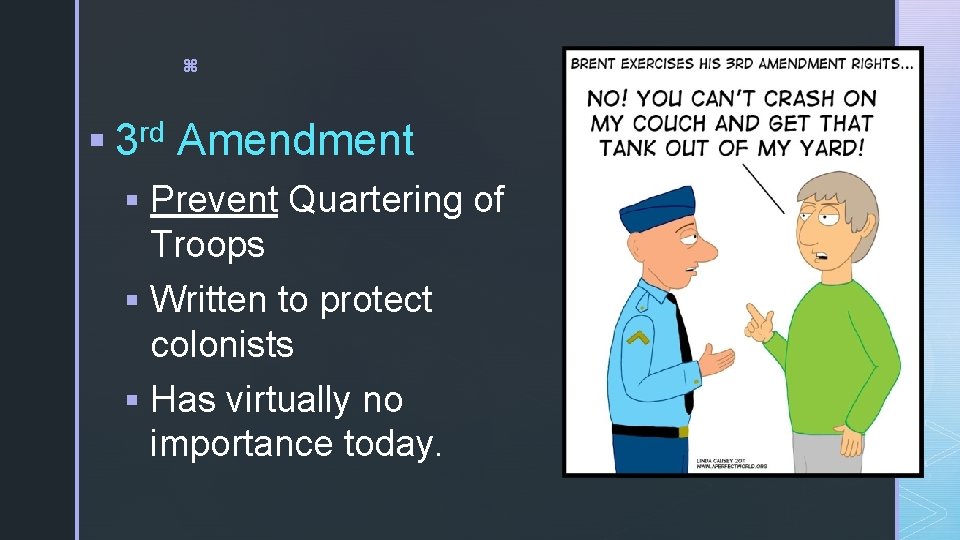
z § 3 rd Amendment § Prevent Quartering of Troops § Written to protect colonists § Has virtually no importance today.
z 4 th Amendment § Unlawful Searches and Seizures § Police must obtain warrants (court order) § Evidence gained illegally cannot be used in court.
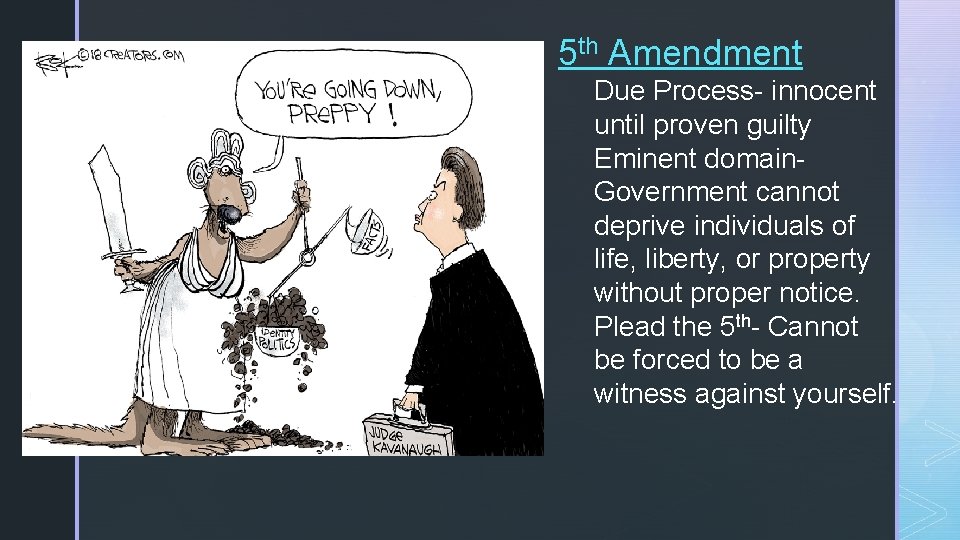
z 5 th Amendment Due Process- innocent until proven guilty Eminent domain. Government cannot deprive individuals of life, liberty, or property without proper notice. Plead the 5 th- Cannot be forced to be a witness against yourself.
z 6 th Amendment Criminal Proceedings Right to a speedy and public trial Right to an attorney § 7 th Amendment § Civil Trials § Right to a jury in any civil case involving more than $20.
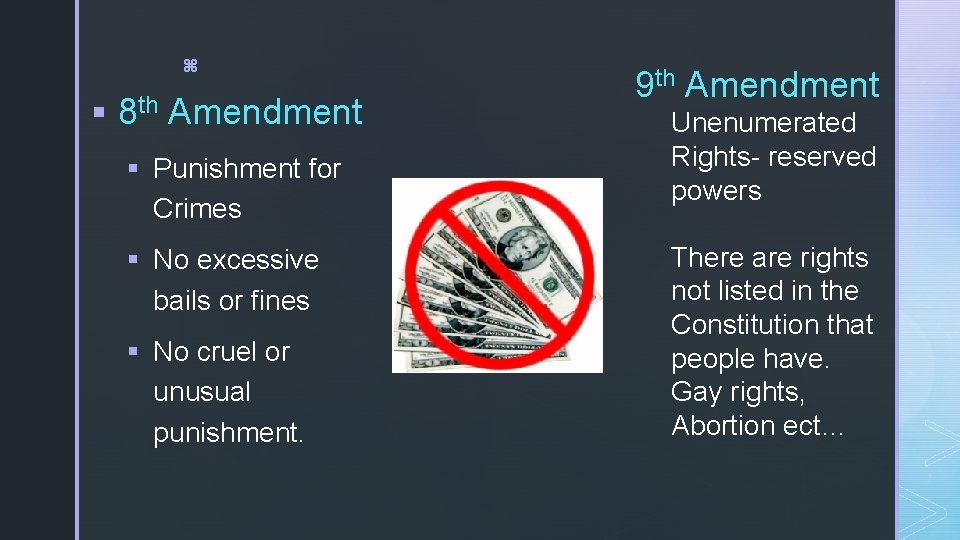
z § 8 th Amendment § Punishment for Crimes § No excessive bails or fines § No cruel or unusual punishment. 9 th Amendment Unenumerated Rights- reserved powers There are rights not listed in the Constitution that people have. Gay rights, Abortion ect…
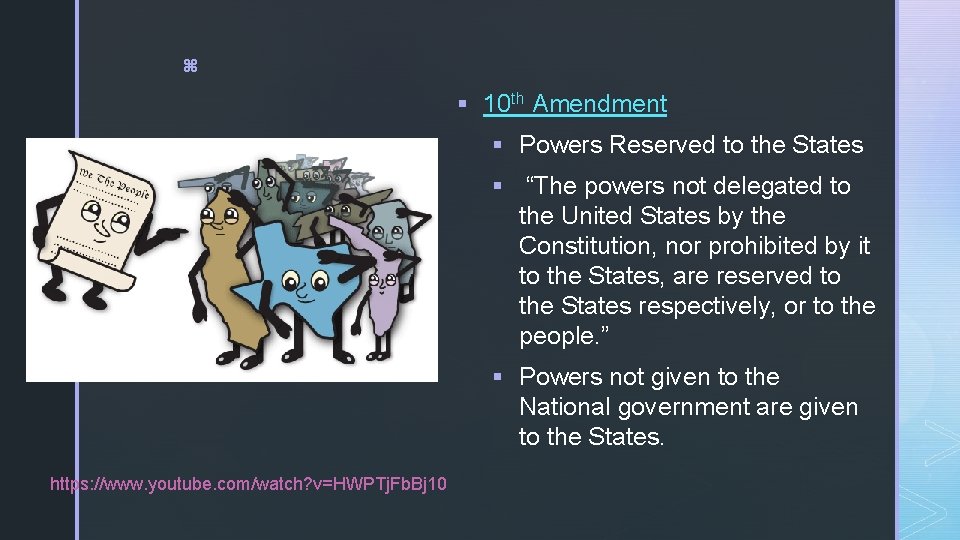
z § 10 th Amendment § Powers Reserved to the States § “The powers not delegated to the United States by the Constitution, nor prohibited by it to the States, are reserved to the States respectively, or to the people. ” § Powers not given to the National government are given to the States. https: //www. youtube. com/watch? v=HWPTj. Fb. Bj 10
z Formal and Informal Amendment Processes
z What are Amendments § Additions to the constitution § There are 2 types of amendments § Formal amendments § Informal amendments
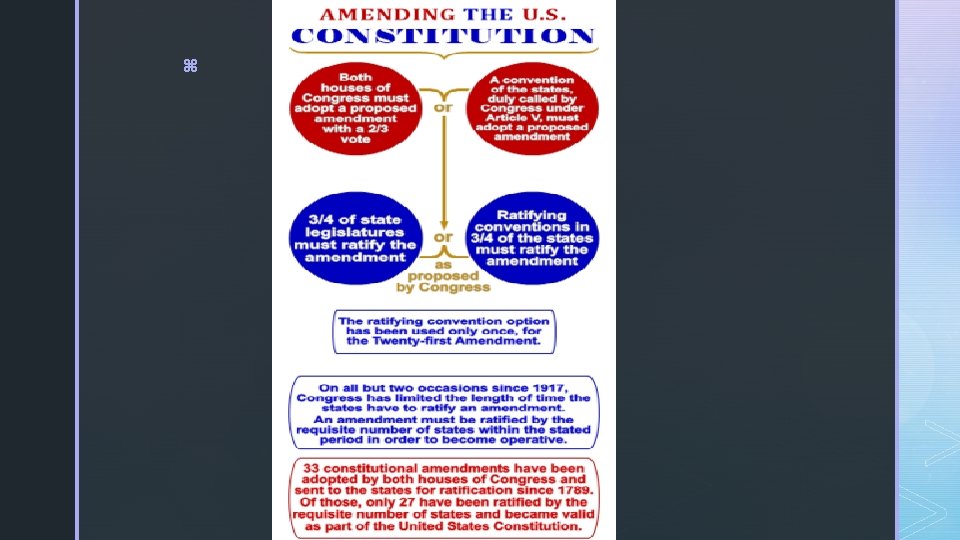
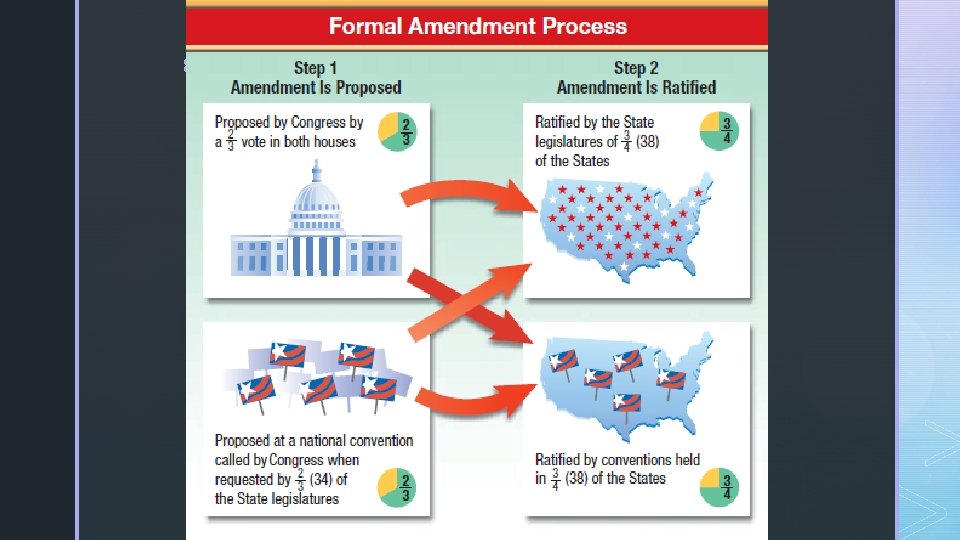
z Formal Amendments §State legislature call advisory vote of the people §Cannot be approved by vote of people before state legislature approves it §Congress places 7 yr deadline for ratification § 11, 699 as of 2017 joint resolutions proposed since 1789 § Only 33 sent on to the states, only 27 have been ratified § There are 4 methods to change the constitution
z Formal Amendment Process Method 1 § Proposed by: 2/3 vote in each house of Congress § Ratified by: ¾ of the State Legislatures § 38 State Legislatures must approve amendment § 26 of 27 amendments adopted in this manner Method 2 § Proposed by: 2/3 vote in each house of Congress § Ratified by: State Conventions (called for that purpose) in ¾ of the States
z Formal Amendment Process Method 3 § Proposed by: A national convention (called by Congress at the request of 2/3 of State) § Ratified by: ¾ of the State legislatures § Congress has never done this Method 4 § Proposed by: A national convention (called by Congress at the request of 2/3 of State legislatures § Ratified by: State Conventions (called for that purpose) in ¾ of States § Constitution was adopted this way
z
z
z Informal Amendments §BASIC LEGISLATION: Congress adds flesh to the bones of the Constitution. §Article 2 creates president and VP, Congress adds other agencies and offices. §Executive Action: Presidents help increase the growth of the Constitution. §Send troops and declares war unofficially §Executive agreements (foreign affairs) §Informal agreement, but legally binding
z Informal Amendments § Court decisions: Supreme Court interprets and applies the Constitution. § Constitutional convention in continuous session § Case law- Brown v. Board, Marbury v. Madison § Custom: unwritten custom may be as strong as written law. § No rule for succession to president until 25 th amendment in 1967 § No 3 rd term until FDR, 22 nd amendment 1951 § Party Practices: government conducts their business on a party basis. § Constitution doesn’t mention political parties § National Conventions have major parties when nominating candidates for the presidency
z 6 Principles of the Constitution
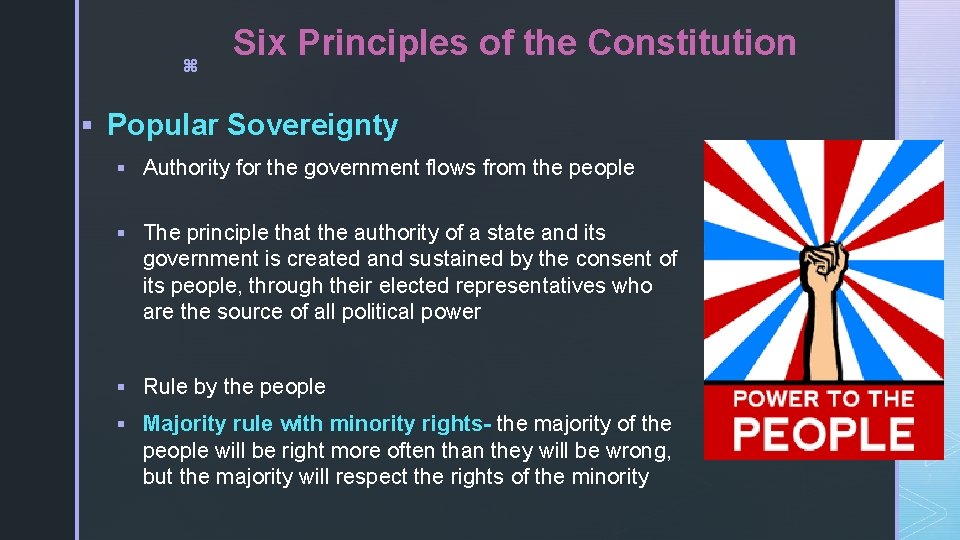
z Six Principles of the Constitution § Popular Sovereignty § Authority for the government flows from the people § The principle that the authority of a state and its government is created and sustained by the consent of its people, through their elected representatives who are the source of all political power § Rule by the people § Majority rule with minority rights- the majority of the people will be right more often than they will be wrong, but the majority will respect the rights of the minority
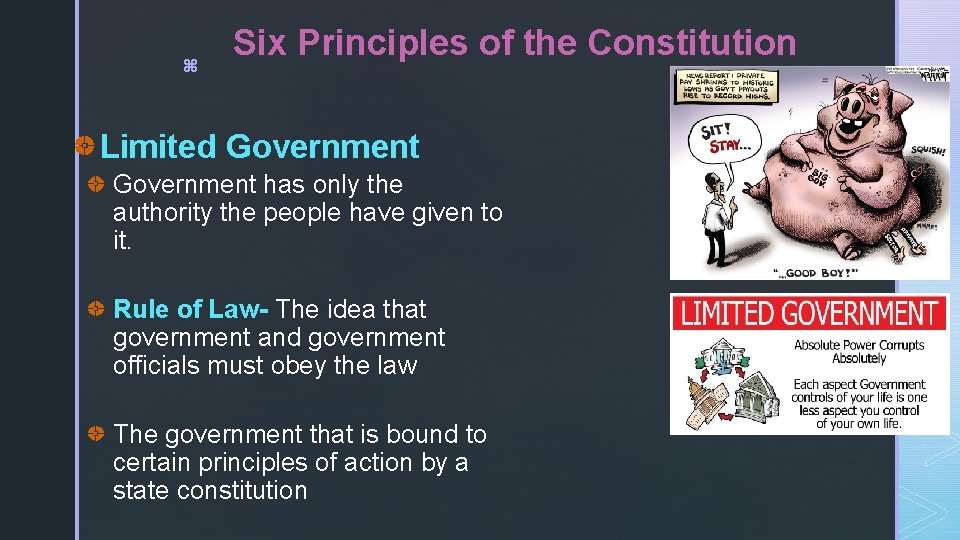
z Six Principles of the Constitution Limited Government has only the authority the people have given to it. Rule of Law- The idea that government and government officials must obey the law The government that is bound to certain principles of action by a state constitution
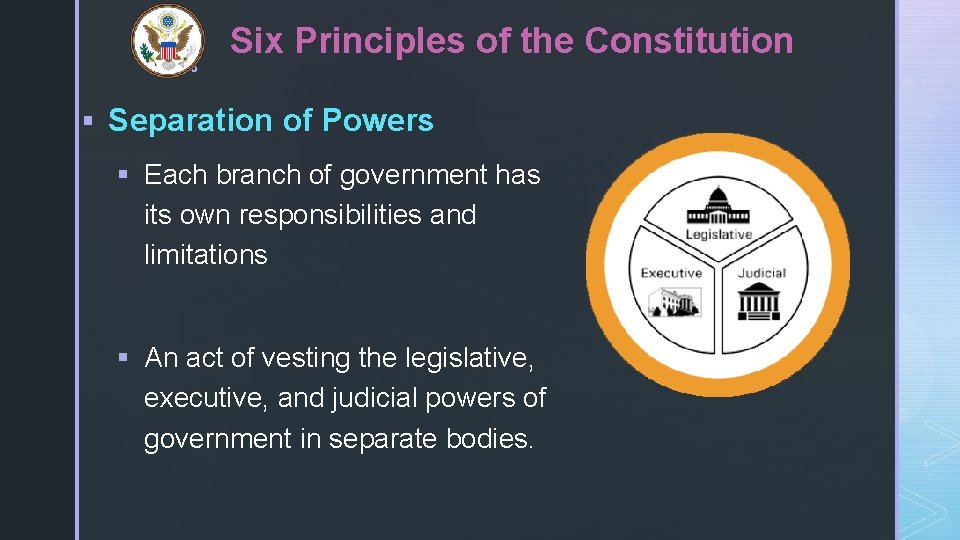
z Six Principles of the Constitution § Separation of Powers § Each branch of government has its own responsibilities and limitations § An act of vesting the legislative, executive, and judicial powers of government in separate bodies.
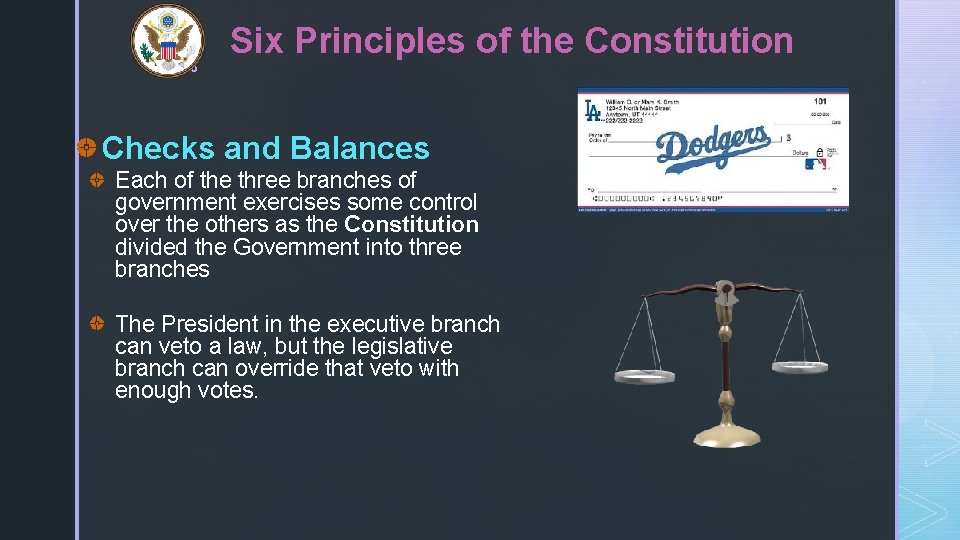
z Six Principles of the Constitution Checks and Balances Each of the three branches of government exercises some control over the others as the Constitution divided the Government into three branches The President in the executive branch can veto a law, but the legislative branch can override that veto with enough votes.
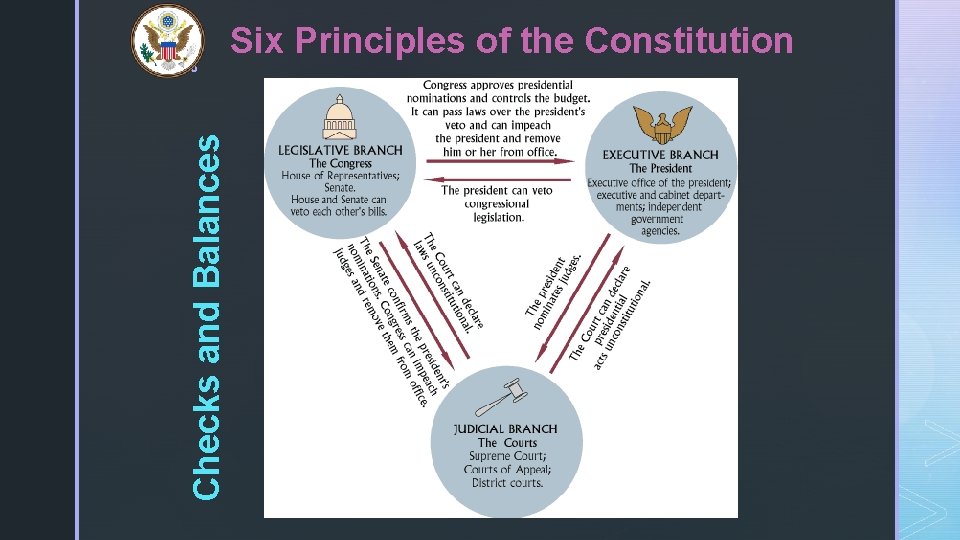
Checks and Balances z Six Principles of the Constitution
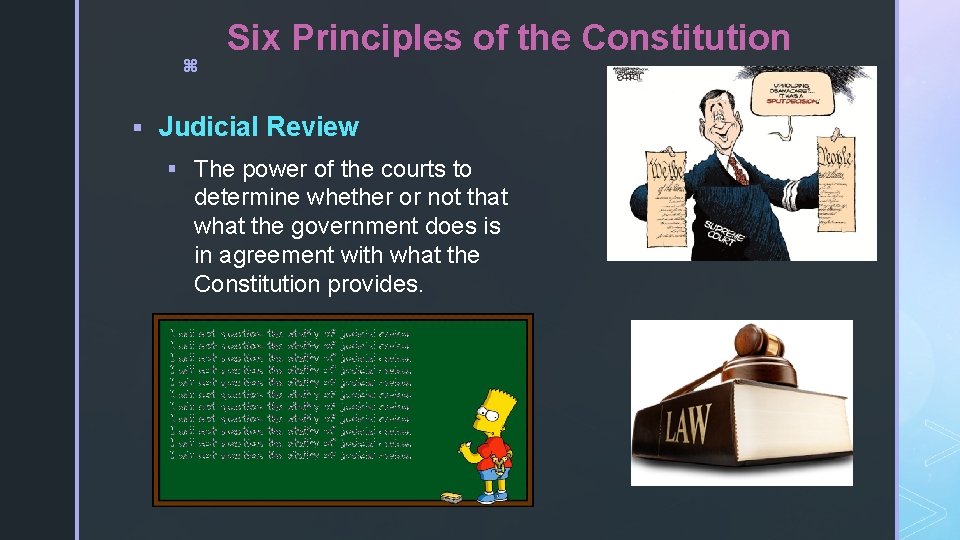
z Six Principles of the Constitution § Judicial Review § The power of the courts to determine whether or not that what the government does is in agreement with what the Constitution provides.
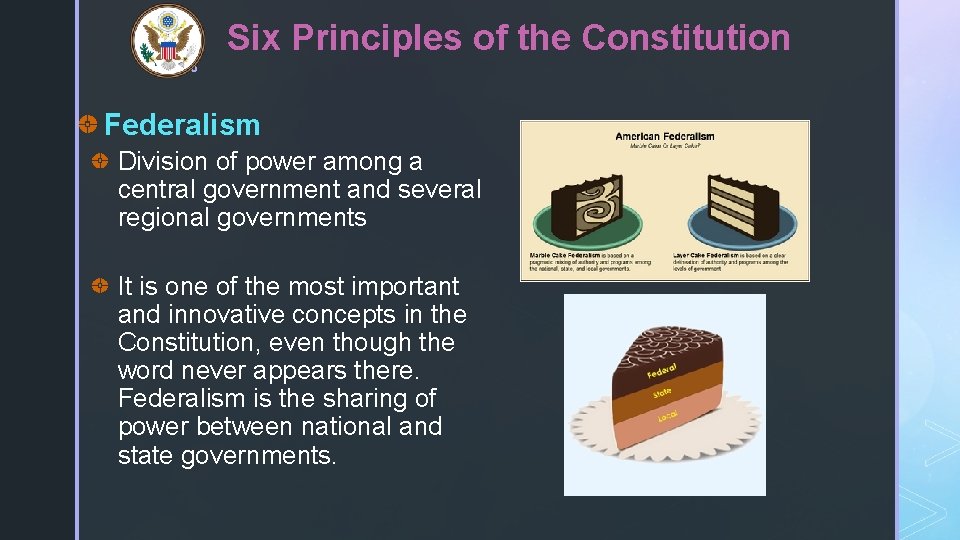
z Six Principles of the Constitution Federalism Division of power among a central government and several regional governments It is one of the most important and innovative concepts in the Constitution, even though the word never appears there. Federalism is the sharing of power between national and state governments.
- Slides: 27