
Bell Ringer Why do cells divide Cell Division
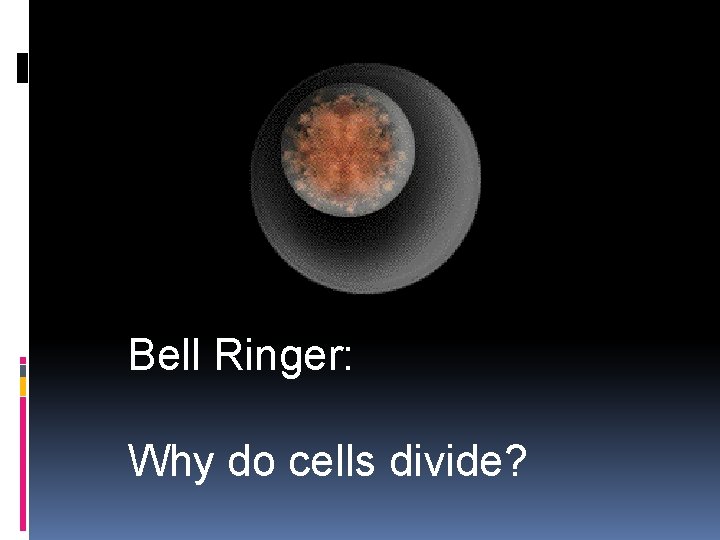
Bell Ringer: Why do cells divide?
Cell Division: (Mitosis) the process by which a cell divides into two new daughter cells. Why do cells divide? Cells will divide before they become too large. The larger a cell becomes, the more demand it places on its DNA and it has trouble moving nutrients and wastes across the cell membrane.
Cancer: Uncontrolled Cell Growth Cells lose control over their cell cycle and they start dividing uncontrollably and end up with a huge number of cells. http: //www. youtube. com/watch? v=LEp. TTolebqo
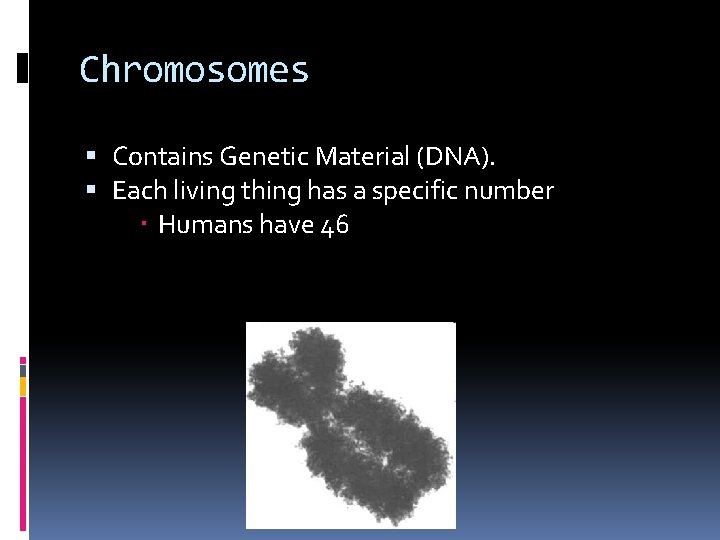
Chromosomes Contains Genetic Material (DNA). Each living thing has a specific number Humans have 46
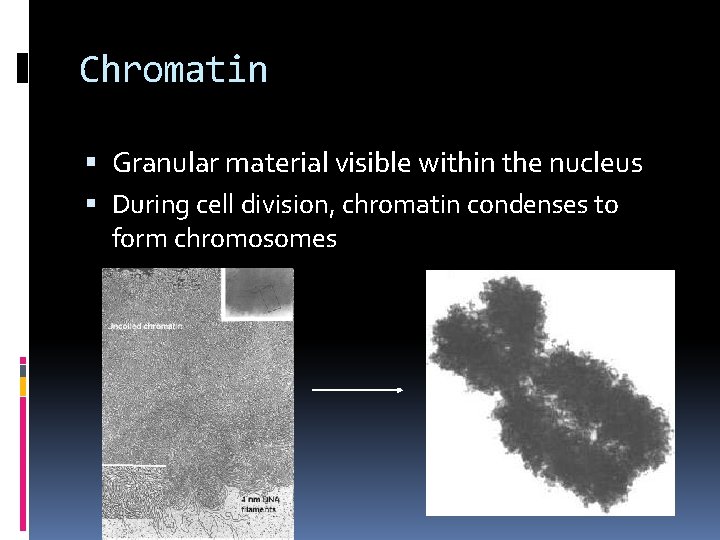
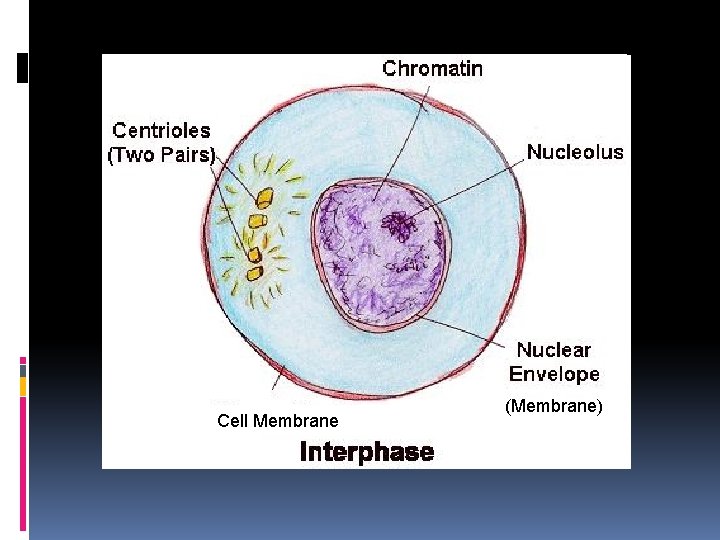
Chromatin Granular material visible within the nucleus During cell division, chromatin condenses to form chromosomes
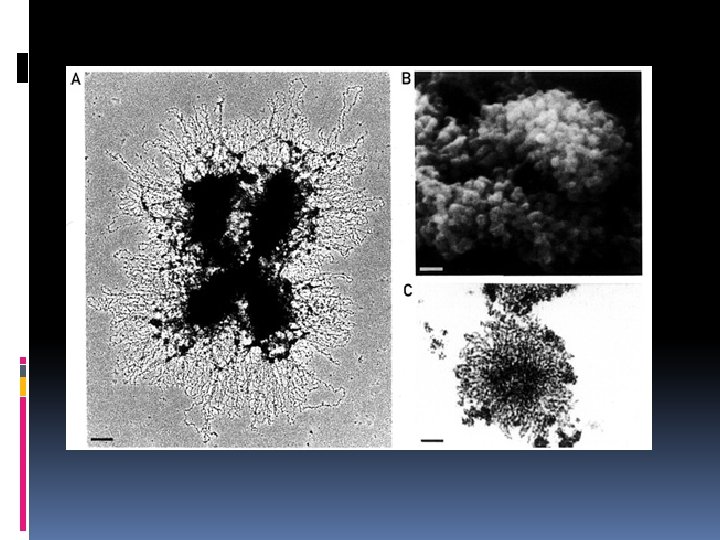
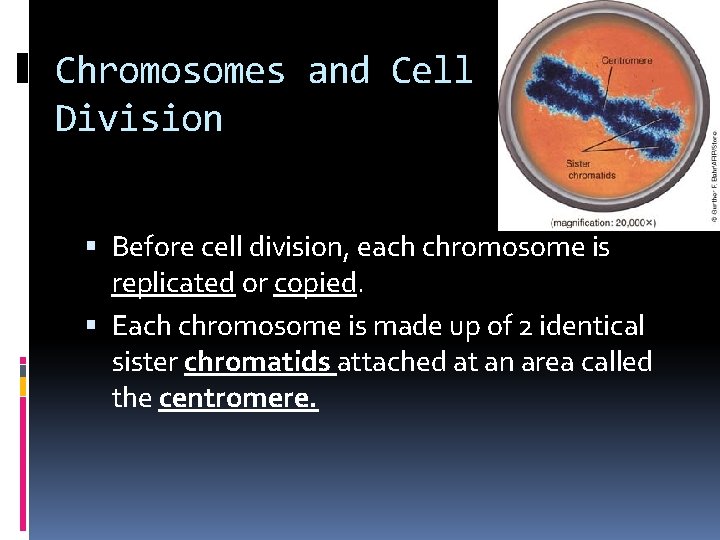
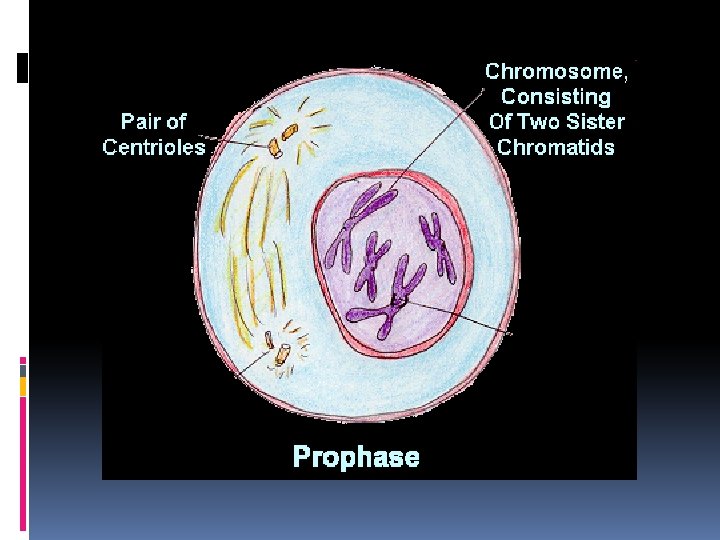
Chromosomes and Cell Division Before cell division, each chromosome is replicated or copied. Each chromosome is made up of 2 identical sister chromatids attached at an area called the centromere.
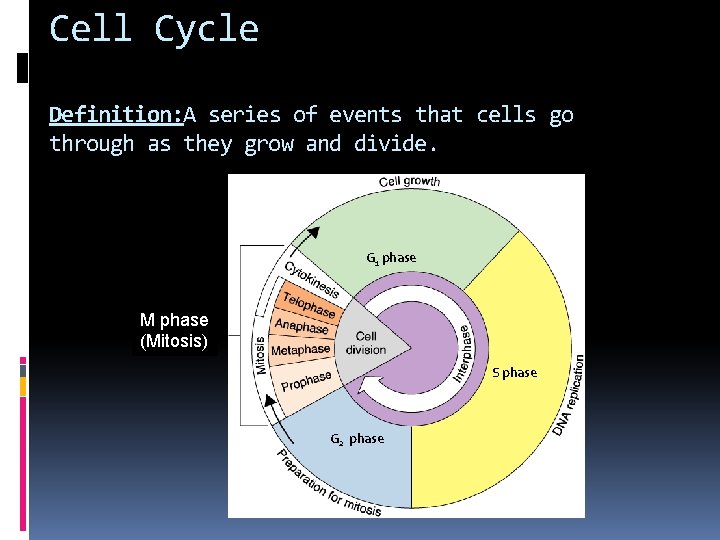
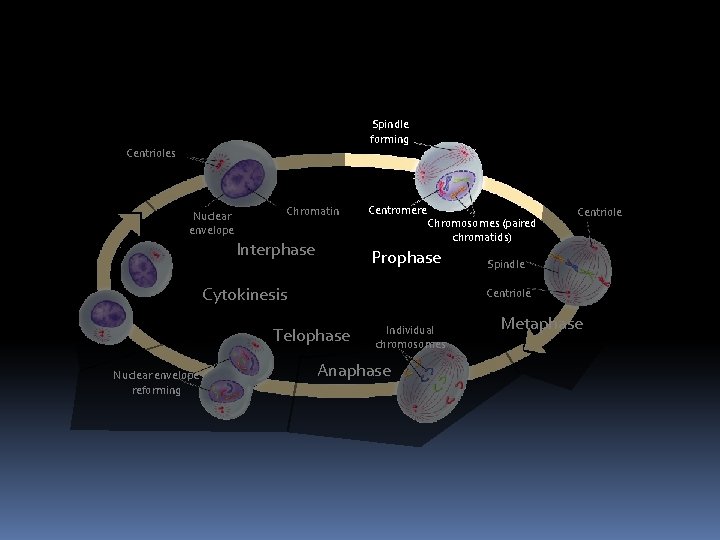
Cell Cycle Definition: A series of events that cells go through as they grow and divide. G 1 phase M phase (Mitosis) S phase G 2 phase
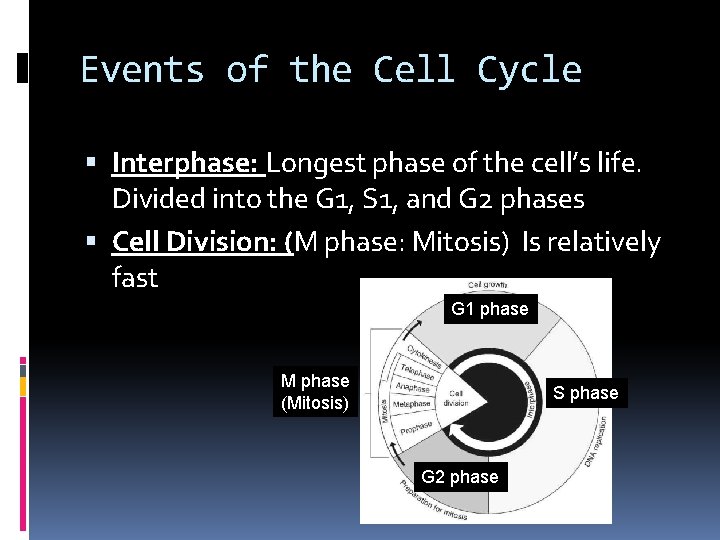
Events of the Cell Cycle Interphase: Longest phase of the cell’s life. Divided into the G 1, S 1, and G 2 phases Cell Division: (M phase: Mitosis) Is relatively fast G 1 phase M phase (Mitosis) S phase G 2 phase
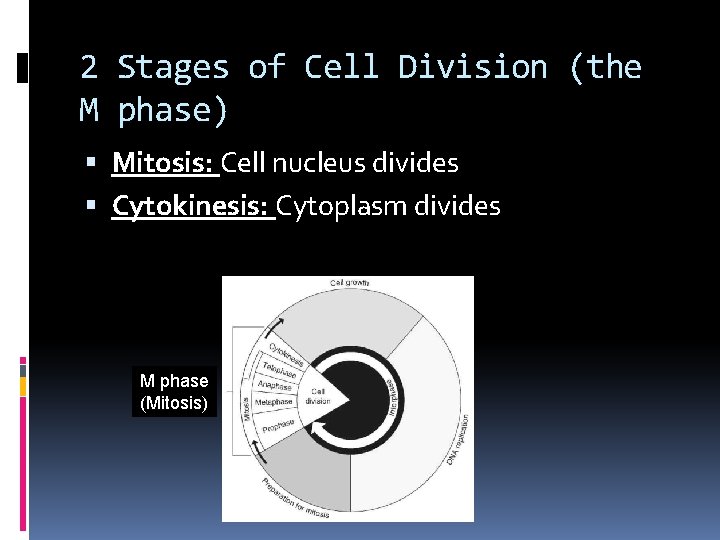
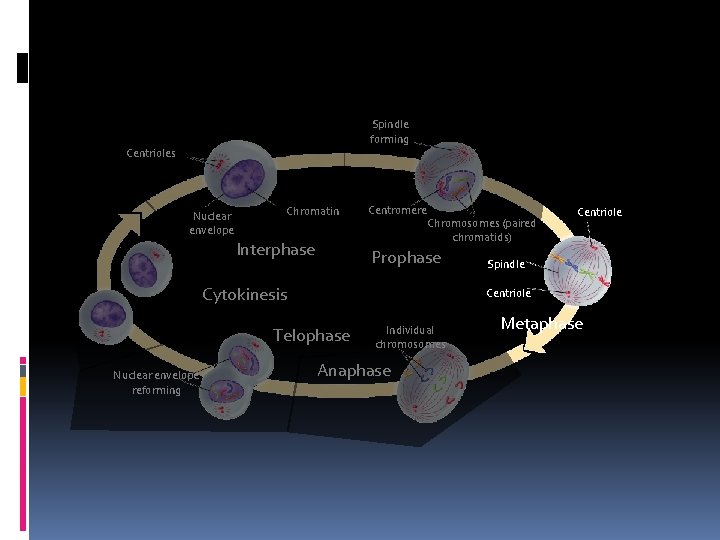
2 Stages of Cell Division (the M phase) Mitosis: Cell nucleus divides Cytokinesis: Cytoplasm divides M phase (Mitosis)
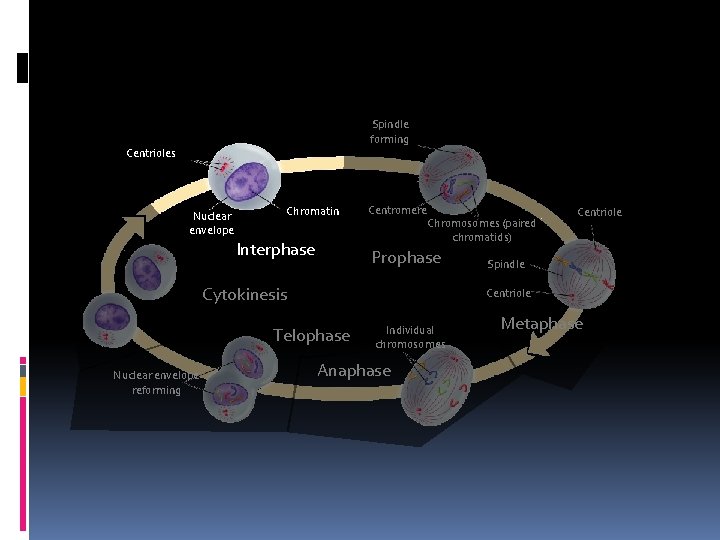
Spindle forming Centrioles Nuclear envelope Chromatin Interphase Centromere Chromosomes (paired chromatids) Prophase Cytokinesis Spindle Centriole Telophase Nuclear envelope reforming Centriole Individual chromosomes Anaphase Metaphase
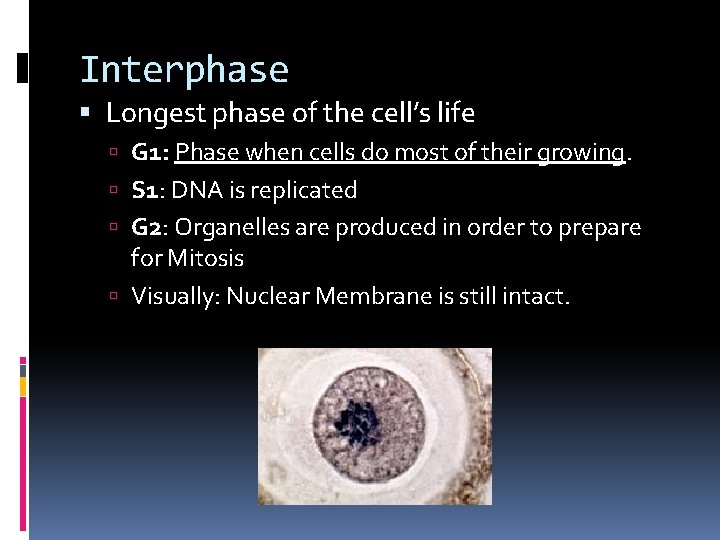
Interphase Longest phase of the cell’s life G 1: Phase when cells do most of their growing. S 1: DNA is replicated G 2: Organelles are produced in order to prepare for Mitosis Visually: Nuclear Membrane is still intact.
Cell Membrane (Membrane)
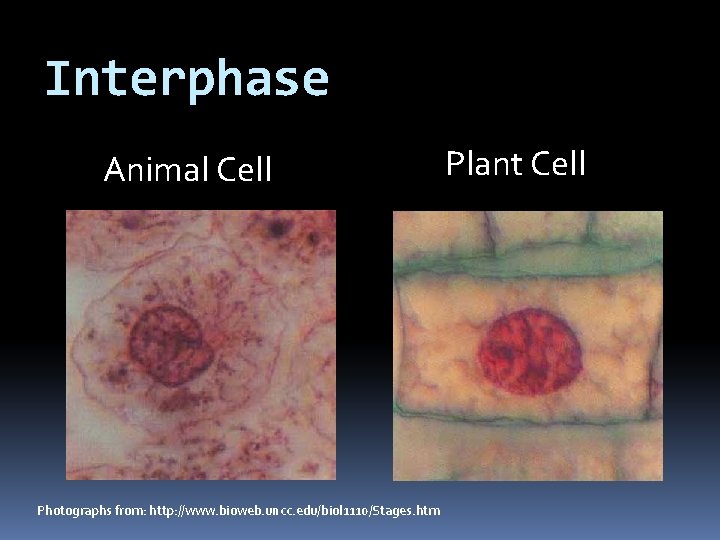
Interphase Animal Cell Photographs from: http: //www. bioweb. uncc. edu/biol 1110/Stages. htm Plant Cell
Spindle forming Centrioles Nuclear envelope Chromatin Interphase Centromere Chromosomes (paired chromatids) Prophase Cytokinesis Spindle Centriole Telophase Nuclear envelope reforming Centriole Individual chromosomes Anaphase Metaphase
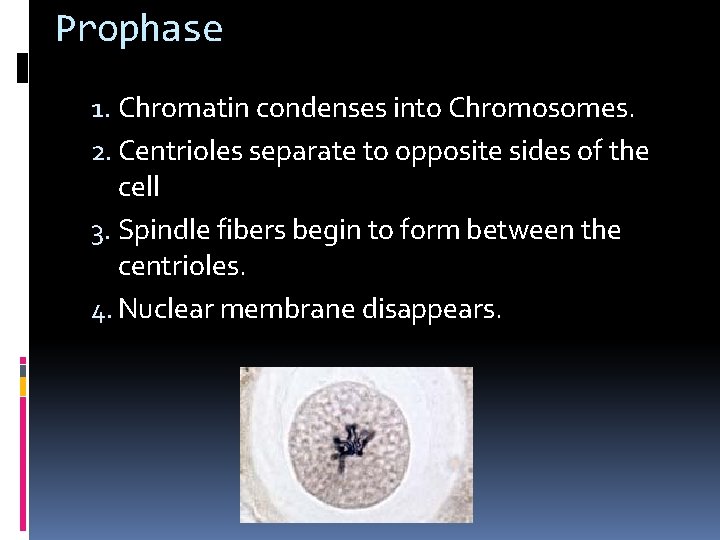
Prophase 1. Chromatin condenses into Chromosomes. 2. Centrioles separate to opposite sides of the cell 3. Spindle fibers begin to form between the centrioles. 4. Nuclear membrane disappears.
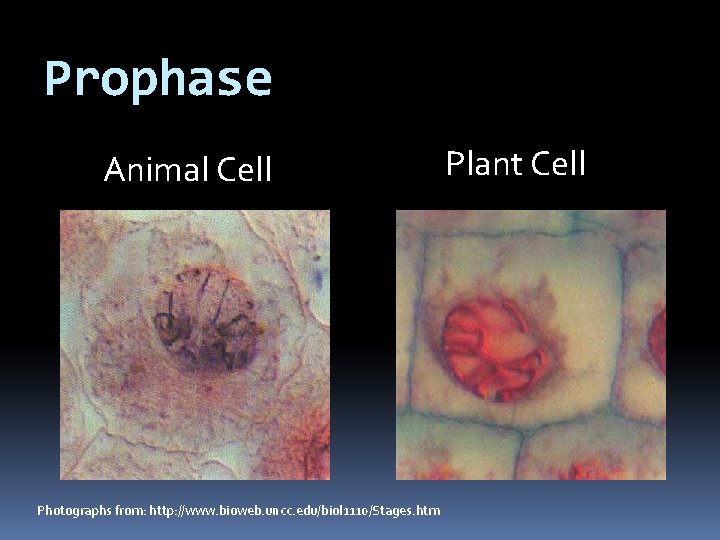
Prophase Animal Cell Photographs from: http: //www. bioweb. uncc. edu/biol 1110/Stages. htm Plant Cell
Spindle forming Centrioles Nuclear envelope Chromatin Interphase Centromere Chromosomes (paired chromatids) Prophase Cytokinesis Spindle Centriole Telophase Nuclear envelope reforming Centriole Individual chromosomes Anaphase Metaphase
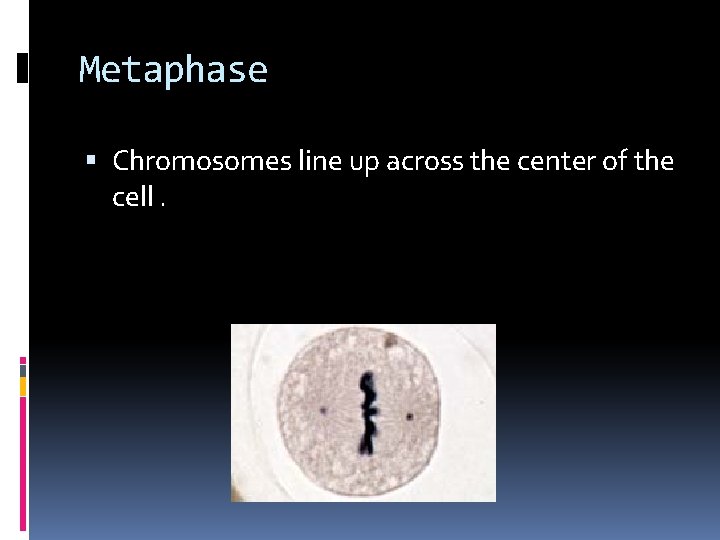
Metaphase Chromosomes line up across the center of the cell.
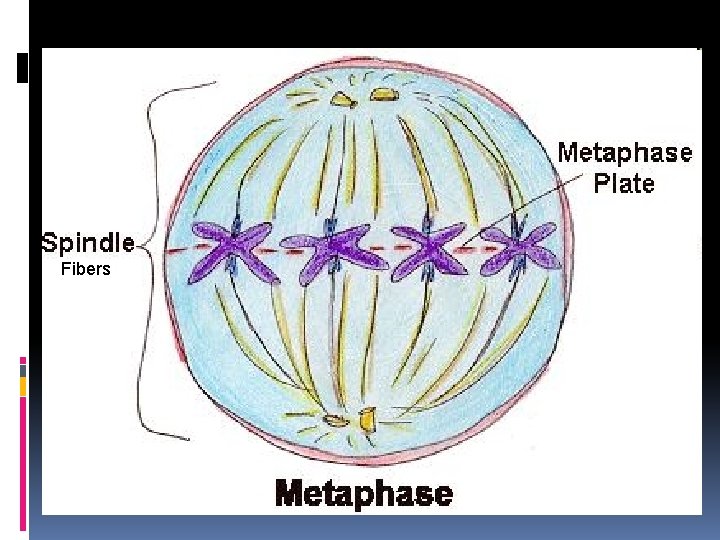
Fibers
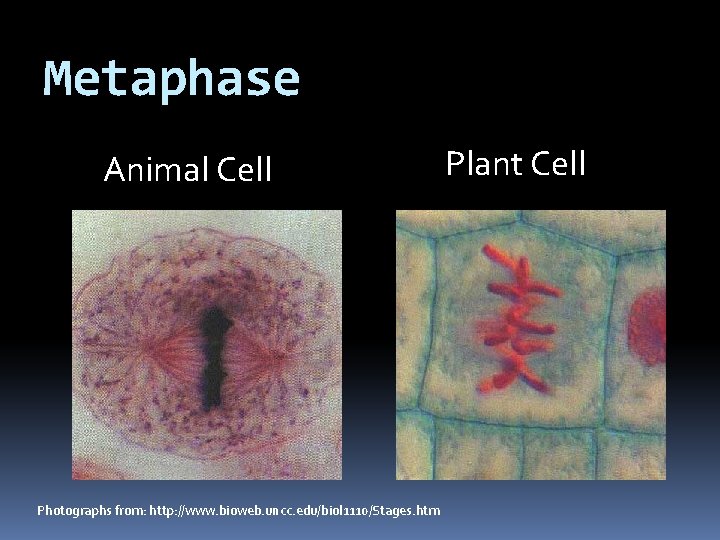
Metaphase Animal Cell Photographs from: http: //www. bioweb. uncc. edu/biol 1110/Stages. htm Plant Cell
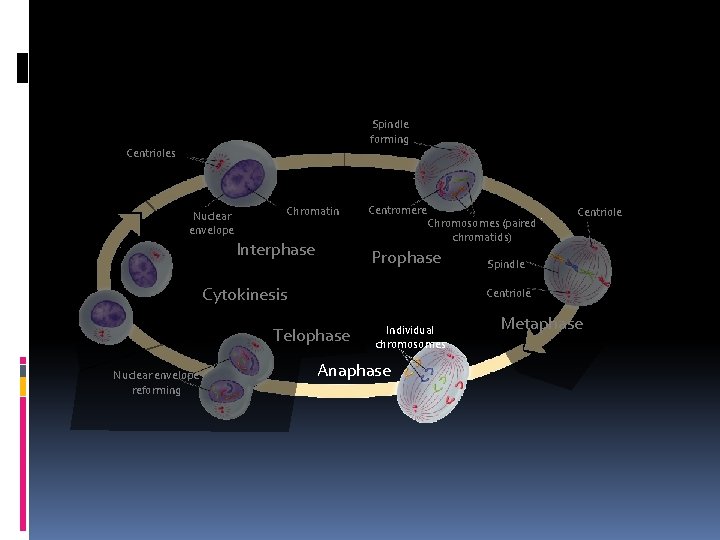
Spindle forming Centrioles Nuclear envelope Chromatin Interphase Centromere Chromosomes (paired chromatids) Prophase Cytokinesis Spindle Centriole Telophase Nuclear envelope reforming Centriole Individual chromosomes Anaphase Metaphase
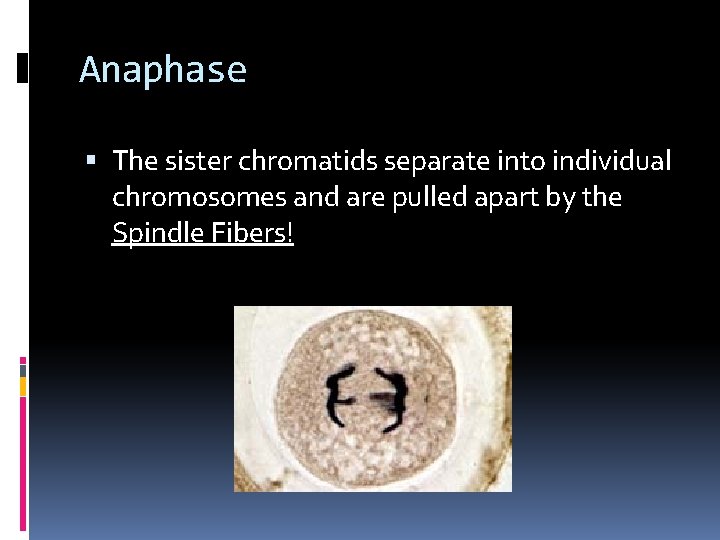
Anaphase The sister chromatids separate into individual chromosomes and are pulled apart by the Spindle Fibers!
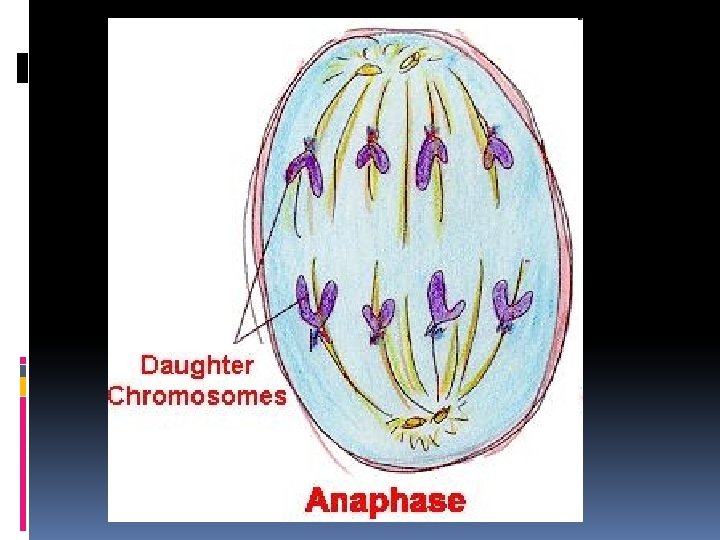
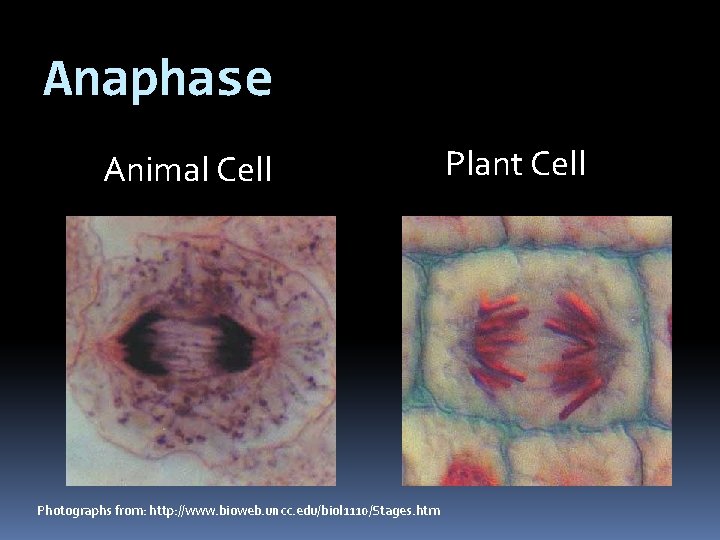
Anaphase Animal Cell Photographs from: http: //www. bioweb. uncc. edu/biol 1110/Stages. htm Plant Cell
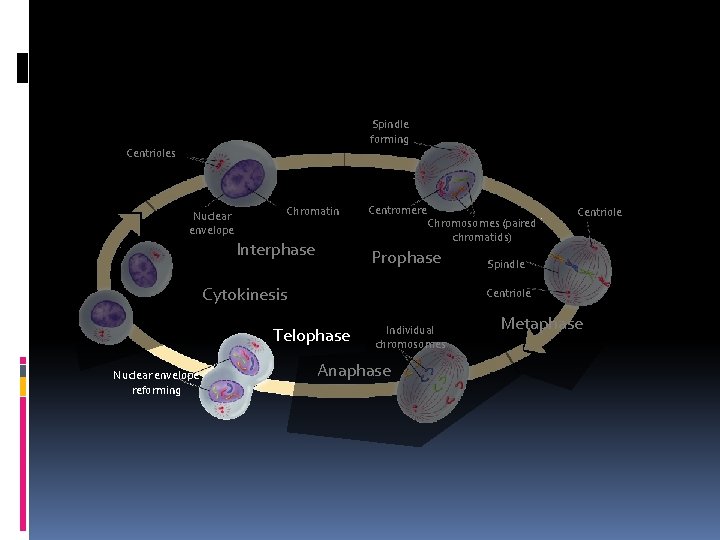
Spindle forming Centrioles Nuclear envelope Chromatin Interphase Centromere Chromosomes (paired chromatids) Prophase Cytokinesis Spindle Centriole Telophase Nuclear envelope reforming Centriole Individual chromosomes Anaphase Metaphase
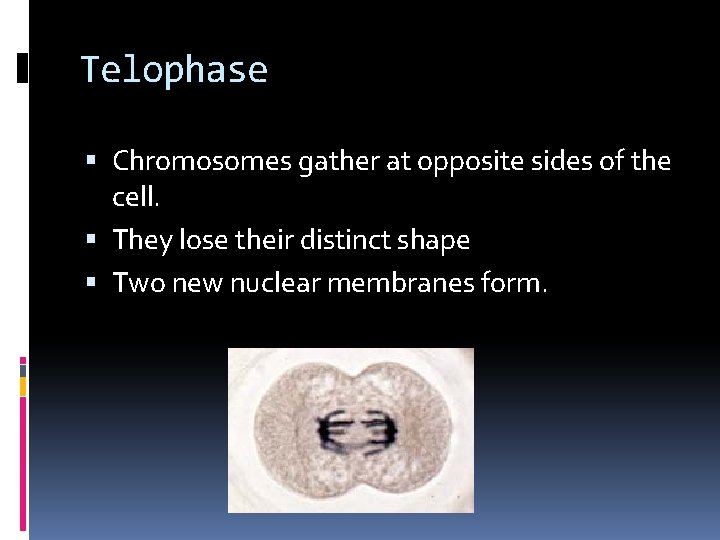
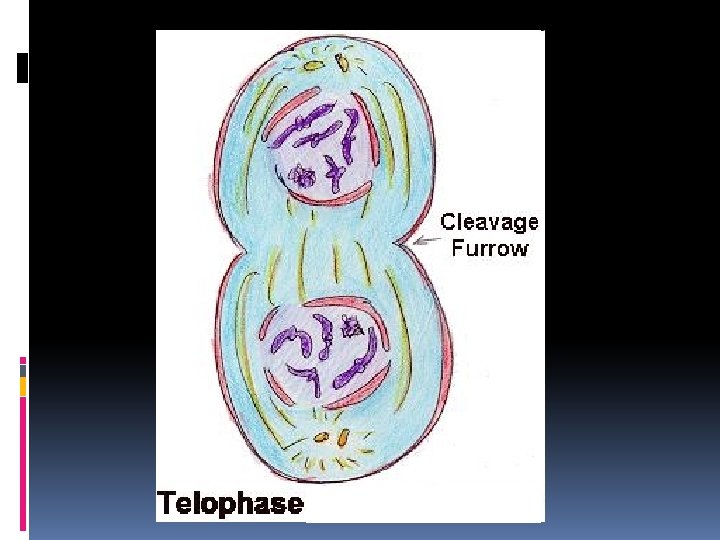
Telophase Chromosomes gather at opposite sides of the cell. They lose their distinct shape Two new nuclear membranes form.
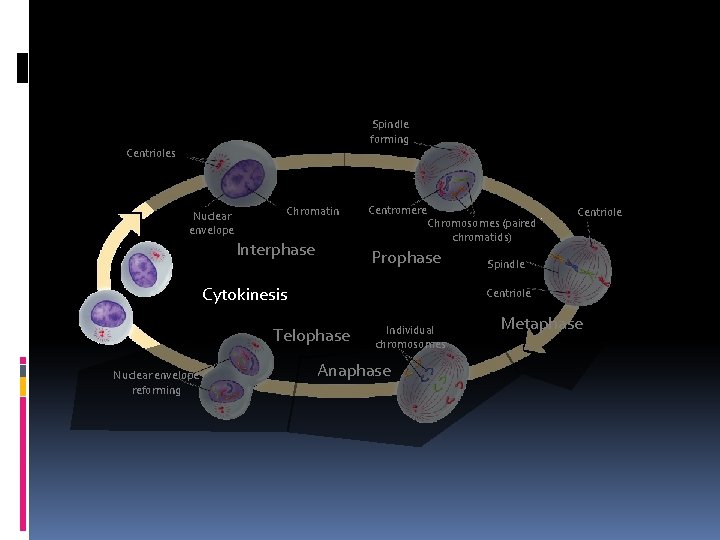
Section 10 -2 Spindle forming Centrioles Nuclear envelope Chromatin Interphase Centromere Chromosomes (paired chromatids) Prophase Cytokinesis Spindle Centriole Telophase Nuclear envelope reforming Centriole Individual chromosomes Anaphase Metaphase
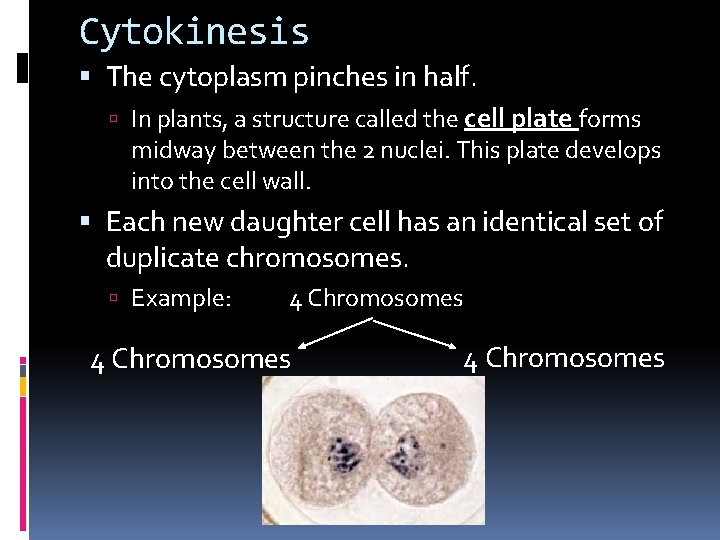
Cytokinesis The cytoplasm pinches in half. In plants, a structure called the cell plate forms midway between the 2 nuclei. This plate develops into the cell wall. Each new daughter cell has an identical set of duplicate chromosomes. Example: 4 Chromosomes
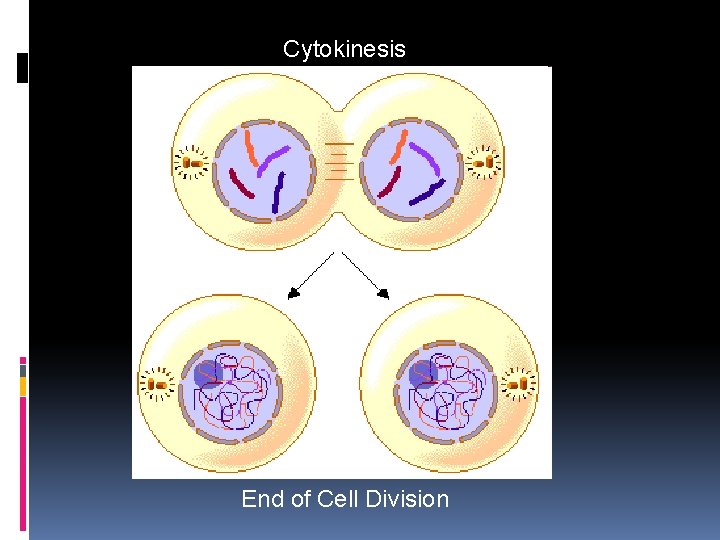
Cytokinesis End of Cell Division
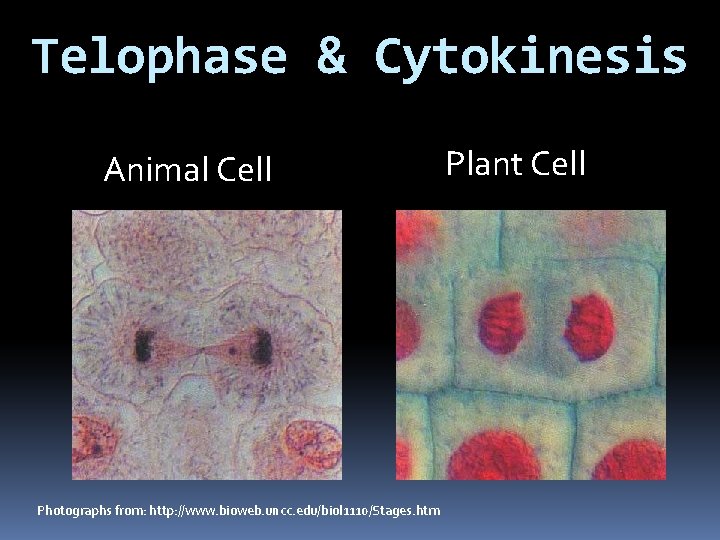
Telophase & Cytokinesis Animal Cell Photographs from: http: //www. bioweb. uncc. edu/biol 1110/Stages. htm Plant Cell
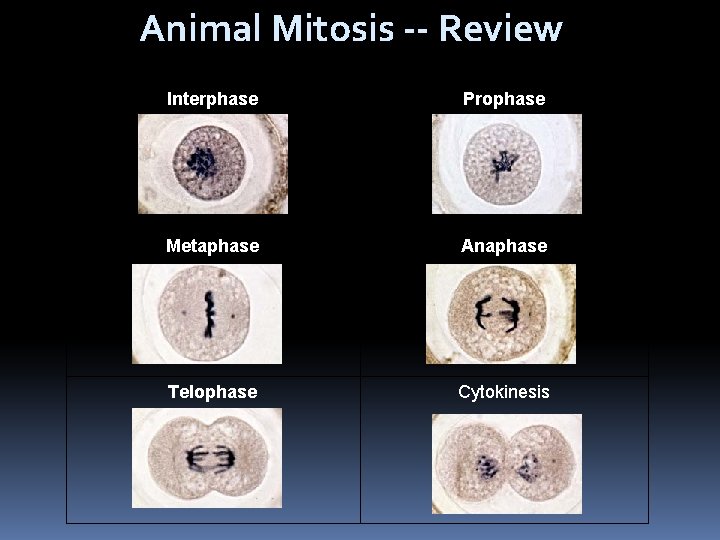
Animal Mitosis -- Review Interphase Prophase Metaphase Anaphase Telophase Cytokinesis
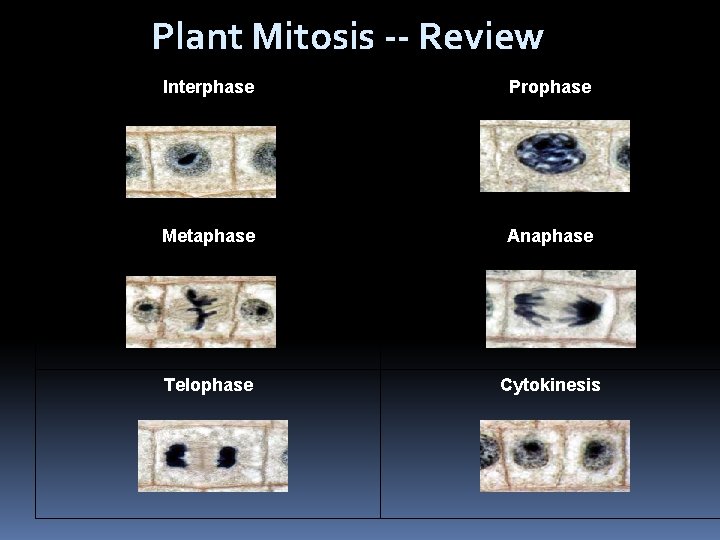
Plant Mitosis -- Review Interphase Prophase Metaphase Anaphase Telophase Cytokinesis
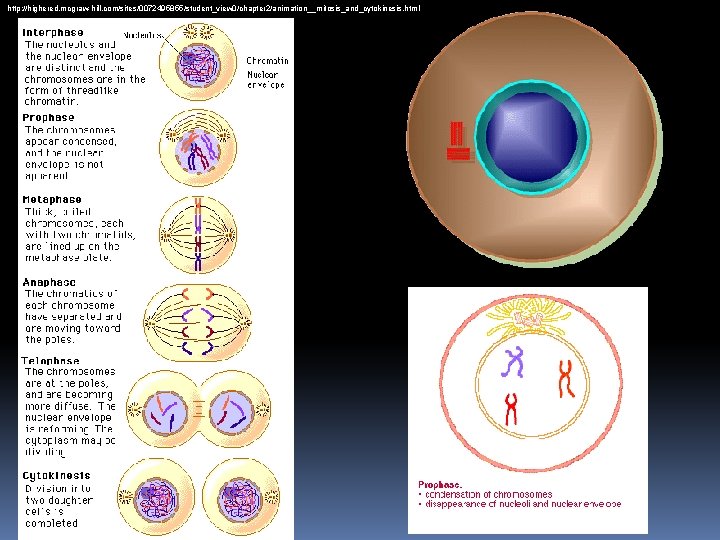
http: //highered. mcgraw-hill. com/sites/0072495855/student_view 0/chapter 2/animation__mitosis_and_cytokinesis. html
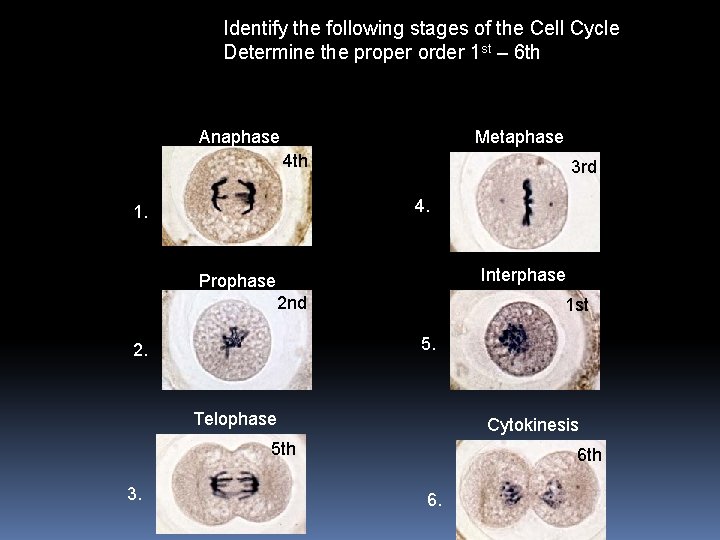
Identify the following stages of the Cell Cycle Determine the proper order 1 st – 6 th Anaphase Metaphase 4 th 3 rd 4. 1. Interphase Prophase 2 nd 1 st 5. 2. Telophase Cytokinesis 5 th 3. 6 th 6.

Picture of the Day: Facebook………………?
- Slides: 38