
Bell Ringer What are the four major spheres
Bell Ringer • • • What are the four major spheres of the Earth? Atmosphere – Earth’s air Geosphere –Earth’s land Hydrosphere –Earth’s water Biosphere – Earth’s living things
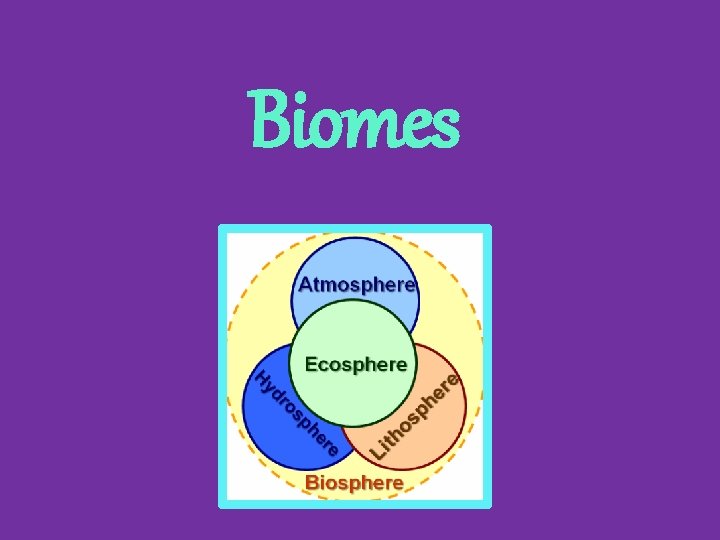
Biomes
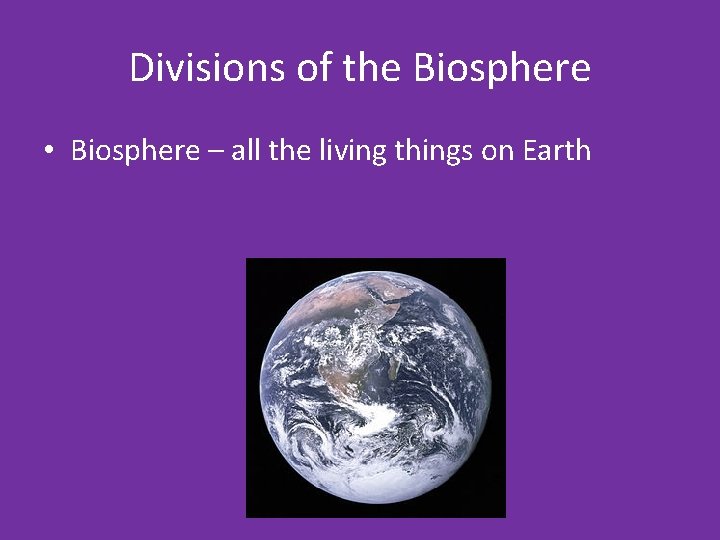
Divisions of the Biosphere • Biosphere – all the living things on Earth
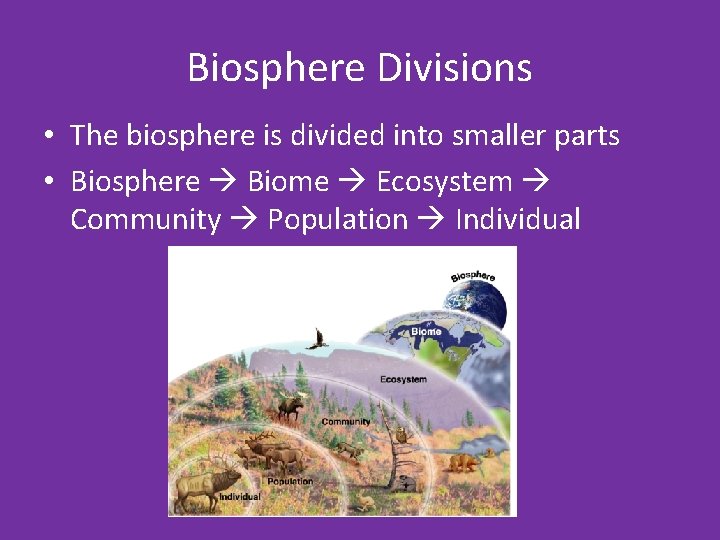
Biosphere Divisions • The biosphere is divided into smaller parts • Biosphere Biome Ecosystem Community Population Individual
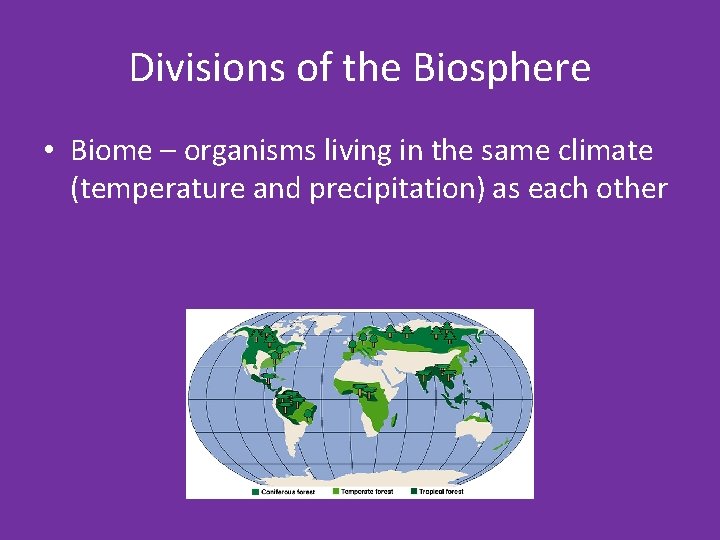
Divisions of the Biosphere • Biome – organisms living in the same climate (temperature and precipitation) as each other
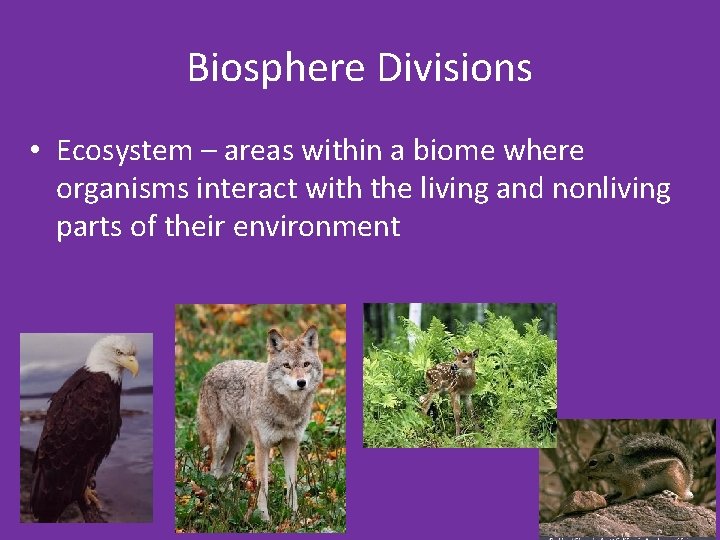
Biosphere Divisions • Ecosystem – areas within a biome where organisms interact with the living and nonliving parts of their environment
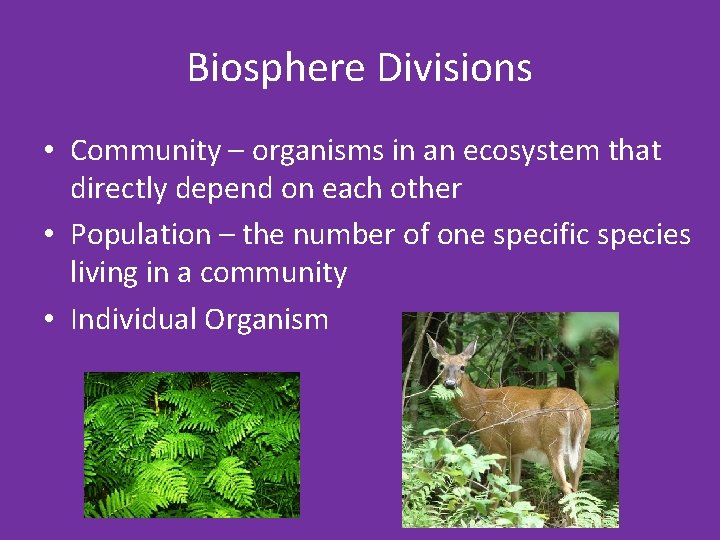
Biosphere Divisions • Community – organisms in an ecosystem that directly depend on each other • Population – the number of one specific species living in a community • Individual Organism
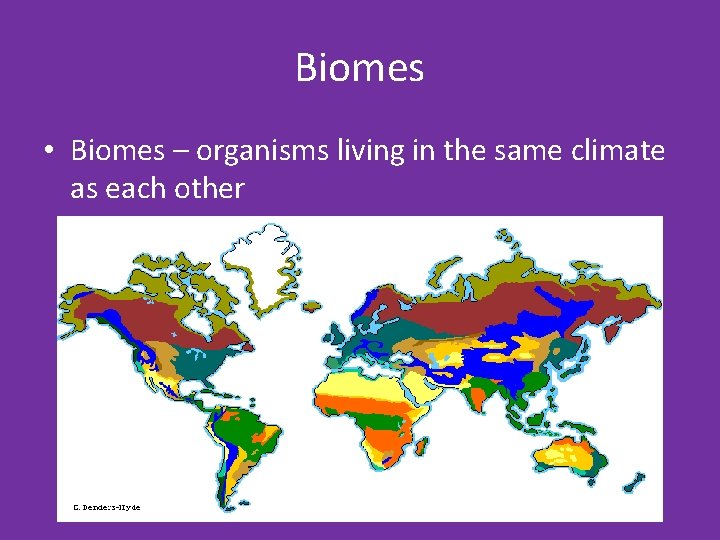
Biomes • Biomes – organisms living in the same climate as each other
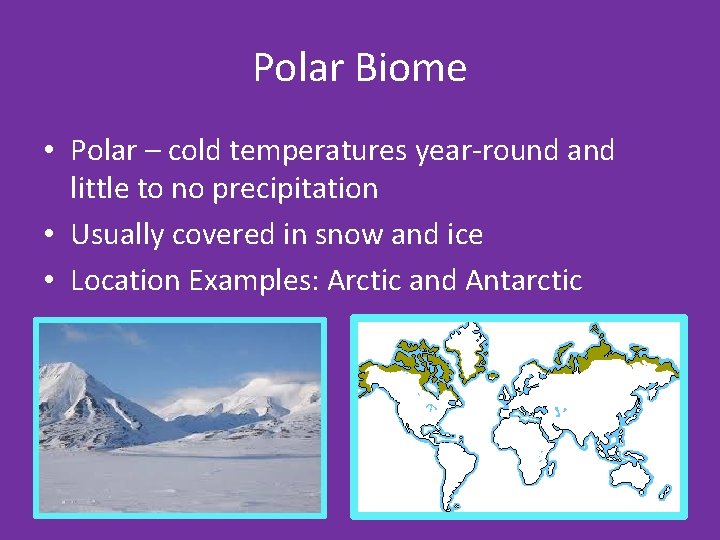
Polar Biome • Polar – cold temperatures year-round and little to no precipitation • Usually covered in snow and ice • Location Examples: Arctic and Antarctic
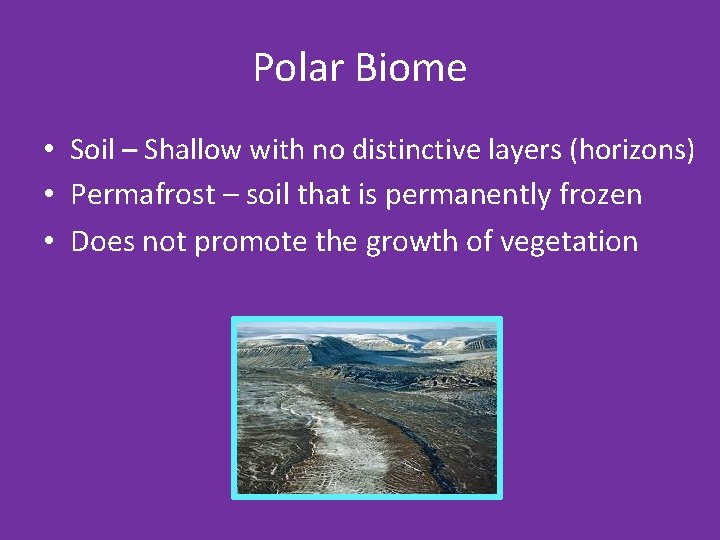
Polar Biome • Soil – Shallow with no distinctive layers (horizons) • Permafrost – soil that is permanently frozen • Does not promote the growth of vegetation
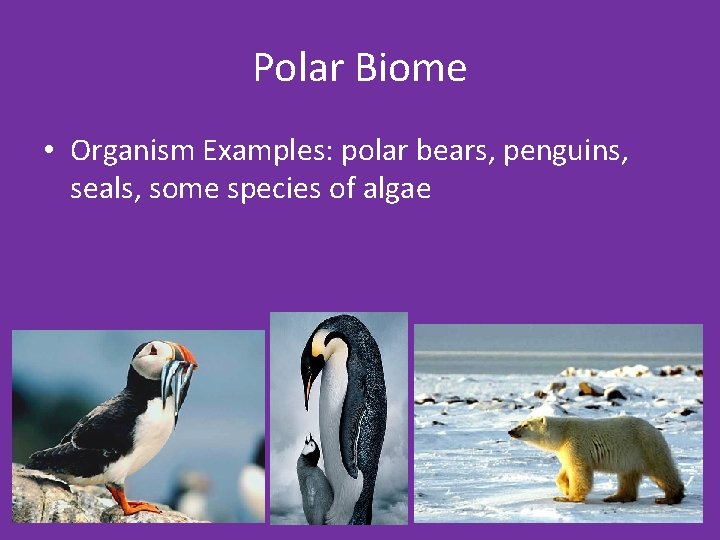
Polar Biome • Organism Examples: polar bears, penguins, seals, some species of algae
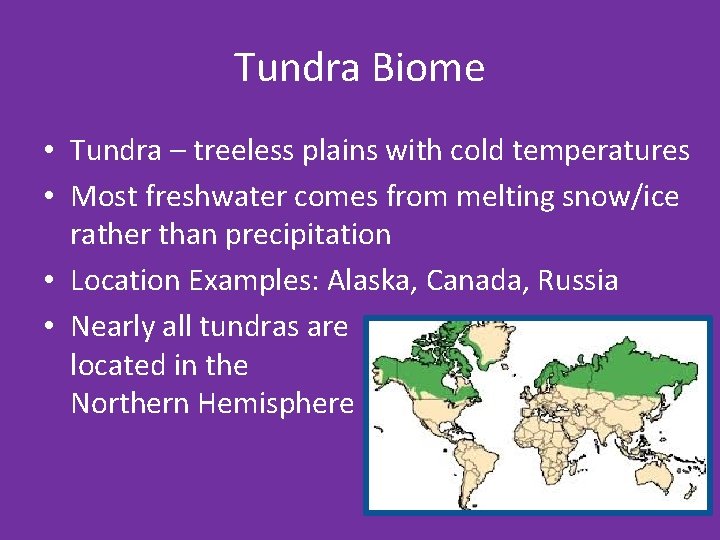
Tundra Biome • Tundra – treeless plains with cold temperatures • Most freshwater comes from melting snow/ice rather than precipitation • Location Examples: Alaska, Canada, Russia • Nearly all tundras are located in the Northern Hemisphere
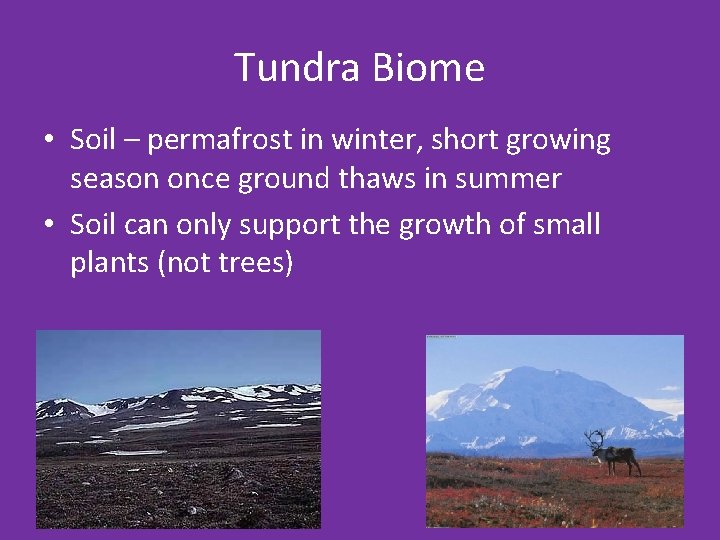
Tundra Biome • Soil – permafrost in winter, short growing season once ground thaws in summer • Soil can only support the growth of small plants (not trees)
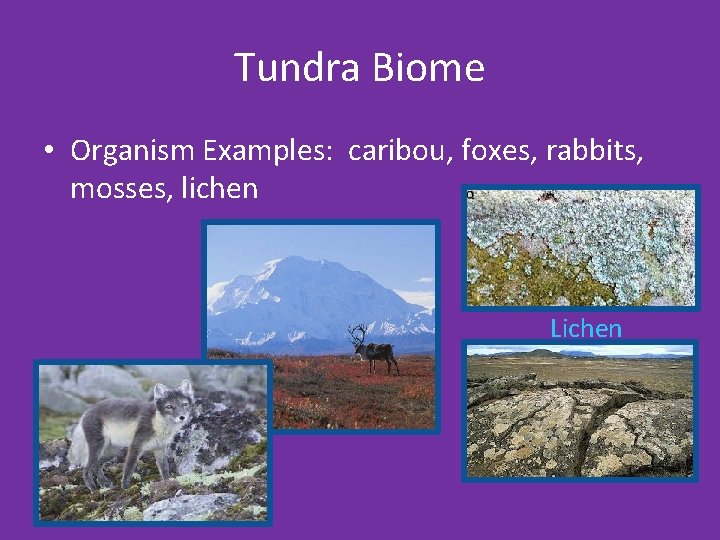
Tundra Biome • Organism Examples: caribou, foxes, rabbits, mosses, lichen Lichen
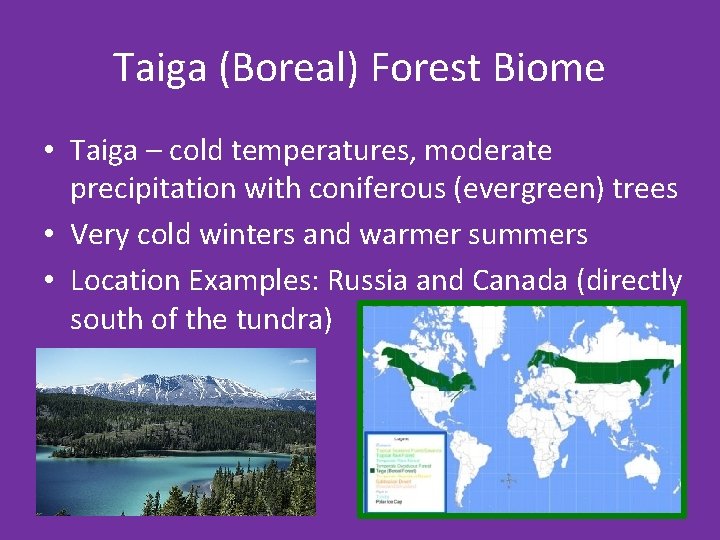
Taiga (Boreal) Forest Biome • Taiga – cold temperatures, moderate precipitation with coniferous (evergreen) trees • Very cold winters and warmer summers • Location Examples: Russia and Canada (directly south of the tundra)
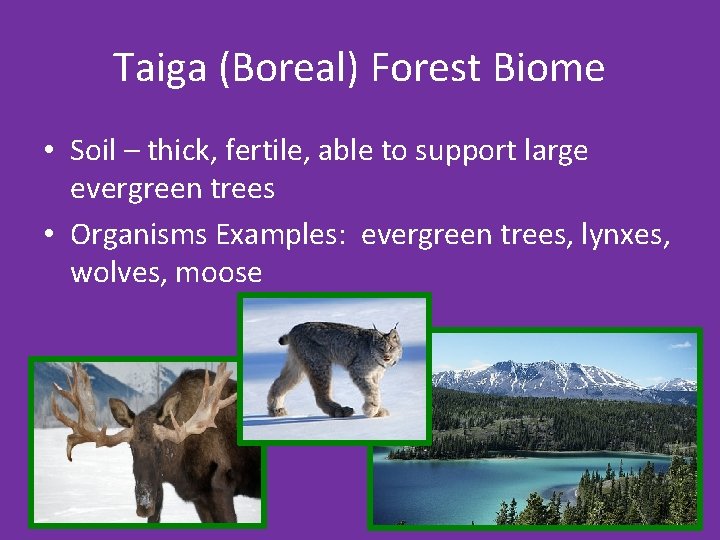
Taiga (Boreal) Forest Biome • Soil – thick, fertile, able to support large evergreen trees • Organisms Examples: evergreen trees, lynxes, wolves, moose
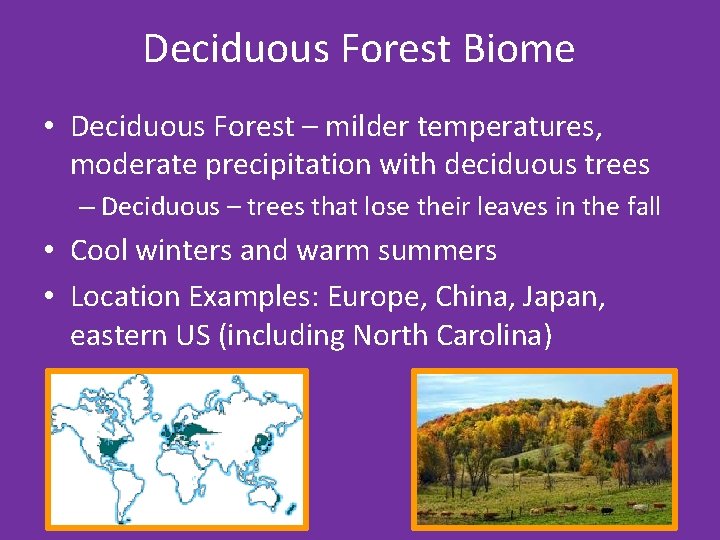
Deciduous Forest Biome • Deciduous Forest – milder temperatures, moderate precipitation with deciduous trees – Deciduous – trees that lose their leaves in the fall • Cool winters and warm summers • Location Examples: Europe, China, Japan, eastern US (including North Carolina)
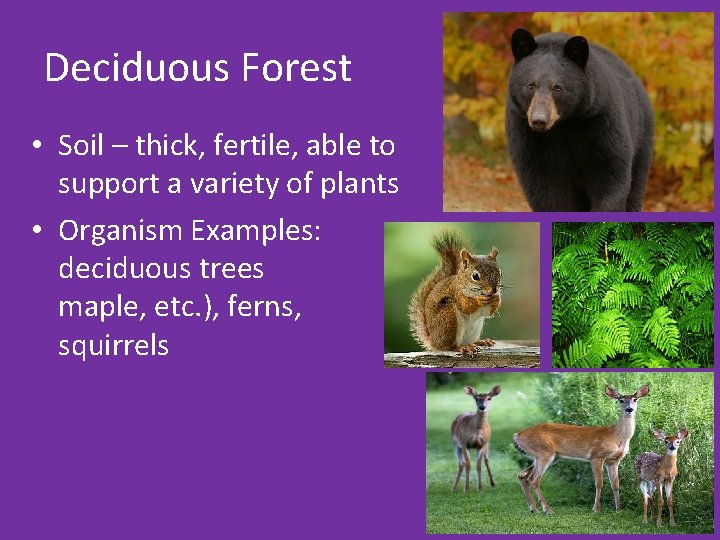
Deciduous Forest • Soil – thick, fertile, able to support a variety of plants • Organism Examples: deciduous trees (oak, maple, etc. ), ferns, deer, squirrels
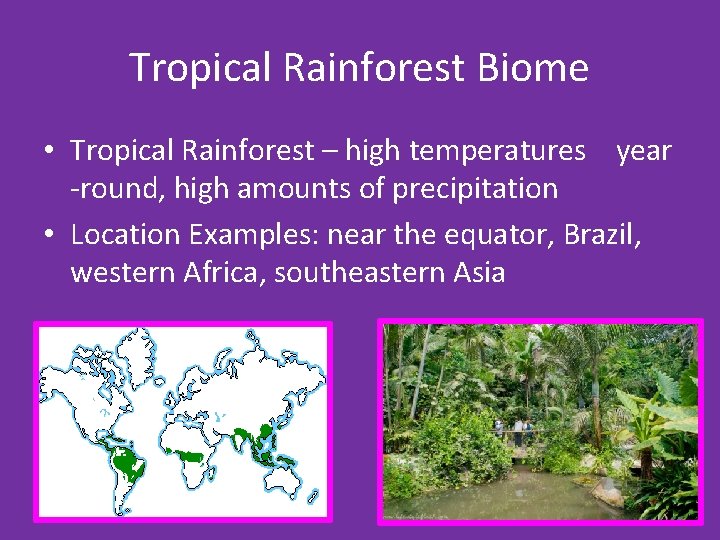
Tropical Rainforest Biome • Tropical Rainforest – high temperatures year -round, high amounts of precipitation • Location Examples: near the equator, Brazil, western Africa, southeastern Asia
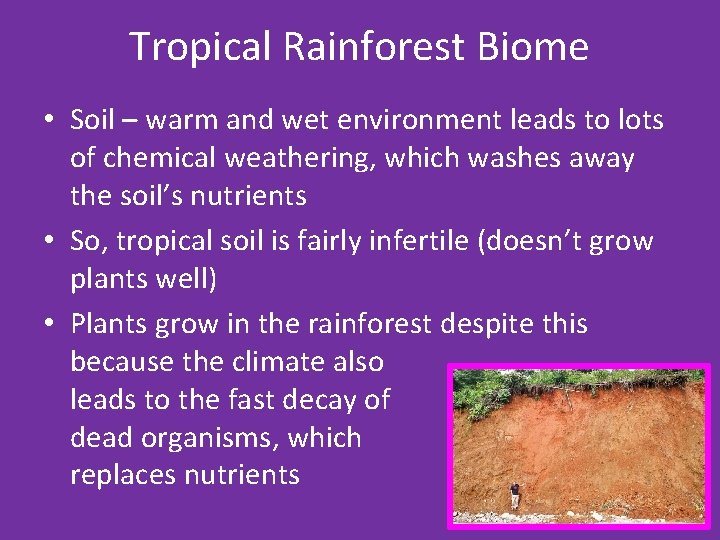
Tropical Rainforest Biome • Soil – warm and wet environment leads to lots of chemical weathering, which washes away the soil’s nutrients • So, tropical soil is fairly infertile (doesn’t grow plants well) • Plants grow in the rainforest despite this because the climate also leads to the fast decay of dead organisms, which replaces nutrients
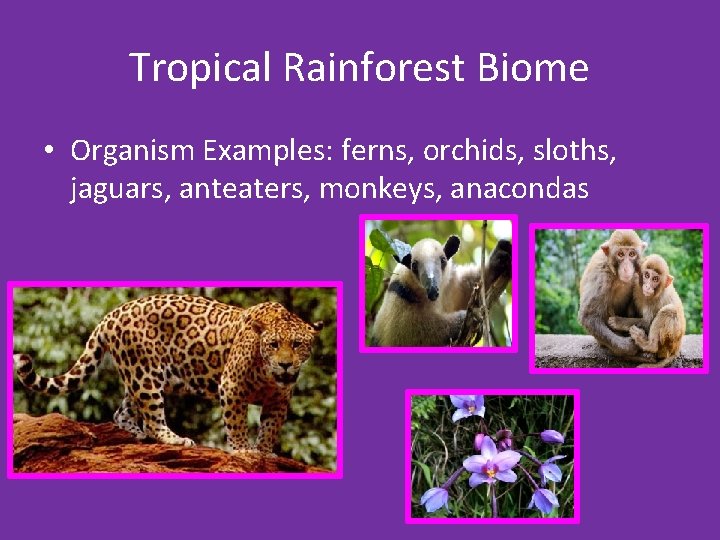
Tropical Rainforest Biome • Organism Examples: ferns, orchids, sloths, jaguars, anteaters, monkeys, anacondas
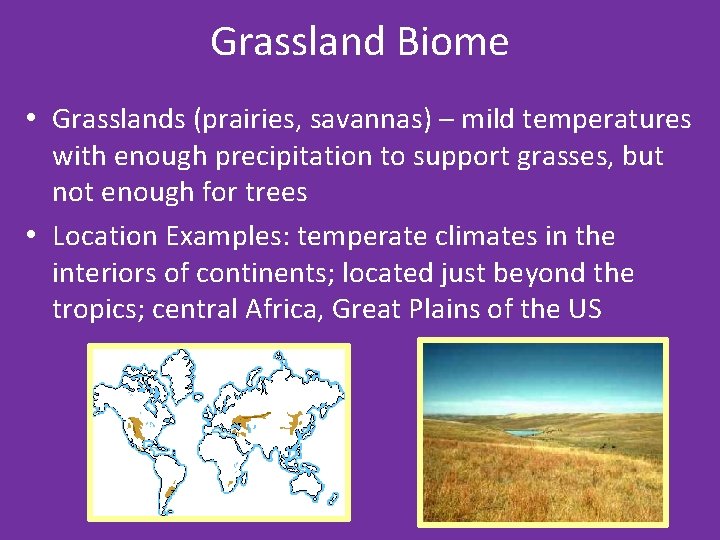
Grassland Biome • Grasslands (prairies, savannas) – mild temperatures with enough precipitation to support grasses, but not enough for trees • Location Examples: temperate climates in the interiors of continents; located just beyond the tropics; central Africa, Great Plains of the US
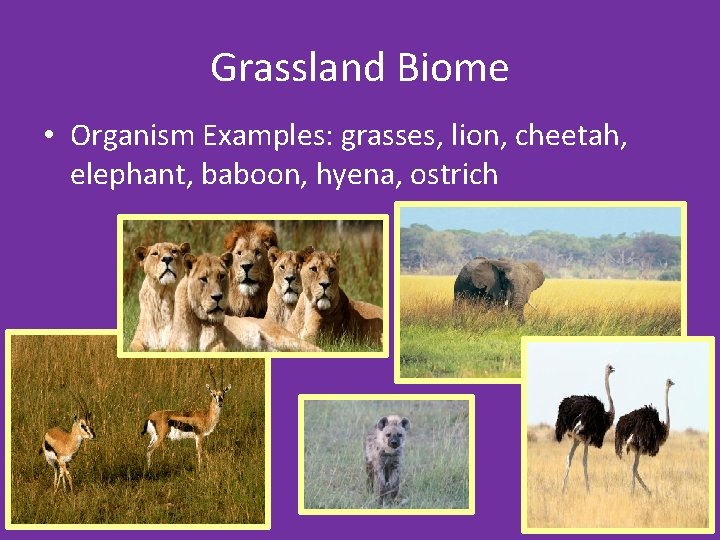
Grassland Biome • Organism Examples: grasses, lion, cheetah, elephant, baboon, hyena, ostrich
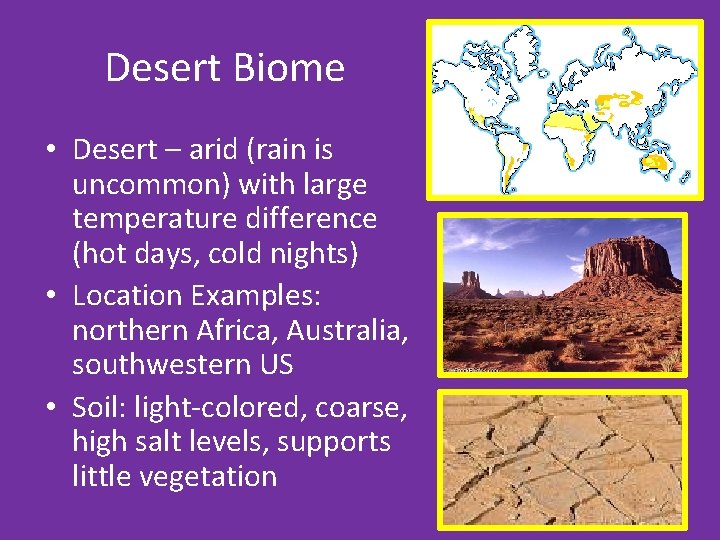
Desert Biome • Desert – arid (rain is uncommon) with large temperature difference (hot days, cold nights) • Location Examples: northern Africa, Australia, southwestern US • Soil: light-colored, coarse, high salt levels, supports little vegetation
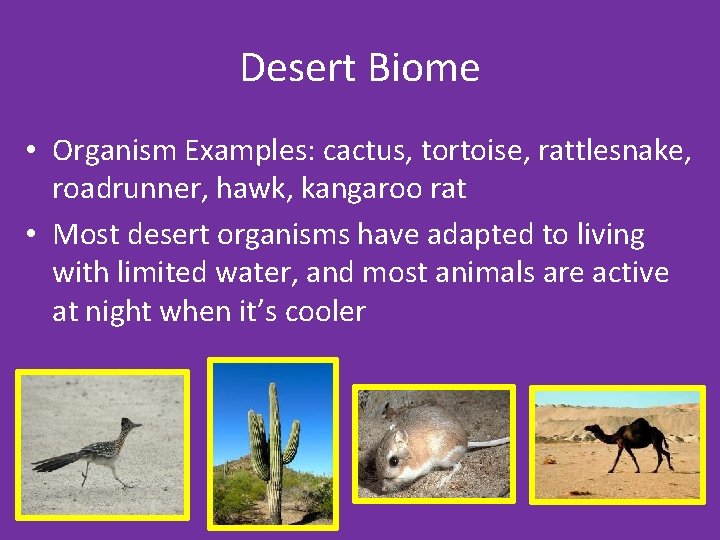
Desert Biome • Organism Examples: cactus, tortoise, rattlesnake, roadrunner, hawk, kangaroo rat • Most desert organisms have adapted to living with limited water, and most animals are active at night when it’s cooler
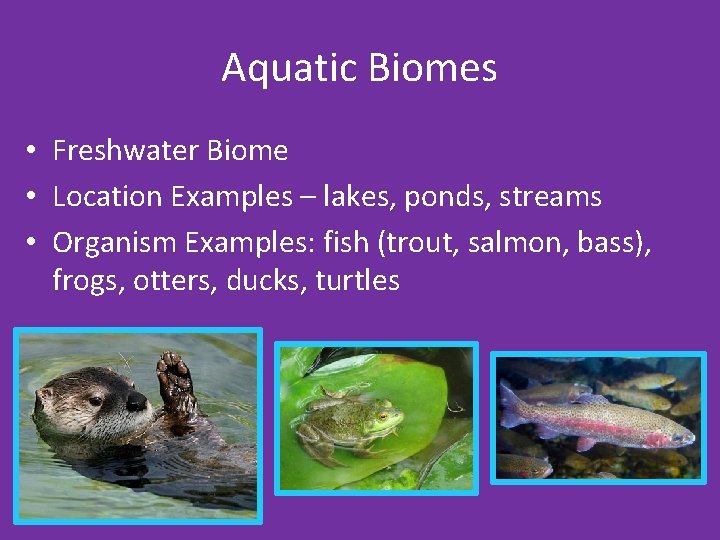
Aquatic Biomes • Freshwater Biome • Location Examples – lakes, ponds, streams • Organism Examples: fish (trout, salmon, bass), frogs, otters, ducks, turtles
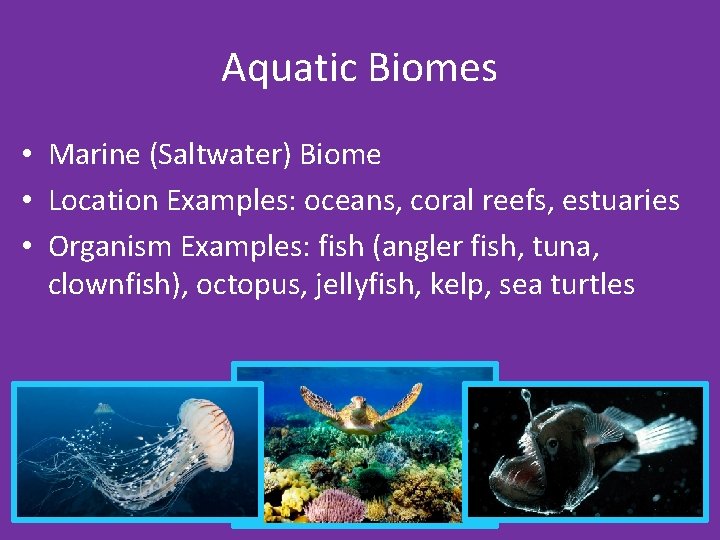
Aquatic Biomes • Marine (Saltwater) Biome • Location Examples: oceans, coral reefs, estuaries • Organism Examples: fish (angler fish, tuna, clownfish), octopus, jellyfish, kelp, sea turtles
Biomes of North America • Color each area as directed and determine its biome based on location and description. • The whole map should be colored when done. • Answer the analysis questions and turn in to basket. • This is INDIVIDUAL work. There is no need to collaborate. • Use your notes to help you.


- Slides: 30