
BELL RINGER There is a stereotypical culture of
BELL RINGER • There is a stereotypical culture of the American education system portrayed in film and popular culture. • Do you think RMHS fits with this idea of school culture in America? Explain. • What distinct groups of kids do you see here at Rocky? • Which group do YOU identify with (if any)?
CULTURE
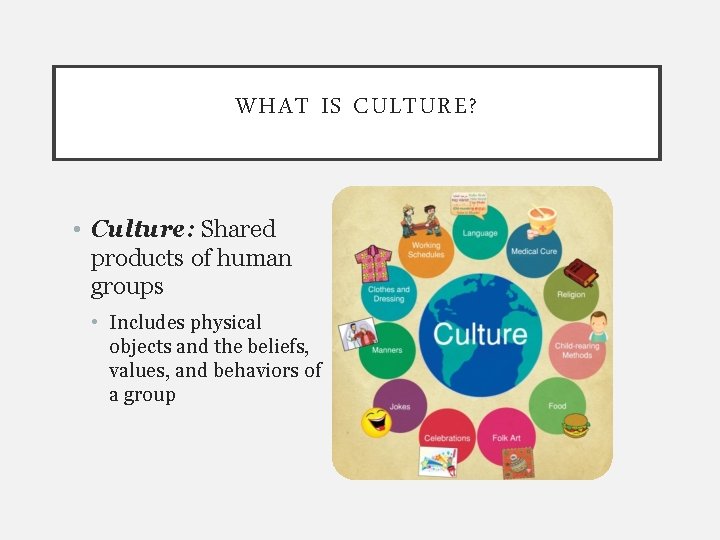
WHAT IS CULTURE? • Culture: Shared products of human groups • Includes physical objects and the beliefs, values, and behaviors of a group
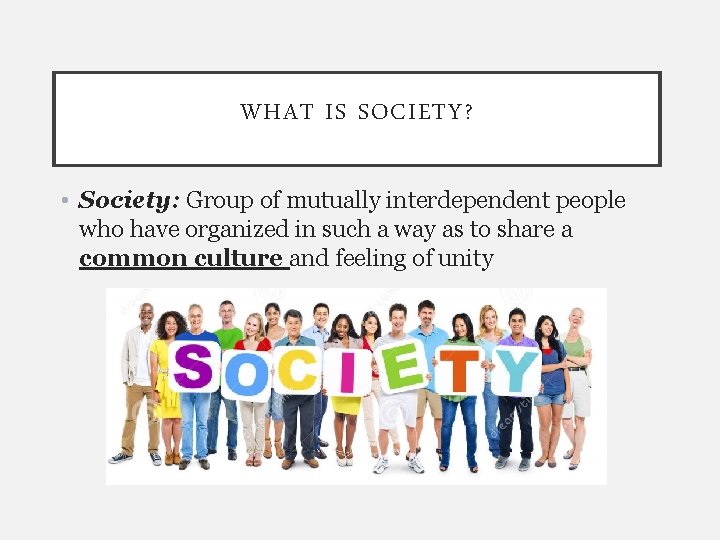
WHAT IS SOCIETY? • Society: Group of mutually interdependent people who have organized in such a way as to share a common culture and feeling of unity
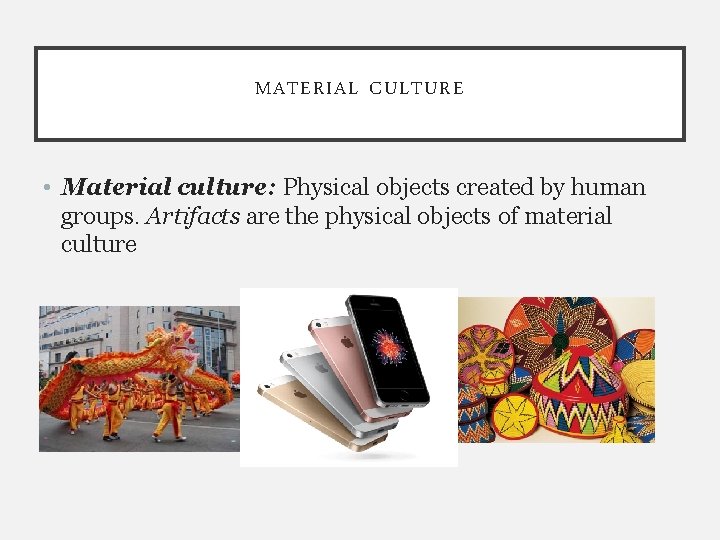
MATERIAL CULTURE • Material culture: Physical objects created by human groups. Artifacts are the physical objects of material culture
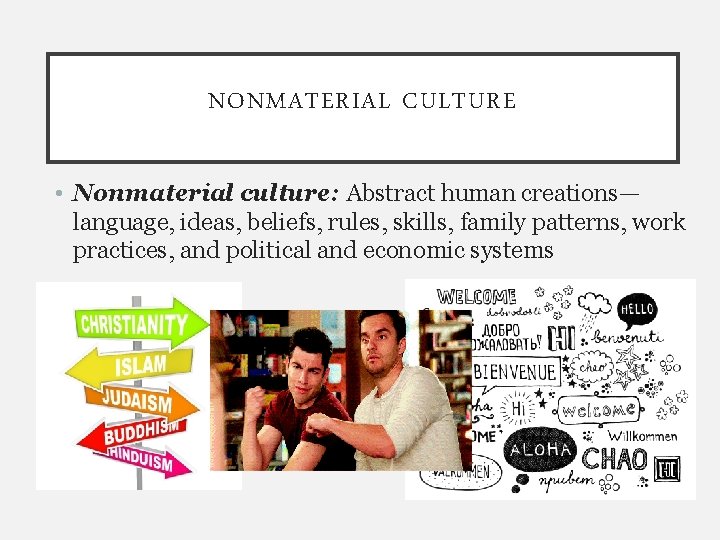
NONMATERIAL CULTURE • Nonmaterial culture: Abstract human creations— language, ideas, beliefs, rules, skills, family patterns, work practices, and political and economic systems
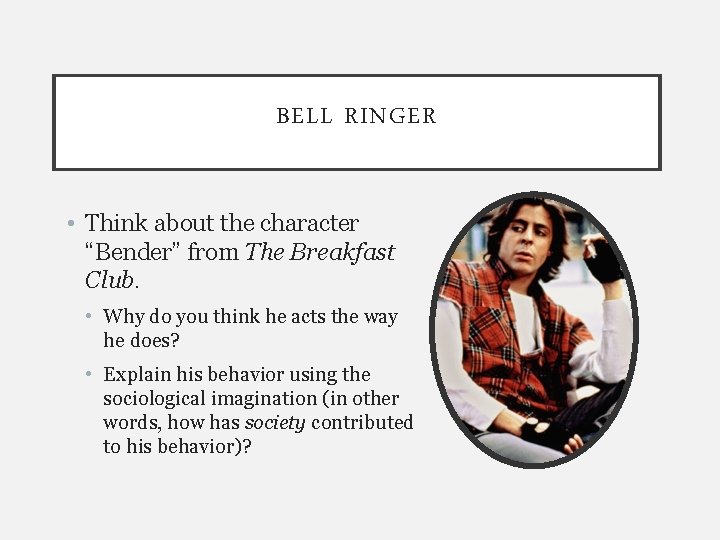
BELL RINGER • Think about the character “Bender” from The Breakfast Club. • Why do you think he acts the way he does? • Explain his behavior using the sociological imagination (in other words, how has society contributed to his behavior)?
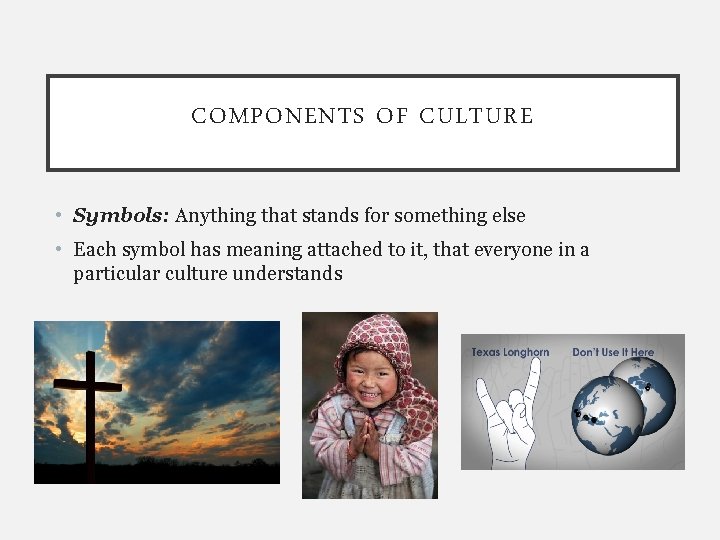
COMPONENTS OF CULTURE • Symbols: Anything that stands for something else • Each symbol has meaning attached to it, that everyone in a particular culture understands
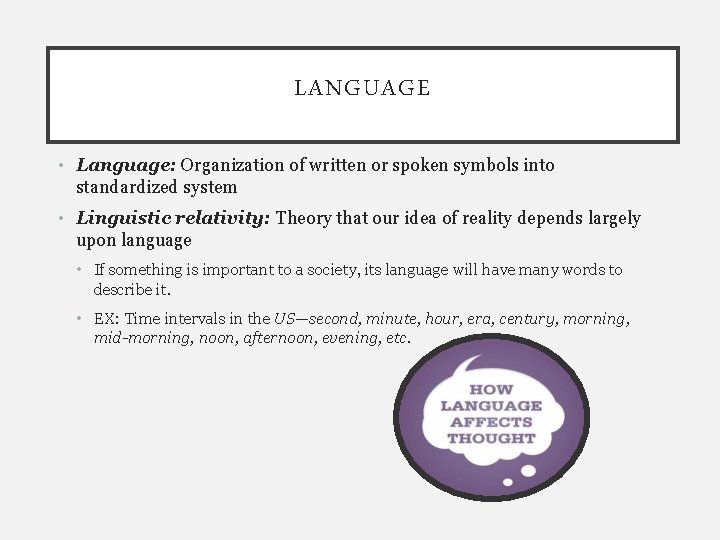
LANGUAGE • Language: Organization of written or spoken symbols into standardized system • Linguistic relativity: Theory that our idea of reality depends largely upon language • If something is important to a society, its language will have many words to describe it. • EX: Time intervals in the US—second, minute, hour, era, century, morning, mid-morning, noon, afternoon, evening, etc.
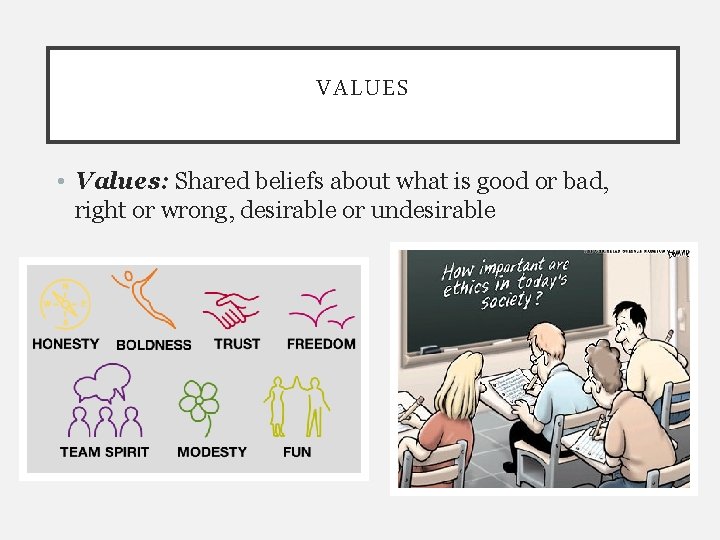
VALUES • Values: Shared beliefs about what is good or bad, right or wrong, desirable or undesirable
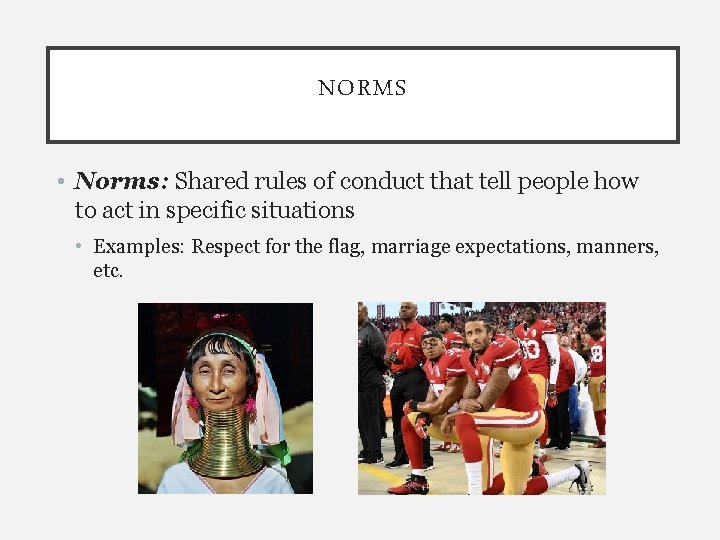
NORMS • Norms: Shared rules of conduct that tell people how to act in specific situations • Examples: Respect for the flag, marriage expectations, manners, etc.
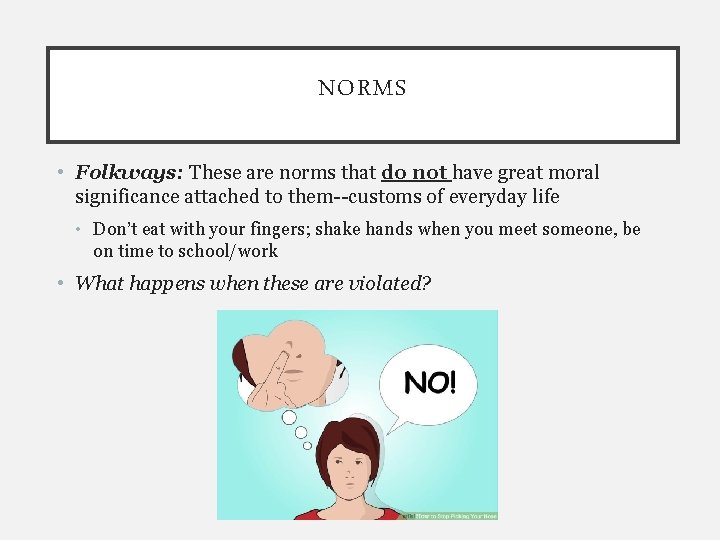
NORMS • Folkways: These are norms that do not have great moral significance attached to them--customs of everyday life • Don’t eat with your fingers; shake hands when you meet someone, be on time to school/work • What happens when these are violated?
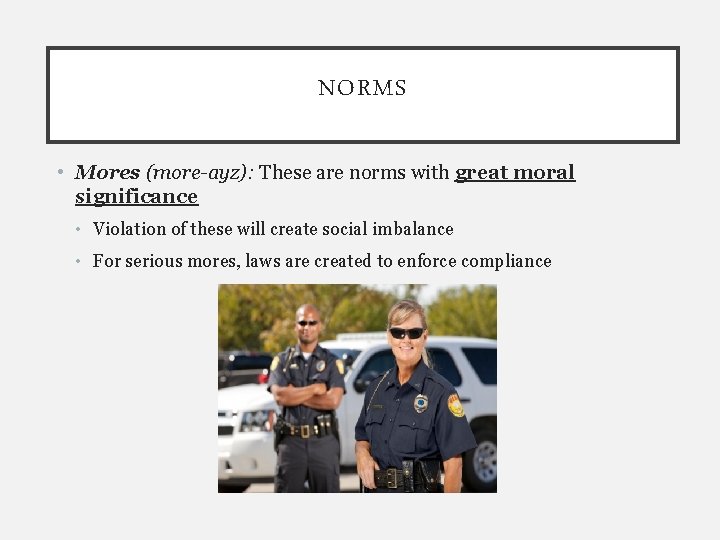
NORMS • Mores (more-ayz): These are norms with great moral significance • Violation of these will create social imbalance • For serious mores, laws are created to enforce compliance
BELL RINGER • For each of the two types of social norms we discussed in class, do the following: • Define/describe in your own words • Give an original example
BELL RINGER • Were you able to find any research on your topic last class? • If so, what did you find? • If not, what are some possible key words/phrases you can search for that may relate to your topic? • Even though we are just getting started with this project, you probably have an idea of what you think the outcome will be. Write down your prediction.
Step One: Once you have selected a topic for your research paper, you need to focus and narrow it into a specific research question. Your question should be one that: Lends itself to sociological analysis (i. e. requires analysis; is researchable) Is not a "yes" or "no" question Has more than one plausible answer Is answerable within the scope of this project Has been approved by your favorite teacher (Mrs. Zimmer)
- Slides: 16