
Bell Ringer Solve even s 3 3 Rules
Bell Ringer Solve even #’s

3. 3 Rules for Differentiation
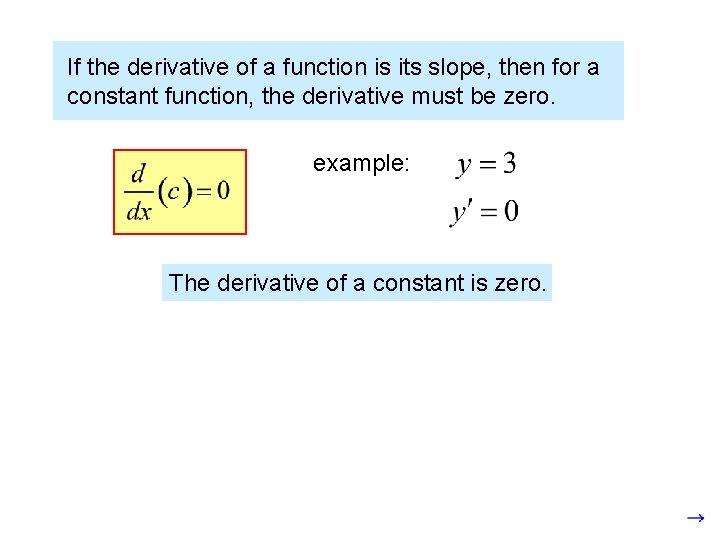
If the derivative of a function is its slope, then for a constant function, the derivative must be zero. example: The derivative of a constant is zero.
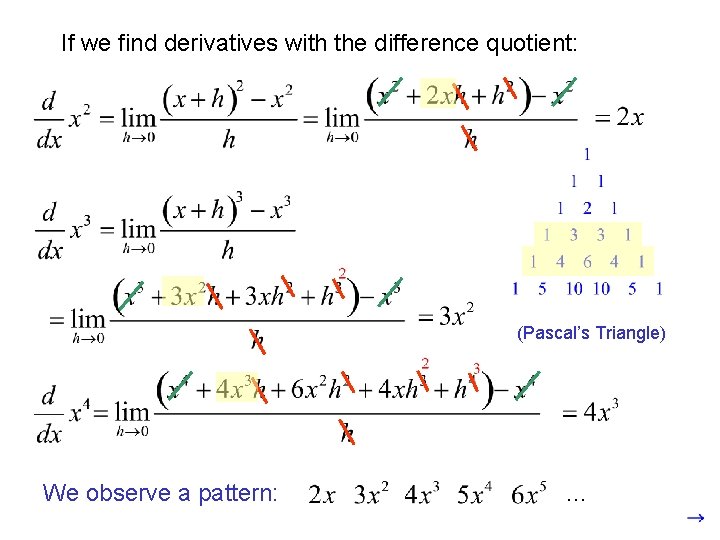
If we find derivatives with the difference quotient: (Pascal’s Triangle) We observe a pattern: …
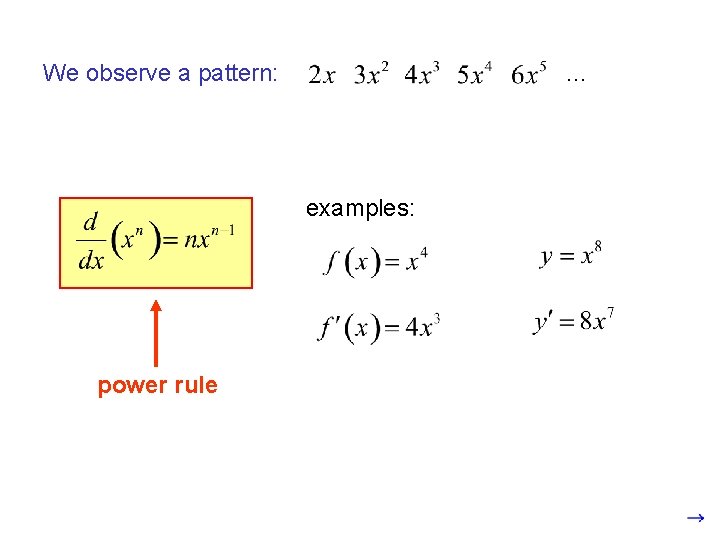
We observe a pattern: … examples: power rule

constant multiple rule: examples: When we used the difference quotient, we observed that since the limit had no effect on a constant coefficient, that the constant could be factored to the outside.
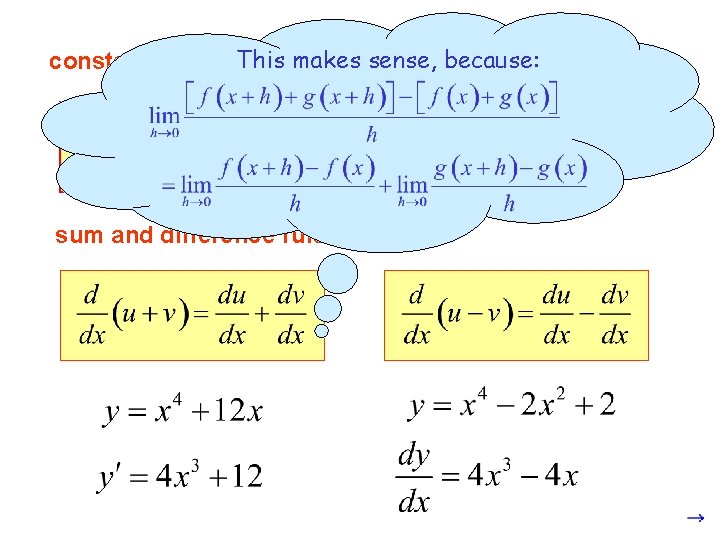
makes sense, because: constant multiple. This rule: sum and difference rules: (Each term is treated separately)
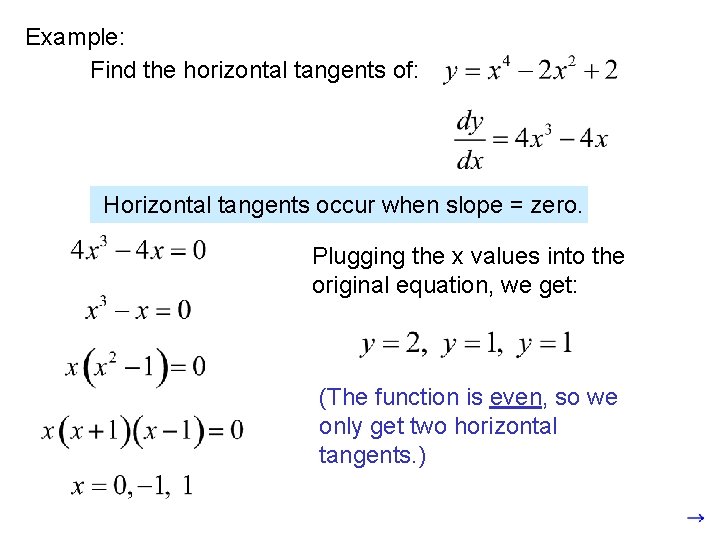
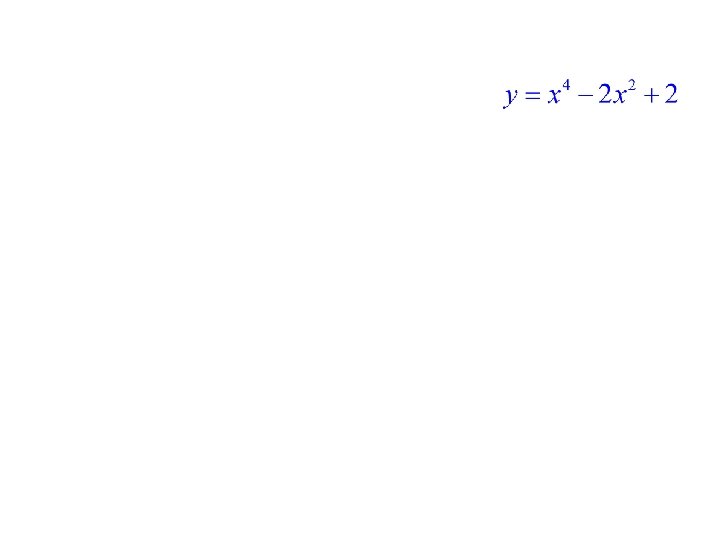
Example: Find the horizontal tangents of: Horizontal tangents occur when slope = zero. Plugging the x values into the original equation, we get: (The function is even, so we only get two horizontal tangents. )

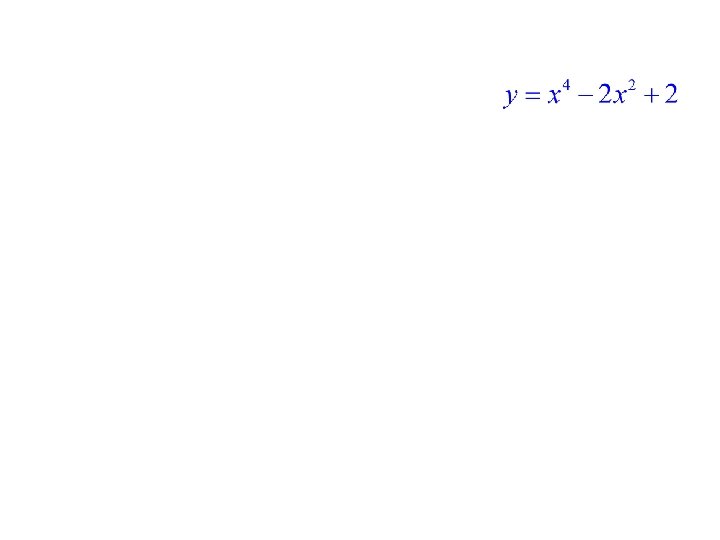
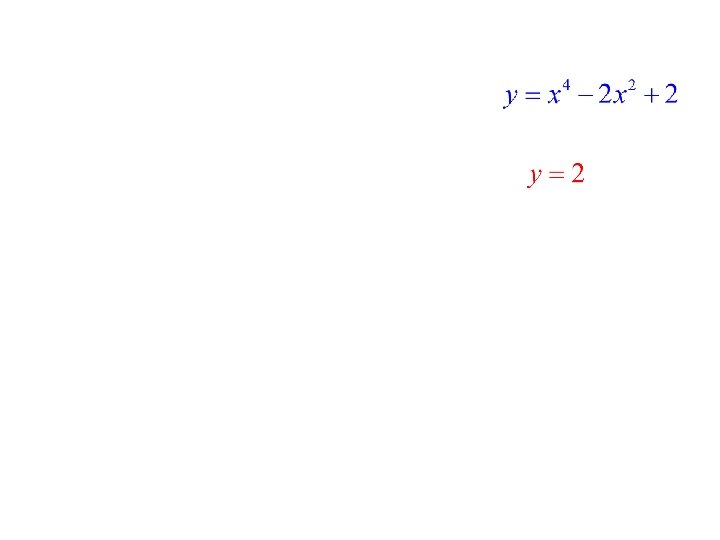
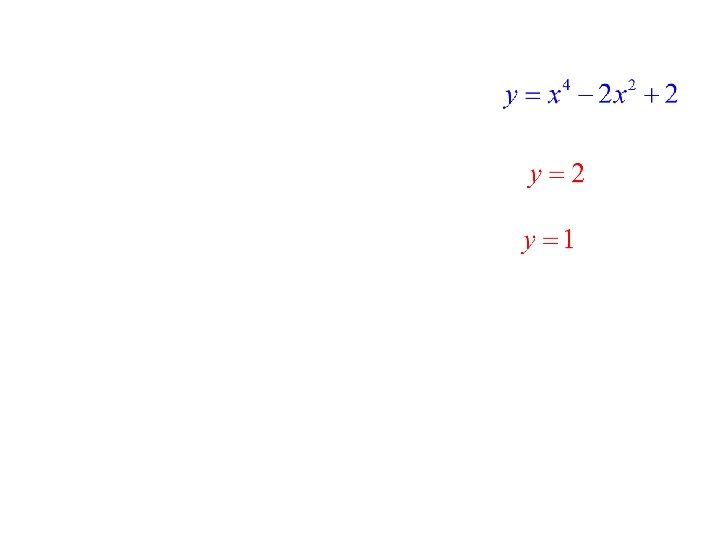
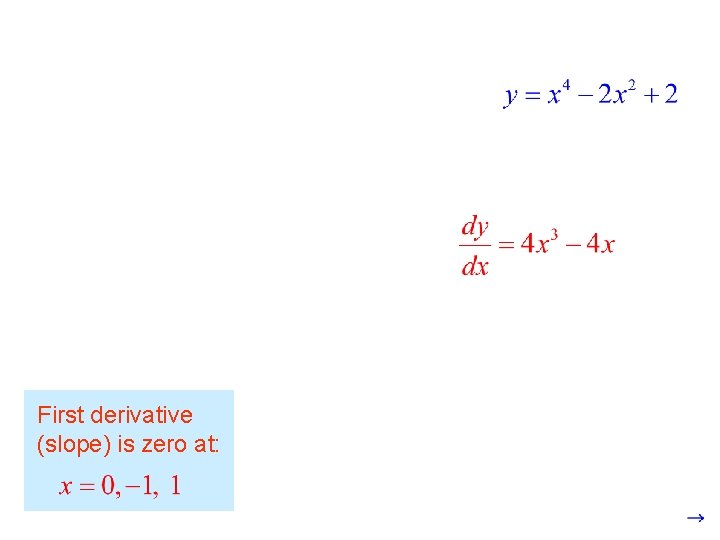
First derivative (slope) is zero at:
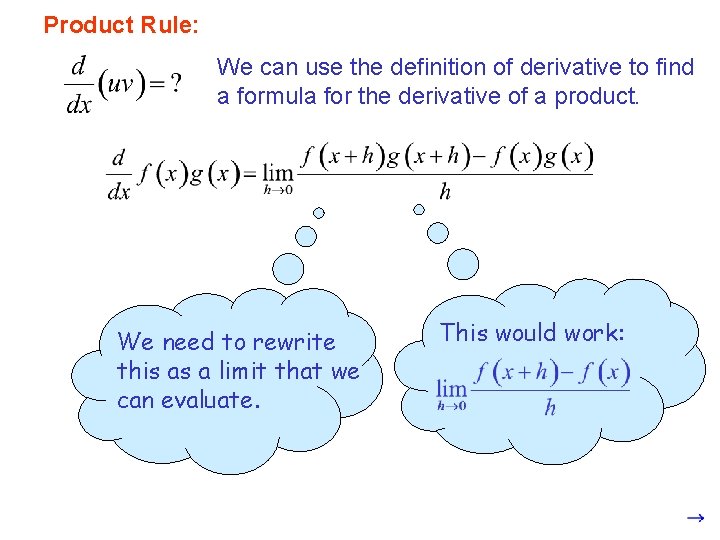
Product Rule: We can use the definition of derivative to find a formula for the derivative of a product. We need to rewrite this as a limit that we can evaluate. This would work:
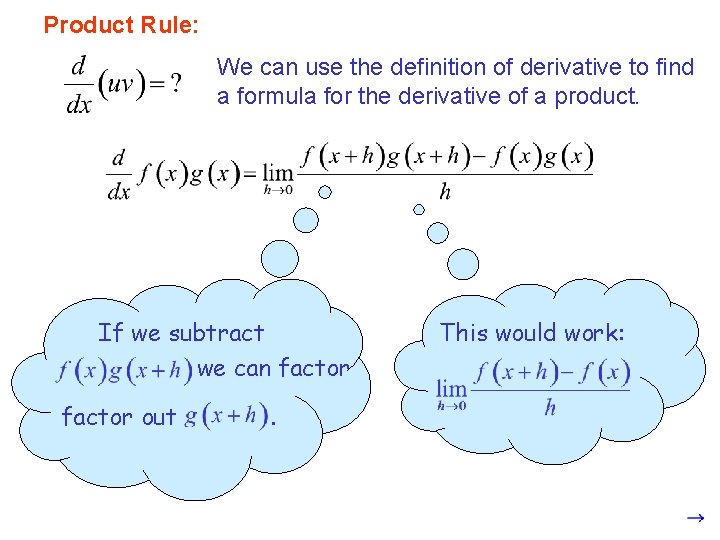
Product Rule: We can use the definition of derivative to find a formula for the derivative of a product. If we subtract we can factor out . This would work:
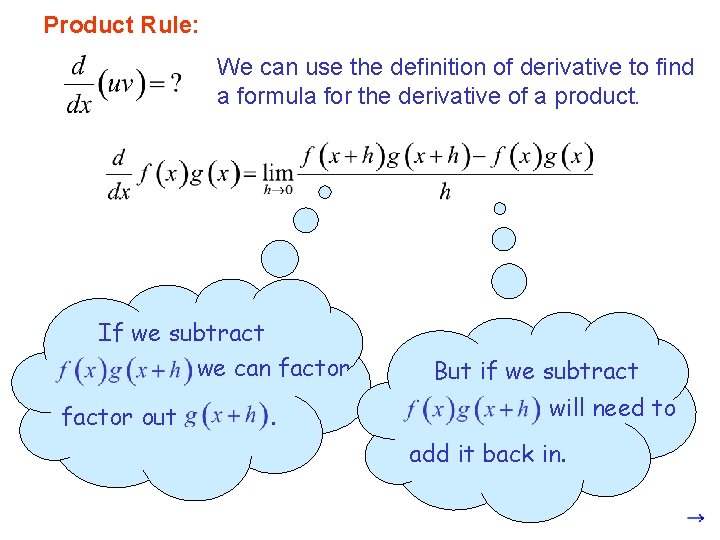
Product Rule: We can use the definition of derivative to find a formula for the derivative of a product. If we subtract we can factor out . But if we subtract will need to add it back in.
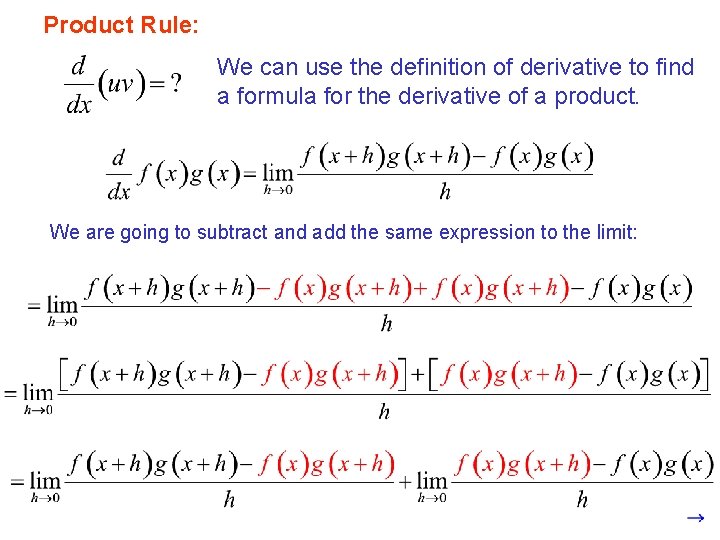
Product Rule: We can use the definition of derivative to find a formula for the derivative of a product. We are going to subtract and add the same expression to the limit:
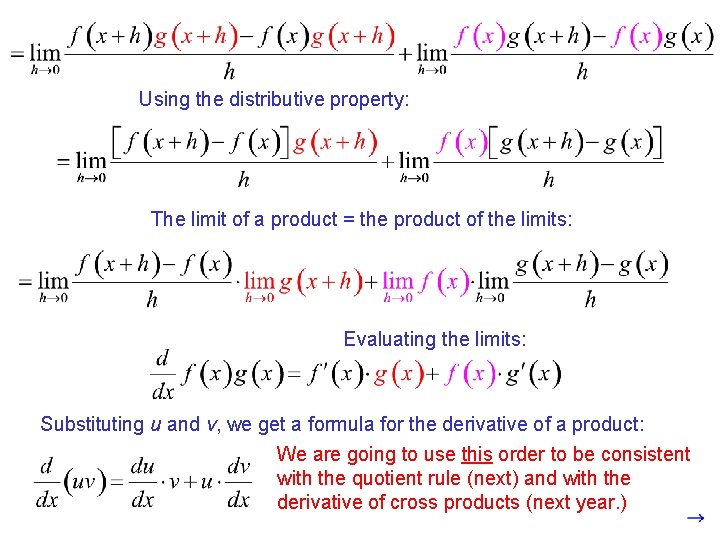
Using the distributive property: The limit of a product = the product of the limits: Evaluating the limits: Substituting u and v, we get a formula for the derivative of a product: We arecalculus going tobooks use this order toours) be consistent Many (including give this with the with quotient rule (next) and withorder. the formula the terms in a different derivative of cross products (next year. )
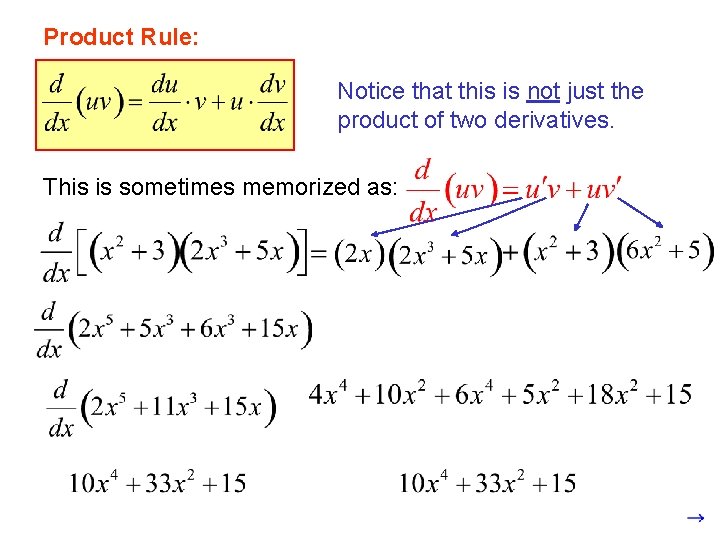
Product Rule: Notice that this is not just the product of two derivatives. This is sometimes memorized as:
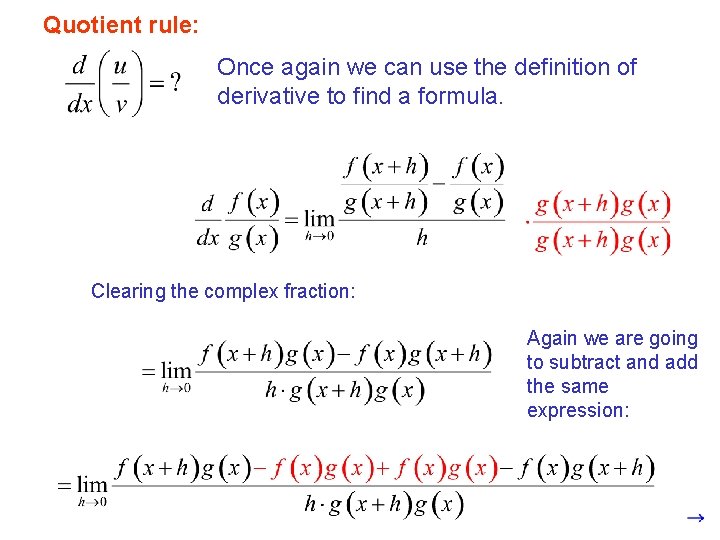
Quotient rule: Once again we can use the definition of derivative to find a formula. Clearing the complex fraction: Again we are going to subtract and add the same expression:
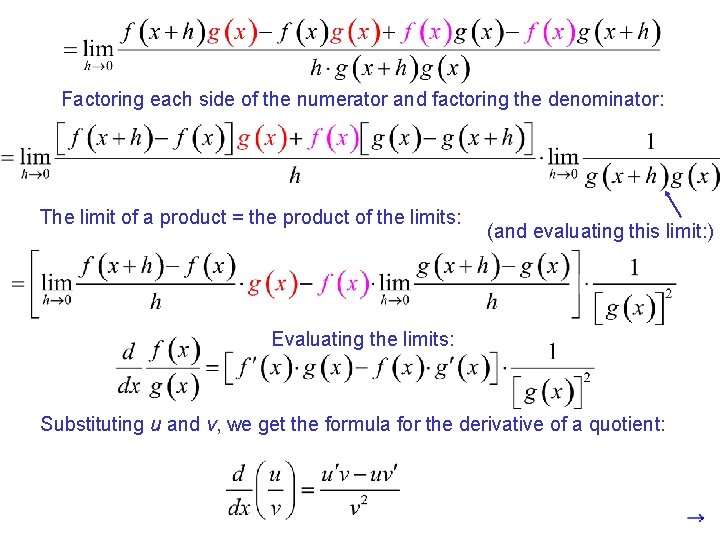
Factoring each side of the numerator and factoring the denominator: The limit of a product = the product of the limits: (and evaluating this limit: ) Evaluating the limits: Substituting u and v, we get the formula for the derivative of a quotient:
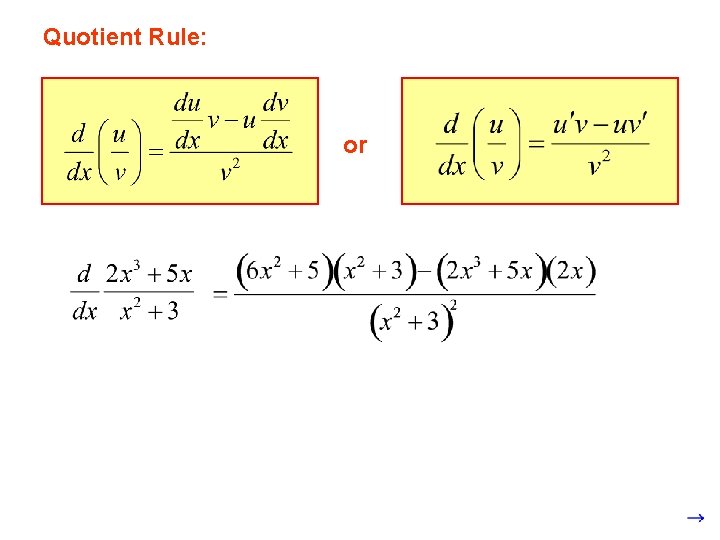
Quotient Rule: or
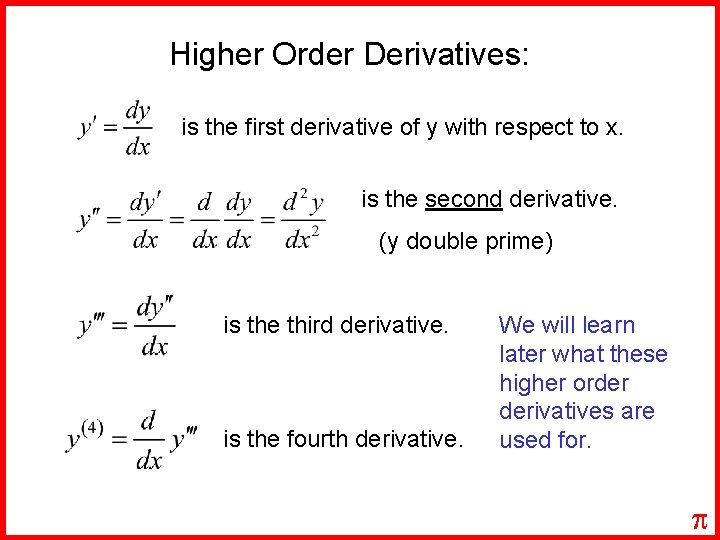
Higher Order Derivatives: is the first derivative of y with respect to x. is the second derivative. (y double prime) is the third derivative. is the fourth derivative. We will learn later what these higher order derivatives are used for. p
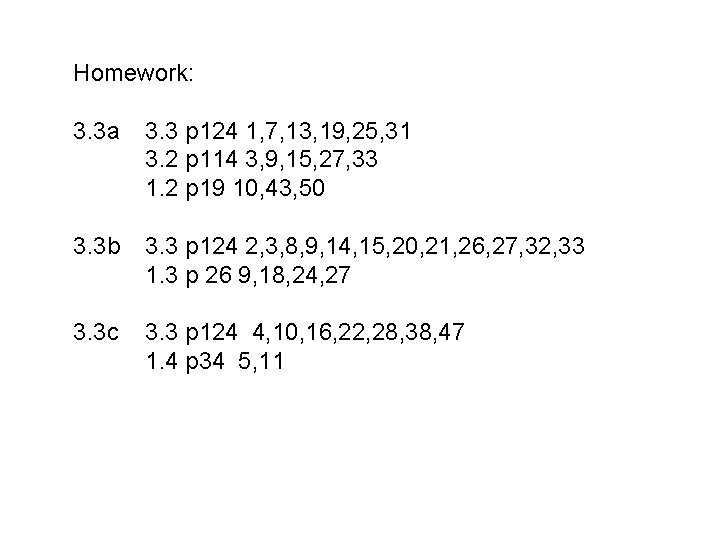
Homework: 3. 3 a 3. 3 p 124 1, 7, 13, 19, 25, 31 3. 2 p 114 3, 9, 15, 27, 33 1. 2 p 19 10, 43, 50 3. 3 b 3. 3 p 124 2, 3, 8, 9, 14, 15, 20, 21, 26, 27, 32, 33 1. 3 p 26 9, 18, 24, 27 3. 3 c 3. 3 p 124 4, 10, 16, 22, 28, 38, 47 1. 4 p 34 5, 11
- Slides: 25