
Bell Ringer Label the parts of the Sun
Bell Ringer • Label the parts of the Sun – chromosphere core radiative zone corona convective zone photosphere • Test tomorrow!
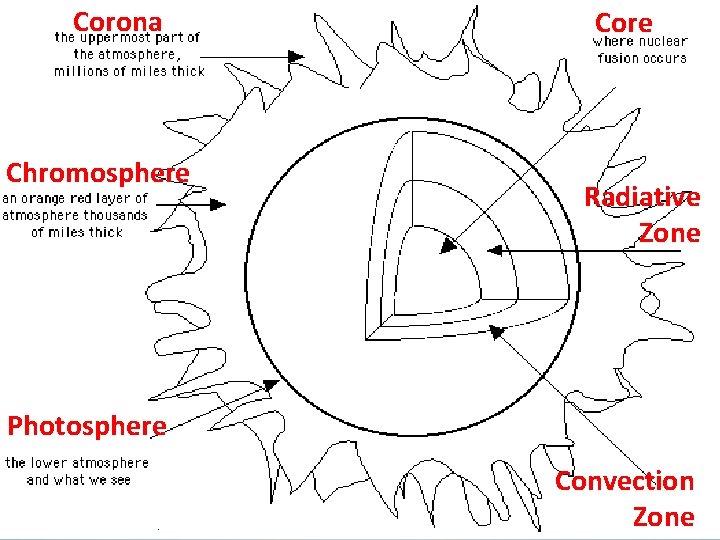
Corona Chromosphere Core Radiative Zone Photosphere Convection Zone
The Universe
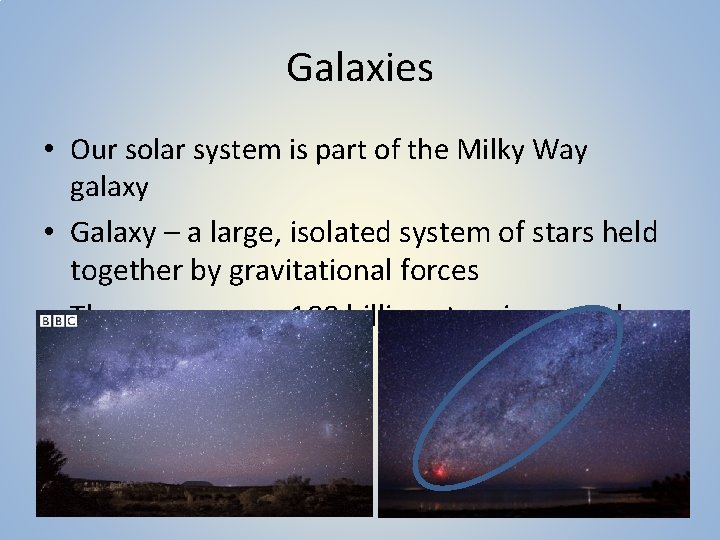
Galaxies • Our solar system is part of the Milky Way galaxy • Galaxy – a large, isolated system of stars held together by gravitational forces • There are over a 100 billion stars in our galaxy
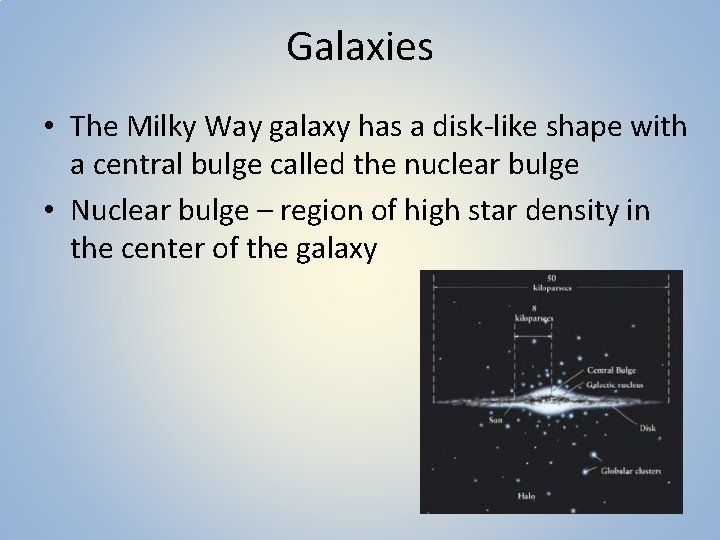
Galaxies • The Milky Way galaxy has a disk-like shape with a central bulge called the nuclear bulge • Nuclear bulge – region of high star density in the center of the galaxy
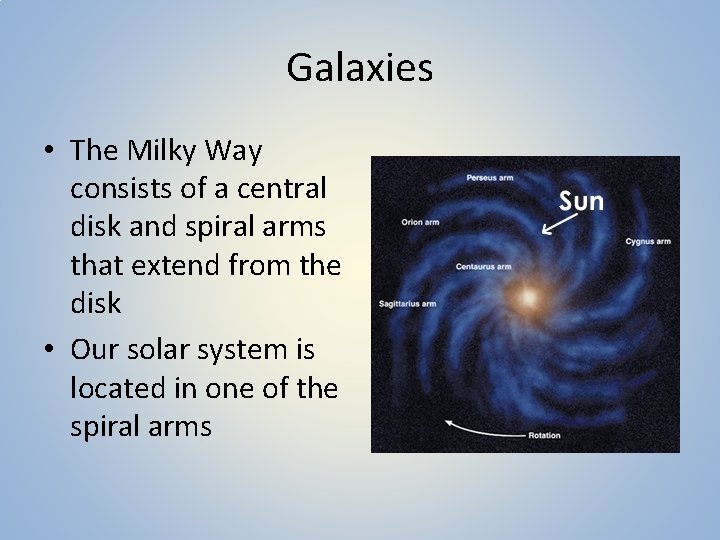
Galaxies • The Milky Way consists of a central disk and spiral arms that extend from the disk • Our solar system is located in one of the spiral arms
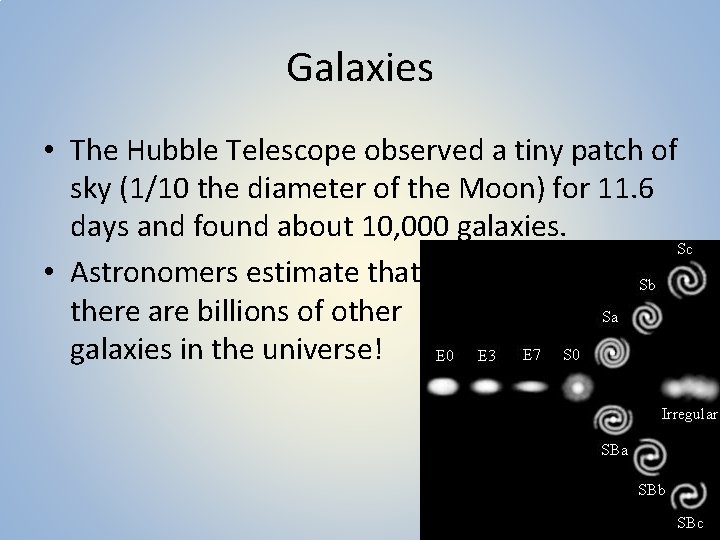
Galaxies • The Hubble Telescope observed a tiny patch of sky (1/10 the diameter of the Moon) for 11. 6 days and found about 10, 000 galaxies. • Astronomers estimate that there are billions of other galaxies in the universe!
Galaxies • Galaxies are grouped into three main categories based on their shapes
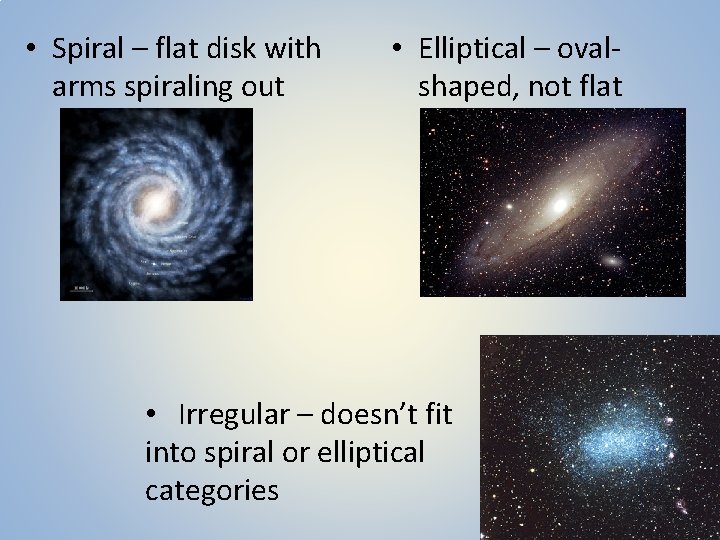
• Spiral – flat disk with arms spiraling out • Elliptical – ovalshaped, not flat • Irregular – doesn’t fit into spiral or elliptical categories
Galaxies • What is the name of our galaxy? • What shape is our galaxy?
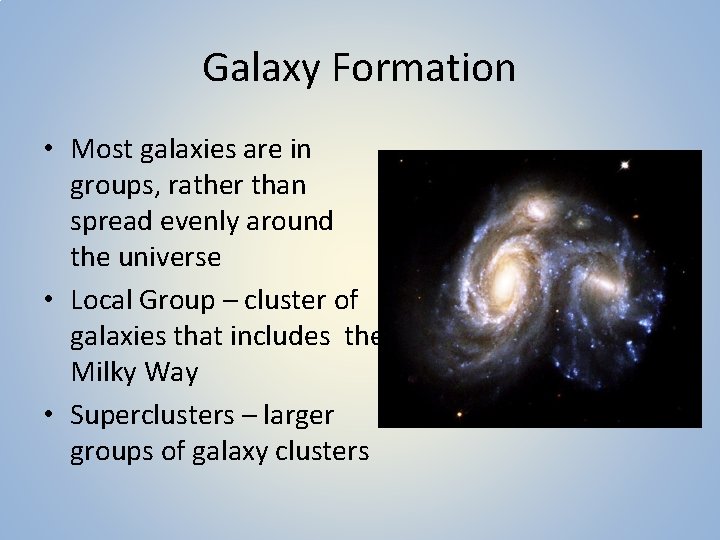
Galaxy Formation • Most galaxies are in groups, rather than spread evenly around the universe • Local Group – cluster of galaxies that includes the Milky Way • Superclusters – larger groups of galaxy clusters
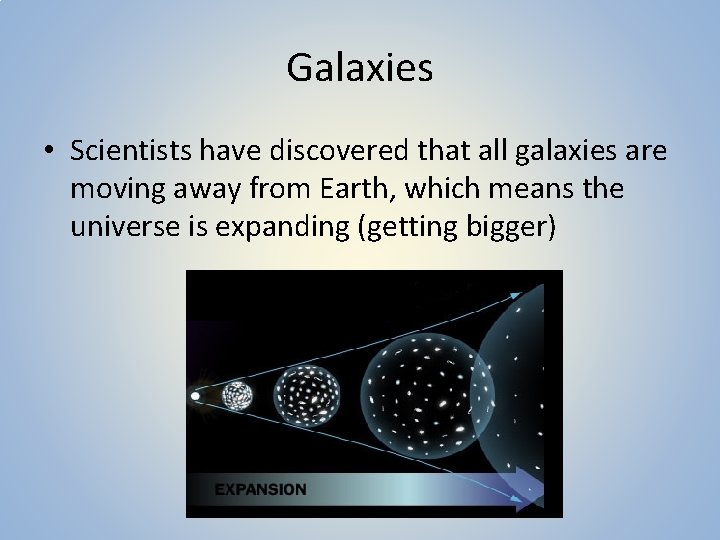
Galaxies • Scientists have discovered that all galaxies are moving away from Earth, which means the universe is expanding (getting bigger)
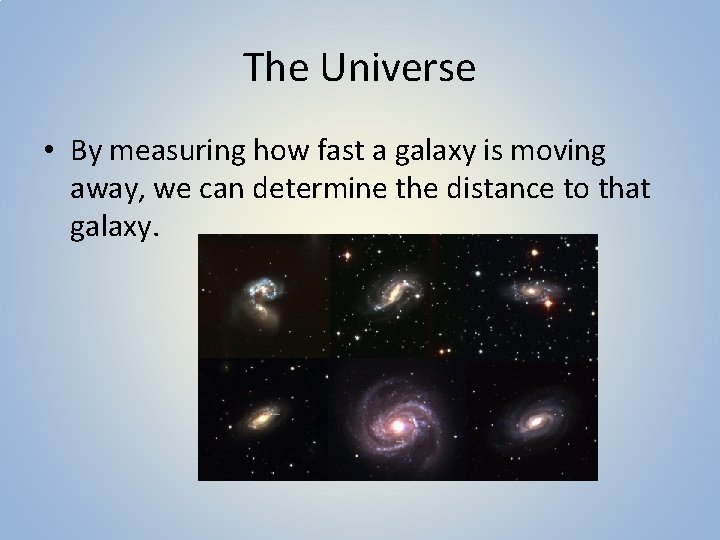
The Universe • By measuring how fast a galaxy is moving away, we can determine the distance to that galaxy.
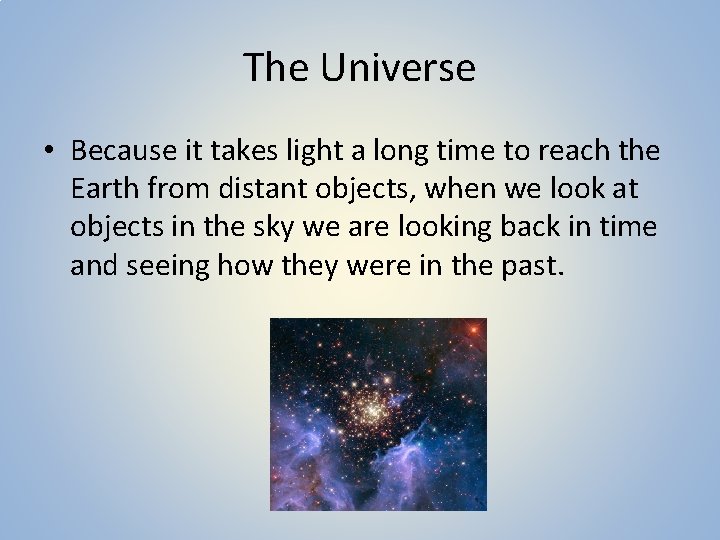
The Universe • Because it takes light a long time to reach the Earth from distant objects, when we look at objects in the sky we are looking back in time and seeing how they were in the past.
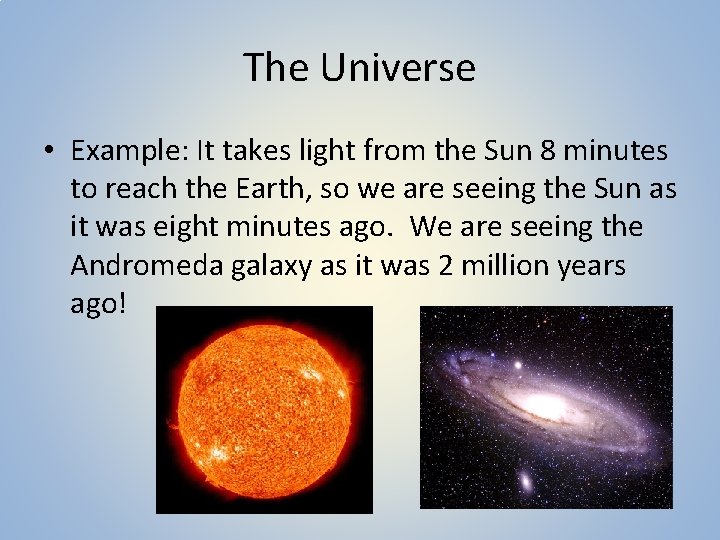
The Universe • Example: It takes light from the Sun 8 minutes to reach the Earth, so we are seeing the Sun as it was eight minutes ago. We are seeing the Andromeda galaxy as it was 2 million years ago!
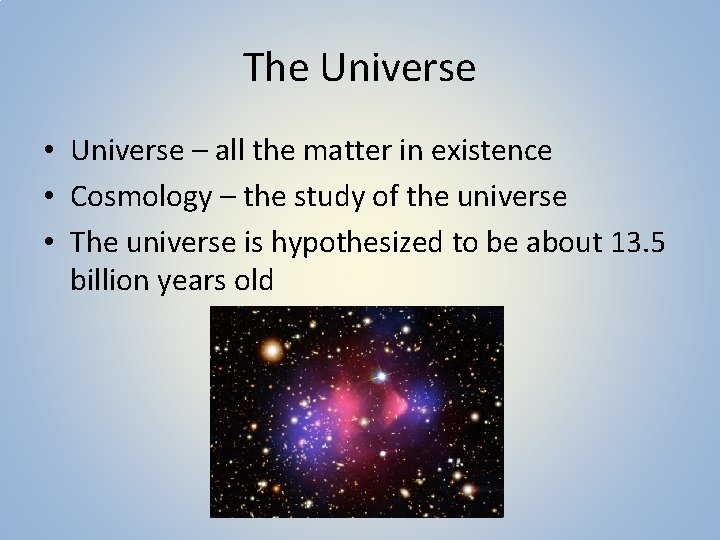
The Universe • Universe – all the matter in existence • Cosmology – the study of the universe • The universe is hypothesized to be about 13. 5 billion years old
The Universe • Big Bang Theory – theory that the universe began as a single point that has been expanding ever since • Not an explosion, rather an expansion • The universe expanded rapidly, cooling down and forming matter like galaxies and stars
The Universe • The inward pull of gravity has slowed down the outward expansion of the universe for a while • However, the most recent observations show that the expansion is now speeding up again due to some unknown force that is dominating over gravity.
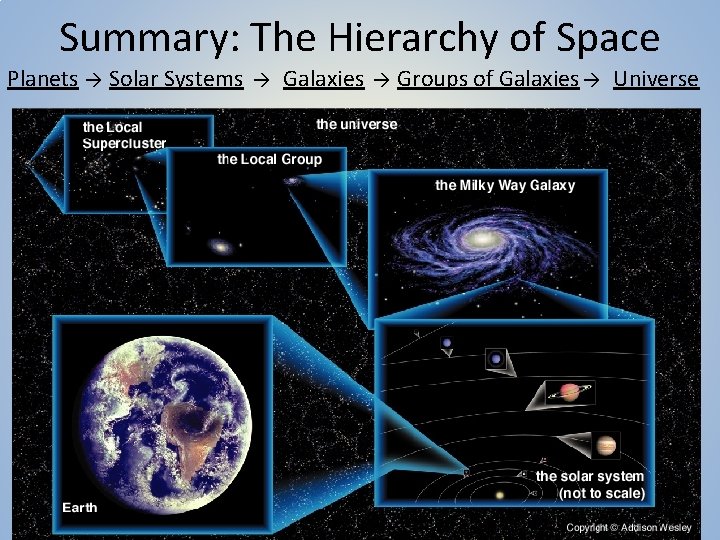
Summary: The Hierarchy of Space Planets Solar Systems Galaxies Groups of Galaxies Universe
Size of Our Universe • https: //www. youtube. com/watch? v=Go. W 8 Tf 7 h. TGA
Astronomy Study Guide • Take out your 9. 1 -9. 6 notes • Complete the study guide • If you have earbuds, listen to music while you work • Raise your hand let me check your work with each page you finish
• Spend ~5 minutes looking over your Vocabulary words. If you don’t have your sheets, look on with someone nearby. If you do not use this time to study, it will be taken away from you. • Clear your desks. • Write clearly. Turn in when done and get a study guide. • Do not talk. Work on your own! If you are missing a set of notes, move on and come back. • When everyone is done, I will project the bellringers.
Study Guide – You Create! • 6. 1 Bellringer: What causes the seasons? • 6. 2: What is the difference between a waxing crescent and a waning crescent? • 6. 3: Describe both the geocentric and heliocentric models of the Solar System. Which one is our current model? • 6. 4: Name three ways terrestrial planets and gas giant planets are different from each other. • 6. 5: Describe three layers of the Sun’s atmosphere. • 6. 6: What determines the path a star takes through its life cycle?

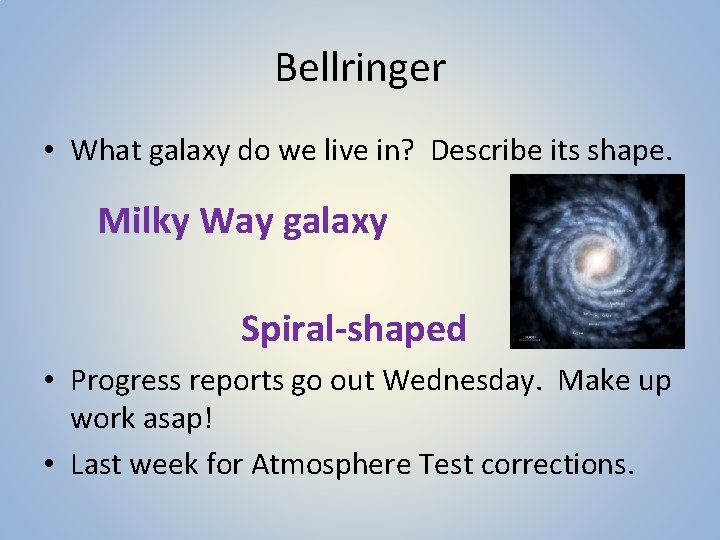
Bellringer • What galaxy do we live in? Describe its shape. Milky Way galaxy Spiral-shaped • Progress reports go out Wednesday. Make up work asap! • Last week for Atmosphere Test corrections.
1. Astronomy Study Guide (from Friday) – Finish. When you are both done, review over your answers and add any additional info you think may be useful (something your partner remembered that you didn’t). Hold onto until tomorrow. 2. Vocab Quiz corrections – on a separate sheet of paper, write the word and definitions of every word missed 5 times to receive some points back. Must be turned in tomorrow to receive credit. 3. Work on Journal 6 (due tomorrow). Turn in when done.
Universe Bingo • Listen for the category (your column) and the question (your answer). • First to get 5 in a row, yell “bingo. ” DO NOT CLEAR YOUR BOARDS UNTIL I CONFIRM THAT PERSON IS A WINNER. If they were mistaken, we will continue on.

Bellringer • Hold onto Astronomy Review Sheet. • Turn in Journal 6
Quick Review • • Rotation/Revolution What causes seasons? Geocentric vs. Heliocentric Facts for each planet Sun: interior layers Sun: atmosphere layers Life cycle of a star
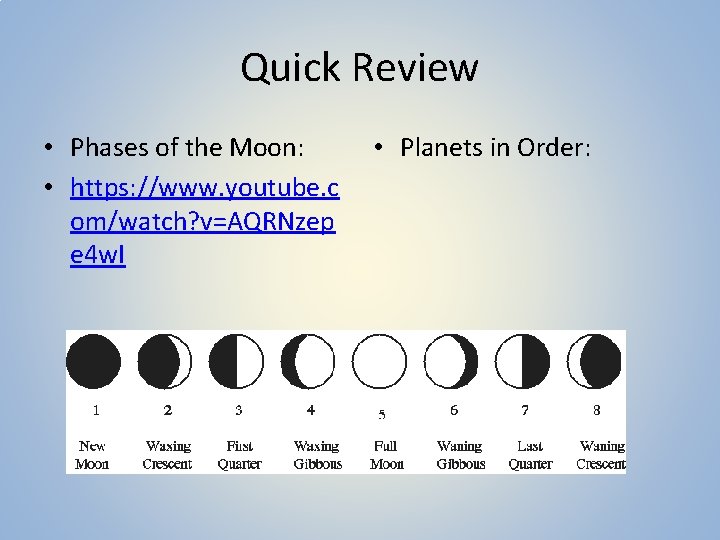
Quick Review • Phases of the Moon: • https: //www. youtube. c om/watch? v=AQRNzep e 4 w. I • Planets in Order:
• Write clearly. Attempt all questions, especially the short answer! • Turn in when done and work individually on Resources Vocabulary. Hold onto when done. I will come by and check it tomorrow. • Find something quiet to do.

• Work on your Vocabulary Assignment by yourself. • When you are done, get a green paper from the front table. Go through each set of notes and find at least 5 important facts (things I might test you on) from each page. Write these down on the paper as a “cheat sheet. ” You may work on this in pairs as long as you’re both working and writing. • Test covers these notes: Astronomy & the Earth, Moon, Solar System, Planets, Sun, Stars, Universe • While you are working, I will hand back your Astronomy Review WS and Planets Quiz. Use these to study tonight.
Announcements • Grades are updated in SPAN (will show up tomorrow). I am handing out missing assignment slips. It is YOUR RESPONSIBILITY to turn in any missing assignments. • ALL MISSING ASSIGNMENTS (including tests) are due next Monday, 1/7 by 3: 00. • Exams begin 1/14. I am handing out a final exam packet. Work on this in your spare time. Bring it to class with you. If you care about your grade in this class, you need to work on this packet.
Progress Reports • Look through, paying close attention to missing assignments • All missing work can be turned in for credit • “Must be made up by ___” – if it’s past that date, you can still turn it in/make it up for reduced credit • Extended absences will be taken into account • Turn in signed progress reports tomorrow!
- Slides: 36