
Bell Ringer 1 If a microscope has an
Bell Ringer: 1. If a microscope has an eyepiece (x 10), Low Power (x 20) and High Power (x 35)…what would the total magnification be for Low and High Power 2. Are the cells in an elephant bigger, smaller, or about the same size as those in a mouse? 3. What is the largest Cell on Earth?
Bell Ringer: 1. On a half sheet of paper, list EVERTHING you can remember about anything that has to do with cells. For example: Organelles and what they do? Cell types? Photosynthesis? Also…. have you turned in your SAFETY CONTRACT?
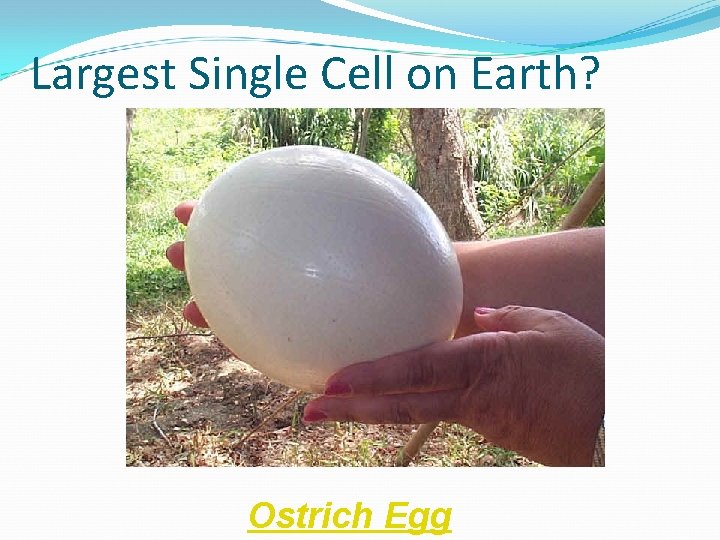
Largest Single Cell on Earth? Ostrich Egg
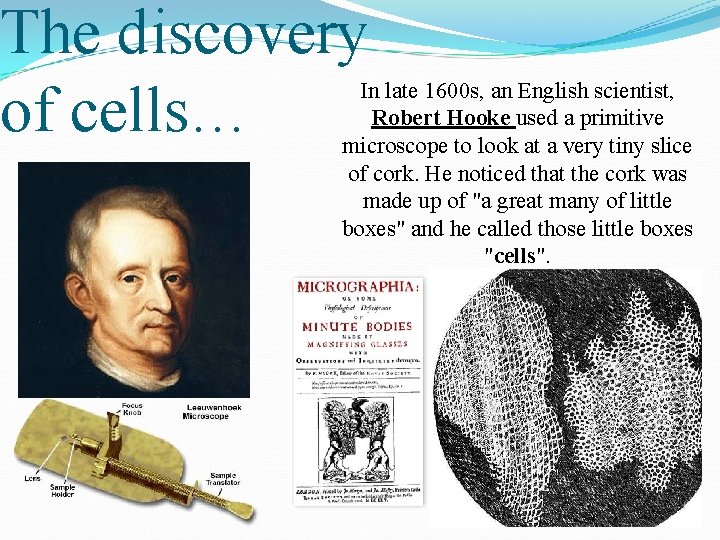
The discovery of cells… In late 1600 s, an English scientist, Robert Hooke used a primitive microscope to look at a very tiny slice of cork. He noticed that the cork was made up of "a great many of little boxes" and he called those little boxes "cells".
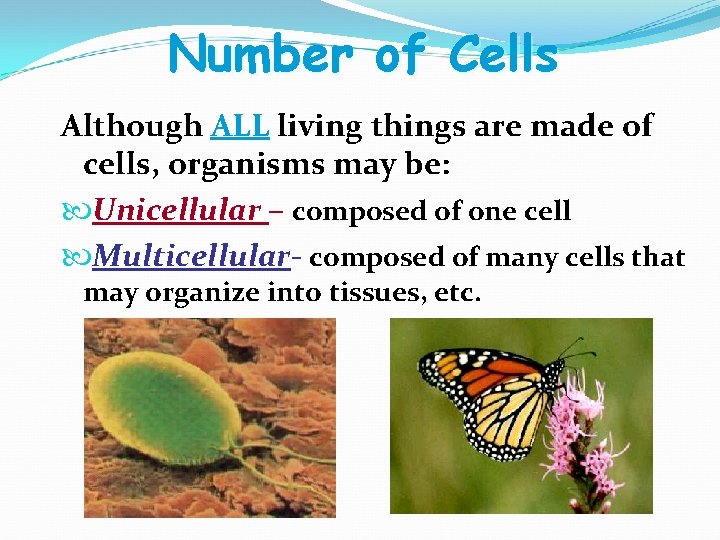
Number of Cells Although ALL living things are made of cells, organisms may be: Unicellular – composed of one cell Multicellular- composed of many cells that may organize into tissues, etc.
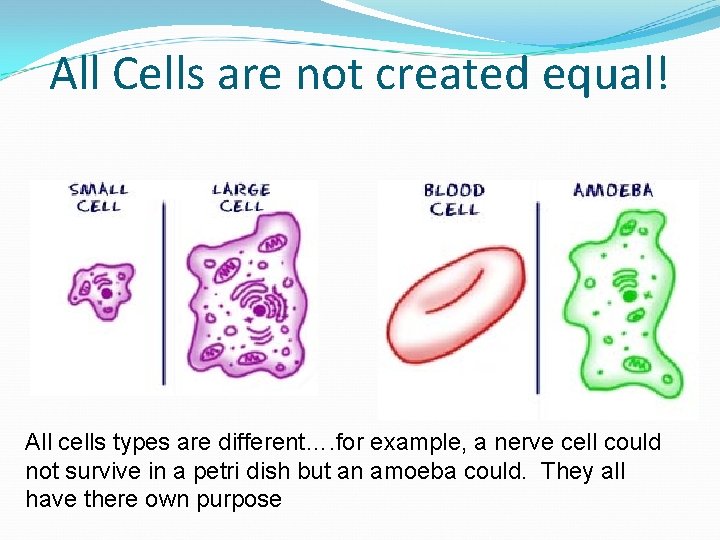
All Cells are not created equal! All cells types are different…. for example, a nerve cell could not survive in a petri dish but an amoeba could. They all have there own purpose
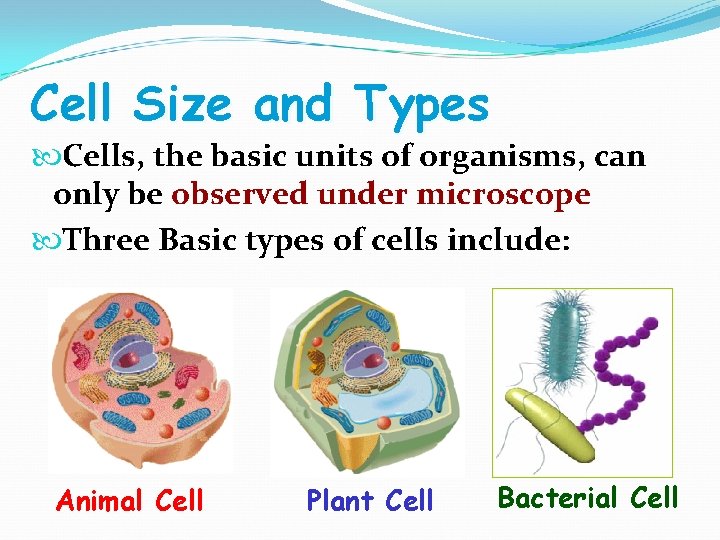
Cell Size and Types Cells, the basic units of organisms, can only be observed under microscope Three Basic types of cells include: Animal Cell Plant Cell Bacterial Cell
1. All living things are made of cells. 2. Cells are the basic units of structure and function in living things. 3. New cells are produced from existing cells.
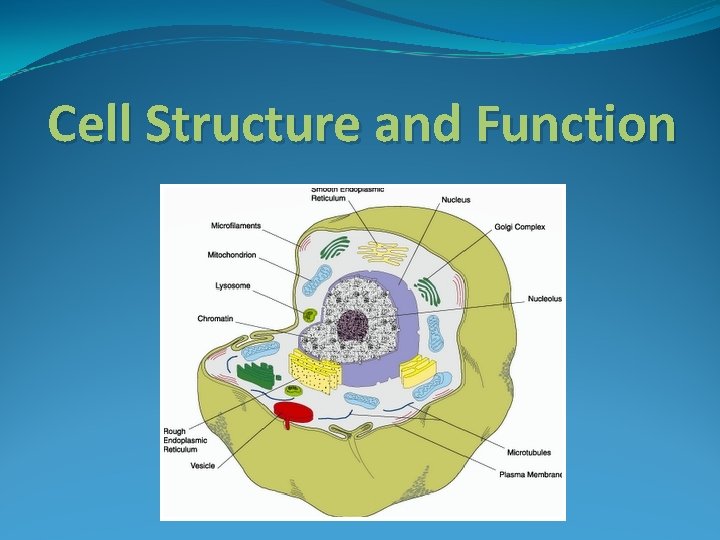
Cell Structure and Function
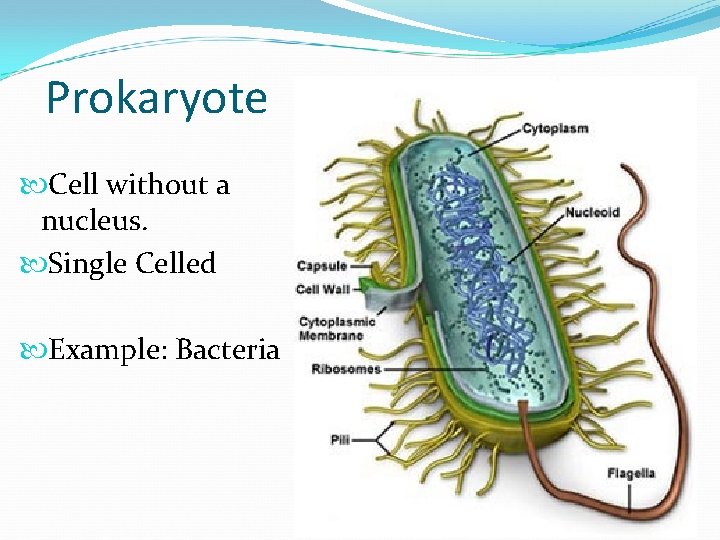
Prokaryote Cell without a nucleus. Single Celled Example: Bacteria
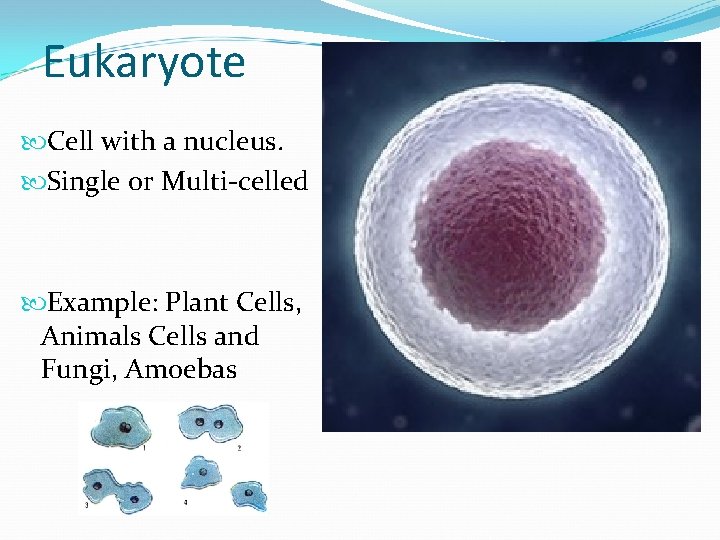
Eukaryote Cell with a nucleus. Single or Multi-celled Example: Plant Cells, Animals Cells and Fungi, Amoebas
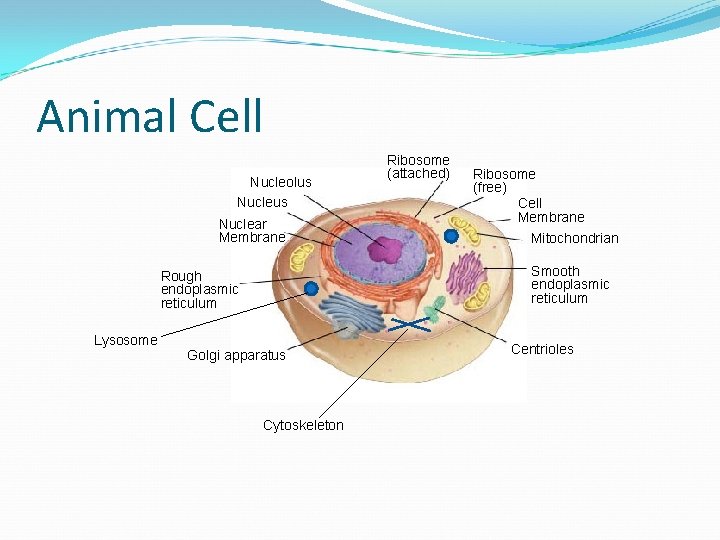
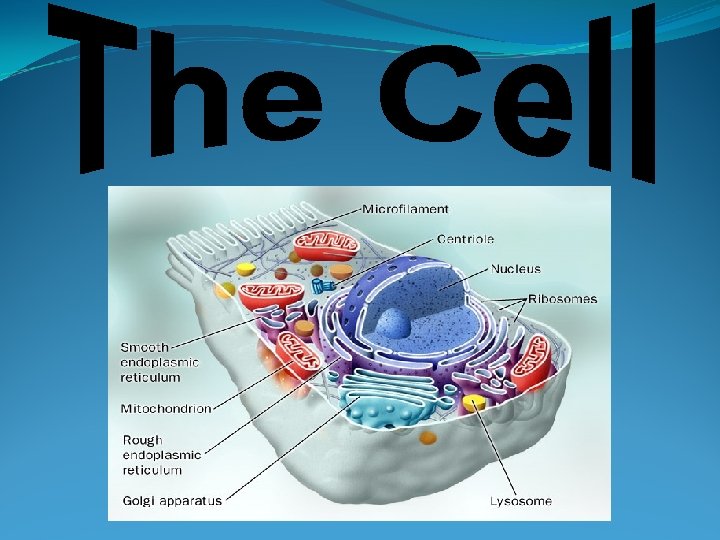
Animal Cell Nucleolus Nuclear Membrane Ribosome (free) Cell Membrane Mitochondrian Smooth endoplasmic reticulum Rough endoplasmic reticulum Lysosome Ribosome (attached) Golgi apparatus Cytoskeleton Centrioles
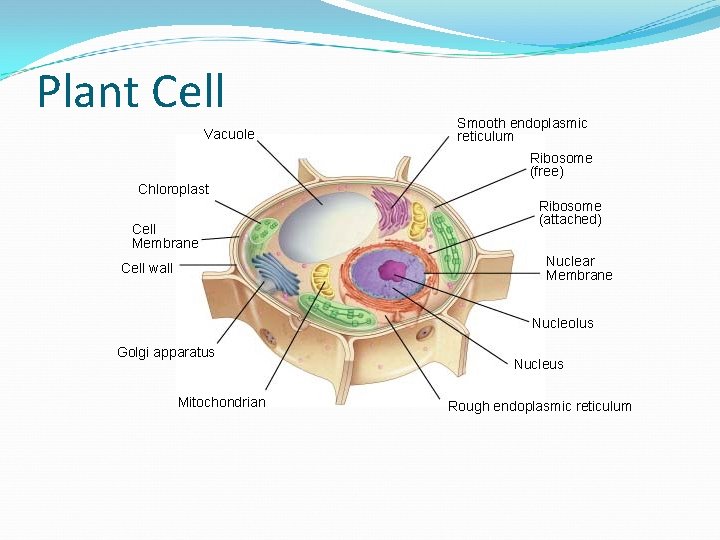
Plant Cell Vacuole Smooth endoplasmic reticulum Ribosome (free) Chloroplast Cell Membrane Ribosome (attached) Nuclear Membrane Cell wall Nucleolus Golgi apparatus Mitochondrian Nucleus Rough endoplasmic reticulum
Organelle: Perform various functions inside the cell. “little organs” Human Body Analogy
Attention: You will need to know the organelles their analogies and their functions for the next quiz.
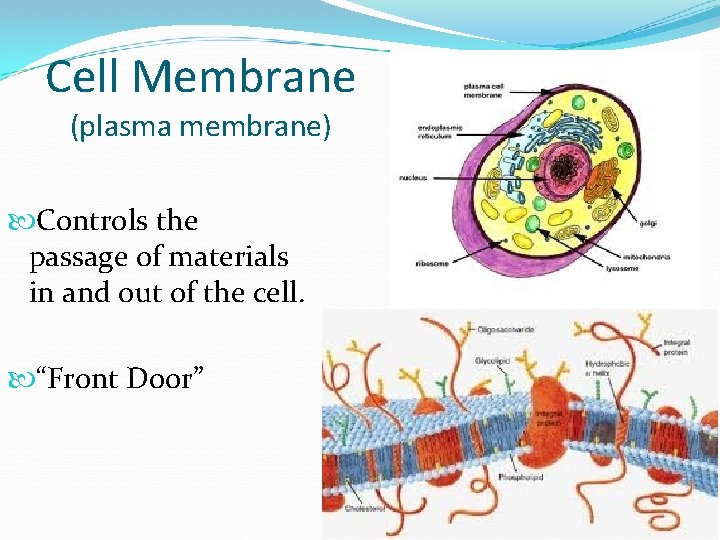
Cell Membrane (plasma membrane) Controls the passage of materials in and out of the cell. “Front Door”
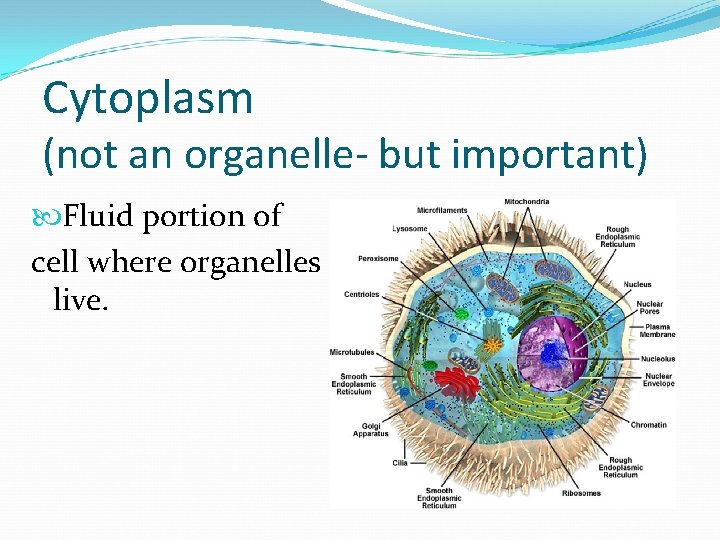
Cytoplasm (not an organelle- but important) Fluid portion of cell where organelles live.
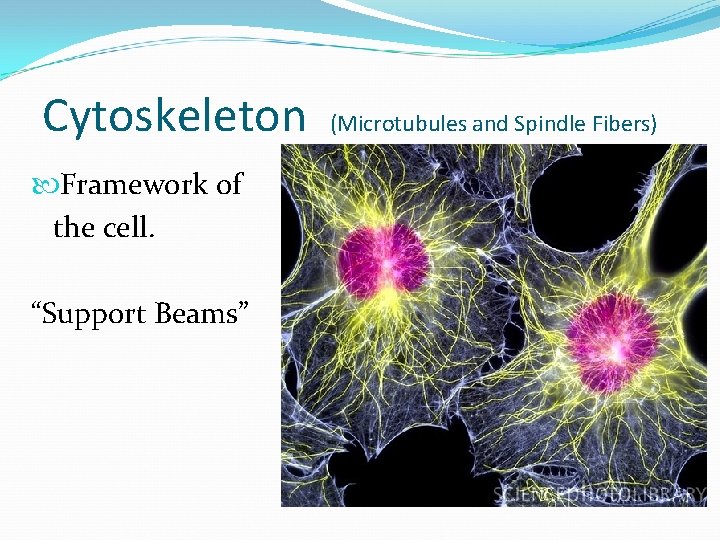
Cytoskeleton Framework of the cell. “Support Beams” (Microtubules and Spindle Fibers)
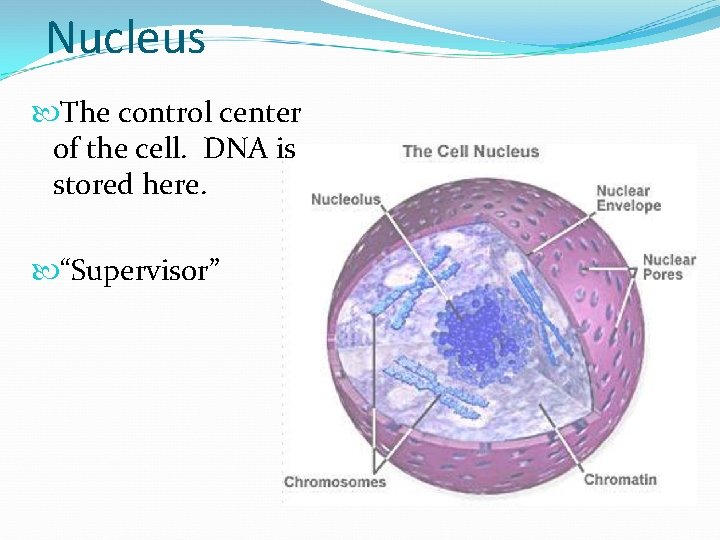
Nucleus The control center of the cell. DNA is stored here. “Supervisor”
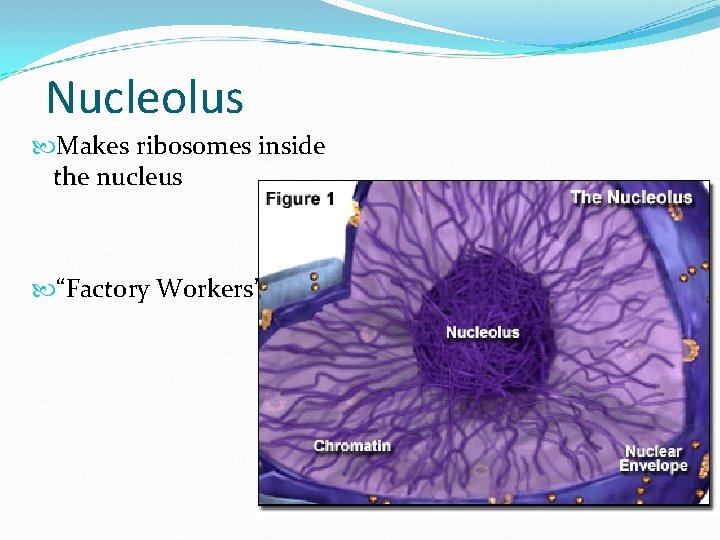
Nucleolus Makes ribosomes inside the nucleus “Factory Workers”
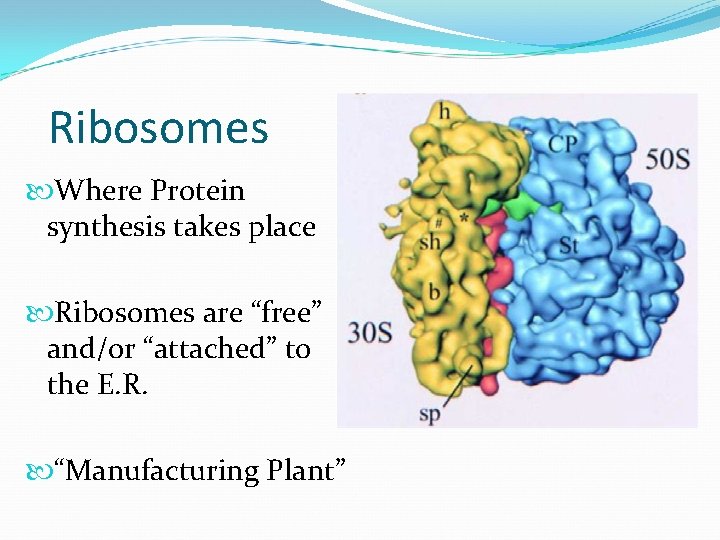
Ribosomes Where Protein synthesis takes place Ribosomes are “free” and/or “attached” to the E. R. “Manufacturing Plant”
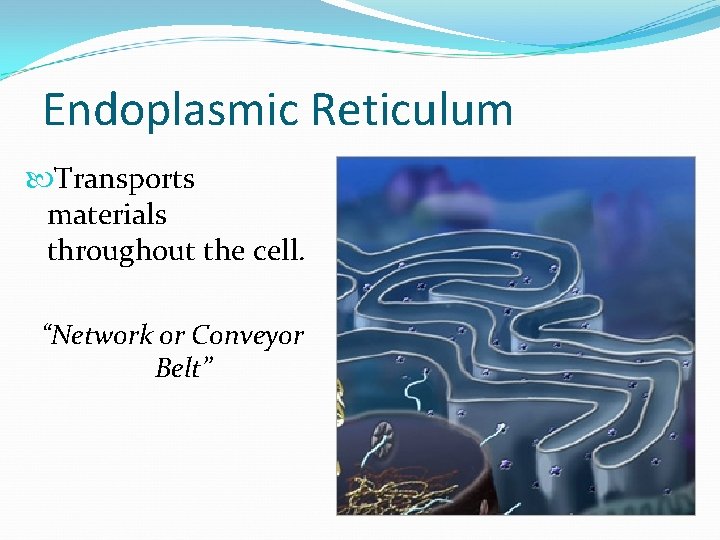
Endoplasmic Reticulum Transports materials throughout the cell. “Network or Conveyor Belt”
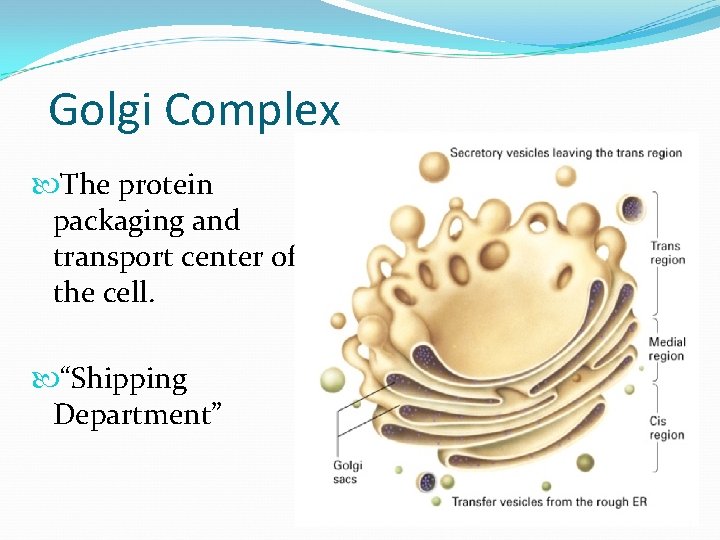
Golgi Complex The protein packaging and transport center of the cell. “Shipping Department”
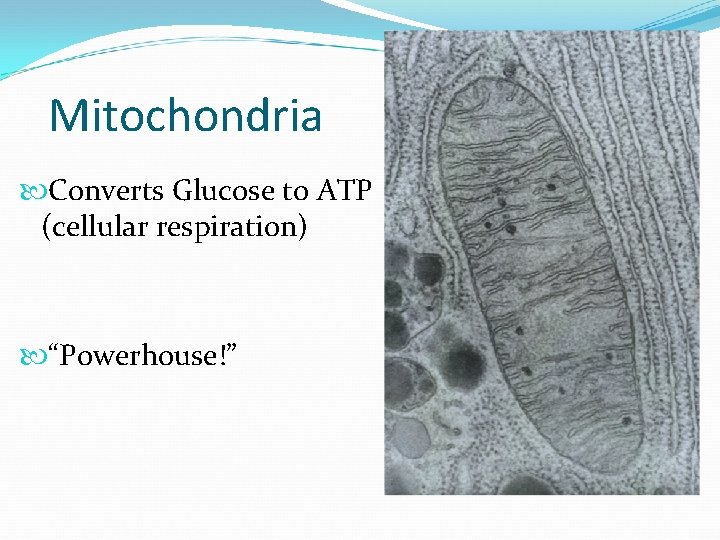
Mitochondria Converts Glucose to ATP (cellular respiration) “Powerhouse!”
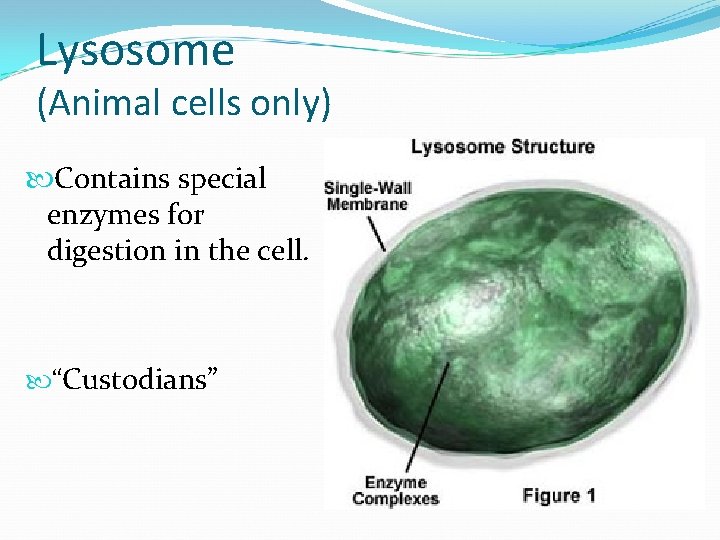
Lysosome (Animal cells only) Contains special enzymes for digestion in the cell. “Custodians”
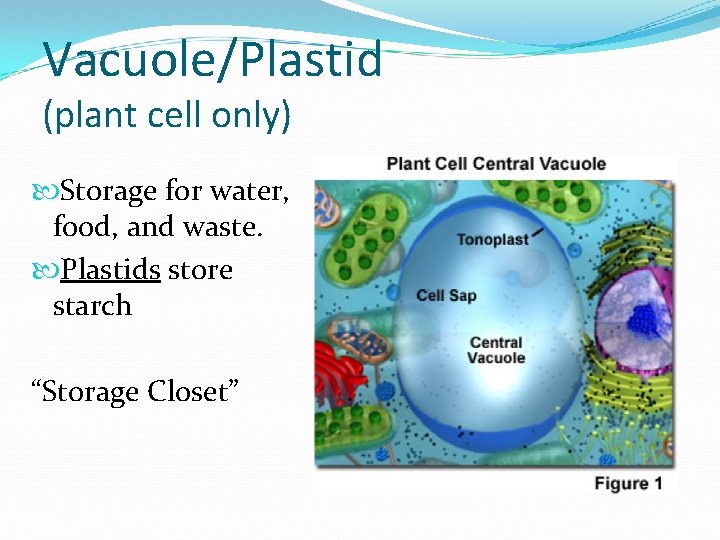
Vacuole/Plastid (plant cell only) Storage for water, food, and waste. Plastids store starch “Storage Closet”
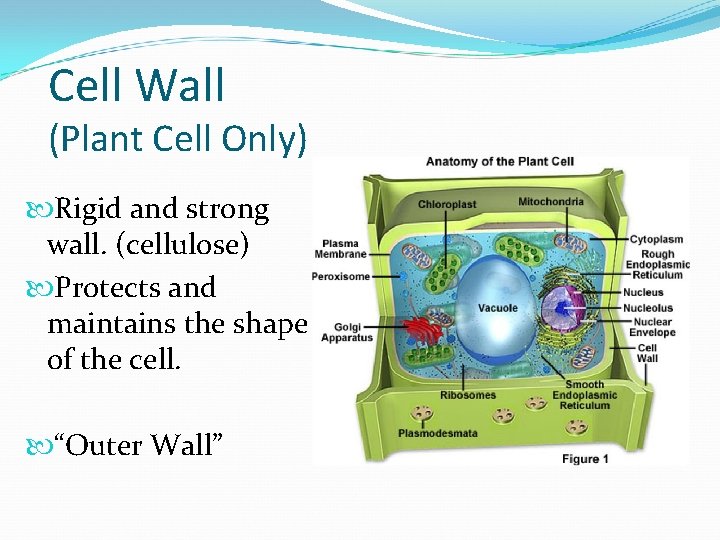
Cell Wall (Plant Cell Only) Rigid and strong wall. (cellulose) Protects and maintains the shape of the cell. “Outer Wall”
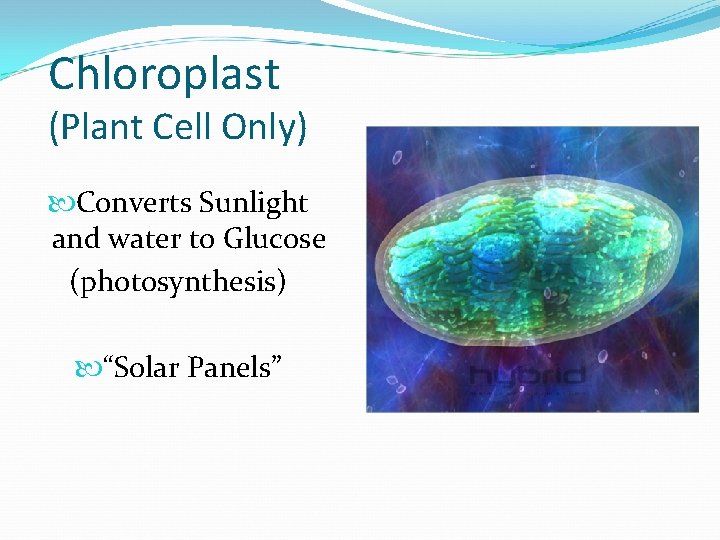
Chloroplast (Plant Cell Only) Converts Sunlight and water to Glucose (photosynthesis) “Solar Panels”
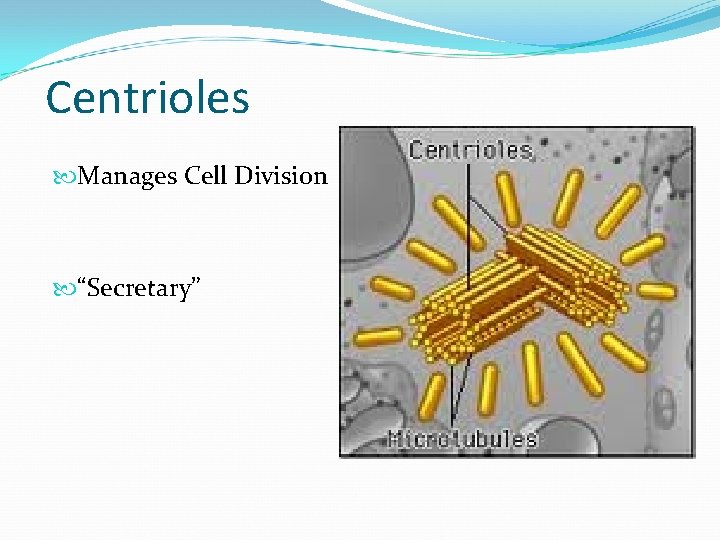
Centrioles Manages Cell Division “Secretary”
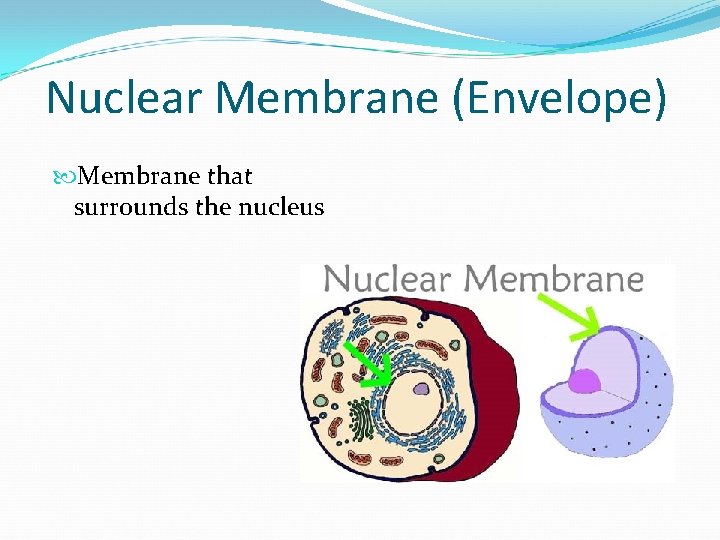
Nuclear Membrane (Envelope) Membrane that surrounds the nucleus
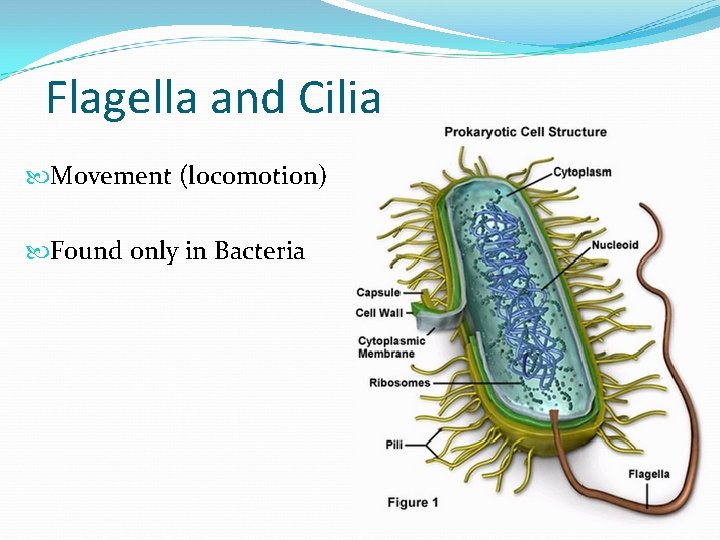
Flagella and Cilia Movement (locomotion) Found only in Bacteria

- Slides: 33