
Bell Ringer 1 Draw and label the ATP

Bell Ringer: 1. Draw and label the ATP Molecule 2. What does ATP stand for? And what is it’s function? 3. Which organelle in the cell does Photosynthesis take place? 4. Why are plants green? 5. What is the Balanced Chemical Equation for Photosynthesis?
http: //www. youtube. com/watch? v=9 w. JDFc 5 ISKw Cellular Respiration How do living things release energy?
Aerobic • A process that requires oxygen Anaerobic • A process that does not require oxygen
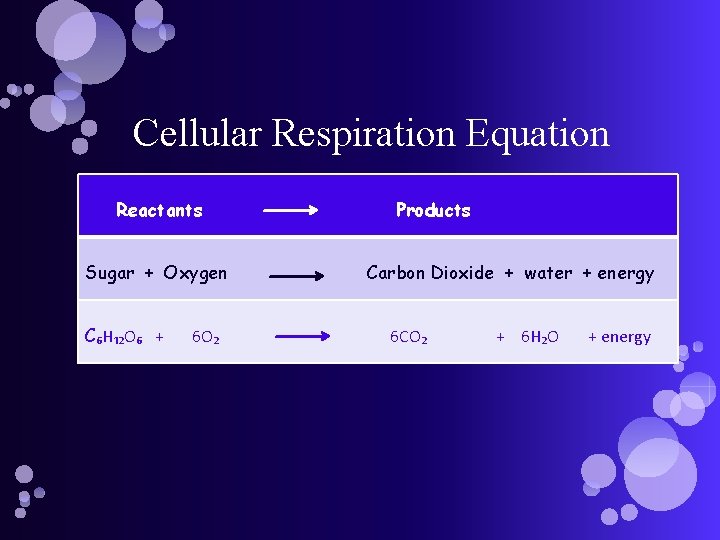
Cellular Respiration Equation Reactants Sugar + Oxygen C₆H₁₂O₆ + 6 O₂ Products Carbon Dioxide + water + energy 6 CO₂ + 6 H₂O + energy
So What is Cellular Respiration? Breaking down Glucose into ATP energy. • (Both Plant and Animal Cells) Three main stages: 1. Glycolysis 2. Krebs Cycle 3. Electron Transport Chain
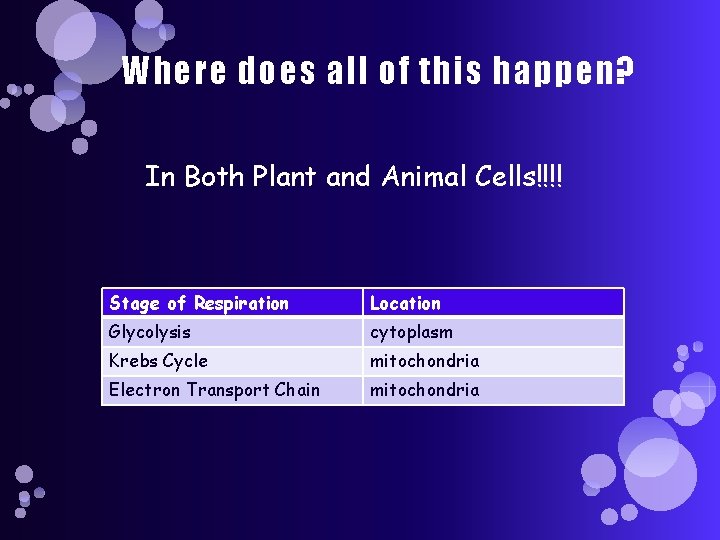
Where does all of this happen? In Both Plant and Animal Cells!!!! Stage of Respiration Location Glycolysis cytoplasm Krebs Cycle mitochondria Electron Transport Chain mitochondria
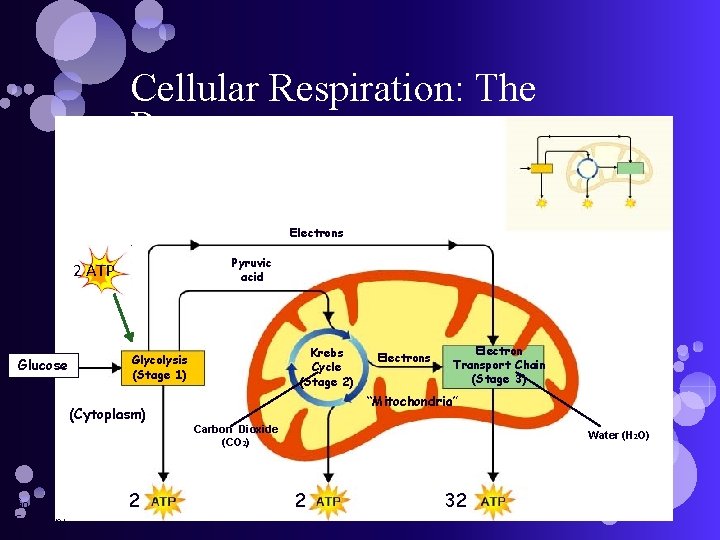
Cellular Respiration: The Process Electrons Pyruvic acid 2 ATP Glucose Krebs Cycle (Stage 2) Glycolysis (Stage 1) Electrons Electron Transport Chain (Stage 3) “Mitochondria” (Cytoplasm) Carbon Dioxide (CO 2) Go to Section: 2 Water (H 2 O) 2 32
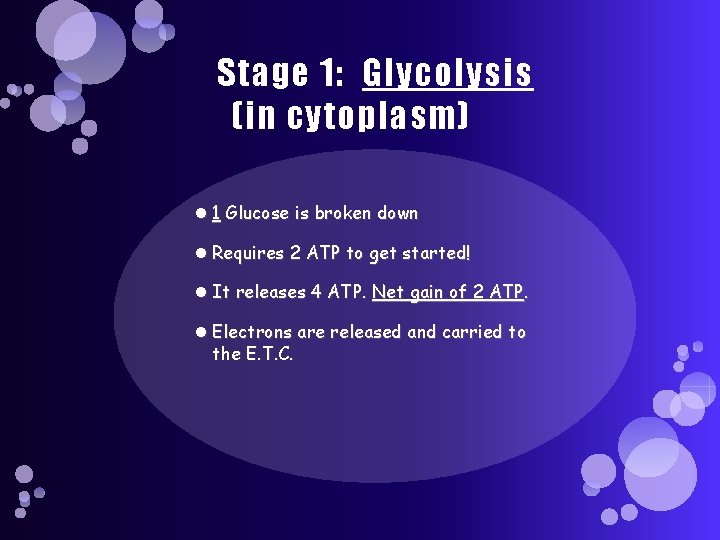
Stage 1: Glycolysis (in cytoplasm) 1 Glucose is broken down Requires 2 ATP to get started! It releases 4 ATP. Net gain of 2 ATP. Electrons are released and carried to the E. T. C.
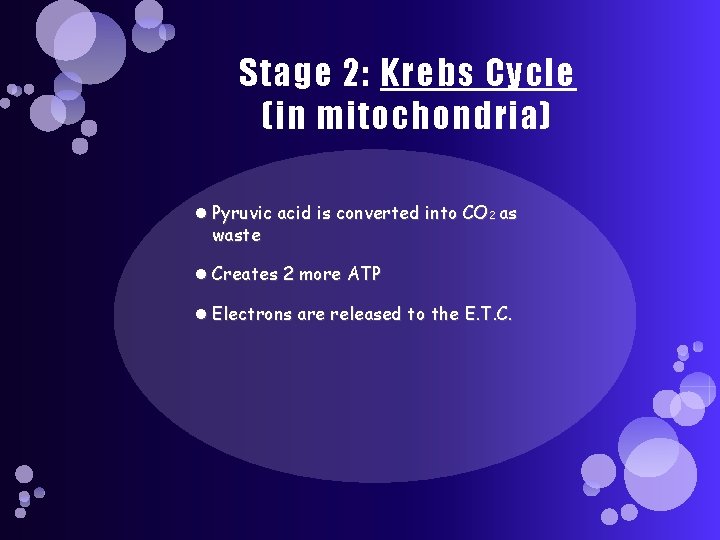
Stage 2: Krebs Cycle (in mitochondria) Pyruvic acid is converted into CO 2 as waste Creates 2 more ATP Electrons are released to the E. T. C.
Stage 3: Electron Transport Chain (in Mitochondria) The E. T. C. uses electrons to produce 32 ATP. Water is given off as waste.
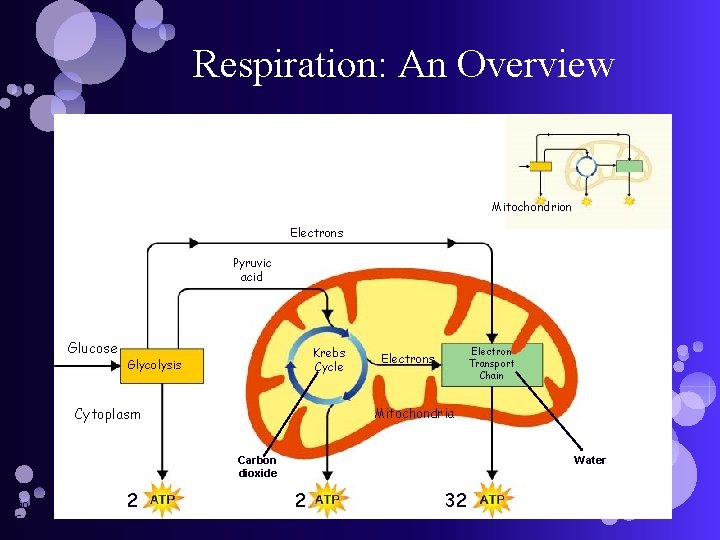
Respiration: An Overview Mitochondrion Electrons Pyruvic acid Glucose Krebs Cycle Glycolysis Cytoplasm Electron Transport Chain Electrons Mitochondria Carbon dioxide Go to Section: 2 Water 2 32
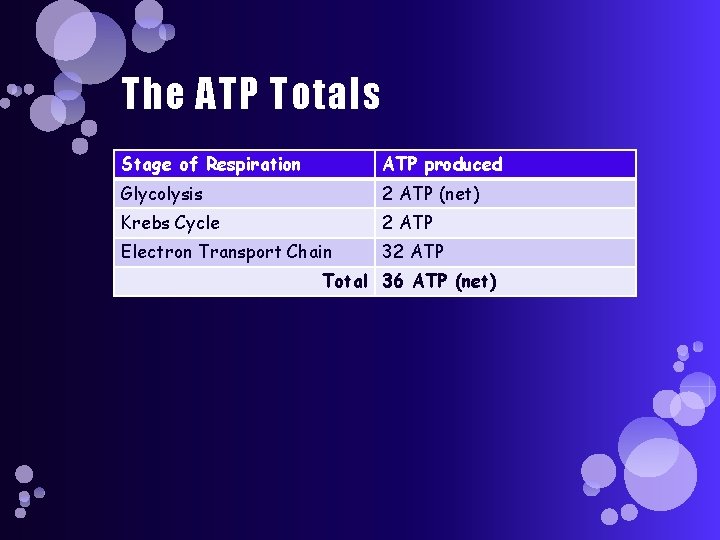
The ATP Totals Stage of Respiration ATP produced Glycolysis 2 ATP (net) Krebs Cycle 2 ATP Electron Transport Chain 32 ATP Total 36 ATP (net)
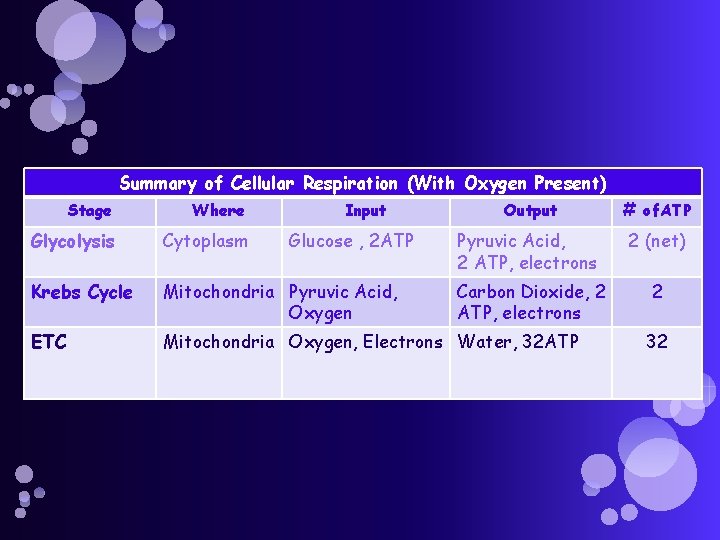
Summary of Cellular Respiration (With Oxygen Present) Stage Where Input Glycolysis Cytoplasm Krebs Cycle Mitochondria Pyruvic Acid, Oxygen ETC Mitochondria Oxygen, Electrons Water, 32 ATP Glucose , 2 ATP Output # of. ATP Pyruvic Acid, 2 ATP, electrons 2 (net) Carbon Dioxide, 2 ATP, electrons 2 32
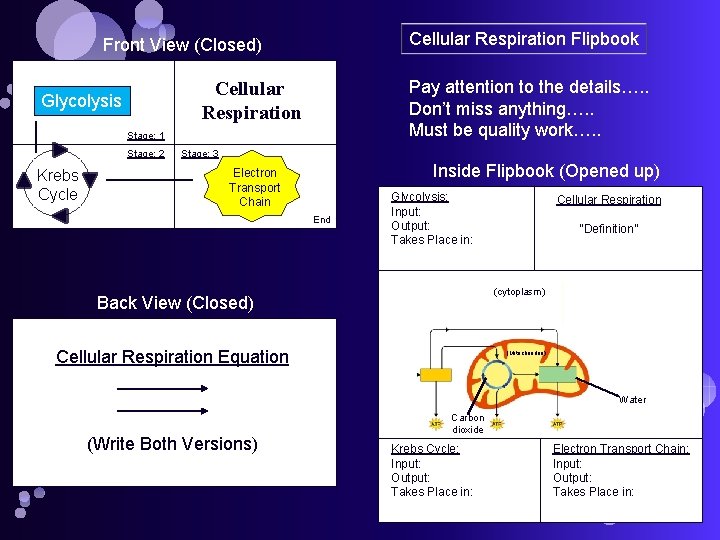
Cellular Respiration Flipbook Front View (Closed) Pay attention to the details…. . Don’t miss anything…. . Must be quality work…. . Cellular Respiration Glycolysis Stage: 1 Stage: 2 Krebs Cycle Stage: 3 Inside Flipbook (Opened up) Electron Transport Chain End Glycolysis: Input: Output: Takes Place in: Cellular Respiration “Definition” (cytoplasm) Back View (Closed) Cellular Respiration Equation (Mitochondria) Water (Write Both Versions) Carbon dioxide Krebs Cycle: Input: Output: Takes Place in: Electron Transport Chain: Input: Output: Takes Place in:
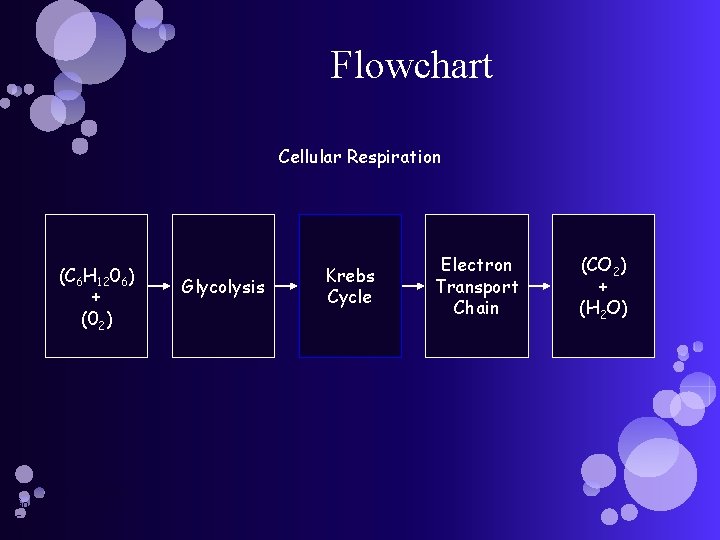
Flowchart Cellular Respiration (C 6 H 1206) + (02) Mitochondria Go to Section: Glycolysis Krebs Cycle Electron Transport Chain (CO 2) + (H 2 O)
Bell Ringer: 1. What is the difference between Aerobic and Anaerobic? 2. What is the balanced chemical equation for Cellular Respiration? 3. What are three stages of Cellular Respiration? 4. How many ATP are need to start Glycolysis? 5. How many total (net) ATP are produced from 1 molecule of C 6 H 12 O 6 during the entire cellular respiration process? 6. What is the process that occurs if oxygen is not present?
What if there is no oxygen? Then Fermentation occurs…. . Fermentation releases the energy in glucose when oxygen is not available. This is Anaerobic because it does not require oxygen. Two Types : • Alcoholic Fermentation • Lactic Acid Fermentation
Alcoholic Fermentation Performed by Yeast Uses pyruvic acid so that glycolysis can continue. Converts Pyruvic acid into ethyl alcohol and carbon dioxide as waste.
Examples of Alcoholic Fermentation Bread dough Beer and Wine
Lactic Acid Fermentation Performed in the muscle cells of Animals. Converts Pyruvic Acid into Lactic Acid so that glycolysis can continue.
Example of Lactic Acid Fermentation During intense exercise, your body cannot supply oxygen to your muscles. This causes the muscles to begin Lactic Acid Fermentation in order to produce ATP. The lactic acid builds up in your muscles causing you to feel sore.
How do you get rid of the Lactic Acid build up in your muscles? When you breathe heavily after exercise, you are basically paying back on oxygen debt. Your blood stream eventually washes away the Lactic Acid into your liver to be digested.
Energy and Exercise Three energy “tanks”: • Stored Energy: ATP stored in cells supports around 6 seconds of intense activity. • Lactic Acid Fermentation: can supply energy for about 90 seconds. • Cellular Respiration: After 90 seconds, this is the only way to obtain continuous ATP. The process is slow. This is why athletes must pace themselves.

Fermentation Summary: Fermentation Type Input Output Takes place In: Alcoholic Pyruvic Acid Alcohol, CO 2, Cytoplasm of and electron yeast carriers Lactic Acid Pyruvic Acid Lactic Acid and electron carriers Cytoplasm of muscle cells
Bell Ringer: 1. Is fermentation an aerobic or anaerobic process? 2. What are the two types of fermentation? 3. 3. Where does each type of fermentation occur?
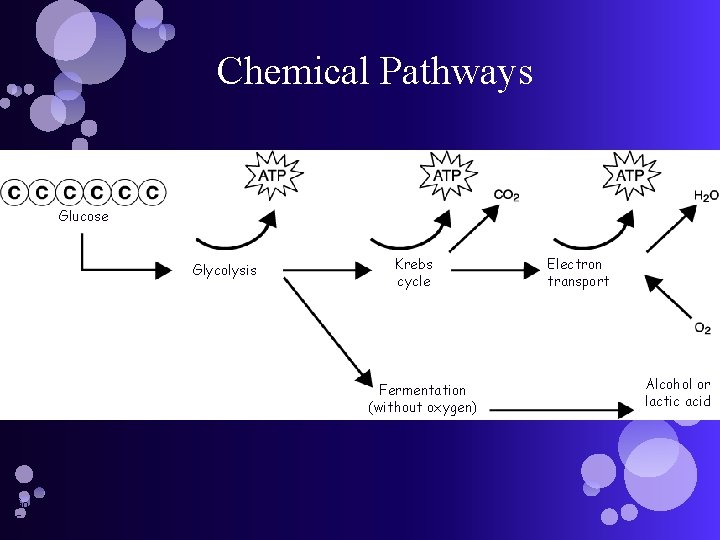
Chemical Pathways Glucose Glycolysis Krebs cycle Fermentation (without oxygen) Go to Section: Electron transport Alcohol or lactic acid
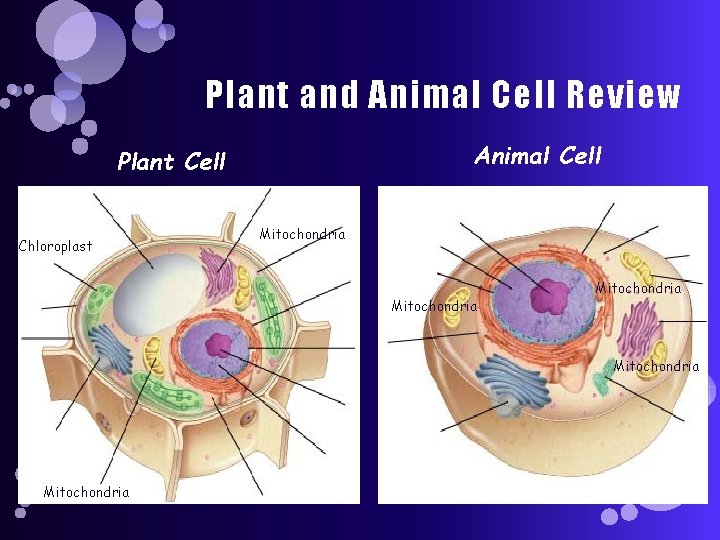
Plant and Animal Cell Review Animal Cell Plant Cell Chloroplast Mitochondria Mitochondria
What happens if there is no oxygen? IF there is no oxygen available fermentation happens. • We will come back to this!
- Slides: 28