
Belize slaveowners and the University College London slavery
Belize slave-owners and the University College London slavery database Barbara Bulmer-Thomas October 3, 2015
• Legacies of British slave-owners database Catherine Hall, Nicholas Draper, Keith Mc. Clelland, Katie Donnington, Rachel Lang • Belize slave owners
Steps to freedom • Abolition of the slave trade 1808 • Emancipation Bill 1834 Emancipation day in the Caribbean 1 Aug 1838 £ 20, 000 mil paid in compensation to slave owners. Estimates range in current prices from £ 1. 6 bn (Retail Price Index) to £ 17 bn (Earnings Index).
• Understanding the ecology of slavery economic benefits affecting Victorian prosperity in the UK. • Commercial Legacies: Ø Banking and the City Ø Railways: John Moss, Nathaniel Snell Chauncey • Cultural legacies: Ø Country house building: Harewood House Ø Connoisseurship: Hibbert, Bernal, Angerstein Ø Philanthropy and institutions: Kings College London Ø Societies and Clubs: The London Institution, Roxburgh club Ø Religious institutions and churches
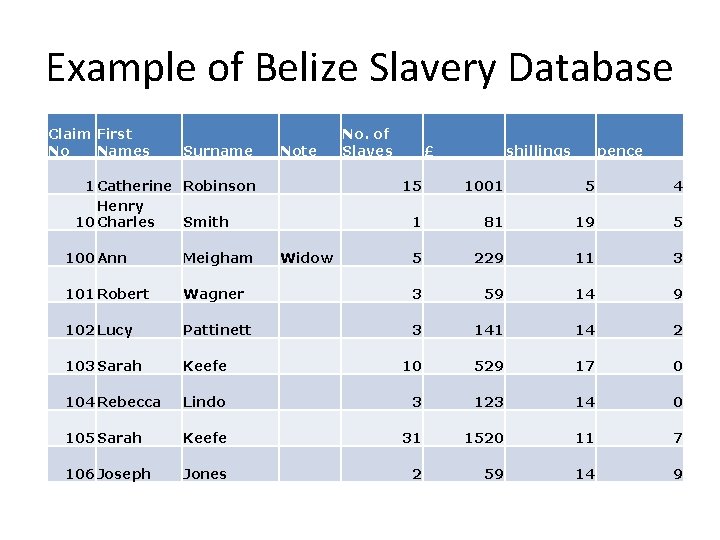
Example of Belize Slavery Database Claim First No Names Surname Note 1 Catherine Robinson Henry 10 Charles Smith Widow No. of Slaves £ shillings pence 15 1001 5 4 1 81 19 5 5 229 11 3 100 Ann Meigham 101 Robert Wagner 3 59 14 9 102 Lucy Pattinett 3 141 14 2 103 Sarah Keefe 10 529 17 0 104 Rebecca Lindo 3 123 14 0 105 Sarah Keefe 31 1520 11 7 106 Joseph Jones 2 59 14 9
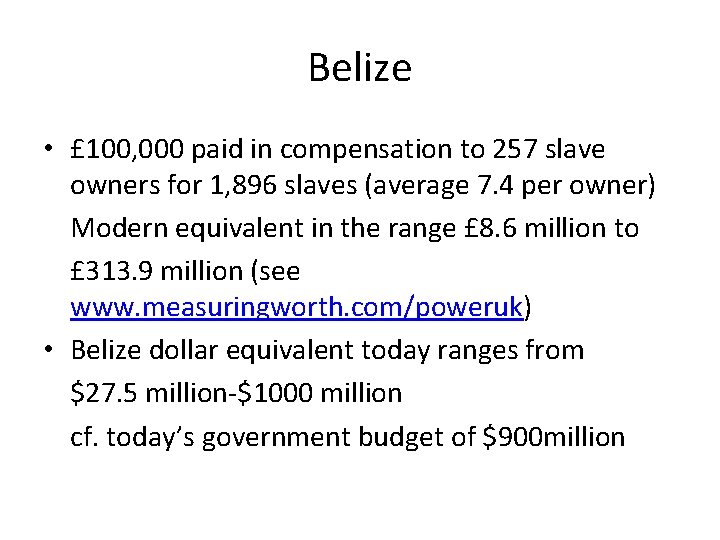
Belize • £ 100, 000 paid in compensation to 257 slave owners for 1, 896 slaves (average 7. 4 per owner) Modern equivalent in the range £ 8. 6 million to £ 313. 9 million (see www. measuringworth. com/poweruk) • Belize dollar equivalent today ranges from $27. 5 million-$1000 million cf. today’s government budget of $900 million
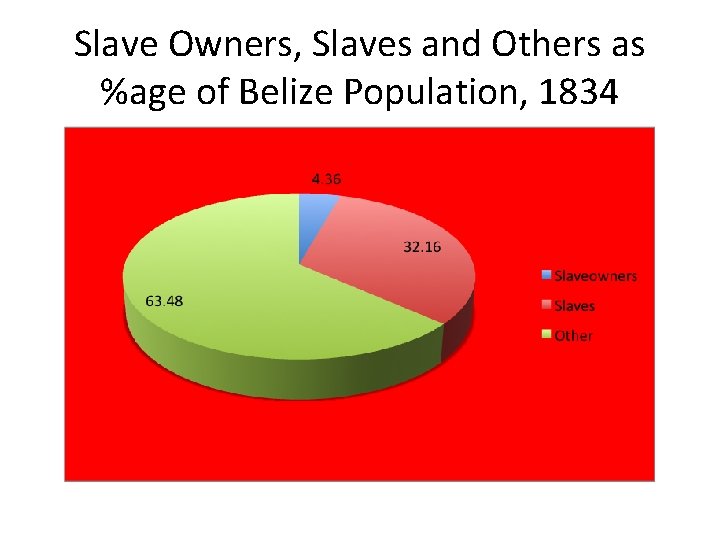
Slave Owners, Slaves and Others as %age of Belize Population, 1834
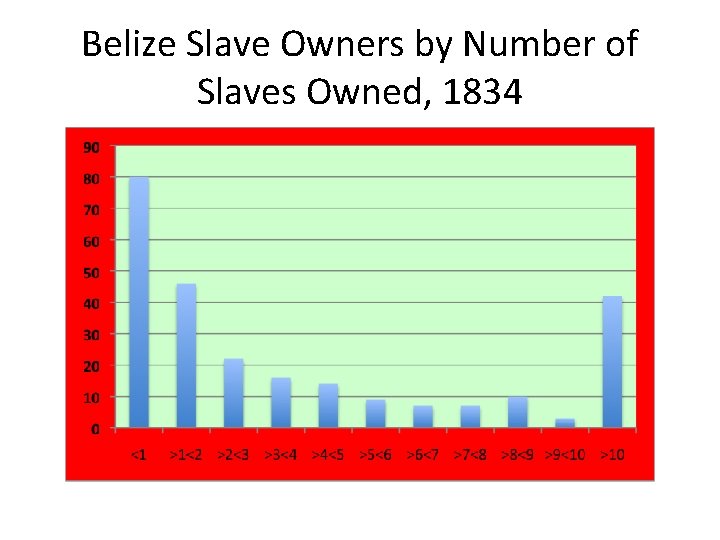
Belize Slave Owners by Number of Slaves Owned, 1834
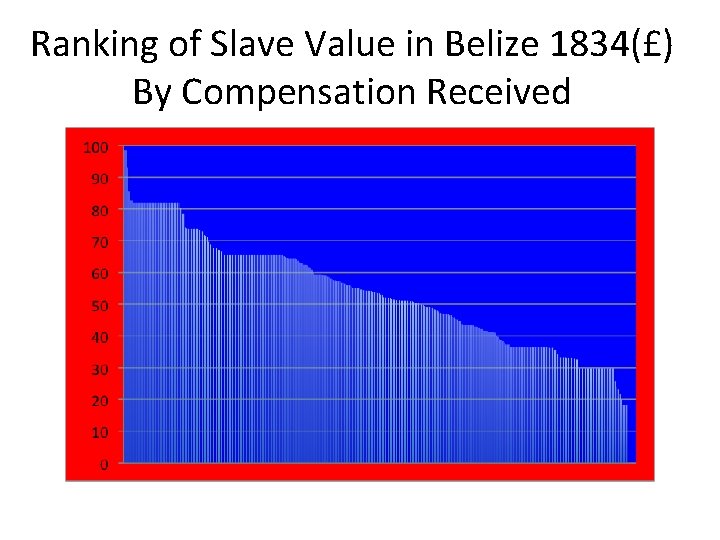
Ranking of Slave Value in Belize 1834(£) By Compensation Received
Who were the beneficiaries? • Many of those not using agents were women residing in the UK while their husbands remained in Belize. • Some were ‘spinsters’ or widows – did they own the slaves outright? • A few signed with an ‘x’ implying illiteracy.
Unanswered questions • What happened to the money paid in compensation? • Why did some slave owners stay on in Belize while others left never to return? • How did the distribution of slave among slave owners compare to other parts of the Caribbean? • Did more women own slaves in Belize than elsewhere?
References • Catherine Hall et al, Legacies of British slaveownership, CUP, UK 2014 • Graham Trust, John Moss of Otterspool (1782 -1856), Authorhouse, UK 2011 • Hilary Beckles, Britain’s Black Debt, 2013 • Legacies of British slave-ownership database hhtp/www. ucl. ac. uk/lbs
- Slides: 12