
Being a Leader HPR 450 Chapter 7 Table
Being a Leader HPR 450 Chapter 7
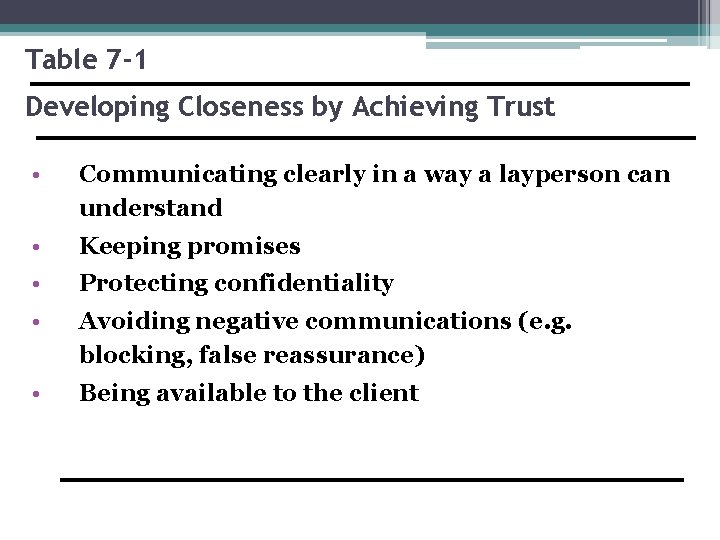
Table 7 -1 Developing Closeness by Achieving Trust • Communicating clearly in a way a layperson can understand • Keeping promises • Protecting confidentiality • Avoiding negative communications (e. g. blocking, false reassurance) • Being available to the client
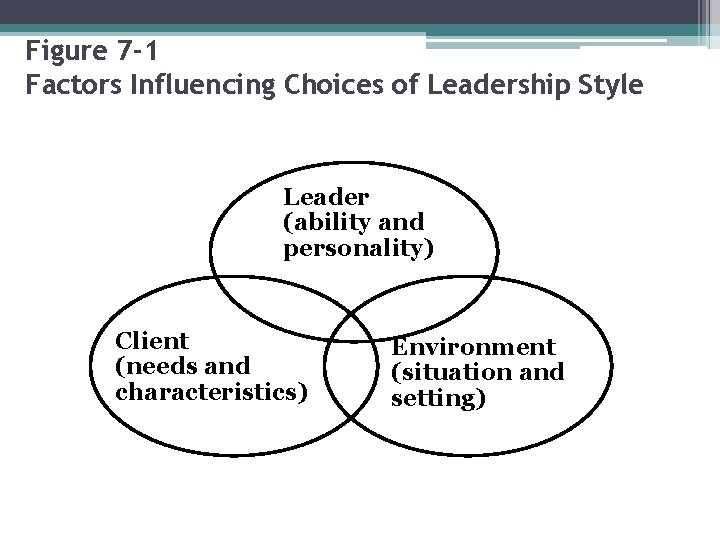
Figure 7 -1 Factors Influencing Choices of Leadership Style Leader (ability and personality) Client (needs and characteristics) Environment (situation and setting)
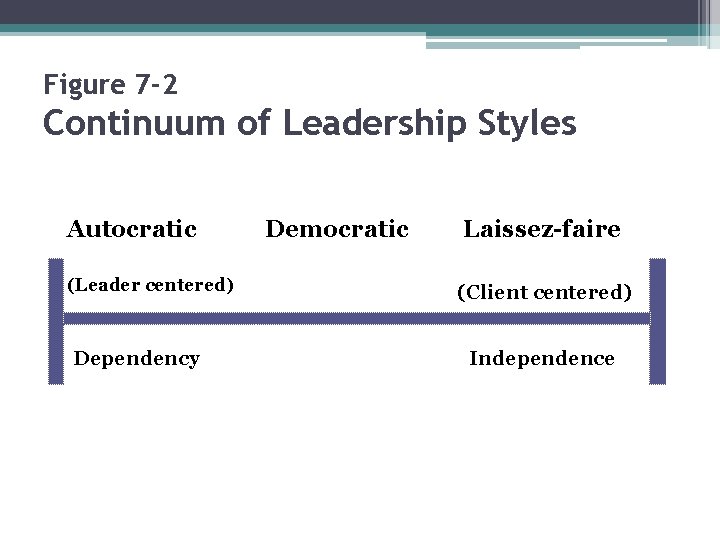
Figure 7 -2 Continuum of Leadership Styles Autocratic (Leader centered) Dependency Democratic Laissez-faire (Client centered) Independence
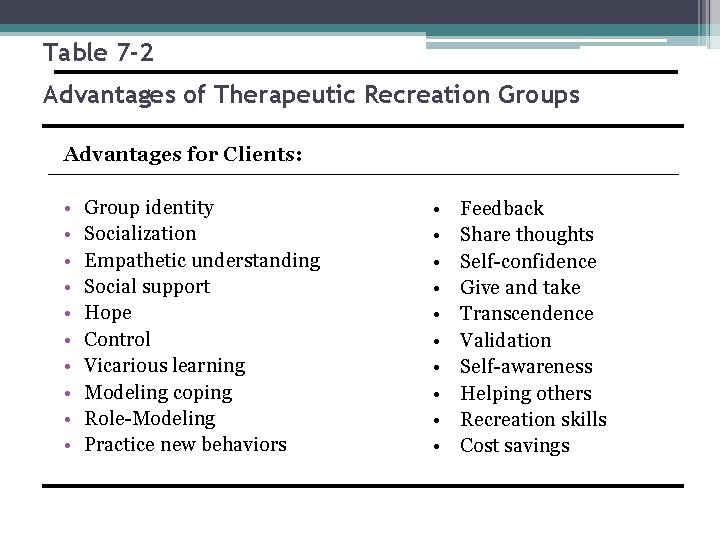
Table 7 -2 Advantages of Therapeutic Recreation Groups Advantages for Clients: • • • Group identity Socialization Empathetic understanding Social support Hope Control Vicarious learning Modeling coping Role-Modeling Practice new behaviors • • • Feedback Share thoughts Self-confidence Give and take Transcendence Validation Self-awareness Helping others Recreation skills Cost savings
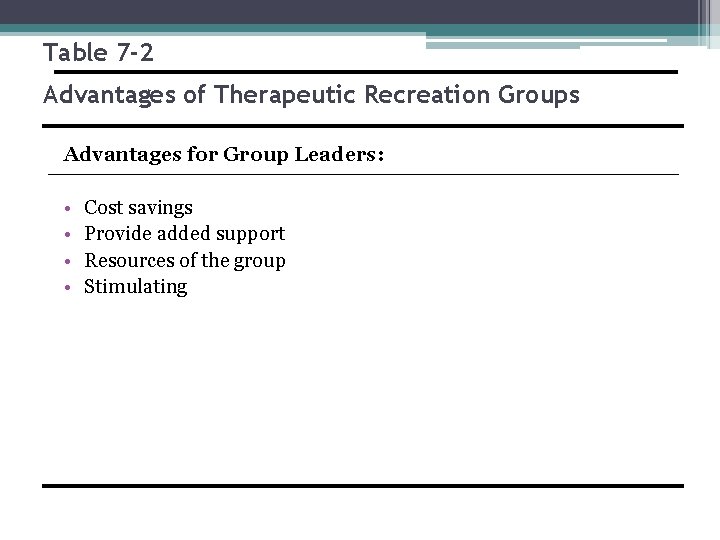
Table 7 -2 Advantages of Therapeutic Recreation Groups Advantages for Group Leaders: • • Cost savings Provide added support Resources of the group Stimulating
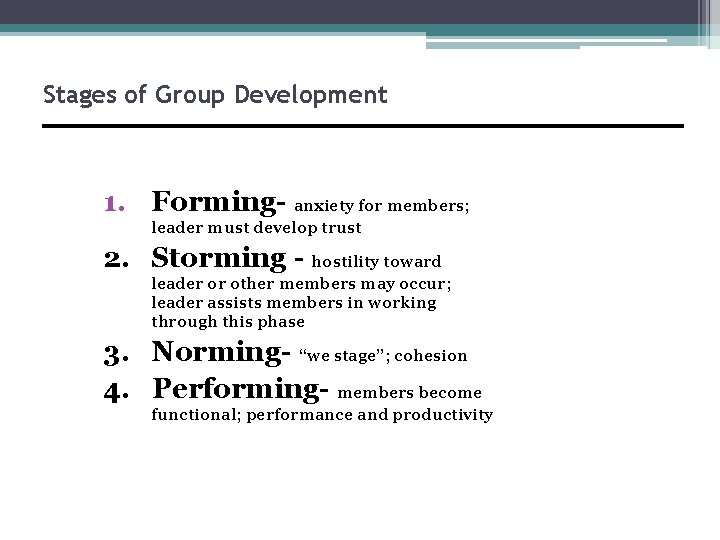
Stages of Group Development 1. Forming- anxiety for members; leader must develop trust 2. Storming - hostility toward leader or other members may occur; leader assists members in working through this phase 3. Norming- “we stage”; cohesion 4. Performing- members become functional; performance and productivity
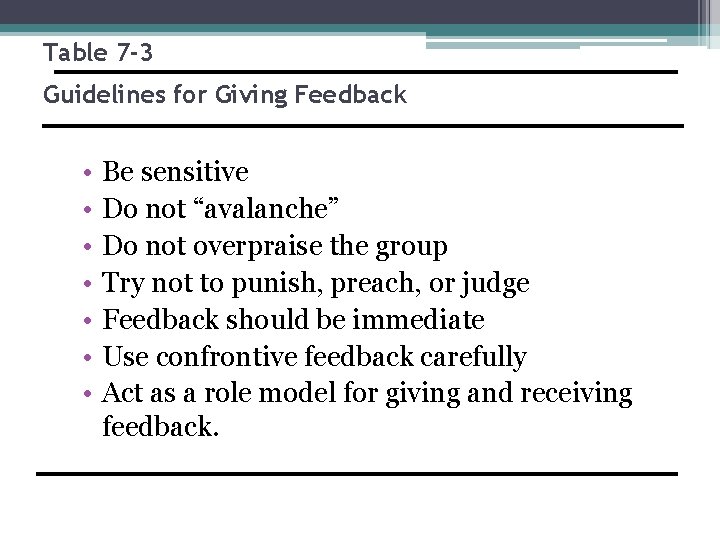
Table 7 -3 Guidelines for Giving Feedback • • Be sensitive Do not “avalanche” Do not overpraise the group Try not to punish, preach, or judge Feedback should be immediate Use confrontive feedback carefully Act as a role model for giving and receiving feedback.
Processing Techniques • • • No Loading Frontloading (aka: framing, briefing, prebriefing) Feedback (including stop-action & reframing) Metaphors Debriefing
General Frameworks for Debriefing 1. What? So What? Now What? 2. The 5 Question Model 3. Experiential Learning Model
What? So What? Now What? Model • What Phase - review of what happened • So What Phase - Express what they have learned • Now What Phase - what they will do with learning
The “ 5 Question Model” • Did you notice…? • Why did that happen? • Does that happen in life? • Why does that happen? • How can you use that?
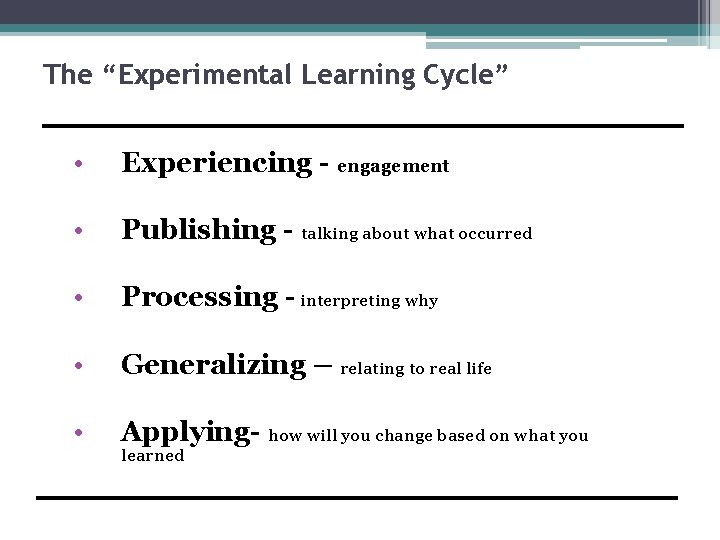
The “Experimental Learning Cycle” • Experiencing - engagement • Publishing - talking about what occurred • Processing - interpreting why • Generalizing – relating to real life • Applying- how will you change based on what you learned
- Slides: 13