
BEHAVIOURAL INSIGHTS GROUP Education Cyber Security Presented by
BEHAVIOURAL INSIGHTS GROUP Education & Cyber Security Presented by: Michael Buttazzoni (Policy Advisor)
Presentation Overview 1. Introduction to Behavioural Insights 2. Increasing K-5 School Attendance 3. Increasing PSE Enrolment after G 12 4. Encouraging Safe Online Behaviour 5. Working with BIG 2
Introduction to Behavioural Insights 3
What are behavioural insights? Behavioural insights are empirical findings about human decision-making and behaviour that can be used to make public policy more effective 4
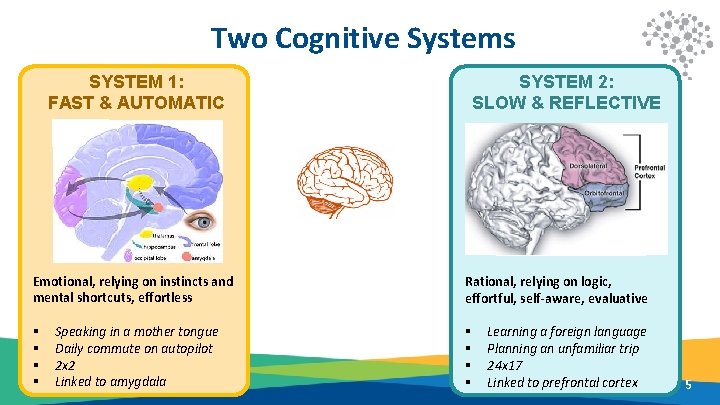
Two Cognitive Systems SYSTEM 1: FAST & AUTOMATIC Emotional, relying on instincts and mental shortcuts, effortless § § Speaking in a mother tongue Daily commute on autopilot 2 x 2 Linked to amygdala SYSTEM 2: SLOW & REFLECTIVE Rational, relying on logic, effortful, self-aware, evaluative § § Learning a foreign language Planning an unfamiliar trip 24 x 17 Linked to prefrontal cortex 5
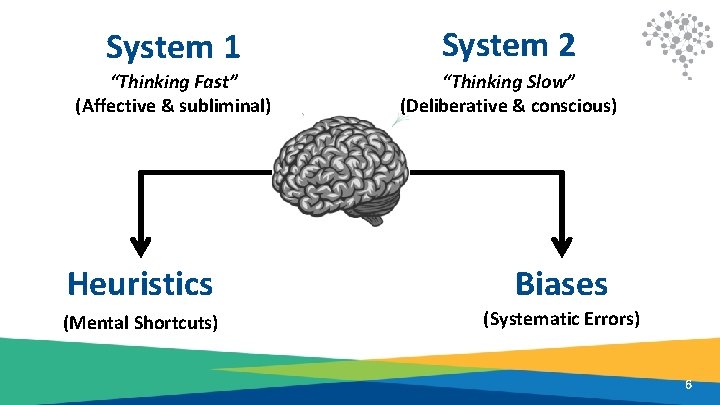
System 1 System 2 “Thinking Fast” (Affective & subliminal) “Thinking Slow” (Deliberative & conscious) Heuristics Biases (Mental Shortcuts) (Systematic Errors) 6
Heuristics & Decision-Making Rhyme as reason effect (Eaton-Rosen phenomenon) People judge statements to be more truthful if they rhyme 7
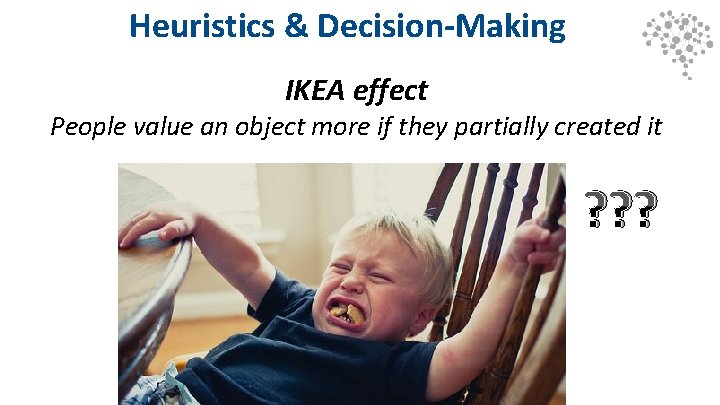
Heuristics & Decision-Making IKEA effect People value an object more if they partially created it ? ? ? 8
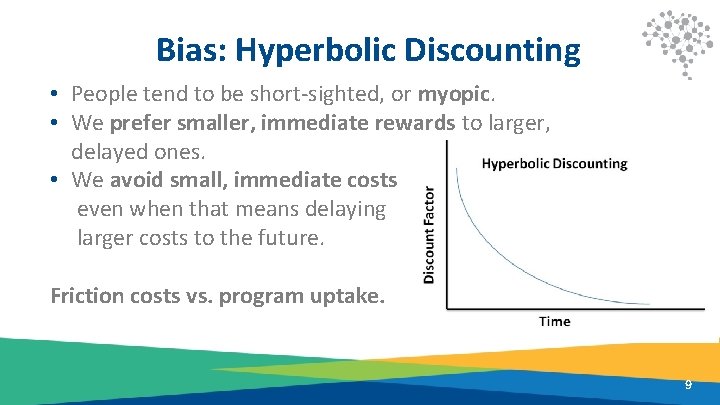
Bias: Hyperbolic Discounting • People tend to be short-sighted, or myopic. • We prefer smaller, immediate rewards to larger, delayed ones. • We avoid small, immediate costs even when that means delaying larger costs to the future. Friction costs vs. program uptake. 9
10
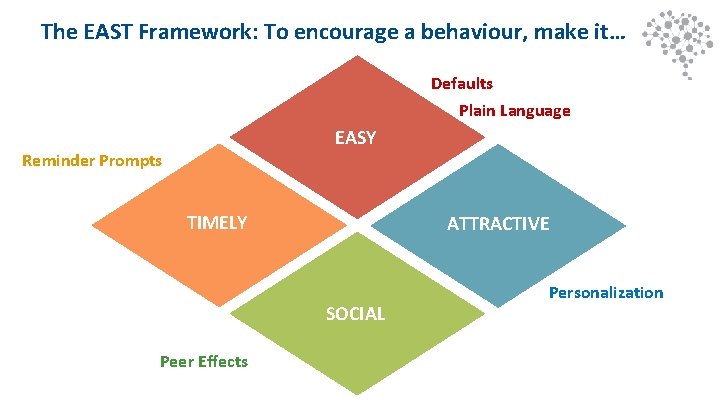
The EAST Framework: To encourage a behaviour, make it… Defaults Plain Language EASY Reminder Prompts TIMELY ATTRACTIVE SOCIAL Personalization Peer Effects 11
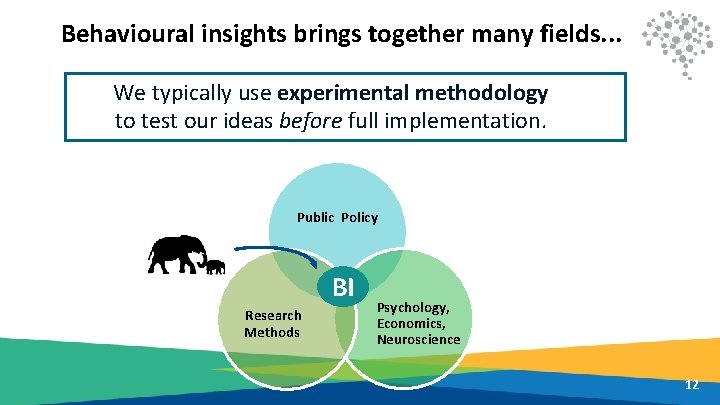
Behavioural insights brings together many fields. . . We typically use experimental methodology to test our ideas before full implementation. Public Policy BI Research Methods Psychology, Economics, Neuroscience 12
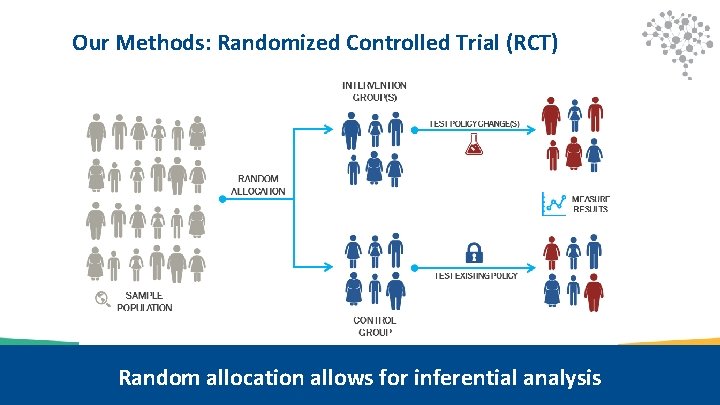
Our Methods: Randomized Controlled Trial (RCT) Random allocation allows for inferential analysis 13
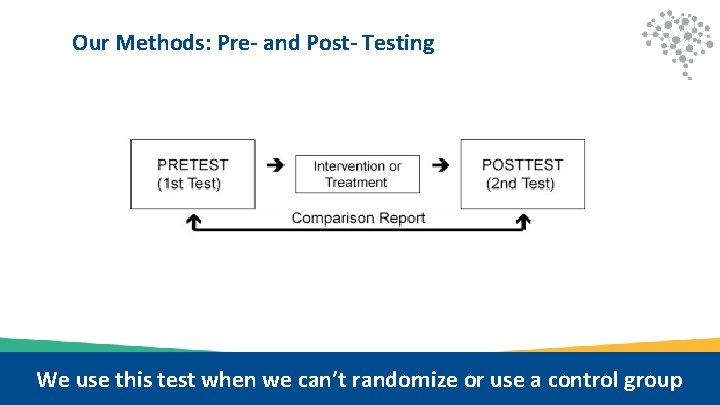
Our Methods: Pre- and Post- Testing We use this test when we can’t randomize or use a control group 14
Behavioural Insights Examples 1. Increasing K-5 Attendance • Network nudge, US 2015 2. Encouraging Post-Secondary Enrolment • Fees, choices, and defaults, BC/ON 2014 3. Nudging Secure Online Behaviours • Warnings and choices, EU 2018 15
Increasing K-5 Student Attendance (US, 2018) 16
Increasing K-5 Attendance Problem • Attendance in K-5 is a strong predictor of student outcomes. • Testing scores, holdback, chronic absenteeism & dropout rates • 10% of US students are chronically absent before 4 th grade. • Little experimental research in reducing absenteeism Behavioural Insights 1) Parental misperceptions, and the ‘network nudge’ 2) Parents consistently underestimate their child’s absenteeism 3) Parents may lack access to transportation for child 17
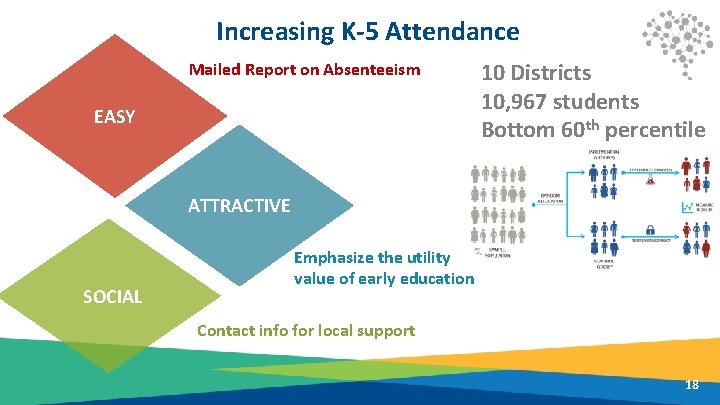
Increasing K-5 Attendance Mailed Report on Absenteeism EASY 10 Districts 10, 967 students Bottom 60 th percentile ATTRACTIVE SOCIAL Emphasize the utility value of early education Contact info for local support 18
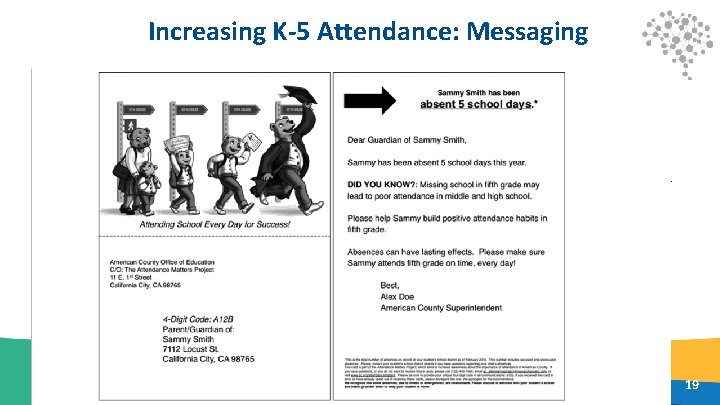
Increasing K-5 Attendance: Messaging “Attendance in early grades affects student learning” “Absences in earlier grades can build long-lasting habits” “Absences result in missed learning opportunities that cannot be replaced” 19
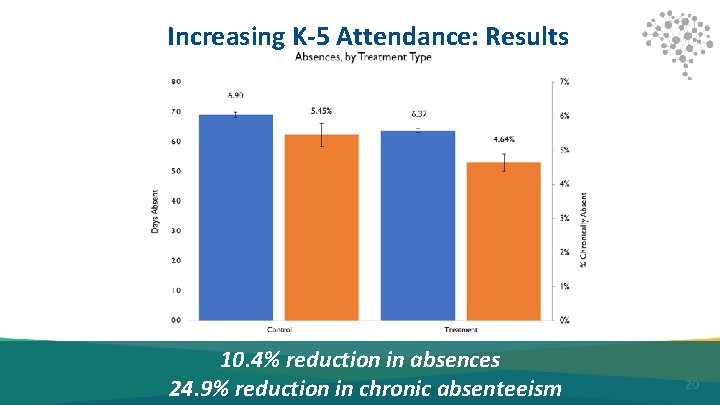
Increasing K-5 Attendance: Results 10. 4% reduction in absences 24. 9% reduction in chronic absenteeism 20
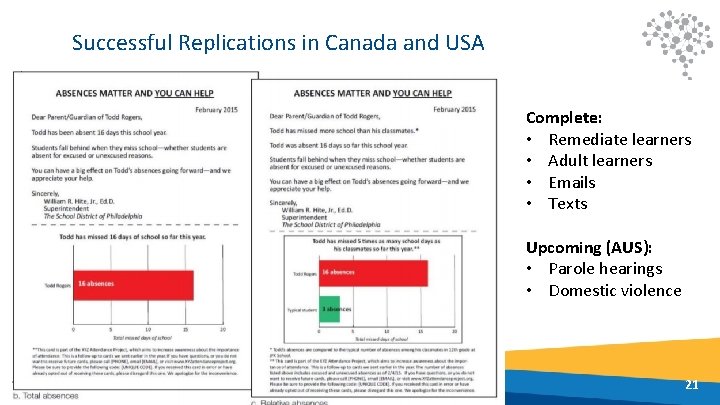
Successful Replications in Canada and USA Complete: • Remediate learners • Adult learners • Emails • Texts Upcoming (AUS): • Parole hearings • Domestic violence 21
Notes & Lessons Learned Simple feedback communications that targets parental beliefs can mobilize them to improve their child’s attendance. ($5. 68 per student per year) Could this be done in BC without burdening teachers? 22

Increasing Post-Secondary Enrolment (BC & ON, 2010 -2014) *Life After High School (LAHS), SRDC 23
Post-Secondary Enrolment – BC & ON (2014) Problem: • Inertia (status-quo bias) holds some students back in applying for Post-Secondary Education (PSE) or Student Financial Aid (SFA) • Many students incorrectly assume they can’t get into PSE programs • Many students are overwhelmed by the potential options Behavioural Insights: 1. Changing defaults from an opt-in system to an opt-out system 2. Small friction costs, “trivial disincentives”, have disproportionate effects 3. Choice overload can cause people to tune out (ostrich effect) 24
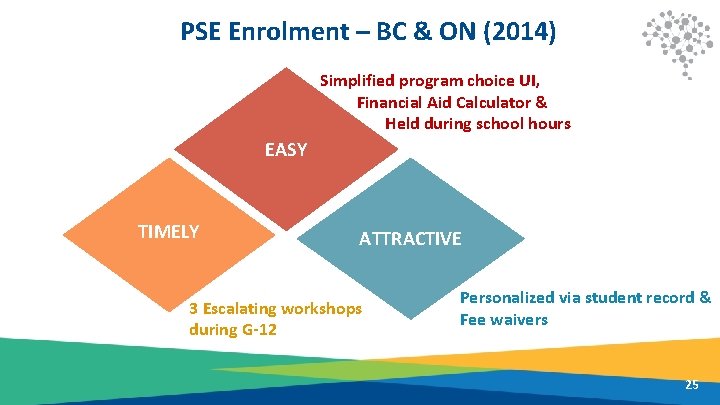
PSE Enrolment – BC & ON (2014) Simplified program choice UI, Financial Aid Calculator & Held during school hours EASY TIMELY ATTRACTIVE 3 Escalating workshops during G-12 SOCIAL Personalized via student record & Fee waivers 25
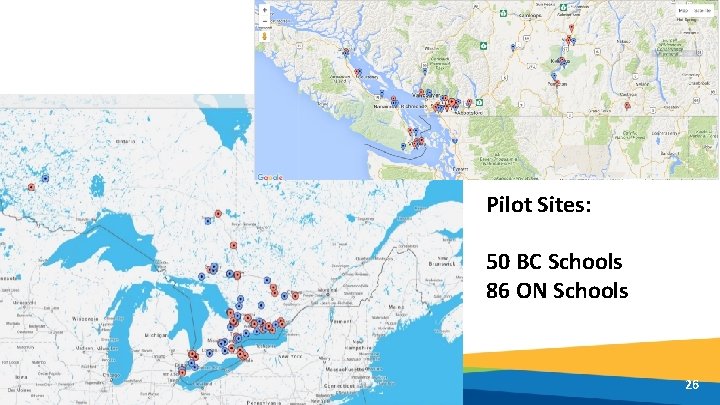
Pilot Sites: 50 BC Schools 86 ON Schools 26
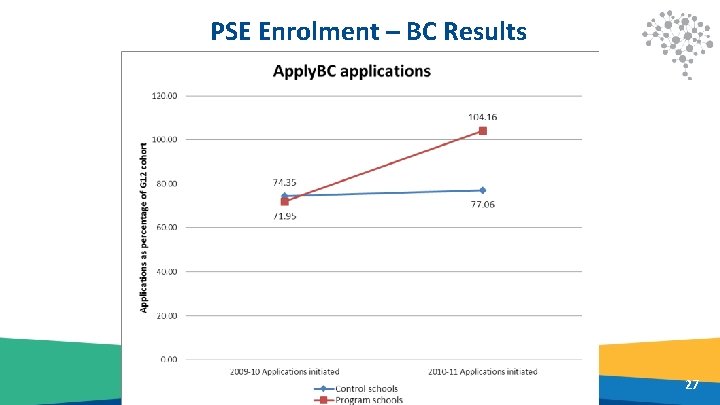
PSE Enrolment – BC Results 27
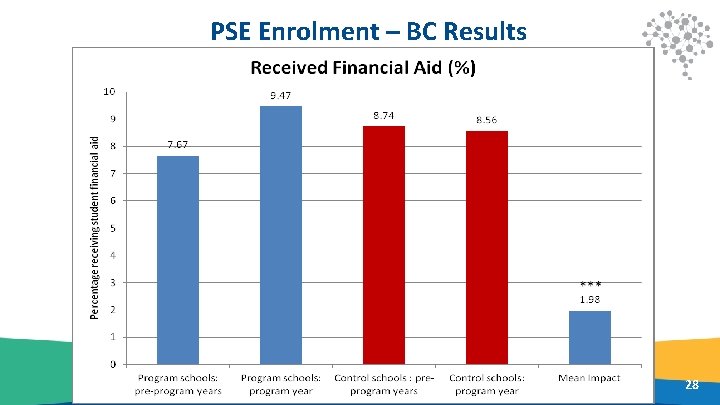
PSE Enrolment – BC Results 28
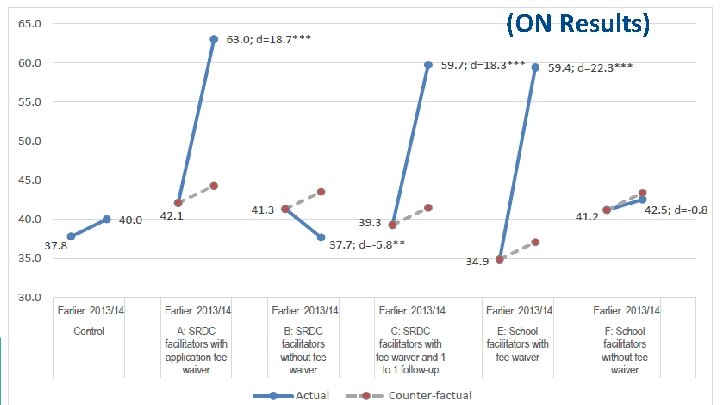
(ON Results) 29
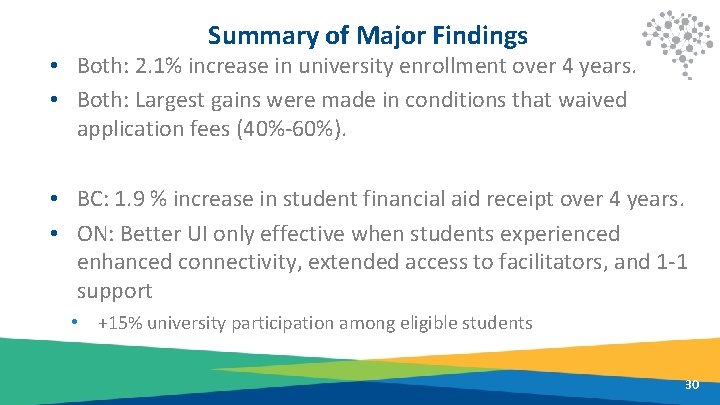
Summary of Major Findings • Both: 2. 1% increase in university enrollment over 4 years. • Both: Largest gains were made in conditions that waived application fees (40%-60%). • BC: 1. 9 % increase in student financial aid receipt over 4 years. • ON: Better UI only effective when students experienced enhanced connectivity, extended access to facilitators, and 1 -1 support • +15% university participation among eligible students 30
Lesson Learned Changing defaults while simplifying application processes can encourage PSE and SFA applications in G 12. & Waiving/delaying application fees can increase PSE application rates by more than half. 31
Nudging Secure Online Behaviour (EU, 2018) Spain, UK, Germany, Sweden, Poland 32
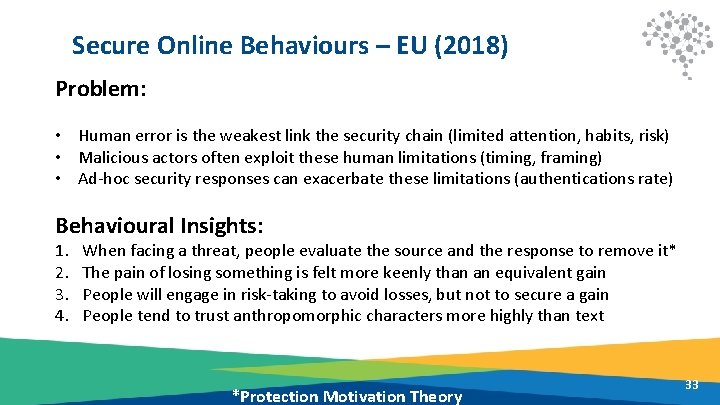
Secure Online Behaviours – EU (2018) Problem: • Human error is the weakest link the security chain (limited attention, habits, risk) • Malicious actors often exploit these human limitations (timing, framing) • Ad-hoc security responses can exacerbate these limitations (authentications rate) Behavioural Insights: 1. 2. 3. 4. When facing a threat, people evaluate the source and the response to remove it* The pain of losing something is felt more keenly than an equivalent gain People will engage in risk-taking to avoid losses, but not to secure a gain People tend to trust anthropomorphic characters more highly than text *Protection Motivation Theory 33
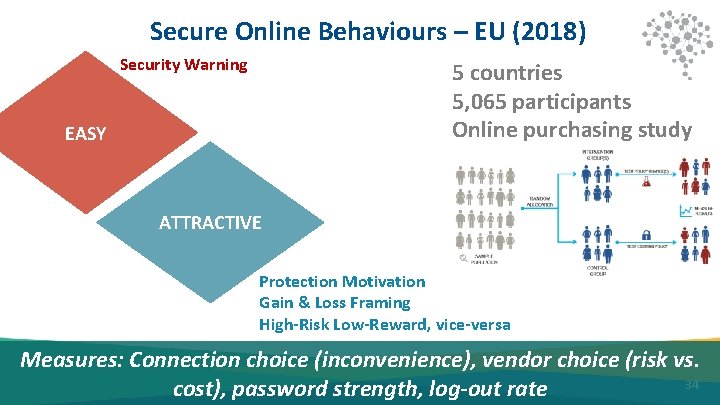
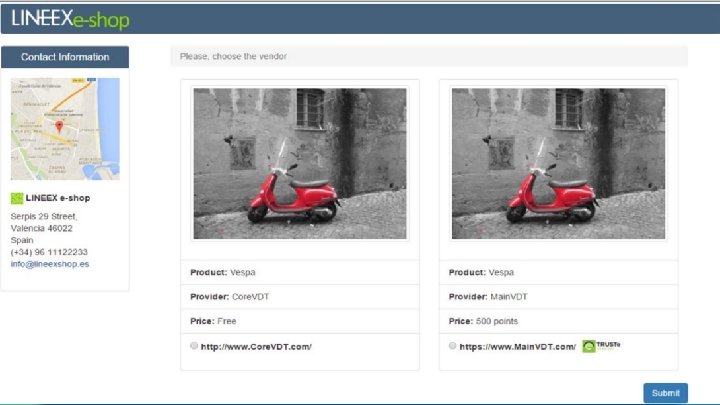
Secure Online Behaviours – EU (2018) Security Warning 5 countries 5, 065 participants Online purchasing study EASY ATTRACTIVE SOCIAL Protection Motivation Gain & Loss Framing High-Risk Low-Reward, vice-versa Measures: Connection choice (inconvenience), vendor choice (risk vs. 34 cost), password strength, log-out rate
35
Secure Online Behaviours – EU (2018) 36
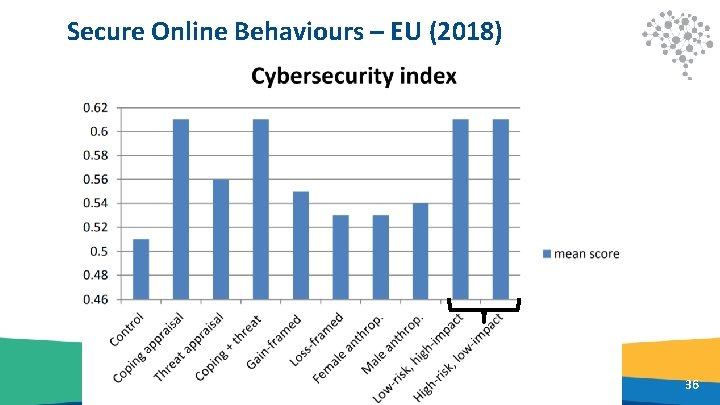
Summary of Major Findings • Heightened coping appraisal had the highest impact across all behavioural measures. PMT is most effective approach. • Suggests that user errors stem not from apathy, but from not knowing what secure behaviour entails, and users skip longer messages. • Gain & loss framing improved only vendor selection • Male anthro-character improved only vendor selection • Significant differences across age and country, not gender 37

Questions? 38
Working with BIG 39
BIG Business Lines 1. Education & Outreach • Presentations & conferences • Workshops • Policy School 2. Policy Analysis 3. BI Projects 40
Working with BIG is centrally funded (no cost recovery), and selects promising projects to co-develop with partner ministries through 4 stages: Research: Problem definition, scoping, research, partnership Innovate: Creative workshops, feasibility scoping, prototyping Develop: Field testing, data collection Evaluate: Data analysis, reporting, scaling recommendations 41
Four Questions to Ask Yourself 1. Do you a specific behaviour you want to change? i. e. Choices & Actions 2. Do you have a touchpoint with your target population? 3. Can you measure the behaviour change? 4. Can you experiment? i. e. use a control group, randomize, pilot study, etc. Interested? BIG’s project intake for 2019 begins in January! 42
BIG@gov. bc. ca “Include us in your project intake process” “Send me Michael’s education package” “Send me Michael’s cybersecurity package” “You should give Michael a raise” Presented by: Michael Buttazzoni (Policy Advisor)
Increasing Charitable Donations (BC & US, Ongoing) 44
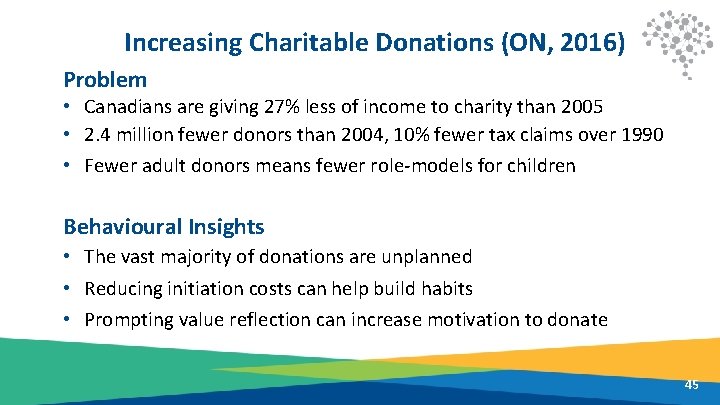
Increasing Charitable Donations (ON, 2016) Problem • Canadians are giving 27% less of income to charity than 2005 • 2. 4 million fewer donors than 2004, 10% fewer tax claims over 1990 • Fewer adult donors means fewer role-models for children Behavioural Insights • The vast majority of donations are unplanned • Reducing initiation costs can help build habits • Prompting value reflection can increase motivation to donate 45
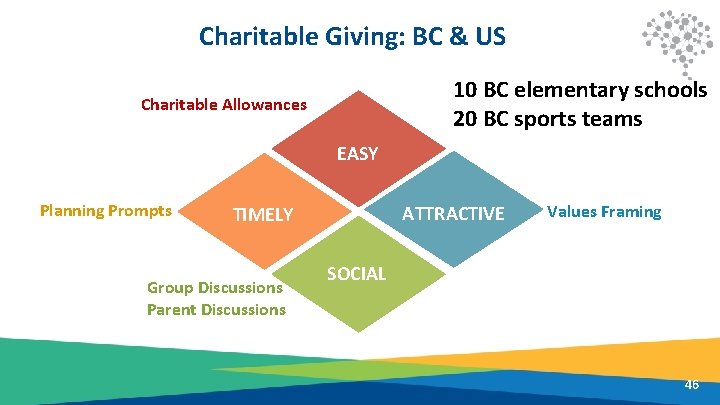
Charitable Giving: BC & US 10 BC elementary schools 20 BC sports teams Charitable Allowances EASY Planning Prompts ATTRACTIVE TIMELY Group Discussions Parent Discussions Values Framing SOCIAL 46
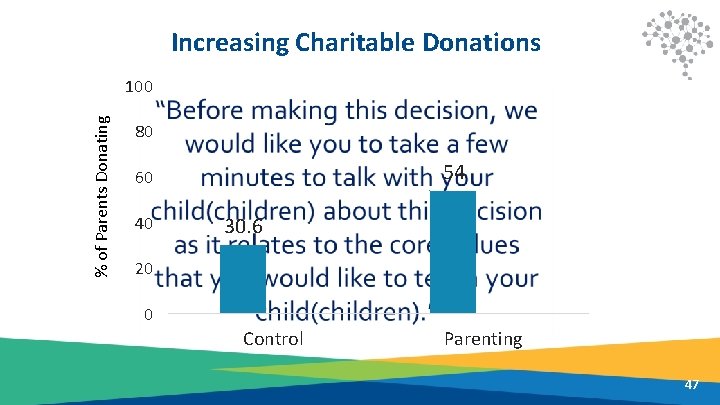
Increasing Charitable Donations % of Parents Donating 100 80 54 60 40 30. 6 20 0 Control Parenting 47
Lesson Learned Just as parents can nudge children to improve school attendance, so too can children nudge their parents to engage with charities. Parents who are prompted to have a quick 5 -minute chat with their child about the value of charity are significantly more likely to themselves engage in these behaviours. 48
Made in BC Example: Reducing Time to Hire 49
Reducing Time-to-Hire (BC, 2017) Problem • Hiring is a complex, multi-stage process with many tasks. • Average hiring times were in excess of 100 days. • Long hiring timelines means a smaller final candidate pool. Behavioural Insights 1) Hiring instructions were long, complex and delivered in a block at the beginning of the hiring process. 2) Hiring managers had to seek out support if needed 50
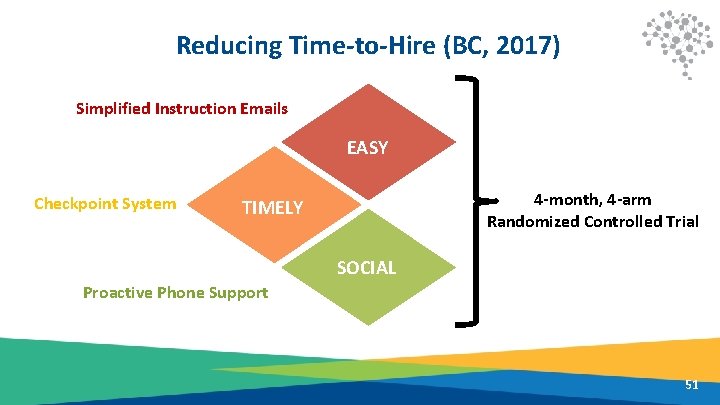
Reducing Time-to-Hire (BC, 2017) Simplified Instruction Emails EASY Checkpoint System 4 -month, 4 -arm Randomized Controlled Trial TIMELY SOCIAL Proactive Phone Support 51
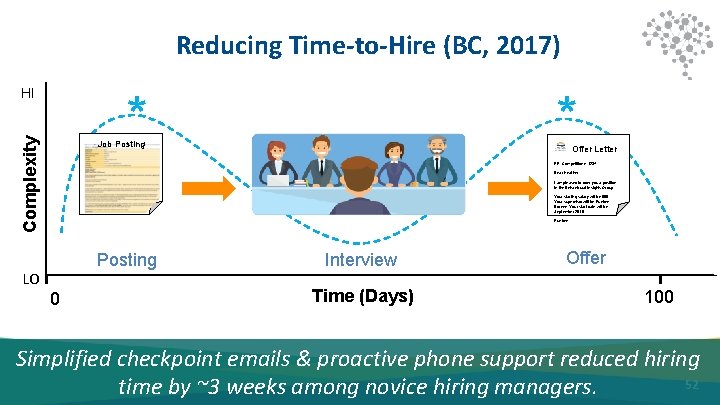
Reducing Time-to-Hire (BC, 2017) HI Complexity * * Job Posting Offer Letter RE: Competition # 1234 Dear Heather, I am pleased to offer you a position in the Behavioural Insights Group. . Your starting salary will be $$$. Your supervisor will be Rueben Bronee. Your start date will be September 2016. Rueben Posting LO 0 Interview Time (Days) Offer 100 Simplified checkpoint emails & proactive phone support reduced hiring 52 time by ~3 weeks among novice hiring managers.
Lesson Learned Chunking complex processes into manageable parts paired with timely instructions and proactive support can improve completion rates and timelines. 53
- Slides: 53