
Behaviour Management No one child has the right
Behaviour Management No one child has the right to be disruptive so as to prevent you from teaching or other children from learning or having fun.

Glasser – Choice Theory • Dr. William Glasser is a psychiatrist, well known in the fields of education and social sciences. • all of our behaviour is simply our best attempt to satisfy one or more of the 5 basic needs built into our genetic structure. The Five Basic Needs Survival Freedom/Choice Personal Power (Success/Recognition) Love, belonging, friendship Fun
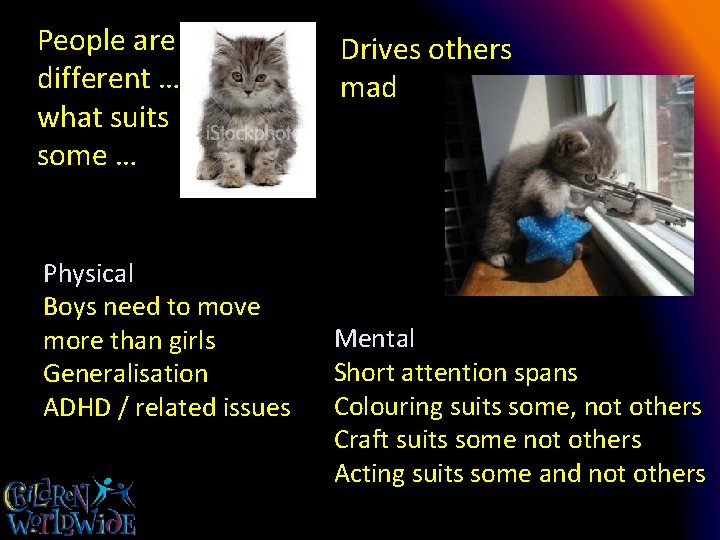
People are different … what suits some … Physical Boys need to move more than girls Generalisation ADHD / related issues Drives others mad Mental Short attention spans Colouring suits some, not others Craft suits some not others Acting suits some and not others
Why do they loose it ? 1. Is my session doing what it should ? 2. Am I engaging them helpfully ? 3. Am I engaging them age – appropriately ?
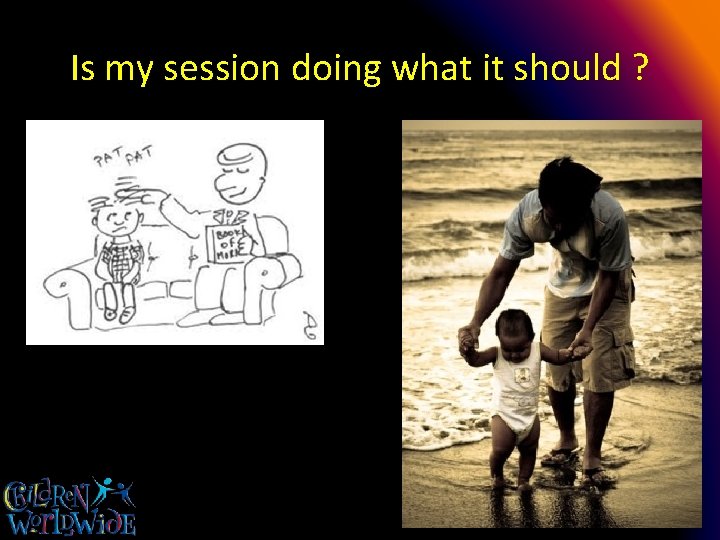
Is my session doing what it should ?
Be Interesting • • Attention span Age appropriate Rainy days Additional needs
Be Flexible • Read how long you have got in the body language • Change the pace of things if attention wavers • Change the activity if we need a wriggle
Be clear Give clear instructions Never talk over the top of other children. Ensure you have attention when starting. Don’t offer choices unless you mean to “We don’t do that here”
Be Relational • • • Know your children. Take a personal interest in them. Learn and remember their names. Build caring relationships with them. Pray for them. Establish rapport • Sit someone next to them, sit there yourself. • Eye contact. • Your presence is often enough to influence the behaviour.
Be Subtle Positive Reinforcement. It’s easy to forget Don’t respond only to negative behaviour. Ask a question of the child, related to the program. A gentle touch on the shoulder. Use a gesture e. g. clicking finger to get immediate attention and to indicate the change of behaviour required. • A short, clear request directed at the child for the behaviour to cease. • Use the child’s name and maintain a normal tone of voice. Return to the flow of your program as quickly as possible. • • • Have adults strategically placed among the children primed to do all this
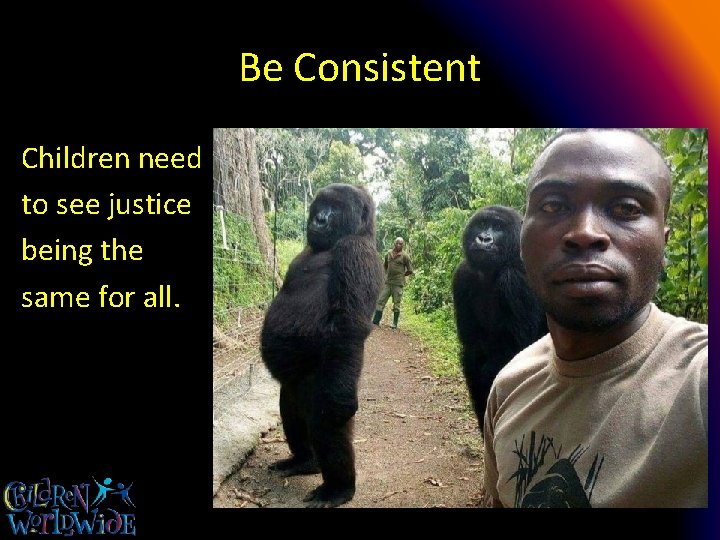
Be Consistent Children need to see justice being the same for all.
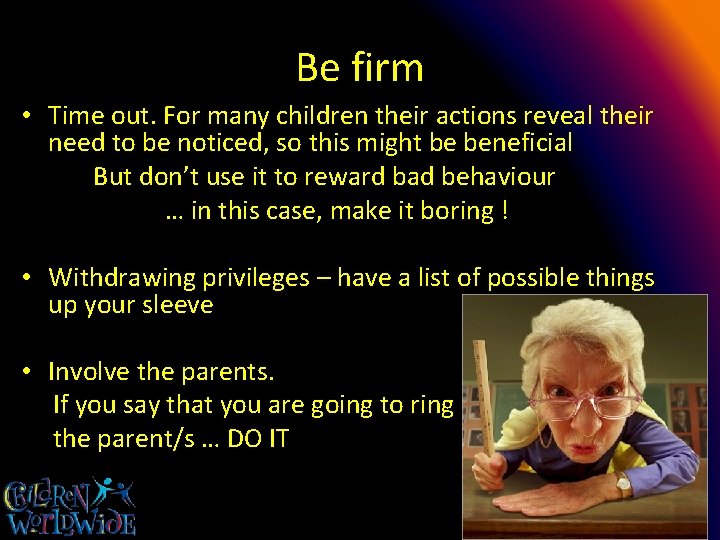
Be firm • Time out. For many children their actions reveal their need to be noticed, so this might be beneficial But don’t use it to reward bad behaviour … in this case, make it boring ! • Withdrawing privileges – have a list of possible things up your sleeve • Involve the parents. If you say that you are going to ring the parent/s … DO IT
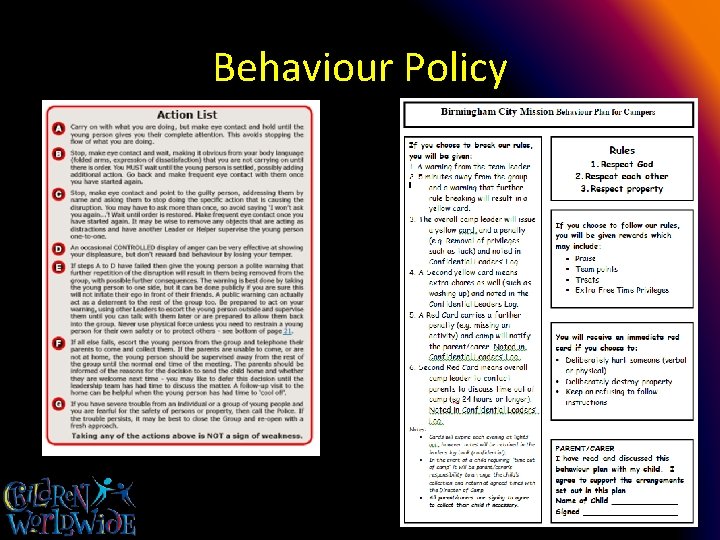
Behaviour Policy
Remember … overall … you are in control … you have to be If you loose that control, children will not enjoy it, not learn … A child may well take control instead
- Slides: 14