
BEHAVIORAL HEALTH INTEGRATION INTO PRIMARY CARE SETTING Marlene
BEHAVIORAL HEALTH INTEGRATION INTO PRIMARY CARE SETTING Marlene Putman, Administrator, Tillamook County Health & Human Services Frank Hanna-Williams, Executive Director, Tillamook Family Counseling Center Barbara Weathersby, LCSW Behavioral Health Provider, TFCC & TCH&HS May 16, 2013
Welcome & Introduction • • Overview What is Integration? Workshop participants Agenda
Tillamook County Integration Project: OUR JOURNEY • When & How we started • Our Process • Our Partnership and Funding • Work Underway
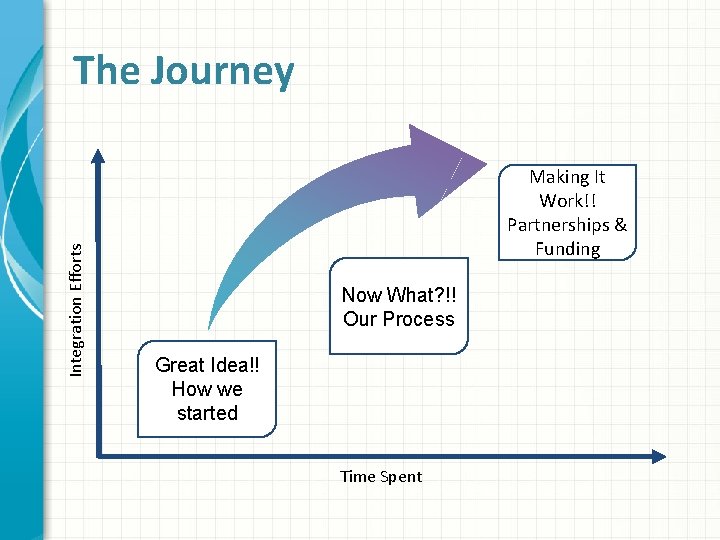
Integration Efforts The Journey Making It Work!! Partnerships & Funding Now What? !! Our Process Great Idea!! How we started Time Spent
Readiness Exercise (Readiness Assessment in Folder)
Behavioral Health Integration: What it looks like On The Ground • Recruitment, Job Description & Role • Shadowing, Care Teams, Interaction • What’s in a Name? – Provider? – Consultant? – Specialist?
Behavioral Health Integration: What it looks like On The Ground • Shadowing – Providers, clinical & Front desk • Care Teams – Huddles & Hand-offs • Interaction – Hallways & Always • Triage – Phone & Front
Patient-Centered Medical Home Care Teams • Principles: Patient-Centered Medical Home – Personal Provider - Primary Care Provider – Whole Person Orientation – Care is coordinated or integrated – Focus on Quality and Safety
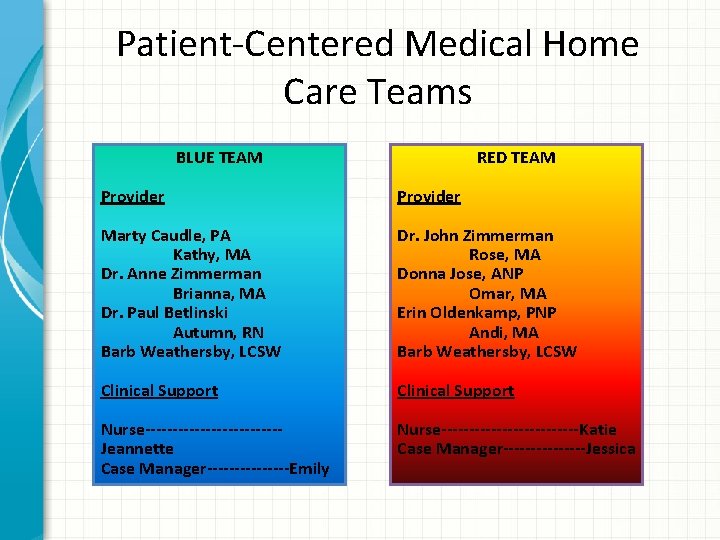
Patient-Centered Medical Home Care Teams RED TEAM BLUE TEAM Provider Marty Caudle, PA Kathy, MA Dr. Anne Zimmerman Brianna, MA Dr. Paul Betlinski Autumn, RN Barb Weathersby, LCSW Dr. John Zimmerman Rose, MA Donna Jose, ANP Omar, MA Erin Oldenkamp, PNP Andi, MA Barb Weathersby, LCSW Clinical Support Nurse------------Jeannette Case Manager--------Emily Nurse-------------Katie Case Manager--------Jessica
Behavioral Health Integration: What it looks like On The Ground • What’s in a Name? – Provider? – Consultant? – Specialist?

Sooo…what does integration REALLY look like…
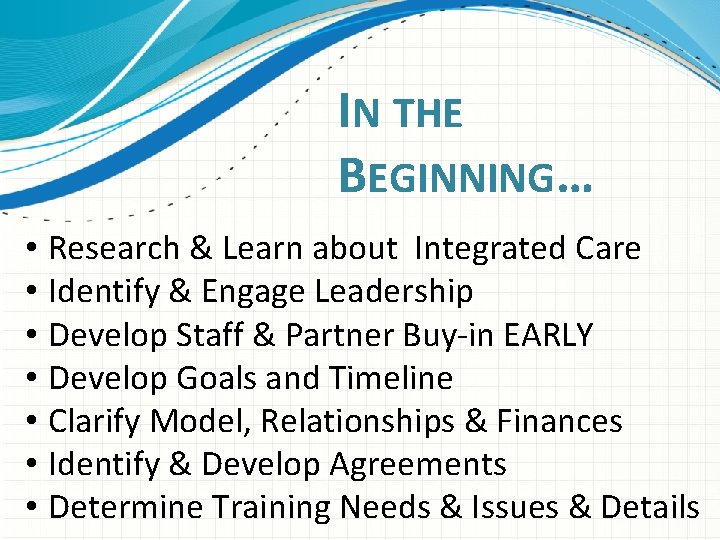
IN THE BEGINNING… • Research & Learn about Integrated Care • Identify & Engage Leadership • Develop Staff & Partner Buy-in EARLY • Develop Goals and Timeline • Clarify Model, Relationships & Finances • Identify & Develop Agreements • Determine Training Needs & Issues & Details

Lesson Learned: Build Buy-in from the START
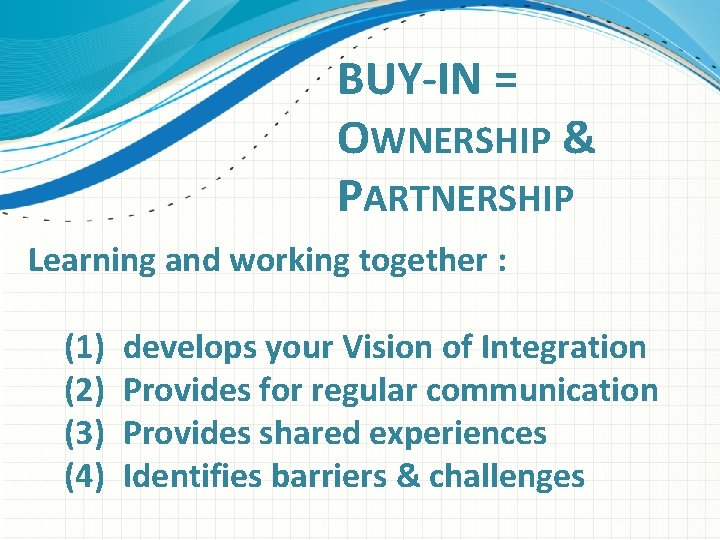
BUY-IN = OWNERSHIP & PARTNERSHIP Learning and working together : (1) (2) (3) (4) develops your Vision of Integration Provides for regular communication Provides shared experiences Identifies barriers & challenges
LEARN ABOUT INTEGRATED CARE • Research Models & Context • Talk with Others • Attend training and/or join Collaboratives • Visit Sites • Talk with your staff • Use what you learn to create your model
BUILDING BUY-IN THROUGH LEADERSHIP • Admin. & Leadership –Vision • Identify key leaders on staff • Identify Other Support Needed • Have a Basic Plan of Action (timelines)
BUILDING BUY-IN – BUILD YOUR CASE • Use local needs assessments & Plans • Use the research & law • Talk with local Medical providers/staff • Build the business case –cost saving & patient health • Give examples of effective models
BUILD BUY-IN – BUILD YOUR CASE • The Business Case for Integration: - Best use of Clinician time - Projections for billable time (10 -13 PPD) - Staff Support & Retention - Triage- resource & referral
BUILDING BUY-IN – SOME CHALLENGES • Cultural • Physical • Political • Administrative • Financial • Philosophical – PCMH Model
BUILDING BUY-IN – SOME OPPORTUNITIES • Screening – PHQ 9 • Screening – SBIRT • Common measures • Common Clients • Shared staff costs • Community Health Outreach

Buy-In Exercise
Question: What will you do next to build Buy-In?
Behavioral Health Integration Start-up: Nuts & Bolts • Developing Infrastructure 1. Preparation for Practice Staff 2. Contract for Services 3. Billing 4. Hire/Identify Mental Health Professional
Behavioral Health Integration: Preparation for Practice Staff – Clinical/practice staff agree on role – Identify Clinic Champion – Identify Introductions & Training – Include support staff, billing, clinical & front desk – Define daily workspace, EMR, training needs, transition time
Behavioral Health Integration: Agreements for Services – Describe model – Describe staff role/job descrip. – Describe funding & Billing – Worksite, equipment, etc. – Hiring & Supervision – Monitoring, Evaluation, & Communication – Exchange of Information – EMR sytems. Contract for Services
Lesson Learned: Billing is confusingtalk with people that have been through it, confer with State, test it, keep learning.
Behavioral Health Integration: Tackling Billing Issues – Differentiate Mental Health and Behavioral Health – Be clear about diagnosis type – Warm-hand off not billable on same visit as medical (typically) – All staff have to understand document. – Different Insurances= Different pay
Behavioral Health Integration: Billing Challenges – Different EMRs – Different terminology – Different expectations – Diagnosis & Coding
Behavioral Health Integration: Identify/Recruit/Hire Staff – Recruitment/Ads Describe Role – Screening of Applicants – Specific Interview Questions with “Scenarios” – Flexiblity/Adaptability KEY

Miracles Do Happen!
Discussion As time allows • What would you do next to prepare for Behavioral Health Integration?

Integration from our Client’s Perspective….
Who’s Who Lead Contact information Marlene Putman mputman@co. tillamook. or. us Frank Hanna. Williams frankhw@tfcc. org Barbara Weathersby bweather@co. tillamook. or. us
- Slides: 33