
Behavioral Ecology Behavioral ecology emphasizes evolutionary hypotheses Behavioral
Behavioral Ecology Behavioral ecology emphasizes evolutionary hypotheses: • Behavioral ecology is the research field that views behavior as an evolutionary adaptation to the natural ecological conditions of animals. • We expect animals to behave in ways that maximize their fitness (this idea is valid only if genes influence behavior). • http: //biosci. usc. edu/courses/2002 -fall/documents/bisc 121 -fuhrman_ch 51. ppt
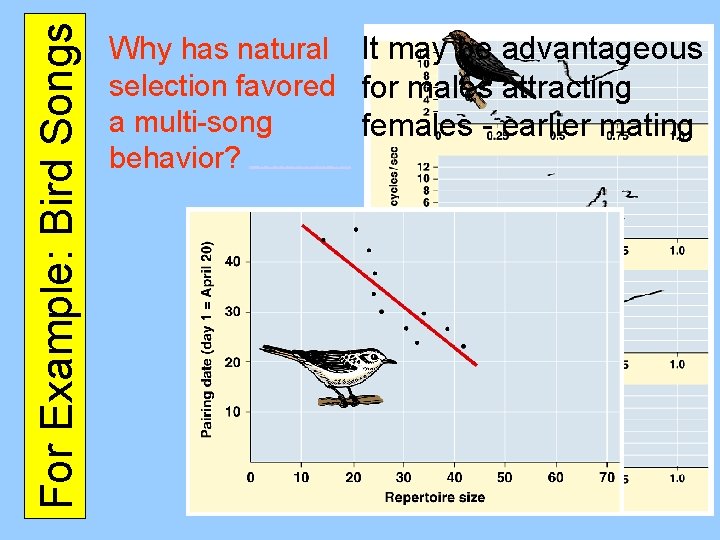
For Example: Bird Songs Why has natural It may be advantageous selection favored for males attracting a multi-song females - earlier mating behavior? http: //biosci. usc. edu/courses/2002 -fall/documents/bisc 121 -fuhrman_ch 51. ppt
Proximate vs. Ultimate Behavior has both proximate and ultimate causes: • Proximate questions are mechanistic, concerned with the environmental stimuli that trigger a behavior, as well as the genetic and physiological mechanisms underlying a behavioral act. • Ultimate questions address the evolutionary significance for a behavior and why natural selection favors this behavior. • http: //biosci. usc. edu/courses/2002 -fall/documents/bisc 121 -fuhrman_ch 51. ppt
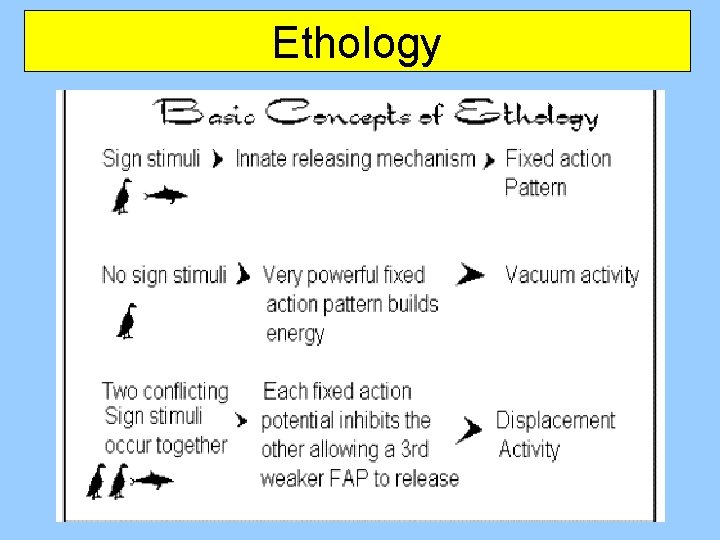
Ethology
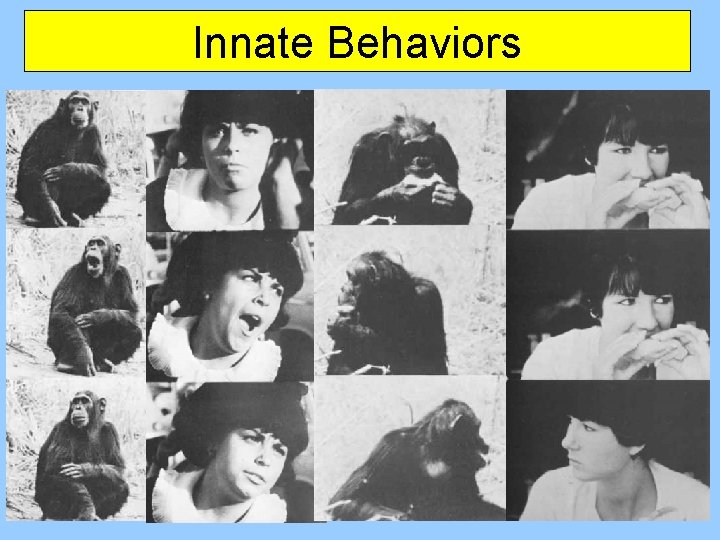
Innate Behaviors
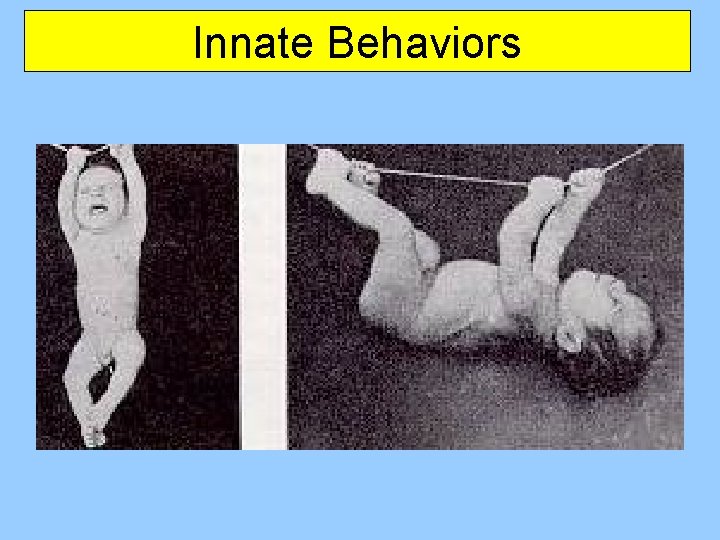
Innate Behaviors
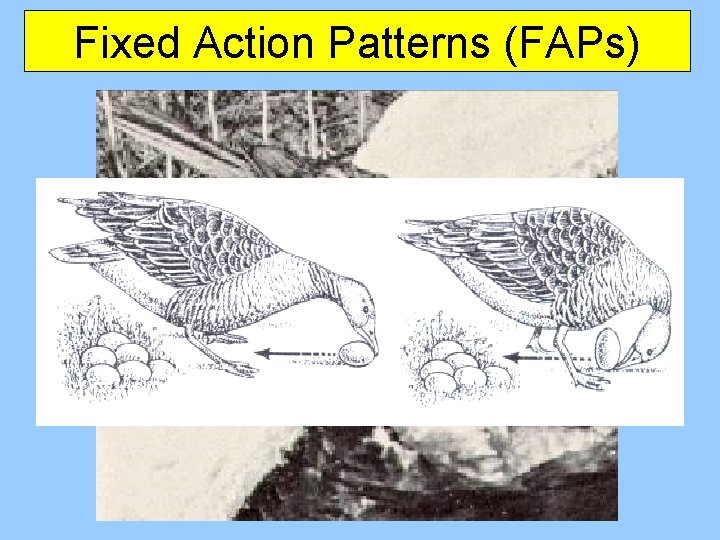
Fixed Action Patterns (FAPs)
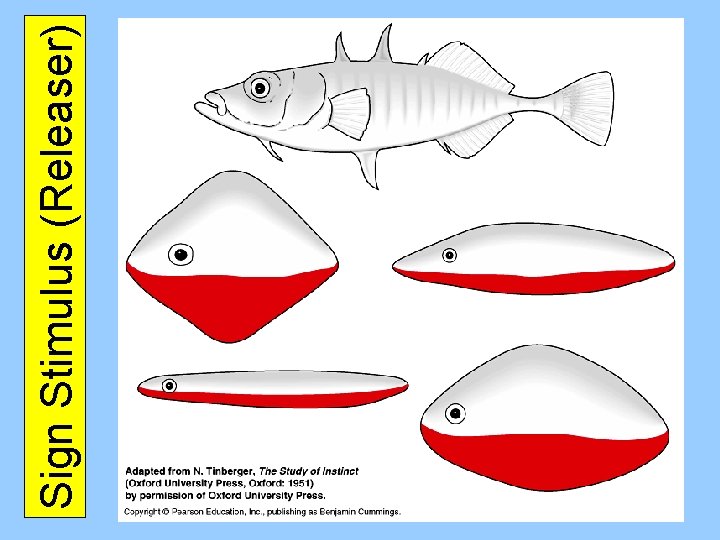
Sign Stimulus (Releaser)
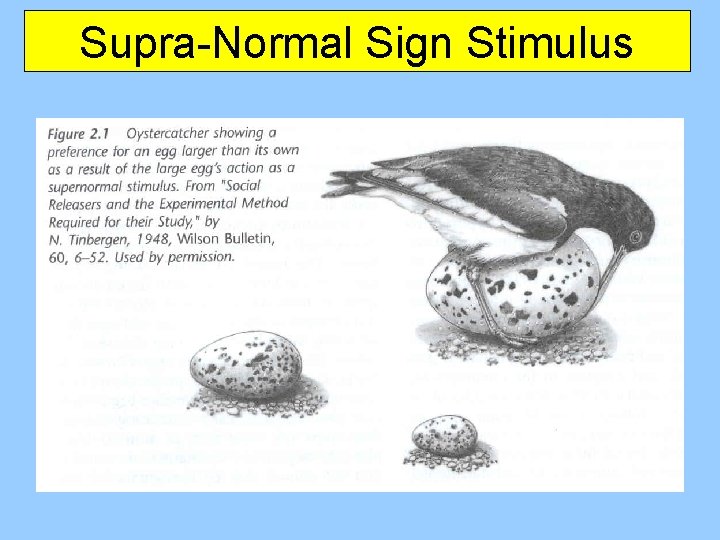
Supra-Normal Sign Stimulus
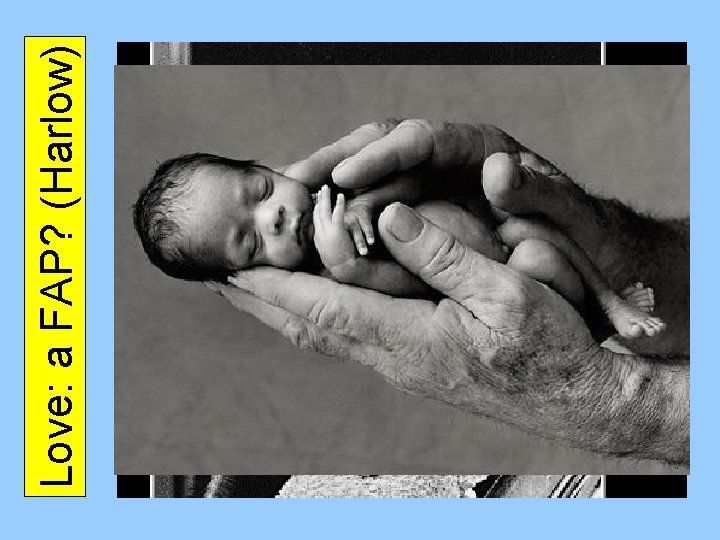
Love: a FAP? (Harlow)
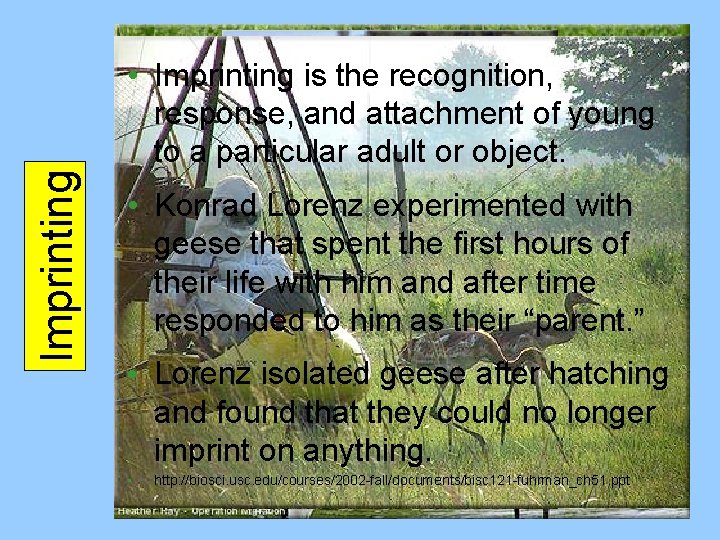
Imprinting • Imprinting is the recognition, response, and attachment of young to a particular adult or object. • Konrad Lorenz experimented with geese that spent the first hours of their life with him and after time responded to him as their “parent. ” • Lorenz isolated geese after hatching and found that they could no longer imprint on anything. • http: //biosci. usc. edu/courses/2002 -fall/documents/bisc 121 -fuhrman_ch 51. ppt
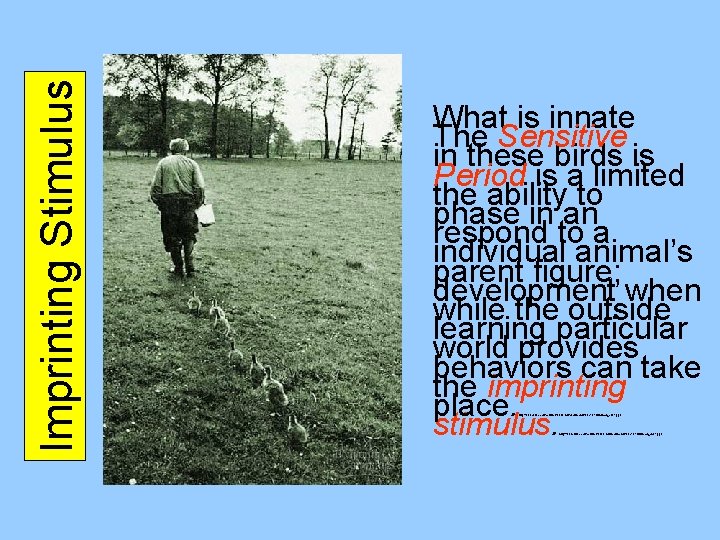
Imprinting Stimulus What is innate The Sensitive in these birds is Period is a limited the ability to phase in an respond to a individual animal’s parent figure; development when while the outside learning particular world provides behaviors can take the imprinting place. stimulus. http: //biosci. usc. edu/courses/2002 -fall/documents/bisc 121 -fuhrman_ch 51. ppt
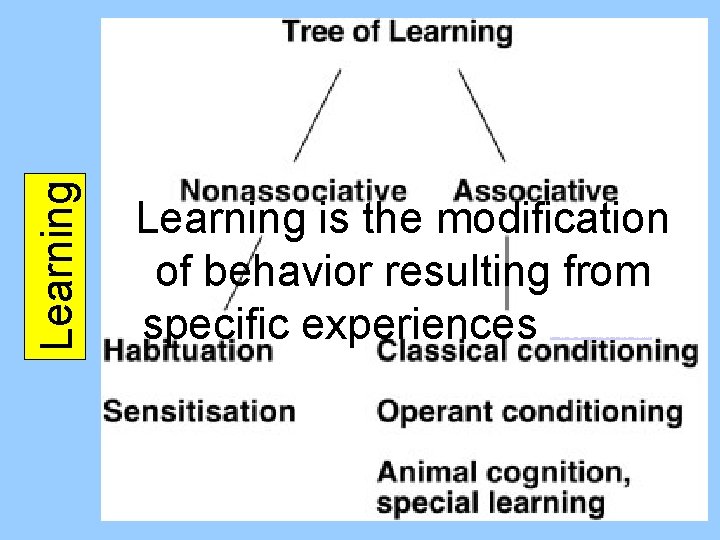
Learning is the modification of behavior resulting from specific experiences http: //biosci. usc. edu/courses/2002 -fall/documents/bisc 121 -fuhrman_ch 51. ppt
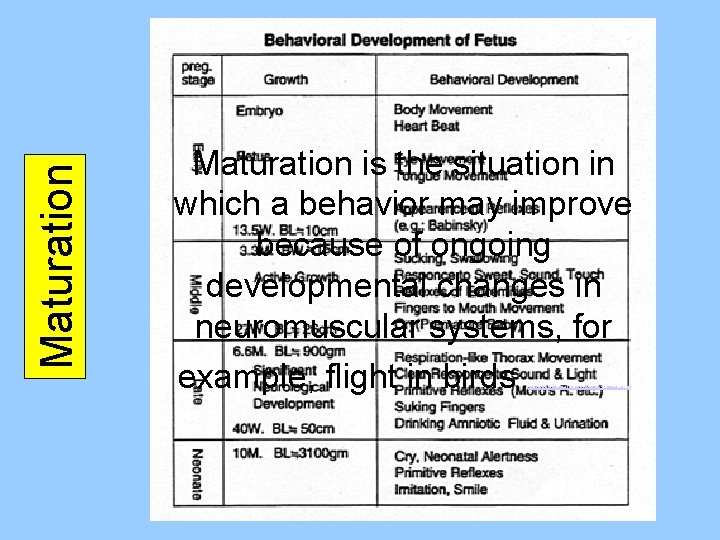
Maturation is the situation in which a behavior may improve because of ongoing developmental changes in neuromuscular systems, for example, flight in birds http: //biosci. usc. edu/courses/2002 -fall/documents/bisc 121 -fuhrman_ch 51. ppt
Habituation is a kind of learning: • Habituation involves a loss of responsiveness to unimportant stimuli or stimuli that do not provide appropriate feedback. • For example, some animals stop responding to warning signals if signals are not followed by a predator attack (the “cry-wolf” effect). • http: //biosci. usc. edu/courses/2002 -fall/documents/bisc 121 -fuhrman_ch 51. ppt
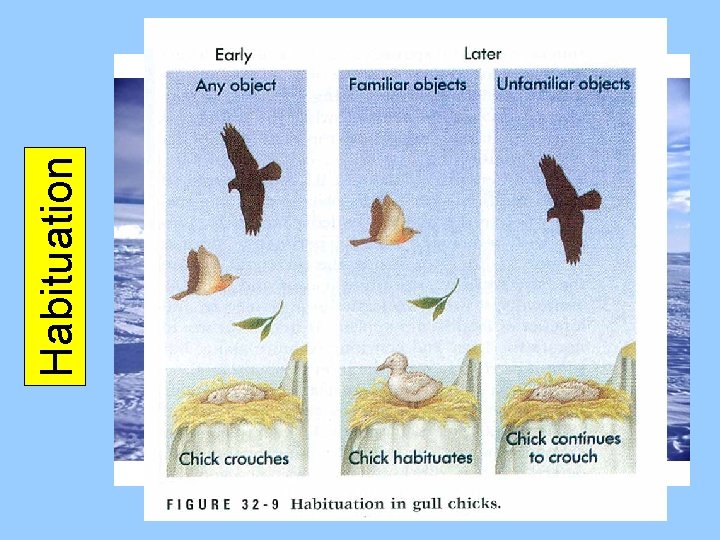
Habituation
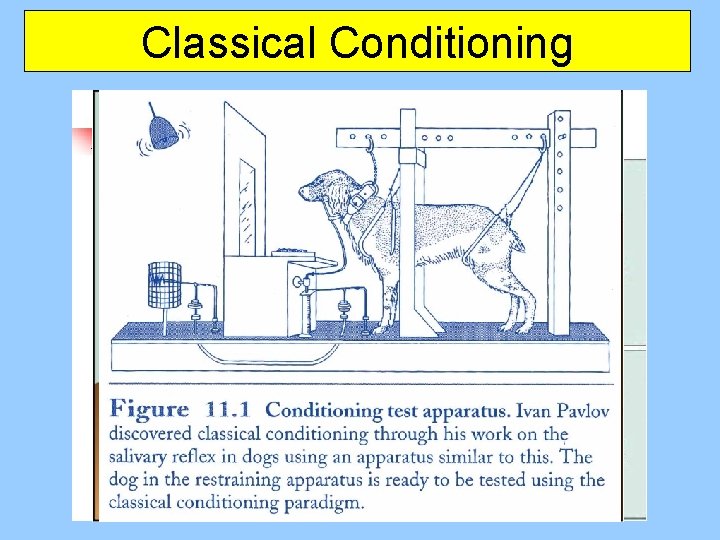
Classical Conditioning
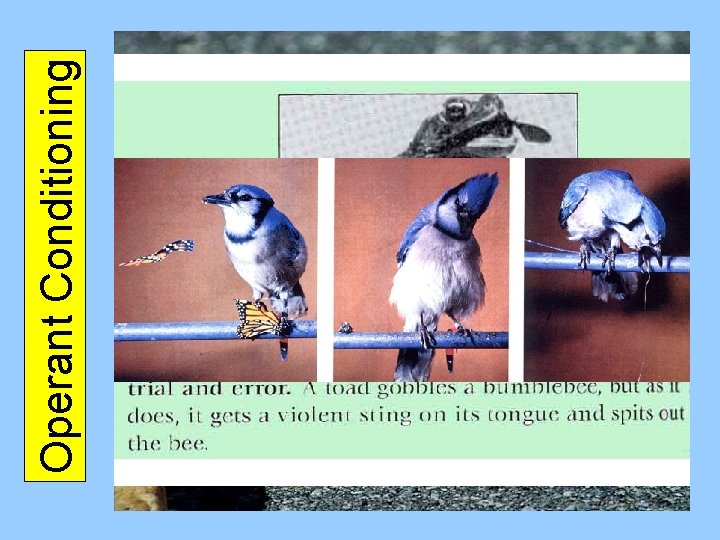
Operant Conditioning This is called trial-and-error learning - an animal learns to associate one of its own behaviors with a reward or a punishment http: //biosci. usc. edu/courses/2002 -fall/documents/bisc 121 -fuhrman_ch 51. ppt
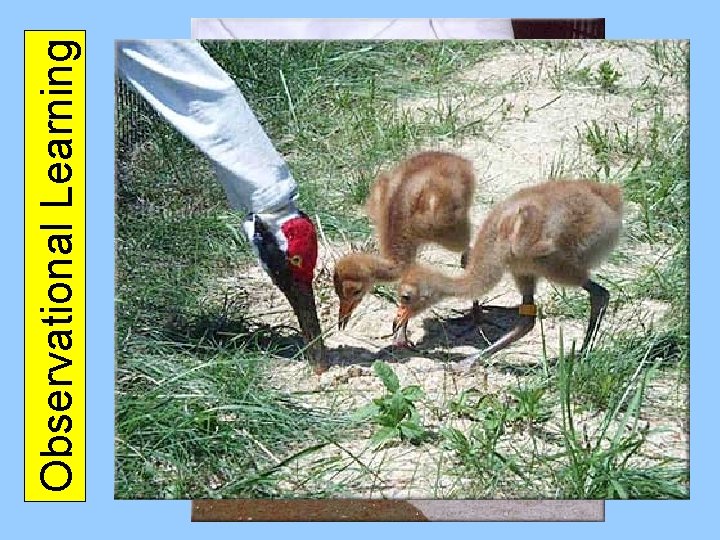
Observational Learning
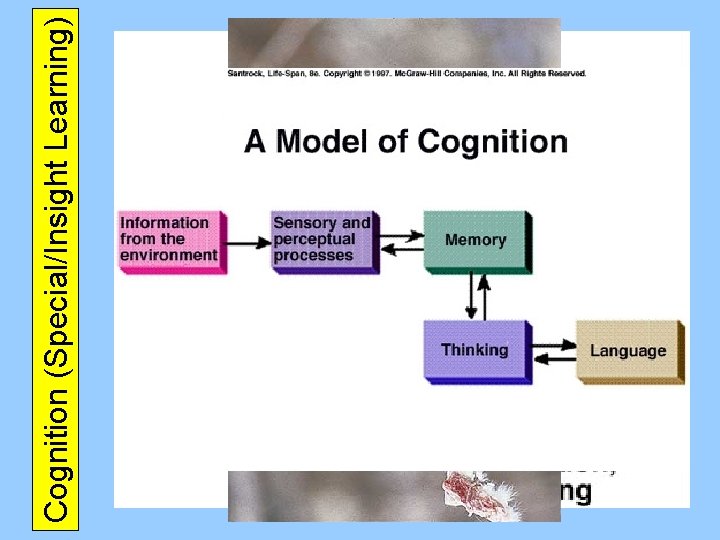
Cognition (Special/Insight Learning) Cognition is the ability of an animal’s nervous system to perceive, store, process, and use information gathered by sensory receptors http: //biosci. usc. edu/courses/2002 -fall/documents/bisc 121 -fuhrman_ch 51. pp
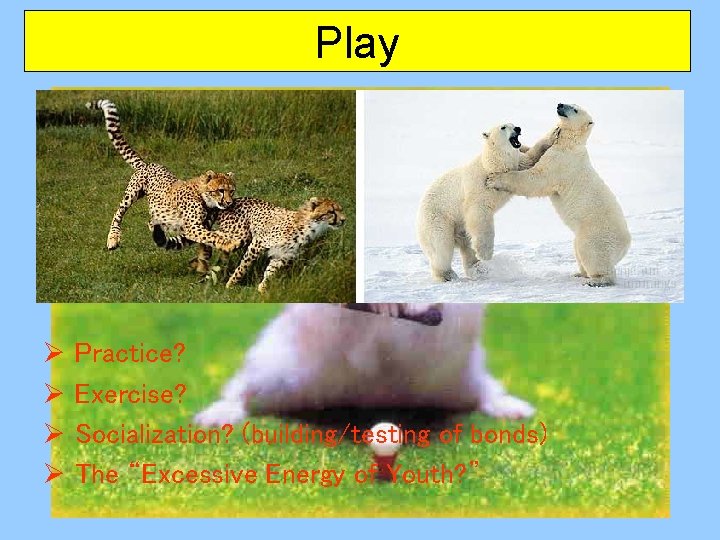
Play Ø Ø Practice? Exercise? Socialization? (building/testing of bonds) The “Excessive Energy of Youth? ”
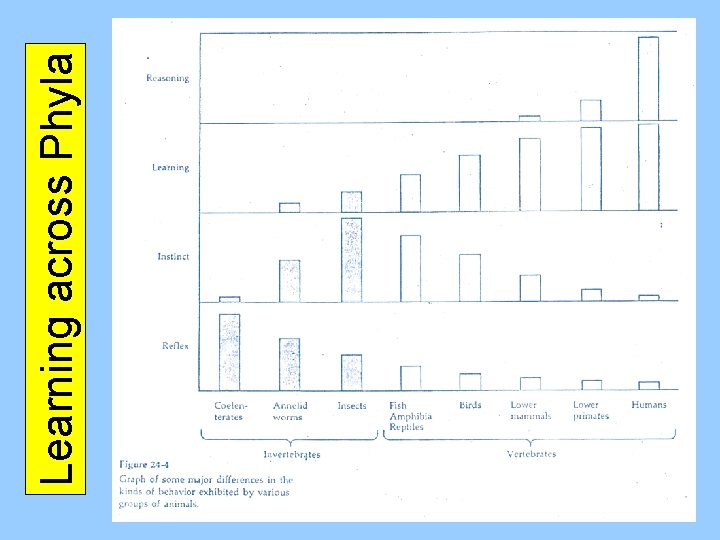
Learning across Phyla
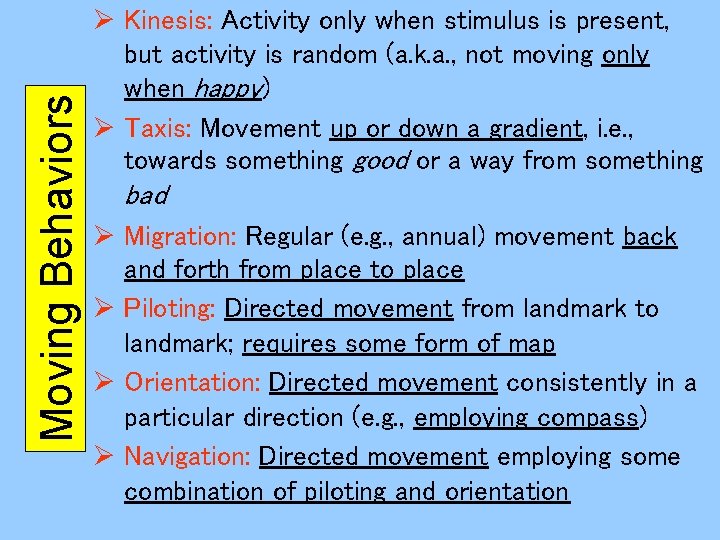
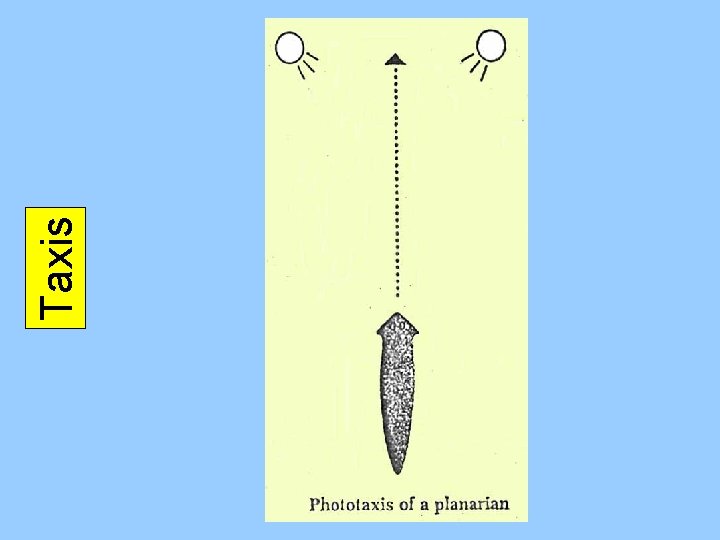
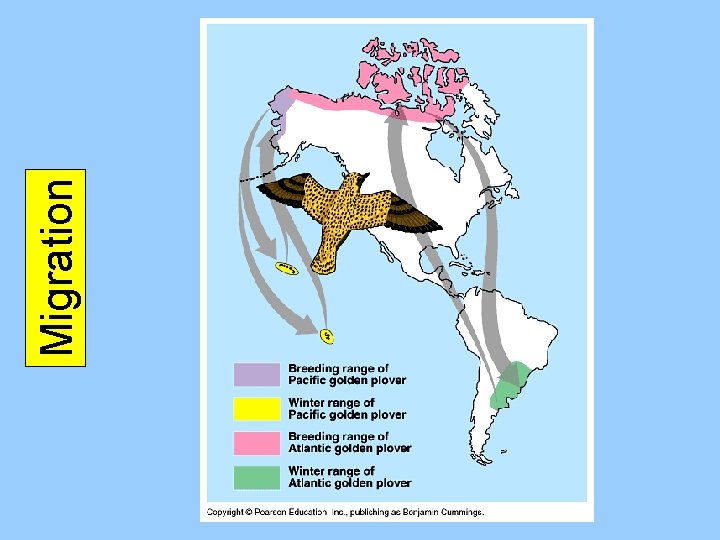
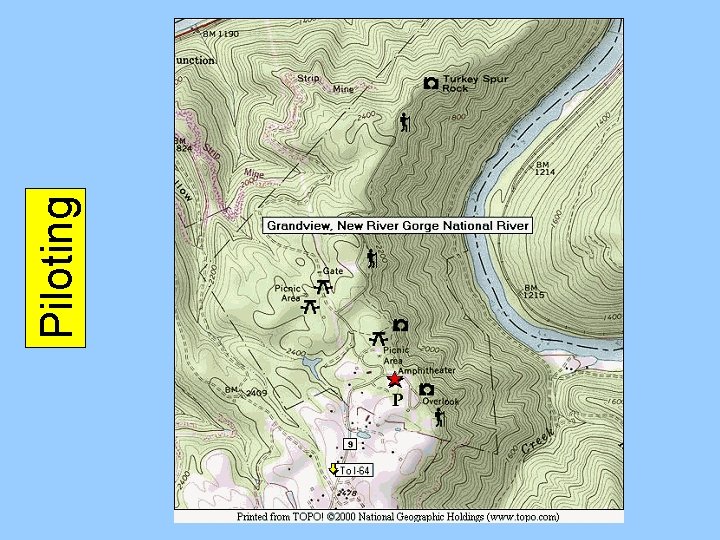
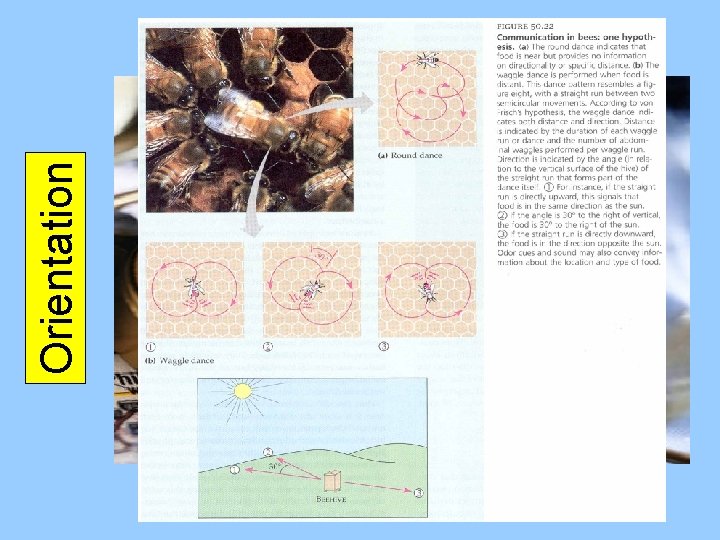
Moving Behaviors Ø Kinesis: Activity only when stimulus is present, but activity is random (a. k. a. , not moving only when happy) Ø Taxis: Movement up or down a gradient, i. e. , towards something good or a way from something bad Ø Migration: Regular (e. g. , annual) movement back and forth from place to place Ø Piloting: Directed movement from landmark to landmark; requires some form of map Ø Orientation: Directed movement consistently in a particular direction (e. g. , employing compass) Ø Navigation: Directed movement employing some combination of piloting and orientation
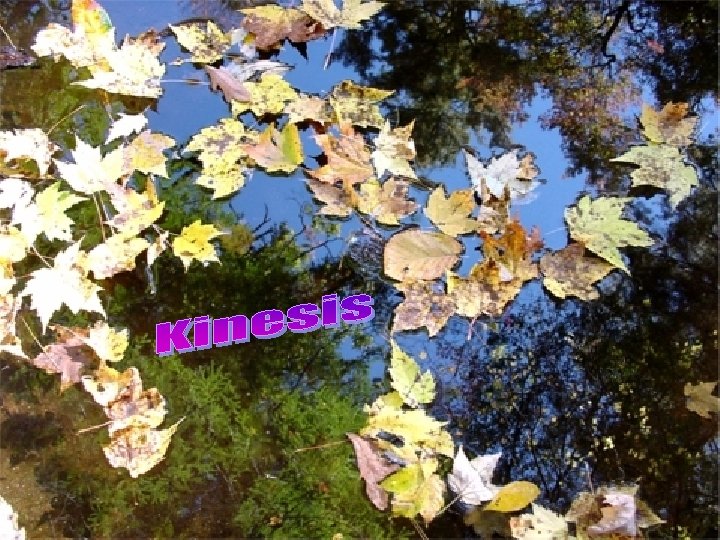
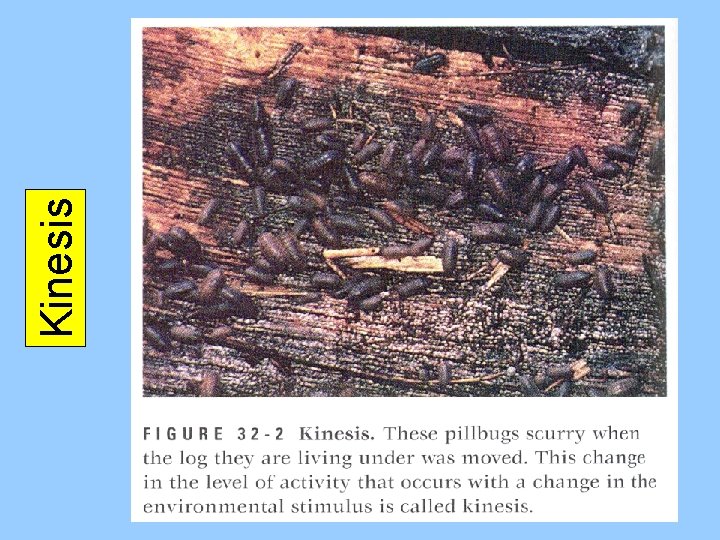
Kinesis
Taxis
Migration
Piloting
Orientation
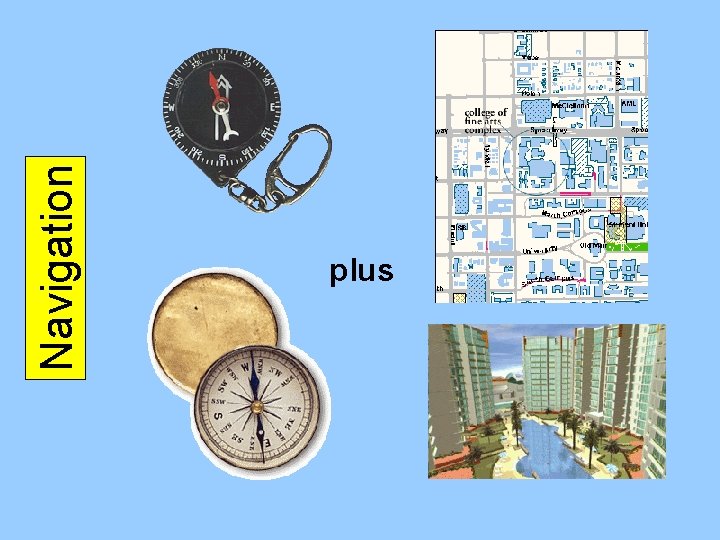
Navigation plus

Foraging
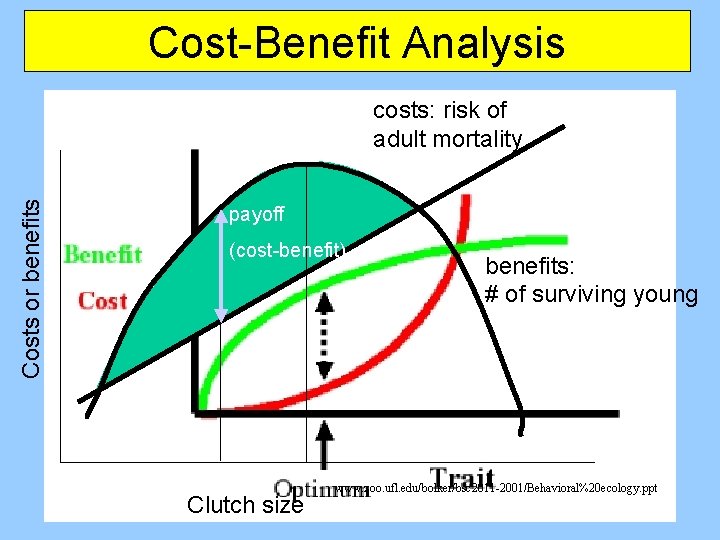
Cost-Benefit Analysis Costs or benefits costs: risk of adult mortality payoff (cost-benefit) Clutch size benefits: # of surviving young www. zoo. ufl. edu/bolker/bsc 2011 -2001/Behavioral%20 ecology. ppt
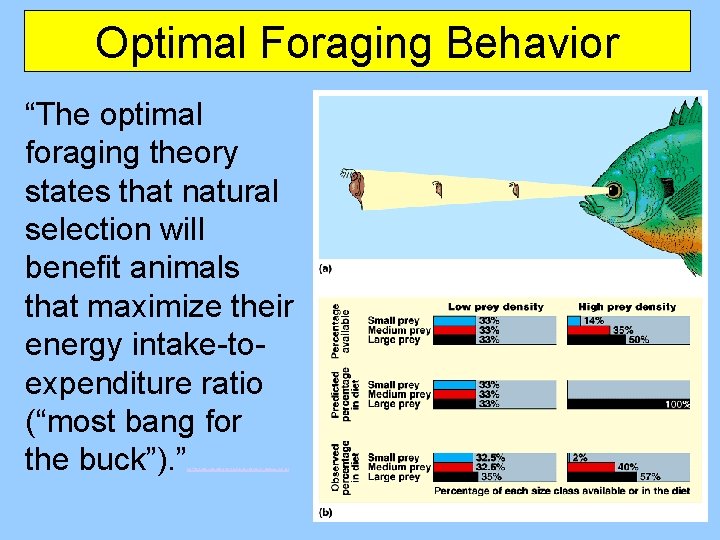
Optimal Foraging Behavior “The optimal foraging theory states that natural selection will benefit animals that maximize their energy intake-toexpenditure ratio (“most bang for the buck”). ” http: //biosci. usc. edu/courses/2002 -fall/documents/bisc 121 -fuhrman_ch 51. ppt
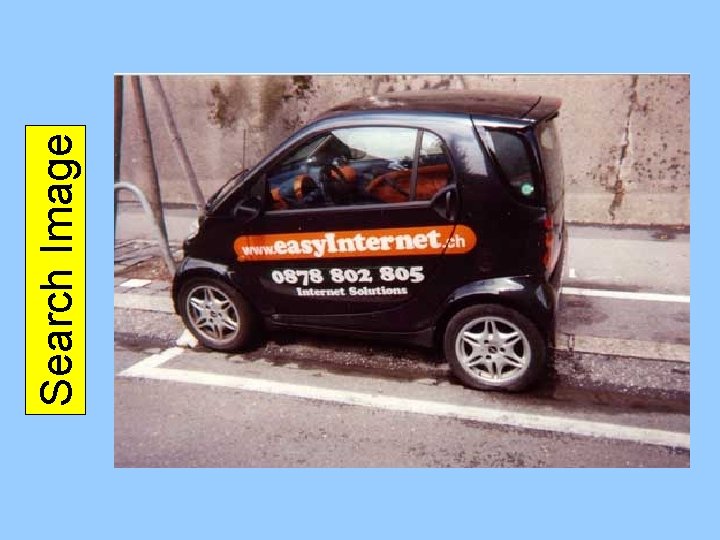
Search Image
Optimal Diet Model • Predictions from: 1. Predators should specialize when more profitable prey is very abundant 2. There should never be a partial preference (predicted for an exact balance which is rare) 3. Predators should have broader diets in poor environments 4. Predators should ignore poor quality items irrespective of abundance http: //www. bioscience. drexel. edu/Homepage/Winter 2003/envr 511/slides/ENVRFeb 4. ppt
Specialist vs. Generalist • To eat or not to eat! • 2 Basic strategies: • Generalist – Broad diet, consume most of the prey they encounter – Spend little time searching – Diet includes low quality food • Specialist – Narrow diet, consume specific prey – Only high quality food – Search time high http: //www. bioscience. drexel. edu/Homepage/Winter 2003/envr 511/slides/ENVRFeb 4. ppt
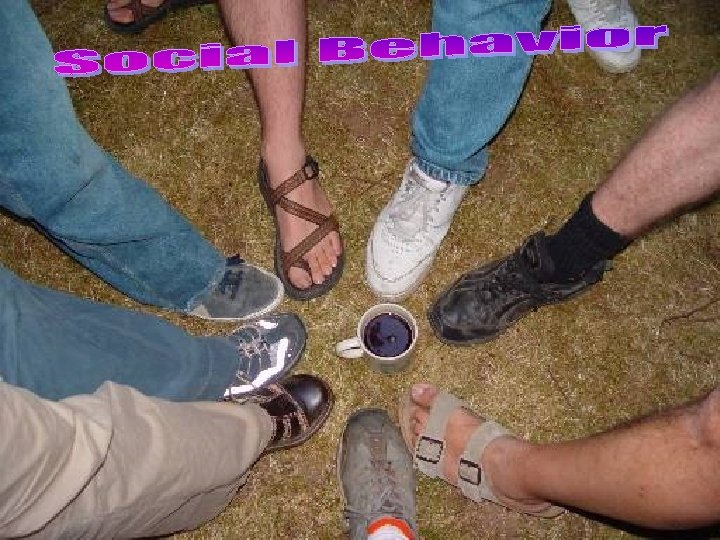
Sociobiology Ø Social Behaviors are interactions between conspecifics Ø Sociobiology is the application of evolutionary theory to our understanding of social behaviors Ø These behaviors include: Ø Fighting (and dominance hierarchies and maintaining territories) Ø Courting and Mating Ø Raising progeny Ø Cooperating (and Defecting)
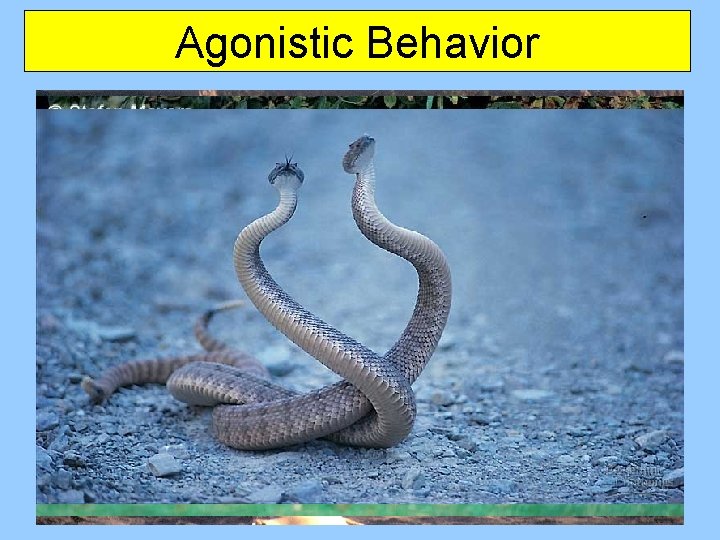
Agonistic Behavior
Hierarchies & Territoriality Ø Dominance Hierarchies are found among chickens, wolves, humans, etc. • The idea is to avoid fighting by knowing your place • to avoid picking on conspecifics that you know have already whooped ya… Ø Territories are maintained in part as a means of reducing aggressive interactions • An animal can avoid fighting by avoiding a conspecific’s territory Ø Fighting tends to occur mostly between conspecifics since same species are both better matched and more likely competitors (e. g. , for food or mates)
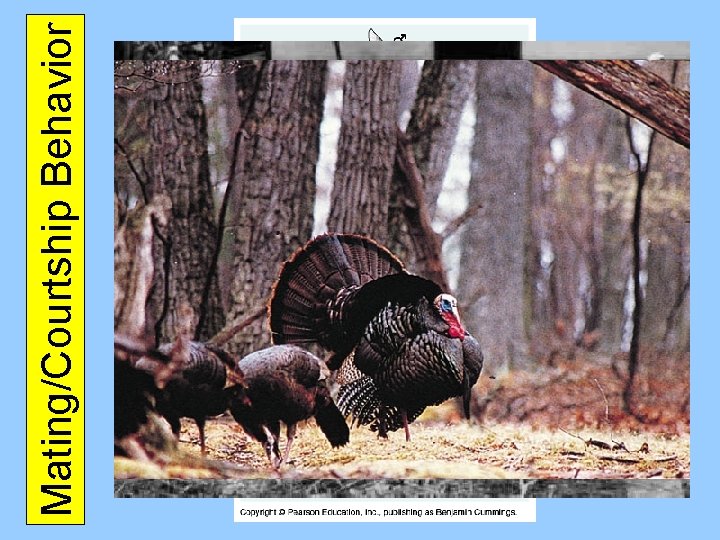
Mating/Courtship Behavior
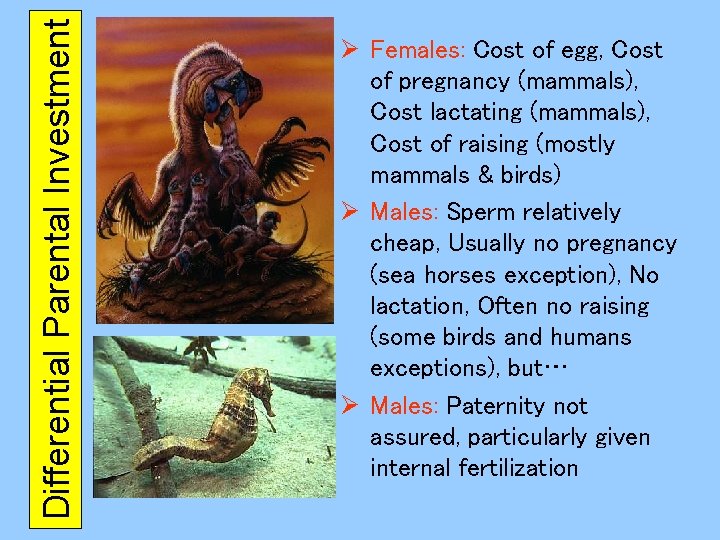
Differential Parental Investment Ø Females: Cost of egg, Cost of pregnancy (mammals), Cost lactating (mammals), Cost of raising (mostly mammals & birds) Ø Males: Sperm relatively cheap, Usually no pregnancy (sea horses exception), No lactation, Often no raising (some birds and humans exceptions), but… Ø Males: Paternity not assured, particularly given internal fertilization
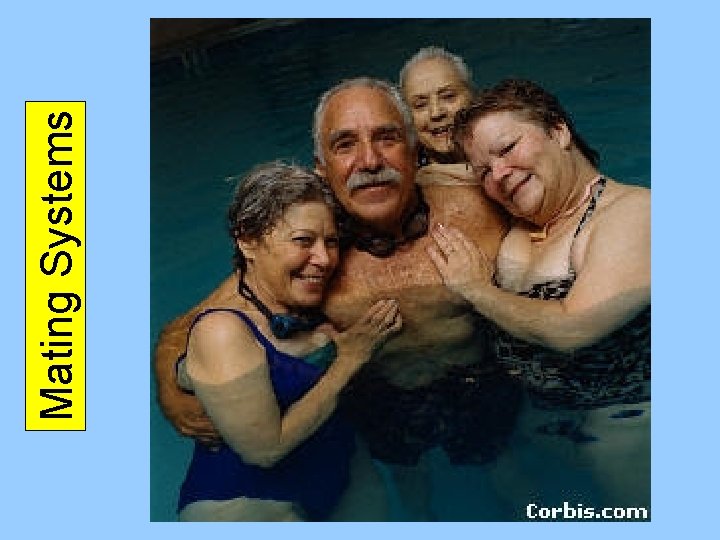
Mating Systems
Mating Systems Ø Promiscuous: low likelihood of subsequent mating with same individual Ø Monogamous: high likelihood of subsequent mating with one individual Ø Polygamous: high likelihood of subsequent mating with more than one individual • Polygyny: one male mates with several females • Polyandry: one female mates with several males
Altruism/Cooperative Behavior Altruism is Cooperative Behavior in which the actor's Darwinian fitness is Reduced by the behavior
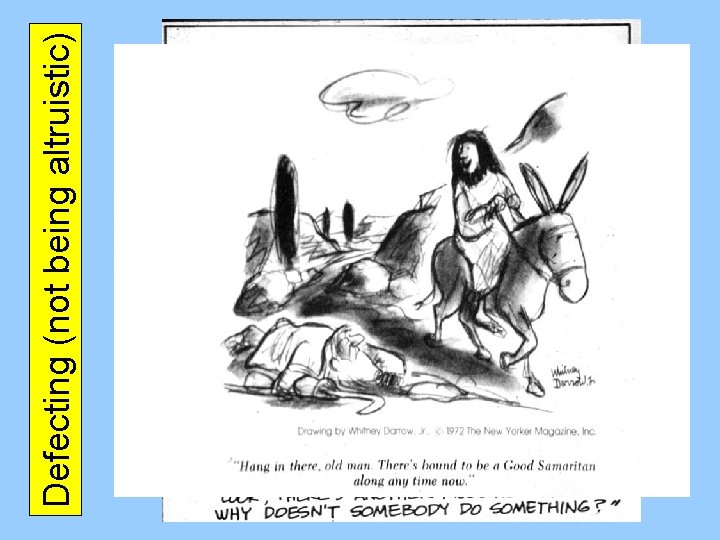
Defecting (not being altruistic)
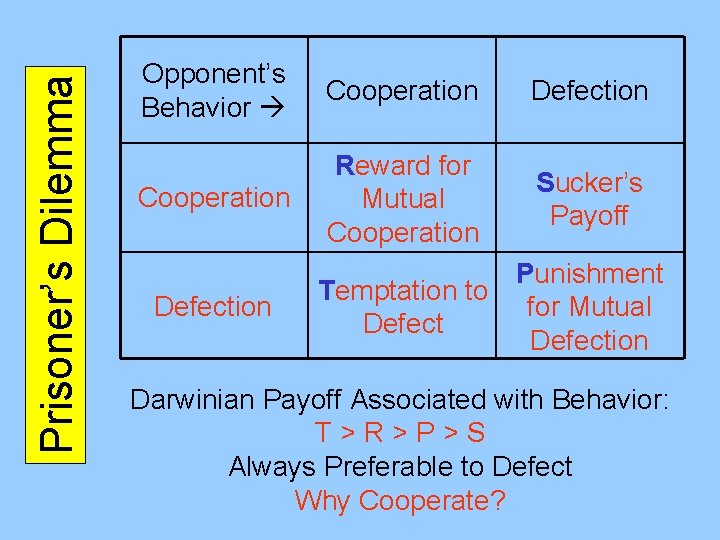
Prisoner’s Dilemma Opponent’s Behavior Cooperation Defection Cooperation Reward for Mutual Cooperation Sucker’s Payoff Defection Punishment Temptation to for Mutual Defection Darwinian Payoff Associated with Behavior: T>R>P>S Always Preferable to Defect Why Cooperate?
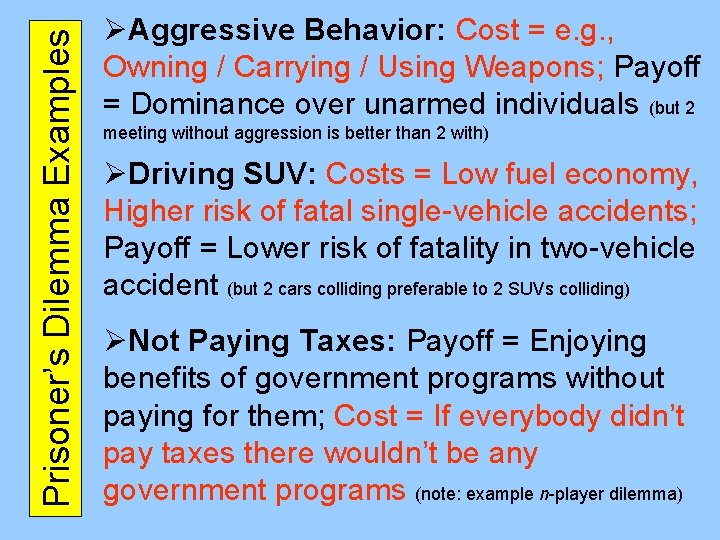
Prisoner’s Dilemma Examples ØAggressive Behavior: Cost = e. g. , Owning / Carrying / Using Weapons; Payoff = Dominance over unarmed individuals (but 2 meeting without aggression is better than 2 with) ØDriving SUV: Costs = Low fuel economy, Higher risk of fatal single-vehicle accidents; Payoff = Lower risk of fatality in two-vehicle accident (but 2 cars colliding preferable to 2 SUVs colliding) ØNot Paying Taxes: Payoff = Enjoying benefits of government programs without paying for them; Cost = If everybody didn’t pay taxes there wouldn’t be any government programs (note: example n-player dilemma)
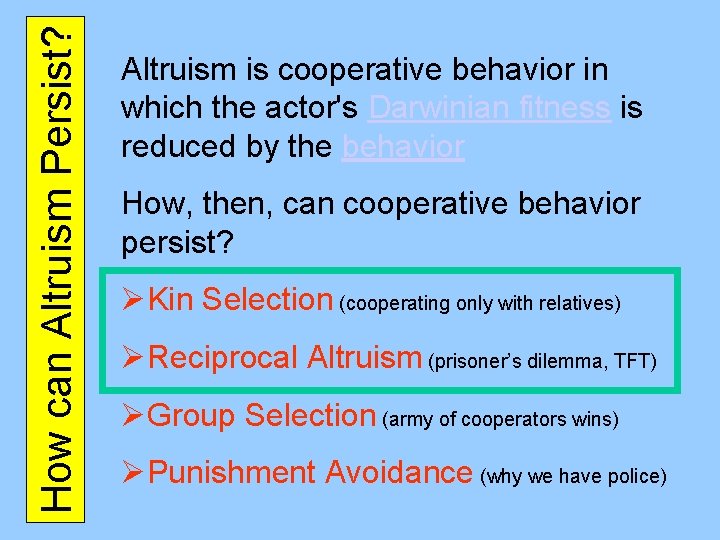
How can Altruism Persist? Altruism is cooperative behavior in which the actor's Darwinian fitness is reduced by the behavior How, then, can cooperative behavior persist? ØKin Selection (cooperating only with relatives) ØReciprocal Altruism (prisoner’s dilemma, TFT) ØGroup Selection (army of cooperators wins) ØPunishment Avoidance (why we have police)
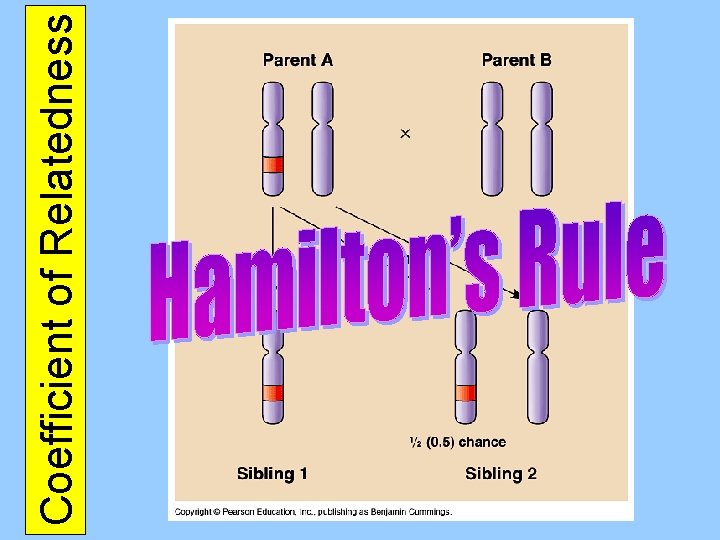
Coefficient of Relatedness
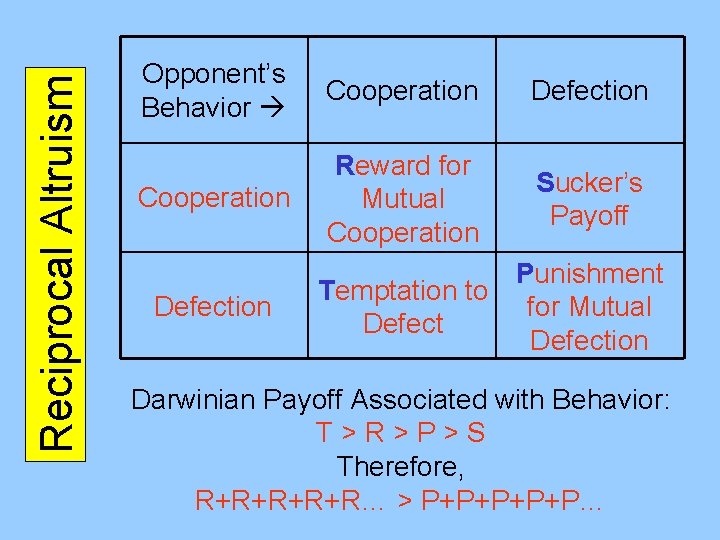
Reciprocal Altruism Opponent’s Behavior Cooperation Defection Cooperation Reward for Mutual Cooperation Sucker’s Payoff Defection Punishment Temptation to for Mutual Defection Darwinian Payoff Associated with Behavior: T>R>P>S Therefore, R+R+R… > P+P+P…
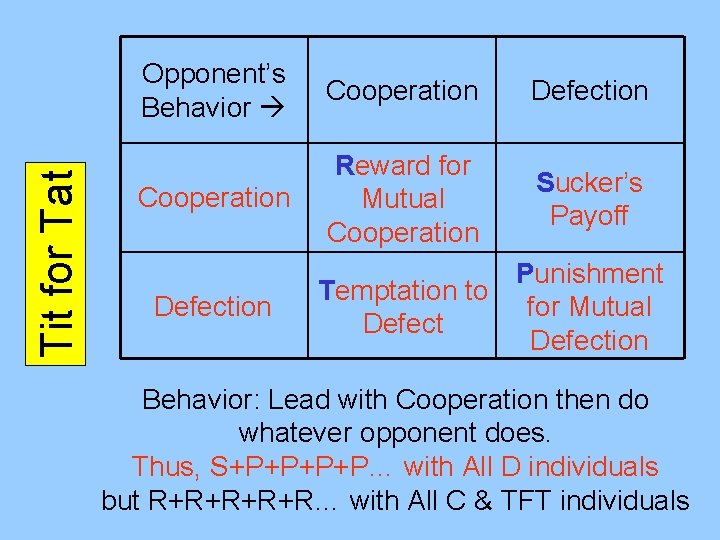
Tit for Tat Opponent’s Behavior Cooperation Defection Cooperation Reward for Mutual Cooperation Sucker’s Payoff Defection Punishment Temptation to for Mutual Defection Behavior: Lead with Cooperation then do whatever opponent does. Thus, S+P+P… with All D individuals but R+R+R… with All C & TFT individuals
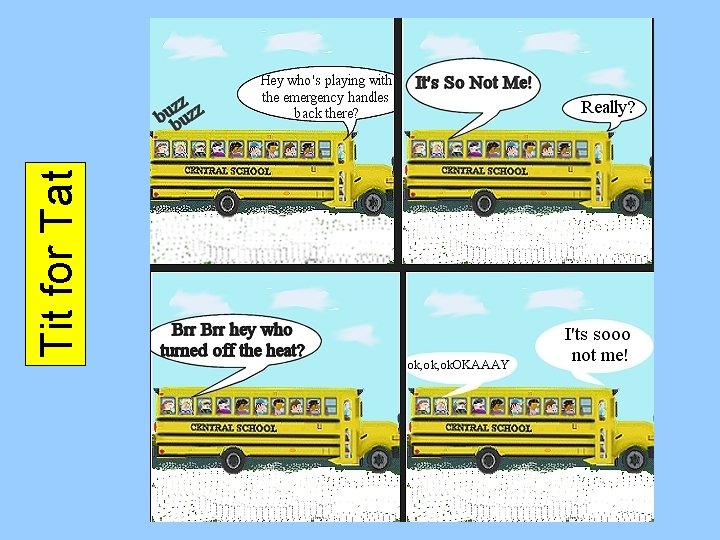
Tit for Tat
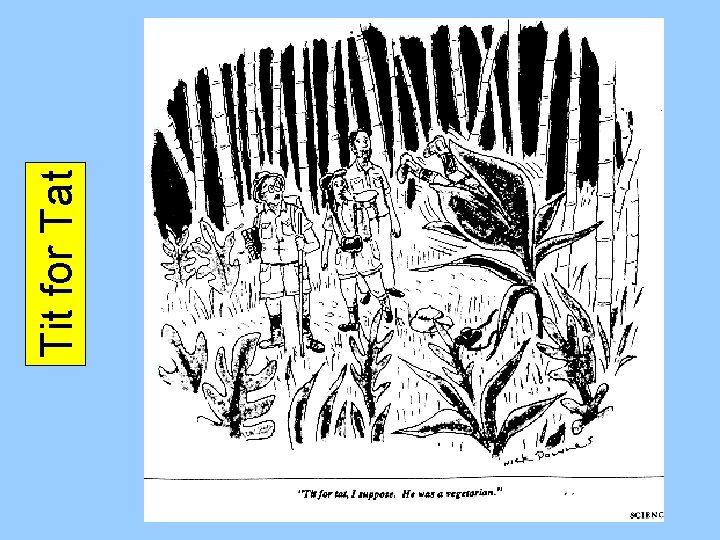
Tit for Tat
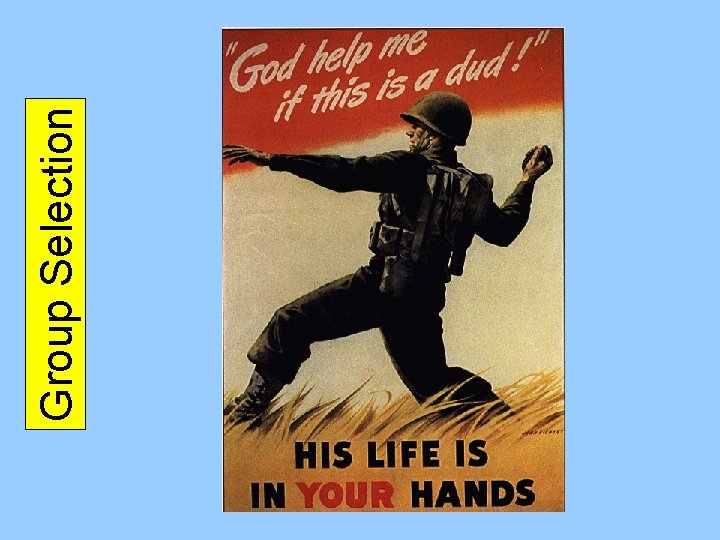
Group Selection
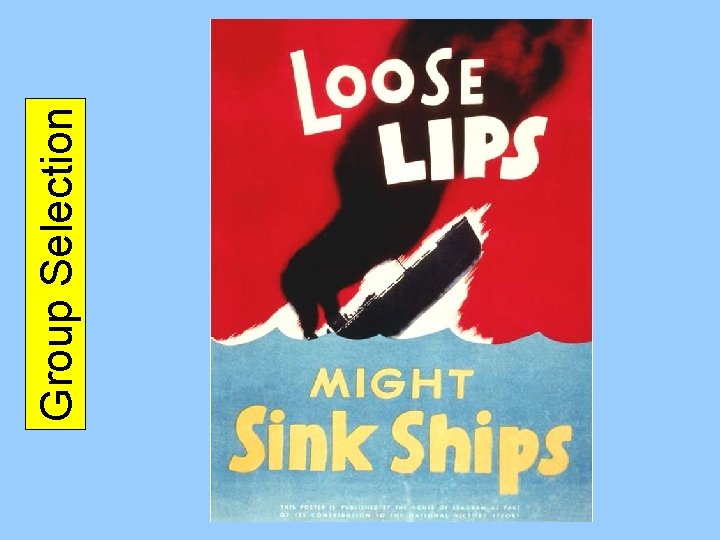
Group Selection
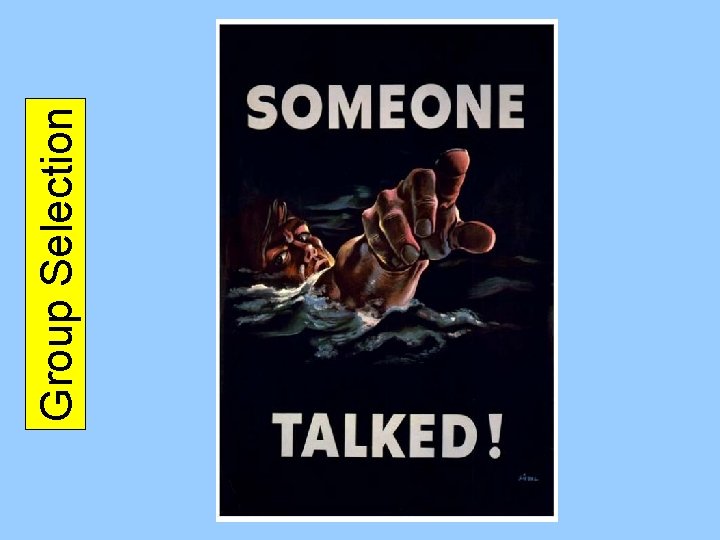
Group Selection

Group Selection
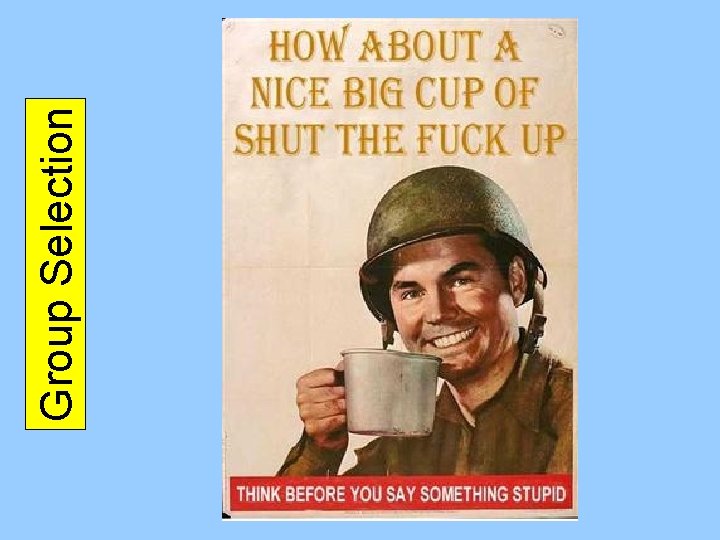
Group Selection
Link to Next Presentation
Acknowledgements http: //biosci. usc. edu/courses/2002 -fall/documents/bisc 121 -fuhrman_ch 51. ppt Pearson Education, Inc. publishing as Benjamin Cummings
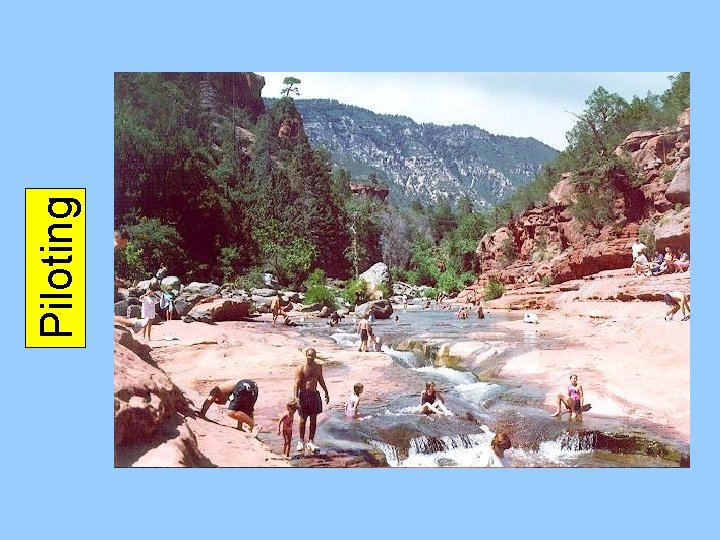
Piloting
- Slides: 66